[Music] yeah hi this is Dr Tim Green and I'm here with Dr Richard Mayer uh Dr Mayer thank you for taking your time and to let me interview you it's my pleasure Dr mayor is a professor of psychology at the University of s California Santa Barbara uh he has been there since 1975 he has done a ton of work uh on multimedia learning uh the science of instruction in e-learning I mean the list goes on and on uh he's written over 500 Publications uh numerous chapters books I mean literally the list goes on and on
we've all read tons of your work and I'm so happy to be able to ask you some questions based upon a chapter that you wrote for the handbook of research on educational Communications and Technology the latest edition and it titled appropriately multimedia instruction so I kind of want to start there I know it's it's a general question but some of those who are uh listening and watching this video it's a good place to start so in your words what is multimedia instruction okay well um all I mean by multimedia instruction is using both words and
pictures um with the intention of helping people learn so by words I mean either spoken or printed text and by pictures I mean uh still Graphics such as illustrations photos charts graphs or dynamic um Graphics such as video or animation so if you're using both words and pictures and putting them together to try to help people learn I think then you're engaging in multimedia instruction so um what's interesting I think is if you at kind of the history of education we have traditionally focused on verbal forms of communication so uh textbooks or lectures are very
um word-based and the real issue I'm kind of interested in with multimedia learning is uh is there a value added by also incorporating Graphics very interesting and and I think one of the interesting things you just said is analog and digital you so you said print-based and computer-based so digital both of those are part of multimedia instruction or can be right so a textbook can be multimedia if it has illustrations and printed text according to my definition that's multimedia yeah and we often forget that since you know most of what we see is digital now
and we we often forget that so why should we incorporate multimedia instruction in teaching and learning why should we even care especially for maybe new teachers who are out there why why should we care about this that's that's a really good question I I will say you know basically for my whole career I've been interested in instructional methods that promote deep learning and basically um promote transfer being able to use what you can have learned in new situations and I think transfer has a very long history both in Psychology and in education um it's been
a goal it's been a goal for a long time in the science of learning and also in education to help people learn in a way so they can transfer um so if we're trying to build transferable knowledge how should we teach that's kind of the question I'm interested in and um I would say at some point I got um interested in graphics as a way of promoting understanding um if we add graphics to text this that people help people understand better so I've been focusing mainly on scientific text and uh to some extent on math
um teaching of mathematics and asking do people learn better if you add graphics to the verbal instruction and what we have found in our research is that um um you can teach pretty well with just words and and people perform adequately on tests but if you add graphics you can greatly increase people's performance on problem solving transfer tests um so the effect size and a typical study is in the uh what what we call the large range somewhere about um8 um effect size8 standard vation so that's considered a large effect in the world of instructional
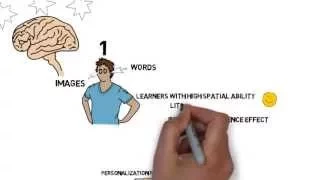
interventions so I would say the reason for being interested in multimedia instruction is that it has potential to improve student understanding and if we're interested in performance on transfer tests we want people to understand deeply then using both words and Graphics might be a way to accomplish that so I call that the multimedia principle people learn better from words and pictures than from words alone and the kind of the rest of my research has been focusing on well what's the best way to incorporate words and pictures because it's not just any any picture and any
set of words but what's the best way to design instruction with words and pictures so I think that's my reason we're kind of being interested in multimedia learning is it's been demonstrated to greatly improve performance on problem solving transfer tests and that's a great reason it is you you mentioned words and pictures where does where does audio come into that I mean do you what do how do you see that playing a role Well audio is what I mean by words so okay you can either have printed text or spokt so either way and so
yeah audio okay um and one of our principles is the modality principle which is that uh in a lot of situations it's better to have audio than printed text if you're going to have a fast-paced animation or a fast Space video having captions um can create split attention so people can't really uh process the graphics uh in the depth they should so we can offload some of that um um impact on the visual system onto the auditory system by using audio for the words and um using our eyes for the video part excellent thanks so
related to this I mean in reading reading your chapter on multimedia instruction one thing that jumped out is you talked about the cognitive theory of multimedia learning and that can you describe that what the foundation or major principles of that is and how we might apply that in designing instruction sure you I think it's important to when we design instruction to kind of start with um some grounding in the science of learning uh it's a field that's been around for a hundred years and I think we finally have um you know developed a theory that
is relevant to instructional design um so the cognitive theory of multimedia learning is is basically taking the information processing model that really has been around since the late 60s and and even before and just adapting it slightly to um an educational setting the idea is that information comes in from the outside world it first impinges on our eyes and ears and enters sensory memory so um we might have um uh kind of a photograph kind of uh view of the world through our eyes and auditory echo through our ears but that information Fades very fast
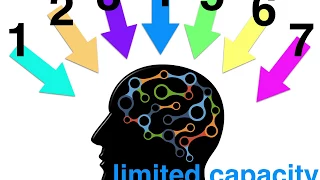
so we have to pay attention to it um so the first real cognitive step is selecting the relevant incoming information for further processing if we pay attention to some of that information in sensory memory before it fades away it goes to working memory which is a very limited capacity store um and in working memory we can um mentally rearrange the information um so the next step really there is to organize the information in some meaningful way um and then also activate information from relevant information from long-term memory um bring it into working memory and integrate
it with the incoming information I call that integrated so the the three main memory stores are sensory memory working memory and long-term memory all the kind of learning activity is in working memory where we have to select the relevant information mentally organize it and integrate it with relevant prior knowledge so according to this Theory meaningful learning depends on being able to carry out those three important cognitive processes in a memory Store working memory which is very limited in capacity so that's kind of the nature of the human um information processing system we have very limited
capacity but we in order to learn deeply we have to engage in a lot of processing so how Translating that to creating multimedia instruction those elements need to be present or at least uh talked about and dealt with as you uh create instruction I mean how do you see that playing so I think um I should have mentioned one other aspect of the system which is what I call dual channels um we have a verbal Channel and a visual channel so that um we can U there's a limit on the verbal Channel and working memory
and and a limit on the visual Channel and we can kind of work between those two um so but the way I think it plays out is we want instruction that is going to do three three things basically so there's really three instruction instuctional goals one is to reduce extraneous processing since we have such a limited capacity we don't want to waste our precious processing resources on cognitive processing that doesn't support the instructional goal so poorly designed instruction just you know waste the learner's cognitive processing and therefore there's less capacity left over to engage in
the processes of organizing the material and integrating it um so so um so one step one big goal is to reduce extraneous processing have very clear well organized instruction that will keep people on track another is to um so one way to do that would be to eliminate any extraneous material from the lesson so it's just focusing on the essential material another goal is to what I what I would call Foster essential processing so this is cognitive processing needed to mentally represent the material that's presented and we can sometimes if the material is very complicated
we can help people with that by breaking it down into Parts which I call the segmenting principle or giving people some pre-training on the definitions of the key um Concepts that is a way to kind of um help manage essential processing and then lastly um another instructional goal is to Foster generative processing which is a deeper kind of processing where you integrate what's presented with what you already know reorganize it in a way that makes sense to you um that requires kind of more motivation more effort on the part of the learner and some um
techniques that help do that are well the multimedia principle using words and pictures another principle we have is the personalization principle which involves communicating in a conversational Style it's like using first person I and you rather than um first and second person um rather than just formal presentation so does that make sense oh yeah no it all it all does and that's great thank you for that summary it's very that's very helpful so kind of switching a little bit talking about just the research on multi media learning where do you see do you see any
major areas where it's heading or I mean I could ask this another way what what's your major areas that you're working on right now okay well you know it's a really interesting field um I think it's evolved over the years at first it was focused mainly on uh illustrations in textbooks and in the 80 in the late 80s and early 90s I think that was the focus but now it has evolved more to um computer-based um learning although I think the principles are the are basically the same whether we're talking about a print medium or
an online medium I I think what's happened um what's happening now in the future is going to be um the development of more principles of how to design um multimedia instruction I have a set of about 12 research-based principles that are based on dozens of um studies but I think what we're also going to do is find the boundary conditions for those principles by that I mean when are they most important and when are they least important for example many of these principles are most important for uh low prior knowledge Learners High prior knowledge Learners
um probably don't need as wellde as well-designed instruction as the low prior knowledge Learners so one thing we find is that sometimes when we partition the Learners into low prior knowledge and high we get much stronger effects for good instructional design with the low low prior knowledge Learners which I guess makes sense but there are a lot of other boundary conditions for a lot of these principles they're not like laws written in stone I think they they work because of what we know about how how the human information processing system works so they're going to
be situations where they're going to be more or less effective so I think what we're going to find is as I said boundary conditions for the principles and as for my own research um I'm kind of getting interested in uh educational games which is I guess a little bit of an extension of research on multimedia learning because most educational games are multimedia and that they involve graphics and words um a lot of strong claims have been made for the potential of games to revolutionize education but um I think those claims are based on pretty weak
evidence so what I would like to do is take kind of a rigorous scientific approach to educational games and try and figure out what works what doesn't work you know are there off offthe shelf games that actually have a positive effect on cognitive skills are there design principles for games that um um would apply that would help us design games that are more effective so that's what I that's kind of what I've been trying to do most excellent that that sounds sounds very interesting and exciting educational games is obviously a huge area right yeah I
I have a a book that if I'm allowed to say this that just came out on called computer games for learning where I try to summarized the research on on educational games looking at what I call the value added approach which is taking an educational game and adding an instructional feature to it and seeing does that help learning the cognitive consequences approach which is taking an off-the-shelf game um and asking does that improve a cognitive skill compared to doing some other activity that is not that game and there are some perceptual skills that can be
improved by playing games and then lastly the me media comparison studies where people look at learning from a game versus learning from conventional media to see which is best so in some cases a PowerPoint presentation can be more effective than learning from an adventure game that's supposed to teach a scientific concept so I I I break the field into those three genres of research and kind of look at what the evidence says in each of those excellent and I I mean I i' I've seen that when when did the book come out it just came
out a couple months ago okay that's what I thought yeah excellent thanks for mentioning that that's uh people will definitely want to pick that up and take a look at it oh of course how could they not the people who are watching this will definitely want to um I like to end all all of my interviews with a question dealing with advice so I have a variety of different people who who watch these and listen to instructional designers teachers and others who are involved in media development so what what advice do you have for instructional
designers or teachers and multimedia developers um about designing multimedia instruction well for one thing I I think folks who are actually designing the instruction you know are doing uh really important job because um you know Education and Training are are crucial for our society and designing effective training and instruction is is very important um and I also think um the kind of issues that instructional designers have has driven my research and driven a lot of research in the learning Sciences so I think the Practical questions are helping improve um research so I I appreciate the
the need to always look and see what really works in the real world that that's that's important um but the advice I would give is um I think it's important to um be grounded in uh in the science of learning so have a good conception of how human Learning Works um how the human information processing system works because that helps you make um decisions about design and also um based things on research-based principles of instructional design we know a lot about how to design multimedia instruction at least based on our our lab studies um so
I think a lot of that is relevant to actual actual um instructional design in the real world so those are my two really my two pieces of advice excellent thank you uh again I I appreciate you taking your time out to let me interview you uh I've enjoyed and talking with you and it's been a a privilege and I I thank you oh it's my pleasure thanks thanks Tim for interviewing [Music] me