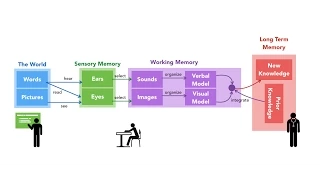
Mayer's cognitive theory of multimedia learning stems from seminal research from two established learning theories: information processing theory and cognitive load theory. There are three core assumptions of multimedia learning theory. The first is the dual channel assumption - humans possess two separate channels for processing visual and auditory information.
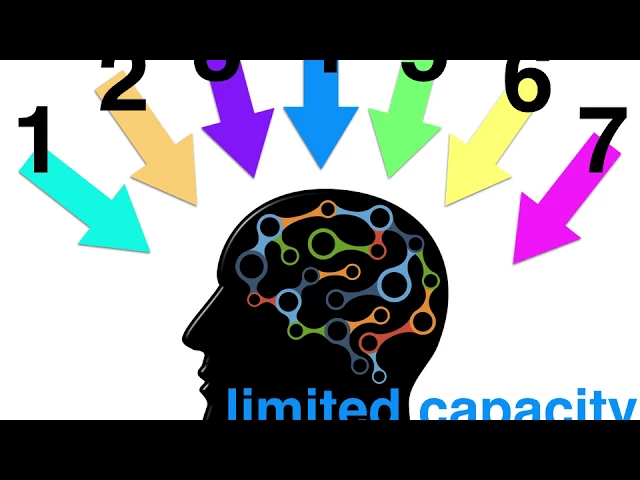
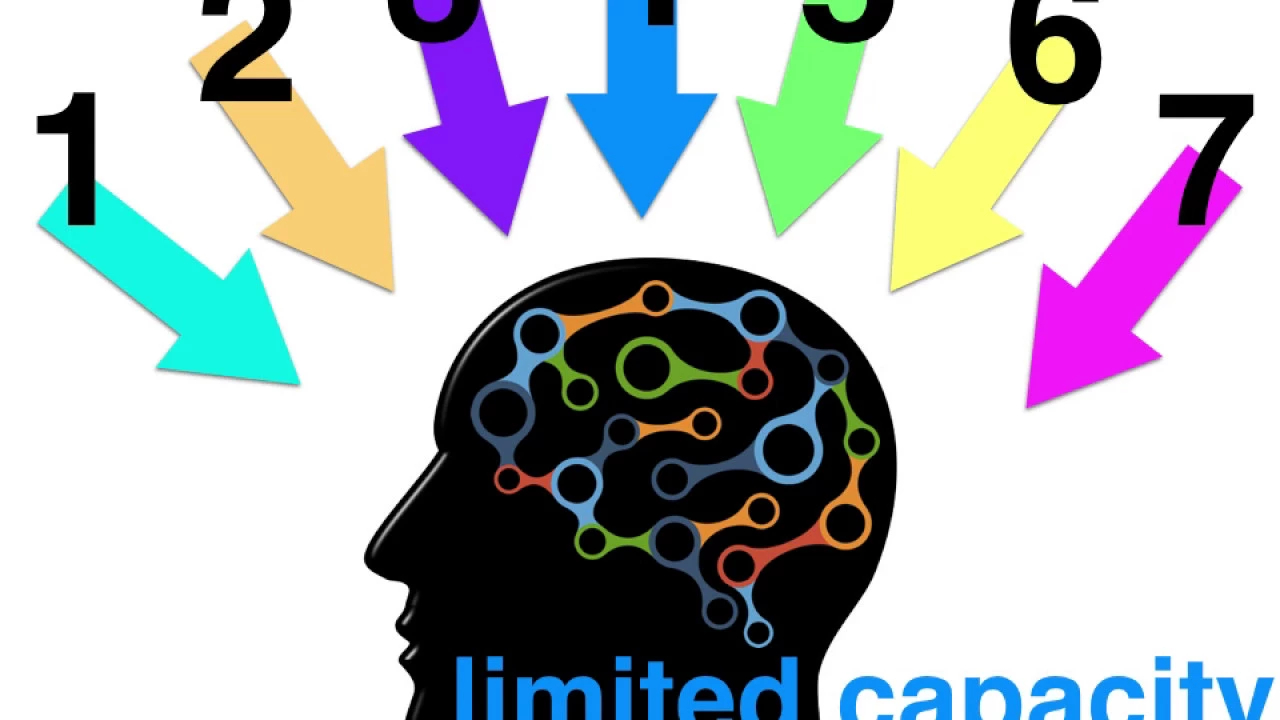
The second assumption is that humans are limited in the amount of information that they can process in a channel at one time. The third assumption is that humans engage in active learning by attending to relevant information, organizing selected information into a coherent mental representation, and integrating that mental representation with other knowledge. Mayer's theory builds on these assumptions of information processing by examining the cognitive processes involved in active learning with multimedia - namely visual images, audio, and text.
Multimedia learning is based on the triarchic model of cognitive load that assumes people engage in three types of cognitive processing while learning - extraneous, essential, and generative - and these three types of processing are limited to a learner's available cognitive capacity. Let's look at what this means for the development of multimedia materials. The first tenet of multimedia learning theory is to reduce extraneous cognitive processing that does not serve the instructional goal.
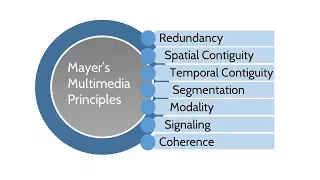
At the core of this theory is the multimedia principle the states, people learn better from words and pictures than from words alone. In order to reduce extraneous processing using these modalities, additional principles should be followed. The coherence principle states people learn better when extraneous words, pictures, and sounds are excluded.
In other words, only include key words pictures and sounds. Get rid of anything extra. The modality principle states people learn better from graphics and narration than from animation and screen text.
So the still image on the left with my audio narration about Carlton dancing is more effective than your processing of seeing him dance while reading the text. The redundancy principle states people learn better from graphics and narration rather than graphics narration AND on-screen text. In other words, the added on-screen text is often redundant and just adds extraneous cognitive load.
If you do use on-screen text, it should only include keywords, and according to the spatial continuity principle, they should be placed near the image rather than at the top or bottom of the page. This helps the brain register the text and image as one single piece of information instead of two. Along with that idea is a temporal continuity principle that states, in order for text and images to count as one piece of information, they should be presented at the same time like this instead of one after the other like this.
With the extraneous cognitive load reduced we can focus on the second tenet which is to manage the essential cognitive processing that represents the critical content of the instruction. One way to do this is with the signalling principle which states, people learn better with added cues to highlight essential material. For example, if the visual you're using is complex you may use arrows, circles, or highlighting as you talk about different parts of the image or text.
Additionally, the segmenting principal suggests multimedia presentations should be short and focused in user-paced segments. The user should be able to go back and re-watch segments as needed. A third principal to help manage essential cognitive processing is pre-training.
People learn better from multimedia when they already know the names and characteristics of the main concepts. You should pre teach vocabulary before diving into the big picture or deeper concepts with multimedia. The third and final tenet of multimedia learning theory is to increase the generative cognitive processing which is responsible for helping the learner organize and make sense of the essential material.
The following principles are related to the presentation of narration and helping the learner connect to the content. The voice principle states people learn better when narration is spoken in a friendly human voice rather than a machine voice. Additionally, you should keep your voice conversational rather than formal or robotic.
Finally, the image principle tells us people do not necessarily learn better when the speaker's image is added to the screen. You might think that floating talking head on the screen helps your learner's to connect more with you as a person but research tells us it is an unnecessary distraction.