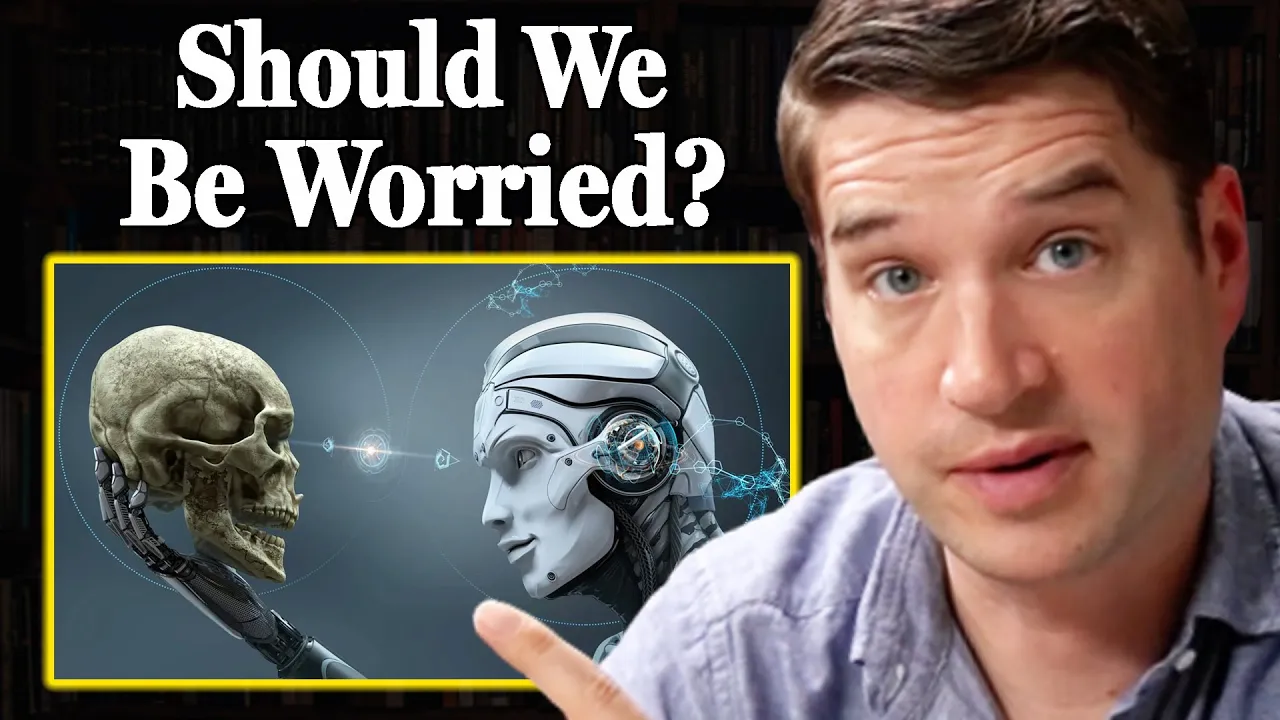
So there are a lot of concerns and excitements and confusions surrounding our current moment in artificial intelligence technology perhaps one of the most fundamental of these concerns is this idea that in our Quest To Train increasingly bigger and more capable AI systems that we might accidentally create something smarter than we expected I want to address this Particular concern from the many concerns surrounding AI uh in my capacity as a computer science professor and one of the founding members of Georgetown Center for digital ethics I've been thinking a lot from a sort of technological perspective about
this idea of runaway or unexpected intelligence and AI systems I have some new ideas I want to preview right here these are in rough form but I think they're interesting and I hopefully will Give you a new way and a more precise and hopefully comforting way of thinking about the possibility of AI getting smarter than we hope all right so where I want to start with here is the fear okay so one way to think of the fear that I want to address is what I call the alien mind fear that we are training these
systems most popularly as captured by large language model systems like the GPT family systems and we don't know how they work they're big they sit In Big Data Centers and do stuff for months and hundreds of millions of dollars of compute cycles and then we get this thing afterwards and we engage with it and say what can this thing do now and so we are creating these Minds we don't understand how they're going to work that's what sets up this fear of these Minds getting too smart I want to trace some of the origins of
this particular fear I'm going to load up on the screen here for people who are Watching instead of just listening uh an influential article along these lines this comes from the New York Times in March of 2023 so this was pretty soon after chat GPT made its big late 2022 debut the title of this opinion piece is you can have the blue pill or the red pill and we're out of blue pills this is co-authored by Yuval Harari who you know from his book sapiens as well as Triston Harris who you know as the sort
of whistleblower on social media Who now runs a nonprofit dealing with the harms of technology and oza Rasin who works with Tristan at his nonprofit um there's a particular quote so this was this essentially a call for we need to be worried about what we're building with these large language model systems like chat GPT there is a particular quote in here that I want to pull out and I'll I'll read this off of my my page here we have summoned an alien intelligence we don't know much about it Except that it is extremely powerful and
offers us bedazzling gifts but could also hack the foundations of our civilization so we get this alien terminology this notion of like we don't really know how this thing works and so we don't really know what this thing might be capable um let me give you another example of this thinking this this is an academic paper that is from this same time so this is April 2023 uh this is coming out of Microsoft Research I wrote about this paper actually in a New Yorker piece that I wrote uh earlier this year about AI but the
title of this paper is important this was very influential the title of this influential paper is important Sparks of artificial general intelligence colon early experiments with GPT 4 now the whole structure of this paper is that these researchers because they're at Microsoft had Early Access to gp4 this was before it was Publicly released and they ran intelligence tests sort of human intelligence test that had been developed for humans they were running these intelligence tests on GPT 4 and were really surprised by how well it did so this sort of glimmer of AGI this glimmers of
artificial general intelligence the sort of theme of this is my God these things are smarter than we thought they can do reasoning these are these machines are becoming rapidly Powerful so it was of hey if you were worried about GPT 35 the original chat GPT language model that they writing about the New York Times oped wait till you see what's coming next all right um there's a general rational extrapolation to make here the original GPT worried people like you all Harari this new one GPT 4 seemed even better we keep extrapolating this curve the GPT
5 gp6 it's going to keep getting more capable In ways that are unexpected and surprising it's very rational to imagine this extrapolation bringing these alien Minds to abilities where our safety is at stake we're uncomfortable about how smart they are they can they can do things we don't even really understand this is this origin of this these things are going to get smarter than we hoped you know I had a a conversation with a friend of mine about this who's really interested in AI has been reading a lot About it and the way he conceptualized
this is he just said we're going to keep building bigger models one of these days probably pretty soon as we keep 10 Xing the size of these models we are going to be very uncomfortable with what we build all right so that is our setup for the concern to address this concern the first thing I want to do is start with a strong but narrow observation a large language model in isolation can never be understood to be A mind all right so let's be really clear I'm being very precise about this okay and what I'm
saying here is actually very narrow if we actually take a specific large language model like gp4 that by itself even if we make it bigger even if we train it on many more things cannot by itself be something that we imagine as an alien mind with which we have to contend like we like we might another Mind right and the reason is is uh what in isolation what a large language model does is it takes an input this information moves forward through layers it's fully feed forward and out of the other end comes a token
which is a part of a word in reality it's a probability distribution over tokens but whatever a part of a word comes out the other end that's all a language model can do now how it generates what token to spit out next can have a huge amount of Sophistication right it it it's difficult to come up with the proper analogies for describing this but I think a somewhat reductive but useful way for understanding how these tokens are produced is the following analogy that I used in a New Yorker piece from a few months ago you
can imagine what happens is when you you have your input which is like the prompt or the prompt plus the part of the answer you've generated already as this is going Through uh the large language model uh it can come up with candidates for like the next word or part of a word to Output next right like okay that's not too hard to do um this is known as Ingram prediction in some sense except for here it's a little bit more sophisticated because with self attention it can look at multiple parts of the input to
figure out what to come next but you know it's not too hard to be like this is kind of the pool of Grammatically correct semantically correct next words that we could output how do we figure out which of those things to Output to actually match what's being asked or what's actually being discussed in the prompt well this is where these models go through something like complex pattern recognition I like to use the metaphor of a massive checklist a checklist that has billions of possible properties on it this is a discussion of chess the uh We're
in the middle of producing moves for a chess game um this is like a middle of a chess game move that's being produced this is a discussion of uh ancient history this is discussion of Rome this is a discussion of buildings right there whatever huge checklist so we're sort of understanding as it goes to these recognizers um this is what we're trying this is what we're in the middle of talking about and then you can imagine again this is a rough anal that You have these really complex Rule books that looks at the combination of
different properties that describes what we're talking about the rule books are combinatorial they combine these properties to say okay given this combination of properties of what we're talking about which of these possible correct grammatically correct next word or tokens we could output which of these makes the most sense right so then it's combining okay Uh it's a chess game and here's the here's the recent chess moves and we're supposed to be describing a middle game move and the rules might say uh these are legal moves given like this current situation so um of the different
things we could output here that looks like the move in a chess game these are actually legal moves and so let's choose one of these right so you have possible next words you have checklist of properties you have combinatorial combinations of Those properties with rules that then help you influence which of these correct words to Output next and all this sort of happens in a sort of feedforward manner those checklist and the rules in particular can be incredibly complicated um the rules can have novel combinations of properties so combinations of properties that were never seen
in the training data but you have rules that just combine properties and that's how you can produce output With these models that don't directly match anything i' ever saw before so there's this nice generalization this is all very sophisticated this is all very impressive but in the end this is still you can imagine it like a giant metal machine with dials and uh gears and your turning this big crank and hundreds of thousands of gears are all cranking and turning and at the very end at the far end of the machine there's a dial uh
of letters these dials turned to spell out One word like in the end that's what's happening a word or a piece of the word is what comes out on the other side after you've turned these dials for a long time it could be a very complicated apparatus but in the end what it does at the end is it can spit out a word or a piece of a word all right it doesn't matter how big you make this thing it can it spits out parts of words no matter how sophisticated its pattern recognizers and combinatorial
Rule uh generators um no matter how sophisticated these are it's a word spitter outou hey it's Cal I wanted to interrupt briefly to say that if you're enjoying this video then you need to check out my new book slow productivity the Lost start of accomplishment without burnout this is like the Bible for most of the ideas we talk about here in these videos you can get a free excerpt at Cal newport.com slow I know you're going to like it Check it out now let's get back to the video okay that's true but where things get
interesting as people like to tell me when I talk to people is when you begin to combine this really really sophisticated word generator with control layers something that sits outside of and works with the language model that's really where everything interesting happen happens okay this is what I want to Better understand it's better understanding the control logic that we place outside of the language models that we get a better understanding of the possible capabilities of artificial intelligence because it's the combined system language model plus control logic that becomes more interesting because what can control uh
logic do it can do two things it chooses what the activate the model with what input to give it and it can then second actuate in the real World or the world based on what the model says so it's the control logic that can put input into the model and then take the output of the model and actuate that like take action do something on the Internet move a physical thing so it's that control logic with its activation actuation capability that when combin with a language model which again is just a word generator that's when
these systems begin to get Interesting so something I've been doing recently is sort of thinking about the evolution of control logic that can be appended to generative AI systems like large language models and U I want to go through like what we know right now I'm going to draw this on the screen for people who are watching instead of just listening you can watch me draw this on the screen um and see my beautiful handwriting all right so there's different layers to this I'll Actually draw this out so I we'll start with down here I'm
going to call this layer zero oh man Jesse my handwriting is only getting worse people are like oh my God Cal's having a stroke no I just have really bad handwriting all right so layer zero control logic is actually what we got right away with the basic chat Bots like chat GPT so I'm going to label this like for for example chat GPT oh my Lord all right fine um so level zero control logic basically just implements what's known as Auto regression right so large language model spits out a single word or part of a
word but when you type a query into chat GPT you don't want just a one-word answer you want a whole response so there's a basic what I'm calling layer zero control logic that takes your prompt submits it to the underlying large language model gets the answer of The language model which is a single word or part of word that expands the the input in a reasonable way it appends it to the input so now the input is your original prompt plus the first word of the answer it then inputs fresh fresh copy of the model
inputs this slightly longer input it generates the next word of the answer the control logic adds that and now submits this slightly longer input to the model and it sort of keeps doing This until it judges um this is a complete answer and then it returns that answer to you the user who are typing into the chat GPT interface right that's called Auto regression um that's how we just repeatedly keep using the same language model to get very long answers right so this is a control Logic the model by itself can just spit out one
thing we add some logic now we can spit out big answers um another thing that we got in early versions and Contemporary versions of chatbots is the other thing level layer zero control logic might do is uh appin previous parts of your conversation to The Prompt right so you know how when you're using chat GPT or using CLA or something like this or perplexity um you can sort of ask a follow-up question right so there's a little bit of control logic here where what it's really doing is it's not just submitting your follow-up question by
itself to the language model Because remember the language models have no memory it's the exact same snapshot of this model trained whenever it was trained that's used for every word generated um what the control logic will do is take your follow-up question but then also take all of the conversation before that and paste that whole thing into the input right so this is simple logic but it it makes the token generators useful all right so we already have some control logic and even The most basic generative AI tools all right now let's go up to
what I'm going to call layer one all right so with layer one now we get two things we didn't have in layer zero uh we're still taking input from a user like you're typing some sort of prompt but now we might get a uh substantial transformation of what you typed in before we uh for whatever's actually put into a language model so you type in Might go through a substantial transformation by the control logic before it's passed on to the actual language model the other key part of layer one is um there's actuation so it
might also do some actions on behalf of you or the language model based on the output of language model instead of just sending text back to the user it might actually go and take some other action all right so an example of this for example would be the web Enabled chat Bots like Google's Gemini right so Google's Gemini you can ask it a a question where it's going to do a a contemporary web search like stuff that's on the internet now not what it was trained with when they changed the original model but it can
actually look at stuff on the web and then give you an answer based on stuff it actually found uh contemporaneously on the web uh this is layer one control logic what's really happening here is When you ask something like Gemini or something like perplexity a question about you know a current a web search Advanced web search the control logic before the language model is ever involved actually just goes and does a Google Search and it finds like these are these are relevant articles it then takes the text of these articles and it puts it together
into a really long prompt which it then submits to the language model I'm simplifying This but this is basically what's going on so the language model doesn't know about these specific article necessarily in advance it wasn't trained on them but it gets a really long prompt that the The Prompt written by the control logic might say something like um please look at the following you know text I'm that's pasted in this prompt and summarize from it you know an answer to the following question which is then your original question and then below it Is you
know 5,000 words of web web results right so the prompt that's actually being submitted under the covers to the language model here is uh not what you typed in it's a much bigger substantially transformed prompt right uh we also see actuation so if we consider like open ai's original plugin you know so these are these things you can turn on in GPT 4 that can do things for example like generate a picture for you or book airline flights or show you The schedules of Airlines you can talk to it about things um in the new
Microsoft copilot Integrations you can you can uh have the model take action on your behalf and tools like Microsoft Excel or in Microsoft Word so there's actual action happening in the software world based on the model this is also being done by the control logic right so you're you're saying like uh help me find a flight to you know whatever this place at this time the control logic is Going to before we get to a language model you know it might make some queries of a flight booking service or what it might do is actually
create a prompt that give to the language model and says hey please take this question about you know flight request and summarize it in the following format for me which is like a very you know flight day destination the language model then returns to the control logic a better more consistently formatted version of The query you originally had now the control logic which can understand this really well formatted request talked over the internet to a flight booking service get the results and then it can pass those results to the language model and say okay take
these flight results and please like write a summary of these in like a polite English and then it returns that to you and so what you see as the user is like okay I asked about flights and then the link and I got back Like a really nice response like here's your various options for flights and then maybe you say hey can you book this flight for me the control logic takes that and say hey can you take this request from the user and again put it into this really precise format you know flight number
flight whatever uh the language model does that and now the control logic can take that and talk over the internet to the flight booking service and make the book in on your Behalf so this sort of actuation that happens in the sort of our current level of plugins um same thing if you're if you're asking co-pilot Microsoft co-pilot to do something build a table in Microsoft Word or something like this it's taking your request it's asking the language model to essentially reformat your request into something much more systematic and canonical and then the control logic
talks to Microsoft Word these language models are just giant Tables of numbers in a data warehouse somewhere being simulate on gpus they don't talk to Microsoft Word in your computer the control logic does as well so that's layer one control logic so now we have substantial transformation of your prompts and some actuation on the responses okay all right so now we move up and things begin to get more interesting Layer Two is where the action is right now I've been writing some about this for the New Yorker among Other places so in Layer Two we
now have to control logic able to keep uh State and make complex planning decisions so it's going to be highly interactive with the language model perhaps making many many queries to the language model on route to trying to execute whatever the original request is so this is where things start to get interesting uh a well less well-known not going to write here Cisero a less well-known but illustrative example of this is the The Meta put out this bot called cisero which I've talked about on the show before CIS C can play the diplomacy the game
diplomacy the strategy war game diplomacy very well the way ciso works is we can actually think about it as a large language model combined with layer to um control intelligence so so diplomacy is a board game but it has lots of interpersonal negotiation with The other players the way this diplomacy plane AI system works is the the language model the control logic will use to language model to take the conversations happening with the players and explain to the control program the control logic in a very consistent systematic way what's being proposed by the various players
in a way that like the control program understands without having to be a natural language processor then the control program Simulates lots of possible moves but what if we did this right and what is really doing here is simulating possibilities if this person is lying like they're trying to but these two are honest and we do this what would happen well what if this person was lying but they're being honest which move would be best what if they're all being honest and kind of figures out all these possibilities for what really happening to figure out
what play gives it its Best chance of being successful and then it tells the language model okay here's what we want to do now please like talk to this player um give me a a message to send to this player that would be convincing to get them to do the action we want them to do and the language model actually generates the text that then the control logic sends so in uh Cicero we have much more complicated control logic where now we're simulating moves we're simulating the mind of other People um the logic is might
have multiple queries of the language model to actually Implement a turn we also see this in Devon so Devon AI has been building these agent-based systems to do complicated computer programming tasks and the way it works is you give a more complicated computer programming task to the Devon and it has control logic that's going to continually talk to a language model to generate code but it Can actually keep track of there's multiple steps to this task that we're trying to do we're now on step two we need code that does this all right let me
get some code from the language model that we think does this let me test this code does it actually do this okay great now we're on the step two of this task okay um we need code that integrates this into this system let me ask the language model for that code so again there's a it's keeping track of a Complex plan to control logic and using a language model is the actual production of a specific code that solves specific request a language model can't keep track of a long-term plan like this it can't simulate novel
Futures because again it's just a token generator uh the control logic can so that's Layer Two And this is where a lot of the energy is in AI right now is these sort of complex control layers the layer that doesn't exist yet but you Know this is the layer that we speculate about I call it layer three and this is where we get closer to something like a general intelligence so I'll put AGI here um and this is where and I'm going put a question mark it's unclear exactly how close we can get to this
but now we have a very complicated this is hypothetical we have a very complicated control logic that keeps track of intention and state and understanding of the world um it Might be interacting with many different generative models and recognizers so it has a language model to help understand the world of language and produce text but it might have other types of models as well um if this was a fully actuated like robotic artificial general intelligence you would have something like uh visual recognizers that really can do a good job of saying here's what we're seeing
in the world around us it might have you know some sort of like Social intention recognizer where just train to to take recent conversations and try to understand what people's intent are and then you have all this being orchestrated by some master control logic that's trying to uh keep a sort of stateful existence and interaction in the world of some sort of simulated agent so that's how you get to something like artificial general intelligence okay so here's the critical Observation in all of these layers the control logic is not self-trained the control logic unlike a
language model is not something where we just turn on the switch and it looks at a lot of data and trains itself and then we have to say how does this thing work I don't know at least in the layers that exist so far layers two through layer zero the control Logics are hand coded by humans we know exactly what they do right here's what's something Interesting about Cicero in the game diplomacy one of the big strategies that's common is lying right you uh you make an alliance with another player but you're backstabbing them and
you have a secret alliance with another player uh that is very common the developers of cico were uncomfortable with having their computer program lie to real people so they said okay though other people are doing that our player cisero will not lie that's really easy to do Because the control logic where that simulates moves this is not some emergent thing they don't understand they coded it themselves it's a simulator that simulates moves they just don't consider moves with lies so we have this reality about the Control Plus generative AI combination we have this reality that
at least so far the control is just hand coded by people to do what we want it to do there is no way for the intelligence In these cases of the language model no matter how sophisticated its checklist and rules get it being able to produce tokens using very very sophisticated digital contemplations that cannot control the control logic it doesn't it can't break break through and control the control logic it can just generate tokens the control logic we build we don't want to lie it doesn't want to lie we don't want it to produce versions
of us that are smarter we just Don't have that coded into the control logic it's actually relatively straightforward same we have this with plugins right the plugins there's a lot of control over these things of like okay um we have gotten a request we've asked for a formatted request the book of flight from the llm let's just look at this because we're not going to spend more than this much money and we're not going to fly to places that like aren't on this list we think are you know Appropriate places to fly or whatever it
is the control logic's just programmed right there so I think we've extrapolated the emergent hardto interpret reality of generative models to these full systems but the control logic in these systems right now is not at all uh difficult to understand because we're creating them all right uh there's a couple caveats here one this doesn't mean that we have nothing to be practically Concerned about but the biggest practical concern especially about Layer Two or below artificial intelligence systems of this architecture is uh exceptions right our control logic didn't think to worry about a particular opportunity we
we we we didn't um put the right checks and something that is like practically damaging happens what do I mean by that well for example we're doing flight booking and our control logic doesn't have a check that says Make sure the flight doesn't cost more than x and don't book it if it costs more than that we forgot to put that check in and the llm gives us uh you know first class flly on Emirates that cost $20,000 or something it's like whoops we spent a lot of money right or you know we have a
Devon type setup where it's like it's telling it's giving us a program to run and we don't have a check that says uh make sure that it doesn't use more than just computational Resources and that program actually is like a giant resource consuming infinite Loop and it and it uses $100,000 of Amazon Cloud time before anyone realizes like what is what's going on here right so that's certainly a problem like your control logic doesn't check for the right things you can have excessive behaviors um sure but that's a very different thing then the system itself
is somehow smarter than we expected or or in taking intentional actions that we Don't uh expect so that we need to be that we need to be worried about um caveat 2 in theory when we get to Layer Two these really complicated control layers in theory one could imagine hand coding control logic that we completely understand that is working with llms to produce um computer code for a uh better control logic and that maybe then you could get this sort of runaway super intelligent scenario of Nick bostrum but here's the thing a We're nowhere close
to being know knowing how to do that how to write a control program that can talk to a coding machine like llm and get a better version of the control program there's a lot of Cs to be done there that quite frankly no one's really working on um and two there's no reason to do that that that won't accidentally happen you would have to build a system to do that and then to start executing the new program and so maybe we just don't build Those types of systems um I call this whole way of thinking
about things and I'll I'll write this on here I call this whole way of thinking about things I'll use a different color text here II right lowercase i Capital AI for intentional artificial intelligence the idea being that there can be tons of intention in the control logic even if we can't interpret very well the generative models like the language Models that these control Logics use and we should really lean into the control we have in the control Logics uh to make sure this is how we keep sort of predictability on what these systems actually do
there might actually be a legislative implication here one way or the other making sure that we do not develop a legal doctrine that says AI systems are unpredictable so it's not your fault as the developer of an AI system for what it does once actuated we Say it is you're you're liable that would put a lot of emphasis on these control layers we really want to be careful here and exactly what we put in these control layers matter especially once there's actuation uh this is on us and so we got to be really careful the
language model can be as smart as we want but we're going to be very careful on the actions that our control logic is willing to take on behalf anyways this is super nerdy but I Do think it is interesting and I do think it is important that we separate the emergent hardto predict uninterpretable intelligence of self-trained generative models we separate that from the control Logics that use them the control Logics aren't that complicated we are building them this is where the actuation happens this is where the activation happens if we go back to our analogy
of the giant machine the babage style machine of meshing Gears and dials that when you turn it great sophistication happens inside the machine and at the very end a word comes out on these dials on the other end of this massive city block siiz machine um we're not afraid of a machine like that in that analogy we do worry about what the people who are running the machine do with it so that's where we should keep our focus is the people who are actually running the machine you know what they do should be constrained don't
Let them spend money without constraint don't let them fire missiles without constraint don't let the control logic uh have full access to all computational resources don't let the control logic be able to install an improved version automatically of its own control logic we code the control logic we can tell it what to do and what not to do and let's just make it clear whatever people do with this big system like you are liable the whole systems you build you're Liable for it so you'll be very careful about who you let in in this metaphor
to actually turn those cranks and take action on the other ENT so that's II that's intentional AI this is early early thinking just putting it out there for comment but hopefully it diffuses a little bit of the sort of incipient idea that GPT 6 or 7 is going to become Hal that's not the way this actually works do you think Jess is that sufficiently nerdy that was solid for Our return to highly technical topics what do you think the comments will be for those that think the other way that don't necessarily agree with you um
it's interesting you know when I when I first pointed out in my article last year the language model is just a feed forward Network it has no state it has no recursion it has no interactivity all can can do is generate a token so this is not a mind in any sort of self-aware way what a lot of people came back to me With is like yeah yeah but it's uh they were talking back then they're talking about autog GPT which is one of these very early um very early layer 2 control Logics yeah but
people are writing programs that sort of um keep track of things outside of the language model and they talk back to the language model and that's where the sophistication is going to come out so in some sense I'm reacting look at this by the way I'm looking at our screen here let's correct This look what I did that should be a three I wrote Layer Two twice sorry for those who are listening I realized that for all the Precision of my speech I wrote three uh I wrote two instead of three um so I you
know I think that diffuses that uh I think some of the more just philosophical thinkers who just sort of tackle these issues of like super intelligence from an abstract perspective like a abstract logical Perspective I think their main response would be like yeah but all it takes is one person to write layer three control logic that says write control logic program and then install it replace myself with that program and like that's what could allow sort of like Runway whatever but I think that's a very hard problem we don't know how to write a control
program if we think of the language model like a coder we can tell at the write code that does something Very constrained but we can write this function write that function um that's a very hard problem to sort of work with uh language model to produce um a different type of control program right uh it's a hard problem and there's no reason to write that program and I think it's not just one per you could again it's just a very hard problem we don't even know if it's possible to write a significantly smarter control program
or you know the Control program is limited by the intelligence of what the uh the language model can produce we don't have any great reason to believe that a language model trained on a bunch of existing code and what it does is predict code that matches the type of things it can see can produce code that is somehow better than any code of human has ever produced like we don't know that a language model can do that like what it does is it it's been trained to try to Expand text based on the structures that's
seen in text it's already seen so do we know that even with the right control program so I I think that whole thing is more messy than people think and we're nowhere near there no one's working on it so like what I care about mainly is layer zero through two and layer 0 through2 we're in control here nothing gets out of control uh I think it's very hypothetical to think about like a control layer that's trying to Write a better control layer um it's just unclear what you can even do eventually the control layer value
is stuck on like what the language model can do and the language model can only do so much and can you know there there's a lot of interesting debates at layer 3 but they're also very speculative right now they're not things we're going to stumble into the next six months or so and you went to the open eye headquarters like a year ago right Yeah I've been there yeah in the mission dist did you guys talk about any of this stuff uh no they're not worried about this stuff they're worried about just the practicality of
how you that's just like a complicated sofware problem and just figuring out all the different things they have to worry about like there's copyright law in this country that like affects this in a way and it's just you know it's just a practical problem like open AI this is Not based on my visit but based on just listening to interviews with Sam malman recently they care more right now I think about for example getting smaller models that can fit on a phone and can be much more responsive I think they see a future in which
their models can be a very effective voice interface to software like that's a really effective future like it's very practical what the companies are thinking about this is more the Philosophers and the uh the the the P doomers in San Francisco that are thinking about mad scientist like recursive self-improvement M yeah but anyways it's just important the control is not emergent the control we code and that's why I think the a core tenant of II is um if you produce a piece of soft you're responsible for its actuation and that's what's going to keep you
very careful about your control layers like what you allow what you allow them to do Or not do no matter how smart the language model is that they're they're talking to and again I keep coming back to the language model is a nert the control logic can autor regressively keep calling it to get tokens out of it but it is a nert the language model is not an intelligence that can sort of take over it it's just the giant collection of gears and dials that you if you turn long enough a word comes out the
other side I like your II collector yeah easy to say right II it's like Zach talk.com hopefully zach.com gets into some II oh man I keep things difficult all right we got some good questions a lot of them are very techy so we'll kind of keep this nerd thing going but first I want to briefly talk about one of our sponsors I thought it was appropriate after a discussion of AI to talk about one of our very first sponsors who has Integrated language model based AI in a very interesting way into to its product and
that is our friends at grammarly right grammarly quite simply is an AI writing partner that helps you not only get your work done faster but communicate more clearly 96% of grammarly users report that grammarly helps them craft more impactful writing uh it works across over 500,000 apps and websites right so when you subscribe and use grammarly It's there for wherever you're already doing your writing in your word processor in your email client grammarly is there to help you make that writing better the ways that can do this now continue to expand so it's not just
hey you said this wrong or or here's a more grammatically correct way to say it it can now do sophisticated things for example like tone detection hey what's the tone of this can you rewrite what I just wrote to sound more professional to Sound more friendly to sound less friendly right it can help you get the tone just right it can help you now with suggestions can you uh give me some ideas for this can you take this outline and write like a draft of a summary of these points right so uh it can generate
not just correct or rewrite but generate in ways that as you get more used to it helps you and again the key thing with grammarly is that it integrates into all these other tools you're not just over At some separate website typing into uh a chat interface like grammarly is where um you're already doing your writing uh it's the gold standard of responsible AI in the sense that they have for 15 years have best-in-class communication trusted by tens of millions of Professionals in it development it is a secure AI writing partner that's going to make
you or your team make their point better write more clearly and get your work done more faster so get AI writing support that Works where you work sign up and download for free at grammarly.com podcast that's gr mm y.com podcast easier said done all right now wherever it is you happen to be doing this work you want to feel comfortable while you do it so why I want to talk about our friends at ran and in particular their commuter collection the most comfortable breathable and flexible set of products Known to man all right here's the
thing the commuter collection has uh clothing for any situation from the world's most comfortable pants to dress shirts to quarter Zips and polos so you never have to worry about what to wear when you have the commuter collection it's four-way stretch fabric makes it very flexible it's lightweight it's very breathable uh it even has gold Fusion anti-odor technology and wrinkle release technology so you can travel with this As you wear it the wrinkles go away it's very useful if you're on like a you have an active day or you're on a trip you can just
throw this on and be speaking at conferences or teaching classes or on let's say a four-month book tour as I know well and having the computer collection means you're going to look good but it's going to be breathable you're not going to overheat it's not going to look wrinkled it's going to whisk away uh the odor so it's like Fantastic if you are active just a great close so the commuter collection can get you through any workday and straight into whatever comes next head to ran.com Cal and use that promo code Cal to save 20%
off your entire order that's 20% off your entire order when you head to R ne.com Cal and use that code Cal when you check out out it's time to find your corner offer office Comfort all right Jesse let's do some questions all right first question is From Bernie you often give advice on methods to consume news with the Advent of chat GPT and other tools should I be worried about the spread of disinformation on a grand scale if so how should I manage this yeah this is a common concern so when people are trying to
say what are we worried about with these large language models that are good at generating text one of the big concerns is you could use use it to generate misinformation right generate Text that's false um but people might believe and of course it could then therefore be used equally for disinformation where you're doing that for particular purposes I want to influence the way people think about it uh I have two takes on this I think in the general sense I'm not as worried and let me explain why um what do you need for let's just
call it negative high impact negative information what what do you need for these type of high Impact negative information events well you need a combination of two things a tool that is really good at engendering viral spread of information that hits just like the right combination of stickiness and you need a pool of this sort of available negative information that's potentially viral you have this big pool and then a selection algorithm on that pool that can find a thing that clicks and then let that really spread that's what allows us to be in our Current
age of sort of widespread miss or disinformation is that there's a lot of information out there and because in particular of social media curation algorithms which are engagement focused this tool exists that's basically surveying this pool of potential viral spreading information that can take this negative information and expand it everywhere right that's what makes our current moment different than say like 25 years ago where uh the viral spread Of information is hard so it could be a lot of people with with either uh Mal intended or just wrong and they don't realize it thought you
know hey I think the Earth is flat it's hard to spread it right but when we added the viral spread potential of recommendation algorithms in the social media world we got this current moment where Miss or disinformation has the potential of spreading really wide all right so what is generative AI Chang in this equation It makes the pool of available bad information bigger it's easier to generate information about whatever you want for most topics we care about that doesn't matter right right because what matters only is if AI can create content in this pool that
is stickier than the stickiest stuff that's already there there's only so many things that can spread and have a big impact right and it's going to be the stickiest the perfectly calibrated things that get That get identified by these recommendation algorithms if large language modes are just generating a lot of mediocre bad information that doesn't really change the equation much probably the stickiest stuff the stuff that's going to spread best in those small number of slots that each of our attention has to be impact it's going to be like very careful crafted by people like
I really have a sense of like this is going to work and we already have Enough of that and most of our slots of ideas that could impact us are filled the exception to this would be very Niche topics for that pool of potential bad information is empty because it's so Niche it's just nothing that there there's no information about it that's the case where uh language models could come into play because if that pool is empty because it's a very specific topic like this election uh in this like County you know it's not Something
that people are riding a lot about now someone can come in who otherwise maybe before because they didn't have like the language skills wouldn't be able to produce any text that could get virally spread here could use a language model to produce it the stickiest things spread but if the pool is empty almost anything reasonable you produce has the capability of being sticky so that's it that's the impact I see most immediately of Miss and Disinformation in large language models is hyper tar tared miss or disinformation when it comes to big things like a national
election or the way we're thinking about a pandemic or um conspiracies about major figures or something like this there's already a bunch of information adding more mediocre bad information is not going to change the equation but in these narrow instances that's where we have to be more wary About it unfortunately like the right solution here is probably the same solution that we've been promoting for the last 15 years which is increase internet literacy just we we keep having to update what by default we trust or don't trust we have to keep updating that sort of
sophisticated understanding of information but again it's not it's not changing significantly what's possible it's just it's allowing it's simplifying The act of producing this sort of bad information of which there's already a lot of it that already exist all right what do we got next next question is from Alissa is the lack of good measurement and evaluation for AI systems a major problem many AI companies use vague phrases like improve capabilities to describe how their models differ from one version to the next as most tech companies don't publish detailed Rel release notes how Do I
know what changes yeah and it's a I mean it's a problem right now in this current age of what is happening is like an arms race for these Mega Oracle models this is not however the long-term business model of these AI companies so the mega Oracle models is think of this as the the chat GPT model think about this as the uh CLA model where you have a Oracle that you talk to through a chatbot about anything and you ask it to do anything and it can do whatever you Ask it and so we build
these huge models gpt3 went to GPT 35 which went to GPT 4 which went the GPT whatever it is 4S or 5S or whatever they're calling it and you are absolutely right Alysa it's not always really clear what's different what can this do that the other model can't um often that's discovered like I don't know we trained this on X more parameters now let's just go mess around with it and see what it does better than the last one so the sort of the release Notes are emergently created in a distributed fashion over time but
it's not the future of these companies because it's not very profitable to have these massive right now the biggest models like a trillion parameter Sam Altman's talking about a potential 10 10 trillion parameter model this is something that's going to cost on the orders of multiple hundreds of millions of dollars to train uh these models are not profitable they're computation very Expensive to train they're computationally very expensive to run right it's like having a Bugatti superar to drop your kids off at school five blocks away you know to be using a trillion or 10 trillion
parameter model to you know do a summary of this page that you got on a Google search is just uh way over provisioned and it's costing like a lot of money it's a lot of computational resources it's expensive what they want of course is smaller Customized models to do specific things we seing this move GitHub co-pilots a great example computer programmers have uh an interface to a language model built right into their integrated development environments so they can just right there where they're coding ask for uh code to be finished or another function to be
added or ask it what is the library that does this and it'll come back like this is the library you mean and here's the description it's Integrated right there Microsoft co-pilot which again is confusingly named in an overlap way is trying to do something similar with Microsoft Office tools you kind of have this Universal chat interface to ask for actuated help with their Microsoft Office tools can you create a table for this can you reformat this and it's going to work back and forth using layer one control with uh those products so it's going to
be more of this again open AI has this Dream of having a better like a voice interface to lots of different things um Apple intelligence which they've just added to their products is you know they they're using chat GPT as a backend to sort of more directly deal with specific things you're doing on your phone like can you take a recording of this phone conversation I just had and get a transcript of it and summarize that transcript of it and email it to me so this is where these tools are going To get more interesting
when they're doing specific what I call actuated Behavior so they're actually like taking action on your behalf you know in typically the digital world now release notes will be more relative more relevant what can this now do okay it can summarize phone calls it can produce computer code it can help me do formatting queries on my Microsoft Word documents so I think as these models get more specialized and actuated and Integrated in the specific things we're already doing in our digital lives the capabilities will be much more clearly enumerated this current error of just we
all go to chat. open.com and like what can this thing do now um this is really just about it's it's the the equivalent of the car company having the Formula One for 1 racer they're not planning to sell formula formula 1 Racers to a lot of people but if they have a really good Formula 1 race car people think about Them as being a really good car company and so then they buy the the car that's actually meant for their daily life and so I think that's what these big models are right now the bespoke
models their capabilities I think will be more clearly enumerated um and that's that's where we're going to begin to see more disruptions I mean notice we're at the year and a half mark of the chat GPT breakthrough has a been a lot of major disruptions the chat interface to a Large language model it's really cool what they can do but right away they were talking about imminent disruptions to major industries and we're still playing this game of like well I heard about this company over here who their neighbors's cousin replaced six of their customer service
Representatives like we're sort of still in that sort of passing along like a small number of uh examples um because I don't think these models are in the final form in which They're going to have their key disruption they haven't found their if we're going to use a biological metaphor the viral Vector that's actually able to to propagate really effectively so stay tuned um but that's the future of these models and I think their capabilities will be much more clearly enumerated when we're actually using them much more integrated into our daily workflow I didn't know
there was two co-pilots yeah so Microsoft is calling Their Microsoft Office integration co-pilot as well so it's very confusing it is confusing yeah all right next question is from Frank is the development of AI the biggest thing that happened in technology since the internet maybe I we'll see we'll see I mean what are the disruptions of the last 40 years uh personal Computing number one because that's what actually made Computing capable of being integrated into our daily lives um next Was the internet democratized information and information flows made that basically free that's a really big
deal um after that came mobile commu Computing slash the rise of a mobile computer Computing assisted digital attention economy so this idea that the Computing was portable and that like the main use the main economic engine of these portable Computing devices would be monetizing attention hugely disruptive on just like the day-to-day Pattern of what our life is like uh AI is the next big one the other big one that's lurking of course I think is augmented reality and the rise of virtual screens over um actual physical screens that you hold in real life that's going
to be less disrup for our everyday life because that's going to be simulating something we're doing now in a way that's better for the companies but the whole goal will be just to kind of take what we're doing now and make it Virtual but that's going to be hugely economically disruptive because so much of the hardware technology Market is based on building very Sleek individual physical devices so I think that and AI are vying to be like what's going to be the next biggest disruption um how big will it be compared to those prior disruptions
there's a huge Spectrum here right uh on one of the spectrum it's going to be you know uh it's there's places where it has A part a part of our daily life where it wasn't there before like basically maybe like email right email really changed the patterns of work but didn't really change what work was on the other in the Spectrum it could be much more comprehensive maybe something like personal Computing which just sort of changed how the economy operated you know pre-comp computers after computers fundamentally just changed the way that we interact with like
the world in the World of information it could be anywhere on the Spectrum um of course there's the off Spectrum options as well is like no no it like comes alive and completely it's so smart that it either takes over the world or it just takes over all work and we all just live on Ubi um I tend to call those offs spectrum because of what I talked about in the Deep dive like we just I don't see us having the control logic to do that yet uh so I think really the Spectrum is like
personal computer on one end email on the other I don't really know where it's going to fall but I do go back to saying the current form factor I think we have to admit this the current form factor of generative AI talking to a chat interface through a web or phone app has been largely a failure to cause the disruption that people predicted it has not changed most people's lives there's heavy users of it who like it but it really has a novelty Feel they they'll really get into detail about these really specific ways that
they're I'm getting ideas for my articles and having these interactions with it but it really does have that sort of um early internet novelty feel where you had the Mosaic browser and you're like this is really cool but most people aren't using it yet it's going to have to be another form factor before we see its full disruptive potential and I think we do have to admit most things Have not been changed we're very impressed by it but we're not impressed by its footprint on our daily life yet so I guess this is like a
dot dot dot stay tuned unless your students just use it to um put pass in papers right maybe so look I have a a New York New York article I'm writing on that topic that's still in editing so stay tuned for that but the picture about what's happening with students and paper write in AI That's also more complicated than people think and what's going on there might not be what you really think but I'll I'll hold that discussion until my next New Yorker piece on this comes out all right next question is from dipta how
do I balance a 30-day declutter with my overall technology use I'm a freelance remote worker that uses slack online search stuff like that all right so Dipa when talking about the 30-day declutter is referencing an idea From my book digital minimalism where I suggest spending 30 days not using personal optional personal Technologies get reacquainted with what you care about and other activities that are valuable and then in the end only add back things that you have a really clear case of value but Dipa as mentioning here uh work stuff right she's I'm a freelance worker
I use slack use online search Etc my book digital minimalism Which has the declutter is a book about technology in your personal life it's not about technology at work uh deep work a world without email and slow productivity those books really tackle the impact of technology on the workplace and what to do about it so digital knowledge work is one of the main topics that I'm known for uh it's why I'm often cast I think somewhat incorrectly as a productivity expert I'm much more of a like how do we actually Do work and not drown
and hate our jobs in a world of digital techn techology and it looks like productivity advice but it's really like survival advice how do we do work in an age of email and slack without going insane um digital minimalism is not about that that was my book where I said hey I acknowledged there's this other thing going on which is like we're looking at our phones all the time in work and outside of work unrelated to our work we're on social Media all the time we're watching videos all the time why are we doing this
what should we do about it so digital declutter is what to do with the technology in your personal life when it comes to the communication Technologies in your work life read a world without email read slow productivity read deep work that's that's sort of a separate issue so I let just use that as a road map for people who are struggling with the promises and parall of Technology Use my minimalism book for like the phone the stuff you're doing your phone that's unrelated to your work my other books will be more useful for what's happening
in your professional life that often gets mixed up Jesse actually and yeah I think in part because the symptoms are similar like I look at social media on my phone all the time more than I want to I look at email on my computer at work all the time more Than I want to these feel like similar problems and the symptoms are similar I am distracted in some sort of abstract way from things that are more important but the causes and responses are different but you're looking at your phone too much and social media too
much because these massive massive attention economy conglomerates are producing apps to try to generate exactly that response from you to monetize your attention you're looking at your email so much not Because someone makes money if you look at your email more often but because we have evolved this hyperactive hive mind style of on demand digital aided collaboration in the workplace which is very convenient in the moment but just fries our brain in the long term we have to keep checking our email because we have 15 ongoing back and forth timely conversations and the only way
to keep those balls flying in the air is to make sure I see each response in time to Respond in time so that things can keep unfolding in a timely fashion it's a completely cause and therefore the responses are different so if you want to not be so caught up in the attention economy in your phone and in your personal life well the responses there have a lot to do with like personal autonomy figuring out what's valuable making decisions about what you use and don't use in the workplace it's all about replacing this collaboration Style
With other collaboration styles that are less communication dependent so it's similar causes but very different I mean similar symptoms but very different causes and responses little known fact Jesse so I sold digital minimalism and a world without email together it was a two- book deal you're going to write one and then the other one of the uh and it went to auctions we talked to a bunch of editors about it one of the editors was like This is the which was an interesting point but I think gets to this issue he's like these are the
this the same thing we're just like looking at stuff too much in our in our uh digital lives this should be one book these two things should be combined and I was really clear like no they shouldn't because actually it confuses the matter they already seem so similar but it's so different a world without email and slow productivity are such different books Than digital minimalism the causes are so different and the responses are so different that they can't be one book it's it's it's like two fully separate issues the only thing to commonality is they
involve screens and they involve looking at the screens too much yeah and so I was like I think you're wrong about that and we kept those books separate other little know fact about that it was originally supposed to be the other order the slow uh a world Without email was the direct followup to deep work was the idea but the issues in digital minimalism became so pressing so quickly that I say no no no we got I got to write that book first and so that's why slow um a world without email did not directly
follow deep work is because in 2017 and 18 these issues surrounding our phone and social media and mobile like that's when that really took off when you were writing deep work did you know you were going to write a world Without email or it kind of happened no I just wrote I just wrote deep work yeah um and then after I wrote deep work I was thinking about what to write next and the very next idea I had was world without email and it was basically a response to the question of like well why is
it so hard to do deepor yeah right in the book deep workk I don't get too much into it I was like we know it's technology we know where're it's tracked all the time um I'm not going to get Into why we're in this place I just want to emphasize focus is diminishing but it's important and here's how you can train it and then I got more into it after that book was written why did we get here and it was a pretty complicated question right like why why did we get to this place where
uh we check email 150 times a day yeah it's a long book who thought this was a good idea right so it was its own sort of like epic investigation yeah I really like that Book um you know it didn't sell the same as like digital minimalism or deep work because it's less just let me give you this image of a lifestyle that you can shift to right now mhm much more critical it's much more how did we end up in this place is this really a problem it's much more of sort of like social
professional commentary I mean it has Solutions but they're more systemic there's no easy thing you can do as an individual I think intellectually it's a Very important book and it's had influence that way but it's hard to make a book like that be like a million copy seller Atomic habits it's not Atomic habits Atomic habits is easier to read than a world without email I will I will say that with confidence let's see what we got here uh we got another question oh yeah is this a slow productivity corner it is do we play the
music before we asked a question or do we play the music after I forgot usually We play it twice before and after let's get the [Music] before all right what do we got all right this question is from Hanzo I work at a large tech company as a software engineer and I'm starting to feel really overwhelmed by the number of projects getting thrown at us how do I convince my team that we should say no to more progress projects when everyone has their own agenda for example pushing Their next promotion well okay so this a
great question for the coroner because the whole point of the slow productivity Corner segment is that we ask a question that's relevant to my book slow productivity which as we announced the beginning of the show the number one Business book of 2024 so far is chosen by the Amazon editors uh this is appropriate because I have an answer that comes straight from the book so in Chapter three of slow productivity where I talk about the principle of doing fewer things I have a case study that I think is very relevant to what you should your
team should consider Hanzo so this case study comes from the Technology Group at The Brood Institute uh joint Harvard MIT brood Institute in Cambridge Massachusetts this is like a large sort of interdisciplinary genomics Research Institute that has all these sequencing machines um but I give a Profile of a team that worked at this institute these were not biologists it was basically it's not the IT team but it's a team that like what they do is they build Tech stuff that other scientists and people in The Institute need so you come to this team and like
hey could you build us a tool to do this it's a bunch of programmers and they let's do this let's build that they had a very similar problem as what you're describing Hanzo they all these IDE Ideas would come up some of them would be their own some of them would be suggested by other stakeholders you know other scientists or teams in the Institute and they be like okay let's work on this you do this I'll do this well can you do this as well and people are getting overloaded with all these projects and just
things were getting gummed up right I mean it's the the classic idea from this chapter of the book is that if you're working on too Many things at the same time nothing makes progress you put too many logs down the river you get a log Jam none of them make it to the mill so they were having this problem so what they did is they went to a relatively simple poll-based agile inspired project management workload system where whenever an idea came up here's a project we should do they put it on an index card and
they put it on the wall and they had a whole section of the wall For like things we should or at least consider working on then they had a column on the wall for each of the programmers the things that each programmer were working on were put under their name so now you had like a really clear workload management thing happening if you had four or five cards under your name they like this is crazy we don't want you doing four or five things that's impossible you're going to Log Jam you should just do one
or two Things at a time and when you're done we can decide as a team okay there's now space here for us to pull something new onto this person's column and and as a team you could look at this big collection on the wall of stuff that you've identified or has been proposed to you and say which of these things is most important equally uh important here as well is during this process of selecting what you're going to work on next because everyone is here it's a Good time to say well what do I need
to get this done and you can talk to the people right there I'm going to need this from you I'm going to need that from you when are we going to do this you sort of build your contract for execution so one the things they did here is okay so first of all this prevented overload each individual person can only have a couple things in their column so you didn't have people working on too many things at once so You you got rid of the Log Jam problem but number two this reminds me of your
question Hano that noted that this also made it easier for them to over time weed out projects that they might have at some point been excited about but are no longer excited about um to weed those out and the way they did it was they would say this thing has been sitting over here in this pile of things we could work on this has been sitting over there for months and we're consistently Not pulling it onto someone's plate let's take it off the wall and so this allowed them to get past that trap of momentary
enthusiasm like this sounds awesome we got to do this you know we have those enthusiasms all the time because here that would just put something on the wall but if it didn't get pulled over after a month or so they would take it off the wall so they had a way of sort of filtering through uh which project should we Actually work on anyways just prevented overload this is almost always the answer here we need transparent workload management we can't just push things on people's plates in an offes skated way and just sort of try
to get as much done as possible we need to know what needs to be done things need to exist separate from from individuals obligations and then we need to be very clear about how many things each individual should work on at the same time so Hanzo you need Some version of this sort of vaguely combon agile style workload management poll-based system it could be very simple like I talk about read the case study in Chapter 3 of slow productivity to get details that will point you towards a paper from the Harvard Business Review that does
an even more detailed case study on this team read that in detail send that around to your team or send my chapter around to your team Advocate for that and I think your your your team's going to work much better all right let's get that [Music] music all right do we have a call this week we do all right let's hear it hey Cal Jason from Texas longtime listener and reader first time caller for the last couple of episodes you've been talking about the applying the distributed trust model to social media there's a lot that
I like about that but I'd like to hear you evaluate that thought in light of fog's Behavioral model uh which says uh that for uh an action to take place motivation prompt and ability have to converge I don't see a problem with ability but I'm wondering about the other two so for someone to if someone wants to follow say five creators um they're going to need significant motivation uh to be checking those sources when they're not curated in one place uh secondly what is going To prompt them to go look at those uh five sources
I think if those two things can be solved this has a real chance one last unrelated note somebody was asking about uh reading news articles uh I use send to Kindle and I send them my Kindle and read them later works for me thanks have a great day all right so it's a good question um so I think what's key here is separating Discovery from consumption so the consumption problem is once I've discovered let's say a Creator that I'm interested in you know how do I then consume that person's information in a way that's not
going to be insurmountably high friction right so how if there's a bunch of different people I've discovered one way or the other put aside how I do that how do I consume their information that's the consumption problem that's fine we we we've had solutions to that before I mean this is what RSS readers were if I discovered a a syndicated blog that I enjoyed um I would subscribe to it and then that person's content is added to this sort of common list of content in my RSS reader uh this is what for example we currently
do with podcast podcast players are RSS readers the the RSS feeds now are describing podcast episodes and not blog post but it's the exact same technology right um so when you you have a a podcast you host your MP3 files on whatever server you want to this is not this is what I Love about podcasts it's not a centralized model like Facebook or like Instagram where everything is stored on the servers of a single company that makes sense of all of it and helps you discover it no we have our servers on um our podcasts
are on Buzz Sprout server somewhere right it's just a company that does nothing but host podcast we could have our podcast like in the old days of podcast on a Mac Studio and rhq it Doesn't matter right but what you do is you have an RSS feed that every time you put out a new episode you update that feed to say here's the new episode here's the location of the MP3 file here's the title of the episode here's the description of the episode all a podcast listener is like a podcast app is an RSS reader
you subscribe to a feed it checks these feeds when it sees there's a new episode of a show because that RSS feed was updated it can uh put That information in your app it can go and retrieve the MP3 file from whatever server you happen to be serving it on and then it can play it on your local device so we still use something like RSS so consumption is fine we have very nice interfaces for uh where do I pull together and read in a very nice way or listen in a very nice way or
watch in a very nice way because by the way I think video RSS is going to be a big thing that's coming you make really nice Readers now we go over to the Discovery problem okay well how do I find the things that's subcribed to in the first place this is where distributed trust comes comes into play it's the way we used to do this pre major social media platforms how did I discover a new blog to read well typically it would be through these distributed webs of trust I know this person I've been reading
their stuff I like their stuff they link to this other person I trust them so I Followed that link I liked what I saw over there and so now I'm going to subscribe to that person or three or four people that I trust are in my existing web of trust have mentioned this other person over here that now builds up this human the human curation this human the human capital of this is a a person who is worthy of attention so now I will go and discover them and I like what I see and then
I subscribe the consumption happens in Like a reader so we got to break apart Discovery and consumption it's the moving Discovery away from algorithms and towards back towards distributed webs of trust that's where things are interested that's where things get interesting that's where we get rid of the the sort of uh this feedback Cy of production recommendation algorithm feedback to producers about what got how popular something was which changes how they produce things into the feedback Algorithm uh feedback that cycle is what creates this sort of hyper palatable lowest common denominator amydala plucking highly distractable
content you get rid of the recommendation algorithm piece of that that goes away it also solves problems about disinformation and misinformation I mean I I argued this early in the co pandemic I wrote this oped for Wired where I said like the biggest thing we could do for both the physical and mental health of the Country right now would be to shut down Twitter I said what we should do instead is go back to an older web 2 model where information was posted on websites like blogs and articles posted on websites and yeah it's going
to be higher friction to sort of discover which of these sites you trust but this distributed web of trust is going to make it much easier for people to curate the quality of information right hey this this blog here is being hosted by You know a a a center of a major university I have all of this capital in me trusting that more than trusting you know Johnny bananas.com you covid conspiracies and like I I just don't there's I don't trust that as much right or I I'm going to have to follow old-fashioned webs of
trust to find my way to sort of like a new commentator on something like this and this is not really an argument for yeah but you're going to fall back to Unquestioning Authority webs of trust work very well for independent voices they work very well they're very useful for critiques of major voices it it is uh slower for people to find Independence or critical voices but if you find them through a web at trust they're much more powerful and it filters out the crank stuff which is really bad for independent and critical voices because it
can get uh pushed in it's the same this person here Critiquing this policy like that's the same as like this other person over here who says it's the lizard people webs of trust I think are very effective way to navigate information in a lowf friction information environment like the internet so I think distributive webs of trust I really love that model it's what we're doing with podcast it's also what we're doing with newsletters so right this is not like a model that is retroactive or reactionary it's not uh Regressive it's not let's go back to
some simpler technological age to try to get some we're doing it right now in some sectors of online content and it's working great podcast or digital trust algorithms don't show us what podcasts to listen to they don't spread virally and then we're just shown it and it catches our attention we have to hear about it we probably have to hear about it multiple times from people we trust before we go over and we sample it right That's distributed webs of trust email newsletters are the same thing it's a vibrant online cont content Community right now
how do people discover new email newsletters people they know forward them individual email newsletters like you might like this and they read it and they say I do and I trust you and so now I'm going to consider subscribing to this right that's webs of trust it's not an algorithm as much as substack is Trying to get into the game of algorithmic recommendation or be like the Netflix a text right now that model works so anyways that's where I think we go so uh I like to think of the the giant Monopoly platform social media
age as this aberration this weird Divergence of the ultimate trajectory of the internet as a source of good and the right way to move forward on that trajectory is to continually move away from the age of Recommendation algorithms in the user generated content space and return more to distributed webs of trust recommendation algorithms themselves these are useful but I think they're more useful when we put them in an environment where we don't have the user generated content and feedback bit of that Loop they're very useful on like Netflix hey you might like this show if
you like that other show that's fine uh they're very useful Amazon to say this Book is something you might like if you like that book that's fine I'm happy for you to have recommendation algorithms in those context but if you hook them up with user generated content and then feedback to the users about popularity that's what in a marshall mclan way sort of evolves the content itself in the ways that are I think undesirable and as we see have really negative externalities so anyways we've gone from geeking out on AI to geeking out on my
Other major topic which is distributed webs and trust but that is I think that is the way to discover information I hopefully that's the future of the internet as well um and I love your idea by the way of to send a Kindle cool app you send articles to your Kindle and then you can go take that Kindle somewhere outside under a tree to read news articles no ads no links no rabbit holes no social media it's a beautiful application Senda Kindle I highly Recommend all right I think we have a case study this is
where people send in a description of using some of my ideas out there in the real world uh are we' been asking people to send these to you Jesse Yeah Yeah Jesse atal newport.com yes if you have a case study of putting any of these ideas into action send those to Jesse atal newport.com uh if you want to submit questions or calls just go to the deeplife decom listen yeah and there's Also a section in there if they go to that website where they can put in a case study yeah okay and we have links
there for submitting questions we have a link there where you can record a call straight from your phone or browser it's really easy all right today's case study comes from Salim who says I work at a large Healthcare It software company in our Technical Solutions division our work is client-based so we'll always work with the same analyst teams as our Assigned clients while I enjoy the core work which is problem solving based I was struggling with a large client load and specifically with one organization that did not align well with my communication style and work
values this was a constant problem in my quarterly feedback and I was struggling with convincing the Staffing team to make reassignment around this time our division had recently rolled out a work plan site for employees to plan out Their weekly hours in advance the issue here was that it was communicated as requirement so most of us saw this as upper micromanagement the site itself is also unstructured so we didn't see the utility in doing this since we already log our time retroactively anyways at this point I had already read deep work and was using the
time block planner but was lacking a system for planning at a weekly time scale this is where I Started leveraging our work plan site and structured it in terms of what I was working on during any given week this included itemizing my recurring calls office hours with clients and a general estimate of how much time I would spend on client work per client I Incorporated sections for a top priority list and a pull list backlog so I could quickly go in and rep prioritize new ideas came in or as I had some free time I
also added a section to track my completed task so That I could visually get a sense of my progress as the week went by after I made this weekly planning a habit my team lead highlighted my Approach at a monthly team meeting and we presented on how I Leverage The Tool into something useful for managing my work I spoke to how this helped me organize me week to week so that I can take a proactive approach and slow down versus being at the mercy of a hive mind mentality constantly reacting to incoming emails And team
messages um and he goes on to mention some good stuff that happened after that all right it's a great case study solim um what I like about it is that it emphasizes there are alternatives to what I call the list reactive method the list reactive method says you kind of just take each day as it comes reacting the stuff that's coming in over the transom through email and slack trying to make progress on some sort of large To-do list as well like okay what should I work on next I'll react to things and try to
make some some progress on my to-do list it is not a very effective way to make use of your time and resources uh you get caught up in things that are lower value you lose the ability to give things to focus work required to get them done well and fast you fall behind on high priorities and get stuck on low priorities so you have to be more proactive about controlling Your time control control control is a big theme about how I talk about thriving in digital age knowledge work so I love this idea that the
weekly plan discipline I talk about could be a big part of that answer look as your week as a whole and say what do I want to do with this week where are my calls where's my client office hours when am I working on this client why don't I consolidate all this time into this time over here surrounding this call we're Already going to have why don't I cancel these two things because they're really making the rest of the week not work when you plan your week in advance it really helps you have a better
week than if you just stay at the scale of what am I doing today or even worse the scale of just what am I doing next so multiscale planning is critical for this control control control uh Rhythm that I preach that's the only way really to survive in digital era knowledge work so what a Cool example of weekly planning helping you feel like you actually had some autonomy once again over your schedule all right so we got a cool Final segment I want to react to an article in the news but first let's hear from
another sponsor look the older I get and trust me my birthday is in a few days so I'm thinking about this uh the more I find myself wanting to be more intentional about the way I live and we talk about This all the time my month my birthday life planning but I also want to make sure I'm being intentional about how I intention intentional attentional about how I eat and take care of my body this is why I really like our sponsor mosh m o mosh bars I love these things it's a it's one of
my sort of go-to when I have these around it's really like a go-to um snack that I like to turn to um I love My mosh bars uh let me tell you a little bit more why um mosh which was started by actually interestingly Maria Shriver and her son Patrick Schwarzenegger with the mission of creating a conversation about brain health because Maria's father suffered from Alzheimer's um so they care a lot about this they developed m Bars by joining forces with the world's top scientist and functional nutritionist that give you a protein bar that goes
beyond what you normally get In a protein bar product it has 10 delicious flavors including three that are plant-based uh it is made with ingredients that support brain health like ashwagandha Lion's main collagen and omega3 mosh bars come with a new look and a new formulation featuring a game-changing brain boosting ingredient you won't find in any other bar it is the first and only food brand boosted with Cognizin a premium neotropic that supplies to brain with a patented form of cocoline or cytool here's the thing about the mosh bars though they taste good I like
them because they are soft with a little bit of crunch inside of them so they're really you really crave eating these things a lot of protein sort of gives you what you need and it has these sort of brain boosting ingredients as well which really comes from Maria and her Son P Patrick's real concern about brain and brain's health that concern is also why mosh donates a portion of all proceeds to fund gender-based brain health research through the wom's Alzheimer's movement why gender based because Maria and Patrick noted that 2third of all Alzheimer's patients are
women so Mas is working closely to close the gap between women's and men's health research especially on this particular topic all Right so great tasting protein bars that have all this really cool stuff in them built by cool people pushing a good cause so if you want to find ways to give back to others and fuel your body and your brain mosh bars are the perfect choice for you head to mosh life.com deep to save 20% off plus free shipping on either the bestsellers trial pack or the new plant-based trial pack that's 20% off plus
free shipping on either the bestsellers or plant-based trial pack at M l.com thank you MOS for sponsoring this episode also want to talk about our friends at Shopify whether you're selling a little or a lot Shopify helps you do your things however you chaing if you sell things you need to know about Shopify it's the global Commerce platform that helps you sell at every stage of your business from the launch your online stop sh online shop stage to the first Real life store stage all the way to the did we just hit a million order
stage Shopify is there to help you grow they have an all-in-one e-commerce platform which makes checking out online and absolute Breeze with super high conversion they also have in-person POS systems right there in the store the what the people use to actually do their credit card and and do their transactions um however you're selling Shopify is really Best in Class at what They're doing they've even added matching the theme of today's program an AI uh feature called Shopify magic that helps you sell even more to your customers be more successful at conversions um it's a
no-brainer you're selling something you do need to check out Shopify the good news is I can help you do that with a good deal you can sign up for a $1 per month trial period at shopify.com sdeep you got to type that all lowercase But if you go to shopify.com /de now you can grow your business no matter what stage you're in that's shopify.com deep all right Jesse let's do our final segment all right this article was sent to me a lot and I guess it's because I'm uh mentioned in it or because it feels
like it's really important I'm brought it up here on the screen for people who are watching instead of just listening uh the article that most people sent me On this issue came from axios Emily peek wrote it the title of the axios articles is why employers wind up with mouse jiggling workers all right so they're talking about Mouse jigglers which I had to look up but it is software you can run on your computer that basically moves your mouse pointer around so it simulates like if you actually there um jiggling your formal Mouse well it
turns out a bunch of M jigglers got fired is that Wells Fargo they discovered that they were using the mouse jigglers and they fired workers from their wealth and Investment Management unit so we're kind of looking into this like there's a couple reasons why the mouse jiggling is useful for remote workers one of them is the fact that common instant message agents like slack and Microsoft teams puts this little status Circle next to your name like so if I'm looking at you and slack or teams There's a status Circle that says whether you're active or
not the idea being like hey if you're not active then I won't text you I won't send a message and if you are like if I know you're there working on your computer I will well uh if your computer goes to sleep your your circle turns inactive so the mouse jigglers keeps your circle as active so if you're boss it's just like hey what's going on with Cal over here they just sort of see like oh he must be Working all you know very very hard because his circle's always green so he's there on your
computer uh when in reality you could be away from your computer but the mouse Jiggler is making it seem active all right so there's been a kind of a lot of outrage um about the mouse jigglers and about this type of um surveillance so what do I feel about it well I'm cited in this axios article so we can see what they think I feel about it let's see here um all right here is How my take is described by axios and I'll see if I agree with this remote surveillance is just the latest version
of a boss looking out at the office floor to check that there are butts and seats these kind of crude measures are part of a culture of PUD productivity that kicked off in the 1950s with the Advent of office work as Cal Newport writes in his latest book with a link to slow productivity um with technology enabled 24-hour connection to the workplace PUD productivity evolved in ways that wound up driving worker burnout like replying to emails at all hours or chiming in on every slack message and with the rise of remote work this pushed for
employees look busy and for managers to understand who's actually working got even worse Newport told me in a recent interview it just spiraled completely out of control well you know what I agree with this Cal Newport character uh this is the way I See this and I think this is the right way to see this there's this smaller argument which I think is too narrow which is the argument of bosses are using remote surveillance we should tell bosses to stop using remote surveillance I think this is like the the narrower thing here it's like digital
tools are giving us ways to to do this like uh privacy violating surveillance and we should push back on that fair enough it's not the bigger Issue the bigger issue is what's mentioned here this bigger Trend and this is what I outline in chapter one of my book slow productivity uh it's what explicitly puts this book in the tradition of my technology writings why this book is really a technology book even though it's talking about knowledge work and here is the argument for 70 years knowledge work has depended on what I call pseudo productivity this
heuristic that says visible activity Will be our proxy for useful effort we do this not because our bosses are mustache twirlers or because they're trying to exploit us but because we didn't have a better way of measuring productivity in this new world of cognitive work there's no widgets I can point to there's no pile of Model Ts lined up in the parking lot that I can count so what we do is like well to see you in the office is better than not so come to the office do Factory shifts be Here for8 hours don't
spend too much time at the coffee the coffee machine right so we had this sort of crude heuristic because we didn't know how else to manage knowledge workers and as as pointed out in this article that way of crudely managing productivity didn't play nicely with the front office it Revolution and this mouse Jiggler is just the latest example of this reality when we added 24-hour remote internet-based connectivity Through mobile Computing that's with us at all times to the workplace sudo productivity became a problem when pseud productivity meant okay I guess I have to come to
an office for eight hours like I'm putting steering wheels on a Model T that's kind of dumb but I'll do it and that's what suud productivity me and also like if I'm reading a magazine at my desk keep it below where my boss can see it fair enough but once we got laptops and then we got smartphones and We got the mobile Computing Revolution now sh of productivity meant I got a CH you know every email I reply to is a demonstration of effort every slack message I reply to is a demonstration of effort I
could be doing more effort at any point in the evening I could be doing it in my kid soccer game I could be showing more effort this was impossible in 1973 completely possible in 2024 this is what leads us to things Like I'm going to have a piece of software that artificially shakes my mouse because that Circle being green next to my name and slack longer is showing more pseudo productivity so the inanity ofo productivity becomes pronounced and almost absurdist in its implications once we get to the digital age that's why I wrote slow productivity
now that's why we need slow productivity now because we have to replace pseudo productivity with something that's more Results oriented and that plays nicer with the digital Revolution so this is just like one of many many symptoms of the diseased state of modern knowledge work that's caused by us relying on this super vague and ristic of just like doing stuff is better than not doing stuff we have to get more specific uh slow productivity gives you a whole philosophical and tactical road map to something more specific it's based on results it's not based on activity
it's Based on production over time not on busyness in the moment it's based on sequential focus and not on concurrent overload it's based on quality and not activity right so it's an alternative to the pseudo productivity that's causing problems like this mouse Jiggler problem so that's the bigger problem new technologies requires us to finally do the work of really updating what we think about knowledge work that's why I Wrote that most recent book about it um it's also why I hate stat that status light in slack or Microsoft teams of course that's going to be
a problem of course that's going to be a problem and even the underlying mentality of that status light which is like if you're at your computer it's fine for someone to send you a message why why is that fine if I'm at my computer what if I'm doing something cognitively demanding it's it's a a huge issue for me to have to Turn over to your message so it also underlines the degree to which the specific tools we use completely disregard the psychological realities of how people actually do cognitive effort so we have such a mess
in knowledge work right now it's why whatever three of my books are about digital knowledge work it's why we talk about digital knowledge work so much on this technology show is because digital age knowledge work is a complete mess the good news is that it Gives us a lot of low low hanging fruit to pick that's going to cause advantages delicious advantages so you know there's there's a lot of good work to do there's a lot of easy changes we could make but anyways I'm glad people sent me this article I'm glad I'm appropriately quoted
here this is accurate this is the way I think about it um and this is the big issue not narrow surveillance but broad pseudo productivity plus technology is An unsustainable combination all right well I think that's all the time we have for today thank you everyone who sent in their questions case studies and calls be back next week with another episode though it will probably be an episode filmed from an undisclosed location I'm doing my sort of annual Retreat into the mountains for the summer no worries the show will still come out on its regular
basis but just like last year we'll be Recording some of these episodes with Jesse and I in different locations and I'll be in my undisclosed Mountain location I think next week might be the first week that is the case but the shows will be otherwise normal uh and I'll give you a report from what it's like from wherever I end up I'll tell you about my sort of deep Endeavors and whatever deep undisclosed location I fine but otherwise we'll be back and I'll see you next week and until then as Always stay deep hey if
you like today's discussion about defusing AI Panic you might also like episode 244 where I gave some of my more contemporaneous thoughts on chat GPT right around the time that it first launched check it out that is the Deep question I want to address today how does chat GPT work and how worried should we be about it