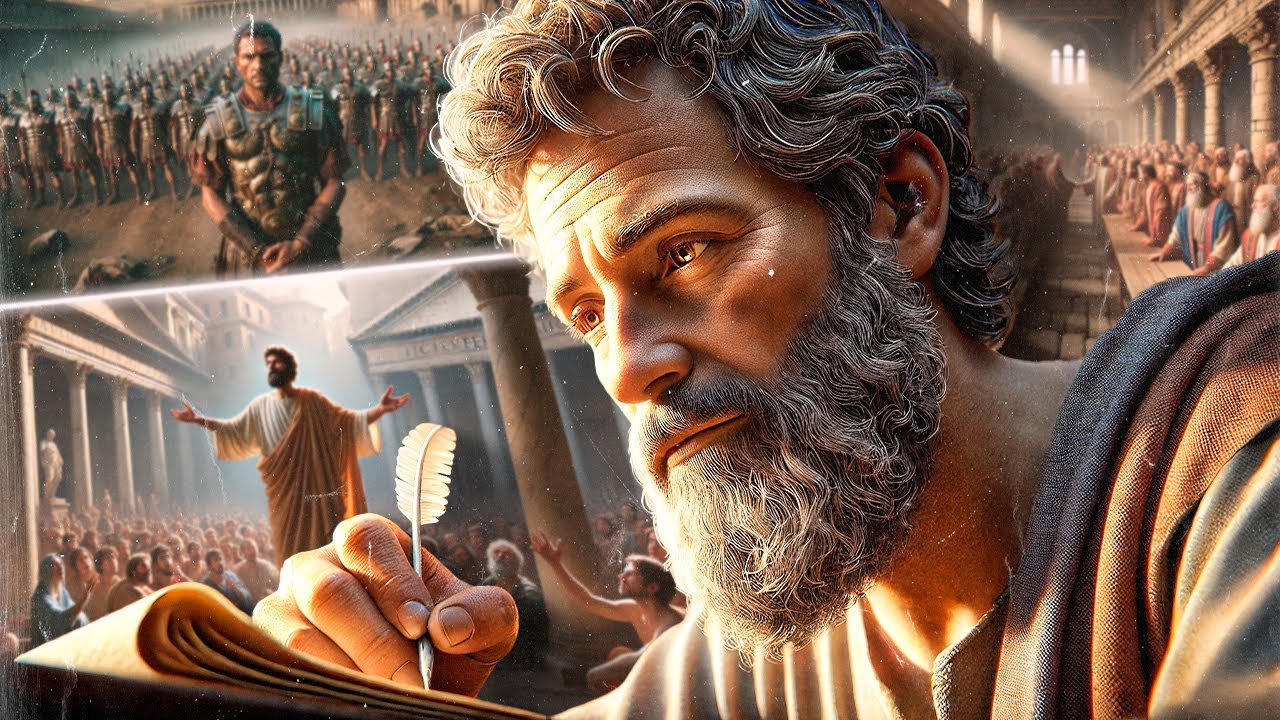
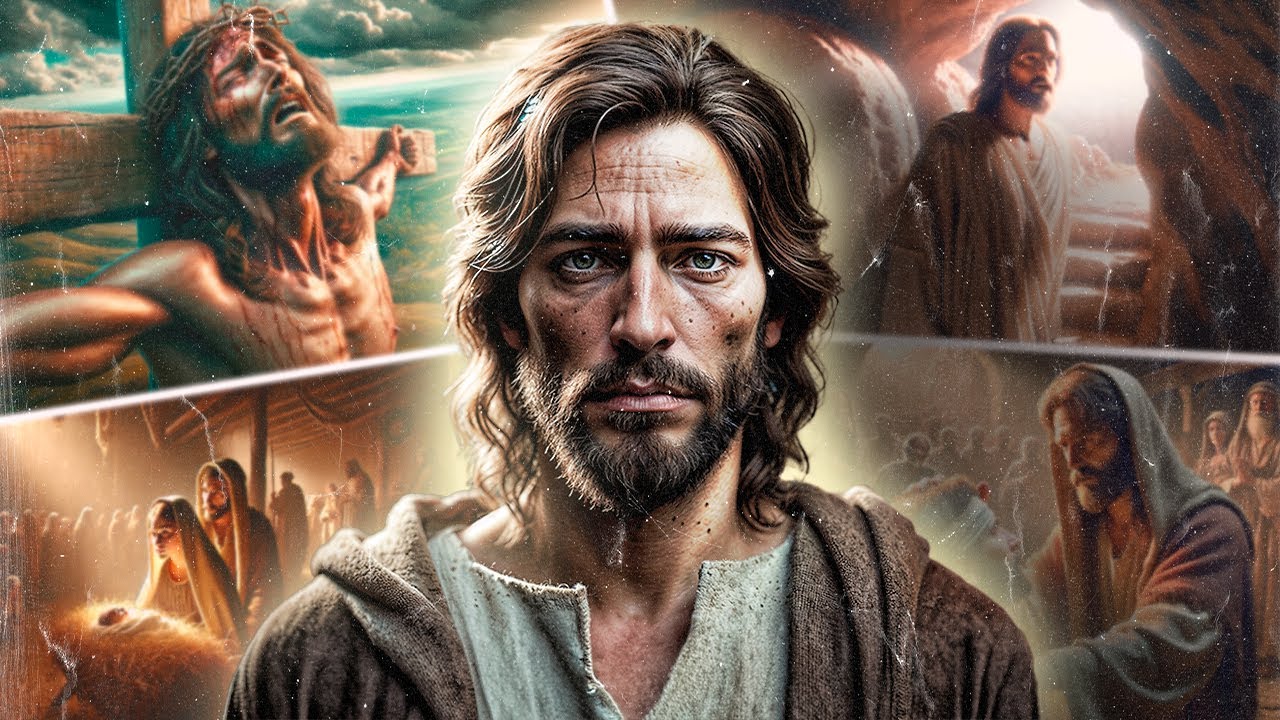
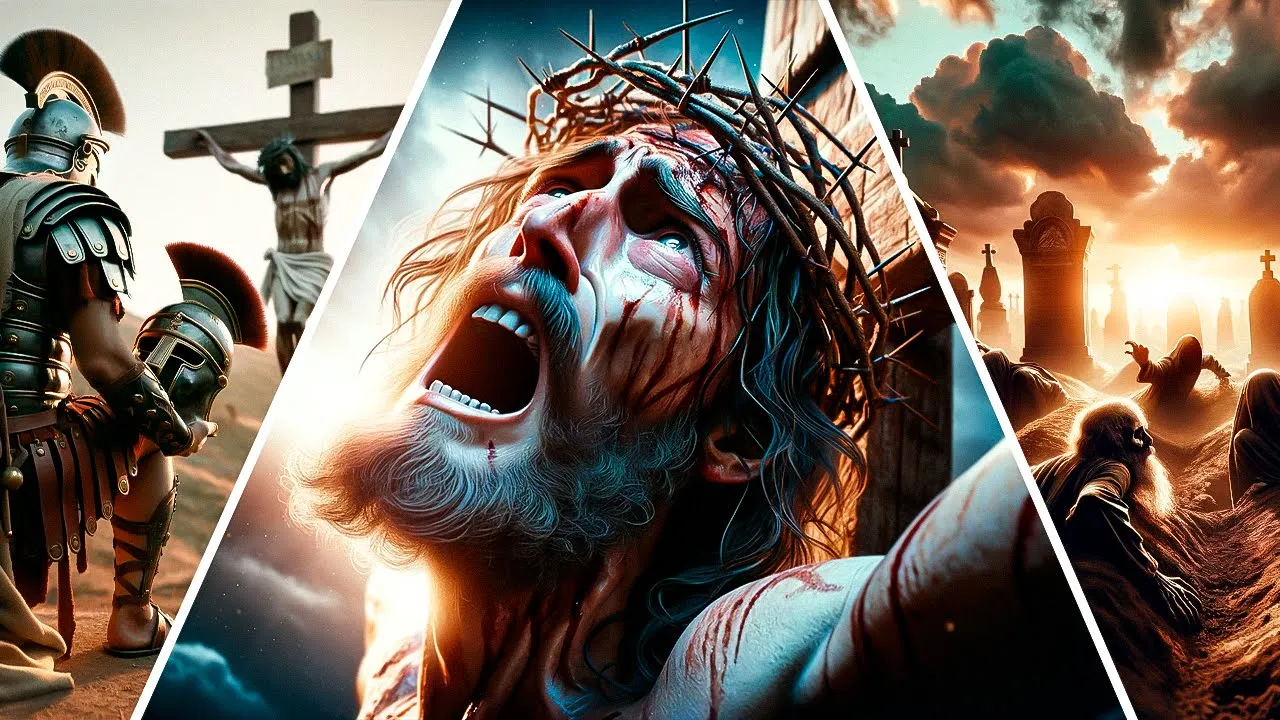
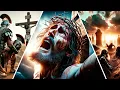
there is a poignant tale a narrative echoing Through the Ages about the five events that unfolded after the death of Jesus firstly emerges the Centurion an imposing figure among the Roman soldiers whose Faith was irrevocably transformed by the tragedy he witnessed witnessing the tumultuous events surrounding Jesus's death a declaration sprang from his lips amidst the storm truly this man was the son of God Matthew 27:54 War but who was this Roman Centurion in the military hierarchy he was a prominent officer in charge of about a 100 soldiers imagine a robust and weathered Warrior someone who
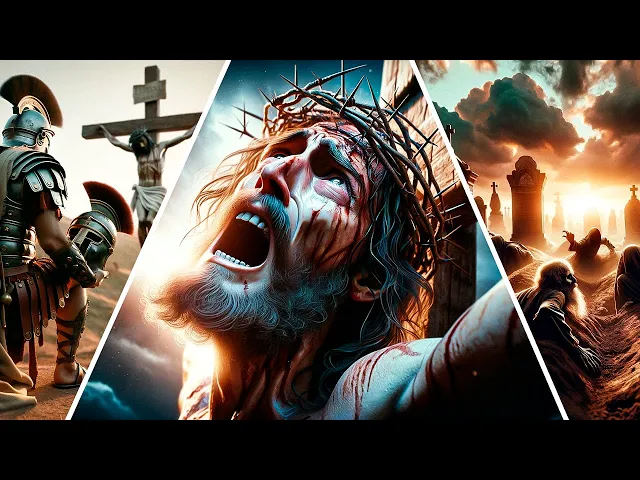
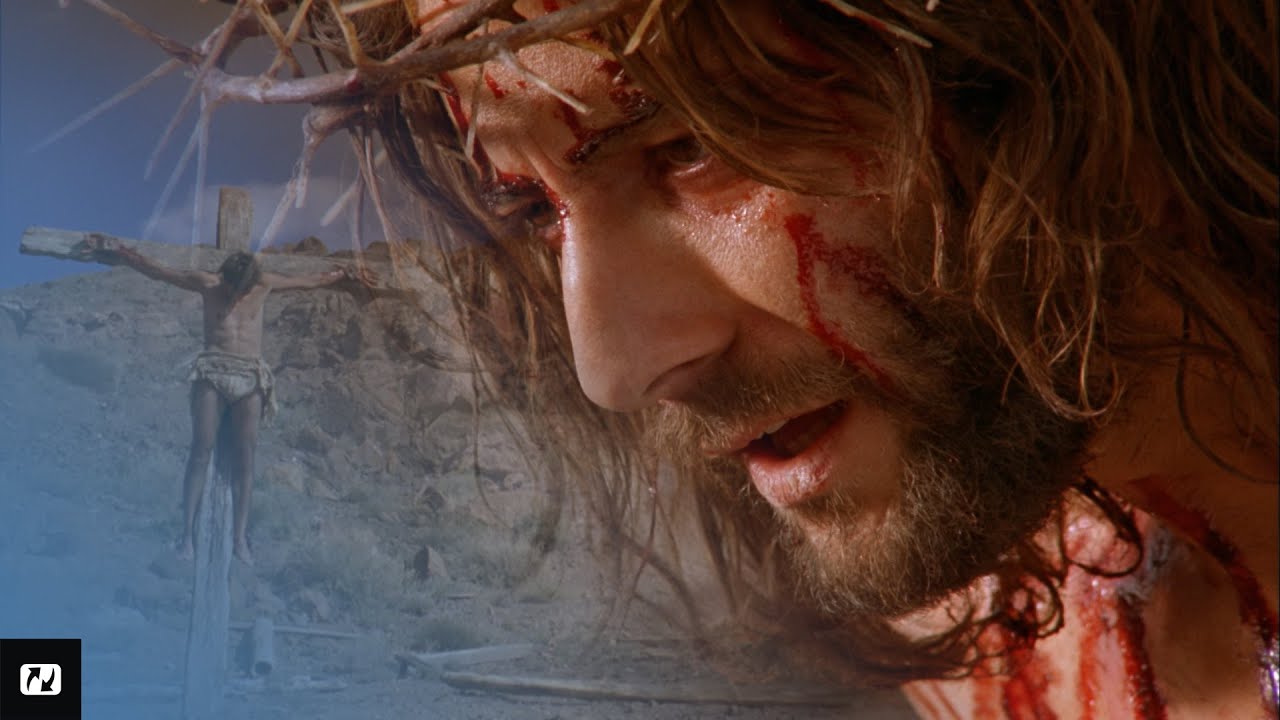
had faced the brutality of life and death countless times this particular Centurion was present during the crucifixion of Jesus a horrendous method of execution reserved for the most despised by Roman society slaves criminals and Rebels this act of public horror designed to be slow and painful served as a grim reminder of Rome's absolute power over its subjects the Bible especially the gospel of Mark chapter 15 vividly portrays that fateful day Jesus was arrested tried and sentenced to death he was then nailed to a cross a symbol of Agony and humiliation in a place known as
golgatha translated as the place of the skull picture the Grim Scene Three Crosses rise against the sky Sinister Silhouettes against the fading light soldiers line up a crowd gathers driven by morbid curiosity and in the center of this tragedy is Jesus flanked by two criminals as he hung there the sky darkened enveloping the entire land in a cloak of Darkness for 3 hours a strange and disturbing phenomenon as recorded in Mark 15:33 where at noon Darkness covered the land until 3: in the afternoon and when the sixth hour had come there was Darkness over the
whole land until the ninth hour it is at this crucial moment that our Centurion enters the scene he was there likely ensuring that the execution proceeded as planned overseeing with the coldness of one who had witnessed countless crucifixions but this one was different when Jesus finally breathed his last a cry rang out Eli Eli lakani which translated means my God my God why have you forsaken me Mark 15:34 this was not just a cry of Agony but a profound expression of Abandonment in his Darkest Hour the Centurion observing all this witnessed something extraordinary as Mark
15:39 tells us upon seeing how Jesus died he proclaimed truly this man was the son of God consider what must have gone through the mind of that Roman soldier hardened by War and death Witness witnessing something that challenged all his convictions until then it was a moment of epiphany where certainties faded in the face of divine evidence the Centurion didn't just see the ordinary he glimpsed something Divine something extraordinary in Jesus's death it's not every day that a Roman officer proclaims a crucified man to be the Son of God this speaks volumes about the impact
of Jesus's final moments on those who were present this story is significant for several reasons firstly it is a powerful testimony from an unexpected Source the Centurion was not a follower of Jesus he was integrated into the Machinery executing him yet faced with undeniable truth he couldn't deny his perception furthermore this event represents a turning point a crack in the Roman perception of power and authority the centurion's Declaration is like a light shining in the darkness of that day a recognition of Jesus's true identity despite the apparent defeat of crucifixion lastly this is a story
of realization and Revelation the centurion's simple yet profound declaration becomes a symbol of the universal impact of Jesus's life death and Resurrection it represents the idea that anyone regardless of their background or beliefs can recognize the truth of who Jesus is the significance of this declaration by apost possibly Pagan Roman soldier is immense it symbolizes the universal impact of Jesus's death reaching beyond the Jewish Community To The World At Large it reminds us that Jesus's message and salvation are for everyone regardless of their background or beliefs isn't it comforting to know that Jesus's sacrifices for
everyone number two the darkness picture the scene Jesus the son of God had just been crucified cruel and painful death reserved for criminals his followers and loved ones heavy with sorrow and confusion watched from a distance as the sky seemed to share in their grief darkening in solidarity it was a moment of profound sadness but also a turning point in a story that would change the world forever the darkness that enveloped Jesus crucifixion is truly intriguing in the Bible Darkness often carries a deeper meaning Beyond mere absence of light when it comes to Jesus's death
this Darkness can be interpreted as representing several significant things firstly darkness in the Bible is often associated with God's judgment and displeasure think of the darkness that fell upon Egypt as one of the plagues sent during the Old Testament then the Lord said to Moses stretch out your hand toward the sky so that Darkness spreads over Egypt darkness that can be felt so Moses Moses stretched out his hand toward the sky and total darkness covered all Egypt for 3 Days Exodus 10:21 22 it was a sign that something serious and unique was happening something that
transcended the ordinary so when darkness fell during Jesus's crucifixion it was like a sign that that moment was a significant Act of divine judgment Luke 23:44 45 records that it was about the sixth hour when Darkness covered the whole land until the 9th hour and the sun was darkened it was now about noon and darkness came over the whole land until 3 in the afternoon for the sun stopped shining and the curtain of the temple was torn in two this event was not just a natural phenomenon it was a manifestation of the Divine a testimony
to the power and importance of what was happening at that crucial moment in human history another way to understand this moment is to realize that the significance of Jesus's sacrifice was not limited to the present moment it was a moment when the Son of God bore the weight of the world's sins it's hard to imagine but the darkness that fell can be seen as a reflection of that burden a testimony to the weight of sin and the sorrow surrounding it furthermore this Darkness can also be interpreted as an expression of creation's own sadness and mourning
it seems as if the natural world was reacting to the Injustice and sorrow of its Creator's death Jesus's crucifixion was not just a human event it was an affront to the Natural order of things and creation itself seemed to respond in protest by plunging Into Darkness this conviction that the darkness during the crucifixion was linked to judgment the gravity of sin and the mourning of creation is not just a dramatic scenario but a profound message about what was happening at that moment this idea is also enriched by the connection with stories and prophecies from the
Old Testament that echo in the events of the New Testament this connection between the two Testaments makes these stories even more fascinating revealing a thread that runs through the entire biblical narrative a notable example is the use of Darkness as a sign an image that resonates both in the Old Testament and during Jesus's crucifixion in the New Testament when darkness is mentioned in the Old Testament the mind is drawn to one of the most dramatic episodes the plagues of Egypt especially the ninth plague as narrated in Exodus chapter 10 in this account God instructs Moses
to stretch out his hand toward the sky unleashing a dense darkness that covered Egypt for 3 Days imagine Darkness so palpable that it seemed possible to touch a presence in itself during those three days people couldn't even see each other and no one dared to leave their homes no one could see anyone else or move about for 3 days yet all the Israelites had light in the places where they lived Exodus 10:23 it's a striking description of the power and impact of that darkness which goes beyond mere absence of light and delves into the very
essence of Darkness as a tangible entity the darkness during the crucifixion of Jesus served as a Divine judgment not only upon pharaoh and Egypt but as a demonstration of God's power and a sign of Liberation for the Israelites fast forward to the New Testament we encounter this crucial moment in history during Jesus's crucifixion as Jesus hung on the cross from the sixth hour until the 9th hour Darkness covered the whole land this was no ordinary Darkness it was as if the entire world had been plunged Into Darkness even in the midst of the day this
unusual event occurred at the exact moment of Christ's death it's interesting to note how this Darkness often seen as something negative can actually signify that something good and hopeful is about to happen consider also how the story of Egypt being plunged Into Darkness for 3 Days Echoes The Narrative of Jesus remaining in the Tomb for 3 days it seems the former story is a foreshadowing a sign of something greater to come later with Jesus in both narratives darkness is not the end in Egypt it was dissipated leading to The Exodus at Calvary it gave way
to Resurrection it's as if the Bible is telling us that in our darkest moments hope is just around the corner perhaps this reminds us that God's plans are often hidden in the shadows waiting to emerge into the light or perhaps it's an assurance that even in our darkest moments there is purpose and a promise of Liberation and new life these stories interwoven with Darkness and Light lead us to a deeper understanding of Humanity's journey and God's faithfulness amidst the darkness they remind us that even when all seems lost there is always a flicker of Hope
ready to illuminate the path to Redemption and renewal think about the tough times you've faced in life life and how they can lead to surprisingly positive outcomes this leads us to reflect on the connection between the darkness in Jesus's house during the crucifixion and the celebration of Easter Easter is deeply intertwined with the crucifixtion of Jesus to understand this connection we need to rewind history to the Israelites celebration of Passover in Jewish religion Passover is a holiday of great significance marking the moment when the is Israelites were liberated from slavery in Egypt the central event
of Passover is the sacrifice of the pasal Lamb a sign of God's promise to spare the Israelites from the plague that struck Egypt including the death of the firstborns this connection becomes clear when we consider Jesus's crucifixion during Passover it's no coincidence that in the Bible Jesus is often referred to as the Lamb of God John the Baptist introduced Jesus with the these words Behold the Lamb of God who takes away the sin of the world John 1:29 Jesus's death Echoes the sacrifice of the Pascal lamb in the past just as the blood of the
Pascal lamb spared the Israelites the shedding of Christ's blood is seen as Liberation for Humanity from sin but then why the darkness during the crucifixion in the Bible Darkness often symbolizes God's displeasure and judgment upon sin it represents sadness and despair in a world without Jesus however it also signifies that Jesus brings light and hope to the world he himself declared I am the light of the world whoever follows me will not walk in darkness but will have the light of Life John 8:12 thus Jesus's death temporarily plunges the world into darkness both literally and
spiritually but the story doesn't end there just as Passover led to the liberation of the Israelites Jesus's resurrection brings hope and light back into the world it's a truly beautiful Narrative of redemption and renewal isn't it it's fascinating how Easter and the crucifixion though occurring hundreds of years apart are so intimately connected while the blood of the pasal Lamb brought physical Liberation to the Israelites Jesus's sacrifice is seen as bringing spiritual Liberation to all of Humanity the darkness during the crucifixion symbolizes the seriousness of that moment a world immersed in sin however it also sets
the stage for the triumphant return of light in Jesus's resurrection therefore the darkness during the crucifixion is a unique sign that points to Easter signifying judgment and the gravity of Jesus's sacrifice but also the temporary absence of the light of the world just as the EAS story did not end with the plagues our belief in Jesus does not end with the crucifixion the resurrection brings with it much light and Hope just as the liberation of the Israelites in Egypt the significance of the darkness that enveloped the Earth immediately after Jesus's death on the cross is
one of those moments in the Bible that captures the imagination and provokes deep reflection on its meaning after being betrayed judged and condemned Jesus was crucified from noon to 3: in the afternoon and it was then that Darkness covered the whole land similar accounts are found in Mark 15:33 and Luke 23:44 45 this was not a typical event it was noon the peak of sunlight so why the sudden Darkness the timing is crucial 2 Corinthians 5:21 explains that God made him who had no sin to be sin for us so that in him we might
become the righteousness of God it is deeply moving to imagine that when Jesus bore the sins of the world everything became dark it was as if the light was momentarily extinguished leaving the world immersed in darkness this leads us to question the spiritual implications of this Darkness whether it was a physical manifestation of the spiritual darkness that sin brings furthermore this event fulfilled an old test prophecy Amos 8 n declares and on that day declares The Sovereign Lord I will make the son go down at noon and darken the Earth in broad daylight could this
Darkness indeed be a fulfillment of the prophecy indicating that Jesus's crucifixion was part of God's divine plan for salvation the darkness is significant because of what followed the darkness lasted for 3 hours and then Jesus cried out and gave gave up his Spirit the darkness was temporary just as the separation between God and Humanity that Jesus came to reconcile his resurrection which followed shortly after brought light back into the world both literally and figuratively isn't it amazing to think that the darkest moments in history were only the beginning of the best the dark sky during
Jesus's crucifixion is filled with meaning it reveals how God views human errors picts the world without Jesus and demonstrates the brevity of the separation between God and people this strongly emphasizes the importance of Jesus's death and the hope that his resurrection brought the impact of Jesus's life is truly profound and transformative death in nature is truly mysterious isn't it it seems like nature itself was reacting to the Monumental impact of Jesus death event consider how the Bible describes the darkness covering the Earth isn't it intriguing to think that in the middle of the day everything
became as dark as night it seems even the sun itself was in mourning and then imagine the Earth shaking and the Rocks splitting at the exact moment of Jesus's death it seems like the very Earth was responding to something extraordinary that was happening isn't it these events are like Nature's Way of acknowledging the significance of Jesus's death it's not every day that we hear about the natural world reacting in such a atic way this makes us reflect on a deeper connection between spiritual events and the physical world the day Jesus died was marked by a
series of extraordinary events that went beyond just his crucifixion it seems like the whole world was responding to what was happening these events are deeply significant as they marked the end of the old Covenant and the beginning of the new the message that through Jesus's sacrifice all now had Direct direct access to God this moment with the natural phenomena that accompanied it emphasizes the significance of Jesus's death it wasn't just a historical or calendar event it was a turning point that reshaped religious thought understanding these extraordinary events highlights the importance of what was happening Jesus's
death was not just the execution of a man but a moment that changed the course of history and spiritual belief now let's examine the exact events that occurred when Jesus died these details provide a deeper insight into the meaning and magnitude of this crucial moment in human history the third remarkable event that occurred when Jesus died was the tearing of the veil in the temple as reported by the Bible this extraordinary event is rich in meaning imagine the temple in Jerusalem the center of Jewish worship inside it there was a curtain or special Veil that
separated the holy of holies where it was believed God's presence dwell from the rest of the temple this veil was not just a thin fabric but a thick and elaborate material symbolizing the separation between God and Humanity due to sin now imagine the moment of Jesus's death on the cross this was no ordinary event the tearing of the veil from top to bottom and not from bottom to top as would be done by human hands signified divine intervention but what does this dramatic act mean in connection with the Old Testament the tearing of the temple
veil at the very moment of Jesus's death is deeply rooted in Old Testament Traditions to understand its full significance let's delve into the narrative and connect the dots first let's set the scene in the Old Testament the temple in Jerusalem was the focal point of Jewish religious life the most sacred part of the temple was the holy of holies separated by a veil this veil was not an ordinary curtain it was a thick and ornate fabric serving as a physical and symbolic barrier between God and Humanity only the high priest was permitted to enter this
Sacred Space and that only once a year on yum Kipper the day of atonement to offer sacrifices for the sins of the people this was a continual reminder of the barrier sin created between God and Humanity but why did this change occur with Jesus's death Jesus's death broke down that barrier of sin his sacrifice unlike the repetitive sacrifices of animals was sufficient once and for all to atone for the sins of all people this act of tearing the veil was like God saying the way is now open furthermore the tearing of the veil represents God's
accessibility to all people previously only the high priest had once a year access to God's presence but now through Jesus everyone has direct access to God isn't it remarkable to think that we can now approach God directly because of what Jesus did this demonstrates the depth of God's love and the redeeming power of Jesus's sacrifice what does the torn Veil and the earthquake signify and why was the temple curtain torn in two to understand this we need to investigate the context of this occurrence the temple curtain a massive Veil separated the holy of holies the
most sacred part of the temple where God was believed to reside from the rest of the temple only the high priest was allowed to enter this space and only once a year to offer sacrifices for the sins of the people in the gospel of Matthew 27: 50 and 51 we find an exact description of these events and Jesus cried out again with a loud voice and yielded up his spirit and behold the curtain of the temple was torn in two from top to bottom and the Earth Shook and the Rocks were split now think about
what Jesus's death means according to the Bible Jesus was the perfect atoning sacrifice for Humanity's sins the book of Hebrews draws this connection explaining how Jesus death destroyed the barrier of sin just as the temple veil was torn but there's more the fact that the veil was torn from top to bottom suggests a Divine Not Human Action it's as if God himself were breaking down the barrier this act symbolizes the end of the old Covenant and the dawn of the new rituals and sacrifices from the Old Testament would no longer be necessary Jesus's sacrifice changed
everything tearing the veil also signifies a new era of Grace in the Old Testament obedience to the law was Central it was the way to maintain a relationship with God but now with the Veil torn it's about grace through faith in Jesus for it is by Grace you have been saved through faith and this is not from yourselves it is the gift of God not by works so that no one can boast Ephesians 28:9 in simple terms the tearing of the veil is like God opening a door that has been closed since the fall of
Adam and Eve God removes the barrier that separates us and invites us to have an intimate and personal relationship with him what does this mean for us today Jesus's sacrifice created a direct path for people to connect with god without needing another person to mediate as it says in Hebrews 10:19 20 therefore brothers and sisters since we have confidence to enter the most holy place by the blood of Jesus by a New and Living Way opened for us through the curtain that is his body this means that the barrier of sin that separated us from
God has been moved through Jesus we can have a personal relationship with God we no longer need a human mediator like a high priest from the Old Testament because there is one God and one mediator between God and Mankind the man Christ Jesus 1 Timothy 2:5 the tearing of the veil was like God opening a previously locked door and inviting us to enter this image is powerful as it invites us to reconciliation and New Beginnings the old barriers of separation and limited access have disappeared and been replaced by an open invitation for direct and personal
contact with God this challenges us to reflect on how we are living in relation to the freedom and access that Jesus's sacrifice provided are we fully embracing this access or are we still living as if the veil is there separating us from God it's a question worth pondering the fourth item the resurrection of the Dead the Earth quake and the splitting of the Rocks were not just ordinary natural events they were indications of a great event happening in the spiritual realm imagine how astonished and frightened the people who witnessed these phenomena must have felt the
tombs were opened and the bodies of many Saints who had died were raised to life they came out of their tombs after Jesus's resurrection and went into the holy city and appeared to many people this is fascinating and somewhat mysterious part of what happened on the day Jesus died this means that death was not just a tragedy but a victory over death itself these holy individuals were resurrected before Jesus's own Resurrection who were these people they were individuals who had died some time ago probably a long time but suddenly they were alive again it's like
a scene where all hope seems lost and suddenly there's a miraculous turnaround as for the identity of these people there are no names names or background stories recorded they are simply described as holy people a term that likely refers to faithful Believers perhaps prophets or righteous people from the past they are those who live their lives with and for God why did this happen here's where the narrative becomes even more intriguing this event was like a teaser a preview of what was to come the resurrected people were in a way setting the stage for the
main event Jesus's own Resurrection think of it as a powerful sign that death is not the end of the story neither for Jesus nor for those who believe in him what happened to these resurrected people they appeared to many in Jerusalem which must have been astonishing imagine seeing someone you mourned back to life and walking around this event speaks of the power of what Jesus was about to do his resurrection was not just a one-time Miracle it was a foreshadowing a sign that life triumphs over death the resurrection of these holy people seemed to say
if God can do this for us just wait and see what he has in store with Jesus as for the connection to the Old Testament how is the resurrection of the dead at the time of Jesus's death connected to the Old Testament the Old Testament is filled with Clues and predictions about events that would be described in the New Testament such as the life of Jesus his death and Resurrection let's explore the grand Panorama of the Old Testament filled with prophecies and signs pointing to Jesus it's like a long narrative with Clues scattered everywhere all
leading to a great Revelation the resurrection of the Dead when Jesus died can be seen as one of these great moments of Revelation regarding the resurrection of the Dead the Bible does not provide a direct Prophecy from the Old Testament about this specific event but it speaks a lot about Resurrection in general for example in the Book of Daniel there is an intriguing verse Daniel 12:2 which mentions that many who are sleeping in the dust of the earth will awake some to everlasting life and others to shame and everlasting contempt this verse is like an
anticipation of the idea of a resurrection an Awakening from Death furthermore we have Isaiah 26:9 which says your dead will live their bodies will rise you who dwell in the dust wake up and shout for Joy your due is like the due of the morning the Earth will give birth to her dead this verse suggests that the dead will rise again these verses set the stage for what happened when Jesus died it's as if the Old Testament is saying hey pay attention because the resurrection will be a big deal and then in the New Testament
when Jesus dies and these people rise from the dead it's like a confirmation a powerful sign that what was promised or suggested in the Old Testament is coming true the resurrection of the dead and the resurrection of Jesus emphasize an important theme in the Bible the power of God over life and death it's a vivid testimony to God's sovereignty over all things including human Destiny itself the Old Testament often portrays God as The Giver of Life and the one who has dominion over death for example in Deuteronomy 3 2 39 God declares see now that
I even I am he and there is no God beside me I kill and I make alive I wound and I heal and there is none that can deliver out of my hand so when these people rise from the dead in the New Testament it's a dramatic demonstration of that power Jesus is described as the first fruits of the Dead indicating that his resurrection is the beginning of a new era where death is conquered and eternal life is offered to Believers it's as if we're piecing together a puzzle uniting the narratives of the Old and
New Testament to understand God's Divine Plan of Redemption and eternal life through Christ the term first fruits has an agricultural connotation referring to the first portion of a harvest which was offered to God as a sign of gratitude and hope for more to come when Jesus is described as the first fruits it implies that he is the first example of what is to come in terms of Resurrection he is the proof that life after death is real and not just an isolated event to better understand we can look at the Old Testament Practice where first
fruits were presented to God as a symbolic offering of trust and gratitude acknowledging that God would provide the entire Harvest similarly when Jesus is called the first fruits of the dead it's like saying he is the first and best example of what is to come for all who believe in him just as the first fruits were a promise of more Harvest to come Jesus's resurrection is seen as a promise of a future Resurrection for believers it's as if Jesus is Paving the way and showing what is reserved for those who follow him the connection between
the concept of first fruits in the Old Testament and the understanding of Jesus's resurrection in the New Testament is deep and significant this is not just a coincidence but an in intentional and meaningful continuity in the biblical narrative by understanding Jesus as the first fruits of the Dead we are acknowledging that he is the first concrete example of this incredible promise of life after death This Promise is not something new but something that has been suggested and built upon over time since the times of the Old Testament by seeing Jesus's resurrection as the first fruits
of the Dead we are realizing that his event was not just an isolated event but part of a much larger plan that reflects Divine Purpose and the continuity of Biblical history this demonstrates the magnitude and depth of God's plan for the Redemption of humanity number five the mystery have you ever wondered about the Enigma surrounding the empty tomb of Jesus it's like a fascinating puzzle of our existence full of tension and unexpected twists this account is about Jesus the individual known for his extraordinary deeds and messages of love and compassion who was recently crucified his
disciples find themselves shaken perplexed and fearful what will be the next step The Narrative continues with the introduction of Joseph of arthea described in the Bible as a wealthy man and a member of the Jewish Council who surprisingly was also a secret disciple of Jesus determined Joseph presents himself before Pontius Pilate the Roman Governor to request the body of Jesus as described in Matthew 2757 58 imagine the audacity required for such an act which meant exposing his faith in Jesus putting himself in a position of great risk at that time pilate grants it and with
that Joseph accompanied by Nicodemus another secret follower retrieves the body Nicodemus brings about 75 lb of spices for the burial a gesture symbolizing deep respect for Jesus as recorded in John 1939 Jesus's body was carefully wrapped in a pure linen cloth along with spices following the traditional Jewish burial rituals it was then placed in a new Tomb carved out of stone by Joseph marking the first time such a tomb was used this action was in alignment with the prophecy of Isaiah 53:9 which anticipated that Jesus would be buried alongside a rich man man even though
he was considered among transgressors he who never practiced violence or spoke deceitfully found rest in this Noble place a large Stone was positioned to seal the entrance of the Tomb evoking a deep sense of sorrow and finality among those present unaware that this event marked only the beginning of a startling Revelation the next day religious leaders including Chief priests and Pharisees fearing that Jesus's followers might might steal his body and Proclaim his resurrection an event he himself had prophesied requested permission from pilate to secure the tomb authorized they sealed the tomb and stationed guards to
watch over it in an attempt to ensure that Jesus's narrative ended there as described in Matthew 27: 62-66 at dawn on the first day of the week just after the Sabbath Mary Magdalene and another Mary set out to visit the resting place early in the week still at Sunrise the two Marys head to the tomb as reported in Matthew 28:1 imagine their surprise as they encounter an angel calmly Seated on the rolled Stone by the entrance of the Tomb under a divinely chilling Aura do not be afraid announces the celestial Messenger to the women for
I know that you seek Jesus who was crucified he is not here here for he has risen as he said come see the place where he lay as Matthew 28: 5 and 6 narrate highlighting their astonishment upon receiving such news consumed by a mixture of fear and immense Joy the women hurried to informed Jesus's followers however they were surprised to encounter him on the way where he greeted them and they worshiped him Jesus encouraged them not to fear and gave them instructions for his disciples to go to gilee promising to meet them there as described
in Matthew 28:9 and 10 imagine the mix of shock and Jubilation they felt on the other hand after the event some guards went into the City and reported to the chief priests about the events feeling cornered the priests decided to bribe the soldiers instructing them to spread the false story that Jesus's body had been stolen by his disciples while they slept as Matthew 28: 11-15 recounts they were trying to conceal the truth but somehow it always finds a way to come to light thus The Narrative of the empty tomb transcends the idea of a mere
bodily disappearance representing the Fulfillment of a promise the strength of faith and a miracle that altered the course of history the vacant tomb represents the renewal of optimism and the Victory of existence over the end inviting us to reflect on our beliefs and actions in the face of this individual Jesus who proclaimed himself to be the son of a higher entity and seemingly confirmed it in an extraordinarily convincing manner the empty space left by Jesus goes beyond a simple termination it marks the beginning of a new understanding of existence cessation and what lies Beyond this
phenomenon challenges our assumptions about the Poss ible encouraging us to explore beyond the tangible so what is your interpretation of the empty tomb is it merely an ancient myth or a historical episode that defies common logic does it represent a human contrivance or a manifestation of the Divine The Narrative of Jesus's empty tomb has captured the imagination of many over the centuries and remains a vibrant point of discussion between admiration and belief this account challenges us to delve into the depths of our convictions and to reflect on the existence of a love and a force
that transcends death the relationship of this story to the Old Testament is notable where we find numerous themes and prophecies that foreshadow the life sacrifice and resurrection of Jesus among these connections the tradition of sacrifice for the remission of sins stands out let us recall the Passover Lamb in Exodus 12 offered to protect the Israelites in Egypt this image of the sacrificial lamb anticipates Jesus's ultimate sacrifice on the cross culminating in his resurrection and the empty tomb symbolizing the new Passover that offers Redemption not only to Israel but to all Humanity the sacred book preceding
the New Testament serves as the basis for numerous predictions regarding the Savior as is the case with Isaiah 53 this chapter extensively details an individual who Bears the sins of many described as someone who would be taken from the land of the living as in Isaiah 53:8 does this passage suggest a glimpse of the crucifixion and future resurrection of Jesus The Narrative of Jonah and the great fish is another example that Jesus himself used to foreshadow his death and Resurrection in Matthew 12: 40 he Compares his three days and three nights in the Tomb to
Jonah's time in the belly of the great fish it is intriguing to observe how Jesus establishes a connection between Old Testament accounts and his own Saga similarly Psalm 16:10 is interpreted as an anticipation of the promise that God would not abandon his soul to the realm of the dead nor let his holy one sea Decay this account is interpreted as an anticipation of Christ's Resurrection suggesting that the Messiah will not remain in the the tomb until Decay sets in but will instead Rise Again leaving behind an empty grave The Narrative of the sacrifice of Isaac
evokes the episode of Abraham and Isaac described in Genesis 22 where Abraham is tested by being asked to offer his son Isaac as a sacrifice however God intervenes at the last moment providing a ram as a substitute this event is often compared to God's Act of delivering his own son Jesus as an offering The crucial difference is that in Jesus's case the sacrifice is carried out but later reversed through his resurrection symbolized by the empty tomb the rebirth from the tomb while the Old Testament does not directly mention the resurrection as understood in the New
Testament there are instances that hint at the possibility of this Resurrection ezekiel's prophecy about the valley of dry bones in chapter 37 serves as a powerful metaphor for the reanimation of the Dead representing the rebirth of the nation of Israel this narrative can also be interpreted as a symbolic Prelude to the resurrection culminating in Jesus's empty tomb examining the empty tomb from this perspective raises questions about how these interconnected elements suggest that the Old Testament paves the way for the ultimate Revelation found in the empty tomb the Old Testament had addressing themes of sacrifice Redemption
and resurrection anticipates and culminates in the New Testament account of Jesus particularly in the mystery of his empty tomb therefore the story of the empty tomb though distinctly narrated in the New Testament represents the climax of a broader story initiated from the earliest pages of the Old Testament for many it seems evident that the Old Testament foreshadowed such an event even if not explicitly mentioned the empty tomb not only represents an isolated fact in present times but also a symbol of the profound sacrifice made by Jesus and the extraordinary power manifested in his death and
Resurrection through his suffering and death Jesus eliminated the barriers of sin and death that separated us from God the tearing of the temple veil the earthquake the resurrection of the Saints and the empty tomb are expressive symbols of this new reality faced with these events it is crucial to question how this narrative influences Our Lives whether we truly understand the greatness of Jesus's act on the cross the events that occurred immediately after his death transcend mere historical factuality constituting invitations for introspection about our lives and our connection with God thus it remains to be asked
why do these events remain relevant to us today these events transcend simple historical records as they carry fundamental truths and essential commitments firstly the torn Veil symbolizes our ability to approach god without fear or hesitation secondly the earthquakes and rocks splits symbolize that Jesus's death and Resurrection Mark a historical Turning Point calling us to abandon obsolete practices thirdly the resurrection of the Saints reflects the promise of life after death offering comfort in times of morning and encouraging us to adopt a world viw focused on eternity fourthly the words of the Centurion encourage us to accept
Jesus's Divinity and its implications in our lives finally the presence of women and men as Witnesses challenges us to Value the importance of each person in the divine plan the account of the events that immediately followed Christ's death is marked by Divine acts and profound significance inviting us to reflect on the immen ity of God's love for us the strength of Jesus's loving sacrifice and how it transforms our existences contemplating these facts we are filled with gratitude for the wonderful work of Salvation that unfolded at that decisive moment in summary these events constitute the foundation
of our belief in Christ and resonate in our spiritual journey addressing transformation hope inclusion and value themes as relevant now as they were 2,000 years ago each part of this narrative challenges us to reflect act and adjust our lives according to the extraordinary account of Jesus's death and Resurrection it is fascinating to observe how historical events still echo and influence our current existence