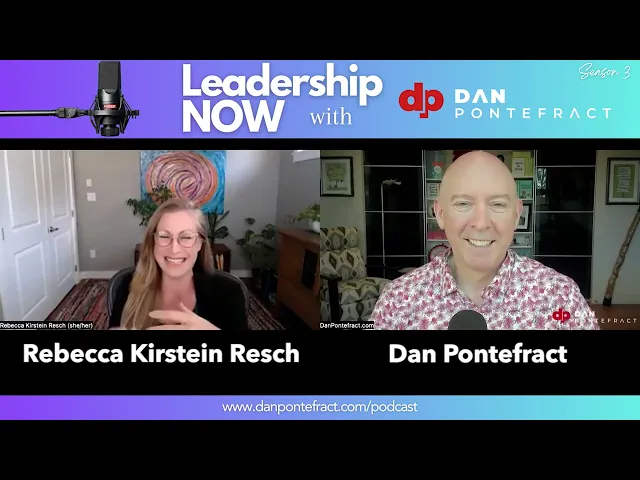
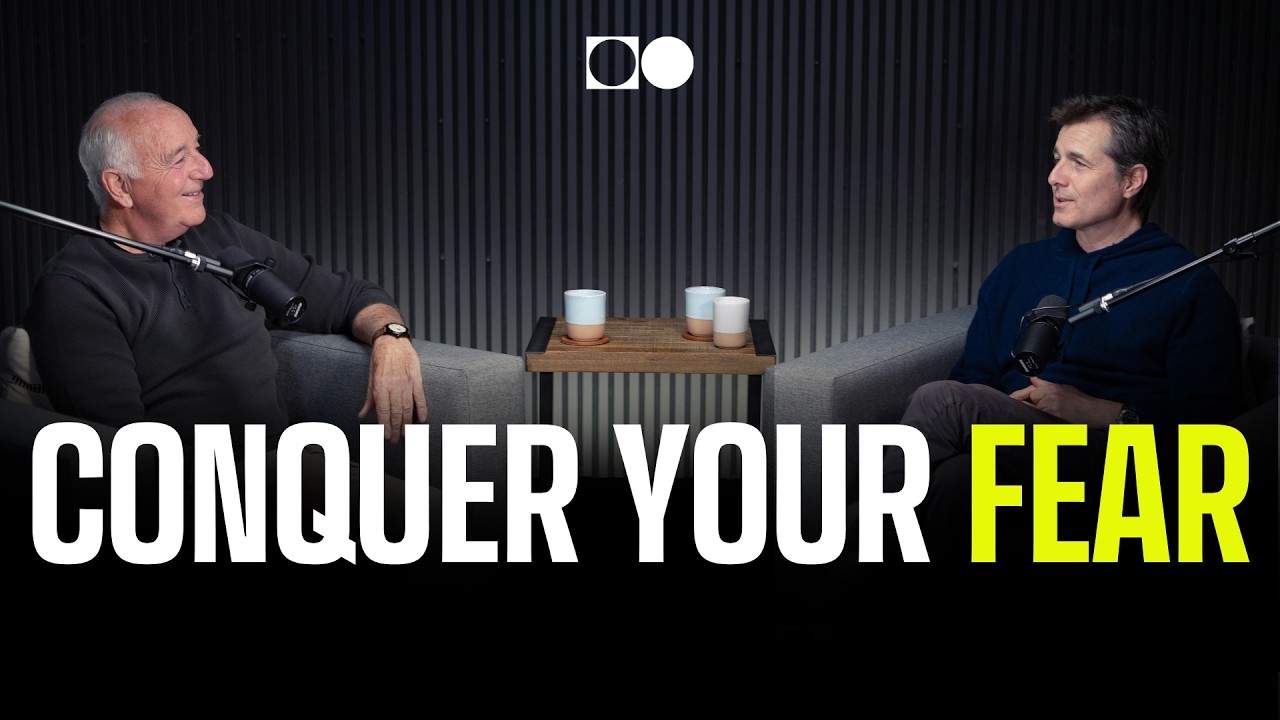
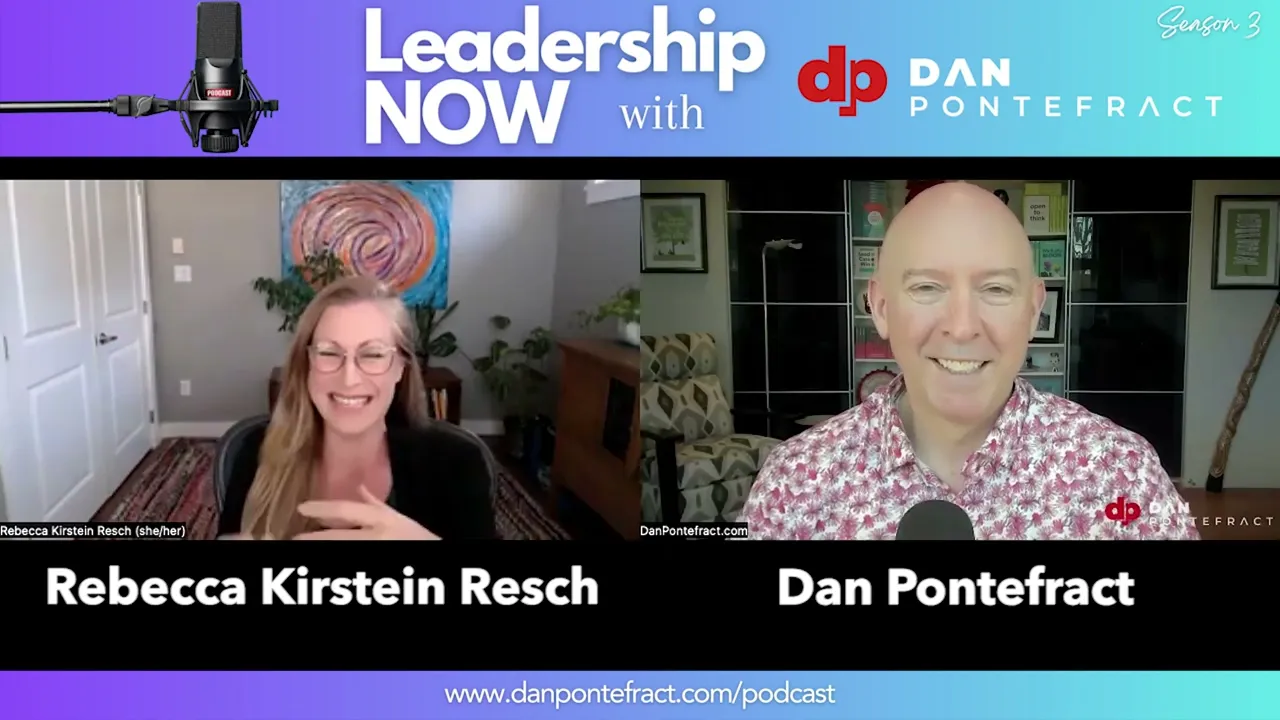
hey everyone welcome to another episode of leadership now with me Dan Ponty Frack today in the house of leadership now Rebecca Kirin Rish now who is Rebecca so first a bio of you uh Rebecca beex as I call you and then uh we're going to get into something um quite particular and specific about both your world um kind of what you're doing and what you just put out into the market so who is Rebecca real entrepreneur an ally to the Next Generation and a Relentless architect of possibility that's one of the best opening lines I've
ever had she's the founder and CEO of inkley an inclusive knowledge sharing platform that is revolutionizing the future of work by providing all people with Equitable access to the knowledge and opportunities they need to Foster fulfillment connection and yes folks purpose at work Rebecca has worked alongside world-renowned educ s researchers and technologists as she's followed the threat of human growth and development from the classroom to the workplace and Back Again In Search of transformational systemic change one of her career highlights was sharing the stage with her hero and the most watched Ted speaker ever in
history Sir Ken Robinson and fun fact I too was in the audience for that one Rebecca envisions a world where everyone has access to opportunities for Meaningful work and fulfilling lives Rebecca thanks for joining me on my little show called leadership now now partly for uh reasons that I'll get into as we discuss uh during our conversation today I've invited you today because you've actually uh recently published a white paper entitled questions are the answer that is so cool the subtitle is improving business impact and employee well-being by by democratizing access to knowledge co-written with
a fellow Canadian Dana faar vote so I'm curious emphasis on the word curious um what is at the root of this white paper let's start there and we're going to dig into a few other uh morsels as we go through our discussion today love it um thanks for having me Dan and uh yeah I actually forgot that was where we first met in person was at that event um I think we we commun at online before so I'd actually forgotten that so thanks for bringing that up um but yeah the root of this white paper
is really um the work I've been engaged in for the last seven years that's really culminated in something I cannot look away from now that I know what I know and it is in abundantly clear overwhelmingly clear to me that this sort of Technology Paradox that we're currently caught in um is not only hurting people at work it's Hur in people all over the world and so the way in which we use technology the way in which technology is designed is directly linked to our loneliness epidemic um it is directly linked to our connection crisis
as many call it um at work and uh and I think we can actually do something about it and I know I can do something about it so that's at the that's at the root of the paper there's a lot more to it but that's that's the core so there are I would argue several itches you're scratching with this particular paper it's phenomenal it's just short of 10,000 words and you dig into some serious societal workplace human being uh issues um not the least of which I think one of them upfront you're discussing sort of
the human energy urgency and what I like about this point as provocative as it is it's kind of you suggesting that there's an impact actually on both productivity from a personal and profession professional sense so organizational and individual but also well-being of which one would argue the organization should be paying attention to uh the well-being of its people so can you help us elaborate a little bit on what human energy urgency actually refers to and how maybe even as a added bonus question what what are the sort of traditional workplace practices that are failing to
address this urgency yeah it's uh the reason I wrote a paper is because it's it's a big topic there's there's a lot to say and there's a lot contributing to it and it's as anything involving humans it's complex um and so there's a lot of layers there and the human urgency the energy urgency really refers to human sustainability so going but beyond organizational stain sustainability and actually looking at the problems that are related to human sustainability which what as you always like to say what powers our organizations people and so when people 's energy is
depleted um they are not productive and they're not well and and those two things go hand in hand if you have people who are not well you have people who are not productive and so all this promise of Technology improving productivity um if you look at different sources of information on this topic um productivity is is actually dropping um and it's dropping because the more and more we throw technology at the pro without thinking about how we use that technology and how that technology is designed and I'll use social media as the greatest example ever
of extractive technology technology that's designed to keep our attention on the technology and not on the people around us or the work around us or the humans in front of us that we're really facing a a massive um human energy crisis that technology is contributing to it's not the only Source by any means but technology at work in particular is an area in which we have so much more control not only you know are we using technology like social media um at nauseum in our in our day-to-day lives it's it's absolutely um intertwined with everything
we do and of course at work leaders have an opportunity to say we're going to do this differently this this technology that we're using at work um in many cases Legacy technology but we continue to add more technology without subtracting and I get to that in the p paper as well without looking at how um each piece of technology is integrated or not with the other pieces of technology and what the impact of that technology is on on human energy because that is a core um sustainability Factor when it comes to organizational sustainability well in
and in the paper later on you get into sort of what you pointed out which is a a sort of a technology Paradox where the Paradox of Technology both connects and isolates us and whether we've feeling that we're feeling that story with social media always connected always on yet never together or inside the organization where the slacks and teams and other discussion forums it all started back in SharePoint I would argue but that's a whole other story and but you write in the paper uh like it or not intentional or not technology is transformational we
just don't often see it coming and it isn't often what we expect and you say in the paper we're going to present our case for more human Centric outcomes based approach to productivity and the importance of Designing and implementing humancentric Tech a augmented Solutions and so you're almost calling out right in the face of leaders and organizational um higher ups it's kind of like well look duh we have technology and it we need it to improve our performance to be more effective to think about productivity in a way that is um yeah like ebit da
Savvy I'll just call it but at the same time we can't lose sight of this Paradox is brewing and Rising loneliness in people's lives and so from a strategy perspective or from a leverage perspective or just from a aha WTH perspective tell us a bit about this parad do and kind of this um notion that you're uncovering and what you're suggesting to others absolutely the the promise of productivity that comes along with technology you know if you look at it in isolation with you know just how we use slack or teams which which you brought
up or just how we Ed social Technologies at work you know the the Yammer all the way up to the Facebook metas and and everywhere in between or Facebook workplace or meta workplace whatever it's called These Days um it it changes every five minutes I feel like um but all of those tools um can be great in and of their own um use case and and and if you look at the data from just the one tool you could say oh we're so much more connected or we're sharing knowledge or or answering each other's questions
or whatever those outcomes are when you look at the technology in isolation you can say point to oh we're increasing productivity because of this or this in each of these um areas of technology but when you look at the big picture um and there's new companies there's a company actually out of uh Vancouver called produce 8 and they're actually looking at the technology use across the organization you know how much technology are we using how often um and if you look at the data it's overwhelming how much time people are spending the average knowledge worker
is spending over 11 hours a day almost 12 hours a day um using technology and when we're supposed to be working and that's workplace technology when we're supposed to be working eight hours a day that's insane right wow 11 11 or 12 hours a day in a 24hour day yes wow yes and that's right no wonder we have a human energy crisis and that isn't even taking into account all of the other ways in which we're using technology like that that is that is a low number compared to what is probably true that we can't
prove and so if we're on using technology that much the one place where we actually have control as Leaders over the technology we're using and how we use it uh why wouldn't we start there why wouldn't we start at work and say what are we using how are we using it how is it actually helping us and how much time are people spending there and so the reality is is that this promise of productivity is actually decreasing productivity because we're spending so much time context switching um um and between Technologies even when they're integrated into
our workflow if you ping me on slack or teams and interrupt me and what I'm doing and I feel because my organizational culture tells me to feel that I should respond to that really quickly then I break my deep work to attend to that and it can take up to 30 40 minutes to get back on track with whatever it was that I was originally doing and that we do that all day all the time and we don't have a lot uh literacy around digital Wellness at work and we certainly don't have Pol policies and
practices uh that support that and so no wonder we are what we are well you mentioned you know the the Hat tip to to Cal newport's deep work thesis and and in and amongst us I couldn't help but think with Triston Harris's world and how he developed infinite scroll and ironically said that's the worst thing I ever did and now trying to fix sort of an undo a lot of what he's suggesting as to this um infinite staring at screens I'll say and this dopamine hit that seems to have been enveloped Society uh like an
addiction that I had to uh toffee as a 13-year-old so you also make the case in the paper though that actually and you've touched on this it there's there's an anxiety and stress and burnout relationship two are always on always adaptable always there and so whether you know you brought up data points um like the World Health Organization the UN estimating that this burnout is costing us about $7.8 trillion do globally so that's a lot of zeros and that you know whether it's Gallup or deoe status does everyone's data is pretty much the same which
is look anxiety stress burnout Etc have been on the rise since you know the early a so we're 20 years into this technology thing but it's actually harming performance and productivity so you've got both the human issue and you've got an organizational issue so reconcile for me why we continue looking at technology as a savior yeah love love that question um because technology alone is not and will never be the Savior um but it's certainly as as you mentioned earlier it's it's incredibly intertwined in our lives it does improve our lives in many ways but
that's the Paradox right um it's you know I I would argue that cheese and wine improve my life in so many different ways but overused those things um are not great right and so when we look at this um and look at how we can solve this problem what we're what we're not realizing I think at scale especially in organizations is that there's so much that goes into the way technology is designed as a as a you know product manager and Technology designer myself um we are building more technology but we're building different technology we're
building technology that is designed with the human needs at the center and why that's so important and you mentioned Triston Harris and and the uh Center for Humane technology is this old extractive Paradigm of technology is what got us here and so the same way social media has created all of these challenges those same um uh ways in which we're developing technology um translate into the work environment social Technologies at work are run the same way um and it's inextricably linked to our um uh economic structures right as a as a founder of a technology
company I have had to work a billion times harder to find investors and VCS that believe in the kind of Technology I'm trying to build because if it's not growth at all costs and instead it's value human value at all costs um that's going to impact our bottom line as a company um it's going to take us longer to build what we're building and so the incentive is what needs to change and that's a big systemic problem that if or if VCS are driving founders of startups like hours um to build companies with growth at
all costs well then we're going into your workplace and we are making sure your people are on our platform as much as humanly possible and that over and over and over again with you know dozens and dozens some organizations hundreds of Technologies of course not all designed in the same way um but hundreds of Technologies and every user using dozens of Technologies a day there's no way that's not affecting our performance and our well-being I want to point out as well tangentially that the paper is full of Hope and dare I say even answers um
one of those is about curiosity and you pait that you know fostering this culture of curiosity is actually essential for well-being for Innovation for performance so um without technology just as a as a behavior or an attribute tell me a bit about a culture of curiosity in that environment and how ultimately it might reduce barriers for people to ask questions absolutely um I I uh I'm a big proponent of curiosity um and I I um I have so I mean there's so much to say about curiosity but at the core I think curiosity is about
psychological safety and when we have safety to be curious to ask questions when it's open in our or organization to not have all the answers and to not have a culture built around leaders have all the answers and instead leaders have all the great questions um that is the kinds of shifts those are the kinds of shifts that we need to make in our organizations because right now when you look at the data on psychological safety in organizations people are afraid to ask questions people are afraid to say I don't have the answer and simply
by creating space to ask questions and to communicate and share knowledge with each other um we're saying it's safe here it's safe here to ask questions to not have the answers to solicit the knowledge and expertise of the people around you and that's critical to um sound decisionmaking in business is to not be the person with all the answers um but instead to um check in with colleagues and diverse colleagues across the organization you I don't know what some somebody on the other side of the country could know about the very topic that I'm struggling
with um and we don't have tools that allow us to connect with people in diverse parts of the organization and it's it's a critical Gap that you know these some of these workplace Technologies are still creating the same silos that we have with um email the same way you have a slack Channel you can have an email thread um but this idea that we could start to expand that Beyond who you know not not only contributes to a culture of curiosity but it also contributes to psychological safety and it contributes to inclusion and diversity it
doesn't matter who I know or that you and I maybe went to Stanford together and so that's how I can tap on your shoulder and know what you know um everybody at every level of the organization can have access to the knowledge that exists the breadth of knowledge that exists across their organization and we just don't have the tools for that today yet there's an irony isn't there because you know um research like European medical journal 2022 who found that um in a sort of a a test of employees who were sort of fed if
you will the Curiosity quotient versus those who are almost um by leaders told not to be curious and kind of stay in their lane or stay in their Silo those that were encouraged to be open Curious collaborative Etc far more engaged far more productive far more well when you took a look at the data um from their overall life and job satisfaction and performance yeah the irony I'm asking you about Rebecca is is this not a leadership issue like why is it that leaders don't see your point of when there is psychological safety when a
culture of curiosity is actually at the core of how we're going to conduct ourselves in between units whether it's cross country country cross units uh Etc what is I guess getting in the way of this I I think it absolutely is a leadership issue you know I think we have been indoctrinated into cultures that that leaders have all the answers right and and that certainly um even in in my own small way with a small team and in a startup um I I embrace that that the reason I've hired the team around me is because
I don't have all the ERS and and I think that's where it starts right it really does start with leadership teams um that that are not only hiring great people because they know what they don't know or they have expertise that they don't have um but additionally creating not just the spaces where knowledge can be shared but the tools the access the culture the processes I mean it's embedded in everything and Technology can only augment the culture that we have have and so if we have a culture of knowledge hoarding and not sharing and not
being curious and it's not safe to ask and I don't even know who to ask well any technology we're using is just going to um be a diagnostic of that show us that that exists at scale I guess like added to that is leader humility I mean if the leader thinks that they need to know all the answers and aren't humble enough to put themselves themselves sort in a situation whereby they acknowledge they don't have an answer then they're obviously not humble and don't demonstrate humility that's going to have a trickle down effect of the
team who either won't demonstrate said humility either or as you mention they're unafraid or they're afraid sorry to open up and say I don't know for fear of reprimand or some other devious outcome that uh results in the fact that they're too scared or fear F to actually open up their mouth and say I don't know anyone got any ideas yeah exactly and and how many times there are opportunities for that that build such trust amongst teams especially when the leader is the one who steps up and says hey everybody this is a doozy yeah
and I don't have the answers here um there's so many great examples that I'm sure going way back to Frederick L's work and Reinventing organizations there's so many great examples um and stories of leaders doing exactly that in in big ways in in organizations that I can't even remember the details of the stories but I've seen this in person and I'm certain that you've seen both sides of this play out um in in leadership positions in in your work and it's powerful it's powerful when a leader steps up and says I don't have the answers
here and here's where I'm looking to you my team team at every level uh to get involved and to come together to solve big problems and and I know I've done that in in a startup and it's not only Built tremendous trust it's gotten us through difficult times I mean I founded a startup in 20 February of 20120 the most prime time ever to launch a startup and we've all gone through Hellen back together and if we didn't come together to solve some of the big challenges we faced um Not only would we not be
a strong team um I think we would have gotten through the times that we did fair enough um you also uh point out another issue but you have a pretty cool and Salient observation of of how to mitigate said issue and um the issue is the connection crisis so as a result potentially of remote work hybrid work certainly postco post pandemic but just I think we were um easing up to this crisis point with your connection crisis point I should say uh prior to the pandemic which is the always on um but lonely and as
you point out rightly in the white paper you know Dr Vivic Murthy the US surgeon general's report in 2023 May issue I believe about how loneliness is kind of the new smoking and thus a new epidemic at both work and in life so where I'm going with this is is tell us a bit about what connection crisis means to you and the work and the research that you've put together but then the effective ways to build what I think is your antidote which is a clever way to say um H qc's high quality connections take
us uh down a path of both of those Concepts I like that um yeah I I really do believe that this um loneliness epidemic is um is um fueled at work um when we all went left the office and and went home that was um I think for many people in many different ways um really disconnecting from the workplace and and for those of us who you know were really enjoying the culture of our work um that abruptly stopped and you know we had all of these responsibilities at home and we're trying to manage that
and juggle that and it really was disconnecting in that you're working and and especially for parents um you're working and constantly trying to balance the um family obligations at home and feeling like you're disconnecting from your kids and trying to keep them in another room while you're doing your work um and then when you're with your kids you're trying to disconnect from your work and I mean this just like snowballed and we all we all know what that was like because we all experienced it in some way or another and some of us more uh
deeply than others and I think that is really what is is still persisting and that we're now trying to find our way towards a future of work if you will um that is already here um in which we're trying to understand what that looks like for different team members and how we can be both connected and disconnected at home and at work with technology with our families with our work itself and manage all of that um is is a real Challenge and the way in which were disconnected from um the humans in our lives because
we are spending so much more time on technology these hqc as we call them the high quality connections are more critical than ever and there are there's a great um study from uh betterup that I referen in the in the paper as well um that really surfaces some some shocking data around how disconnected people feel and the lack of trust in co-workers and you know people who have been hired during the pandemic who have spent little or no time in person with people um have had sort of um fabricated experiences of connection um through you
know Zoom cocktail hours and things that people were doing during the pandemic that really weren't working especially when you look at the at the data on uh how those things went over um with different employees and those team members um you know really haven't had a chance to develop high quality connections with anyone and it's AB absolutely critical that we develop those connections and it's possible through technology I've I have had them myself throughout the pandemic where I've developed really high quality with connections with people that I would call very good friends um over the
last few years and so if I if we can do that onetoone as organizational leaders we can facilitate those kinds of high quality connections and they're critical to our attachment to our organization to our job satisfaction action to our ability to do our jobs when we have people to reach out to when we're struggling I mean the layers and of of why that's so important um are are just growing as we become more and more geographically and uh geographically disconnected and Disconnected by um sheer technology and and the fact that we aren't in offices together
and and we won't be even those who are forcing back to work um I I don't think that's going to fly for very long so that's a whole other story so in addition to hqc your high quality connections you make reference to which I can't believe is more than 50 years now uh Thomas Gran's work and the strength of weak ties yet um you emphasize the importance of uh virtual or enabling sorry virtual weak ties uh as part of your almost repertoire of being less lonely uh more connected Etc and this helps in fact the
Curiosity the Innovation the knowledge sharing so what are these practical steps that you'd like organizations to consider if not you know Infuse to strengthen these virtual weak ties at least to start the conversation about their importance and maybe what to do about them yeah um so your question is how let me let me make sure I got this right how are we how are we to approach enabling virtual weak ties is that the the essence of the question yeah yeah I I think it's um you know and I I get into this in in more
detail in the paper but enabling weak ties as we've just talked about high quality connections that doesn't necessarily mean that we are you know old friends who get together every week um these high quality connections can happen virtually we could not necessarily ever be in the same room together um but those weak ties those and Mark rav's work I I too was like when I went back and I I realized that it was 50 years ago I was quite shocked by that as well but these weak tie connections are where our knowledge and our opport
and New Opportunities actually come from when you look at the data it isn't people who are PALS like you and I might be where we actually don't live very far apart we could get together in person for a coffee we're much less likely to provide each other with um opportunities than someone who's a weak tie in an organization and someone a good friend or family member and so those weak ties are um again Limited in the sense that in an organization whoever is around us in the old model where we sat at a desk was
kind of the the um limit to our to our weak ties now those weak ties can extend to people all across our organization we could have thousands of people in different areas of the world um but we need to start creating organic ways for people to connect and build those weak tied networks and there's no better way to do that than through technology when we're not bumping into each other and there's no better way to create Equitable access to those opportunities because it isn't about who you know or who you happen to rub shoulders with
in the department you're in or around the water cooler as we love to say those kinds of connections can now happen and we can facilitate them as an organization using technology but still use the technology to facilitate person toperson connections not person to AI connections those are great too to find information but the person-to person Dynamic using Ai and thinking of it through that lens of how we're using AI to connect People to People is what really interests me that I believe can solve a lot of the challenges around hqc weak ties knowledge sharing um
and connection at work so related to that then uh in my penultimate question is sort of you you may an advocate for the case for human Centric approach design or human Centric approach to the technology itself and as my my good friend the tech humanist Kate O'Neal uh would would agree with you uh what are the elements then that make up sort of human Centric technology such that organizations can look through that lens and see how a culture of curiosity can create hqc as well as virtual week ties yeah absolutely um well I think the
center for Humane technology again I'll call them out because they've done an incredible job of um you know creating a lot of resources so highly recommend reference that in the in the paper as well in terms of not just people building technology um but students and and leaders in organizations understanding what does this even mean what does it mean to look at technology through a human Centric lens and it's is this technology extractive is it is it distracting people from The Real World to bring them onto the technology platform as much as possible or is
it actually facilitating their thriving and that's you know at the core of everything we do is to say as much as it would be great to have people on our technology platform 24 hours a day is that great for the people and ultimately that's not going to serve our technology either because we're we're heading down this rabbit hole that has no end and it doesn't look good the end the end is near and it's not going to be good for technology companies either so if we're not looking at this lens where we shift to a
more human Centric less extractive less attention focused but instead focusing on creating value for humans with the technology and so I use the example of of our technology we are design designing so that people can use the platform to find the people and the weak ties and the connections they need to find knowledge that they wouldn't otherwise have and ultimately get back to what they were doing and not be incessantly pinged all day to create the safety to ask questions so I think this is so much better Illustrated through examples which is why I did
that um at nauseum in the paper gave some examples of of the how because I think it's one thing to talk about it in concept um but to really talk about it and what does that mean in terms of features um removing excessive notifications you know getting people off the technology getting them in to get what they need and getting them out again I mean there's so many different ways that we can change the way we Design Technology but we have to change what the incentive is and for a technology company if my incentive is
to keep you on the platform as much as humanly possible that is automatically Miss aligned with your human thriving and so we really have to look at this as the systemic problem that it is so you've segued quite nicely to the final question which is ultimately well if you're the CEO and founder of inkley uh tell listeners and viewers what it is that inkley does so that it's not just another technology and how does it support the arguments that you put forward uh in the white paper for itself well thanks for asking I used Ed
it as a few examples but inkley is ultimately social knowledge sharing technology and why we call it that it really is a new category of technology and the social part is really a double on Tandra and that in many ways um it is social in the sense that we are connecting people to people um but we also have a social outcome in mind we want people um to use the platform every day because that means they're getting knowledge um they're getting resources they're making connections using the technology that's actually helping them do their work move
forward um solve problems um solve uh challenges in their life and in their work and that when we're successful of that of course people will use the technology every day um but the intention is not to ping you incessantly to bring you back again is to create those intrinsic motivators that allow you to safely ask questions at work using AI to match people to the right content to other people in the organization to diverse perspectives so that we are ultimately building on knowledge so that we are solving big problems and that companies are able to
innovate because their people um are able to build on the knowledge that already exists because they're freely sharing it between um people in the organization which has this lovely byproduct of actually connecting people through the work itself and that's our goal well isn't that just perfectly landed you landed the balloon it was just great um where can we find more about Rebecca Andor inkley then ah I love it uh you can head to inkley decom and you can find me Rebecca Christine rash on uh on LinkedIn and uh you can find the uh paper on
our website as well it'll be uh it'll be up in uh just a couple it is so and for listeners that is I nq. yes that is correct that cor excellent well uh Rebecca thank you first and foremost not just for this discussion and for making available uh such a powerful piece of research you've you've curated all kinds of data points and the argument stands on its own I believe that we we don't need more Tech we do need tech and we have to rethink kind of ways in which to make Tech more more Humane
in a way that allows us to be better connected um less lonely um certainly driven by I hope a higher sense of purpose that we're kind of on this planet for one reason and that's to kind of love and live with one another equally don't you think yeah I really do think I really do think you and I see I die on that one well it's been such a joy thank you for this and folks uh again please head over to inkley Ian q.com you'll grab the white paper there it is a gem just short
as I mentioned of 10,000 uh words it's called questions are or sorry um yeah questions are the answers improving business impact and employee well-being by democratizing access to knowledge today in the host Rebecca Kristine rash CEO and founder of inkley thanks for listening everyone catch us another time on episode of leadership now with me Daniel Pony FR thanks beex