in the 21st century our ability to feed ourselves will be tested as never before already food prices have soared and across three continents the hungry have turned to protest the world faces pressure on food supplies from an exploding population and we are consuming more than ever at levels that are simply unsustainable the world's resources essential to food production are in scarcer supply than ever we have imbalanced the ecological system soil health is lost our surface and groundwater we have lost we will need some radical solutions to these complex problems before the world goes hungry if
we are going to survive until 2050 and without having mass starvation we simply have to use this technology over recent years the warnings have been growing louder and more urgent food scarcity is an issue that no one can ignore so i think food security even for those of us living in african countries is going to become an issue lester brown is the founder and president of the influential campaign group the earth policy institute and has been an environmental and agricultural analyst for 50 years it's going to take more and more of our income to feed
ourselves uh in the us um even more than in the uk we've become accustomed to rather cheap food over the years i mean we spend way under 20 percent of our income for food over the last five decades consumers in the developed world have become accustomed to an abundance of cheap food whenever they wanted new covent garden in london england is the uk's largest fresh produce market it's nicknamed london's larder by locals but the produce comes from all over the world in fact ninety percent of the fruit and forty percent of the vegetables that brits
eat are imported paul bishop has been a stall holder here for 20 years originally our parents i mean everything was english produce sourced and now we're given far bigger scope now to go all around the world and source this product the most countries we use are holland spain italy but now we're getting now we're getting stuff from poland we get stuff from tasmania america kenya south america all the africa consumers have become used to this kind of variety at all times of the year but it leaves a smaller space for locally grown fruit and vegetables
when there's a world's worth of produce to sell obviously i'm english i like to sell english produce i would prefer to sell our english produce look after our english farmers but in being in the industry and i've been here for 20 years i think supermarkets have got a big say in this in the way that they they've come in especially and aimed at a retail sector and and now they're pushing everything from around the world they can get it on your table most times all year round so they're going to have the stuff on the
shelves every day of the week and we have to compete with that and that's what we do whether driven by consumers or supermarkets many experts now question whether the unlimited choice of fresh produce is sustainable for much longer if you go in a modern supermarket today in the states and you look around at what you can buy it's difficult to tell what season of the year it is that's going to change and i think we're going to begin producing we're going to begin consuming more locally produced food and i think our diets will also become
more seasonal in nature as part of this drive to eat more local produce some say we all should be growing more of our food ourselves in back gardens allotments and any spare bit of land available in west yorkshire in england two women have done just that they have been planting fruit and vegetables all over their small market town we've got herbs at the station we've got a lovely gooseberry walk down by the golden lion pub we've got apples and pears around the school playing field we've got swiss chard outside the old surgery we've got beans
and strawberries growing in boats in every schoolyard we've got a potato bed down by the station just about to come up pam warhurst and mary clear started their movement in 2008 and called it incredible edible todd madden with the aim that the town will grow all of its own vegetables and orchard fruits by 2018. within ten years we could make todd and self-sufficient in food if we could do that then we can pass on something to our children and then it would be incredible and then it would be totally incredible we've got big dreams we've
got enormous dreams i mean 10 years to make a town self-sufficient what we've got is the potential in time to have a town that can look after itself but also doesn't have to fly its beans halfway across the world why should we be eating african children's beans i just don't get it why don't we eat our own beans and leave african beans for africans seems sensible doesn't it so in 10 years time we think we can do that we could do something at the end but is it true that if we stop eating beans from
africa africans would have more to eat or is selling food away out of hunger for developing countries kenya is a nation which supplied the world with over five and a half billion dollars worth of agricultural exports last year it is still selling its food despite suffering from a food crisis partly caused by drought the food shortage in kenya has got so bad that the government has declared a national disaster and says that a quarter of their population is highly food insecure less than a fifth of kenya's land is suitable for farming but one of the
most fertile areas even in this time of need is being used to feed foreigners rather than kenyans michael cunnington runs a large farm which supplies some of europe's major supermarkets with vegetables we've got baby corn we also grow chilies we grow green and red chilies we grow broccoli and we grow courgettes baby courgettes and these are all for the european market this is where they come from you know 365 days of the year you can find them on the shelves the crops being picked today will be flown out and on european supermarket shelves within 36
hours the proportion of the price that comes back to kenya is small although the farm gets less than a tenth of the price these beans are sold for in the european supermarkets the workers here are still on salaries above the average for kenya on our 700 acres we have four to 500 people working for us they're getting six or seven times what would be an average salary when things are going well you know in a normal time you can double it yeah these farm workers and their families are the lucky ones they've got enough to
eat while millions of others go hungry every day it might seem perverse that so much time and effort goes into feeding europeans rather than crops for the kenyan market but it's not that simple says michael cunnington we're creating jobs we're we're adding to this country's economy what else are we going to do in kenya at the moment we don't have industry you know the 80 plus of the population is employed in agriculture so we have to use the resources whether it's soil water the climate the people whatever to produce crops if we didn't do that
you know the people will go hungrier than maybe they are at the moment the brutal truth is that most kenyans couldn't afford the food from these commercial farms and producing food for europeans here is using up large amounts of kenya's scarce resources particularly its water but if water is in short supply so is money the economic benefits of exports are important horticulture is kenya's second biggest export earner the argument that it is best for each country to concentrate on the crops most suited to their climate and to import from others who do the same is
called comparative advantage and is easy to see with new zealand lamb new zealand produces nine times more food than its population can eat last year for every baby born in new zealand 450 lambs were born and 350 000 tons of lamb was exported it's clear to see why it makes sense for new zealand to sell this food abroad a quarter of new zealand lamb is exported to the united kingdom one of the country's oldest trading partners after its 11 000 mile journey new zealand lamb can still be cheaper than the uk produced variety economist caroline
saunders argues that by the time it gets onto the british plate new zealand lamb can also have a smaller carbon footprint than uk reardlam new zealand's been exporting lamb to the uk for 150 years there's been a reason for that because new zealand can produce it relatively cheaper than the uk because of the climate because of the scale of the farming there but our study showed that the energy and emissions is really in the production phase as opposed to the transport phase caroline sees trade as the answer not just for rich economies to ensure food
supplies but for developing countries too historically trade has been shown to be the most efficient way to feed the world and the way to feed the world obviously with rules to make sure that trade is sensible and fair you've got to make sure that your supply chain has is fair and equitable and that the benefits flow back to farmers but with the world's increasing competition for food is it realistic to hope that profits will always flow back to the point of origin so quickly back in africa the stage has been set for a new chapter
in the competition to feed the world's population this is a continent rich in agricultural resources even if they are not always best used and it's here that many countries from outside the region are looking for land to boost their own food security this is no longer a case of governments importing the food they can't produce themselves now richer countries want the ultimate assurance of food security for their people they want to get hold of the land itself the tana river delta is a lush area teaming with wildlife of all shapes and sizes this is a
fertile region but its full agricultural potential has not been exploited on a large scale at least not yet the oma tribe have worked this land for generations um but their ancient bond with this land could soon be broken the people of mawanja village have heard unconfirmed rumors that the kenyan government might lease a large slice of this area to the oil rich but land poor gulf state of qatar if the deal goes ahead muhammad and his neighbors say they would lose their source of food foreign so for the people of mohanja the consequences of the
deal if it was signed and sealed would be not only the loss of their birthright but their very livelihood too but the threat of hunger is what is driving so many countries to look for additional agricultural land beyond their own shores oil-rich middle eastern countries have been at the forefront of this new race for land after the dramatic rise in food prices of the past two years they're ready to do whatever it takes to feed their people is a kenyan activist who has been campaigning against african land deals well this is an african phenomenon actually
almost every other country in africa is being targeted it is actually going to the highest bidder companies and governments from outside there are coming and they are taking over they are being facilitated by legitimately elected governments the local people are actually going to be marginalized they are going to be disinherited from their own inheritance muburu has been opposing the rumoured deal with qatar but if it is such a bad idea why are the kenyan government even considering it this is one case of misguided priorities in this country kenyans here are suffering they are dying of
hunger now we are closing to 10 million people who are not having enough food now to say that we are going to give our land to a foreign country so that they can grow food for their own people out there while our people are dying it is really a mishap the tana river delta land deal is not done and dusted but what about the rest of africa right across the continent foreign investors are paying governments large sums to lease tracks of land for food production it's argued such deals could bring benefits and opportunities to all
but only when rural communities are consulted these land deals prove just how acute the competition for food has already become and how much of a limited resource agricultural land is oil is another key resource essential to getting food on our plates it is used by farmers in the tractors they drive and in the fertilizers and pesticides used on crops the transport storage and processing of food are mostly oil-based too but many have warned of an oil shock to come a dramatic drop-off in the availability of oil and a corresponding rise in its price and this
would certainly have an impact on food production when oil hit a record 147 per barrel in 2008 it helped to push food inflation up to double figures some fear that oil prices could reach 200 per barrel in the years ahead so what options do we have if we have to feed our increasing populations with far less oil in the caribbean there is a city where home-grown fruit and vegetables are being used as a solution to low oil economy in havana more than 2 million people rely on urban farms to grow half their fruit and vegetables
perhaps this country has lessons for the west producing food with a radical cut in oil is a challenge cuba has already had to meet head-on for decades cuba used to import nearly all of its food it was able to do that because trade with the soviet union was heavily subsidized but when the soviet union collapsed everything had to change cuba had to grow its own food and it had to use every tiny little bit of space in order to do that even spaces in cities like havana before the 90s soviet union sent us all the
food and after united in the soviet union farm we had to produce different crops and we opened all of these spices to grow food spaces in the city have been opened up and now there are almost 200 urban farms known as organaponicos in havana emilio andres works at one of the city's biggest allotments alama organaponico a co-operative that produces 240 tonnes of vegetables a year for the local community it's important because it's near the city is a food for the people it's a healthy food and you can provide a lot of jobs for the people
too as well as limiting fuel costs in transporting the food and labor the oil shock in cuba limited the use of oil-based agricultural chemicals advocates of the cuban organaponicos say that this is truly sustainable farming it's so important because now there's a big big problem in the world and the price of the food is increasing every day so if you are available to produce food you can have the sustainability and you have food security too urban farms in cuba produce more than four million tons of vegetables every year and the country is now 90 self-sufficient
in fruit and vegetables but it still has to import half of its total food the health of the nation has improved too at the time of the oil shock the average calorie consumption in cuba dropped by about a third to dangerously low levels since then they've bounced back and cubans now eat a similar number of calories to americans partly due to the organi ponticos but this low oil diet is not ideal it is incredibly limited with about three times less of the food energy coming from animal products like meat and dairy than in the usa
would developed countries be prepared to give up their burgers and steaks for the cuban staple of rice and beans even if we don't move to the cuban style low oil farming we may have no choice but to give up much of the meat in our diets it is the least sustainable form of food we eat livestock production uses a phenomenal amount of the world's resources including a third of the world's free land around 700 million tons of cereals are fed each year to cows livestock farming accounts for about 10 percent of water used annually and
cows aren't very good for climate change either cows on the cattle business are responsible for nearly a fifth of global greenhouse gas emissions one alternative is to change the way we rear cattle that's what's happening in the uplands of england where cows are reared on land that is good for nothing else but grass british farming is unusual in this way of rearing cattle over 80 percent of the country's cows are fed mainly on grass and not fattened up on corn in the last six months of their lives as many cows raised in other countries are
on this farm in the yorkshire dales a rare breed called ling has been introduced they can survive longer out in the fields so they eat more grass and need less food stock dr evan fraser believes this type of cattle farming is the way forward this is as sustainable a form of protein that we can get as exists the cows and the sheep eat that small amount of grass and turn it into something we need and in doing so they're fertilizing the next generation of grass they're keeping the landscape neat and tidy so it's it's brilliantly
clever in america the last six to eight months of a cow's life are spent on feedlots which means that they're on concrete pens in them somewhere between ten thousand and a hundred thousand animals fed intensive grain diets that are augmented with growth hormones and anti-antibiotics and it's in that period of time they will essentially double their weight at the end of the day the american system is focused on the amount of kilos of beef they can get per dollar invested and that's it this system really looks at the animal much more as part of a
an ecosystem it's a seductive argument but there's a catch if this type of cattle farming becomes commonplace the amount of beef on sale would tumble and of course prices would rise we can forget about cheap mints and bargain burgers if we went to this sort of model for beef there is no question we would eat less beef less people would eat beef and it would be more expensive there's just there's just no there's no way of rounding that hole or squaring that peg that's the way it's gonna have to be and people will have to
find other sources of protein um but but there are abundant other sources of protein like the grain which is being fed to the american cows could be converted into human feed the idea that a shift away from mass production is the answer to more sustainable food production is counter-intuitive in the past the industrialization of farming was the answer to keeping up with increasing food demand the last time the world faced a food crisis there was one nation that met the twin challenges of food security and an exploding population head on india is a country that
50 years ago was getting food aid and is now almost totally self-sufficient india's population went up by 50 percent in the first half of the 20th century and with it the demand for food rocketed but in the 1960s the country's fortunes changed as food riots flared up throughout the subcontinent india turned to science in an attempt to feed its population punjab is the indian state that was the focus of those scientific leaps forward that became known as the green revolution a combination of new high-yielding strains of wheat and rice and intensive farming techniques these new
ways of farming enabled punjab which makes up less than two percent of the country's land bias to grow 20 percent of its wheat in the 1960s jack jet singhara was one of the first landowners willing to experiment with what were then revolutionary agricultural techniques uh in early 50s when we came here just one crop and marginal crop and no much irrigation here no canal irrigation so those things were not here and the soil was not a good firm fertility as in those jungle and barren area it was only the confidence came when we got the
green revolution the green revolution dramatically increased yields for punjabi farmers 200 increase it's not a small jump then we got the confidence we can feed the not only india we can feed the whole world the new farming methods were introduced along with new breeds of rice and wheat that combination had a dramatic effect on yields in 1965 a farmer in punjab could grow enough rice to feed 12 people on two and a half acres of land by 2007 he could feed 30 people on the same plot almost a three-fold increase this was a massive rise
in yield particularly for an area that had barely grown rice before this state punjab state was not known for rice hardly rice was a rarely we used to eat it is economics that return from the crop was so good and then the farmer said why not we do it so it spread like wildfire and that's why a small part of the country is feeding india in the 1960s india led the world in this new form of farming it was seen as a model by many other poor countries struggling to feed their own people even in
developed countries new more intensive agricultural techniques led to an increase in production throughout the 20th century with a three-fold increase in wheat yields alone in europe between 1950 and 1990 these advances not only help to feed india they also dramatically raise the standard of living in punjab the word for wheat in punjabi is kanak and it's also the word they use for gold that's not just because of the lovely color of this wheat it's also because of the wealth that it has brought to the state bisak is the traditional celebration of the wheat harvest and
mr hara is having a party for the occasion and the first day of our month which is known as batak we are the people who earn and spend and enjoy the new technologies raised you so significantly that many farmers lives were transformed green revolution in punjab especially and noaa has really made a big big difference that has really changed its standard of living a lot more more material goods are available like refrigerator television and things like cars motorcycles so that's there and people are better off they want to live better they are living better punjab
has profited from its position as india's breadbasket but some believe that now after 40 years the party is over that this level of success is not sustainable some experts now believe that the green revolution's very success will also be its downfall years of intensive farming have depleted the soil and drained the state of much of its water surrender singh is a farming campaigner who believes that punjab has paid a heavy price to tackle india's food security this whole system was not a sustainable system we have lost our food biodiversity we have imbalanced the ecological system
to highly mechanized and highly intensive farming while health is lost our surface and groundwater we have lost if the methods we are using if we are not changing that then i don't think that in coming 10 to 15 years we can produce any food grains for punjab although there have been increasingly vocal campaign groups like surrenders publicly warning about the long-term sustainability of industrialized high-input agriculture in punjab little has changed we have some people in punjabi also in scientist community in government sector which are saying that this is reality but they are not saying on
record punjab is the food basket of india that's why they are still promoting advocating this system it's easy to see why the methods introduced by the green revolution would be hard to let go this has fed india for the past 50 years high input industrialized farming is like one big insurance policy against hunger but the fear is that it's all beginning to change after decades of growth yields are now dropping in punjab so whether they want to or not the region's farmers may have to think again so too will the rest of the world with
food demands predicted to double over the next four decades as world population rises and diets change conventional farming methods will struggle to keep pace if harvests stay at their present levels then by 2050 we'll need new agricultural land the size of brazil to produce enough food to feed the world so if an increasingly industrialized form of agriculture is not going to feed the world's growing population what is today it is possible through genetic modification to adapt the structure of plants themselves supporters say this controversial gm technology could be the next scientific leap forward to provide
the dramatic increase in yields needed to feed the world in the years to come the united states has been growing and eating gm produce for almost 10 years with no apparent ill effects but there are some who believe the claims made for gm are exaggerated my name name's corky jones a farmer from brownville nebraska that's a little town in the southeast corner of the state been a farmer all my life actually 78 years just proud of every one of them eight years ago along with thousands of other us farmers corki started planting gm wheat and
soya or gmos as their known stateside it was just another thing printed on the bag that said something but it didn't mean anything to the farmers and didn't even know they were gmos when we planted them and didn't even know what the gmo stood for the companies selling gmos to farmers promised high crop yields and a reduced need for chemicals to treat those crops well the first year we planted it that it was right we sprayed one time and it just so happened that it was worked and it worked well that we held down the
grass weed population the second year why we weren't quite so lucky we had to spray twice and now several years later while we're spraying and putting other chemicals down to prevent weed infestation if i was able to turn the clock back and say okay no gmo and where he got now i would definitely turn the clock back corki is an exception most u.s farmers seem to have welcomed gm crops for this small but vocal group of farmers and environmental activists who oppose gm across the world the involvement of big business seems to be as much
of an issue as the science itself concerns about the safety of genetically modified crops have turned into outright opposition even to field testing these new strains especially in the uk and europe one of the world's top gm research centers is based in the east of england where they're looking at the future of plant technology giles oldroid is trying to create new crops that will be less reliant on the chemicals that lie at the heart of intensive farming in this experiment he's trying to take the nitrogen producing ability from pea plants and transfer them into wheat
plants reducing the need for nitrogen fertilizer this is a pea plant on the roots of the plant they have what we call nodules and within those nodules are these pink structures on the roots so those nodules are basically nitrogen factories and they are supplying all of the nitrogen the plant needs for its growth and in other plants that aren't incapable of doing this they have to capture that nitrogen from the soil and in our agricultural processes we provide that nitrogen as nitrogenous fertilizer nitrogen-based fertilizers can increase crop yields by up to 50 percent so they're
an essential part of the global food supply we all depend on but the costs of using these oil-based fertilizers are likely to rocket over the coming decade because oil itself will become more expensive there is also an environmental cost to using chemical fertilizers with evidence of nitrogen poisoning affecting soils and seas across the world for giles oldroid these are all compelling arguments to push ahead with the kind of gm research program he is spearheading despite the fact that many see gm food as unnatural or unpredictable science by definition is predictable because it's not that we're
just randomly taking a gene out of p and putting it into wheat and asking what happens we're actually very carefully very thoroughly trying to understand the process in the pea plant and then with that knowledge and with that understanding taking that into wheat what we do know is the effect of nitrogen fertilizers we do know that they cause death stones in the gulf of mexico we do know that they're using huge amounts of fossil fuels and yet we do them anyway what gm has the potential to do is to make our farming far more sustainable
and yet improve yields and and reduce our reliance on the on the use of chemicals as well as enabling farmers to use less chemicals this technology promises plants that can tolerate floods or droughts that are resistant to disease or that give higher yields scientists like giles odroid argue that we cannot afford to say no to genetically modified plants we're facing depleting natural resources from depleting fossil fuel reserves we're facing uh expansion in the population to nine and a half billion and um and we're facing climate change and this is all going to happen within our
lifetime and if we are going to survive until 2050 without going into major wars and without having mass starvation we simply have to accept that we're going to have to use this technology there are many advocates of genetically modified food and many critics it has so far been a debate seen as a struggle between mega corporations and the smaller farmer or between frankenstein science and nature the trouble with such polarized views is that it has prevented a proper in-form debate about a science that could help feed the world but perhaps this is not the only
answer perhaps the key to feeding the world in years to come is as much about using our existing resources more intelligently maybe we need to consume or waste less food consumers in the developed world throw away about a third of the food that they buy and disposing of that waste isn't cheap either in the us alone it costs one billion dollars every year on the other side of the atlantic in the united kingdom it's recognized that this is waste that the country simply cannot afford in a world that's running out of food so in the
english county of bedfordshire a groundbreaking new service has begun here residents are asked to keep their food waste separate from their general rubbish it's collected weekly and taken to this anaerobic digester there it gets shredded liquefied and then goes through a process of fermentation and pasteurization which produces excess energy that goes back into the national grid and most importantly ends up as fertilizer for the farm waste food is ultimately helping to produce more food lisa burton and her family have been taking part we've been putting our food waste into our brown bin for about six
months now probably fill up about a bag a week or so roughly because we're not so bad at throwing away but if we've got bread then it'll be two bags a week which is quite a lot and then it does seem like we're wasting food notice that i'm not buying so much in the supermarkets now and not throwing away so much because you notice the wastage and you realise how much is is going out in the bin every week because it's going into a brown bin as opposed to just going away bit by bit john
ebert is the farm who came up with the idea to set up the anaerobic digester on his land this plant takes 12 million liters of pig slurry it takes an additional 30 000 tons of all sorts of different food wastes we produce enough electricity to supply around 1700 households and we replace about 300 tons of nitrogen fertilizer which is about 1750 acres worth of fertilizer that would be normally applied to the fields at the moment we have a problem with waste the landfills are all filling up and we need to make better use of that
resource this does turn rubbish into a genuine useful resource it's green all the way around it's a perfect circle this farm can grow six thousand tons of grain on the land that has been fertilized using the thirty thousand tons of waste food that goes into the plant every year in a world where food is an increasingly valuable resource this technology is one way to create more food from the waste we can't seem to avoid producing and there are even more radical solutions that scientists are exploring who knows whether meat grown in laboratories so-called victimless meat
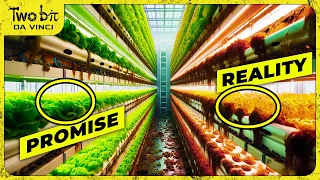
will ever catch on or be cost-efficient to produce or whether the new wave of enormous humidity and temperature control greenhouses growing year-round vegetables will fulfill their promise of being food production at its most advanced intensive and efficient in the u.s professor dixon despommier believes his multi-story vertical farms could not only grow everything we need but do it in the urban areas where most people live the idea of a vertical farm is quite simple actually it means simply to take existing greenhouses and instead of making them flat and spread out all over the place stack them
on top of each other and turn them into a building maybe 5 10 or 15 stories tall an outdoor farm of 10 acres of tomatoes is equivalent to one indoor acre of tomatoes because there are no crop failures due to weather events and you can grow them year round so that means you can actually feed as many people with a single acre indoors as you can with 10 acres of outdoor land vertical farming doesn't necessarily mean just plants because we don't eat just plants we eat various animals too it's possible to connect plants to animals
indoors in separate facilities but connected together so that i can now have an ecosystem in a building and i think in 10 years from now this idea although crude at the moment will be refined enough so that almost every city that you go to will have a project on vertical farming despommier's vertical farm is still only a computer graphic but the different farming technologies that could make it a reality already exist in the uk a project linking fish and plant production is already underway it's called aquaponics and charlie price is the man behind it aquaponics
is the integration of aquaculture or growing fish with hydroponics which is growing plants without soil in water in an aquaponic system effectively waste products from fish provide a nutrient source for plants and plants act as a filter for the fish then we take the offcuts of the plants produce worms in wormeries to feed the fish so it's a constant recirculating loop this is what you could call a virtuous cycle and it uses surprisingly little water the water that's here stays here and gets recirculated through the system any small losses that we have through evaporation will
get topped up through rainwater harvesting so aquaponics provides a really good solution for areas where water scarcity is an issue this is an example of sustainable food production in action but the big question is whether aquaponics could ever provide food on the scale we need aquaponics fits very well with localized food production it's its main limitation is that it doesn't scale up to meet with the commercial outputs of say dutch glass house technologies where vast ranges of monoculture crops are coming out and being exported throughout the world this is a test site for the aquaponic
system with the hope that it could be replicated in communities worldwide here the tilapia known as the aquatic chicken due to its wide appeal and salad produced as part of the system seemed to be going down well aquaponics really fits is through the the production of a diverse range of crops locally we like to produce all the crops that we need on one site so it fits very well with with having an aquaponics system in every school town village across the country aquaponics may not be the solution to a global food crisis but perhaps that's
the whole point we might have to look at a variety of answers in the years to come the world's farming land will increasingly be seen as a limited resource and farming techniques will continue to develop and science whether in the form of genetic modification of crops or in novel ways to produce food near the people who will be consuming it whatever solutions the world finds to make food supplies more secure the one certainty is that food will continue to be an increasingly scarce resource and the issue will not be going away you