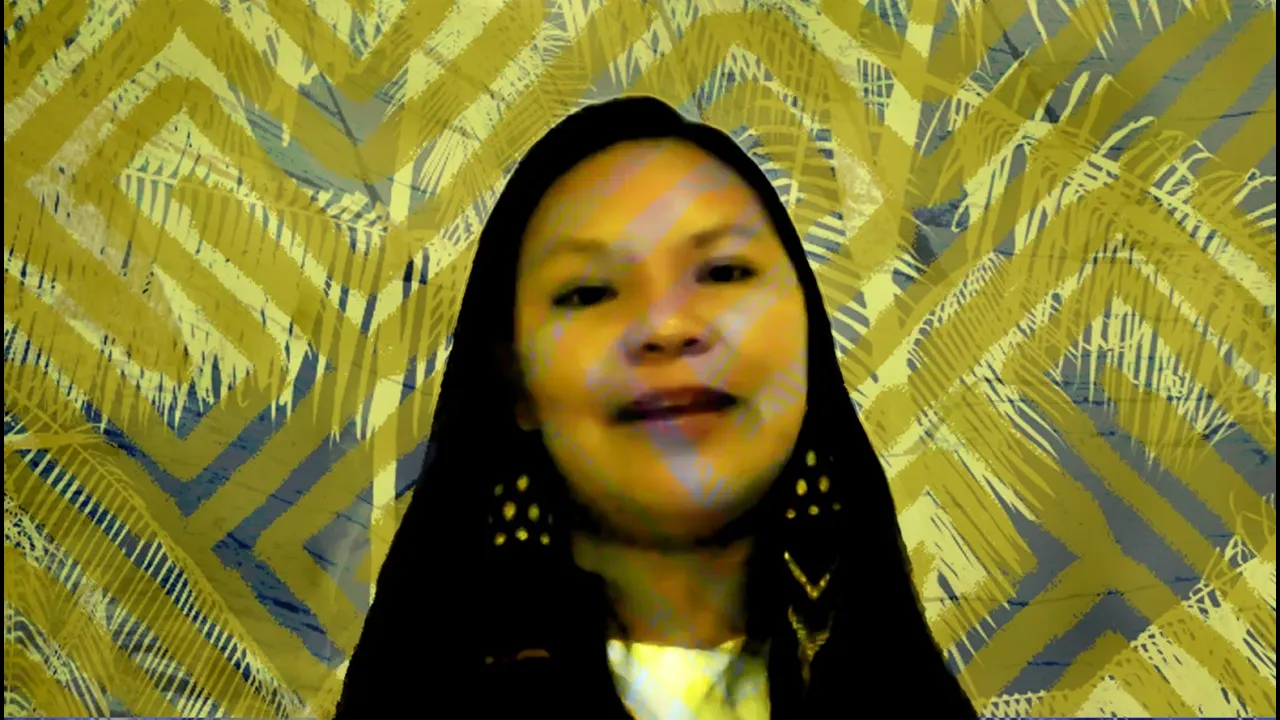
Among my people, not only do we plant the fields, but we also learn to take care of the fields From our early years, we go to the fields to plant fruit, or to help carry water. My first teachers were also my brothers, my cousins. I was taught to read and write in the Baniwa language, and maybe that's why until now I haven’t learnt to speak Portuguese.
I would rather talk in Baniwa. I clearly remember my mother and my aunt demanding that a school should be created in my region – elementary school and high school. They were the ones who demanded a school.
They were also the first women to ask for a school, much because they wished the children would not have to leave the community anymore. They used to say, “We don't want our children to be in need in the city. That's why we want our own school.
” We would stay in the city studying for four months, and would then return home in July [Note: For the Brazilian winter holidays], where we would stay the month. But there were times when we couldn't make it back down to the city sometimes because we couldn’t find a ride, sometimes because there was no fuel. So we were very far from the city, and that's why they thought it was much better to have a school with Baniwa teachers, since there were trained Baniwa teachers already who could teach in this school.
When you arrive in the city, you do not have the means to survive, because your family doesn't have the resources to keep you in the city. So the only option you have… you have no job experience, so to speak. You're a minor, and you need to survive in the city.
The solution is to become a nanny. When my sister came to the city she was already 19 years old so she got work as a cleaner, taking care of a house. Because he was a man, my brother went to work at the bakery.
There were three younger siblings with our older brother, who also couldn't keep us in the city, so we had to work. Because I was a minor, and I didn't speak Portuguese, [that was] the only thing I knew how to do. .
. because I also couldn't work in the kitchen, because I didn't know how to make this food that isn't ours, let alone. .
. Guys, I don't know what a squeegee is, what a cloth is, whatever cleaning products people use in the city! I know from back in my community that we use a vine broom to clean the yard, and a different type of broom to clean the house.
So when you arrive in the city and you are not used to anything, all this information that may seem very trivial. . .
it's scary, like. . .
So you go to a place where you cannot survive, and you need to work so you can eat. This whole process, I talk a lot about this experience, of surviving in this space of body movement – both of returning to the community and of living in the city – sharing experiences with non-indigenous people, writing about it. But that does not take away your condition of being a Baniwa Indian, Hipamaali.
The territory forms you in different ways, but your body also carries this formation. So when we talk about this body-territory, it is precisely to break with this discriminatory idea that those who leave their territory cease to be indigenous. Our bodies go beyond that.