7 Ways The End of the World Could Happen The end of the world as we know it is always present in collective thought. We all want to know where we come from and where we are going, how it all began, and how it will end. In the universe, nothing is eternal, and our planet is no exception.
At some point in the future, life and even planet Earth will disappear from the universe to become dust that gives rise to new stars. But what will the end of life and the Earth be like? There are many theories about how our planet might end up.
Today, we will explain what are the seven most accepted theories about what THE END OF THE WORLD could be like. LET'S GET STARTED! 7.
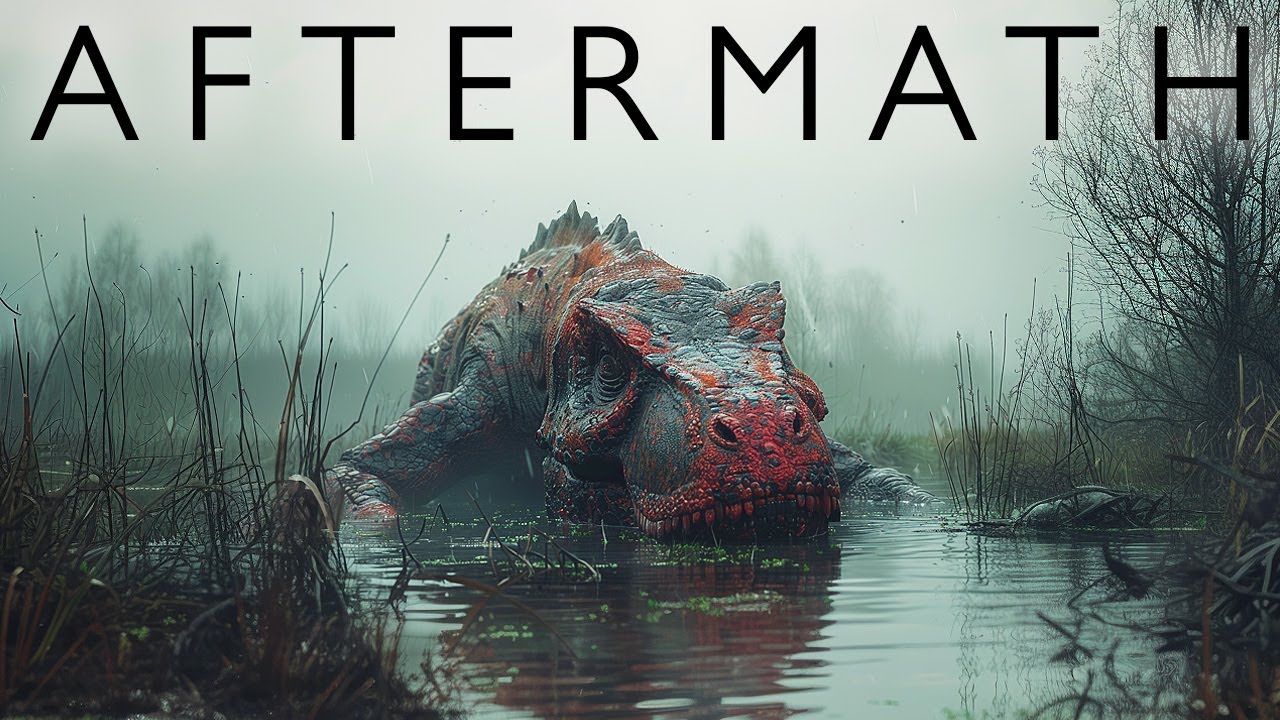
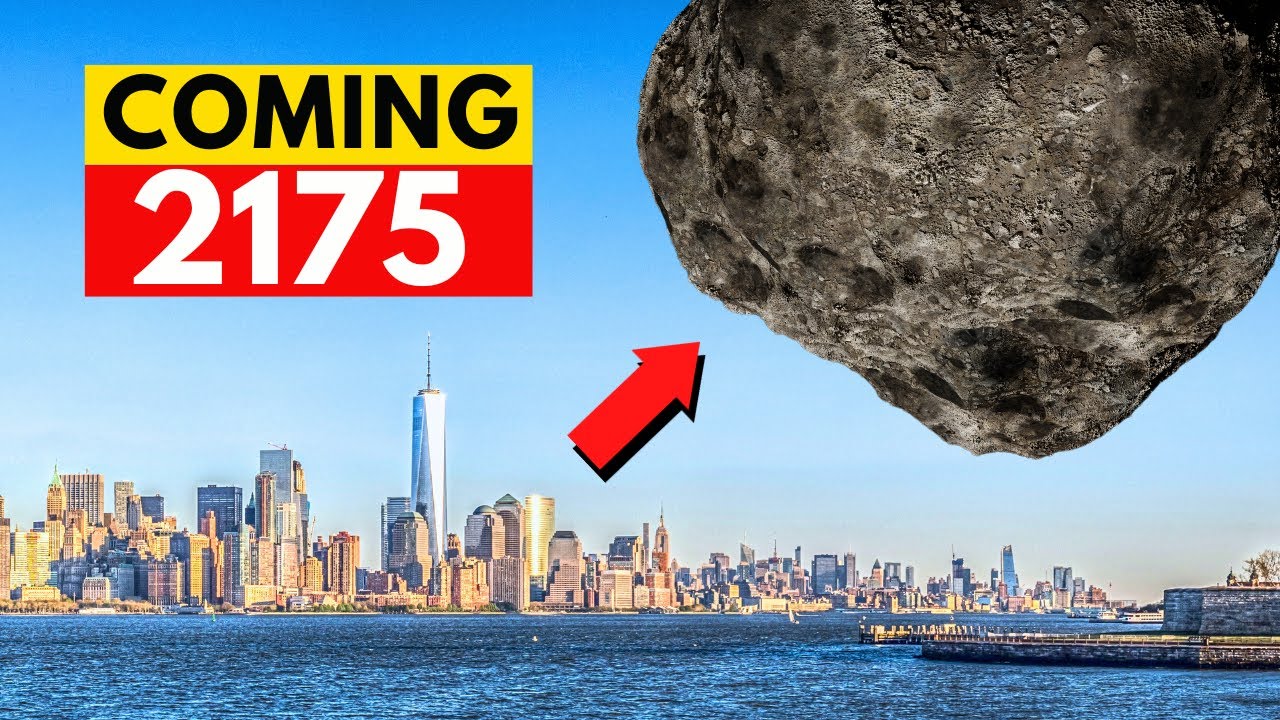
Asteroid impact In the past, an asteroid was the one that ended the age of the dinosaurs approximately 66 million years ago. An event similar to or larger than that could also lead to the extinction of life on Earth in a relatively short timeframe. This event, known as the Chicxulub impact, released energy equivalent to billions of atomic bombs, causing a series of catastrophic events.
According to scientist Luis Alvarez, who proposed the impact theory in 1980, the collision of a massive asteroid between 10 and 15 km in diameter caused a global disaster that caused the extinction of more than 50% of all living beings, including, of course, dinosaurs such as the sauropods, tyrannosaurus, plesiosaurs, as well as a large part of plants. A study published in 2019 in the journal Proceedings of the National Academy of Sciences by Dr Sean Gulick and colleagues supports this theory. Gulick, a geophysicist at the University of Texas at Austin, studied the Chicxulub crater and found evidence that the impact generated massive tsunamis and scorching heat that sparked global wildfires.
In addition, dust and aerosols released into the atmosphere blocked sunlight for months, causing significant global cooling and breaking the food chain. In the face of a similar event, humans could survive for a few weeks or months, depending on the availability of shelter, food, and water. However, the resulting "impact winter" would block sunlight, drastically reducing global temperatures and affecting photosynthesis.
The food chain would collapse, affecting plants and then herbivores and carnivores. The icy conditions and lack of food would lead to the mass death of fauna and flora. The probability of such an event occurring is extremely low but not zero.
According to a NASA study, the probability of an asteroid of similar size to the one that caused the extinction of the dinosaurs impacting Earth is about 1 in 100 million years. While a similar event today would not mean the end of the world, it would mean the end of life as we know it. However, life would eventually rise again from the ashes; it would possibly be the end of the human race and the beginning of a new era for the following species that will dominate the world.
6. Supervolcano The eruption of a supervolcano is one of the most catastrophic geological events the Earth could face. Supervolcanoes, such as Yellowstone in the United States, can release more than 1,000 cubic kilometers of volcanic material, causing devastation on a global scale.
A study by Dr Michael Rampino, a geologist at New York University, published in the Geological Society of America Bulletin, details how the eruption of the Toba supervolcano approximately 74,000 years ago created a "volcanic winter" that lasted for several years. This led to a drastic reduction in global temperatures and a severe impact on biodiversity. Initially, an eruption of this magnitude would immediately destroy the surrounding region, killing millions of people and animals instantly due to pyroclastic flows, ashfall, and tsunamis if the eruption occurs near bodies of water.
Injecting huge amounts of sulfur dioxide (SO₂) into the stratosphere would form sulfuric acid aerosols, reflecting sunlight and cooling the planet. The resulting "volcanic winter" could last for several years, destroying global crops and causing mass starvation. Humans could survive for a few weeks to months, depending on food reserves and infrastructure, but most would succumb to a lack of food and extreme conditions.
Reduced photosynthesis would severely affect plants and marine ecosystems, collapsing food chains. Although more resistant, bacterial life and microorganisms would also face adverse conditions due to reduced light and water acidification. Most animal and plant life on the Earth's surface would perish.
Some organisms could survive in underground shelters or deep in the oceans, but biodiversity would be drastically reduced. According to a study by Dr Bryan T. Singer, published in Earth and Planetary Science Letters, the probability of a supervolcano eruption in a human period is low—about 1 in 730,000 per year—but not impossible.
Although a supervolcano eruption would not destroy the world, it would drastically change living conditions, bringing it close to total extinction. The Earth would not be physically destroyed, but its ability to support life would be severely compromised for an extended period, which could mean the extinction of humans. 5.
Extreme climate change Extreme climate change is one of the most alarming scenarios the Earth could face. If greenhouse gas emissions continue to rise dramatically, we could see global temperature increases of more than 4 degrees Celsius by the end of the 21st century. This scenario is supported by the Intergovernmental Panel on Climate Change (IPCC), which warns of the catastrophic consequences of such warming.
Extreme climate change would have devastating effects. Dr James Hansen, a prominent climatologist and former director of NASA's Goddard Institute for Space Studies, has warned of the "inhospitable conditions" resulting from severe global warming. Humans could survive a few years but face extreme droughts, deadly heat waves, and the collapse of agriculture.
Shortages of food and clean water would lead to conflict and mass displacement. Extreme temperatures would exceed human tolerance limits, especially in equatorial regions. Extreme weather events like hurricanes and storms would become more frequent and intense, causing large-scale destruction.
Extinction would not only affect humans. Ecosystems would collapse due to climate stress. Species that can't adapt quickly, such as corals and many plants, would disappear.
The likelihood of achieving extreme climate change is significant if urgent action is not taken. The 2018 IPCC report emphasizes that global warming could exceed 4 degrees Celsius by 2100 without drastic reductions in carbon emissions. Although the planet would not be physically destroyed, Earth's ability to host living things could change severely.
If the current trend continues, most ecosystems and life forms could become extinct, leaving an arid and hostile planet. In the worst-case scenario imaginable, an extraordinary increase in greenhouse gases could give Earth a Venus-like appearance. Venus is a planet like ours, but the greenhouse effect is so extreme that temperatures exceed 450°C and sulfuric acid rains down.
Venus is a world where no living thing can survive, and it is an example of what Earth can become if we don't care for it. Ey! before moving on, be sure to like or dislike the video so that we can improve them for YOU, the viewer.
Plus, Don't forget to subscribe to our channel by making sure to hit the NOTIFICATION BELL so you don't miss ANY of our daily videos! 4. Nuclear war A full-scale nuclear war would have devastating effects and possibly lead to the extinction of life on Earth.
According to a study by the Federation of American Scientists, the use of just a fraction of the global nuclear arsenal could cause a "nuclear winter," a phenomenon in which smoke and soot from nuclear explosions would block sunlight, leading to severe global cooling. Initially, nuclear explosions would cause the immediate death of millions of people from the explosions and radiation. Extreme temperatures and persistent radiation would cause humans to survive only a few months.
Dr Alan Robock, a leading climatologist and professor at Rutgers University, has researched the climate effects of nuclear war and warns that the drastic drop in temperatures and the loss of sunlight would destroy global agriculture, causing mass starvation. The resulting "nuclear winter" would significantly reduce global temperatures for years. The destruction of agricultural infrastructure and radioactive soil and water contamination would impede food production.
Most humans would die within a year due to lack of food and extreme cold. Persistent radiation would also cause long-term disease, including cancer and damage to the cellular structure of all living things, leading to congenital disabilities. Animal and plant life would also be severely affected.
Decreased photosynthesis due to a lack of sunlight would result in the breakdown of the food chain, although some life forms could survive in underground shelters or in the deep ocean. The probability of nuclear war is low but not negligible. A study by the Bulletin of the Atomic Scientists in 2020 indicated that geopolitical tensions and the proliferation of nuclear weapons continue to be a significant threat to humanity.
While a nuclear war would not physically destroy the planet, however the life as we know it would cease to exist forever. Most ecosystems and life forms would perish, leaving a barren and desolate planet. If a nuclear war were to occur, the recovery of the biosphere could take thousands or millions of years, If it ever recovers.
Perhaps the most terrifying part of this is that of all the events we will mention in this video, a nuclear war is the most likely to occur in the short term, as it does not depend on external factors but solely on humanity's decisions in the coming years. 3. Loss of magnetic field The loss of Earth's magnetic field would have catastrophic consequences for life.
The Earth's magnetic field protects the Earth from solar and cosmic radiation, acting as a shield against charged particles from the Sun. Without this shield, the Earth's surface would be exposed to lethal radiation. Dr Daniel Baker, a leading researcher at the University of Colorado's Laboratory for Atmospheric and Space Physics, has studied the effects of solar radiation on Earth and warns that losing the magnetic field would make the planet's surface uninhabitable.
Intense radiation would damage the ozone layer, increasing exposure to ultraviolet (UV) radiation. Global temperatures could fluctuate due to altered weather patterns. Farming would be impossible, as the plants would not be able to survive high UV radiation and adverse weather conditions.
Without the magnetic field, solar radiation would increase dramatically, causing severe burns, skin cancer, and genetic damage. Constant exposure to this radiation would cause humans to die in just a few years, along with 99% of plants and animals. Eventually, solar flares would completely evaporate the atmosphere and oceans, leaving a dry, barren planet identical to Mars.
The probability of a complete loss of the Earth's magnetic field is extremely low. A study from the University of Leeds, led by DrPhilip Livermore, indicated that although the magnetic field fluctuates and weakens, it will unlikely disappear shortly. These studies suggest that the magnetic field could undergo reversals but would not disappear entirely.
Although the loss of the magnetic field would not destroy the Earth, the Earth's ability to support life would be virtually eliminated. 2. Final stage of the Sun's life Currently, the Sun is in the middle of its life, but eventually, its fuel will run out and begin to die; this will occur in approximately 5000 million years, but before that happens, the Sun will shine brightly.
This increase in brightness and radiation emitted by the Sun will cause solar flares so energetic that they will sweep through the Earth's atmosphere. The intense heat and radiation from the sun will increase the temperature of the entire solar system, causing the habitable zone to shift to Jupiter's orbit and turning the area where the EarthEarthhocated into a scorching region where life cannot survive. While this will not occur for several billion years, eventually, this time will come.
At that moment, our beautiful green and blue planet will become an arid rock without water and life. Let's hope that by then, humanity has already moved to another solar system and that this is only the end of life on Earth, not the end of the human race. 1.
Death of the Sun in Red Giant So far, we've talked about all the ways life on Earth could end, but none of the above events can destroy our planet; not all nuclear bombs and not all asteroids can destroy Earth. But there is an event that has that capacity and will end our world. In about 5 billion years, when the Sun has reached its last stage, it will become a red giant so large that its diameter will reach beyond Earth's orbit.
During the expansion process, the Sun will absorb everything in iSunpath, including Mercury, Venus, and finally, humanity's home, Earth. This will be the end of the world. The Sun was the star that gave rise to the solar system, the one that gives us heat every day, the one that made life on Earth possible, its also the one that will also end everything.
Let us hope that long before that happens, the human race will have left the solar system and settled in another similar world. So when the Sun decides to end the cradle that saw the birth of humanity, all our descendants will have settled in one of the stars we see in the sky and be safe. While that distant, arid, and lifeless planet that was once the home of humanity enters the surface of the Sun to become the dust to give rise to the next generation of stars and planets, some of which may be the future home of the children of humanity.
Now we want to know your opinion, tell us! Which of these events do you think will put an end to humanity? Let us know what you think in the comments!