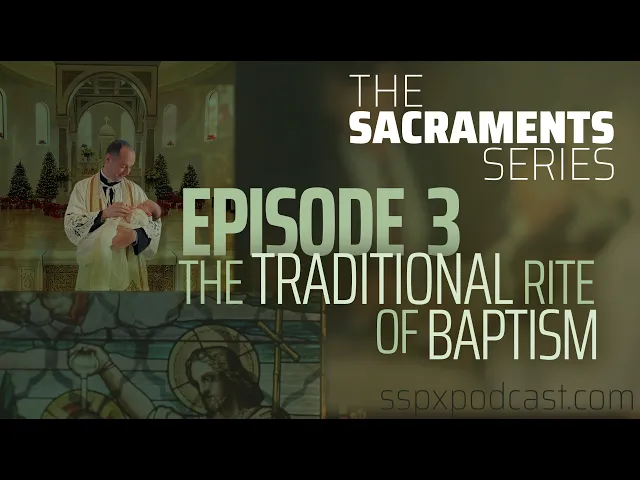
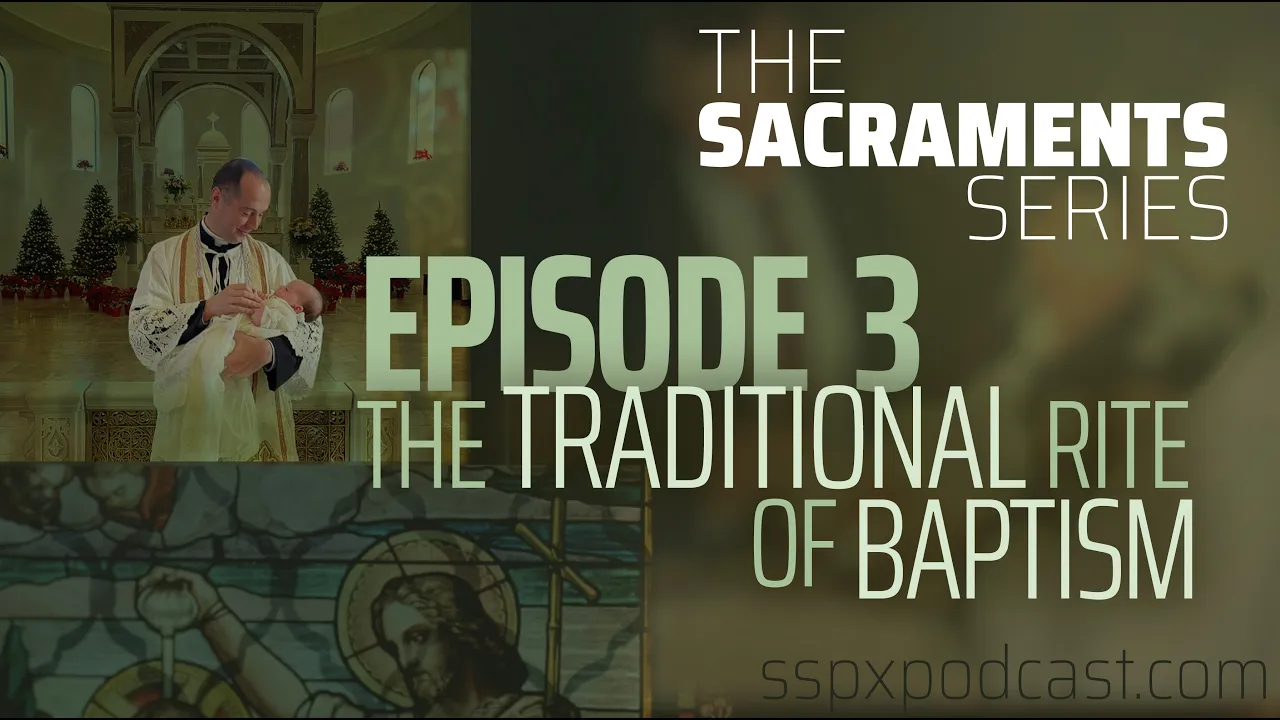
[Music] you're listening to the sspx podcast and welcome to our third episode on the sacraments today we're going to look at our first sacrament baptism father alexander wiseman professor at st thomas aquinas seminary is joining us for the next two episodes first to look at the traditional rite of baptism and then to look at the new rite as you'll see the traditional form is so much more than Simply pouring water and saying a few words of the formula the church has filled this ritual with exorcisms symbolism and graces for the benefit of the new christian
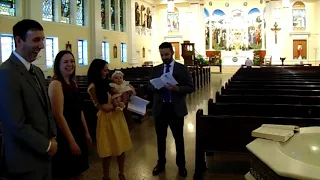
being baptized we'd like to say a special thank you to those who graciously shared pictures of their children's and grandchildren's baptisms for use in this episode it helped to make father wiseman's descriptions even more clear And as we move forward in this series we're looking for help if you like these series and want to have more of them you can help us by leaving a rating or a review wherever you're listening to this podcast and you can share it with someone who you think would like it or appreciate it or maybe they just need it
that's the best way to help because you're helping us with this apostolate to reach as many people as possible with The beauty and the truth of what it means to be a traditional catholic now let's join father wiseman for episode three on the sacrament series right now father wiseman thank you for joining us today on the sspx podcast how are you doing pretty well thanks andrew how about you i'm doing fine doing fine we are in the thick of winter here in the southwest which is Fantastic there's supposed to be a snowstorm here they keep
telling us um maybe on sunday but the time keeps changing so hopefully it doesn't it just comes as rain but we'll we'll see right right well we'll see it's it's forecasting it's inexact and any case um so we're talking about baptism today father um we're gonna be starting uh With these with this series with an episode on the traditional rite of baptism and then we will compare it with the the new rite of baptism so we're gonna do on our episode today on the traditional form of baptism so where do we start in this discussion
father i'd like to begin by giving a little bit of context and i think this context is probably known To just about everybody that's watching or listening to these podcasts but i think it is important to lay it out briefly and father robinson in the episode the first episode about the sacraments in general he had spoken about the sacraments in a specific way and i'm going to try to follow on the way he spoke about them there which is just the traditional way of speaking About them but try to give a little bit of context
and what i'm talking about here is maybe god's could be called god's plan of salvation for man and as soon as we say the word salvation save we have to know what it is that we are being saved from okay and that is we know sin and Primarily original sin which is a sin that is given to all men passed down to all men by generation from our first parents adam and eve but also our own we call them actual or personal sins so sins that we have committed we have to be saved from those
as well and one of the things you're going to notice about the sacraments and even any point in the Catholic faith is that if you touch one point of the catholic faith you you touch many many others at the same time and for that reason what we're saying here about the sacrament of baptism it's going to touch many many doctrines of the church and right away we touch the doctrine of sin and original sin the fall of our first parents and that's it's crucial to See that if you're going to understand what bapti baptism is
and why the church presents the right of baptism in the way that she does so obviously we know sin is an offense against god but it also breaks the friendship that man can have with god and it violates an order of justice that is outside of man so man breaks an order that god has established and this makes Him an enemy of god he's declaring himself independent of god and against god he defines himself as against god not your will right but my will or as we hear uh luther's famous uh sorry lucifer is famous
non-serviam i i will not serve right so man here he he is going to be miserable as long as he pursues this path but more importantly he's also defining Himself as outside of what god of god's kingdom let's say outside of of the friendship of god so he has to be saved from this state he has to be somehow brought back into the friendship with god and that's why god the father sends his son so our lord jesus christ comes in the flesh and he saves us and here we have To remind ourselves that how
is it that christ saves us well he saves us by his passion and death on the cross so this is the word passion obviously we refer to the suffering of our lord the death of our lord on the cross this is going to fulfill the justice of god which has been violated so restore the broken order but it's also going to Be a an infinitely meritorious act that christ does and i believe father robinson touched on that all of the merits that christ has won by his death on the cross this is going to be
how man can be restored to that friendship with god and so everything is everything is brought back into harmony and order and man can now uh be on a friendship friendly terms with god again But as father robinson pointed out how is it that man is going to receive this salvation how is it that man can receive all of the good things that christ has won for him on the cross and here father robinson already explained that i'm not going to go through it again but i do want to mention a phrase that saint thomas
aquinas uses and he uses it so frequently in His treatise on our lord jesus christ and then again on the treatise on the sacraments that i think it's important to mention he uses the phrase first of all coming into contact with the passion and he uses he he has an objection that he keeps bringing up and he says the passion is an historical event it's something that's material so it's Something that's stuck in time and it's something that's done by by a man a man suffers and dies that's true to say of christ and so
he constantly brings up this objection how is it that man can benefit from the passion spiritually when he doesn't seem to have any access to the passion which is over and done with it's it's in the past and he's going to answer his own Question how does man come into contact with the passion of christ he says this phrase quote through faith and the sacraments of faith and that's saint thomas's answer and i just want to mention there this is important for baptism i think as as we'll see that it's through faith first of all
because man has to believe in christ believe that christ is god and That he can bring him this salvation but also through the sacraments of faith which connects with what father robinson was pointing out the sacraments are how we apply the passion to us they are going to be what gives us let's say what puts us at the foot of the cross ready to receive from the open side of christ from the open heart of christ and i really think that's the Mind of saint thomas that the passion is is like this amazing remedy that
can solve all of your problems but if you don't take the remedy you can't receive any salvation from it and for saint thomas the primary way that we receive the remedy is through the sacraments and his whole vision of the sacraments is going to be directed to the highest the most important the best Sacrament which is what we call the blessed sacrament the holy eucharist and therefore the mass and we always hear that phrase sorry go ahead yeah i was just gonna ask so this is we we always correlate the i had never considered this
before father we always correlate the the passion of our lord jesus christ with the holy eucharist like you just said yes and with the holy sacrifice of the mass um but there is a connection between the passion of our lord and all The rest of the sacraments as well absolutely yes exactly so every every sacrament is going to receive its power to affect what it has to affect from the passion of christ it's going to be some way that we get in touch with christ and therefore in touch with his passion as well and that's
really a beautiful doctrine i think that we have to remember and that that the church has at her At heart when she she builds the rights of the sacraments which we'll see with baptism specifically but you should see that in the other episodes about the sacraments but for saint thomas everything's leading up to the eucharist the the ultimate sacrament which is as we know christ himself so where does baptism fall in this whole progress well it's the beginning it's we call it the door of the sacraments it's the first sacrament that anybody Has to receive
if they want to receive any of the other sacraments and specifically we have a lot of teaching in scripture about baptism especially a lot of beautiful sentences and thoughts of saint paul especially and one of the things he teaches us is that by baptism we are and he uses this Phrase incorporated we are made part of the body of christ so man becomes a part of christ and he becomes the the beneficiary of all of christ's treasures and that's going to be primarily the the effect of baptism to bring man into this union with christ
that is the union of the mystical body and it's it's such a profound union that all of the graces which christ uh has Won all of the merits which christ has won they are now available to that soul he can now receive from them just in the same way that the body receives all the parts of the body receive the blood right through the blood goes everywhere well that's a little bit that that metaphor of the mystical body we receive everything from our head which is christ but how do we become a part of this
body well it's going to be through baptism and so really Baptism makes a man capable makes a man enter into this intimate communication with christ and it's going to restore therefore all of the order that god had intended and restore this friendship of man with god that's a kind of very high level view of what baptism is doing and i want to emphasize one other aspect that's very beautiful that is also scriptural and that is that baptism is Called a new birth so christ will say to nicodemus unless a man be born again born again
so that is to say there's going to be some kind of rebirth here and we're going to see that in the symbolism of baptism but also what's going on there well when you're born you receive who you are you receive your nature we were born of our parents and we receive our fallen human nature right we Are let's say under adam who is our head our father by baptism we are going to be reborn and we receive a new nature a spiritual nature which is this divine the share in the divine nature that makes us
like our lord jesus christ so that he is now our new head he is our spiritual head from whom then we receive so all of this is kind of like the The background this is basically right from scripture about what baptism is doing okay and one other aspect there that we should mention is that because now by baptism we are made part of christ we are now able to worship god to adore god the way christ does and so when christ says the father is looking for men to adore him in spirit and in Truth
adorers worshipers in spirit and truth baptism makes all of that possible without baptism we could not be worshiping god in spirit and truth because we would be separated from christ and christ is the only one who can give to god a worthy worship or adoration so that's a little bit this kind of overview context summary and now we can maybe dive into a bit more Uh specifically what this sacrament is right and as father robinson said last week or the week before the sacrament could have been anything god could have our lord could have created
the sacrament or instituted the sacrament using any sort of a form or matter but what did he choose to do here father exactly so he uh he chose specific things and there's there's a there's a reason for them There's a symbolism obviously uh there that is is very important and so that's the next thing i want to talk about is what what is the sacrament of baptism itself father robinson had explained that every sacrament is going to have this material side but also a kind of spiritual side sometimes we use the words there bored from
philosophy matter and form so there's going to be a matter to the Sacrament which is going to be the substance we use and the action that we do and then there's going to be a form or the more spiritual side which is the words that we say that's going to give a very precise meaning to the gestures that we do the substance that we use and so on okay and it's no different in baptism in fact baptism is Really the clearest sacrament where we make this distinction so there's going to be a material side to
the sacrament what is that we say first of all that baptism uses water and that's directly from our lord jesus christ you have to be reborn of water and the holy ghost there has to be water involved and this is very fitting substance to use because It is so easily accessible and that's another point that we can see is if baptism does all of these things then it's going to be necessary for salvation you can't you won't be able to be saved without baptism in some way and so water is available everywhere you can you
can get it um so easily so that's why we might say god chose this substance and not a substance that was Harder to obtain but also water is classically representing life it's always associated with life and that's what baptism does it brings us the new life and so the church following christ's command there she always uses water and more specifically though what is going to be the the matter of this sacrament the material side it's going to be the Action that is done with the water and that action is a washing it's what the the
word baptize signifies it means a washing and that's also fitting because there's a cleansing that is going on with baptism the soul will be made clean again we might say sin is going to be washed away in the waters of baptism so that symbolism of the water And the washing is really giving us the sense of what the sacrament is doing we might mention here too that the church historically has had different practices as to how that washing takes place so in the earliest times of the church the washing was done by an immersion so
the person who was being baptized would be Well immersed in the waters often step in a shallow bath and then the priest or an assistant would help the person go down under the water and then come back up and that was actually done three times so there's a triple immersion so under the water and then up again and then two more times and this is it's just such a a rich symbolism and it's what saint Paul kind of speaks about very clearly in his epistles that we are there buried with christ the water represents like
the tomb into which christ was was put after he sacrificed himself on the cross and then the rising up out of the water is christ coming out of the tomb rising to his new life and so that's you get a sense there About how careful the church is to give all of the symbolism that's going to show us what's happening what's spiritually happening invisibly happening to the soul why was it done three times well that represents first of all the trinity but also represents the three days that christ was in the tomb and so there's
a direct connection with the passion of christ again The man is being put as saint thomas would say into contact with the passion of christ through the sign that is given here of the of the being immersed in the water submerged in the water there's also another very beautiful aspect of the symbolism there that the water is like um a womb of the mother And so you are born again when you come out of the water that's another aspect of that symbolism we obviously today in the western church we don't practice the immersion we use
a process rather called technically called infusion but is simply just a washing so the priest everybody has seen this i think the priest pours the water over the head of the child or of the one to be baptized And this is while we we lose something of the symbolism of the being buried we keep all of the symbolism of the washing and so the soul is cleansed made entirely clean again and again it's done three times to represent uh the the trinity but also to represent the the burial of christ christ being three days in
the tomb before rising again so this is the material side the action that the priest is going to be doing When he baptizes as far as the the more formal side the more spiritual side that's going to be the words that he says and for baptism it's absolutely necessary to say the words with together with the action that is happening and so that's why if anybody has Witnessed a baptism the priest says the words wall while he pours the water and what are those words they are very simple the priest uses the name of the
person to be baptized so he says for example john and then he says he says the formula always in latin obviously but i'll give it in english uh john i baptize you in the name of the Father and of the son and of the holy ghost and that's the ho those are the words and he's going to pour the water at the at the names of the persons of the trinity and we can see there uh a few different things in the words themselves first of all it's a very it's a very tight we might
say form because it represents everything that's going on in that short Um short sentence first of all i that's the name the minister who is acting here in the person of christ so it's by the power of christ that this person is baptized so it's not christ baptizes you no i baptize you so i baptize that's the action that's going on the washing that's happening you that's the person being baptized so this person i've just addressed him by name And then i say in the name which means which is in the singular you notice so
in the singular name that represents the unity of god there is one god by whom this baptism by whose power this baptism happens but then i name the three persons of the trinity in the name of the father and of the son and of the holy ghost which represents the trinity of persons we believe the fundamental doctrine of our faith The trinity so you have really everything packed into that short sentence and i want to reiterate that the baptism all the spiritual effects of the baptism that happens in those moments in that moment of the
pouring of the water and the saying of the words that's the sacrament itself and again as we said it's it's such a necessary sacrament that the church Says if there's ever a anybody's in danger of death and they ask for baptism you you give them the baptism with just those words and just that action and that will perform all of the the wonderful spiritual effects that occur there so that's kind of a summary of the sacrament itself we're going to talk about the right that the church uses surrounds the sacrament with uh just shortly but
we want to talk a little bit First about the effects of the sacrament before we go to the the surrounding right okay and this is and and because baptism imparts this this character makes someone a catholic make someone a child of god it's you can't repeat it it's it's one of the sacraments that's done once and that's it exactly so everybody is always baptized only once and i mean we give various explanations for that we'll talk About the the the technical term character there that we'll talk about that in a minute uh but also christ
died once so you can only be assimilated to his death in baptism one time you can't be if if after that you need to be restored to life there's going to be another sacrament for that that configures you to the passion of christ in a different way okay and that's the way again it's god's prerogative that's The way he decided to do it but we don't i would say it's important that baptism is not repeated it's very fitting because this is the entry this is the way you you you are going to be uh receiving
all of the gifts of christ and you are assimilated we might say you are made like to christ dead dying on the cross dead in the tomb and then rising again to the new life and that's so that's so clear in in uh In saint paul i i want to i want to give an excuse for myself here and that i'm not trying to insult anybody's intelligence by going through such such basic details i think this is kind of in the in the minds of of of catholics because um they've seen a baptism they've they've
heard the church say these these beautiful epistles of saint paul but it is important i think for us to come back and reflect on it Slowly because there's so much symbolism there you just it's just stunning when you when you see how many links there are and and how how closely the church obeys christ's voice in giving us this uh this sacrament absolutely so i spoke in the kind of in the context there at the beginning about some of the effects of baptism but i think it's important to Go into them in a bit more
detail because we're going to see how the church teaches us about those effects in the right that she gives us and so first of all i thought i would just mention a little call back to catechism class the baltimore catechism says it very clearly what does baptism do It says it in the answer to the question about what is baptism it says baptism first cleanses us from original sin second makes us christians children of god and heirs of heaven so listing four things there and if we kind of break that down and also maybe supplement
that a little bit with what saint thomas explains in in a lot more detail we can say that broadly baptism is going to be doing two things It's going to be removing things from us taking them away and then it's going to be giving us certain things so what does baptism remove first of all well it removes all sin all sin whatsoever original sin first of all and then any personal sins that have been committed by the person uh at any of them whatsoever and so after One is baptized that's it there's there's no sin
left on the person's soul at all but we might go a step further and say always when we talk about sin we talk about two things we talk about the the uh the stain of sin that's what we use the latin word makula makula kupe the stain of sin so when someone sins he is he is um dirty we might say we use that that Expression that's why again baptism is that washing is gone into the mud into the dirt right um all those all those images of of being unclean like the lepers in the
old testament that was that's an image of sin it was it's this leprosy of the soul so that's one aspect of of sin uh but another aspect of sin is the remember we talked about how the order that god has established was Broken and therefore there has to be some punishment there has to be something to restore the order of justice and that often is called the the debt of sin so the debt of punishment that a man who has sinned who has sinned owes to restore the order of justice so those uh saint thomas
will always talk about those two aspects with sin the stain and then the debt of punishment And just to maybe connect this in people's minds um when you we talk about purgatory what's the point of purgatory well the point is to remove um any debt of punishment that's still owed to the soul as a result of sin and that can be there even though the sin has been forgiven the stain has been Removed but i still have to restore the order of justice but when it comes to baptism that's the beauty of the sacrament all
debt of punishment is completely removed and so one person a person who is baptized after he is baptized not only does he not have any stain on his soul whatsoever he's restored to a perfect purity of soul He also owes nothing anymore the the the order of justice has been completely restored anew and that is a direct effect of the passion of christ and that passion being applied to this soul in the waters of baptism so that's a just an incredible thing that by this sign this act of of going through the sign this symbol
uh a man is is entirely restored uh to this This uh friendship with god not not having any stain on his soul not having any debt to pay back and that's that's the effect of baptism as far as what baptism removes okay there's also we can talk about the what baptism then gives to the soul because it's not only a question of removing things but it's a question of giving things as well And we typically say there obviously baptism gives first of all sanctifying grace so that is the grace that makes us a sharer in
the divine nature of participating in the very nature of god but it also gives us all of the virtues all of these powers to now act in such a way as befits what we are that is to say children of god so all of the virtues are infused in the soul by baptism Uh and then it also gives us two other things that we have to talk a little more specifically about first of all it gives us what we call a character a kind of mark and i'll explain that in just a moment and then
it gives us a special a special grace called the sacramental grace a grace that is very particular to the sacrament of baptism each sacrament will give this special grace a grace particular to it So i want to talk very briefly about those two things again i think i'm kind of in in basic uh catechism land here but it's kind of important to say these things in order to look at the right of baptism again okay so the word character is a technical term that we've we've borrowed we've used for a specific thing given by three
of the sacraments not by the others it comes actually the Word comes from a greek word a greek verb carasen which means to engrave so if you imagine a man with a block of wood or something like that and a chisel and he's he's engraving something on the wood that would be karasin and so our english word character comes from originally from that greek root and therefore it has the idea of a A mark something that's permanent something that's um engraved on us and even when the word comes to mean like the character of a
person like his personality you can see that it it retains that sense of permanence of of something that can't change or go away or at least not change easily and that that's why i think this this word was really used for this special effect of of some of the sacraments Saint augustine will make a kind of analogy and to explain what the sacraments are doing here and he'll say well if you join the military you are going to receive a special mark that puts you in a role so usually we we say now we would
say now like you're in a particular unit and often they they wear the they wear the patch of that of that particular Division or unit um but in saint augustine's time and and before it it wouldn't be uncommon even for a man to have that mark on his uh very skin like a kind of tattoo sometimes you see that in the in the movies and we don't go into the historical thing but they're the spqr or something like that right um so anyway but saint augustine is referencing this mark that's given in some way To
make an analogy and he said he says just as a soldier is set aside or deputed to a certain task by this mark that he has and that mark signifies that task so also a man who receives a sacrament like baptism he is set aside he is given a kind of mark for a task and what is that task going to be well it's going to be the worship of god the Proper and true adoration of the trinity and so the three sacraments that give this special that each give a special mark are going to
set man aside in a special way to something to do with the worship of god now i'll leave the other two to for the other specific sacraments but baptism is Going to give a character it's one of the three that does and what is it what is baptism setting us aside for well just the actual worship of god to participate in all of the rights of the church all of the sacramental life of the church which is the prayer of christ it is the worship of god and so by the baptismal character i am now
able to receive all of the other good things that the Church provides that are part of the worship of god and so that was why you know in the in the past you had the catechumens those who were preparing for baptism but were not baptized yet they couldn't come to the second part of the mass the mass of the faithful as we call it why because they weren't yet ready they weren't yet set aside to participate in that worship And that um that's exactly what's going on once they are baptized now they can worship god
now they can be part of the of the mass for example of all the prayers of the church and so on and so that's a little bit um of a summary there of the character would you say that the character gives the the person the privilege to practice the religion or the duty to practice the religion i would say i Would say both yeah both so once you are once you are marked you that's your duty you have to do that just as a soldier again but it's also for us it's our great privilege to
be um sharing now in this intimate communication that goes on among the three persons of the trinity which all the all the liturgy of the church is entering into that life of the trinity because all the liturgy of the church is Merely the expression of the prayer of christ right christ is the one who is praying and we as his mystical body we enter into that prayer with him and that's why saint thomas will explain it's very beautiful that the character of christ what is it what does it make us like what does it look
like what is that character a character of and he says it's a character of christ but specifically the Priesthood of christ so it makes a christian like christ as priest and that's the meaning the profound meaning behind saying that we are a priestly people we are priestly people because we participate in the worship of god now before i get attacked right when we say that everybody is a priest we obviously have to make a crucial distinction And say there's going to be another character the character of holy orders that gives a man the ability not
only to receive divine things but to give them as well and that the regular faithful do not have that character and therefore they are only priest in a a very broad sense right sharing in the priesthood of christ by receiving from his priesthood but there are going to be other men who are priests properly Speaking they are the ones who receive the sacrament of holy orders so to be very clear there obviously we only call those men priests really who are the ones who are able like christ to give those divine things but nevertheless when
whenever the faithful come to mass they are sharing in that worship that christ gives to his father it's it's very clear um in the traditional mass especially that they Are there for that reason um so that's the that's the the character that baptism gives us we also spoke about a sacramental grace a special term that the church uses to signify that grace that is specific to the to the sacrament in question and in the case of of a baptism what is going to be that special grace that we receive Well it's going to be the
grace to live as a child of god as a friend of our lord jesus christ a brother of our lord jesus christ we might say so to spend one's whole life doing the things like christ did and therefore pleasing to his father you remember christ says i do always the things that please him well that's the sacramental grace of baptism to To give us this ability to do always the things that please our father who was made our father we might say by this very sacrament it's sometimes difficult to express the sacramental grace because it's
such a it's a mystery but it's also such a such a profound thing and such a powerful thing that it it seems to have you know it seems to extend to so many things and i might mention there just in passing as a little A little spiritual nugget here um if i can call it that um saints have spent their whole life contemplating the sacramental grace of one sacrament and my my example here is is elizabeth of the trinity certainly a saintly soul she spent her whole life contemplating the the grace of baptism and that
grace of baptism was to make us Children of god but more specifically these temples of the holy ghost temples of god so by that grace in our soul as christ said right we have the whole trinity dwelling within us and he said if you uh if you love me right my father and i will come we will make our abode in you we will we will dwell inside your soul so elizabeth trinity for example she spent her whole life just thinking about that one thing that one sacramental Grace of baptism and it it's it that's
the power of these sacraments that they they give a whole life of sanctity they can if if we let them you know sure so that's that's our little um summary not so summary of the we might say the catechism of uh what baptism is what what effects um it gives and that maybe brings us now We've got to talk about the traditional rite of baptism so i think that's important to see how it is that the church signifies shows us all of these things in her um the right that she has has used to surround
the sacrament itself so maybe we can we can go to in that direction now sure so so when we're looking at the right of the baptism In the traditional right um there are two distinct uh formulas i guess there's one for the infant and then one for the adult is that yes yes that's it and um that's actually that's actually a good point i may maybe want to say one thing before that because it's a bit more general i i forgot to say it a minute ago but we can add it here just that um
when we speak about the right of any Sacrament we speak about all of the ceremonies and um other actions that the church says you must do when you are giving a sacrament so okay as we saw the sacrament of baptism itself is is the washing with the water with the words and um that's it right that's the sacrament but then the church says if you're gonna baptize somebody you have to do all of These other things too all of these other actions all these other ceremonies and well why does she do that well first of
all because those ceremonies are sacramentals they are also going to be a kind of vehicle of grace for the soul being baptized and those attending the baptism but also she's trying to instruct us she's trying to teach us and you know that phrase we'll use it Many times during this series i'm sure lex orandi lex credenti the the law of praying is the law of believing and the church knows that so she says you must pray this way you must say these things when you're going to give a sacrament this sacrament and because we believe
these things because this is what you are doing and so she instructs us by that and i might add another reason though That the church surrounds the sacrament itself with a right and that is that she she has the faith she she knows what this sacrament is doing and she knows that the sacrament is holy she knows that the sacrament was given by our lord jesus christ and it's like with a with a gem you know if you have a diamond that somebody gives you you don't just have the rough diamond or the diamond itself
and you just show everybody Here's the diamond you you put it in a setting like in a in a ring or or whatever it is a bracelet and you surround it because it's something sacred it's something precious and the church knows that and so she surrounds the sacrament with this beautiful right to to show the reverence we have to have towards it and i i'm taking a time there to to to beat that dead horse because um This is the probably one of the one of the saddest things we see when we look at the
novus ordo sacraments um the the new right sacraments is they seem to have kept the diamond but they've they've ripped it out of their setting and now there's there's not this this sense of reverence anymore the sense of that this is something sacred this is something god himself has handed To you and said you take this you keep this you use this for the salvation of souls for my glory well that's something we have to we have to really respect and i think the disrespect shown to the sacraments sometimes in um in these in these
um in the nova sort of rights is is just it's well it's it's saddening really saddening so we'll see that with baptism But maybe with other sacraments too but let's let's talk now about as you said there are kind of um two rights here um that the church gives in her ritual um that's the book that contains the instruction about how to do the sacraments and the rights surrounding them and they're actually very similar if you're receiving um an infant to be baptized or you're Receiving an adult they're they're very similar rights they're gonna be
some interesting differences in the adult baptism and i want to because they're so similar and just for the sake of time and simplicity we're going to focus on infant baptism because that's kind of it's going to give us the clearest view of it and i might mention as we go a Couple of differences in the adult baptismal right the adult baptismal right is absolutely amazing as well so i don't want to downgrade that but we don't have time for a full course and and it's very clear what the church is doing in the infant baptism
so maybe we'll talk just about that for now okay um so when we talk about the the baptismal right um I want to mention something right away that is very striking and that is that the church has the priest and the the infant to be baptized um and then in the arms obviously the godmother have three different locations for the right so the the right of baptism is going to Take place in in three parts and each of those parts corresponds to a place in or outside of the church or with respect to the baptismal
font and it's very striking because it's kind of the only sacrament in which there is this very specific movement from one place to another there's obviously movement in the other sacraments but right So clearly in baptism and right away the church is teaching us what's happening in this sacrament she says you have to start outside the church so you've got to bring this baby to the vestibule right or even outside the door of the church if you don't have a vestibule but not inside the chapel not inside the church itself you have to be outside
why Because the child is an enemy of god the church is not his place he does not belong there he cannot enter there and that's um that's so it should be a little bit shocking you know right like he's just a an innocent baby it's a baby you know i mean what's the problem it is a poor baby right right but no the church says out out of the church you are you are an enemy of god and that's because she believes in Original sin and she knows that that child has on his soul original
sin that makes him belong not to the kingdom of god but under satan the kingdom of satan so the child we might say is is belonging more to the devil than to god almost we could say it that way and that's that's a shocking thing but it's very clear in the right of baptism that that's what the church thinks and i might note we're talking about an infant we're talking about a Baby here with an adult it's going to be the same thing you have to start outside the church you are not yet able to
come into the church that's the first location there are going to be some prayers some ceremonies that we'll talk briefly about and then the priest has got to bring the baby inside the church and it says in the right you have to lead the child into the church you use a Um one side of the stole the priest uses one side of the stole to place on the head of the child as he leads the child inside the church and now at the next place you are at the entrance of the church more things are
going to happen there and then you're going to go to the third location you're going to again lead the child in some way to the to the baptistry to the font itself and that's where the baptism Itself the pouring of the water will take place so by these three locations the church is signifying very clearly what's going on in this ceremony of baptism we are going from being an enemy of god part of the kingdom of satan to being now part of the kingdom of god in the friendship with god in the sanctuary not the
sanctuary we might say but in the baptistery in the Inside the church itself where as we know christ is present in the eucharist so that's just right away we we need to note that that it's uh the church is saying that very clearly um i don't want to go through every detail of the right here i'm rather going to highlight a few different things maybe a little bit with a view to the changes that are going to happen so we'll talk about that in the next Episode but especially with regard to the church showing us
clearly uh what is happening in this baptism and the first thing i want to mention there is that in each place so outside the church inside the church and at the font there is a questioning that happens so the priest has to ask questions and get a response And if we're talking about an infant so can't speak for himself obviously who is going to give answers it's going to be the god parents and but it's very important to note that the church says the priest is asking the candidate so these questions are directed to the
baby and it's it's just it's marvelous really um st thomas will explain That the infant needs baptism because he needs to become a friend of god otherwise he can't be saved he's outside of the kingdom of god before he is baptized and so in order to receive this baptism normally the child would have to have the intention would have to want it in some way but st thomas says well that's not the way it is with babies babies are always Cared for by someone else someone else feeds them someone else takes care of giving them
a place to sleep and all these things that are necessary for their natural life and it's the same in the supernatural life someone else takes care of the baby and saint thomas will actually say therefore it's the parents who present the child the god parents who speak for the child but ultimately saint thomas will say It's the faith of the church that supplies the intention of the church that presents this child for the baptism and that's such a beautiful um image we might say the church the mother church taking care of her own what is
to be her her children marked out set aside for her right for for her um for the mystical body so there's a questioning in each place the priests ask questions of the infant and we might say the church um uses the Mouth of the godparents to respond on behalf of the child and the first questioning is going to be basically why are you here you know what what do you want we're at the entrance door of the church and those first questions um very striking what do you ask of the church of god and the
answer faith remember saint thomas it's how do we Come into contact with the passion faith and the sacraments of faith and then what does faith give you eternal life right so what are we going for here life the new life that's going to be the eternal life so that's the first questioning then inside the church finally there's going to be another questioning and now it's the questioning of renouncing satan so we've entered the church now you have to leave behind the kingdom of satan so the Questions are going to be do you renounce satan and
these are the questions we remember because we renew our baptismal vows each year at the easter vigil we answer these questions again right you know satan and all his works and all his pomps and so on so that's the second questioning the final questioning will happen at the font right before the baptism itself and that's going to be the belief in god the belief in in jesus Christ in the church so the faith so do you believe in god do you believe in jesus christ and so on and then finally directly to the child right
so imagine the child's name is john or something john do you want to be baptized do you wish to be baptized and again the church lending let's say boring i should say the the mouth of the godparent says yes right i this is in the parents the godparents Present the child the child wants the baptism for his salvation so we get those three questionings that happen one two three um the other thing i want to point out is very striking in the traditional right is the exorcisms so this is uh what everybody remembers also i
think um there are a few times where The priest directly addresses the devil so he speaks to satan and he tells the devil you get out and right from the beginning that happens um right after the first questioning you know what do you ask what do you seek of the church of god faith and so on the first thing the priest does to the child is he he breathes on the face of the child Um that breath always representing the spirit of god and he says you know eggsy of eo so get out i'm paraphrasing
get out of this one you know you devil right it's uh satan get out and he's gonna say that actually two more times to the devil in the course of the rite so there's a there are three exorcism prayers with the the infant baptism Actually there's a fourth if you include the priests exercising and blessing the salt that's part of the rite of baptism so he exercises the salt as well but directly to the devil who's let's say has this child under his power he says get out three times and they're very strong prayers i
i really encourage the faithful to go look up the traditional right read the prayers In english they're always said in latin but read them in english and they they're very strong they're things along the lines of the priest will make the sign of the cross on the head of the child and then he tells the devil you don't ever dare don't ever dare to violate this sign of the cross don't come near this child don't touch him right and it's it it's a very um it's just it's moving you know it's Powerful when the priest
says those prayers i i've done it many times myself many all of us have done it um you have to you you are thinking to yourself i'm i'm commanding this angel that has fallen to to go away and never to come back just be gone don't touch this one don't try to tempt him don't try to do anything it's a it's a very powerful prayer and we say that as the priest we say in the name of christ you know and and so it the the prayer has that power So that's a very striking thing
those they're going to be those three exorcism prayers the other thing i want to mention is the other rites of symbolism so we mentioned the salt the priest will give a little bit of salt into the mouth of the infant and that is that representation of the of the infant we're giving to this child through the Baptism this ability to discern to taste to to have a taste for the things of god and that i can't let this slip by even though it's gonna it's gonna be a little bit of a tangent but the word
uh for wisdom in latin is sapiencia it comes from the latin word sapere which means to taste and so there's a there's an intimate Link between wisdom knowing uh having the wisdom of god and knowing the things of god and being able to taste and so we say for example taste and see that the lord is sweet right you remember that from the from the um from the psalms and that's what this the priest is doing there he gives the salt and he says give this child the ability to to taste the things of god
so to live this life of a child of god Then he'll also he'll also touch the ears of the child the nostrils of the child and he'll say that that word that christ said efta so be opened right opening the ears of the child so that he can hear the the faith so they can learn the faith opening the the the smell of the child so that again he can smell the the sweet savor of the incense that's offered to god and so on And so forth so all this very um symbolic right very much
a sign for these we want this child to be able to live as a child of god and that's that's what the church is symbolizing there um we might mention also then there are uh some anointings with the oils so an anointing with the oils of catechumens an anointing with the the chrism the oil of the chrism these oils are consecrated by the bishop each year on holy thursday at the very special Chrismal mass therefore all of the prayers that the bishop offers there they they imbue these oils we might say with a kind of
power and the priest is excuse me is using those here again to symbolize what's going on oil was had a lot of symbolism in the old testament One of the symbolism one of the signs that it was of was um of this fight or a struggle because um the wrestlers used to anoint their body with oil before they would go into the match into the wrestling and that's actually that that symbolism is there in the baptismal right we anoint the child so that he can then go into the combat but now on the side of
god uh again saint paul says right our our um our fight is not against flesh and blood but Against these these powers of the this these um the devils and and all this in a spiritual way it's a spiritual fight and so that's the symbolism of the the oil there in the old testament the oil was often used to anoint kings as well is that that's not in baptism though that symbolism is more in holy orders well actually it's funny because the there is the anointing with a chrism and on the crown of the on
the head of The child so that in the third part of baptism there i was i was going to mention that that um the the chrism used for kings i think is a different thing you can see that symbolism here to a certain extent because we say christ is priest prophet and king we are made like to christ so we are made like to him his priesthood even in in a sense his prophet is prophecy in the sense of praising god and then his kingship in the sense of we are by Serving him we will
reign with him right so that symbolism can be there as well but the priest specifically says there that you know i anoint you um chris mate salutes with the chrism of salvation and so it's actually that's done immediately after the baptism and it's representing that this child is now a temple of the holy ghost now uh um has in his soul this whole trinity right so he has he has the chrism is used for all those different consecrations of the church The altar whatever all those different things and it is is really in in that
sense i think that this uh the child is anointed to symbolize what the child is now um so yes that that is a very striking uh moment also in the baptismal ceremony so all throughout we we get i hope it's clear because we don't have tons of time to go into every aspect of this but we're getting the sense that Baptism is is a new life it's giving a new life the baptism itself shows that as a sign of that the washing with the water again being buried with christ rising with him but also all
of this other symbolism that we are we are removing the child from the kingdom of satan which is all of the sin that is there all of the debt that he owes all of that is getting wiped away the child is being Brought now into the church is going to be himself a temple of god is going to himself be able to be a true adorer of god so that's the whole symbolism him is this is this movement and this battle this fight that's going on between the devil who's trying to claim the child for
his own and the church using the power of christ to say this child is is christ's now no longer yours you no longer have any power here so that's really a kind of um summary i would say Of the baptismal right we we might mention just in passing um one addition in the adult baptism is that there is um in addition to the other a few other exorcism prayers there is a sort of solemn triple exorcism that takes place and that the candidate is meant to be um he's he's it's very striking he's meant to
come in there um again it's it takes place at the Entrance of the church he has to kneel down he has to say the our father his um god parent or sponsor has to make the sign of the cross on him the priest makes the sign of the cross on him then says a prayer then says an exorcism kicking out the devil and then the whole thing is done again so he stands up yes kneel down he has to say the our father again again the sign of the cross again the sign of the cross
Again a prayer a different prayer a different exorcism then he stands up and again he has to kneel down again he has to say the our father and this is this is so striking because this is being an adult right he was um perhaps for uh really an enemy of god personally as well not just with original sin but he personally offended god so now he has to he has to be wrenched away from the Power of the devil and maybe the last thing i'll say there is about both both infant baptism and adult baptism
is pay attention the next time you attend a baptism or if you read the right about how many signs of the cross there are how many times the priest is making that sign of the cross that gives us a direct link back to the passion of christ it's by the power of the passion and Through contact with the passion and death of our lord that we are saved period and the church makes that eminently clear with the number of signs of the cross that are happening and with the way the priest speaks about the sign
of the cross that it it is the passion of christ that's going on there so that's kind of our um that's kind of our summary of of the traditional baptism i uh i wish we could go into more detail but we're sort of limited and As i said it's a well when you go to a traditional baptism hopefully the priest explains also a bit more some of the symbolism um that can be a way to enter into more this uh what the church is doing there that's fascinating um i did have a question it's a
little bit tangential um in some churches especially europe big Cathedrals the baptistery is on the outside of the church sometimes even another building yes um is that that same concept where this is happening outside the church you you can't enter in yet yes so it's it's true that the um uh there there are let's say there's i don't know personally all of the history there and so i'm not going to be able to give you a complete answer i wish i could but at least we would say Baptism being the doorway to the rest of
the sacraments there was a certain fitness in having the baptistry as a separate location for two reasons i would say one because of the sacredness of what goes on there and so they wanted to consecrate a special place that it would happen often the artwork brings you all the way back to the baptism of christ which is the institution of the sacrament and so on and so forth the baptistery itself is Very or sorry the font itself is very ornate sometimes very large um so they want to have it be a very sacred thing by
consecrating a special place for it but also as i said it's the doorway of the sacrament so the church is the place of the mass that's where the altar is that's where the sacrifice happens this baptism is not happening in the context of a mass why because you have to be baptized First then you're going to go to mass and the symbolism on the easter vigil is very good that way because your um all of the all of the things happen preparatory to the baptism itself um the easter fire the blessing of the baptismal paschal
candle the blessing of the baptismal water then the baptism itself and only after that does the mass start and then the newly baptized can Attend his first mass but you see that the mass and the baptism are not the same thing and so there too i think the baptistery is separated from the church because separated from the altar and the place of sacrifice often we have now them just for space considerations and because that's the way the churches are built the baptistery is usually in the back of the church so it's there's still a separation
we might say with the altar but it's it's The doorway to it so i think there's that symbolism i wish i had the history better i could give you more uh more information there but there's definitely some things to say there florence could see the little piece of cathedral all those grand cathedrals have that separate building yeah they look very similar to the church but it's yes it's set apart yeah exactly and actually one thing i remember is that um In the in the early times it used to be so the an adult uh converting
would be baptized and then after baptism he would actually go into another separate location that was a little chapel where the bishop would confirm him and so the confirmation was maybe that's a little good segue into the confirmation talks eventually but Um the confirmation was seen as the completion of the baptism for those adult converts and that was done in a special chapel dedicated to confirmation as well so you see that you see the idea there the church setting aside certain places where the sacraments happen yeah very interesting well father this has been great thank
you so much and again many of us probably many of the people Watching know a lot of some of this stuff but it's good to put it all together and for my part i always forget you know you think about baptism being well it takes away sin and it gives you sanctifying grace but all of those exorcisms all of those rich yes nuggets that's a terrible word but you know that's okay i used it earlier i was it's my fault for bringing it up i couldn't think of a word yeah but all of those All
those pieces the the symbolism there is just it's beautiful and it's striking so thank you for for putting it all together in one spot for us yep that's great well we'll see you next week then to talk about the new right of baptism and we'll be able to compare and contrast a little bit exactly yeah all right very good father thank you so much all right you're welcome andrew thank you [Music] You