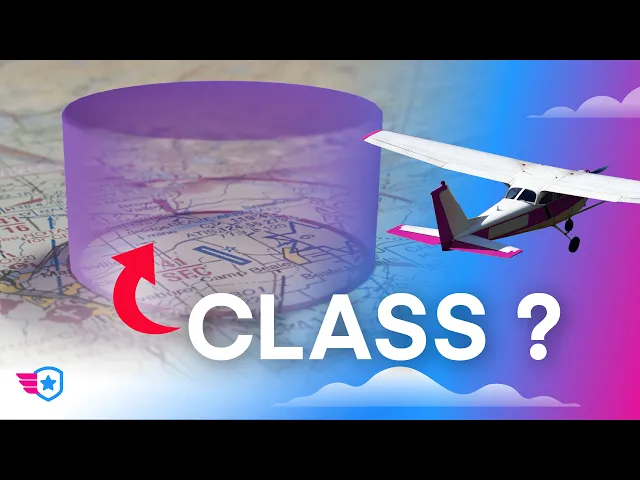
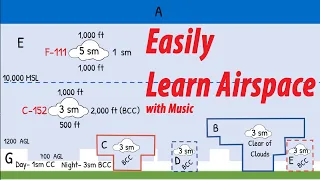
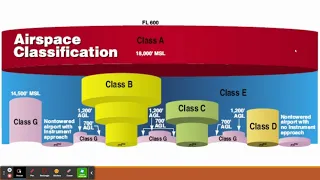
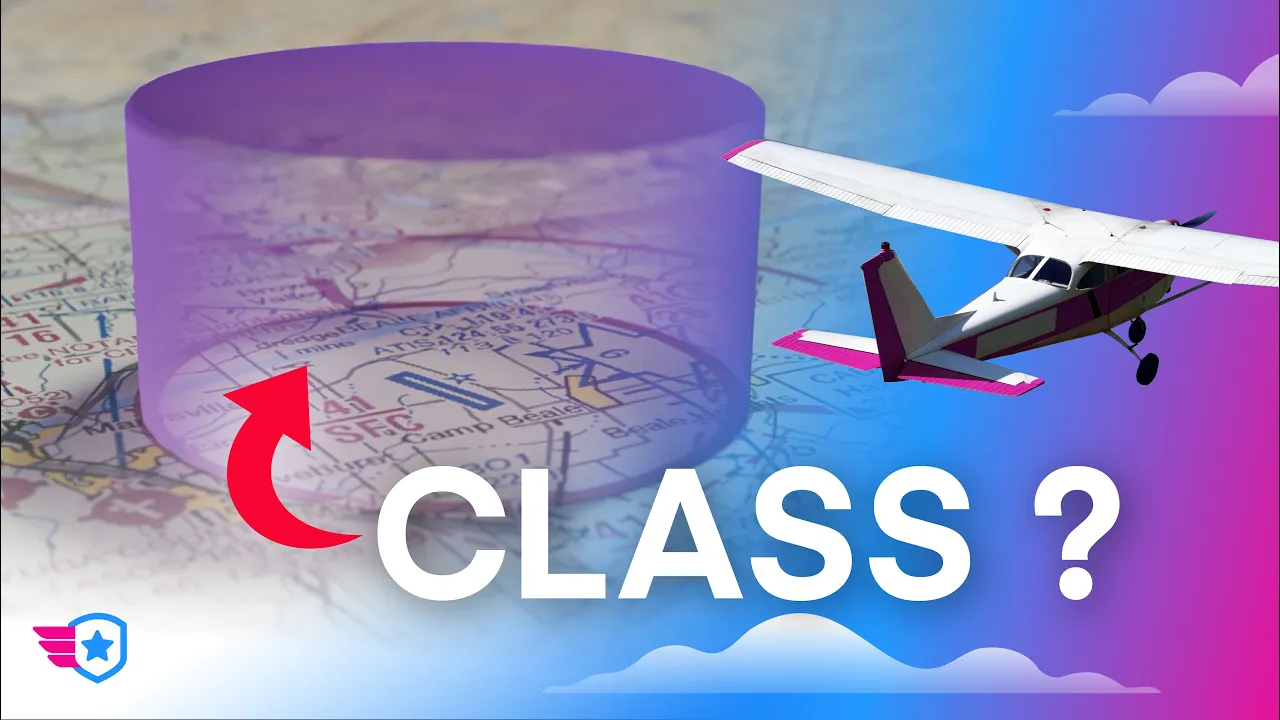
in this video we will cover everything you need to know about airspace classes we promise it's not as hard as you think but what is an airspace class well it's just a type of airspace the FAA uses letters like Class A or class b to separate them airspace can either be control or uncontrolled controlled airspace is where ATC controls traffic while uncontrolled airspace is where they don't now let's explain controlled airspace first starting with class A a Class A airspace also called class Alpha extends across the entire United States it starts at 18,000 ft MSL
and goes up to 60,000 ft MSL you might be wondering MSL stands for mean CA level because it is the altitude measured above sea level now it's not depicted on any charts because it covers the entire country it's also IFR only this means that you must be on an instrument flight plan and clear by ATC in order to enter you will need a mody transponder and also adsb out if you go above flight Level 240 you need a distance measuring equip equipment or DME lastly the speed limit in class A airspace is Mach 1 okay
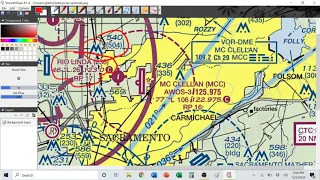
next up is Class B airspace or class Bravo Class B is around the 37 busiest airport in major cities now you will find Class B depicted on sectional charts using a solid Blue Line each sector has an altitude block with a floor and a ceiling these altitudes are listed in hundreds of feet above sea level also remember that sfc stands for surface now if you look at class B airspace in 3D it looks like an upside down wedding kick this is because it consists of several sections with different altitudes and also different shapes the inner
sector of Class B starts at the surface and goes up to around 10,000 ft MSL sectors further out will have a higher base allowing traffic to fly underneath is also a 30 notic m mod SE Val that surrounds Class B airspace this is depicted as a magenta circle on a sectional chart inside of that Circle all aircraft need to have a Moy transponder and adsb out you also need ATC clearance before you enter Class B airspace now the VFR weather minimums require at least three statute mile of visibility and make sure that you remain clear
of clouds this is to avoid IFR traffic the speed limit is 250 knots inside Class B and 200 knots below it the speed limit is also 200 knots through VFR corridors okay let's move on to Class C airspace Class C exists at large airports that are less busy than Class B airports now you will find them around medium-sized cities typically on a sectional chart Class C looks like class as B but it's actually smaller it also has magenta lines instead of blue ones the inner core extends from the surface to around 4,000 ft AGL and
has a radius of 5 noal miles AGL stands for above ground level it's another way to measure altitude when we're not using MSL mean sea level the outer shell has a radius of 10 noal miles it starts at 1200 ft AGL and extends to 4,000 ft AGL and you need to fly at least 1,000 ft above 500 ft below and 2,000 ft horizontally from the clouds the speed limit is 200 knots within a 4 notic M radius of the airport otherwise below 10,000 ft MSL the standard limit is 250 knots now you don't need ATC
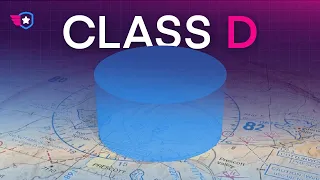
clearance to enter Class C airspace but you must establish two-way radio communication you also need a mod C transponder and adsb out to fly in or over Class C okay up next is class D airspace Airpor in class D or very much like Class C just not as busy on the sectional you will find class D airports that are depicted with a dash Blue Line the number in the bracket indicates the ceiling in hundreds of feet MSL and class D resembles a cylinder with a radius of about 425 noal miles it starts from the surface
and generally extends to the airspace above it or 2500 ft AGL now the VFR weather minimums are the same as Class C airspace you need three statued mile visibility and then the VFR Cloud clearance is 1,000 ft above 500 ft below and 2,000 ft horizontally and the speed limit is also so 200 knots just like Class C you must establish two-way radio communication with ATC before you enter all right only two more to go and next is Class E airspace or class Echo any controlled airspace that is not a B C or D is Class
E think e as everywhere else it allows ATC to manage IFR aircraft that are outside of other control airspace in most of the country the floor of Class E airspace is 12200 ft AGL above level but how do we know if it starts lower well look for the Shaded magenta shape on the sectional chart e fa calls these Vettes they depict the changes in the Floor of Class E Earth space on The Faded side the floor starts at 700 ft AGL these are what we call transition areas they allow ATC to provide services to IFR
aircraft that are flying in and out of airports these are especially useful at airports without a control tower now on the solid side of the Shaded magenta class e starts at the usual 12200 ft HL now inside these transition areas you might see a dash magenta shape around an airport now this indicates that the class E goes all the way down to the surface now remember when we said Class E starts at 1200 ft AGL in most of the country well there are some rare cases where we have class E starting at 14,500 MSL now
you will see these represented with a blue vignette The Faded side represents the typical floor at 1200 ft AGL and then the solid side represents the floor at 14,500 MSL now remember these are very very rare across the country Class E airspace extends up to but not including the floor of Class A airspace at 18,000 ft MSL now it starts again on top of Class A at 60,000 ft MSL now there are no entry requirement for Class E but there are some VFR minimums if you are below 10,000 ft MSL the weather minimums are the
same as Class C and class D airspace meaning you need three statute M visibility 1,000 ft above 500 ft below and 2,000 ft horizontally from the clouds now if you're above 10,000 ft MSL the minimums increase to five statute M visibility 1,000 ft above 1,000 ft below and one statute mile horizontally from clouds okay that concludes controlled airspace now what about uncontrolled airspace well this is where class golf comes in class G exists where controlled airspace doesn't it starts at the surface unless controlled airspace exists on the ground it's basically the bottom of Class E
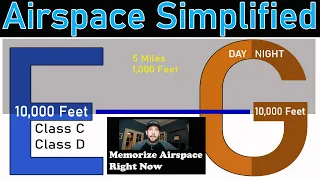
airspace now you won't find class golf depicted on a sectional chart and there are no entry requirements if you're in class golf under 10,000 ft MSL you need one statute mile visibility during the day three statute miles at night below 12200 ft AGL during the day you also need to stay clear of clouds now at night it changes to 1,000 ft above 500 ft below and 2,000 ft horizontally from clouds now what about the rare class golf that is under 10,000 ft MSL but over 12200 ft AGL well in that case the strict Cloud clearance
also applies during the day and at night now if you're flying over 10,000 ft MSL and over 12200 ft AGL then high altitude Class E requirements apply for visibility that's five statute mile 1,000 ft above 1,000 ft below and one statute mile horizontally from the clouds now there's an exception if you fly in the traffic pattern at night with a half a mile of the runway in that case you only need one mile of visibility and to stay clear of clouds so enjoy your nighttime touch and goes now that covers airspace classes but there are
more types of airspace that you need to know about we'll cover these here in part two thanks for watching and we'll see you in the next one