in this video we'll cover everything you need to know about class D airspace we'll also give you real world ATC examples to help you arrive and depart the Delta with confidence cesna 647 Delta Sierra clear to land Runway 27 left hi I'm Greg from Pilot Institute the online Ground School that makes Aviation easy so first what is this airspace well class D surrounds airports that are busy enough that they need a control tower but aren't as crowded as Class C airports you'll typically find it at Regional airports near cities or larger towns but don't be
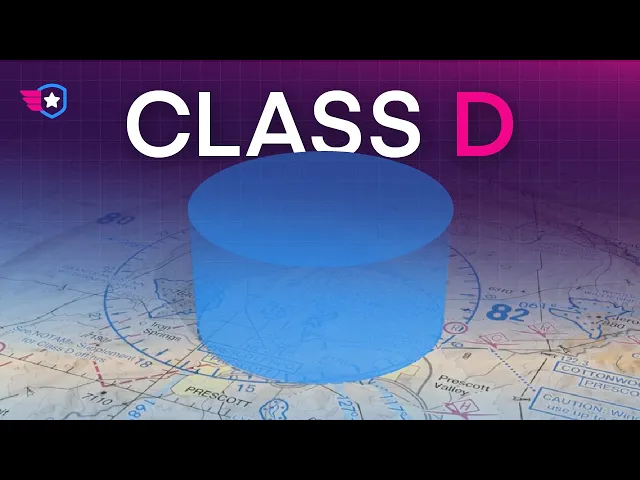
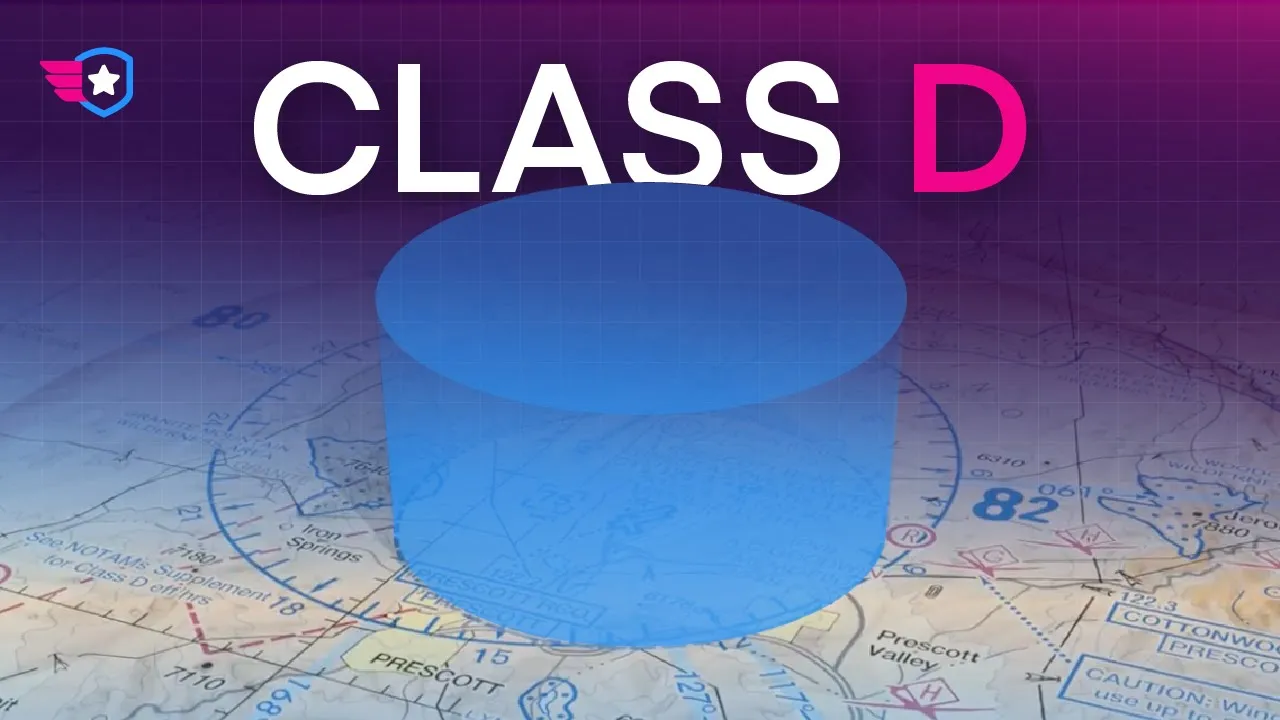
fooled Delta airports are anything but quiet they are often home to Lively fly training schools and Jet operations if you could see the airspace in three dimension it would look very much like a cylinder it starts at the surface and typically extends to 2500 ft above the airport it also has a radius of about 4 nautical miles although the exact size depends on the airport okay let's see what class D airport looks like on a chart here's New Bedford Reginal airport in Massachusetts you can see the boundary as a dash blue circle inside the circle
is also a box with a number on the inside this tells us the top or the ceiling of the airspace in hundreds of feet MSL MSL here stands for mean sea level meaning that our altitude above sea level now this is different from AGL above ground level now the 26 here means that the ceiling is 2,600 ft MSL but now let's take a look at Westchester County Airport the ceiling here starts with a minus sign no the airport is not underground although that would actually be pretty cool the sign here means that the ceiling goes
up to but not including 3,000 sheet MSL this is because there's an overlying Bravo airspace that starts at 3,000 ft MSL the chart can tell us a lot about the airport as well for example CT means control tower and then the frequency is 118 575 the star indicates that the control tower operates part-time now you might be wondering why a tower sometimes shuts down while the airport that aren't very busy outside peak hours typically shut the tower down overnight for example New Bedford Regional is open from 6:30 a.m. to 10: p.m. and some airports are
only busy during certain times of the year take East Hampton Town airport for example it only has an operating control tower during the busy summer month to deal with a huge traffic of vacationers the rest of the year it's uncontrolled but what happens when the tower closes well notice that the chart supplement says other times class G this means that when the tow is closed the Delta disappears and then the airport's airspace becomes uncontrol golf airspace but not all part-time Delta revert to class golf sometimes it changes to class Echo so how does the fa
determine which one if aircraft can remain in contact with ATC down to the runway and the airport has weather reporting that meets standards the airspace can become Class E if it can't then it becomes class G this blue circle with a c in the middle means that when the tower is closed this frequency becomes the common traffic advisory frequency or seaf Pilots will use the sea to self- report their position now take a look at Concord municipal airport is this class D nope the magenta Dash Circle tells us that it's actually a Class E starting
at the surface but you'll sometimes see similar markings around Delta airspace for example at Martha's Vineyard Airport the dash magenta shape indicates that the class Echo is an extension that starts at the surface this allows IFR air to remain in controlled airspace during approach now if you're flying VFR you don't have to top to ATC in that specific area now what happens to extension when the tower closes well since Martha's Vineyard reverts to golf airspace the echo extension also disappears at airports that revert to Echo airspace the extensions remain remember how we said that most
Delta airspace look like a cylinder while there are some exceptions that you should be aware of if the airport's extension is less than 2 noal miles the fa extends to Delta instead of us using Echo airspace other Deltas have cutouts so Pilots at nearby airports don't have to contact the Tower every time they fly now here's an interesting one take a look at quanset State airport part of the Delta is cut off by the Class C airspace the Delta goes up to 2500 ft MSL but some of it underlies the class Charlie shelf which starts
at either 1,300 or700 ft above sea level highlights need to be careful and stay out of the Charlie without permission okay now that you know what class D is and what it looks like let's talk about what you need to enter it so you can divide the requirements into three categories equipment pilot and VFR minimums let's start with equipment good news there is only one simple requirement a two-way radio to enter the Delta you first need to establish two-way radio communication with the control tower we'll talk about how to do that in the next section
now unlike Class B or Class C you don't need a mody transponder or adsb out but many Delta Towers receive a radar feed from nearby approach control so if you don't have a transponder you won't show up on their screen and they'll probably ask why they can't see you okay quiz time what equipment do you need to land at quet State airport two-way radio two-way radio and GPS two-way radio and mody transponder two-way radio or mody transponder and adsb out well if you chose the you'd be correct even though the Delta only requires a radio
you'd be flying under the Charlie which requires a mody transponder and adsb out okay next Up pilot requirements as long as you hold at least the student pilot certificate you can enter class D airspace but if you're a student pilot or new to flying at towered airports make sure that you're comfortable with basic radio procedures before flying solo into a busy Delta next is the VFR weather minimums many Pilots use cesna 3 152 as a memory aid the three means 3 Mi of visibility the 152 is for the cloud clearance you must remain 1,000 ft
above 500 ft below and 2,000 ft horizontally from the clouds now these minimums ensure that you have a clear view of other aircraft as well as the ground now if the cloud ceiling is less than 1,000 ft the tower won't allow VFR operations getting out of the Delta airport in these conditions you'll need to file IFR or request what's called a special VFR clearance a special VFR clearance requires at least one mile of visibility and the ability to remain clear of clouds now you must be at least a Private Pilot to request one and if
you request one at night you need to also have an instrument rating and your airplane must be instrument equipped but as handy as special VFR clearances can be there are not really too many ways to use them safely and scut running along your route is not one of them so read up on the topic before you launch VFR into bad weather now let's talk about how you fly into class Delta airspace let's say that you're planning a short trip in your Skyhawk from Finley Ohio to the Ohio State University airport just outside of Columbus during
your pre-flight you need to spend some time getting familiar with the airspace and the Airport layout on the sectional you can see that OSU airport sits beneath the Charlie shelf of Columbus International so you'll need to stay below 2500 ft MSL if you get vectored south or east of the airport the airport diagram also shows three run ways in a somewhat unique layout three marked hotpots indicate confusing areas make sure that you brief them by reading their description in the chart supplement Now flip to the airport entry and read any remarks and noise abatement procedures
the little diagram here is very handy it shows the approach the vassy and the papy light locations the cone shapes tells you where the wind socks are located and the star is the rotating Beacon now you'll have a pretty good idea of what to expect when you arrive and once you're Airborne tune into the airport Adis about 20 M out from your destination write down the important information like weather ultimeter setting and active runways note the phonetic identifier for example information Alpha you'll need to report the identifier to the tower so they know that you
have the latest information next switch to the tower frequency when you're about 10 Mi out before you can enter the Delta you'll need to establish two-way radio communication with the tower but don't immediately hit the push to talk button make sure to listen first is it slow or is it buzzing like a beehive you need to adjust your radio technique depending on how busy the airspace is let's say that the frequency is very congested you might want to actually cold call First for example State Tower Skyhawk November 647 Delta Sierra this lets them know that
you have a request while actually respecting the controller's workload if the tower can't deal with you just yet they might respond with saying a craft calling State Tower standby does that mean that you can fly into the airspace nope even though you talk to them them and they talk to you they have to acknowledge your call sign in order to count as two-way radio communication so you'll need to Circle outside the Delta and wait for further instructions now what if they say cesna 647 Delta crra remain outside the class Delta can you legally enter the
Delta still no sure you've established two-way radio communication but the tower is asking you to stay out so you need to comply if the tower frequency is not very busy you can transmit the entire request just keep it short and clear tell them who you are what you are where you are and what you want to do and the AIS identifier for example State Tower Skyhawk November 647 Delta Sierra 10 m Northwest inbound for landing with information Alpha the tower will respond with instructions like cesna 647 Delta Sierra State Tower Roger report 4 Mile right
base Runway 27 left as with all ATC instructions read them back report 4 Mile right base Runway 27 left 647 Delta sh so can you enter the Delta right now yes you finally can now if you're worried that your radio skills aren't good enough for the delta or radio communication Made Easy class is perfect for you click the link in the comments to learn more now it might not affect you in your single engine Cessna but they are speed limits inside the Delta it's 200 knots once you're at or below 2500 ft AGL and within
four vertical miles of the airport this is pretty much the exact dimensions of most Deltas okay as you make your way into the airspace make a mental picture of the traffic are there airplanes in the pattern where exactly is that Business Jet on the long straight and final yes the tower is there to prevent collision and ensure that things run smoothly but avoiding traffic is ultimately the Pilot's responsibility and listen closely for your call sign ATC may need to Vector you for traffic or change runways if you're unsure about what they're asking request clarification they're
here to help when your four miles out check in with the tower as request State Tower cesna 647 Delta Sierra 4 mil right base Runway 27 left at this point you will likely get your Landing clearance cesna 647 Delta Sierra clear to land Runway 27 left again readbag the clearance and complete your checks after landing make sure the aircraft completely crosses the whole Short Line the tower will usually tell you to contact Ground Control for taxi instructions for example cesna 647 Delta Sierra turn left on Charlie then right on Alpha to the ramp make sure
to readbag instructions and keep your Airport diagram handy this is where your pre-flight studying really pays off especially at airports with complex taxiways now of course if you get lost don't hesitate to ask the ground controller for help once you cross from the movement area into the non-movement area you no longer need to worry about ATC but you're not done just yet not until you shut down the engine keep your head outside as you taxi to parking now it's time to grab yourself a drink and a snack at the FBO to celebrate your accomplishment okay
now let's talk about how to deport class D airspace first obtain the Adis and note any special instructions for example at OSU airports the controller wants VFR aircraft to report their OnCourse heading in degrees some airports are fine by using cardinal directions so when you're ready contact Ground Control State ground Skyhawk November 647 Delta Sierra at the FBO departing VFR heading 330 ready to tag with information Bravo grun control will come back with taxi instruction cesna 647 Delta Sierra State ground taxi Runway 27 left via Alpha write the clearance down and read it back during
your taxi make sure that you don't cross any runways without permission and always have your trusty Airport diagram at the ready if you want VFR flight following you can request it from Ground Control they'll coordinate with approach and give you a squad code departure frequency and other instructions and when you're ready to go contact the tower State Tower CNA 647 Delta Sierra holding short Runway 27 left ready for departure the tower will then clear you for takeoff and give you departure instructions for example cesna 647 Delta CR clear for takeoff Runway 27 left fly Runway
heading after you've cleared any conflicting traffic Tower will clear you on course as you climb out keep an eye on other traffic in the area if you requested VFR flight following the tower will tell you when to contact departure otherwise wait until you clear of the Delta before switching frequencies now if you want to nail every Transmission in the Delta check out our radio communication Made Easy class right here thanks for watching see you in the next one