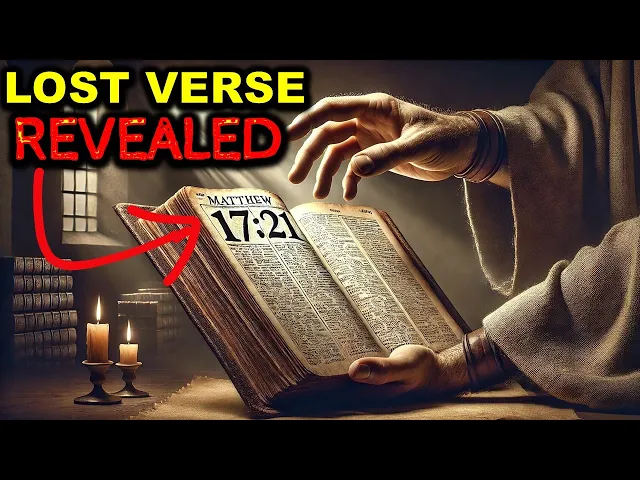
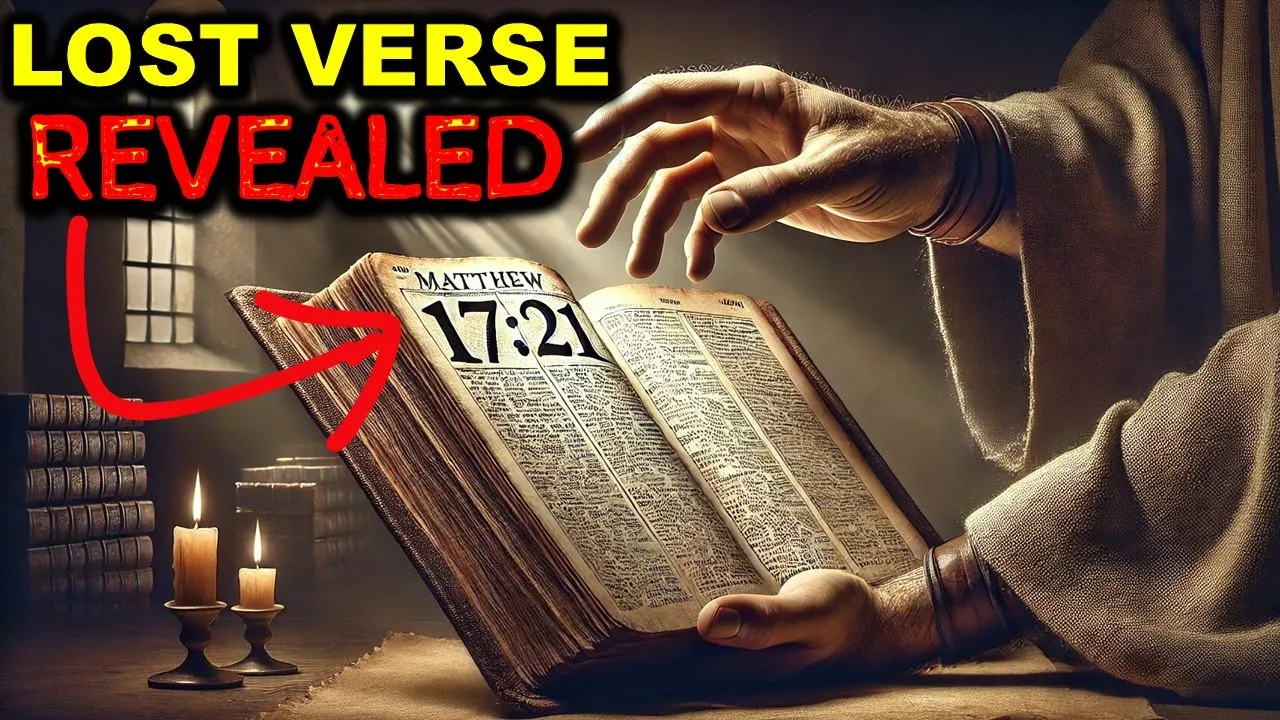
did you know that an entire verse in the Bible Matthew 17: 211 is missing from millions of modern translations why would a verse about the power of prayer and fasting simply vanish is this a conspiracy a mistake or something deeper in this video we're diving into the truth behind this mystery you'll discover why Matthew 17: 21 is omitted in some Bibles what it means for believers and how we can still trust that God has preserved his word stick around to the end you don't want to miss the powerful takeaways that will strengthen your faith and
Inspire your walk with God if you've ever wondered about the reliability of scripture or the importance of prayer and fasting this video is for you don't forget to like this video subscribe to our Channel and hit the notification Bell so you never miss a deep dive into God's word comment below with your thoughts and share this video with others it's time to spread biblical truth far and wide let's get started let's start by focusing on the verse itself in the King James version KJV Matthew 17: 211 reads how beat this kind goeth not out but
by prayer and fasting this verse is part of a pivotal moment in the gospel of Matthew where Jesus heals a boy possessed by a demon the disciples had tried to cast out the demon but failed in response Jesus explains the necessity of faith and in the KJV he concludes with this verse emphasizing the extraordinary spiritual strength required for such challenges in this context Matthew 17:21 highlights two crucial elements of spiritual life prayer and fasting Jesus teaches his disciples that some spiritual battles are so intense they demand a deeper level of dependence on God an alignment
of Body Mind and Spirit through these disciplines but if you open many modern Bible translations such as the NIV ESV or NLT you'll find Matthew 17: 211 missing entirely or marked with a footnote this has left many Christians wondering why would such an important verse be removed what are we to make of this Omission to answer these questions we must Journey back in time to explore the fascinating history of biblical manuscripts understanding where this verse came from and why it's absent in many modern translations sheds light on the complex process of how the Bible has
been preserved and translated Through the Ages the Bible as we know it today has been preserved through centuries of meticulous copying translating and compiling but the process of preserving scripture wasn't as simple as copying a single book the New Testament was originally written in Greek and scribes across different regions of the ancient world hand copied these sacred texts to ensure they could be shared with as many people as possible however not all manuscripts are identical minor differences arose over time some accidental others intentional these variations led to the development of different manuscript Traditions or text
families which Scholars categorize into groups such as the Byzantine alexandrian and Western text types Matthew 17 : 21 is a perfect example of these textual differences this verse is present in later Greek manuscripts particularly those from the Byzantine tradition these manuscripts formed the foundation of the texus receptus which was the basis for the King James version but if we go further back to some of the earliest and most complete manuscripts like the codec caticus discovered in the 19th century and the Codex vaticanus held in the Vatican Library we find that Matthew 17: 21 is absent
these early manuscripts dating back to the 4th Century are considered by many scholars to be among the most reliable due to their proximity to the original texts the absence of Matthew 17: 211 in these manuscripts raises questions about whether it was part of the original Gospel of Matthew or a later addition scribes often added or harmonized verses to clarify or emphasize points and some believe that Matthew 17: 21 may have been included later to align with Mark 9: 29 which references prayer and fasting in a similar context these differences Are Not Unusual in biblical texts
and highlight the intricate process of textual transmission over thousands of years this discovery has profound implications for translators should they prioritize the earliest and most complete manuscripts or later ones that became the basis of traditional versions like the King James these are the challenges faced by modern Bible scholars as they strive to Faithfully preserve God's word one of the biggest questions surrounding Matthew chapter 17: 21 is why it was omitted in many modern Bible translations to answer this we need to understand how scribes approach their work and how modern translators evaluate ancient manuscripts in the
ancient World scribes faced a daunting task copying lengthy texts by hand with Precision but they were also human to ensure Clarity or provide consistency across the gospels scribes sometimes harmonized passages borrowing details from one gospel to supplement another for Matthew 17: 21 many scholars believe it was borrowed from Mark chapter 9: 29 where Jesus says during the same event this kind can come out out by nothing but prayer and fasting this practice of harmonization was common in the scribal tradition a scribe might have thought if Mark mentions prayer and fasting in this account Matthew should
include it too while well intentioned this addition was likely not part of Matthew's original gospel but was inserted in later copies fast forward to the 20th and 21st centuries when Bible translators began prioritizing the oldest and most complete manuscripts like the Codex sinicus and CeX Vatican canus these manuscripts do not include Matthew 17: 21 when creating translations like the NIV ESV and others Scholars concluded that this verse might not have been part of the original text of Matthew instead it appears to be a later Edition introduced in the Byzantine text tradition because of this many
modern translations either omit Matthew 17: 21 or place it in a footnote for example example the NIV notes some manuscripts include here words similar to Mark 9: 29 this transparency allows readers to understand the variation and make informed decisions about the text this decision was not made lightly translators sought to balance faithfulness to the original text with the historical evidence provided by early manuscripts it is a reminder of the complexity of preserving God's word through centuries of transmission far from being an attack on scripture these omissions reflect the care and diligence of Scholars who want
to provide the most accurate representation of the Bible as it was originally written while Matthew 17: 21 might not appear in every modern Bible its message remains consistent with the teachings found throughout scripture so what does the omission of Matthew chapter 17: 21 mean for believers today does it undermine the integrity of scripture or change the message of the Bible the answer is clear not at all the principle of prayer and fasting remains a foundational teaching throughout the Bible even without this specific verse while textual variations can seem concerning they don't diminish the Timeless truths
of scripture Matthew 17: 21 aligns with a consistent biblical theme the importance of prayer and fasting as powerful tools for Spiritual break through for example Mark 9:29 mirrors the message of Matthew 17: 21 showing that Jesus emphasized the need for a deeper Reliance on God when confronting spiritual challenges but these practices are not limited to a single event in the gospels they are woven throughout The Narrative of scripture demonstrating their importance in the life of every believer consider acts 13: 2:3 before sending Paul and and Barnabas on their missionary journey the early church fasted and
prayed seeking God's guidance and blessing this moment illustrates how fasting and prayer prepare Believers for significant spiritual work connecting them to God's will in profound ways Isaiah Chapter 58 offers another perspective reminding us that fasting is not merely an outward act but a matter of the heart God calls his people to fast in humility breaking the chains of Injustice and caring for the oppressed when done with the right heart fasting becomes an act of worship that pleases God and transforms the believer whether done individually or in community fasting and prayer deepen our dependence on God
align us with his purposes and Empower us for Spiritual battles this truth is echoed not only in the New Testament but also in the lives of countless Believers throughout history Moses fasted for 40 days and nights as he received the law on Mount Si Daniel fasted to seek understanding and guidance from God and Jesus himself fasted for 40 days in the wilderness preparing for his public Ministry the omission of Matthew 17: 21 doesn't take away from these powerful examples instead it invites us to look at the broader Narrative of scripture and see how God calls
his people to engage in these spiritual disciplines the message Remains the Same prayer and fasting are essential to to our faith they strengthen our relationship with God equip us for Spiritual challenges and prepare us to fulfill his purposes in our lives even with variations like the omission of Matthew 17: 21 the Bible Remains the most reliable and well-documented ancient text in history it stands unmatched in its textual support and preservation over thousands of years with over Greek manuscripts and thousands more in Latin Coptic and other languages the New Testament has unparalleled textual support by comparison
other ancient works like Homer Iliad have fewer than 2,000 surviving manuscripts and most classical texts have fewer than 20 Scholars have analyze these manuscripts extensively comparing differences to reconstruct the original text with Incredible accuracy even Skeptics agree that no other ancient text has been as meticulously preserved as Christians we can trust that God has Faithfully preserved his word the Apostle Paul reminds us in 2 Timothy 3 verse 16 all scripture is God breathed and is useful for teaching rebuking correcting and training in righteousness this verse affirms not only the inspiration of scripture but also its
purpose to guide Believers in living lives that honor God while textual variations exist they do not alter the core message of the Bible the gospel remains intact Jesus Christ lived died and rose again for the Salvation of humanity these variations such as the inclusion or omission of Matthew 17: 21 often involve Minor Details and do not affect the essential truths of our faith through centuries of persecution translation efforts and technological advances the Bible has endured as a beacon of Truth and hope for billions of people around the world its unparalleled Rel reliability underscores its divine
origin and its unchanging relevance in every generation this reliability also calls us to action as stewards of God's word we are called to read study and share the Bible with others its reliability is not just an academic fact it's a testament to God's faithfulness in preserving his Truth for his people in a world of uncertainty the Bible stands as a rock of reliability its preservation accuracy and impact remind us that we serve a God who keeps his promises let us treasure this gift knowing that his word is living and active guiding us into truth so
what should we do as Christians when we encounter differences in Bible translations should we be alarmed or discouraged not at all instead let these differences be an opportunity to deepen your faith and understanding of God's word start by comparing transl ations each Bible translation has a specific goal some aim for word for word accuracy like the ESV or nasb While others like the NIV or NLT prioritize readability and meaning by exploring these translations you gain a richer understanding of scripture pay attention to the footnotes they often provide valuable context about textual variations manuscript sources and
interpretive decisions made by translators footnotes are tools to help you better understand why certain verses like Matthew 17: 211 appear in some translations but not others go deeper by exploring the history of the text resources like commentaries lexicons and Bible apps can help you uncover the meaning of the original Greek or Hebrew words and the historical context of a passage this kind of study not only answers questions but also enriches your spiritual life life studying scripture in community can also provide fresh insights discussing translations and differences with fellow Believers allows you to learn from their
perspectives and grow together in your faith but the most important thing is this let the Bible draw you closer to God the ultimate goal of studying scripture is not simply to acquire knowledge but to deepen your relationship with the Lord Psalm 119: 10 5 reminds us your word is a lamp to my feet and a light to my path whether you're comparing translations or meditating on a single verse allow the word of God to guide and transform your life when you encounter challenging passages or variations in translations don't shy away instead let it fuel your
hunger for God's truth pray for understanding fast as an act of seeking him and study scripture with a humble heart these practices will not only strengthen your faith but also equip you to share God's word with others the Bible is a gift a living word that reveals the heart of god let's cherish it study it and allow it to shape Our Lives remember the power of scripture isn't found in debates about translations but in the spirit of God working through his word to transform hearts and lives in conclusion Matthew 17: 21 feat Omission reminds us
of the rich history of the Bible and the importance of studying scripture carefully whether included or not the call to prayer and fasting remains clear and essential what do you think about Matthew 17: 211 being omitted share your thoughts in the comments don't forget to like subscribe and share this video to help others grow in their faith see you next time and God bless