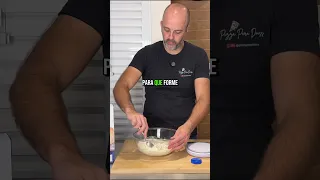
Hey guys, in today's video I'm going to make a long-fermented Neapolitan pizza dough using the indirect biga process and I'm also going to use the planetary mixer so you can see what this process is like, so this first part of the video is going to be Quickly for you, I'm going to show you here how I make my biga, hold on, good things are coming. For this biga recipe, I'm going to use 250 g of flour and for the hydration of the biga, I'm going to use 45% hydration, which corresponds to 115 g of water for the biga just for the biga so it is 250 g of flour 115 of water and 1 g of dry yeast if you are going to use fresh yeast you have to put 3 G of fresh yeast to make your biga this biga it will be part of a recipe of 500 g of flour with 62% hydration and the biga it has to be made the day before you prepare your dough because the biga has to rest at least 18 hours at room temperature so it can ferment it you You'll also have to control if your temperature is too high, you'll have to control if it's fermenting too much, you'll have to put it in the fridge for a bit to slow down its fermentation a little, so that's it, let's go, let's start here, I Here I already have the heavy flour, here you already have 250 g of Venturelli flour, the very pure Venturelli flour, it is a very strong flour, a good flour, it has 13% protein and the biga, it is highly recommended that you make it with a strong flour with a strong percentage of protein because the result of your pizza is much better with one you make the biga with the flour very strong I'm going to pour all this flour here which gives 250 G I'm going to weigh the yeast so we can dilute it in the water before we incorporate it here in the biga before we incorporate water here in the biga here, there's 1 g of yeast here, heavy now I'm going to weigh the water, I try to use mineral water, okay guys, I 'm going to put the yeast here so it can be diluted here, the more diluted the better because we dilute it so that it works better here, the flour, right, to avoid any type of lumps left here, any type of yeast from Pelota, or yeast that has not dissolved here, sometimes it takes a while just a little bit, no more than the water is a little cold It takes a little longer to dissolve But it already dissolves PR, you need to be patient to make a good pizza, you know, folks, that's the way it is, you might want to run, you can't do anything other than the result of the of your pizza, in the end, it's pretty bad and it's also good for you to organize yourself because otherwise there's no point, you'll lose the thread in the middle of the process and everything gets messed up now we're going to incorporate all this water with the yeast here, in the flour all the water we will start mixing the idea here is not to form a compacted dough, it is to form a dough that is very loose even without you compacting it without kneading it without anything PR that forms the biga so that it forms lumps And then form our biga After our fermentation, the ideal here is to leave it so that there is no leftover loose flour here in the pot . see, let's release it, we come with our hand here, we take it in our hand, a scratch on the spoon that we do here, we're going to give it one, we're going to do it with our hand, we're going to give it one, incorporated into it here, we're going to do it one flour and water to form the lumps here, to remove all this loose flour here, here, if you come and see, it looks a bit like shredded chicken.
flour is all compacted here, right in lumps, okay, you see, the biga, that's it here, it's very important for us to check that there is no more loose flour, even if we sell the larger lumps that remain, we cut them like this, see, see this Here is a very good pre-ferment, the biga, see guys, I love using the biga, I use it a lot, the doughs are amazing, we're going to put some cling film here to close this container, this container here has a lid but I don't use the lid because why? the chariot has to breathe, it has to exchange the oxygen here, the fermentation gas with oxygen, right, it has to breathe, what do we do here, I put the paper film, leave it tightly closed here, we leave it tightly closed, as if it had been hermetically sealed, without external contact with air, here, I'm going to take a toothpick here and I'm going to make holes up here so that the biga can breathe and change the oxygen here, you see this biga here, it will stay at least 18 hours at room temperature for it to take effect, right, the biga yeast will act here, leave it with a very good pre-ferment, well activated, PR in the morning when we are going to make it Our dough, the biga is ready and the dough becomes that spectacular dough. This was the first part of the recipe for you, it's going to be quick, so hold on , coming back now after the 24 hours that we made our biga, our biga is ready here, okay?
with a very good alcoholic smell, you see, biga That's right, people, you see, I put it in the fridge for a bit now at the end of the day because it's too hot here so it doesn't get hot here in the mixer And then I left it at room temperature for about 18 to 20 hours and then I put it in the fridge to make it cold so she could mix it with the cool dough so the dough doesn't get too hot because today it's 26º here now it's 8 o'clock at night, okay? very hot here we will weigh the ingredients like our biga here it has 250 g of flour and a hydration of 45% it has 113 ml g of water right which corresponds to 45% of the hydration of the biga we will calculate the rest of the water for the rest of the flour in the recipe in total, which will give a total of 62% hydration, I'm making everything with the purest aventur flour, which has 13% protein, it's a very good flour, it's really cool now for me to top up this amount of water I need 198 g of water, I'm going to add 200 to make it round, it will give about 62. 5% of hydration, that's no problem, it won't interfere with the result, just to make everything a little more exact, I'll weigh it now water here and you can see, everything is cold here, my jar is cold, my water is cold , my water was in the freezer so you can have an idea.
g of olive oil 12 g of salt I have our flour with 250 grams of flour which is the rest of the biga, right PR we can complete our recipe this recipe I made with 50% biga you can make it with 50 with 60 30 normally People make it with 30, I've already made it with 30, this recipe here I'm deciding to make with 50% of the total biga dough, half of the dough is biga, there are people who make it with 100%, you can also make it, no problem, beauty, here we have 250. g of flour that I already weighed, the flour was also in the fridge, if you have a very hot place in the place, then you have to defrost everything, we freeze everything without mercy, keep it cold because when your mixer starts to beat or your dough maker will heating the dough you have to be very smart about it my hook was in the freezer it's also very cold everything is cold here the oil is very cold here so come on we're going to start now I'm going I'm going to get this chariot the first thing I'm going to do To do this, I'm going to take the biga and I'm going to put it inside our Boo here, oh, how does the biga come out well compacted? You see what we have to do?
We have to break it into pieces here. [Music] sell, seeing our biga here. in our B, you can already see, everything is fine, it's very porad here, I'm going to add a little bit of water here so that our chariot can start our welding here very slowly and ideally, we should always time it, so what am I going to do?
now I'm going to put all our water in our beam to give it some hydration too, center here, look, we're going to incorporate our flour here, let's do that , let the dough start to mix, see, it's already starting, all the water is gone and Now put the whole biga on speed one and then start mixing the ingredients well here, I do it step by step, okay guys, first I let all the flour incorporate with all the water, all the biga when it's almost loosening or releasing everything from the Deep down I start to incorporate the olive oil, understand, I give the dough some time to come together, I don't, I don't add it all at once I'm the only one who's going to put it on speed two now that a speed like the blender is already fine, the dough is already stuck to the Boo here, the moment there is no more flour, dough stuck to the bottom of the Bol, that's the time I add the olive oil and then I put the jump on, let's see what temperature our dough is here, 14º, very calm and in this case, I'm not going to add more yeast, because the biga is already the pre-yeast, precisely you don't need P yeast for this amount of dough There's no need here, there are people who still add more yeast then I won't because we're in really good weather here, it's very warm, it's very calm, you know, the temperature of the dough here is 15. 8, you can see that we don't know what it is. our objective here is not to let the dough exceed 22º, maximum 24 grams, I let it reach more than that, I don't let it reach it, you can see here at the bottom of the bowl there is nothing left, now I'm going to reduce the speed and add the olive oil Now is the time for it to go awry, we have to slow down, otherwise the oil will fly out onto everything chelated and another thing, a lot of my students ask me Oh, but can I take the oil out because the oil is expensive and so on?
One thing, you can remove the oil, you won't have the same flavor in your dough, it won't have the same aroma, then the city will change a little but you can remove the oil, no problem, there are people who use the oil, right? I don't like oil, soybean oil, sunflower oil, oil that has a fat content, right, and I personally don't use it, I prefer not to use it . You see the dough becomes structured, start structuring it, you see the dough starts to fall apart even when you add the oil, we usually increase the speed so there is no longer any risk of the oil flying out, soon we will incorporate the salt After the oil is good and now the oil has incorporated, now go to this mixer here to beat this amount of dough, it's really good, okay guys, I've already beaten almost 2 kg of dough here in this mixer here, it also beat really well here it is practically the dough is 500 g of flour and 310 is to have 840 g of dough with olive oil with the salt that I'm going to put here now the weight of it is more or less the smell of the dough is also very tasty because of the biga now I'm going to incorporate the salt, you saw how important it is for you to incorporate one by one, very little by little to give time for the ingredients to all adhere, right?
If you incorporate it, everything looks nice, everything is done correctly so there are no problems, the temperature is 19º, it's very good here, the BOL is ok. still ice cream too and here for this mixer here, speed two is ideal, so we can knead here with any amount of dough, but that's not cool because it forces the mixer, right? It leaves the dough very stressed, there's no, there's no Why has now arrived Unos 20 grams just leave it for another 2 minutes We're still very calm at 20.
1 the temperature is that the dough is taking on a really nice texture, you see, you don't know how good it is to knead the dough in the mixer, we just keep looking at it [Laughs] ] our dough is ready here, 22 total minutes of kneading, right from incorporating the ingredients , right to the final kneading, my dough reached the maximum here, 20°, you see, it's great, I could still manage to work with it if I I wanted to, but there's no need anymore, now that we're going to do it, we're going to take the dough out of here, hook screen here, look how the dough is here, look, look, look at the dough, how is it? You see, I'm going to put it here inside this container, let it rest in the fridge, I'm going to put it here inside this container, the dough is here now in our glass jar, here it goes in the fridge, now it will rest for half an hour in the fridge, this will be its first rest And then afterwards When we get back we're going to start making the first fold, first sequence of folds to start structuring our secure dough, then it'll be quick, well, now we're going back to our refrigerator, right? That's very important when the We knead the dough in the mixer, when we come back from resting, the first rest in the refrigerator is what we are going to do now here, we are going to put this dough in, how is it going to be, just so you can have an idea, do you have any idea about this?
here, look, this point of Vel pulling from behind, here, for you to see, look, here, a couple more folds, here, two folding sequences, the dough is ready, so it's very important, as it's hot today, that we let it rest in the fridge because otherwise it starts to ferment here, it's going to give it a little stretch here. We 're already making folds in it here , it's a little sticky even at the beginning here, that's normal, in a little while it's already giving it some structure here. People call it bertin or slap and fold, people also call this method here .
It's still an ok temperature here, the dough is very cold, it'll be good and then another half hour we'll go back and do another folding sequence on it here. Hold on, it'll be quick, coming back from our first half hour of rest after our first fold. Oh, as our dough is now more structured, more beautiful, you see, it doesn't even stick straight to the counter anymore, we're going to make one more fold in it here, so we can make it more structured, stretch it here again, really stretched, Oh, what a beautiful dough What are we going to do, start giving it that little ball here, just do it backwards , leave it well stretched and let's leave it here for another half hour resting and then we'll come back to PR to see how the dough is safe, then we're coming back from wow, our last rest here, look, like the dough, it's already very good, it has a Vel point, great, excellent, I'm going to portion out these masses so we can put them in our containers here, I'm going to leave them together here so we can weigh them them and roll them here since I'm going to make 350 G dough each dough as I'm only going to make two pizzas I love this dough really cool ol 460 let's look at this one, make it well structured hej hej Just grab the napkin there so we can come back here oh in the pots You can see with this dough here, it's already very thin, we've already added it here and this one, which is already quite good, one more here, put a couple of them here, I'm going to put a little bit of olive oil on the top of them, little paper here, just put a little bit of olive oil on the top of them here so that they don't dry out we are going to close the Two jars here now we closed the Two jars they will rest here for 8 to 10 hours at room temperature as it is very hot it probably won't arrive not even 8 hours of fermentation here in less time I'm going to have to put it in the fridge and then it goes to the fridge and it will stay in the fridge for almost 72 hours PR so we can take it out 4 hours before so we can bake our pizza in approximately 72 hours That was today's content, I hope you liked it, share it, like it because it's very important for us to continue developing our content for you, it helps to spread our videos, okay, see you in the next video.