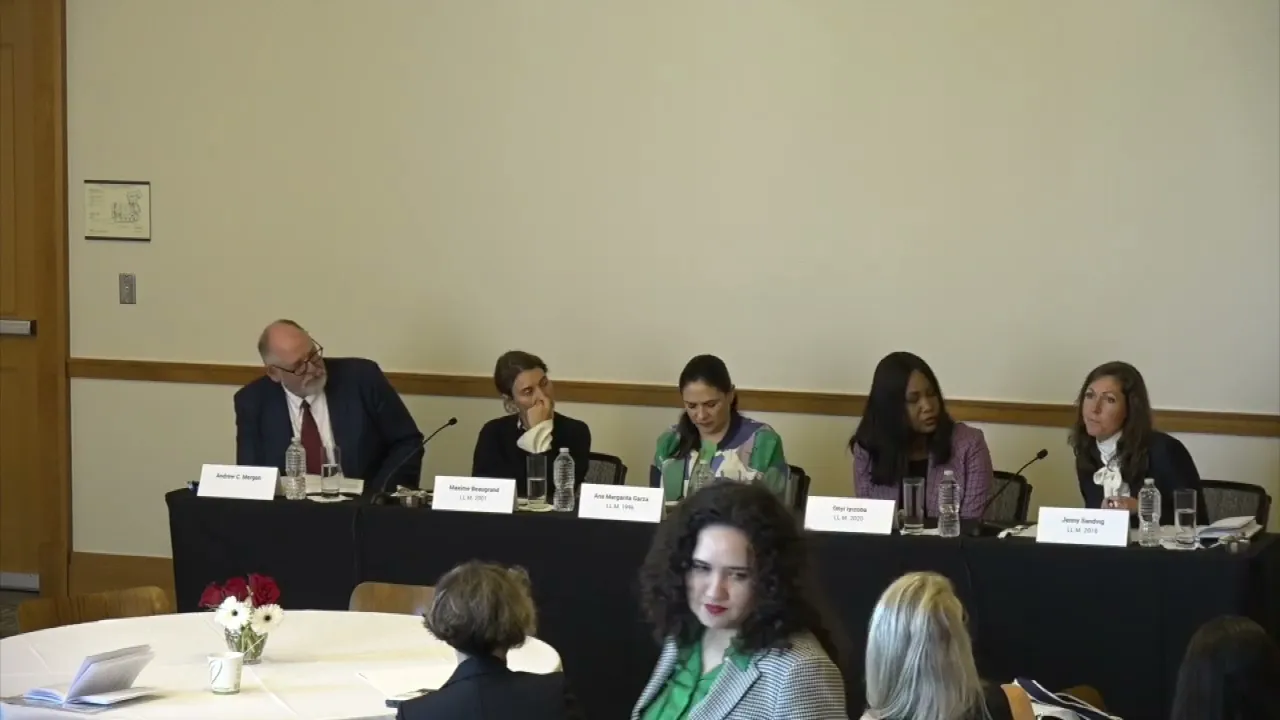
thank you an yeah hi everyone um so I work with an organization an intergovernmental organization which is based in Delhi India it's um it's like a collaborative platform of about 120 signature countries I would say it's one of the newest um International organizations because it was just launched in 2015 at cop so basically the we're looking at tackling environment um sustainability and climate change through looking at it from the energy angle we when you look at most of the um if we if we look at how we view the greenhouse emissions we all know what
causes Greenhouse emissions and um the carbon CO2 and we are looking at if this is looked at from if we can all change fundamentally how we generate and distribute energy this can have a huge impact on helping to curb emissions in the long run um on an average each country is looked at as having about 40% of its carbon emissions come from Power generating plants and if that can be replaced with cleaner new clean energy then there is a huge um curb curbing of emissions in that angle so the international solar Alliance works with its
member countries to help the green the energy transition to Greener energy which is solar um which has been seen as one of the world's cleaner sources of energy for now and um it's becoming quite cost effective also in the long run but when I just looking at it from the energy um emissions angle we're also looking at ensuring that there is universal access to energy and it's not just general access it's clean and affordable um clean energy access so part of what I do for the organization is to support a lot of the least developed
countries and most of the developing economies to ensure that they have the right legal and Regulatory framework that can attract investments in clean energy um sector in their countries so when when uh countries are trying to open up and work more towards expanding energy access especially for small island States and these least developed countries the fossil generating energy with fossil fuel at some points is still a bit cheaper than cleaner energy but at the longer run um we have environmental issues to deal with so this organization we work to ensure that the country just does
not expand its fossil fuel base to helping um create universal access to energy for all its citizens but also ensure that this uh we have the right enabling framework that can have private investors come in and um set up these clean energy plans um part of this will also include looking at working with The Regulators closely to ensure that there are those enabling environments that have been put together there is um the economic policies that we have to really um review and help them set up some of these things and then there are the parts
that has to do with capacity building for a lot of uh Regulators in these countries to ensure that in making the right decisions whether they talking about power purchase agreements or they're trying to deal with uh you know solar power plants that they have the right capacity to um go into those business decision and negotiate effectively what their work will be um and then for a lot of the other countries as well it boils down to providing technical assistance for them to have the basic the very basic uh Frameworks which can be both their regulations
um that has to do with the sort of solar that they can have or how the consumers will have to interact with using solar supplementary energy um we can sometimes we have to help redraft their energy principle laws just to ensure that these are some of the right ways that they can integrate clean energy mix in their countries in um this Dall fold so part of um this has been also my experience from the Harvard Law School even while I wasn't specifically under the environmental um Clinic which I tried to get in but at some
point because of my credit load I couldn't but I had uh I had I had been quite very interested in law and economic development um took a couple of Cl courses on that with David Kennedy and um there are some other cses so that has helped me in discussing and navigating This legal and business Landscapes and having to deal with the policy decision Mak for a lot of the governments when we're having to navigate between um cost effectiveness of a particular source of energy and having to go with the existing status qu so there's um
having a very multidisplinary uh background from the Harvard Law School kind of equipped me for the current role uh which was quite out of Sur Deputy I wasn't looking to get into energy law but working for the this organization I found myself having to lead this regulatory initiative um because I I was there and that drawing back from my background from the Harvard Law School it has been amazing to work with um so many African countries and so many Pacific island developing States in creating what uh will be enabling for clean energy investments in the
various countries yeah thank you thank you so much Professor Morgan and uh thank you to my co-panelist it's fascinating to hear your stories and thank you so much uh for the invitation it's an it's absolutely delightful to be back here at Harvard it meant the world to me um I work as a private attorney uh in a commercial law firm in Oslo called similon f where I have the great luck of representing several environmental organizations in lawsuits before went into private practice I worked for the national human rights institution in Norway where I had the
honor of representing 46 National human rights institutions in Europe in support of some very courageous Swiss elderly women called the CLA seorin in a um Landmark win against Switzerland in the European Court of Human Rights I pleaded in the Court's Grand chamber with the support of another Harvard alumna uh Cataline s uh who works for the Ombudsman for future Generations in Hungary and um we were able to reach out to each other because we both knew that we had gone to Harvard and had heard about each other so that was instrumental just in that little
sense and the court followed our advice deriving a right to protection against climate harm from the right to privacy and acknowledging that the right to life is applicable to climate harm and since last year I represent Green Peace Nordic and uh young Friends of the earth Norway in an injunction case against the Norwegian states to suspend and quash three new oil permits in the North Sea and we won on all counts in the district court in January and we're now defending that win on appeal in June the UK Supreme Court who we heard from uh
late Justice lady Arden the UK Supreme Court followed the osel district court citing rwin as persuasive Authority in the interpretation of a central EU directive on environmental impact assessments and the UK government not yet their Norwegian counterparts but the UK government now concedes that there's an error in law and has thrown its hands in several similar lawsuits including a coal mine that will ensure that several hundred million tons of CO2 is going to stay below ground if it's not permitted and relatedly I represent the same organizations in a uh high-profile case before the European Court
of human rights on Arctic drilling we have submitted scientific evidence that the 6.6 gigatons of CO2 only CO2 that is embedded in the Arctic which is now opened for drilling would cause millions of deaths only from heat and could in itself trigger tipping points and that it would melt away the highly snow defendent Sami indigenous cultural practices that Norway has a particular responsibility to protect and we say that the decision to open the Arctic for drilling violate their right to life and physical integrity and at any rate that the disregard for those disparate impacts amounts
to indirect discrimination against their interests and finally I represent the World Wildlife Foundation in a new challenge against an equally Reckless decision to open an area the size of the UK for deep sea mining on the Norwegian continental shelf and since no one has knowledge about 99% of the area we have no idea who what species there are down there we just recently learned that oxygen is produced in the depths of sea we say that the environmental impact assessment is flawed so that's a case we're fighting now in November and I'd love to come to
the impact of Harvard but I'll say it was truly transformational for what I've done thank you so much um we're going to give uh folks lots of time for questions but um I want to start with uh you some of you have had a chance to reflect on um your time at Harvard and uh how that has uh you know uh made a difference in the in the work that you do now I'm really interested in sort of what advice you have um and I'm just blown away by this panel is amazing so thank you
so much for making the time to to come and speak uh to us today but I'm really interested in sort of like what advice um you might have for uh the folks in the audience and uh uh our students right that that we're working with today the JD and llm students uh about uh getting into this work uh how to think about this work things that you gained uh an appreciation for during your time from Harvard and maybe things that uh as the world changes we confront this climate catastrophe uh biodiversity catastrophe all of these
things are happening that you think we ought to be doing um does that sound fair and um I'll I'll do it the opposite direction Jenny I'll start with you well thank you um no advice is always very difficult to give uh it's best to give on self advice in hindsight but um I say um I think if I can if I can go a little personal I think that's the best the most genus answer you can get um I came here to Harvard as a ambitious government attorney I was preoccupied by the legitimacy of international
courts I was concerned about certain expansionist radical interpretations of some courts on detriment of Norwegian uh government interests but I also came here as a young mom with the child the Harvard generous leades deferred my admission for a year and she took her first steps on these grounds and with her um a growing anxiety that that we were not leaving her and her Playmates a better world so during commencement I tore up my course plans and I decided to enroll in Jodi Freeman's clim course on climate and law policy and that's the best decision I've
made and I also soaked up all courses across Cambridge across campus on environment and climate far beyond law and there's one afternoon that's set in stone for me it's a class I took with Professor Daniel shrag in geology he was uh visiting uh Freeman's class and he just set out the brutal physics of climate science and it opened my eyes I knew but I didn't know how bad and I remember walking in the rain back home that afternoon and promising myself that I would do everything in my power to do something about that and I
conf finded in Professor David Kennedy at one point that I also had who was phenomenal and he said that what you describe is a turn from process to substance and that's Harvard Law School to me it's deep knowledge that you can expose yourself to but it's also the agency to use it and it's the confidence that you have acquired cutting Ed Edge knowledge and that you can bring that back to wherever you come from I come from the seventh largest exporter of oil and that's you can put that knowledge to use and that it's it's
a massive privilege to be here as a student pure luck and skill but a lot of luck to come in it's a massive privilege and with that comes the duty to use that knowledge to the best of the societies that you come from because it's Limitless what you can achieve if you only pursue your own ends but with that privilege comes to duty to to use it to the best of others so my advice to wrap that up is is expose yourself to new knowledge and do all the reading it's going to be super tough
and and find your own voice my supervisor Vicky Jackson she said why do you cite all these judges what do you mean learn about that and make friends you're going to have a patchwork of phenomenal lawyers out there who's going to help you and and it's going to achieve amazing things and I guess my last advice for those of you with any with kids it's going to be a lot harder I think uh but it's doable and it's good to take breaks from Readings and to do something that's fun and to have a routine that
sort of splits it up especially if you work in this field because it's exhausting because it's just pure uphill to take care of yourself so it's um going to be difficult to top that but I think that Jenny I think that Jenny had uh put it um all into context and I recall quite fondly the advice if an alumni a former hls um llm had also given me when I was stressing out about my law school days um he told me I think I had I had a paper to submit to David Kennedy and I
couldn't figure out what I was doing and he told me that Havard law school is a great place to be from and not at so when you're at Harvard Law School it takes it toll on you but mentally physically academically because the rigorous training um the analytical skills that you need to put in place the readings um the clinics the seminars they are quite a lot um and of course you have to give in your best so yes there's going to be a lot of time that you just feel like uh you're not getting a
breeding space but just remember that this is the nuring process and I had a fantastic time at the Harvard Law School taking being close to a lot of the professors um always feel free to go ask your questions even if it means you you think it's the most stupid question on Earth but I have seen that there is the multidisiplinary approach in a lot of the courses as well so you can be stressing out about something in international business law and then you're able to navigate it from what you've gotten from law and economic development
so these are some of the ways that I've seen that I was able to U make the most use of my time at the Harvard Law School and um most importantly I would want to add that being here was transformative for me because it it takes you out from just being your country person now you're probably from Greece or you're from Brazil or from Nigeria but after this program you're not just competing within your geography anymore you're able to contribute on the global skill you're able to effectively uh compete and contribute widely enough because of
the sort of background that you're going to get from har a law school so that is the transformative effect of the llm it doesn't put you in one box it gives you the the world becomes your oyster and you're able to move across jurisdictions and help sort uh real life challenges and problems in these spaces so I would also encourage you to network uh this is a high value network of individuals both from your professors to your fellow students to the alumni make sure uh to be in contact touch based with everyone and this has
been transformative for me in also helping to shape my career as I go forward and I believe that it will also help you all thank you so I would start with a very personal experience first class halfway through I start feeling awful long story short kidney stones so I missed the whole full first week where you are going to be auditing classes so I was stuck with the classes I had chosen but what it meant for me is that I made somehow instant friends the solidarity of people being away and helping you it was an
amazing experience in fact those are my one of my few best friends internationally I still have contact with them and that and I got an advice from a former a a friend who was here at the llm and was Dean at our law school he said social life is mandatory and I'm like huh how mandatory and what what extent of social do you mean and I think reflecting on that in hindsight is the legal I mean the classroom and the formal legal education is very important but the real life experience of learning from other people
from their point of view that's how I learned International environmental law and I had no idea because I was hearing from something in Syria was from Africa from the Amazon and I mean those were the Casual conversations we were having and they were being kind of archived in my mind and then it gives you a different perspective because you go back and you are different in the sense of your mind has been opened and there's no turning back which means that now you have a responsibility and that responsibility gives you I wouldn't say entitlement but
it empowers you to speak up to do something to move beyond your small space and and and make difference small or big it doesn't matter it's different as long as in the right direction and for the right reasons because we do things that or others do things without thinking about stuff and and there's a duty in in knowing that a responsibility and accountability in doing that and so for me now working with UNICEF and pure Earth in first it was a program called protecting every child's potential and now it's healthy environments for healthy children which
is addressing the aspects of uh climate change in children and and the effect it has on them it it is about that responsibility and that accountability to make sure that you help change happen and and I think having the network that you create and your exposed to it's it's transformative I for me that's a very powerful word of what it encompasses being here having access we have a saying in Spanish don't give me just put me where there is so you have access and and and I think that is very good from uh networking and
and experience perspective but also it is a huge uh Challenge and responsibility and I think we have that to to be grateful from the experience being in Harvard Law School and the llm program um I'll be short it feels like it's a repetition there's a little bit of each uh of what has been said that I could say again um I guess um common threat would be agreed to be disorientated even though there's orientation week because it's it's only the beginning of the journey um of Awakening and I think we can all share that I
mean I personally choose classes that had no idea even existed uh in this world um in their content their approach their methodology I was absolutely terrified of my first few classes but so agreed to be disorientated uh agree to step out of your comfort zone embrace it because eventually you'll see looking back and we have the privilege of doing here tonight uh today it's uh there's a thread if you've got out of your comfort zone you open up your your brains and then you'll you'll pay back somehow some way um the privilege uh I agree
fully and the the duty to be agents of change and of course as you uh you've heard me I do this with a sense of urgency um I'm like Jenny uh we we we pick up on the on the same piece of the science the Arctic The Tipping points as you know I'm just terrified of um the the the near term and how we're going to de end and how we're going to make a difference now um again agree with um Anna Maria Thea Margarita sorry the um the opportunity to have a um a worldwide
Network one of my colleague from Turkey uh is here gonen um we uh we lose ourselves find ourselves again 20 years later and um and I feel a little bit old though I'm a little bit jealous and and I'm not going tell you with me but those two uh um they're a little bit annoying and you know mostly because they had the opportunity to have environmental classes when I walked in in 2001n I'm more developed internet but we didn't have um that wasn't on offer so I think um I quite like can we do a
second one do we get refund on the second llm I'm so jealous I quite like I'm pondering don't know whether that fit with my um my sense of urgency but um I'm very happy to be here and maybe you can be um doing my vicariously doing my second llm which I would love to to have the opportunity to do uh use your network um yes uh my boss always says there's a fine line between networking and not working so you just just have to just put in the put in the eyes and do your networking
um but yeah very happy to be here very privileged um to um talk with all of you and uh expand our net work thank you I'm going to um to pick up on a phrase that Anna used um which I loved I've heard a great a number of phrases that I'm going to put into my vocabulary but uh I'm going to embrace the bear here and uh move on to a to a somewhat more serious subject which is as um the panel was recounting the the incredibly uh important work that they do I heard discussion
of uh Pediatric health I heard discussion of energy Equity the climate crisis tipping points our duties to indigenous people and the threats that they face in the climate crisis these are really serious things that they're things that we all think about a lot in the Harvard environmental law program and I would love for the panel to just sort of um going back to the work that you do and your experiences and also um you know being a parent in the space obviously uh very significant um talk a little bit about something in your daytoday work
that makes you hopeful um and I I'll open it up to whoever might want to start on that let me start with uh an example in in all this awareness of Children's Health in the country of Georgia there's um like 50% of the children in the country had lead in Blood and and the sources is spices they add lead in order to brighten the color of turmeric so beware of turmeric um and in two years because there was this Coalition between government a willingness and the Nos and the funding that allowed it to change in
less than two years and for me that meant that there's hope and and the duty is of how to make those actors work because we know all the differences that we have what about discussing where we meet our minds and and I think is the how to get to yes in fact there was a professor about that book and we took courses on that and lectures and and to getting to yes it's a much more difficult road but every time there's a new National Health survey in Mexico that is integrating as mandatory to do let
checks on pregnant women and children under five years of age it's a good day because you are detecting that and and and then of course the treatments and this and that and whatever but it's it's opening and making people aware of things and and I think bringing all those discussions forward and and being able to have progress moving forward I think for me it's it's it's amazing and we recycled around 30 million batteries a year in or 8,000 batteries per hour in the world and knowing that all those batteries are not in a dumpster or
in a river or leaking or leeching into the under groundw or a that they're being recycled uh inadequately and the fumes go to organic crops for me it's it's it's something that I cannot stop doing in in terms of the importance of circular economy and doing things right and and and it's the not working people of the networking and that you need to be able to get more people on this side than the other side anyone else I'd love to pick up on that um how to get more people on this side and and of
course it's not dimensional but but I yeah I I wanted to to continue there because that's what's that what that's something that gives me hope day to day is to see and to represent these brilliant youth um that are just bursting with energy with competence and with enthusiasm and courage um and coupling them with scientists that are sort of have thought about this are frustrated but also have magnificent ways of of explaining these things um and to couple that again with interest from finance and also at least in Norway a growing sense of urgency in
media which is no small thing because this is a very petrol dependent country which is duped in in petrol uh commercials every day so but it's it's it's turning a little bit uh in the social legitimacy of exposing younger generations to these plights without any consideration and the dangers of of of of these continue a business as usual and what really gives me hope is how you see that cross fertilization of Juris Prudence across jurisdiction and it's feels at times as a raise to the top because yes you will have outliers with with judgments that
are not science-based or that are very much doesn't understand what's at stake but then that Juris Prudential dialogue is informed by very much scientific based judgments such as the itas opinion such as the stasbor court judgment and they are raising the bar so that it doesn't really matter that you have some some cases that doesn't go well because they doesn't hold up argumentatively because you're not grounded sufficiently in in an understanding of the urgency that is objectively there so I think that's something that gives me hope it's just it's it it's um you see that
the more the more this is sort of um the more accessible this information is the more people come on board okay um so I will say that what gives me hope in this is seeing the the hope that we bring to a lot of um lesser developed economies there is a particular country that we worked with and the day that we helped them solarize one of their health centers and the nurses there discussed how they had carried out cesarian operations for women giv birth with torch lights from their mobile phones and the number of deaths
that they had recorded because of no energy there was no um energy security it it was um to me a light bulb moments on what is the disparity between the developed count and when we're talking about maternal mortal mortality and talking about infant mortality it's not just about diseases it also comes from lack of vaccines lack of energy and some of the ways that we can support uh these countries is in helping them access clean and affordable energy so having um hearing from these people and seeing a lot of the improvements that have been done
in the health care centers um from these the it kind of gives me hope um that the work that we're doing with energy Equity isn't just um for the sake of being you know doing some work that it's actually making impactful meaning for a lot of the societies that needed out there so uh for me that gives me hope and keeps me moving yeah next time I'll steal the floor first because although I feel like I'm a copycat yeah um no fully agree with Jenny um again you have to remember we uh we're not uh
that old but we kind of you know bit veterans in in this room so feel like the um the growth in um in activism around me is um feels Cozier because I'm not alone but um so I I get hope in in seeing extremely sophisticated um smart young activists taking up cases that um that I support and help make and and and seeing them uh with successful lawyers in in charge um this extremely um uh gives me a lot of hope that this um this Army of conscious climate conscious professionals is is is growing now
again we have to um to um not just sit and um just enjoy each other's company but do it with a purpose and uh and and I'm hopeful that we will make a dent but we have to be all hands- on Deck uh there's no time to spare um but otherwise um yeah sharing everybody's um hope and with a bit of warning cautious optimism uh we're try to nail it that way I think we um it's probably a good time to take some questions for the panel so we'll open it up at this point just
a quick note there's a microphone going around we do ask hello this is guruk uh llm 2001 same class as Maxim so I got into the uh the climate fight uh quite late in the process uh and Maxim has been influential in that actually um I'm uh I have functioned as uh a Board of Trustees member of client Earth for a very long time globally and uh one thing I found um was that as Jenny said information becoming uh accessible makes it um quite inviting but also there are a lot of people out there um
that uh do not live up to the expectations of a climate fighter in their lives yet they have good litigation abilities and they have their hearts in the right place to do things this is a an ongoing thing between me and Maxim as well because Maxim is on the pedestal and she lives life the way it should be lived in terms of climate whereas I I do eat the big steak and I I I constantly I I didn't row across the Atlantic uh you know I I do eat the big steak every once in a
while and I I do fly every where and you know my life is not an exemplary life of someone who would do climate uh change work um yet as I went into litigating more and more of these things and especially uh haunting the standing matter I found that a lot of young people they feel first they should there get their act together and then they will deserve to move into the uh climate litigation uh field would you agree with it is there a way of of dealing with this problem don't you think making it accessible
in terms of you know you you're a good person just come on and and do your thing you don't have to you know be one of us uh kind of a thing don't you think it it may also help um I know that we're close to the Tipping Point and I I know that uh it is important for people to uh be consistent in what they argue and what they do but but at the same time I feel like we're losing a lot of valuable resources and and people who could make a change so question
to whoever uh wants to take it on maybe this time I'm going to you're so you're no I you know listen again I want to build an army um everyone's welcome all hands on deck I don't have any um any pre conceptions about who can be who can't be on board um all I know also is something we weren't asked about what we find difficult um we are hopeful but we are also I mean the the the what I worry about as you know is speed and um the last three days I was in New
York and a lot of my at the climate week um and a lot of my interactions are trying to fundraise money to fund this climate litigation and this policy work as an NGO and um and I'm trying I'm having the same theme with those funders speed at funding put your money into to play everybody gets on board so we've done 125 grounds in our climate litigation program and that's the Mantra put the money into play with trusted grantees um and they know they know their field allow them to regant but the the bottom line is
um the overarching theme for me is speed yes sometimes you make mistakes but it's still better than just keeping um still get get going thank you and and it's a it's a great question and I I I fully agree with you same here I I actually I I I had the same question for for uh my professor uh Jody Freeman when before I left because I was uh trying to figure out how to be effective where to go and she sort of set up a number of things I could do you know doing going to
the industry going to politics going to Academia but what she did say is you will be tempted to to to to to sort of live very purely but you can't necessarily be effective if your preoccupation is by living so purely so if you want to be effective let that be sort of The Guiding The Guiding thing uh but of course personally I do find it easier if I'm aligned a little bit with what I preach but I don't think that that is needed of everyone that's how I work but um but I I I fly
I I I came here I didn't row so I I I think you you can't if if you are to sort of you can't ask the impossible of you have to if if there's something to be done you have to allow yourself the tools to do it yeah let me add something two things first a warning I've encountered a lot of what I call environmental mercenaries and and it's very easy to mistake them for young activists they want to have presence and they're able to move money for the wrong reasons and and my take with
that is the other aspect of how do you take that force and flip it in what sense invite them to understand the issues from all angles because the first thing is run away from them embracing the bear concept like okay come on let me take you to what is a substandard or illegal recycling facility and let me take you to one which is done properly and then the consequences of all that that's been done proper um illegally or not properly and and how do you change that because what I found for example with the pottery
thing is that the easiest way out was ban potery and what about all the families and the indigenous groups that that's their livelihood so from one stroke you could be wiping people out and so how do you find creative ways and the frustration there it's sometimes it's the longer Road and not the fastest but it's the right Road in the sense that you're protecting a a group like in the case of fers but also you're educating people to understand the problems from the different aspects because I understand the urgency The Tipping Point and all those
kind of things but I mean I'm from an industrial city so it wouldn't be a successful City and attracting so much International Investment and with all the the new Shing and all those kind of things without industry and jobs and universities and and all that if you're not having places to to work the thing is how do you change those places and and and the way and the ethics of industry and associations to to improve things and so I would say for young people who want to be there to get better informed and and to
raise the bar on ethics because the mercenaries are out there uh any other other questions we'll get you next thank you um my name is Gabriela Greenstein I did my llm in in 2012 and I like the question about what makes you hopeful so I'm going to take a Twist on that one so what is one action you think it's doable to combat climate change and that you would focus you know your areas's expertise into doing that next Kurt methane Kurt methane can avoid three I mean can avoid cutting the short live climate pollutant non
CO2 can avoid 3 to five more warming than CO2 can do alone by um 2050 so let's just try to be efficient if we need to prioritize and it's difficult uh to change a lot of to transition way of a lot of practices and economy um so my uh my biggest the single fastest cheapest piece um is to um reduce methan emissions so it's not um it's very the low hanging fruit is the fossil methane uh because the Technologies are available affordable scalable uh and most of the time they um they are 75% of the
time they're non um cost no cost for the fosil fuel industry to put them into place easy right is um waste um also Technologies available um agriculture difficult politically but um but but not impossible just takes a lot more sophistication to address it so for me cut methane there's a piece in um you can search on on the internet there's an article from someone said cut methane or die that's where we are because we need U and it's you know it's a death sentence for some country between 1.5 and two you know we sitting there
I'm I'm not going to be um um in my daily life apart from couple of heat waves or maybe a bit of rain in London but you know on the front line it's it's a different story so I think um we have to be efficient and that's my pece for now just mandatory and ethical recycling time for one more question here I think yeah well well uh you you are spoken with about your your daughter and um what else can we do with children you spoke about Youth and um I went through your experiment in
other words I was working for heavy Chemical Company I was working with sve I was senior vice president and one day my 10 year-old said you don't walk the talk and um okay fine let's let's resign and I created a tiny NGO which is now in France because can you hear from my accent I'm French and uh at least you got rid of your accent it's good I married a Brit that's then you get the big big excuse and um and my tiny AG is called Albatros and we we train about 15,000 kids uh in
China France and Brazil and um and we are using like very simple Innovative tools and therefore uh what do you do what do you envision for children to train them basically on uh climate ethics in a in a way which could be instrumental in the in the future because um well I do believe that education at the the youngest age can be um where we should start from even before fundraising because I mean I know fundraising is always like a headache for whatever we do and this um this world is driven by um by by
money I mean let's face it but on the other hand um when we go down to to ethics sometimes there is a contradiction in I mean this is just my tiny view w it looks like you have more um experience in me than in educating so I mean I have I just no no no but I think I would like to hear what you do and replicate that further and we just have we have adopted four kids when we are living in Asia with my husband which was like crazy things to do and uh and
then they taught me because um I was like you I was like in corporate find and then after that I turn into chemical and and this this was not good for for my kids and basically I took the lesson from my my tiny from from my kitchen I would say because my kids were like that uh I mean they were like criticizing me I I think I think that's that's quite Central I mean in some countries like mine climate change can be a divisive issue but but if we really drill down it it's all about
what we leave for the youngest and those who will come after and I think that's a fundamentally unifying issue that's something that we all have an interest in is preserving conditions for life right exactly and that is so I think it's it's one shouldn't place that responsibility of course on on underage and and youth of everyone who's adult must step up but um I at least draw um whenever I need energy I I think of all those who will Who who would have thought the same in the years to come and then that makes any
resistance seem quite pale in comparison I think we're out of time uh I want to thank our incredibly wonderful panel [Applause]