Hello art friends! My name is Anoosha Syed, and I am a picture book author and illustrator. I’ve made many videos in the past on how I illustrate my books, how to start your illustration career, and the business side of industry, however I realized that there aren’t a lot of resources out there for people who are completely new to picture books that go over the absolute basics.
So I’m starting a new series called Picture Book Basics; instead of my usual hour long guides, these are shorter videos that go through every tiny step of the publishing world. As you’re working in the picture book industry you might come across some words you’ve never seen before. Maybe your editor asks who you want to send your ARC’s to, or your art director asks for your opinion on the trim-size.
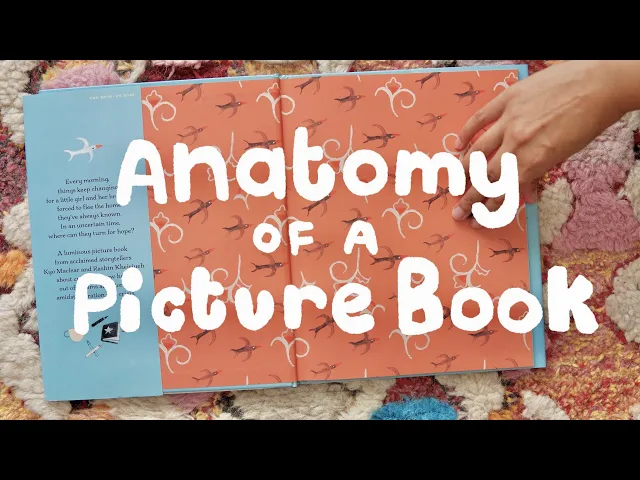
If you don’t know what these words mean and you wish there was a picturebook dictionary, you’ve come to the right place. In this video, we’re talking about the anatomy of a Picture Book and going over some publishing vocabulary. Let’s go!
— **Jacket**: A dust jacket is a removable paper cover that keeps the book clean and protected. It wraps around the back and has two flaps that fold inside. The front flap includes a brief description of the book, while the back flap contains the author and illustrator photos and bios.
Paperbacks and board books never have a jacket. Jackets are only found on hardcover books, but it is possible to have a hardcover without a jacket. Besides protecting the book, the jacket also makes the book look more luxurious, and you can have a lot of fun with the design of a jacket to really entice readers.
Adding things like spot gloss, or emboss, holographic or gold foil. **Case**: The case wrap is the actual cover of the book, underneath the jacket. The artwork can be identical to the jacket, but this is definitely an opportunity to be creative here.
The cool thing is that sometimes the jacket and case covers will have completely different art. Case reveals are always a lovely surprise, and feels like a little secret. You also don’t need to include the title on the case and instead have fun with a completely illustrated cover.
**Page Count:** As I mentioned in my last video, picturebooks are generally 32 pages long but the pages can come in any multiples of 8. Like 16, 24, 32, 40 or 48 pages. This is because of how books are printed.
Remember, that if you have a 32 page book, that doesn’t mean you will have 32 pages to tell a story; some of those pages will be used for your front matter and end pages. **Endpapers**: Endpapers are pasted pages at the beginning and end of the book, on the other side of the cover. These will usually only be in hardcover books because they are used to hold the interior pages onto the cover.
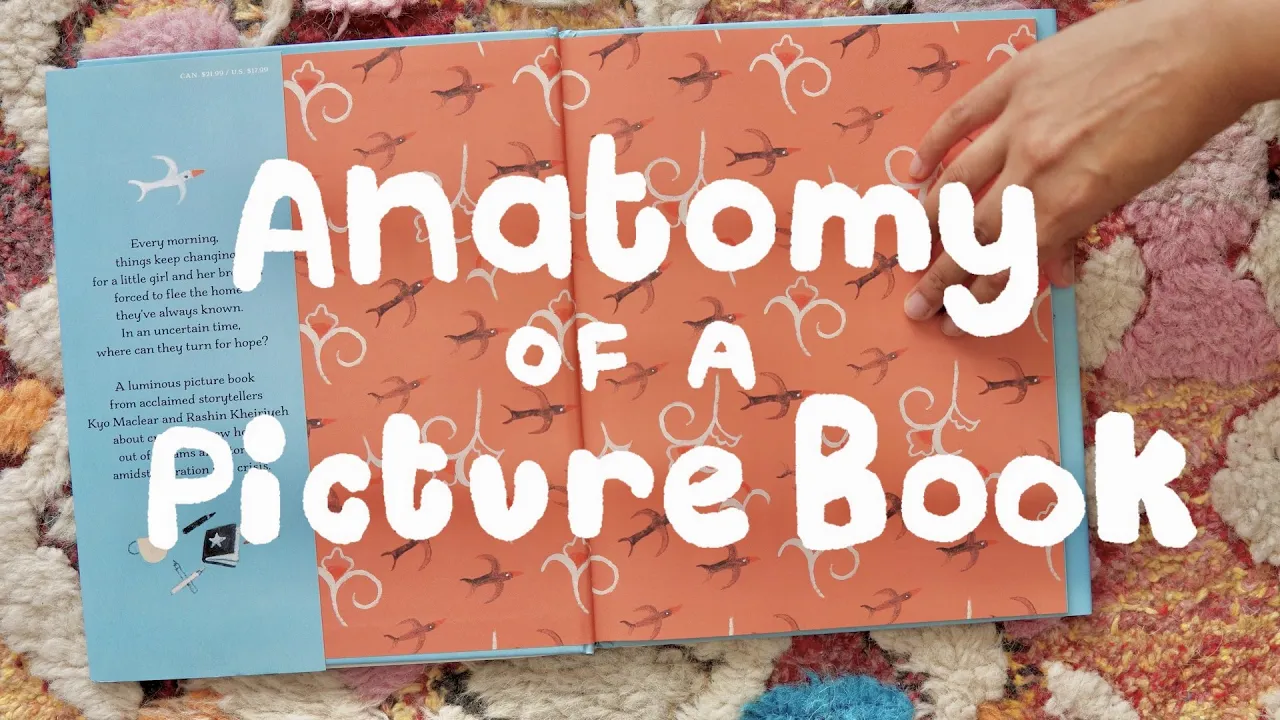
However, some picture books can have endpapers purely for aesthetic reasons even if they aren’t technically needed. Endpapers can be a simple flat color, but it’s also a great opportunity to add some lovely details to your book. You can find an illustrated pattern related to the book, or occasionally a full illustration.
This is dependant on the two ways a book can be made: **Self-ended books** Endpapers are printed on the same paper as the rest of the book and are included in the usual 32-page count in a picture book. S**eparate-ended books** the endpapers are printed on different paper than the rest of the book and not counted in the 32-page count. A good way to tell the difference is by using your hands.
If I pick up a book and touch the first two loose pages and they feel the same, they are self-ended. If the pages are made of two different papers, they are seperate ended. This book for example has a matte paper for the ends, and a nice glossy paper for the interior pages.
You can also tell it’s seperate-ended because it has a two color pattern. In contrast, this self-ended book has full-color illustration. What are the benefits of doing one of the other?
You can see with seperate ends, you have more pages to use for your actual story since they aren’t being used for the endpapers, this can be really helpful if your story is getting too long. On the other hand, having full-color endpapers can be really fun and used to add some fun details to your book. You can find out more at Tara Lazar’s blog post on Picture Book Construction, and Editorial Anonymous post of Book construction.
**Front Matter** Everything before the actual story is your front matter. This includes the **Copyright info:** which has information on the publisher, the printing year, the copyright info, the ISBN number and what tools the artist used for the book. **ISBN:** The International Standard Book Number is a unique number assigned to each book.
It is used by publishers, booksellers, and libraries to easily identify books for ordering and stocking purposes. **Dedication:** **Title Page,** which has the title, the author and illustrations names, and the publisher. Depending on the page count, these can all have their own pages or be combined together.
Here are a few examples. One where the copyright, dedication, and title page all have their own pages. And here’s an example of them combined.
**Spine**: The spine is the literal glue holding your book together. It is the outside edge of the book where the pages are gathered and bound. This is the part you’ll see when your book is on a shelf, and will have the title on it, the author and illustrator, and the publisher.
**Gutter**: When you open up a book, the middle crease where your page intersect is called the gutter. If you want a horrible analogy. the spine is your elbow, then the gutter is the inside of your elbow.
Some books will be able to open up completely flat if it is saddled-stitched without a spine. However, if it is a hardcover book, the pages will curve away from the spine, creating a deep indentation and a gutter. This can cause issues when you’re illustrating a spread.
A lot of information can get lost in the gutter, so it’s crucial to design your spread with that in mind. Make sure you don’t have any important elements in the middle of your spread like faces, otherwise they’ll either be distorted or disappear completely. Within the book you can have several types of illustration: Spreads, Spots, Vignettes and Full page illustrations.
These all serve different purposes, but this will be the topic of anothern video **Back matter:** This is supplemental material at the end of the book. This can include educational resources for parents and teachers, a glossary, interviews, photos and the authors notes. It’s totally optional, and I usually find these at the end of non-fiction books or ones based on true stories.
Here are a few examples: Bilal Cooks Daal, I Am Perfectly Designed, Lost in The Library, etc **Trim Size:** This is the actual size of the book, like 8. 5x11 inches. However, as an illustrator you’ll be working slightly larger than that.
The **bleed** is the area of the canvas that extends past the book, that will be cut off after printing. This could be as small as 0. 25 inches all around your canvas.
The bleed and trim is usually determined by your publisher, though I was able to choose the dimensions of my author/book. If you’re self-publishing, you’d need to research what dimensions your printer requires. **Book Dummy:** When you are pitching a book to a publisher, you submit a rough draft called a book dummy.
This would be your manuscript set up with all your sketched interiors, and a few sample illustrated pages to give an idea of the final art style. Here’s my dummy for my book That’s Not My Name. For more information on pitching, check out my video ‘How I Got my PictureBook Deal’.
**Proofs**: These are the loose pages of the book printed using the same paper and dimensions as the final book, but not trimmed or bound. These are sometimes sent to the illustrator to get a closer look at the pages to make sure everything looks ok before the final printing. I would inspect the proofs to see if there are any mistakes I missed in the artwork, and more importantly, to confirm the printing was accurate.
If the colors were inaccurate to my art for example, I would let the publisher know to fix that for the final book. **ARCs**: Advanced Reader Copies, also known as ARC’s, are an early copy of your book. These are sent out to various people to generate publicity before the official publication of the book.
You can send ARC’s to booksellers, reviewers, influencers, publishing friends, award committees.