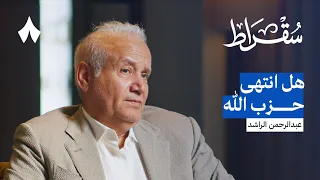
How are you contributing to the growth of the economy without destroying the old economy or the private sector? which complains today sometimes, or even always that the Fund is pressuring them? I used to ask the ministers: What are the things that we are competing with them over? No answers I sat in a number of meetings with members, the private sector salespeople, entrepreneurs or CEOs in the Eastern Region, Western Region, and Riyadh I sat with them and told them: Give me an example I got no answers This is Socrates, from Thmanyah Radio and I am Omar
Jeraisy. I host leaders of change, leaders of business and leaders of opinion and talk with them about the updates and targets of Saudi Arabia's Vision 2030 Today's episode's guest has been numerously and continuously nominated by you, hoping for his presence And I share with you that aspiration for the importance of the enterprises He is responsible for leading. Today's guest is Mr. Yasir Al-Rumayyan Governor of the Public Investment Fund (PIF). A historic episode because we talked about the beginnings. about the establishment; The backstage events of the start of the PIF in its new form How was
its strategy built? How were the investment portfolios identified? What was its nature in terms of the number of employees? Targets? Revenues on assets which were available? And what has changed today in terms of assets and revenues? How did we achieve this jump in revenues? And how did our guest choose his team for this start? Then we talked about the previous phase What are the most important outcomes of the established companies? Do they compete with the private sector by establishing these companies? How does our guest comment on this constant accusation of the PIF that it competes
with the private sector? Then we talked about their future endeavours What is their focus? What are the sectors? The aviation sector What's the deal with the new airlines? Why are they entering sectors which are, for some people, not necessarily serious? Like the entertainment sector sporting games or even clubs? We talked about New Castle United, Why have we invested in it? Why did we invest in football? And why New Castle United in particular? What are the expected revenues from this investment? We continued onto the subject of SoftBank The investment that isn't bringing big revenues to the
PIF. In contrast, it is incurring loses So how does our guest reply? Why did we even invest in this fund? And what is its reality today? And we continued talking about the most important points about the economic effects and new job opportunities And because we know that one episode isn't enough for all of our questions about the PIF, We asked our guest to focus on the big picture this time On the historic review And in the future, we can host other leaders from the PIF to talk in detail about its portfolios And we can propose
as many of your questions as possible I concluded the conversation with a question for our guest about the most important lessons he learnt from the Crown Prince Due to the nature of their close work together throughout the past period. I'll leave you with the conversation Welcome Abu Faisal, we are honoured to have you Thank you so much! Thank God for your safety you told me you had an injury while paddling Yeah What is your deal with sports? I see you playing tennis with Prince Abdulaziz Bin Faisal and the President of the Golf Association And now
paddle What is your deal with sports? When I was younger with my brothers There were in the airbase in Riyadh halls available They had with them, I think, the United States Sports Academy Coaches for all types of sports And I was fortunate enough to have access because our father was a retired officer So I tried all types of sports at that time Swimming, volleyball, basketball, running I used to run a lot I participated in a lot of running competitions Tennis, squash, jumping A lot of things Football too but I'm not that proficient Not as good
as at golf No never Golf came later actually Golf... About 14 or 15 years ago My son Faisal used to ride horses with his sister Dima They were 6 or 7 years old And he fell once because of a jump He broke his arm So Faisal's mother forbade horse riding after that incident We looked for a sport with less physical contact Or without injuries So we found golf by accident And we began from there I started with them Accompanying them every weekend And it is a very interesting sport One of the best sports Because you
aren't only competing against others You're competing with the weather: Windy, rainy, sunny, humid You're competing with the topography of the golf course And you are competing against yourself Because everyone has his own handicap It has its own way of documentation So how can you surpass yourself or your handicap every time And as you know some holes in the golf course are 600 meters away, You want to reach the hole in 5 strokes So if you can reach in 5 or less That is something very excellent And most people would need five or more And with
congestion of the new tasks the new old tasks relatively Do you still find time for sports? Yeah, for sure I find time for sports, for food, for family, for work But it all comes together For example, when doing sports, I'll be with people discussing work Even vacations My personal vacations If someone calls me, I'll invite them over to sit and meet up So, it's a part of my life now And the family, this is the best part of the situation Is understanding and appreciative of everything I mean, I have an office at home where a
lot of the meetings are held Even in social activities, my family would be with me in them and there would be business as normal So, it became a part of your lifestyle? Yes If I didn't do something like that I feel that something is missing It's a part of it We are very happy to have you as you are the governor of the Public Investment Fund The apparatus which can be considered the dynamo of the economic transformation in Saudi Arabia from 2015 till today This may be your first extended interview in Arabic so I consider
it a historical opportunity To know the-behind-the-scenes beginnings When was the first time the crown prince told you about this job opportunity or this task? And how did you start? I was, till 2015, the Chief Executive Officer 7:52 for the Saudi Fransi Capital. Before that I was one of the founding members of the Capital Market Authority from 2004 till the end of 2010 I was in the Deutsche Bank before that and before that I was conducting some studies as a legal accountant as a part of the Saudi Organization for Chartered and Professional Accountants When I received
the call from the Royal Court they informed me that Prince Mohammed wanted to meet me I remember When I first went to the Royal Court Of course the magnificence of the Royal Court and the flag And all of these things. It was very impressive And I was very happy, more than I can imagine because I was chosen I had no prior relationship with Prince Mohammed at all I've never met him before Of course Prince Mohammed is well-known. I’ve heard about him then but This was the first meeting? The first meeting I went to the Royal
Court and it wasn't for the Public Investment Fund I was brought in to establish the Decision Support Center Which is in the Royal Court His Highness’s idea was that the majority of decisions be based on opinion And not based on evidence So, he provided me with his vision And I asked him that I didn't work in things like this What is the relationship between bankers and Decision Making? So, he said because bankers or financial personnel use information and data to make their decisions They don't only use opinion My gut feeling is to go and buy
this or do that Because of that And the place I used to run was one of the most successful Investment banks Was it losing money or something like that? Before I came, there were 3 companies All losing money The three together were seemingly going with losses In the first year we transformed the losses to profits Then we doubled and the year after we had a major increase So, the name of the Saudi Fransi Capital became known Prior to that no one knew about it And we had some very big deals With Saudi companies and international
investment funds So we used to give access to our clients to enter with BlackRock with all of their funds It was, of course, easy for me as I came from the Capital Market Authority and I have seen a lot as I am among the founding team of the Capital Market Authority In terms of IPOs, the stock market had 70 companies and after I left there were 140 so it doubled up The market value also grew I was also responsible for M&A activities which are mergers and acquisitions I was responsible for the development of financial tools
Such as REITS, which are Real Estate Investment Trusts I had the accessibility for foreign investors in the Saudi market We also created electronic voting with Tadawul All these things were not there, So they came to reality, based on my previous experiences In relation to systems and how to create them and the processes and all that So, all went well. How did the discussion go between you and the crown prince for the task? After a month of starting to work with the Royal Court working under the supervision of the crown prince I was appointed as a
member of the board of directors in the Public Investment Fund Prior to that the Fund was restructured It was shifted from supervisions of the Financial Affairs Department to the Council of Economic and Development Affairs Right Under the direct supervision of the crown prince He is the chairman of the Council of Economic and Development Affairs and also the chairman of the Public Investment Fund So he mentioned He used to request information which he needs immediately and they used to say that it needs 2 or 3 months So, the Public Investment Fund for sure was established in
1971 One of the greatest achievements established It contributed to SABIC, in banks, Ma'aden, in many companies which were the cornerstones of the Saudi economy And loans, and many other developmental aspects Not as a sovereign wealth fund It take's the country's investments and manages them in a way that gives constant growth for many many years to come So, the prince’s vision with regard to the Fund Was to make it something much bigger than it was That's why the board was remade, and I was there The prince used to rely on all members in particular matters And
he relied on me One of the tasks he relied on me with was his desire to hire a CEO for the Fund “Find me people”. So, I said: “OK” and contacted the Capital Market Authority and requested the names of CEOs in the investment sector And I got all the names, files and everything I remember I was travelling with the Prince on a plane I can't remember where we were travelling and I was going through the names name by name So he wasn't fully satisfied with the majority of the names He said: “No, bring me someone
else”. And then it clicked Then the decision was made to make me the supervisor of the Public Investment Fund So we began after that under the supervision of His Highness the board of directors of the Public Investment Fund used to conduct a meeting weekly The first meeting, I remember it very well Was for 2 full consecutive days The first day was 12 hours and the second day was for 6 hours Continuously I remember the first 12 hours the prince didn't move from his chair for the entirety of the 12 hours and we were going through
everything What were the contents of that meeting? We placed the blueprints The roadmap The roadmap for how the Fund will be What was his vision at that point? We are talking about 2015 before people knew about the Fund 2015, again, His Highness relies on information More than opinions Opinions are appreciated but he wants information that supports opinions You can't tell him that this is my opinion without giving him proof for that opinion Do you have prior experiences? are there evidence? Is there data supporting what you're saying? So, the first thing we did was a full
diagnosis Of the status quo of the Fund at that time Everything What the pros and cons were, things we do and things we don't That is number 1 Number 2 was benchmark What do sovereign wealth funds in the world do? So the first sovereign wealth fund was in Kuwait Then came the Emirates You’re talking about their chronological order? Yes, in the 1960s, I suppose. Because the largest is the Norwegian sovereign wealth fund No, the Norwegian came later. Yes, but it is the largest in terms of the size of assets The largest in the size of
assets is the Norges Bank The oldest is the Kuwaiti The Norges Bank's strategy is One fund, passive investment What does passive mean? it means that it buys 5% of public markets in the world And goes and purchases on that basis. They have perspectives, like they say: “We do not want fossil fuels” for example They have their blacklist, but then they passively invest in all indicators So, they go up and down with the markets. So, we found that the Kingdom or the sovereign wealth fund needs at least 6 pools of investments Firstly, we want Saudi equity,
which we were having in 2015. This is one pool. The second pool is, the sectors which were in the kingdom are either not there or dormant or are weak Weak because there are no investments or regulations are against the development of these sectors Or there are no regulations in the first place allowing for investment in them Exactly The third pool, which has the nature of real estate, Is Giga projects The prince was talking, he had Neom, Qiddiya, Red sea, Roshen, in his mind and the vision he had So, we made it a pool, giga projects
Even the name, we said giga We firstly proposed “mega”, mega is everywhere: any big project with an area of 1 kilometre is called a mega project It's not. This is a giga project, a complete ecosystem that you're doing It is not something simple, one project or walkways or a building or a park with parking and streets, no This is a whole ecosystem The third thing is real-estate and infrastructure Whatever real-estate is available, companies like Ro'a Al Madina and Ro'a Al Haram Or companies which we are making now, the development of city centers Airports too, the
development of airports Airports are in infrastructure, and ports. All of these are under infrastructure and real-estate It depends, between sector development and… It depends. This is from the things that were assessed internally, under which pool will projects be categorized These are the first 4 pools. The fifth and sixth pools are for international investment The international investment used to be previously less than 1.5% It was mostly politically incentivized investments, like in Arab countries and so on They weren't commercial investments as much as they were political ones We had one investment which was in POSCO steel in
South Korea at the end of 2013 or 2014, before I came So international investments, we also had two pools which is a balanced portfolio which is investing in everything Whether it be with fund managers, different underlying, private equity, public markets and different instruments of investments These are mostly indirect investments No, they can even be direct but not strategic Strategic investments are direct or non-direct but with a strategic layout Like what? Like SoftBank Vision Fund, that's a strategic 45 billion dollars in a fund worth 100 billion where SoftBank invested 28 billion And Mubadara invested… but I
can't remember the exact numbers but it was less than us and SoftBank the company As for BlackStone, we invested in the infrastructure in America in a 50 billion fund where we have 20 billion, so it's 40% of that fund So this is considered strategic Our investment that placed us on the world map of investment in Uber it was the first investment that was international for us This is considered strategic. These were all discussed in the initial meetings to identify where we want to be, in these 6 pools Exactly. These are the basic pools, and we
began after the pools, all the building was happening around them How did you work during that phase? The Fund only had 30 or 40 employees Less than 40 How did you assemble your team and why were you working in a maintenance building? The building was originally one floor in a building inside the Ministry of Finance I didn't work there, to tell the truth because the Public Investment Fund was moved from being under the Ministry of Finance to the Council of Economic and Development Affairs (CEDA) So, the prince ordered us to go find proper offices And
they are supposed to be yours not with any other place So, I started looking in Riyadh, firstly in Al Faisaiya and Al Mamlaka as they are the biggest two buildings Then I heard about the Digital City which is under the Retirement Pension Fund (previously) And I went there, the Digital City was almost not fully ready there was on building ready which was the maintenance building So, I said perfect, let's take a part of it So, I remember we took half a floor The building was circular in shape we took half a floor of it and
I began employing new people, 4 people were with me initially They are Turki Nwaiser, now vice governor for international investments. Yazeed Al Hmayid, vice governor for investment in the harbour region. Sultan Ali Al Sheikh and Mohanned Al Bleihed These were the first people who worked with me How did Yazeed reply when you talked to him? Oh, Yazeed and Turki. Yazeed was moving out from the Capital Market Authority, and he was working with me when I was there I called him: “Here is what I want, this is the mandate that I have, I would like you
to come”. He said: “Ok, I'm coming”. I told him you didn't ask about the salary or anything, but he said that he is coming and that is not a problem So, he is one of the first people to join. The same thing happened with Turki Al Nwaiser. A mandate came to bm from the prince that we want to invest in France So, I talked to my previous employer, Saudi Fransi Capital, and Turki was the head of asset management there I talked to them and they weren't understanding, they weren't capable of comprehending I told them we
want to invest approximately 10 billion dollars They couldn't comprehend what I was talking about! They weren't comprehending at all. At all! They couldn't comprehend what was happening I said: “You know what, I'm not going to waste time”. I called Turki, in the afternoon I told him here is the thing I need you to come and so on, and he said: “Fine”. His reaction was exactly as Yazeed’s. Fine, the next day at 6 am we were on a plane going to France: Turki, Yazeed and me. Both of them, in addition of course to Sultan and Mohanned,
they were believers They didn't even have full information but they believed in the cause and maybe personally in me and of course in prince Mohammed We moved to the maintenance building in the Digital City. We took half a floor, and we prepared 5 offices which were glass I even remember that Yazeed and I used to go to the shops on the 60th street to buy furniture, we had nothing. We got contractors and we finished the 5 offices in a week, then the workers were working beside us on the remaining half Then we took the entire
building, then the building beside it Today, we are approximately around 2000 people working the in the Public Investment Fund We are here today in King Abdullah's Financial District (KAFD) and one of the first tenants And I think the same story that happened in the Digital City, there was no one in it and now the occupancy rate is 99% or 98% Your blessings, they are your companies They are companies of the Fund; they are blessings of the Public Investment Fund and of course the leadership of the prince If it wasn't for him, none of this would
have happened at all, at all. Hands down, if it weren't for the support and the vision of the prince none of this would have happened in a hundred years After this beginning, founding, and roadmap, you began working on the strategy And you were one of the first authorities. I remember you were the third program launched for the Vision The National Transformation Program, then the Financial Balance Program and then the Public Investment Fund program We were present before the vision, the Vision of the prince began with the Fund I think it is one of the essential
foundations for the formation of the Vision And in the Vision, as the prince said, the Public Investment Fund will be the main driving force of Saudi Economy And most KPIs that are available include the Fund So, when the Vision Realization Program was launched it was the first to be launched out of the 13 initial programs which ended up being 12 It was launched in 2017 and there were no changes made to the targets which were accepted by the board of Fund management and board of program management and all targets were met while others were met
with results exceeding the original goals Let us take examples Talking about the size of assets, what was fulfilled? And what was fulfilled in terms of revenues? The size of assets was 150 billion dollars in 2015 before the prince became the chairman of the board and reformed it How much do you think is the part that was moved from the government? because some people say that it isn't an achievement that the government moved assets, so the size of assets of the Fund increased Where is the achievement of the management in growing the existing assets? When considering
the existing assets which were moved which were put on the market, most of them are in private assets or private companies How can we make them ready to be put on the market? This is the added value Of course We gained 4% from ARAMCO, before there was nothing called ARAMCO as an indexed company, it wasn't an indexed company so, it had no investment value in the stock market It was indexed and it became available What is the relationship between the Fund and ARAMCO? Maybe this is Abu Faisal, as a chairman, but the Fund itself what
is its addition? The money that came from ARAMCO went back to the Fund The initial sale went to the Fund, as cash, then we got the 4% So, this is the relationship of the Fund with ARAMCO Today, the Public Investment Fund is considered the largest shareholder after the Government of Saudi Arabia When it comes to revenues, you are an investment fund, so your most important indicator is the revenues How did the revenues change between 2015 and 2020 with the end of your first strategy? The revenues were initially between 2% and 3% because the strategy was
different It was a pool to conserve the state’s assets To conserve the state’s assets There was a lot of loans, a lot of bad loans lent directly to places with no investment or commercial feasibility They were only for developmental goals Loans from the government to whom? From the Fund to these projects Take the company SAR as an example, the trains’ company We introduced an impairment of approximately 50 billion of its value because when evaluated it is not worth it. It doesn't. How do accountants evaluate assets? They will check the cashflows If it is not a
listed company, not a publicly listed company It has no value as a private company So, how is it evaluated? They will examine the cashflows of the company A company whose cashflows are all negative So, when cashflows coming from operations, finance, investment are all negative You have to impair it; you need to have it as a zero in your books In our books, 54 billion has been spent, but in our books it's a zero It has an impact on the revenues of the Fund in that phase? Definitely. Considering the basic things, we didn't have accounting books,
accounting information wasn't available. So, this is one of the things that we began doing: How financial management is done; how accountants and auditors work We had no audited financials No yearly audited financial statements? Nothing, all of these things weren't available Even the locations of some of the receipts weren't known, how we collected them and placed them and so on So, it was Back to the topic of revenues, this was the beginning, how much is the revenue today? The revenues reached at one point more than 8-9% This is the revenue of the whole Fund or the
new investments? No, it is the entirety of the Fund. We have assets of 600 billion, there are revenues of 8%, so I suppose 50 billion dollars of yearly income is generated. There are some years where more income is generated. Especially when we sold SABIC But it's cashflow, it's not in the income statement. But as an income, our current aspirations are to reach 7% to 8% This is going back to the benchmarking exercise which we conducted in the beginning How can we reach the amount of the revenues? There is something called the efficient frontier Which means
“how to reach the highest revenues with the least risks”. Which was 7% to 8%? There are some funds where the risks are high, but the revenues are low. So, we wanted to reach a strategic asset allocation point where we are able to reduce risks and increase revenues. What are the most important assets that helped in this jump? When talking about 3% to 8% It isn't a simple jump, especially with the size of the Fund. What are the most important assets that helped you achieve this revenue? There are multiple assets that increased in value Which are
available in the Saudi market The Saudi market grew in a very excellent way, one of the best in the world in the past period. I think, this year it's better than all international markets. At some stage we were up like 34% versus 18% in the American market Liquidity started remarkably coming back I'll talk about liquidity and why we are returning to it in terms of effects from the Public Investment Fund In addition to some international investments that we have. We have some stable investments, like the funds in private equity and in public markets. We have
investments which had big support just like what happened in Lucid In lucid, we invested approximately 1.8 billion dollars then another maybe 200-300 million dollars At some stage, Lucid had a market cap of approximately 60 billion, so we owned 85% and after the IPO we had around 65% Our 65% Are 40 billion for example Yeah, it reached From 2 billion to 40? Yeah. Which is Would you take my money and invest for me? Now it fell down a little bit We have some investments, like Sanabil for example, was at 7 billion capital and now it has
12 billion dollars When you sum up all the investments this is the outcome And we are very conservative by the way For example, all the projects and plots of land that we have Now we have plots of land, NEOM alone is around 24 thousand square kilometres the Red Sea is 43 thousand square kilometres if I am not mistaken. Qiddiya, which is considered one of the smallest giga projects, was 800 and now it's over a thousand square kilometres. This, till now, when we go back to our books, we price them as one riyal, 1 riyal for
each of these projects Not per meter, but for all the plots of land, 1 riyal So NEOM, all its land is priced as 1 riyal. 1 riyal When do you start taking the land's value into consideration? Because this is also a part of projects value Once the projects start getting commercial operations which come with cashflows Or when the sale of some plots happens then there will be an evaluation It either works commercially or a part of them are sold Yes, at that time an evaluation will happen So, this has its own impact This indicates that
there are reservations in the evaluations Because we are now moving with the IFRS, the Saudi Organization for Chartered and Professional Accountant and the standards which are available. So, of course we don't overvalue anything Actually, we impair things So, we are very conservative Our CFO Yasir Al Salmani is very conservative when it comes to evaluating assets, standards and everything else And we don't do it ourselves, we bring auditors whether they are financial, monetary or real-estate related Or legal auditors, the external plus the internal. So, this is approximately the reason for the rise in the evaluations we
have. I remember the first interview with the crown prince with Turki Al Dakhil when he spoke about the Public Investment Fund And today this Fund has a board of directors and has governance and it takes decisions according to a particular way A lot of people still have a mental image that states: “No, the Fund is based on individual decisions, directions for buying and investment and that is what is happening”. So, tell me more about the governance in general and some examples of decision making within the Fund. We have the bylaws of the Fund, which are
Statutes of the Public Investment Fund This is the main thing that we abide by, then the relevant regulations within the country, this is what we abide by. This is what the board does. Then the powers given by the board to the governor and of course the available committees Then the powers would go down to the level of the executive management Now let me give you an example if we want to start an international investment The investment starts from maybe 3 things Either from the chairman or the board of directors propose the opportunity for consideration or
management itself states that it wants to invest in this thing Or someone abroad would approach us with the opportunity So, it would be generally assessed by the team available in the periodic management Whether it is public or private, it gets assessed over there After they finish, they have internal committees that approve or reject proposals That is on the level of management under the periodic investment Then comes the MIC, Management Investment Committee, this committee used to be fully under my leadership Now after having two vices, each one was given different committees One is now the chairman
of the investment committee, and the members are the second vice and then all the senior managers of the Fund. Up to a certain threshold, then if its bigger it comes to me as the chairman of this committee This means that I see all their decisions after they are taken and not before. But if the ticket went higher, it comes to me in my capacity as the MIC for approval If even a larger value, it goes to the BIC (Board Investment Committee) which is a subordinate to the Fund Management Board And this has members from the
Fund Management Board and external local and international members. It gets studied. If accepted it goes to the Public Investment Fund Board, which is led by the crown prince who is the chairman. There, disagreement may arise, and there were a lot of decisions where disagreement arose between members of the board How do you solve the disagreement? With a vote And if the majority vote was against the chairman's vote? The majority wins, the governance wins Is there an example? All the investments that we have. There is one example where the entire board was against an investment decision,
Which is, you remember in 2020 During the time of Corona During the time of corona, when we went into international markets The members of the board, out of care, were saying that it is better to invest this money locally But the crown prince and I were against that position as this is a historic chance where we can greatly benefit in addition to strategically entering some companies But the board was against it Here we went back to the relevant regulations. What is above the board? The Council of Economic Affairs and Development; and above it is the
king and the prime minister. So, we went all the way up to the king So, the members actually voted against the chairman and the governor, and the voting was accepted, Then it was elevated to the king where he issued a statement ordering for the opinion of the chairman and governor to be taken. And this was implemented. So, it is possible in disagreements for things to reach such a level And that's one of the qualities that isn't present in anywhere else in the world. When the chairman of the board and of course, that is one extreme
example there are many examples available where his highness the chairman has a certain opinion Saying that we need to do this or avoid that He has a particular vision or some information on a particular matter Once we show him the evidence, he may change his mind Sometimes it does not happen but most of the times he changes his mind because we showed him the evidence stating that this is a good investment decision or not And he will take the opinions of the people available, from the board and executive management Since you brought it up, how
much did you make in investments during corona? Oh, it was really good! We went in with, if I am not mistaken, 35 billion dollars and we did around 40% in revenues, so it was really good. In how much time? In the period of the initial months because, to tell you the truth, we were expecting the recovery to be W or U shape with a small percentage of it being V shape: It goes down and goes up So, we had the provision of buying with 80 billion, the first phase was 35 billion And it didn't bounce
back immediately? It didn't go down, it bounced up [laughs] So, we got quick revenue, we weren't able to deploy the full amount unfortunately because of the predications And that's a funny thing, the entire world was talking about the entrance I mean the international and not local media, were talking about the entrance of the Public Investment Fund as the first long term investors with this drop I think the effect of the sudden rise is originally our entrance Because we had to disclose. We used to go up more than 5% in most of the companies, so we
have to disclose it. Even some companies which are lower, especially in the American markets we have to disclose on a monthly basis what are we doing. And here I remember Abu Faisal, a lot of questions were asked in that period about whether the Fund is a quick broker or it is a sovereign fund with long term decisions? We did three things in relation to entrance during the pandemic Strategic positions, there are companies that we haven’t left till now. Opportunistic, which is finding opportunities and capitalizing on it, which makes perfect sense. Thirdly, rescue financing, which is
targeting companies that don't need stock investments but capital by giving it loans or convertibles which transform into stocks or something like that So, these are the basis that we entered with, we didn't enter just to capitalize on opportunities and that's it. I talked to some friends who work for the Fund They told me because of the big transformation that happened, nominating the Fund representatives in companies. I think you have 450 representatives in management boards of companies you own shares in. What has changed, when it comes to governance, when it comes to nominating representatives? Because previously,
it used to be majorly a matter of relations I remember some of my friends asking me if I know certain ministers because they need nomination for certain governmental companies. Today the story seems different to me, so what has changed? There has been a complete change. Maybe I will take two steps back For the success of any company, facility or management, there are three main factors: To have the right people, the right processes and systems, and to have the right product. What are you selling? What do you want to do? The suitable product or service. Exactly!
So, the Public Investment Fund today is not about people only it's about people, things we do, and processes and systems in place. Going back to evidence base, data and information and all of these things So now the decision when it comes to companies, we have around 85 companies now We founded around 50 companies if I am not mistaken There are more than 400 management board members some are from the Fund employees, but the majority is from outside the Fund. Our current database has more than 1400 potential board members So, for every company we go we
see what qualities we want in the board member Is it financial? Is it investment? Is it governance? Is it strategy? leadership? So, we have a network, in addition to education and previous experiences so we go for each one of these factors and rate the composition of the board of directors For example, we want at least one in the field of governance and compliance. At least one who is in the financial field, someone with financial or accounting background. We want one who has strategic features. We want one who has leadership experience, if they are going to
be the chairman of the company And we want someone who knows the business. So, if we didn't find someone who knows the business locally, we will hire foreigners. And we are not going to stop, of course it is better to have all our employees Saudis but we don't mind On the contrary, we encourage for experiences to come from India, America, Asia, Europe, and from anywhere And in indeed, I think one of the board members of the electricity companies was American and now he is the vice minister of energy in America And we had brought him
to the electricity company. So, we go out and look for the best qualities, based on the profile of the company. It transforms into numbers? It's all numbers After these numbers are done, under the management of the chief of staff who is the senior manager, He has a number of verticals, one of them is the board composition It goes to a committee called the PCNC, Portfolio Companies Nomination Committee, this committee is under my leadership If the company is non-strategic, it stops at the level of this committee. And the members, who are the two vices, the real-estate
investment and giga projects manager, senior manager, general counsel I think that's it And the CFO And the CEO Candidates are screened and voting is done, if it is a non-strategic company, the issue is stopped here. If it is a strategic company, after this it goes to the BIC I'm sorry I'm giving you boring information After going to the BIC, the Board Investment Committee, which is related to the Fund’s board After they are done with it whether they accepted the nominations or not It then goes to the Fund management committee if it is a strategic company.
So, it's not based on friends and family. So, if I ask you right now to recommend me to be a part of Red Sea company it won't work? It isn't this way at all I don't want to lose you! I do not want to answer! This is a big change in governance, and it may make me move on to another important topic which is the Fund's role. Today, the Fund is the vehicle of economic transformation with the new sectors it is entering, and the new companies it is founding they all share the idea that we
lead the economic transformation So, I would like to hear from you, Abu Faisal, what are the major achievements in the promising sectors? And how are you contributing to the economic growth without destroying the old economy or the private sector which complains sometimes, or even always, that the Fund is pressuring them? Not anymore, I don't think they are complaining now. Basically, some individuals in the private sector used to complain from the Fund’s competing with the private sector You asked them one question? Give me an example? I used to hear a lot of ministers who said a
lot of things… I used to ask them what the things we are competing with them over are? No answer I sat in a number of meetings with members, the private sector, salespeople, entrepreneurs or CEOs in the eastern region, western region and Riyadh I sat with them and told them to give me an example No answers They didn't tell you Saif's company for security services? Not even the industrial security sector? I'll give you Saif's company as an example. Now look at private security services Sadly, there is no qualification for the guard, nothing. A very weak salary
At the same time, he isn't fulfilling the purpose expected from him So, the state is forced to rely on its own security services to guard some locations? Exactly Saif, and even when Saif's company was mentioned, we had a constitutive board for it and the idea was deemed bad The constitutive board said that the idea was bad. I talked to them, and gave them guidelines as to what to do, after a couple of months the idea was still bad, and the existing management said they agree with them. And then we removed the constitutive board and we
carried on the idea under the Fund. This means that the Fund's management is the one who will proceed with the original idea. So, we investigated the best private security services in the country ARAMCO, the security guards of ARAMCO are among the best security guards in the country if not the best. They are most likely the best So, in my capacity as the chairman of ARAMCO I talked to them and requested if my team could observe what you do There is training, preparation, habilitating And there are excellent rewarding salaries So, we took the model that is
in ARAMCO, and we adopted it in Saif's company And we contacted the private companies to offer to train their personnel in our institute For free? There would be financial compensation for sure, we are a commercial company after all But it's an investment not an expense Now most places want the private guarding services of Saif Even the Ministry of Interior, there are a lot of things it doesn't want to be in anymore So, Saif became the replacement, or anyone accredited from Saif's facilities So, we are training people to come so everybody is thriving The individuals' salaries
became excellent, relatively speaking, they tripled or quadrupled more or less So, everybody is winning The security services provided became legit security services instead of being just for looks Having a security person, we even introduced a new uniform. There should be some Like when you see a doorman in New York, you'll see what he's wearing, you'll respect him. The same thing applies to security people, they need to be wearing something you can respect them in Not an untucked shirt and so on The look of a security person needs to be different Educational habilitating, physical habilitating, and
mental habilitating for the security person And the other sectors, Roshen in real-estate, AMC in cinemas Exactly, cinemas for example, when we started with it, I remember... the models that were in Kuwait were given to one company or two at the rest of the Gulf countries it's different from a country to another just different models at different countries around the world so when the cinema was proposed as an activity to be there, basically the Public Investment Fund paved the way in front of opening the cinema for the private sector. Today we have more than six cinema
companies and some of them are larger than you! Yeah! Unfortunately, but the competition is fair, actually very fair and the best is the real competitor. But what is the borderline between the sectors you choose to invest in and the sectors you don't ? What counts? There is no borderline, when we see any underdeveloped or underserved sector, we get in it. But when it came to contracting works, you didn't choose to establish a contracting company You chose to negotiate with the existing contracting companies to invest in them. - Am I getting this right? - That’s right.
What's the difference between investing in the private sector and supporting it to grow and between establishing a new one? Because these companies were already working, but with obstacles And these obstacles have many reasons some of them are internal and operational And some are external. So it's better for us to hit the ground running instead of rebuilding all over again just take this company and improve it look for what's needed and work with them, and we did it, we did it! A company like ACWA POWER, it was a great company before we had joined and became
greater after we did. When we joined it, we increased our percentage and then we got it involved in the local stocks market and now it's one of best companies performing in this market. We gave them access to projects In renewable energy. So, when you see all these things In the case of ROSHN, that you mentioned, most of the real estate developers expected we will take their work over, no we didn't. We created the infrastructure, we made the masterplans We got everything and we gave them two things: We offered them to come and work with us
in the construction as a contractor This has already started in Sidra Yes, as a contractor Or take some lands through an auction we made Come and develop them, do whatever you want only within our quote So we are working… We are just paving the way for the private sector to work with us Abu Faisal, you have just mentioned that you established 50 companies or more How do you manage to follow the work of all these companies and monitor their performance? Again, it's an institution, it's not about one individual or one person running them having said
that, there is a biweekly report that's sent to His Royal Highness the chairman of the board it has the list of all companies. Fortnightly? Yes biweekly report to HRH, and a weekly report to me It has the list of the companies, full information about each company their latest developments, what are they assigned to do and where they have reached. so.. and before I get it, we have the chief of staff Project Management Office (PMO) They follow up with all the portfolio companies about what's happening So, it's systematic Again, going back to the individuals, the procedures,
the systems and these details So, it's perfectly organized regarding the supervision Also, the individuals are monitoring There is a new administration that you formed lately which is called the local administration the local development administration What is the idea behind this? and why its leader is not local? Regardless, either he is local or not I examined this leadership more than two years before we established it looking for the right profile, who should take this role? I looked at economists PE managers economists college professors I mean someone from university Or people from the private equity I met
so many people to tell you the truth did interviews, and it didn't work out At last, I found Jerry Todd Jerry Todd was in McKinsy for a long time then he worked for Ali Ahmed Al-Khateeb as far as I remember to establish Jadwa obviously, Prince Faisal Bin Salman was its chairman back then and he did... when I was in the private sector, I didn't see any other competitor of mine except Jadwa, ok? and he is the guy who was behind so, he is close to the local market and knows it He knows the local market
very well and he ticked most of these boxes So, I will give him the idea of the administration and see if he is the right person for it or not Of course, I saw people from all over the world, not only from Saudi Arabia and I could not find the right person, and I think that he is the right choice The idea behind this administration is that we have local investments we have international investments, real estate investments, investments in Giga projects investments in sector development We also have Vision 2030 We have KPIs here, and KPIs
there I need somebody to look at all these things And to see how we can link employee X with employee Y with employee Z with this administration with that administration with Vision 2030 with the outcomes with its targets with the targets of the Public Investment Fund targets. So that's his role, now he established this administration and it's drawn and we are working on it, so on how to improve the performance of the administration, and thank God now we are doing extremely well for example, our real estate projects and the GIGA projects and ROSHN, they need
iron they need cement They need glass they need ceramic they need marble they need wires they need cranes, elevators in enormous quantities they need televisions, air conditions, all these things now the study NDD has conducted, they gave us all the outcomes of these companies so for us, we look at the local market and see who can provide them and if they are not available, we can get them from the international market, we are buying them we do the JV here, and then we have local content so now what is your target and what you already
have at the local content? We aim at 60%, this is the targeted local content I remember the Crown Prince mentioned that the Investment Fund is expected to spend annually 150-200 billion Saudi Riyal in the local economy That’s right, as a drive of the local Saudi economy you should have investments in new things, and the local content is not excluded for sure, But when you invest, you think of the economic revenue besides the revenue of investment. Of course, all these investments should come out with rewarding Return on Investment as per our threshold, which means minimum of
7% If it's less than 7% ,then we should figure out how to raise it up to 7% So, we have projects with targeted return of investment in which the economic multiplier should be more than 1 or 100% So, I just gave an example most of the previous governmental investments passed through ups and downs But they were always less than 1 or less than 100% which means? which means every Riyal that is spent loses a part of its value, it went as low as 33 cents So, when the government spends one Riyal, what affects the economy
is 33 Halalas and 66 Halalas are lost, not related So as if you burn 66 Halalas in every Riyal spent Now all the projects we have at the Public Investment Fund we even now have a partner program which its multiplier should be more than 1 or 1.4 and sometimes it rises to 2. And the other thing besides the economic multiplier is how to create jobs? We talked at the beginning of our talk that the investment Fund creates 1M 800K job opportunities through its program 1M 800K job opportunities? Yeah! It’s a huge number! Not at all!
We started in the first five years with more than 400K job opportunities with our lowest investment targets at the local economy within the new projects These are your companies, and the companies you work with? All the portfolio companies and the ecosystem that we are making for instance, when we talk about ROSHN, it doesn't work alone It works with contractors, it works with developers with factories this makes 400K job opportunities? This was in the past. and in the next five years it will be 1M 800K job opportunities Yes, 1M 800K job opportunities, I think it is
doable. I don't want to say it's doable so the prince would increase the number I don't mind it increasing but let's start with this Yes, let's start with this But the question is, Abu Faisal, where do you get this from? It's 200 billion annually. I don't think these are your profits Not all of them is our profit where do you get the 200 billion every year? There is a complete program on how to reach that. Now for example, at or VRP we aim to reach 1 billion and 46…, no am sorry one trillion and 46
billion dollars by 2025 2025 Now we are short, we are less than 700 so we still need approximately 400 billion USD To reach this amount of assets? Yes, to reach this amount of assets of course... Again, we have the injections that we get from the government I mean the money we get from the government So, this is a resource Yes, it is the exit we make out of some of the investments, this is another resource the profit we get from some of the investments, this is another source We have a full plan from now until
2030 to initially reach the target of 1 trillion and then to reach to between 2 to 3 the Crown Prince insists on 3 trillion USD as a target How can we make it? so, there is a whole fully detailed strategy what support needed from the government the tasks we must do, the investments we are working on The investment return we aim at, the risk we might go through the financial return we can get the risk we can reach so, this is matrix-structure system that shows how we can achieve these targets Talking about the exits, you
have been so enthusiastic lately we have seen a lot of companies being listed What are the most important companies that are expected to be listed in the coming twelve months? First of all, before I answer your question or not to answer as I told you, we have five-step approach for any investment we might enter: how it starts, actually six if you want to consider zero which is the preparatory stage before the first stage Then we have the first, second, third, the fourth is the operational stage the fifth which is the exit, how do you exit
you should not be involved in any investment unless you have an exit even when we invest in any country, the first thing we ask about do you have capital controls? getting the money out if I can get my money out, is it is possible or not we took exceptions for the capital control from specific countries through negotiations If I want to exit, how can you stop me? We cannot invest this way that's right I can't be in an investment that I can't exit even the ever-green investments, you should be able to exit The Prince says
that any company that completed five years of operation or one profitable year should be able to make profits Yes, any company we make should make profits Now let's go back to the question you don't want to answer So, this is the first exit. The second thing, there are some companies like SABIC that we totally exited and sold it to ARAMCO and it was one of the greatest things for both ARAMCO and SABIC The synergies we got out from ARAMCO's investing in SABIC is Even the two teams that were working in ARAMCO and SABIC have hit
beyond the numbers they were targeting I see it every month All the numbers were great So, what's good for us today, could be better for someone else So, at the end of the day, our exit doesn’t mean it is something negative for the market or economy On the contrary, our exit from SABIC is the most striking evidence. Was SABIC going to grow the way it is doing now? If it still exists as a shareholder at the PIF? No! When the shareholder was changed, growth occurred. It doesn't mean it's a negative thing Or it means it
was a failed investment Or an investment that we want to get rid of It's different It is a mature investment, and that's it. mature with us, but it would be rejuvenated with someone else and that's what happened. They rejuvenated it from different synergies Abu Faisal, I wanted to ask you about a sector that's considered so exciting for many people and they are not convinced how our Fund has entered it: I mean entertainment and sport. We are talking about SAVVY and its investment in digital gaming and we are also talking about New Castle United and our
investment in this football club If you look .. Most of the Saudi population are young and most of the targets we have at Vision 2030 focus on health in general through sport and through medical aspects of course, and the entertainment which was something the only entertainment activity we had in Saudi Arabia was restaurants Yeah, to go to eat, and not to play sport So… and unfortunately, we had a lot of people who would travel for entertainment; travel to watch movies. travel to attend a concert Even If I want to watch a movie, I would travel
to a different country This is unbelievable! So yes, entertainment is one of the strategic sectors for us which is entertainment and sport. Now, going back to SAVVY at SAVVY you have the E-gaming, electronic games, electronic contests also SAVVY has five different pillars, you have the bank, you have the infrastructure you have the fund, you have the operations and you have the…, if I'm not mistaken, the contests themselves. so, after seeing all these verticals of the E-gaming and if you want to see where the E-gaming today is at the global economy, It's one of the fastest
growing sectors Is this measured with numbers? Sure! or one of the fastest growing sectors I mean you need to see where you want to put your money invest in the IP, invest in the software, in the hardware For example, if you choose to invest in the hardware of video games maybe it's not the best thing, right? because you will have other competitors from the computer industry so where should we be in? so of course, it's ticking all the boxes of Vision 2030 but at the same time, it will be one of the best investments for
us In terms of returns? Yes, as investment returns so your decision was purely profit-making? Look, even if it wasn't not profit-making at the beginning it should be profit-making, otherwise it won't be sustainable and if it's not sustainable, it's a failed project How to make it a successful project? you should make returns! You can't rely on subsidy from the government forever You cannot rely on support from the government It will stop one day All the projects we get involved in, we say and this what HRH chairman of the board always mentions Think of how you can
do it on your own without any support If you could not find any, then let's look for the support that might come But we don't start thinking of getting support first. No… It doesn't work that way. How can we make it efficiently? If we can't, let's see what support we can get initially. and is this support financial? or is it infrastructure support? or is it changing some of the implementing rules or some of the systems that can be an obstacle in front of making these activities grow What about Newcastle United? Pardon me, Abu Faisal, people
here are asking The first thing, is it believable we are investing in a football club? The second thing, when we got in, we chose a club that's not in London for example where the returns come from the real estate, assets and the soft power presented by audience that would come and watch matches So, people see two issues here, the first one is getting in this sector and the issue of choosing this club in particular. however, you are doing really great lately, God bless you So, how can you explain this? So, football as I said before,
sport is one of the 13 sectors the Public Investment Fund is interested in football is definitely one of the most important sports whether locally or internationally it's the number one sport worldwide Why the EPL? why the English Premier League? Because it's the greatest League in the world now with no competitors that's right There are 20 teams, three teams are relegated and three teams are promoted three teams go down, and three go up form the league below what's interesting about the English Premier League is that any of the 20 teams can win against the strongest team
It is intense competition! very intense! This means more views and more sales Exactly! so... when we looked at it, we did from a financial perspective and by the way, it was not the first offer we get for a team we saw this in Italy, France, the UK, for example in the UK From the UK, we got an offer to take only 30% of the team without having anything to do with the administration for £700 million, and we bought Newcastle United which was fully offered for us to buy but the brokers Amanda Sevry and her husband
who got us the deal said that they like it so much, and they would like it to be with us I said that's excellent! then the Robin family who are one of the biggest real estate developers said they would like to come with us and they are one of the biggest developers at Newcastle I said that's great! I agreed to have a skin in the game They became a part of both success and failure Exactly! We bought the whole team for 350 versus 30% of another team for £700 million versus Chelsea lately for 3 billion
and 500 million so, my potential now is to go from 350 up to at least 3.5 that is ten times the money, versus Chelsea if I want to buy it now, how much you think it will cost? 4 billion? 5 billion? may be less than 100.. So, the choice is purely profit-making? Yes, purely profit-making, so that's one number two: Newcastle United football club is one of the few clubs that is located only in one city most of the cities have more than one club but New Castle, you have all the city people behind you 950K
approximately, and more than 1 million in the area, they are all fans We have now almost between 52K seats at the stadium all of them are sold out So, when you look at it from all perspectives, the potential we have now the chief strategist with the international investments they are looking at the side of real estate and the infrastructure that we are building in the area so the potential is great from a profit-making perspective and also it works as the cornerstone of going forward to our investment in sport So, may we see you investing in
other clubs? It will be hard for us to take some incubators in Europe I mean smaller clubs to make them incubate into this and to see what else we can do in the Kingdom Saudi Arabia? God willing Abu Faisal, as I am following most of your activities I notice that there are five portfolios that are obviously doing very well, at least from what I see at the media but there is a portfolio that's totally absent, the real estate portfolio most of the initiatives there are not heard about Is it struggling? Does it have problems? what's
the story? No, ROSHN is doing extremely well ROSHN is a part of the GIGA project, not the real estate portfolio I'm talking about developing the downtowns the vision of the Makkah Sanctuary ROSHN actually started there and ended there because its mandate at the beginning was small, and then it expanded so it was moved to the GIGA projects. Regarding the real estate portfolio, we have a lot of projects in the pipeline but these projects need a lot of time in planning specially if you want to have the right models and the right plans, and how to
make these plans with a suitable investment and financial feasibility So, you mentioned developing the downtowns cities like Tabuk Buraydah Najran, Dumah Al-Jandal near Al Jowf so for example Dumah Al-Jandal has 19K residents so if you want to develop it there, how can you? what is the proposition that would make people from around it visit? same thing applies to Najran, there were some sites offered because before you want to start developing, you need to take the lands we were offered many sites and some sites were already demanded by the Ministry of Environment another ministry wants these
lands so it takes time to have these logistics, and it takes time to find the right design and the right proposition to make it worth investing More than one from Their Excellences told me that the Crown Prince is unimaginably accurate when it comes to original designs Yes, sure. and this sometimes takes time from you, can you give us an example? ROSHN for example, they are following the Salmani pattern in Riyadh but the Salmani pattern I mean the one at Al-Riyadh downtown and the embassies' neighbourhood How can we modernize the Salmani pattern? so we went through
so many designs We changed a lot of designers who have suitable experiences and the same thing is applicable to what we do in Al-Kharj, AlQatif, in Mecca and in the southern region These designs should be inspired by its local environment for example, you can't come with the Victorian pattern and just put in AlQatif or Al-Kharj or Al-Riyadh It doesn't work Ok, maybe it looks good, but it looks like you are throwing it in the wrong place So yeah, these things take time Also, when you work with designers or engineers it takes time I will give
you an example, KAFD was supposed to be delivered in 2012 until now it's not fully operational because the way it was planned was incomplete so you see all the buildings The only thing that connects them is the bridges. But when you look at the efficiency of some of the buildings it's less than 50% when I say efficiency, I mean the rented spaces for example, suppose you come across a building That has 100,000 square meters with a rental space that is less than 50 thousand square meters. the other 50 thousand square meters are all designs, lobby,
and I don't know what The average in the world is between 75% and 85% and here? less than 50% less than 50%? Yeah so... These are examples that the insufficient planning leads to this? yeah, it leads to results, I mean, catastrophic And takes longer than if you took your time to plan? Exactly! So, we don't mind taking our time to plan as long as implementation will be as required, or better There is something that people are anticipating with great enthusiasm perhaps you will save them The new airlines. What can we know about these airlines? Um...
of course. You have Saudi Airlines and Flynas And you have a number of private airline companies When you compare Saudi Airlines with advanced international airlines For example, Singapore Air, and then came Emirates when you compare all of them with Saudi Airlines, for example or with American Airlines the main point of contention is one hub or multiple hubs Saudi Airlines is supposed to have 3 hubs Riyadh, Jeddah, and Dammam If you want to succeed, you must have one hub you have a direct flight from Riyadh Let us suppose that the airline hub is from Riyadh to
any other place in the world And to any city inside Saudi Arabia but you cannot come, for example, from Arar to New York directly or from Arar to Amman directly you can, but it's better if you have one hub So, the airlines that will have one hub The fleet that will be available is supposed to be all the same model or of two models. You shouldn’t have multiple models of aircrafts, for maintenance, for pilots because every pilot will take a different training So, you can have efficiency for pilots spare parts and... Exactly! Maintenance is the
same, catering, and everything else Going back to the methodology we usually follow in the Fund Let us see the diagnostic Let us examine Let us see the benchmark, let us see it Let us see where we want to go And this is what we are doing There are people who say, OK, why didn’t you fix Saudi Airlines why didn’t you invest in it and started from there? The Saudi Airlines is serving what .. I mean the things that are there now it has moved to you, the Saudi Airlines Group? No, No, we're looking into it
it hasn't moved to us yet but again, the Saudi Airlines business model which is the multi-hub, is very difficult American airlines, most of them are struggling because they have multi-hubs So, the new lines will be from Riyadh? Single hub and it will be a business class and no classes? It depends on the demand of course, you cannot have the whole plane business class apparently, Saudi Airlines did this and they were not very successful in it, which is the AlFursan or AlKhayala Yes, AlKhayala I don't think it's the right proposition When is it expected to be
launched? I think 2024 we will have the first.. Oh Yeah and the airport? The CO is coming in a month... exactly a month He will start working with us we hired a lot of current leaders and again, we brought the best in the world and they don't have to be Saudis only We brought the best people in the world to work on the matter There is a question on the subject of Soft Bank It is perhaps one of the most interesting investments and was mentioned in an interview with David You were saying Rubenstein? Yes Yes,
you were saying that you were happy because they brought you 9 billion in returns at that moment Yeah Today, what is the news? I mean... after the losses inflicted on the Fund? Yeah when...Soft Bank, regional fund Let me just take maybe a few steps back to give you some context How did we get into Soft Bank? so, I mentioned in one of the sessions where I was sitting with His Highness the Crown Prince we were talking about the aspirations that existed and what we want to achieve in the Fund he was always referring to he
would say we want to be in artificial intelligence we want to be in robotics, we want to be in life science we want to be in the internet of things These are the basic things, because these are future directions and again, you may have talked before about the old economy and the new economy this is new economy so, it happened that I met with Masayoshi Son in Tokyo and I was with him in the office and he kept talking about an idea he had in his head By the way, he was the richest man in
the world back in 1999 For a few hours For a few hours before he became the poorest person in the world No, he didn’t become the poorest He lost almost 97% of his wealth, and returned it in his investment in Ali Baba Ali Baba, excellently So, Masa Talked about his vision. He said, I'm gonna put 28 billion dollars in this 100 billion dollar fund 28 billion, he is going to put it in the 100 billion fund He is faithful to be given this hard test I put my money with you so, that's one second thing,
he said, I want to talk about the investment topics. the things he wants to talk about: Internet of things, robotics, artificial intelligence customized for you! And life science and, I said okay he began to speak here and there we were on a visit with His Highness the Crown Prince in China and then we came to Japan, and I talked to the Prince I have this guy, who I met before, and I met him in Tokyo I was sitting and talking, apparently, he was wearing headphones and he heard what we were saying If you don't mind
seeing him. He said ok, great so, he came and saw him, and the prince Said: Ok, is 45 billion what you want? We'll invest it. Why did the prince say this? Because of the vision. That's one Number 2, we were sitting and talking we need to invest heavily we need to reach, as I told you, we were 1.5% in our foreign investment How can we get it to 30%? By the way, we went down to the range between 20 to 25 If we want large sums like this no single asset manager today can take these
amounts So, this is one of the main reasons we went with Soft Bank Regional Fund they're not doing as good as the proposal that they had And certainly with the global market down now, their performance is lower I remember that you came were on the Financial Times You were saying that Saudi Arabia's investment in the Vision Fund has a minimum return. That there is 7% guaranteed Yes. And there is… So we are investing in two things In the preferred and in equity Our preferred is 7% This is a guaranteed return no matter what? Guaranteed return.
But we don't take the upside I mean, this is just guaranteed and the rest is in the equity. The equity is Do you know how much the division is? Approximately? Which is more? If I'm not wrong, it's 25/75 or 33/66 I'm really not sure But which is more? The most, that is preferred the preferred? For five years you have been taking this fixed percentage Yeah Ok. And in the following days we saw that you had not repeated the experience and you would like to invest directly That's right Because it wasn't feasible. It wasn't satisfactory? No,
no, no. Look When we started, the number of people in the Global Investment Fund was maybe 100-150 people. Today, we're like 1,800 From two thousand...1,800 or something And by the year end we'll be over 2,000 I think We didn't have the sufficient technical know how We didn't have the right number of people We didn't have processes We didn't have systems We didn’t have all these things Now we have them In addition, our direct investments today the performance is much better than most of the funds we invest with Today we have an office in New York
an office in London an office in Hong Kong So this will give us access to deal flow It will give us access to people of course, they will be employees of the Fund in addition to employees from these areas that we are in And it will make us closer to the opportunities for control over them And to be active in these investments And closer to opportunities that can be presented to you from people themselves A question before the last question: And then I will talk about a final topic; a personal one When can we buy
our car in in Riyadh? Lucid It is available! But it is not being sold yet It is So, the main problem with it is and of course, it is a listed company I cannot give you more details about it but based on general information They are too late in production They are late because of the supply chain That is one. In the world, there is a shortage of supply But they are also late, in addition, because it is a new company They are still, working, for example, Lucid is all glass, right? The windshield is from
the front, back and on the ceiling And different glass, because it is shaded and such So, the people who can provide these services are few And there is quality assurance Problems with it. Everything needs to be 100% So, it doesn’t get recalled In addition, as a new company, it changed a number of its processes and systems So, when all of these things come together, it reduced production What I’m hoping for, Turki Al-Nowaiser, a member of the Board of Directors there and follows up with them What I’m hoping for, is to achieve at least the numbers
they announced And hopefully, they can do more And the Saudi factory? The Saudi factory, we began with it We got the land We got all the incentives which came from numerous authorities of the government, including Al-Shera' ? The Industrial Fund And this is a car that is considered for the upper class Would there be an electric car that suits the middle class? Yes, actually, we begin with Lucid Air which is available now, but eventually, we want to do SUVs Because we want more cars If it were up to me, Abu Faisal, I wouldn’t stop There
are million questions on my mind and million questions on people’s minds But I want you to help us This interview gives us the big picture, and the historical story I hope that you help us reach the leaders of the portfolios of the Fund each leader gives us the details of his portfolio because there are still many questions But because of your time, I don’t want to take too much of your time You had access, I think Fahd Saif already came on with you Correct. But he came on with the old format With the new format,
we are honoured you are the first guest from the Fund Thank you. Fund companies honored us but we wanted to begin with you with the big picture. And we need… Certainly! to take the story of each portfolio. And go into the details of companies They are only two representatives but they are all in the same level Great! I mean, the rest Chief of Staff, Real Estate Investment Manager and GIGA Projects, CFO, COO Is this a directed instruction to them? that they honor us with their presence Yes, of course! Abu Abdulaziz will be the first one.
Certainly! I will conclude. Abu Faisal your relationship is very close to the Crown Prince since the moment the Vision was launched in 2015 You got close to this inspiring leader who inspired many not only in Saudi Arabia but this inspiration extends to the Arab world What are the most important lessons you learned from your manager? What I did not learn What are the things that I did not learn I learned a lot from him Maybe in age I’m older than His Royal Highness But I learned a lot from him And, what I liked about him
Wasn’t only the information he had Some people say, this person has superficial information the depth of information he has Once I was discussing with him about golf He was talking to me. He knew about golf the clubs and its angles He knows very well about design financial matters social matters economic matters The thing I like most about him is the details How he can go up to look at the macro and go down if needed to look at the micro And he is always engaged He gives you time to talk, He gives you time to
listen He doesn’t interrupt you at all when you are talking And he refuses to let anyone interrupt anyone while they are speaking If anyone interrupts someone, he tells him: Let him finish Let us listen If what he is saying isn’t right, they tell him what you said isn’t right It is not correct If what he said is correct, he is thanked and recognized for it Same thing, I’ve followed this same approach Regardless of the person I’m dealing with, whether distant, close, dear, etc. I have to listen to the person in front of me And listen
to him. And after that, I give a response All these things, a person expects to be small things but once you put it all together It is something very beneficial and very excellent Of course, a person should sometimes be emotional but it is better to be rational and more sensible These are from the things we learned me and I think most of the Ministers and most of the people around The Prince learned from him. How to be more rational More logical. More logical. How to see capacities you have What potentials and skills you have. And
how you can utilize it in the best way How you can work on not one topic but work on twenty, thirty, forty, a hundred topics You don’t have to succeed in them all But, if you worked on one project the rate of success, the maximum rate of success will be 100% But you won’t be able to do it So, if you succeed 90% or 80% , you’ll be happy While if you go into 100 topics, a success rate of 70% we did 70 things more than the single thing we were concentrating on So, this is
from the things how a person can arrange their priorities Arranging priorities is very important. What are the priorities? What is important What is more important, what is less important which frankly, I learned a lot from the Prince Even if I have some of them they developed greater when I worked with him How to see the big picture You don’t go sometimes For example, one of the things that results in failure from people who are educated and highly experienced is going too much into the details and forgetting about the big picture You must have like a
zoom lens To bring closer and farther as needed. To bring closer and farther. You need to see You cannot just concentrate and forget what is happening around you I had the honor, and one of the things I wanted I wanted to have known the Prince before 2015 But thank God, learning from him, and the results were very positive on the Fund and on me personally And the country. Thank God. Thank you Abu Faisal. We are grateful that you accepted the invitation. Good luck achieving the 3 trillion dollars by 2030 We want to set this and
confirm this Good luck! I am glad you accepted the invitation. Thank you for accepting our invitation And good luck in achieving 10 trillion riyals by 2030 We are setting this number, and God give you strength Thank you. Thank you all Thanks to Fahda Al-Qusaier. I have completed around 100 episodes, thanks to Fahdah Al-Qusaier. She has been there every step of the way So imagine I have been saying her name in a wrong all that time so many thanks Fahdah Al-Qusaier for producing this episode Aseil Bafarat in the production management Yasir Al-Ghanem, the director of photography
Nayef Al-Bogamy behind the scenes and Mohammed Abdulhalim, Mohammed Sami, Mohammed Jami', and Mohammed Abdulwahab for preparing this hall Abdulaziz Al-Mazzi in the audio recording and in editing, Anas AlKhalil in sound engineering, Mohammed Alhassan Saleh Basalamah, the production manager Many thanks to the employees of the Public Investment Fund Who made our mission easier and fun, and helped us overcome challenges related to this episode. In the end, this is Socrates from Thmanyah