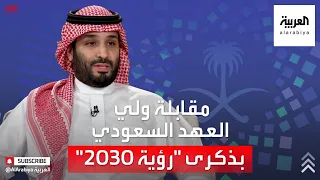
Anyone who looks at the government today finds it very challenging to establish a strong connection between it and the government of that time. Honestly, it was a completely different government. On April 25, 2016, the Cabinet approved the Saudi Vision 2030, and its document was released on the official website. The interview with Prince Mohammed by Turki Aldakhil It was a historic day. Describe your feelings at that time and what happened afterward. Honestly, they were three difficult and challenging months. The birth of Saudi Vision 2030 was a tough process. The idea was that we are the world's
largest producer of oil or one of the largest at that time. Why not be a source of energy rather than just oil? "I told you they're special zones, not special economic zones." At that time, I found the proposal strange. Why do we want the general term that may not precisely clarify the picture? Translated by Turki Al-Hessan تركي الحصان
[email protected] Socrates podcast This is Socrates from thmanyah broadcast I'm Omar Al Jeraisy, hosting the leaders of transformation, business, and opinion. Over more than 120 episodes, We narrated the story of the Vision, its initiatives, projects, and institutions. Today,
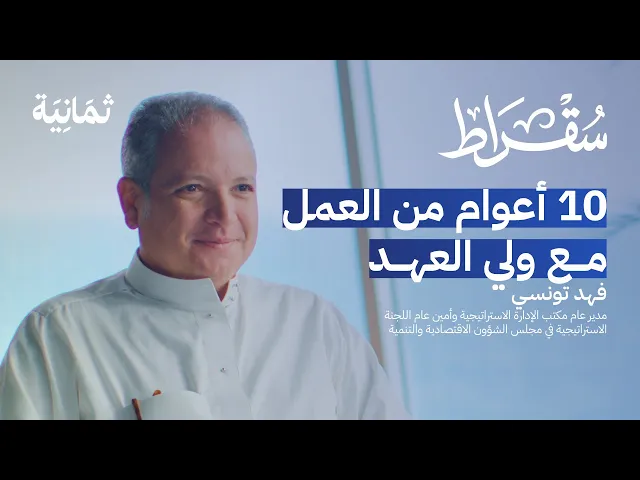
we tell the story of the Vision itself how it was conceived and evolved and how its executive plans were designed and monitored. Our guest for this episode is His Excellency Dr. Fahad Toonsi. advisor at the Royal Court and the Secretary-General of the Strategic Committee in the Council of Economic and Development Affairs, the umbrella responsible for this vision. This episode is very special because it reveals the behind-the-scenes details of the birth of this vision from the first time the ideas and directions were proposed to the stage of developing them into a written document, discussing and defining
their axes and determining their foundations before revealing it to society, and what happened after that reveal? The question is, how do we implement the vision? What programs and initiatives have resulted from it? We also discuss the most important challenges in achieving the vision over the past seven years. The most significant achievement of the vision on its three axes, which are: a vibrant society, a thriving economy, and an ambitious nation. In the first half of our journey, which spans the past seven years, Our guest completed ten years this year Working with Prince Mohammed presenting a golden
opportunity for us to learn about the most important leadership traits of Prince Mohammed and to conclude our one-of-a-kind dialogue. Thanks to our main sponsor, SAFA Investment Company Let's begin Welcome, Abu-Abdullah. You honor us with your presence. Thank you, Omar. I'm happy to be here. You chose to film in a location by the sea. Share your story with the sea. The sea has held special significance for me since childhood. It's a place where I find myself to a great extent. Thankfully. And lately It has become a place that connects me strongly with my family. Whenever I
have free time, you'll find me there, trying to be by the sea. My children also love the sea, and it's a common bond between us. Therefore, it has a significant place in my heart. What or where was the island you last visited? The last island I went to was north of the Red Sea project. It was a virgin island. It has a unique ecosystem. The Red Sea project consists of a lake approximately 50 kilos by 200 kilos and it has a number of purification holes They call them mizabs These places have very wonderful biological ecosystem
Because with the tides the lake is emptied every day and it filled back up through the mizab This lake you're referring to is the wide area that the Red Sea Islands surround. -[Exactly] -a natural lake. Coral reefs surround a natural lake in the middle, more or less. When they empty and refill every day, nutrients come in and out. So it attracts big fish An ecosystem that is very beautiful and amazing, honestly. You have been to the islands north of Red Sea project in your last visit The last Island I've been to was to the south
of this lake, the lake of Sheybarah I just came back the day before from the Red Sea project. I believe it is the most beautiful island I have ever seen in my life Sheybarah Island surrounded by mangrove trees, their intertwining with the sands, and then the coral reef area, which seemed like a ring around the island. We saw water color variations. We had a girl in the helicopter who was the only one who could name the different colors of water. As boys, we could only see it as blue. But there are different shades of blue.
There is dark blue, light blue, and even a lighter one. It was a magnificent sight. Abu Abdullah, are you the Secretary-General of the Board of Directors of Red Sea Company? Yes, I am. We are very enthusiastic about this project. I am personally very excited about it. I believe that the Red Sea Project will bring about a qualitative leap in domestic tourism. Saudi tourists have grown up with the opportunity to see the best places in the world. The real challenge for the tourism sector in the Kingdom was to provide options that compete with the best in
the world. I think the Red Sea Project falls into this category. God willing. Among the dozens of hats that you're managing today we talk about a distinctive and important hat, closely related to podcast Socrates The hat of the Secretary-General of the Strategic Council Committee in the Council for Development, that is generally responsible for the vision. We've produced more than 120 episodes featuring transformation leaders discussing the stories of the vision. Today, it's time to tell the story of the vision itself, from its inception as an idea to its developments and where we stand with it today.
Where would you like to start? Perhaps a good starting point is the first meeting related to the Economic and Development Council. This council has been formed since the beginning of the reign of King Salman and one of the initial decisions made was establishing two councils including restructuring by abolishing a number of existing councils, 12 in total And then establishing the two. Was your first meeting with the Prince, or did it happen before that? Before, I worked as the Director of Councils and Committees in the Office of the Crown Prince. I joined the work at the
end of 2012 and the beginning of 2013 as the Director of Committees and Councils when King Salman, may God protect him, was heading these councils during his time as the Crown Prince. I was recruited professionally, and a company contacted me for an interview with His Royal Highness Crown Prince Mohammed who, at that time, was the President of the Crown Prince's Court, I started working from there [and this was the first meeting with him.] Yes, this was the first meeting with His Highness Prince Mohammed What do you remember from the meeting? This meeting was before King
Salman's reign and before the official announcement of the vision. There must be behind-the-scenes discussions happening there. I entered his office at the Crown Prince's Court, which was majestic, and it was an impressive place, to say the least. However, the most important aspect of that meeting was the encounter with His Royal Highness himself. He was impressive beyond words. It was a traditional interview format, similar to any other interview anywhere else. Then we reached a turning point where he asked me some questions about my professional history, previous work experiences, and my resume. After that, he offered me
the job. At that moment, I was hesitant, and I wanted time to think about it. It was surprising for me to be asked this question. I had to answer him then. I asked myself, Why join government work? Here, I honestly see an impressive side from His Highness. First, he was sensing all the challenges in the state very honest in presenting it He showed a different kind of courage in his approach and a desire for change from a leadership position. Honestly, I thought to myself, if I see this matter and do not strive to support this
enlightened thinking, then I would be falling short in my duty to my country. So, this was the beginning of joining for this reason, and there was a high intellectual alignment. In the private sector, I worked in the field of corporate governance. In the public sector in the Kingdom, we did not have these governance principles. as it was a sovereign government entity addressing governance in councils and committees. For me, it was a new experience Even in the private sector at that time, it was not very advanced in terms of these standards. The Capital Market Authority imposed
them and the Ministry of Commerce began to publish them. Around 2012–2013, even the private sector was not uniformly adopting governance practices. It's true. In the private sector, If it were not for the efforts of the Capital Market Authority in enforcing these practices, and let's not forget the investors The investor wanted governance This is why it's supported. But what would drive the government sector to implement governance unless there was an enlightened mindset from the top? So, it was a national duty for me to join. In reality, I have thanked God for this choice until today. After
two years of work before King Salman took over, may God protect him, and within less than a week of assuming office, he issued a decision to form two councils, Council of Economic and Development Affairs (CEDA) and Council for Security and Political Affairs (CSPA) The first meeting was held, and you were present at the first meeting. Tell us about the behind-the-scenes. The first meeting First of all, the establishment of these two councils indicates a significant change in the government's work, creating a strong government center. Typically, a government center in the world plays a pivotal role in
setting policies, directions, and monitoring implementation. This was not present in the Kingdom of Saudi Arabia in parallel with our ambition Establishing these councils in itself, was a signal for change in this direction. By any standard, the first meeting of the Council of Economic and Development Affairs was outstanding. First of all, and to sense the situation, and many ministers, most of whom were newcomers at that time, some did not even know each other, and the council was convening for the first time, so many of them were unaware of the goal of establishing this council. All of
them came to the meeting, and they didn't know what was required, why, or how we would work, and so on. The meeting was convened under his leadership, may God protect him. The truth is that it was started with a few words from His Highness, clarifying the purpose of establishing this council and reassuring everyone that its primary goal is to set public policy through dialogue and consultation An open dialogue I remember that when it started, he said, "We have established this council to strengthen the notion of exchanging ideas among ministers." The discussion was open from the
first day, with His Highness presenting an opinion and one of the ministers presenting an opinion, and we hear the opinions of others. It was very beautiful, but what distinguishes this council, in particular, or this session in particular, was that for the first time, what was later called the orientations and visions were presented. These are the thoughts and directions of the new government under the reign of King Salman towards various sectors. In agriculture, we want this, and in trade, we want that. His Highness introduces the idea, calls the minister by name, saying, "We want so-and-so in
the field of agriculture" and the same with trade. Then he listens to him and listens to the opinions of the other ministers in the file that concern this minister. The dialogue was very transparent. The proposals were often new. Therefore, it presented a different method and perspective. Do you remember examples of the files he discussed? or how does he explain his aspirations to the concerned minister? There were many examples in various fields. One notable question, for instance, I remember His Highness stating that we have been producing oil for 50 years, and oil constitutes 90% of our
income. When will we diversify our economy and reduce our heavy reliance on oil? On account of its fluctuating market prices and you can't base your plans on fluctuating prices. This was one of the novel proposals at that time, [like renewable energy] regarding renewable energy The idea was that since we are the largest oil producers globally, or one of the largest oil producers globally at that time, why not become a source of energy as well? So we should use renewable energy and not only exporting oil but also exporting electricity and new energy inputs like hydrogen, etc.
The details discussed in that meeting were fascinating, and I'm curious to know more. All the ministers that I met and talked about this meeting They were talking about the accuracy and clarity of the vision They said he was talking to the Minister of Justice in judicial services and says "We want this and that," and then he realizes and says, "while preserving the independence of the judiciary." As an independent entity with improving the services. As well as trade, agriculture, and social development services My question is, regarding February 2015, when King Salman, may God protect him, assumed
power for less than a month, when did Crown Prince Mohammed become acquainted with this information to shape his vision? I believe and almost assert that Crown Prince Mohammed did not formulate these visions at that moment or in the few days immediately preceding it. Let's not forget that the Prince is a Saudi youth living in this state, aware of the challenges And opportunities that could be achieved. These proposals, in my opinion, likely had a long growing period in his mind. It might have started to crystallize and become evident in that meeting, but it is not a
spontaneous creation. Also, it could be a two-year process of formulating the details within the Bureau of Experts at the Council of Ministers where systems and decision-making processes are discussed. Everything was passing through scrutiny, indicating points of friction and delays. He spent two years in Riyadh with King Salman as the governor back then. All the problems and issues related to citizens, traders, and government entities passed through Riyadh. These two points could be crucial for understanding reality and touching on pain points or opportunities for improvement. Without a doubt Crown Prince Mohammed's previous experience was not focused on
a single area but spanned various places, as you said, that covered many topics. I imagine that this should provide him with extensive knowledge and insight into a wide array of issues affecting the ordinary citizen's life. In addition to that, even when King Salman was the governor of Riyadh he was well-informed and has always been keen that his sons are well-informed as well. This was very clear in the case of Prince Mohammed. This reflection on the issues had a clear impact on the visions and directions we heard. They demonstrated a deep understanding of the state's and
citizen's needs, coupled with his ambitious aspirations. How long was your first meeting? There were a lot of ideas and discussions. [It took hours, but I can't remember exactly how many.] Four hours or more? Possibly within that range. As for the beginnings, the meetings were always long people were not yet familiar with each other we listened to different proposals the ideas were being formulated most of them were brainstorming sessions [more than a normal meetings] Yes, rather than decision-making meetings. [What happened after that meeting?] After that, His Highness directed the ministers but before that, a group of
visions and directions were presented. I remember around 24 different ones. Each minister was asked to build a plan to achieve these visions and directions and present it to the council. At that time, the council meetings were weekly, and the ministers began to think about the proposals on the table, how they could be realized, and started to lay out the implementation plans. However, this process was the prelude to the birth of the vision, not the birth of the vision itself. Each minister started to include something from the plan and presented it with the mechanisms for implementation
of these visions and directions. And present it to the council for discussion. The beautiful thing was that the discussion was not only between the minister and His Highness, the Council President, but with all ministers who had opinions because the government's work today is extremely complex. There is no one who can manage and organize alone. One action, whether commercial or social, always involves more than one entity. The council greatly facilitated such discussion. Minister Mohammed Al-Jadaan once said He may not have attended the beginnings, but he became a minister of finance in the following year. However, in
the beginning, there was some sensitivity to expressing opinions about your colleague, the minister. He might take it personally in some instances. However, this culture has started to solidify and establish to the extent that today, discussions are very open. I am comfortable discussing and objecting to the actions of your ministry or to provide recommendations and observations about the work of my ministerial colleagues without them taking offense. This is an accurate application of the concept that all ministers are collectively responsible in front of the king and the leadership. Have you noticed that these cultural developments are becoming
the foundation of meetings? Anyone looking at the government today finds it very challenging to connect what it is doing with what the government was doing at that time. Honestly, it's a completely different government. The government used to work in scattered ways, as if it were on separate islands. Today, we have a general policy that is a unifying force with one common goal that brings everyone together. Everyone is required, not just desired, to contribute to the making of this public policy because, in one way or another, they either influence it or are influenced by it. Socrates
podcast These different perspectives that each minister began working on in his ministry, how did they transform into the vision we know and have seen officially? It went through several stages, starting with visions and orientations, then plans of the ministers then worked on what is known as the National Transformation Workshops. These workshops were led by the Ministry of Economy and Planning, bringing together various government entities from ministries, authorities, and public institutions to assist them in developing a plan for implementing this matter. They gathered for about three months, if I'm not mistaken, and these workshops were truly
dynamic, reinforcing the principles of collaboration and solidarity in shouldering responsibility. But there was always the principle of personal responsibility for the file. Beautiful administrative principles were strengthened, and in about three months, these workshops produced a comprehensive document known as the outputs of the National Transformation Workshops. It expressed the initiatives of various government entities and what they aimed to achieve. His Highness, the Crown Prince, made a big contribution to the subject and played a significant role in changing the mindset, raising ambitions, and instilling confidence that we can achieve more. Then it came to the Economic and
Development Council when this document was presented the Crown Prince, may God protect him, said there was something missing in this document. He desired a document that clearly outlines the overall direction. He called it a strategy at that time, not just an initiative for a specific task but an ultimate goal of where we want to reach He instructed them at the end of this meeting to form a committee from a group of five ministers, This committee's responsibility was to crystallize and develop this document, which had not been named yet. True. We should not forget that achieving
the vision of the Kingdom of Saudi Arabia is not only the responsibility of the government but the responsibility of everyone living in this state whether from the government, private sector, third sector, or citizens in general. So, there was a need to mobilize these efforts together. If I take the initiative, what should the other party do? We needed a specific document to mobilize all these efforts, and the initiator or the entity responsible for it would implement the initiative. Still, the others undoubtedly have ways to help. [We did not know at that time it was a document
or anything else.] The first question was: how to find the common link between these initiatives, formulate what was originally called visions and orientations in the form of a government output? This was the first question. The result was very clear at that time. This document is called, in some governments, a manifesto or government orientation. At that time, we did not have a name for it. Its name was decided later. Then, what happened? What exactly did these five members or this committee do? Did they have an open discussion, or were specific topics discussed each time, or was
there brainstorming? What exactly did this committee do? This committee took the outputs of the National Transformation Workshops, but more importantly, it took the original 24 visions and orientations and began trying to find the common link between them. We started with several standard comparisons, trying to see the best global practices in this field. We sought help from several consulting companies that had worked with other governments worldwide to benefit from lessons learned. We were working with more than one consulting company because we were keen to ensure that the outputs we received were reliable. We reached a very
high level of certainty that most states in the world always focus on three main axes: economic, social, and international status. The committee met daily and then weekly. The Economic and Development Council, chaired by His Highness, would meet to discuss what the committee had reached. Discussions in an extremely in-depth manner in a beautiful open dialogue I am not going to forget these days. The conversations in it were very beautiful There are opinions based on the deep experiences of ministries And there are other opinions Sometimes there is a minister who doesn't know about the opinion of the
other ministry but as a citizen, he has an opinion in this subject we listen to his opinion as well His Highness was keen that this discussion continue in the Council I remember some ministers who did not give their opinion in some matters But His Highness knows, through their private conversations, that he has an opinion He would ask, What is your opinion about this topic? Sometimes topics have multiple aspects that are not all raised So it is always better that the financial or economic side for example, presents their opinion The enablers of human resources, technical systems
or so on also give their opinion So it was a very nice dialogue in the Council The committee met on a daily basis The Council met on a weekly basis At that point, they decide whether to accept or reject the committee's proposal. After that, it would be amended. This continued for three months Until the Council came out with the document of the vision of the Kingdom of Saudi Arabia 2030 And based on international practices, you reached the three axes of the vision. [Correct] Which is a vibrant society, a thriving economy, and an ambitious nation. What
about the pillars of vision? His Highness was always talking at the beginning of the presentation about a strategic document Strategies are always built on one of the two One is the weakness that we want to improve or strengths that we like to focus on And he was always wondering about them It is not easy when you think about your weaknesses. Sorry, but what I meant was that it is not easy to think about your strengths. It's very easy to find your weaknesses. I remember his highness at that time he said we are the heart of
the Arab and Islamic worlds and that we are a leading investment force Additionally, our geographic location is positioned between the three ancient continents of the world. This is the proposition that was the number two challenge for this committee. Are these our main strengths or can we find more? Honestly, there was nothing stronger than these points and in the end, they became the pillars So he was keen on the idea that the work of this committee should be based on the foundations of building a strategy in a scientific way which is the commonly accepted practice in
the world. This is where the pillars of strength come from. We are talking about the vision before its public announcement with its full content. Was it reviewed? or did it solely rely on the accepted files that were presented to the public? How was the review of the final document? The review didn't happen during one stage. We mentioned that there are daily meetings and weekly meetings. In the weekly meeting, the committee would print the contents they had reached and place them on the table of the Council of Economic and Development, in front of each minister on
a written paper. We enter the council; His Highness sits, and the ministers sit at the table. Each one reads it word by word, makes amendments, expresses opinions, and so on. The amendments are made on the spot, and we take them. In the next week we show the amendments made the previous week. At the same time, any new proposal on the table is discussed. I remember these meetings, and there was something strange about them. It is known about His Highness the Prince and a lot of people know it that he is very fast He is very
quick. God bless him. He always finishes reading and amending it, word by word, before all the ministers. And he sits, waiting for the others. So, there was a strange silence in the hall. everyone is reading, and he is waiting for them to finish. He waits patiently, allowing others more time. He only starts after they are all done reading them and then the open discussion on the content begins. Do you remember any specific topics or discussions that stood out during these meetings? Do you remember a meeting topic that did not convince you but became clear later?
Any behind-the-scenes details? There is no topic that was not put for intensive discussion It's hard for me to pick one There is one instance, but before that there is something new that everyone has experienced in this dialog the dynamism in the desire of His Highness the Prince to elevate ambitions in every field. He was keen on pushing for the utmost level of ambition, perhaps even getting a bit closer to the unattainable. Always raising the bar of ambition to the maximum possible extent. Let's not forget the dynamic at the table. You have a leader who sets
the direction and the target significantly. Then you have the minister responsible for executing it. The dialogue between them is one where one sets the ambition and the other is responsible for achieving it. It was a new dynamic for us, and I believe the result of this is the level of ambition we see today, which wasn't present before. We had a lot of potential but we settled for less So, this was one of the beautiful things Maybe a particular moment that I remember in these weekly dialogues was when His Highness the Prince used the term "Special
Zones." When I was writing it in the document, I wrote "Economic Special Zones," a term widely recognized internationally. He then said to me, "I said 'Special Zones,' not 'Economic Special Zones.'" I noted that and went back. I did some research and asked about it. I found that "Special Zones" is a very general term and not widely recognized. We were already discussing 'Economic Special Zones'. so I kept it as it was. He said, "Yes, I told you 'Special Zones,' not 'Economic Special Zones.'" At that time, it seemed strange to me Why do we need a general
term that may not precisely convey the idea? However, today we can clearly see the significance of these terms on the ground, we have Economic Special Zones, Logistics Special Zones, Cloud Computing Special Zones, and various types of special zones. It is evident that, at that time, His Highness was envisioning this future and could see it ahead. This, for me, was an eye-opener in 2016. Nobody was thinking along these lines at that time. In those beautiful dialogues, I believe history should record them. On April 25, 2016, the Cabinet approved Saudi Vision 2030, and the document was published
on the official website. There was an interview with Prince Mohammed with Turki Aldakhil. It was a historic day. Describe your feelings for that day and what happened after it. They were three challenging and difficult months. The birth of the Kingdom of Saudi Arabia's 2030 vision was difficult. After the document was released, I needed to get some rest badly. Particularly noteworthy was the subject's lightning-fast transition from planning to execution. As soon as the vision came out and the world was impressed with it, the Council of Economic and Development was convened, and questions arose about how to
achieve this vision. At that time, the Financial Balance Program and the National Transformation Program were introduced. -The Financial Balance Program is now called the Fiscal Sustainability Program. -[That is true.] Maybe this is a point that we need to go back to later The dynamic of execution You can not write your rules in stone and you build on that. We have to get back to this at some point. You have reached the national transformation as an overall effort for almost all government entities. In the financial section, the fiscal balance deals with the deficit and public money
management initiatives. These two programs were in place to achieve the vision. True, to a large extent. They didn't cover all aspects and targets required for the vision. His Highness mentioned that there are two programs on the table today, is there a need for additional programs? At that time, there was a question about the execution reference. whether there should be a responsible authority or if everyone is collectively responsible. The responsible authority approach is more aligned with international best practices to achieve a vision of this magnitude. It's responsible for setting policy mechanisms, overseeing implementation, and ensuring the
necessary dynamic adjustments. Following this proposal, a Strategic Management Office was established at the government center, reinforcing its central role. Approximately a month after the vision was issued, this office was set up Along with the Strategic Committee under the Council of Economic and Development, led by His Highness, Crown Prince [You took over the rule of the secretariat of the committee] I took on this position and and the office presidency at that time. initiating the work on identifying additional programs needed to achieve the Saudi Arabia Vision 2030. As an office, we were keen to focus our efforts
as much as possible. Honestly, we were determined not to exceed around five programs at that time. We used to say that five was the magic number because it's manageable. Given the size of ambition and the scale of the required transformation and the the diversity of fields, as the programs needed to cover all essential areas for the nation His Highness refused this proposal and gave us alternative proposals We reached a total of 13 programs at that time, which has now been reduced to 11. When the office started, we were about 15 or 16 ambitious Saudi youth,
all coming from excellent professional backgrounds and good jobs. Before the establishment of the office, there was no institutional entity that embraced them. They had all left excellent jobs. They sacrificed themselves for this vision because they saw the future of the nation in it. It was truly beautiful. Now, going back to the topic of implementation, it deserves a more detailed discussion. I think there is a notable difference between the vision and other transformation projects elsewhere. Anyone can create a vision, but not everyone can execute it. I believe this point needs more attention. Generally, during the initial
period of engagement with the vision, it was described as an elitist interaction, Addressing the top 5% of society who are proficient in the language of indicators, targets, and initiatives. The general public, university students, children, and expatriates living with us cannot access it. What is your comment on this point? Maybe this is true. However, from that time until now, two things happened. First, the 5% became the 95%, so today, when people speak, even at the street level, they talk about targets and KPIs and use the language of the vision. It took time for the language of
the vision to reach the grassroots level. And the second thing, success stories began to resonate and connect with citizens. Now, the citizen is the one speaking about the success story. For example, how about the ability to conduct a court session electronically today? I apologize, but this is a much more powerful story than talking about enhancing judicial services and so on and a lot of examples like that. Another point I remember is when I started tracking the critical articles or objective criticism of the vision during that period when it was launched, There were several points that
kept coming up, maybe among the common and repeated issues. One was the absence of specific targets related to education. We were talking about clear targets in the field of service to Hajj guests, clear targets in logistics services, clear targets in facilitating business practices, clear targets for increasing spending on entertainment and culture. But there was nothing at all about general education, school education in terms of the number of rented buildings, Or the ranking of our students in international indicators. What's your opinion on the issue of education targets in the Vision's main document? Education in the vision
could be summarized as one effort or a very broad general direction. However, underneath, there are numerous branches. In education in the Kingdom of Saudi Arabia, its focus began with raising the literacy level initially, and thanks be to God, we reached a level comparable to some of the best countries in the world around 70 to 80 years ago. After that, educational outcomes weren't based on the needs of the job market. In terms of public policy in education, the Vision has taken the connection between the outputs of the education system and the needs of the labor market.
This is the main output and under this, you can talk about many and varied details. We have seen them translated into the Human Capability Development Program today. Socrates podcast Socrates podcast One of the notable things in Vision 2030, which I couldn't find in other visions of different countries, is the issue of programs to achieve the vision. We have 11 programs to achieve Saudi Vision 2030. This makes us wonder: how did we reach this model, and what is the need for this body in between the entity that formulated the vision and the executive entities that will
implement it? Why didn't we directly involve your strategic office in the different ministries to monitor each ministry to implement the goals of the vision? This need arose because of two main things that was noticeable at that time. First, various executive ministries lacked strategic planning capabilities or financial planning capabilities. Planning was done through the Ministry of Economy and Planning in the five-year plans, and financial planning was carried out by the Ministry of Finance through the annual budget workshops. These ministries lacked these capabilities, so there was a need for a bridge to fill this gap. The second
one is We were in desperate need to enhance collaborative efforts among ministries. The programs are led by program committees consisting of all relevant ministers responsible for achieving the goals of any program. In these programs, you will find that their objective is to serve as a bridge between the government center and the executive ministries. This bridge contains the essential elements needed to fill this gap. For instance, if we talk about housing, you need to address the Ministry of Housing, Ministry of Municipality which served as a land reservoir Real Estate Fund as a financier banks as private
sector financiers The developers All these diverse players required someone to organize and coordinate their efforts and oversee their work. This was one of the roles of the programs in achieving the vision. Certainly. in every program, you will find representation from those who influence or are influenced by the actions of that program sitting at the table, and their input is heard in formulating the implementation plan and subsequently monitoring its execution. What is noteworthy in the matter of programs to achieve the vision is their constant change. When we talk about the first wave of programs, there were
two or three that disappeared, such as the National Character Enrichment Program and the Local Entrepreneurship Program. Later on, new programs were added, like the Capacity Development Program and the Health Transformation Program. There are programs like Health Transformation Program came from the National Transformation Program And others were new like the Capacity Development program. Why is there a constant change? Even in program names, for instance, the Financial Balance Program changed its name to the Financial Sustainability Program reflecting ongoing adjustments. People might get a little concerned about this continuous change, thinking that we are not on the right
track. What do you think? I believe it is a very positive sign, expressing dynamism and adaptability to variables. Secondly, In the beginning, the question was whether to wait and launch all programs once they were ready, but if something is prepared, why delay it? Ready programs can proceed, and those not ready can catch up, benefiting from the lessons learned from the previous launches. So, the principle from the beginning was that whoever is ready should rely on Allah and not wait for others. The second thing is that some matters require longer research, while others need deeper delving
into details. It took time until it materialized. The second thing is that no programs were discontinued, and nothing disappeared. In reality, anything you don't see today as a standalone program is present within another program. For example, the National Character Enrichment Program I talked about today exists as an integral part of the Human Resources Development Program, correction, Human Capabilities Development Program. All the targets are still present, and all the initiatives are there, but under different management and in different formats. This dynamism, on the contrary, I see as very positive, reflecting the ability to respond to challenges
presented by local, regional, and global changes. The strategic committee oversees and monitors the vision overall and follows up on the programs to achieve the vision. There are programs that monitor the vision to help achieve it and designs initiatives, monitors their implementation, and supports any shortcomings with the ministries. This is our current format. The question is: how are we monitoring the progress of the vision? What is the nature of your relationship as a strategic office and as a strategic committee with these programs and various entities? We talked about the stages of the vision, and there are
three stages. The first stage was the founding stage, which might have been the most challenging. In the founding stage, our focus was primarily on finding implementation mechanisms and enabling these entities. Afterward, we started focusing on the performance monitoring process when the programs gradually began The focus then shifted to the performance monitoring process, and the adopted mechanism at that time was quarterly reports. These reports were either written by the Strategic Management Office based on data from the programs or based on data from the General Performance Measurement Center. The Strategic Management Office collected this data and presented
a quarterly report to the Strategic Committee, Followed by the Economic and Development Council about this vision. Subsequently, there was an annual report at the end of each year presented to the Economic and Development Council. These reports were very detailed, looking at more than one aspect. Initially, they looked at the overall performance of the vision, then the performance of the programs, comparing the performance of some programs with others. After that, they examined the performance of the initiatives and then looked at its impact on the indicators and targets. The reports were very thorough, and if it was
observed that a specific program needed intervention or support, that was the appropriate time for us to provide support and intervention. Who were the brilliants among them? And who brought Eid? (A sarcastic expression for failure.) Look, I remember when these reports first started coming out They were based on the traffic light system. [They must be all red.] Red, yellow, and green. Honestly, in the beginning, they were all red. [They always claim that budgets not being allocated to them.] and it is not necessarily about budgets because sometimes there is an inability to measure the information due to
the lack of it. The baseline system has not been established, and you have no indicators neither their the measuring lines. In the beginning, there were significant difficulties in financing these initiatives. The concept presented in the vision was entirely different from previous thinking. The financing mechanisms proposed at that time did not align with this thinking. There was a need to find alternative financing mechanisms, and the financing mechanisms of the vision today are entirely different from the usual government systems. We are starting to see the spillover of this strategy. As soon as the vision was formulated, we
thought about how to fund it, how we could start presenting RFPs in the market and how we could deal with vendors differently, and so on. The need to find financing mechanisms for the vision led to a very long and complicated handbook that helps us fund these programs and then we felt the need to generalize this to the entire public sector. So, there was an update to the government procurement system and government tenders. At that time, I remember we, as the Strategic Management Office, played a role in this matter. We insisted that anything present in the
financing mechanisms of the vision must be reflected in the government procurement and tendering systems. Because the future may not require these programs we might need the executive entities themselves to contract with modern and innovative mechanisms that help in implementation. I think here the role of the Government Center comes in it applies its goals to all policies. For example, in the government's new procurement system there is a focus on empowering small and medium enterprises, which is one of the goals. [and national enterprises.] There is also a focus on local content in competition, giving it priority and
different contracting mechanisms. I want to involve the private sector I want them to execute some projects and then transfer them to the government, Like PPP (public-private partnerships). All of this is reflected in the procurement system because the government center is the one thinking and planning, not just one device among the various devices. This is considered one of the transformations and fruits due to the existence of an effective and powerful government center. This is a realistic answer to your previous question about why programs are needed. We needed programs to bridge the gap between reality and what
was desired. Now, this bridge has become part of the daily work mechanisms, and the government procurement and tendering system is a good example of this. Today marks the halfway point of our journey. About seven years have passed, and there are seven more years left. Is this a milestone for you? What are the highlights of what has been achieved in the past period in terms of the vision's targets? The midpoint of the journey is not a milestone. For us, the vision is not divided into two halves, but rather into three main stages. Currently, we consider ourselves
in the middle of the second stage with numerous achievements that have been accomplished. It might be challenging for me to speak about them, Socrates podcast talk about all of them and each aspect is discussed differently, but we want to hear from you in a comprehensive manner. Honestly, Omar, I am delighted to tell you that the whole world is talking about these achievements, not just Socrates. I meant each episode is covering something, but the world is definitely talking about it. The global perspective on this matter has changed significantly and there has been a lot of positive
feedback. Many countries are now drawing lessons from Saudi Arabia. In the beginning, we used to go and see the best practices Today, if you see what other countries are doing, many of them say, "What is Saudi Arabia doing?" This is indeed a source of pride, without a doubt. Let me briefly touch on our achievements in recent years and the gains we have made. On the vital societal level, we are talking about basic services—health, education, and housing. The percentage of housing coverage was around 47%, and today we are talking about more than 60%. Regarding health services
in remote areas, it was 84%, and today it has reached 94% In terms of education, the Kingdom did not provide kindergarten services through public education, and today we are providing these services. The enrollment rate in kindergartens among citizens in the Kingdom has reached 33%, Which is a great achievement, thanks to Allah. Moving on to opportunities in the state, whether in terms of economic, commercial, or volunteer opportunities, people want to help and support this vision. In 2016, we started with 23,000 volunteers, and today we are talking about 65,800 volunteers. An increase by 2770% Clearly, for us,
people needed someone to guide them and show them the way in this direction. If we talk about sectors like entertainment, sports, and tourism, the percentage of Saudis engaging in sports was 13%, and today we are talking about 32%. All these targets are being achieved, and many of them are surpassing the required levels. If we move on to the thriving economic level, At the beginning of the vision, the most important target was probably diversifying Saudi Arabian economy and we reached the point of being among the top 15 economies in the world. Last year, the Saudi Arabian
economy was the fastest-growing among the G20 economies. Various structural reforms were initiated to open new economic sectors that were not present in the country, such as tourism, entertainment, mining, and others. Each of these economic sectors has a different starting point. For example, tourism was straightforward—open the visa, prepare the infrastructure, and people would start coming. It was easy and fast to see the transformation. In sectors like entertainment, citizens were present and eager for entertainment, so it was easy for us to provide and witness its rapid development. Some sector emerged slowly but naturally, like mining. The last
survey of minerals around the state was taken in the 1950s if I'm not mistaken. [You mean the geological survey] The geological survey itself takes about seven years to complete. when we started in 2016, we took some time to prepare Today, we are talking about the final stages of completing this survey, and after that, the actual work will begin. We have seen, at the same time, the establishment of the Mining Investment System, the preparation of the infrastructure to attract mining companies, and the creation of large national companies in this field. The Gross Domestic Product (GDP), it
has increased from $654 billion to more than a trillion dollars today. This, in itself, is a significant accomplishment, and, God willing, we are on our way to becoming one of the top 15 economies in the world. Non-oil revenues have witnessed a repeated multiplication, from about 160 billion to more than 400 billion. Regarding non-oil exports, we have increased from around 18-19% to 25% as a percentage of total exports. The assets of the Public Investment Fund have grown from 600 billion to 2.6 trillion riyals. The participation of women in the labor market is one of the great
achievements of the vision, increasing from 23% to 35% today, surpassing the target of 2030 Currently, we are wondering about the new target. The unemployment rate is one of the most important economic indicators in any economy. We have, fortunately, decreased the unemployment rate from 12% to around 8% which is very close to the global maximum employment rate and near the 2030 goal of 7% In this field, we might need to raise the target a bit in the future, God willing. Before you go to the Ambitious Nation I'd like to comment on the topic of early childhood
education. I was an investor in the education sector from 2008 to 2017, And part of the research we conducted before entering the investment was to review Saudi Arabia's Ninth Five-Year Plan from 2010 to 2014. I am not quoting anyone, but I read it myself. The plan aimed to increase Saudi enrollment in early childhood education, a target set in the Ninth and Eighth Five-Year Plans. The reality is that this number did not change at all. This is a living example of how effective programs are at achieving targets. The goal, as you mentioned, had been there for
15 years before the vision started. However, when programs were put in place, collaborative work was initiated, brainstorming was encouraged, and attempts were made to find the best ways to achieve it, I remember the Ministry of Education came up with a very innovative idea to start this work faster than others. They utilized existing educational facilities Instead of waiting for three, four, or five years to create new infrastructure there was some infrastructure that was sometimes underutilized This was an excellent spark to initiate change in this field. Additionally, we have excellent human capabilities in the Ministry of Education,
and we started benefiting from them and expanding the scope. We did not build something new; instead, we maximized the utilization of what we had. We saw the results very quickly and, God willing, the future will be even better in this regard. Now, do you want to say something on this topic, or shall we move on to the next one? I believe this topic might be difficult for me to talk about. The whole world is talking about it. Today, the Kingdom's global presence in influencing policies that affect humanity is clear to everyone. We have led the
G20 at a difficult time for the whole world. Thanks to God, we have left our mark on the global agenda in this field. Our pivotal role in stabilizing energy markets is established, is existing, continuous, and growing. As for the Arab and Islamic leadership, we have played a pivotal role in combating extremism and terrorism, enriching social thought and Islamic culture. Today, the number of visitors to the Kingdom for Umrah is achieving record-breaking figures year after year, which is one of the goals I expect that we will soon surpass it. We might have to review it soon.
May Allah strengthen you. Perhaps, Abu Abdullah, you can move on to a very important axis related to the challenges of implementing the vision. One of the things I have recently discovered and am amazed by is the issue of accessibility that we are achieving in Socrates with the Gulf audience. In the past two weeks, I have met or communicated with friends from Qatar, the UAE, Kuwait, and Oman. and they talk about following Socrates episodes and being impressed by the story of an official, a file, or a case. They are actively following the story of the Saudi
transformation regionally and even more broadly. Therefore, I think part of this is to be part of those who are interested in understanding the challenges and how we dealt with them. There might be valuable lessons we can share with all followers of the Saudi transformation story. So, what can we say about the key challenges? the lessons we have learned when we started the transformation journey Today, the Kingdom has become a kind of teacher for other countries' transformation experiences. However, there are numerous challenges—many and diverse. One of the initial difficulties was transitioning from a traditional approach To
a significantly higher degree of commitment and transparency. This was a qualitative leap. Perhaps the second challenge was reinforcing a culture of collaborative work. People, by nature, tend to be protective of their mandates and always strive to achieve success individually. The vision imposed collaborative work on everyone, and the approach of His Highness, mandated this on everyone There were big challenges in human resources The government sector were somewhat limp there was some stagnation and an inability to attract competencies. When we started the dialogue, I told you that when I joined the government, I was very hesitant. Today,
when a young person graduates from university, their first choice is to work in government And the private sector faces difficulties competing with the government in attracting talents. There was a significant challenge in finding competencies, changing the mindset and accepting diversity in the nature of the public sector. The beautiful thing is that when challenges are viewed as opportunities and success is generalized, they become a strength rather than a weakness. If we talk about the challenge of attracting talent to the government at that time, today, I believe that the private sector faces challenges in attracting talents rather
than the government. Omar, you're laughing! [Do you represent the private sector?] The private sector suffers a lot. We need to achieve, and what we achieve benefits us and the state. The private sector does not have the deep pockets or the huge funds that you have. So, is the competition fair for talents? If the economy grows, everyone benefits. The private sector grows, and the pockets get deeper, hopefully. This might be a temporary migration. In the end, you will start distributing talents more smoothly. so it appears that there is a pattern, pragmatism is severe in implementing the
vision, and I believe there is no ideal solution. There is a side effect, a certain cost, but it is a necessary solution that we need to implement. We deal with the phenomenon or side effects and try to address them. Perhaps this is what we can infer today, that many solutions are not ideal, but if we wait for an ideal solution, we will never take any action. This action has a cost. But the cost would be higher if the public sector didn't use these talents to implement the vision. Without a doubt,. and don't forget, the labor
market is like any other market that is based on supply and demand When the government sector came and had a big demand, it started to take some competencies from the private sector But today, because of the presence of demand, this supply has become bigger. So universities are focusing more on graduating people who are compatible with the requirements of the demand Whether it is from the private sector or from the public sector Today we will find more focus on the capabilities required to implement the vision of 2030 So the supply will increase, and we will all
win, as well as the economy in general. This is one of the biggest challenges in talent demand. Is there another challenge we can talk about? Well, the challenges are many, and it's challenging to list them, but what's beautiful about the issue is that we always look at the challenge directly, and move on to the next and I don't want to focus much on the challenges. I think that focusing on challenges is somewhat inhibitory. I believe that focusing on achievements is the most beautiful. What are the most important lessons we have learned after these seven years
that summarize the story of the Saudi transformation? First of all, we have learned from His Highness, he taught us that you cannot know the extent of your capabilities until you try. So, we set very high aspirations that initially seemed impossible, but with time, it became apparent that they were achievable. This was a great lesson. I remember the resistance to high targets initially. Today, I see how they have become ordinary, and we deal with them easily. I think there are lessons learned from the transformation in Saudi Arabia. We need clarity in the vision initially. We need
a clear, written direction that citizens, investors, locals, or foreigners can read. People from other states can understand, so they know where we are going. The most important feature is that it's not executed by one person. Anyone who is interested should be able to contribute. This is an essential task for us. I think the second thing is not enough to put a vision It is not the end of the road. This is just the beginning It takes time, requires continuous work, determination, perseverance, and a great deal of dynamism and acceptance of change. The other lessons learned
are that it is very easy for states to settle for a certain level if that level is acceptable. However, it is better for these states and for humanity in general that we push the limits a little more. Today, the Saudi transformative story is not just for Saudis many are following and emulating it, wanting to learn from it. Can you summarize the most important lessons that we can share with the world? one of the most important lessons learned from the Saudi Vision 2030 is that change starts at the top of the pyramid. Change always starts at
the top. And the best way for the top to initiate and make change possible and mobilize all efforts towards it is to set a clear direction that everyone should make every effort to reach. The second thing is that it is not just a vision that we wait for to be achieved. The vision is the beginning of the work and the beginning of effort, and effort is continuous and it doesn't stop. Another lesson that we benefited from a lot and I hope it is deeply ingrained in the government's work in general, is dynamism and the acceptance
of the need for change. There is no one right opinion forever. but the opinion is right for its time and can accept change. We have seen an example of this change in the programs and the launch of new things. This dynamism comes from continuous scanning of the horizon And finding opportunities or areas of weakness that need improvement. Let me give you an example: the vision, for instance, never talked about electronic games at the start. At one point, we noticed that this sector was one of the fastest-growing in the world. The Saudi citizen, in general, has
a high percentage of youth who are computer literate and passionate about electronic games. [Providing the infrastructure, and our internet connection] Exactly. all of these were opportunities and the vision was dynamic enough to see opportunities in this way, and we saw the launch of the e-gaming strategy based on the opportunities we saw in this field. You will always have a desire to seize new opportunities. This is also one of the important lessons learned Never expect things to be stable for 15 years. I remember when we started writing the vision, there was talk about the time frame
of the vision. Is it reasonable to plan 15 years ahead? We don't know what will happen in the world, but the advantage is that you set a long-term target and ensure that you are dynamic and responsive to changes, that you will indeed achieve this target with this dynamism. Collaborative work and partnership are essential because non-institutionalized work may be very beneficial, but it is rarely sustainable. The topic of collaboration makes us stronger together, and this is part of the spirit of the vision. It is part of why there is a document called Vision, because we want
everyone to participate in helping the country achieve this goal. These are some of the most important lessons learned, in my opinion. If we talk about the topic of institutional work, it may not reach people in the way you explained it. People feel that there is a minister who brings a file to Prince Mohammed shows him his goals, the Prince approves them, and this minister starts working. In a previous discussion with Prince Turki bin Talal, the Amir of Aseer, he talked about the long journey to adopting the strategy of Aseer. If we shed some light on
what I mentioned earlier about the institutional impression There is an impression that the government center is the administration of the tent or the tribe's sheikh, where someone enters, takes blessings and approval, and then starts. What I know is that the matter is entirely different. Could you shed some light on some examples or stories in this direction? This is a recurring matter. Firstly, His Highness Prince Mohammed is keen that his door is always open to listen and respond to people. However, his approval in an individual meeting, and he always emphasizes this Approving on this matter doesn't
mean it's an official approval. Approval is a blessing; it is an agreement with the direction or something similar. Still, institutional work requires the concerned minister to raise it through the approved channels. So, the approval of His Highness is a blessing for the direction, but it does not negate the need to formally send it. On another note, you will see it in every aspect that the government is trying to achieve through the Vision 2030 of Saudi Arabia. We always strive to build a reference entity to empower this reference entity. We make sure that this reference entity
works in an institutional way, Firstly, in line with the general direction, secondly, based on a detailed strategy that includes a roadmap and mechanisms to achieve the target. There is also continuous review of these matters. We hear this talk a lot, but I can confirm from the inside that it is not true. If we take an example of a strategy life cycle inside a government center, to understand how these strategies go and their relationship with the vision. The strategies, now, are what we see frequently—regional strategies and sectoral strategies. Could you give an example or describe its
life cycle? Of course, the vision was laid out, and then we found the programs that covered its goals. Later on, through continuous reviews, we found gaps in things that were not covered by the programs or were not adequately covered. They won't reach the achievable target we started collecting all these things and seeing what sectoral strategies are. Sectoral strategies are recognized as institutional planning. You were talking about programs a little while ago and that they were an external body, and they really were. we needed them in 2016. Today, the capacity for achievement has grown significantly among
the executive entities and ministries in the state. There is a need for the presence of sectoral strategies led by the leading authority If we talk about the investment strategy, you will find it led by the Ministry of Investment, but all relevant ministers share in its implementation. We talk about the sports strategy, the strategy of the regions, for instance, the Aseer region or other regions in the kingdom, almost in the same mechanism. It's almost the same as the life cycle of programs, the same institutional work but in another form. I assume that this will be the
planning approach in the Kingdom of Saudi Arabia for the future. [It starts from the same leading entity] No it starts at the government center. the government center sets the direction and works with the leading entity to agree on the targets. Then the leading entity gathers the relevant entities that it needs to gather and works with them to set a plan to achieve these targets. Then it is raised with the government center for review and approval. In the government center, it goes through several review cycles, both of its ability to achieve the targets, Its alignment with
other existing programs and strategies. Then there are things that may not be achieved by one initiative, one target, one program, or even one sectoral strategy, but all of them participate. Let's talk about the gross domestic product (GDP), for example. Every initiative from the initiatives of programs or sectoral strategies pours into the GDP. We need all of their efforts to reach the target. Now, to conclude this interview, I can't leave without covering a part I and thousands others are passionate about it, looking forward to it, and enjoying hearing more about it, which is the personality of
Prince Mohammed bin Salman. You have completed ten years of exceptional leadership with Prince Mohammed, An exceptional leader at a historical moment and not only the Saudi society but the international community looks at him with different appreciation. Tell us more about him, What have you learned from him? I learned from him everything I know today. Prince Mohammed is an exceptional leader whom Allah has honored us with in this state at this time. Honestly, talking about him is very difficult, and it's challenging to condense ten years of admiration into a very brief conversation. But Prince Mohammed has
a set of exceptional qualities, in my opinion, so let's focus on them. Firstly, he has extreme clarity in his directions he always knows what he wants. Once he defines what he wants and we agree on it, he has very strong determination to achieve this goal. Accompanying that is a tremendous dynamism in accepting changes that cannot be dealt with. These three, together in my opinion, God willing, are what will lead us to achieving the Vision 2030. Additionally, along with that, he has a very beautiful ability to look at the big picture first. then delve into the
details, and then return to the big picture and so on when we need the big picture, you'll find him focused on the big picture and avoiding details, and vice versa. This is something amazing when you see it, and everyone who sees him in action is always amazed. He has an amazing ability to separate between topics. it's very difficult for you to enter a meeting talking about security and military matters, then come out, enter another meeting talking about health or social matters, then come out, enter a meeting talking about international politics or global participation, and then
come out, enter into economic matters, all without one affecting the other. This is a beautiful thing that I hope I've learned from His Highness, and it's very difficult for me to do it at the same level but I'm always fascinated by it. Even today, after all these years, When I look back to the 1970s and try to understand what happened, I can't find a clear answer. Suddenly, we were in mud houses, or, as my father tells me, he was in a mud house. Then suddenly, there were reinforced houses. He used to move by hours from
one city to another, then suddenly, he started moving by plane. It's a transformation story that happened in the seventies, but we don't know how it happened. When I ask my father how it happened, he has no answer. If you were asked by Abdullah (His son) In 2030, how we did what we did? What would your answer be to the secret or reason for our ability to achieve the vision? I think it's Mohammed bin Salman without this exceptional man, I don't think we could even think about the things we think about today. This man had clarity
in direction; he had depth in thinking and a strong determination to implement, enabling us greatly while retaining his right to accountability. I sincerely believe he is the man who made the difference. I am grateful and appreciative to you, Abu Abdullah, for providing this opportunity for me to document this historical journey for this generation and future generations through this dialogue. Thank you for accepting the invitation, thank you, Omar, for your effort. The truth is, you are a great help to the vision, and we are keen that it continues, and hopefully, we will see it as a
motivator for everyone. May they be keen to focus on the vision and implement it in the near future, Thank you, Abu Abdullah. Thank you all Thanks to Fahad Alqasyer in preparing and producing the episode and Anas Alkhalil in editing Yasser Ghanim in picture management and Lighting Director: Salem Ba Fqas Omar Abdul Majeed - Production Assistant Behind-the-Scenes Filming: Abdul Rahman Aboud Sound Recording: Youssef Ibrahim Audio Engineering: Mohamed Al Hassan Production Supervision: Ghiyda Al-Tamimi, Ayman Khalid, and Aseel Bafarat This was Socrates podcast a product of thmanyah for publishing distribution