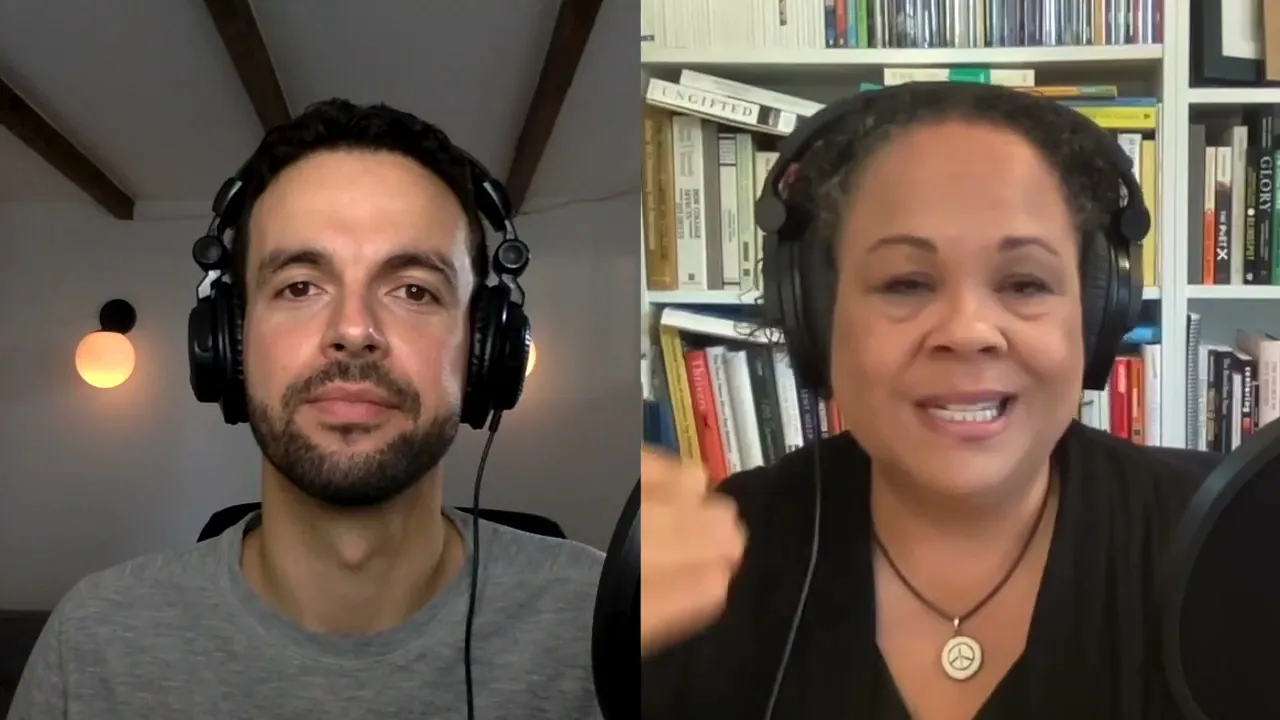
so hey yeah I'm Julie lcot Hayes and I'm so delighted to be here I'm an author I'm a mom I'm a former dean of freshman at Stanford and I'm pretty much just rooting for all of us to make it you did this Ted Talk that was for parents and now you've got this book your turn which is about how to be an adult so what's the relationship between those two yeah absolutely my TED Talk was based on my years as a Stanford Dean where I was watching the encroachment of parents into the lives of University
students helicopter parenting had finally arrived at the University level and I was deeply concerned with what those well-intended behaviors were doing in effect to undermine student agency and so my TED Talk emanated out of fierce um empathy and compassion for young people who were being raised with this heavy hand this micromanaging parenting style and so um my third book your turn how to be an adult is the companion off offering if the Ted Talk is trying to help parents retool so they don't undermine their kids your turn how to be an adult is this compassionate
offering to anybody who's feeling I can't adult I don't want to adult I'm scared to adult I don't know how this is me not critiquing them like many do what's wrong with that generation no no no this is me saying yeah I get it I get it and I'm here for you you know something that I've heard you say is that if everyone in a generation is saying that they're really struggling with how to enter this next phase of what it means to be an adult how to leave childhood that that's not an individual problem
that that is a societal failing and that that's how you're viewing it which I think is so different from a lot of the kind of condescending talk of like H this generation they don't know what they're doing what can we do about it on an individual level as we experience it ourselves well let's name a couple of the systemic issues one is macroeconomics we have crafted an American society where wages and salaries have not kept up with the cost of living and so you emerge out of high school or you emerge out of college or
trade school and you emerge into a workplace environment where these two mathematic variables variables don't line up that's not the fault of a of a generation right another societal macro thing is how a lot of young people were raised which was with this over overh helpful overly helpful lovingly intended parenting style where they managed your every move they watched your every move they cleaned up your mistake they made choices for you they did the tough things for you and so you literally have not had the chance to practice in a lower Stakes way through childhood
the things that are now the higher Stakes version of that stuff in adulthood so we can't change those things anytime soon but I think if an individual young person can be aware of those macro things that are impediments or obstacles in their path and take a deep breath and say you know what boy that sucks but neither of those things is my fault fault they are you know facets truths of my environment but I'm still in charge of me and in the face of the awareness of those things I can say well yeah that sucks
but what am I going to do about it what am I going to do to learn the things I feel less capable of doing how am I going to reach out to my network and ask for support as I make my way forward maybe I'm going to uproot myself from the San Francisco Bay area where I grew up because I can't afford to live here even though I did all the right things you I'm going to go move to a part of the country that is actually hospitable to young adults who are trying to make
it the individual has profound profound Choice an agency that's a little bit of an ableist and a and a class-based statement I just made obviously if you're financially struggling if you have significant special needs maybe what I've just said isn't really available to you but in the main I want people to hear like this life is up to you and yes there are obstacles but guess what you are powerful and you can figure this out from the parent side what should what's one thing that you think parents should be doing differently to empower their children
to feel like that and to to learn those skills I look I'm a parent let me get that out of the way I have a 23-year-old and a 21y old I'm not some expert who's critiquing Parents Without fundamentally critiquing what I've done in my own house to micromanage my own kids so I've I've learned these lessons firsthand each one of us as parents needs to really get this this Fact one day we'll be dead and gone and to survive as mammals we are supposed to have taught the younger generation Our Offspring how to do everything
for themselves and we don't teach them to do for themselves by doing it for them we teach them by explaining it and getting out of the way and watching and wincing a little as they kind of sort of do it and sometimes screw it up that's our job and so as parents we have to be asking what are the next three things I want my kid to learn this weekend this semester this year and at every age and Stage it's a different set of skills from you know walking into a store and asking a question
being able to take public transportation being able to make a meal you know these are basic things that we've deprived our kids from learning how to do and we've got to Delight in their learning instead of fearing that they're going to be imperfect at it today we have to Delight in the learning process which makes them able to do it themselves tomorrow you've talked about how sometimes parents approach their children as though they're a project that they're trying to perfect so that they can then brag to their other parent friends about it rather than as
a a human that you're trying to set up for success in life true success in terms of like resilience and the capacity to learn and to grow yeah so now you're getting at why do we parents micromanage what is animating our encroaching behaviors and what you're hitting on is ego the other two things our love we love our kids profoundly of course we want to do everything for them we're afraid of the world so we think we're you know we're farther down the path of the life of life more knowledgeable so we'd better help love
and fear are valid ego is what has really cropped up in the raising of Millennials and now gen Z you know our parents my I'm Gen X my parents did not have ego around where I was or what I was doing nor did the Boomers right we now have this sense that my child is my project my pet the evidence of my worth as a human as a parent so therefore I need to make sure that when they're on the soccer team or they're taking this math test or whatever that I need to curate that
situation so that I make sure they achieve the highest level of measurement on this thing because it all reflects on me and what that really gets to Chris is we as parents are so insecure it's like we have filled our life with I'm raising this child and that will be the evidence of my worth as Carl Young said the greatest harm to a child is the unlived life of the parent when we're centering our child as the project in our life it puts so much pressure on them and it says to them all that matters
in my life is you don't screw up can you imagine how that makes a kid feel we've got to go get really good therapy get really right within ourselves about what am I so afraid of why am I so worried about what my peers think of where my child places in school next year you know what is unwell in me that if I do the work to heal it means I will be a healthier parent which is what my kid deserves it's also fascinating to me how those pressures which sometimes feel like they're just about
the personal right the relationship between a parent and child they translate into some of the biggest issues that are facing this country facing the world right when you think about things like segregation when you think about things like uh the wealth Gap right these are forces where when you think about like I have to make my child's life perfect and that is the only thing the score of that often it plays into these huge social ills and when we think about it in the other way even just on the micro level it plays into these
unrealistic standards for the self it plays into uh you know uh stress mental illness a lack of well-being um all of these like big issues can come from this like one thing which is viewing the world as though it is a zero sum game and we're trying to get a score through our children it's beautifully put and if I may I want to bring Lori gotle into this conversation she's a psychotherapist in LA and she's done a TED Talk and has an amazing book and I was in conversation with her when I was writing your
turn I said help me understand what you're seeing in your uh Psychotherapy practice when it comes to adulting or the inability to adult and she said you know what Julie when a person has been so attended to in childhood your parents brought you anything you forgot you were so busy studying they brought you dinner to your laptop they just served served served rescued you know were're just always there um it's of course lovingly intended and yet it sets up a pattern where this young person comes to believe that love looks like the other person drops
everything to show up for you so in her psychotherapy practice she's got these young adults who are out there in the world they're trying to you know succeed at a job succeed in relationship and they come to her and they say well I dropped him or I dropped them I dropped her you know like I'm not with them anymore why Lori says and the client says well we got into a fight and they just wouldn't see it my way so shrug shoulders hands in the air I dropped them I've moved on she says they don't
know how to be in relationship with another human who also expects to be heard and seen and supported and validated right if they've been taught that the person who loves you drops everything to serve you they will not be able to succeed in relationship with other humans some of the way that we're approaching it in the the conversation so far I can imagine if you're a parent and you're feeling like oh gosh it's yet another thing that I'm doing wrong but but I think the bigger picture is that like something that I've heard you say
is that a parent's worth today is defined by the sentence right like I stayed up all night to help Sarah finish her biology project and why would we Define a parents worth like that why why does that happen to you think oh my gosh uh peer pressure you know once upon a time a a small number of parents stayed up all night with a glue gun bragged about it the next day as they clearly demonstrated their child's project which was better than the other kids work because a parent helped you know that used to be
the Absurd you know parent who did that now when I go to communities around America talking about this stuff and I say you know nobody here but people near here are doing their kids homework everybody laughs cuz they know it's happening in their community in their house maybe and so it's become the the the way to demonstrate you care instead of no I expect my kid to do their own homework because that's the only way they're going to learn and I'm okay if they get a b or a c or whatever today because I want
them to work harder and work with their teacher and become the student who can actually earn the grade for excellence themselves without my hands having to be anywhere in it you also look at this from the perspective of the young adults who maybe are recognizing that they need to have a hard conversation with their parents but not quite sure how to do it so what advice would you give them as they're trying to Broach this with the people who are raising them what I tell kids is basically I've got a six-step method I I advise
kids with these six steps and and what what it begins with is ask for the time you need say I have something serious on my mind can we set aside time to talk which will freak them out but make them listen and then when you are in that that pre-arranged time open with gratitude because your parents love you and are trying to do the best they're not trying to ruin your life right so you don't want to lead with a critique you want to lead with appreciation you use the highest form of gracious gratitude you
that is authentic in your family or your culture like I love you and I know you love me or I know you've worked so hard and sacrific so much for me and frankly this will further set your parents back they'll now be completely worried and and that's terrific because you've got their attention which is how then the actual substance of the conversation um is going to more successfully unfold sometimes I have this feeling that there are families that have issues and they need to work them out and then there's other families that don't have issues
because they're doing it right and I think one of the real clear reminders here is that no matter what whether you have you know a healthy loving family whether you have a family that has some like real issues we always need to set these boundaries and to have conversations about these things because it's it's kind of impossible to get through becoming an adult without needing to have these sorts of conversations so let's put it this way humans are complicated human interaction is complex we get better and better at it as we grow and know ourselves
as we get better at articulating our wants at drawing boundaries but also getting better at listening to what other people need and what's really animating their anger underneath that is fear animating their wild emotion underneath that is insecurity the the more mature we get the more we're able to appreciate kind of approach human conversation with that sort of finer tune dial and uh what I'm describing is the work the delicious confounding frustrating necessary work of being a human so whether your family is deeply problematic and you know your life is filled with trauma or it
feels like a fairly functional family but there are still some issues and situations that crop up wherever your reality may be on that Spectrum it's worth it it's worth doing the work to unpack to know somebody better to know somebody more clearly to be in deeper relationship with them accordingly or to be able to draw that line and say you know what peace out I love y'all or but y'all got some stuff to work on I mean that's my final piece of advice for young people if after having this mature thoughtful conversation your folks are
still insisting that they have the right effectively to treat you like a dog on a leash and they will always yank you back you have the right to snip that leash and say you know what I'm going to go do my thing and when you've done doing your work if you want to come back to me I will be here but this is my life and I am no longer going to let you dictate the path what is the value of Independence to a young person yeah you know what instead of Independence Chris I'm going
to use the word agency this is a term out of the field of psychology it was discovered slash labeled by Professor Albert bendur at Stanford quite some time ago and this is the fundamental knowing within the human psyche of our own existence I know I exist why because when I act something happens or when I fail to act there's a consequence our psyche needs to see the cause and effect effect in order to know of our existence so you might be able to int it that when we overh help as parents which I have done
with my kids I'll admit it when we overh help them to an outcome lovingly or when we're always watching to make sure every step goes well or when we force them to an outcome because they have to be a doctor or they can't come home from college you know we are interrupting what would otherwise be the natural development of self-efficacy so if you lack agency you're more likely to have depression or anxiety if you lack resilience which comes from struggling when things go badly because perhaps you've been overh helped you're more likely to have anxiety
and depression so this is why it matters you called it Independence I'll call it agency we need to demonstrate to ourselves that we can do stuff not only to get the thing done not only to build the skill and be stronger for next time but because this is the very Foundation of our mental health and wellness outside of parenting methods there there are a lot of other social pressures and societal pressures that young adults are facing right now um can you talk about what some of those challenges right now are yeah so this 21st century
man it's a trip uh societal factors like widening income inequality systemic racialized violence climate change uh climate catastrophe looming um a lack of faith in our democracy here and and Democratic systems here in the United States covid I mean let's not let's not Overlook we are emerging out of a pandemic um for young people there are incredibly valid and real threats and it is not unreasonable to want to go hide in the corner in the face of it all however what I would offer if I may to anyone feeling that way in addition to it
being valid don't you forget how much agency you do have and can build further in yourself okay we all all most of us I would wager are descendants of people who went through an even worse set of circumstances at some point over the history of our ancestry so you come from people who survived you come from people who survive long enough to give life to the people who gave you life and you can draw upon that strength and remind yourself I am capable and there's nothing like people who have the bit between their teeth I'm
frustrated by this I want to pour my heart into this I want to pour all my energy into this I mean this is a ripe time for problem solving of these most seemingly intractable problems I am so certain that gen Z and whatever we're calling the people who come after them and Millennials let me not Overlook them they're just getting to be middle-aged now so I don't think of them as super young anymore right there is every indication that this generation these Generations are going to take us forward in ways that are beautiful and that
blow our minds you for many years worked with firste students in college and I know that that one of those especially for students where it's the first time that they're living away from home one of the real beauties of that can be getting to share and compare amongst other people of your age about what your parents are like um so I'm curious how you've seen those conversations play out in helping uh students or young people in general to start developing some of that agency or Independence that we've talked about well the first thing I got
to say is yeah I was a dean of freshman and I chose that work because I have a heart for freshmen and by that I mean I have a heart for people who are new lost bewildered scared worried they won't make friends worried they won't measure up and Chris I think that's cuz I moved a ton as a child I was always the new kid not only that I was the black kid often in an all-white environment so I just have this Compassion or empathy for um those who might you know be on the margins
you brought up some of your own background in um your own childhood you you wrote A Memoir all about this called real American a really beautiful award-winning book how has your own background and your own experience of growing up influenced the way that you think about trying to help young people today as they become adult of their own couple things come to mind I'm 55 I'm the child of a African-American father and a white British mother who dared to fall in love when and get married and have me when it was illegal for them to
be married in 12 or 14 of these United States so I came into this life in inherently transgressive I was out of bounds I was uh not contemplated favorably by the rules of society as a mixed race child and nobody put it in those terms to me when I was a child but I could sense that some people thought something was wrong with me and it's given me tremendous compassion for the The Many Many Humans who are discarded or treated as the other uh by Society you know I'm a parent I'm a mom I am
deeply interested in my own children thriving and um want to know what I do to to Aid and help and have also learned the hard way that sometimes I'm pushing them from behind or you know pulling them from the front I'm trying to live that life for them I'm sure I've got it all figured out and I just want them to follow like tiny ducks behind me and um you know I've I've learned that with the best of intentions we can we can undermine someone else being on that on that life path uh so you
know I think those are are a couple of the things that animate my my Fierce interest in all of us being able to make our way unfettered by the opinions or overhelmed something that had I wouldn't have thought about before listening to you talk about all these is how growing up you felt coming from a mixed race background that there was this impossibility of fitting into the the perfect box of expectations and so much of your work right now is trying to communicate to young people that if they feel that they do not fit into
this small perfect box of what you're supposed to look like that that is also okay and it seems like is a connection there perhaps um you are 100% right um I never fit into a box so therefore I'm deeply interested and anyone else who's either forced into a box or trying to get into a space and is told they don't belong it is definitely um animating my compassion for others and look I went off to law school to help humans I knew I wanted to help humans I knew I wanted to be you know one
of those who would speak up for those whose voice was trampled upon or or um discarded and yet even though I went to law school to be that type of lawyer like a civil rights lawyer public interest lawyer I was so insecure as a young black woman I now know at 55 that at 25 I was so insecure in that space that even though I went to law school to get a degree to go help humans like be a public defender I came out of law school knowing in my own head I need to get
a corporate law offer to prove to all the people I fear are judging me and think I don't measure up I need to prove to them that Corporate America wants me and I'm going to go be a lawyer in Silicon Valley and Chris I did that work and I was good at it they told me and they mentored me and they were kind to me and sure Lord knows they paid me well but I had a knot in my stomach every Sunday because the work was not work I loved and I learned it's not enough
to just be good at it or just to be pleasing others I was pleasing others okay I was applauded but my spirit was telling me this is not why we're here Julie on the planet and I pivoted from that work to being a Dean at a college to try to help young people figure themselves out sooner than I had give themselves permission to be that self what are you good at what do you love both are necessary in order for you to really be on a path in life that's going to feel rewarding meaningful joyful
and I'm speaking here a little bit to the Japanese concept of iigi which I didn't know of as I was formulating this you know way of being being with students um but I'm just acknowledging I'm not the only one who preaches this stuff Mary Oliver's poem tell me what is it you plan to do with your one wild and precious life is you know in the realm of poetry is offering the same opportunity if you're willing to ask yourself what is it I'm good at what do I love who am I and then give yourself
permission to be that person that is when life is a magical Enterprise so this is a question that's a selfish question it's a question that I really struggle with and I'm really curious to hear how you think about emotionally intellectually I'm convinced I'm totally convinced by what you say about how we have put all this pressure to be in these one or two very narrow definitions of success that only if you get to this handful of the most successful exclusive schools is are you actually have done well in high school and will you do well
in life and I I get I I buy that that's not true And yet when I think about myself as a person and when I think about what I would want for a future child of my own it's hard to reconcile that with some of the advantages that I know come from going to one of these you know extremely exclusive places and then getting one of these extremely exclusive jobs right the same things that create all the the stress and this impossible bar it's easy to see the rewards of them so how can I push
back on that in myself and how as you you know someone who went to these prestigious institutions you taught at Stanford how do you push back on the idea that your path or that path is the only successful one in yourself I want to just offer you compassion around that and for that future child you might have I love that you're already thinking about doing that work I want to push back on the sort of it's easy to see the rewards and advantages um yeah it does look like there's some rewards and advantages that come
with attending a brand name school but do we know that the people who aren't at that big brand name School are not experiencing a set of rewards and advantages that are deeply satisfying and meaningful um there are so many great colleges most of which don't have big brand names so what I preach is fit and belonging go to a place you walk the pathways you feel like I can be myself here and I can be valued for who I am because that means you're going to lean into the opportunities that are going to lead to
the grades and lead to the letters of wreck and so on that you crave which are going to lead to the opportunities outside of of college um there's research that shows that it's about whether you were mentored where you went to college not the brand name of the school that determines whether you were successful but were you at a place where one person faculty or staff mentored you gave a darn about you and great mentoring happens at places well below the top tier and um so we should be seeking those opportunities to be mentored and
uh and make our College choices accordingly um there's a lot of people who attended who had a brand name life who who are deeply miserable the brand name doesn't make you better at being in relationship the brand name may lead to the greater likelihood that you can land that really lucrative job but if you don't feel Joy in that job doesn't matter how much money they're going to give you um you feel miserable there are lot of people who feel the imperative to be in a brand name life who in fact have it but discover
this is not who I am and these sort of shiny trappings of success are really thin and Hollow you know it's like do you want an Instagram life or do you want an actual life an actual life is well-lived when you know we we find work that we love we find people who love us as we are and we pursue those things uh really without regard to the brand names attached to the places we've gone to school or the or the work that we do it's s it's such a good point it's really a an
important reframing for me to hear too and and I think it also it brings up for me the idea that like no matter how many of the brand name life pieces that you can stack up eventually something is going to not line up right like no one can live the Instagram life 247 for their whole life and when that falls down this is the these are the things that actually matter so let me tell you what would break my heart at Stanford and it applies to any school where this could happen I would hear from
students who'd say well I want to be a third grade teacher but you know everyone's telling me to go for the PHD and be a college professor or you know what I want to be on the front line saving lives I really see myself as an EMT in the back of an ambulance but I'm being told like yeah go for the you know go all the way go to med school um or you know what my dad wants me to work on Wall Street but I just love being in the wilderness and really would rather
go to forestry school and these kids were feeling that being a forestry person being a Wilderness naturalist being a an EMT being a grade school teacher were unacceptable Pursuits because someone in their life that they felt was judging them or conditioning love upon these choices was telling them that's not good enough and I saw it as my job to validate that choice the world needs Wilderness naturalists and third grade teachers and Lord knows it these EMTs why not you and yeah maybe you can't afford to live in the most expensive region of the country and
do those things cuz maybe they don't pay a lot but when you love the work the work becomes part of the compensation so go find where you can do that work and still pay your bills and you will lead a life of joy and even if your family never really gets it to hell with them it's not their life it's yours well it has been an absolute pleasure talking to you thank you so much for making the time to be on the show I have loved it it has been an honor and thanks to everyone
who listened