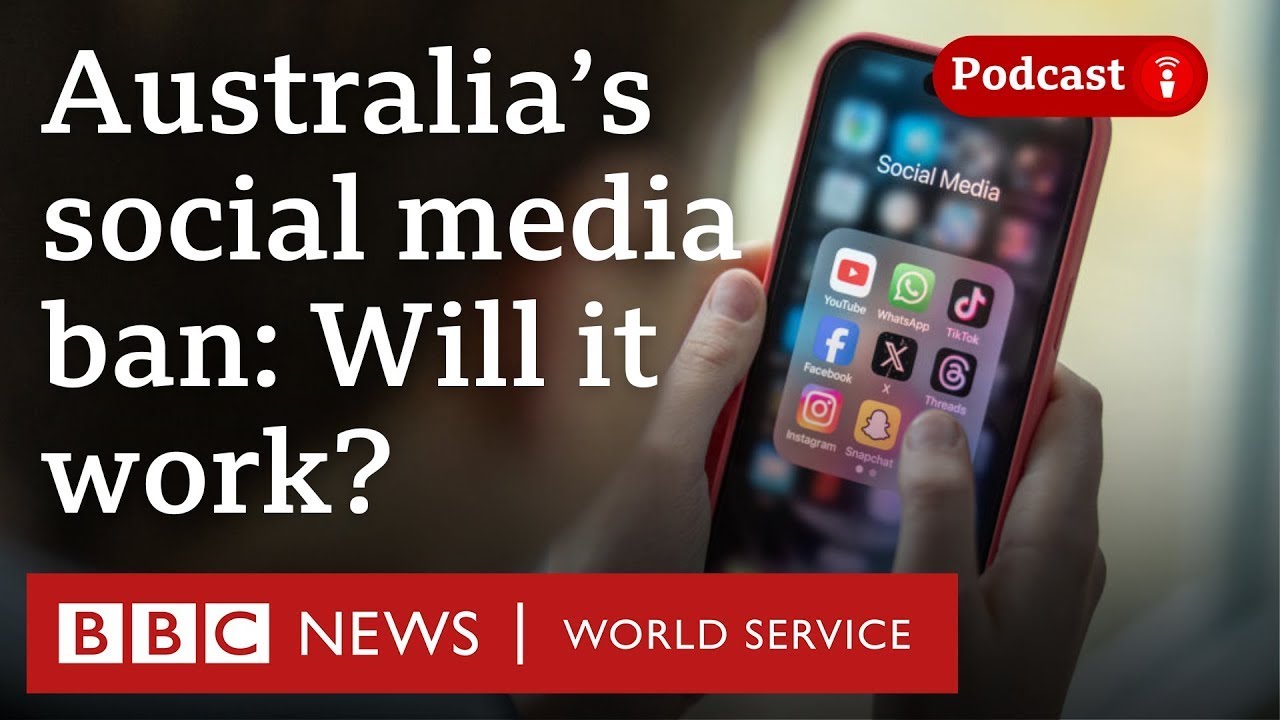
Just the other day Australia passed the law the first in the world of its kind to ban social media for children under 16 and to offer stiff finds to social media companies if they don't put in the right safeguards to make this ban possible I want to get into this law today I'm going to go through the main arguments from both sides so I will quote a key player both for and against this law and we will go through these Arguments together piece by piece and then we will conclude where I stand on this or
similar types of legislative action the final part of this deep dive I will then connect what's going on in Australia with all of our general struggles to control the role of Technology For Better or For Worse in our lives all right let's start with some details I'm going to read a couple quotes from a recent CNN article about the law just so that we are all starting From the same page with information about what's going on so let me read here Australia's Parliament has passed a world first law Banning Social media for children under 16
putting tech companies on no notice to tighten security before a cut off date that's yet to be set under the new law tech companies must take reasonable steps to prevent underage users from accessing social media services or face fines of nearly 50 million Australian dollars is about 32 million us it's the world's toughest response yet to a problem that has seen other countries impose restrictions but not hold companies accountable for breaches of a nationwide ban the ban is expected to apply to Snapchat Tik Tok Facebook Instagram Reddit an X but that list could expand all
right so that's just a quick summary couple other points the bill was backed by most members of Australia's main opposition party which is the Liberal Party it does have some Opposition in including some Fierce opposition from Independents and some of the smaller parties including the greens uh in terms of the Australian public it has pretty large majority support all right so a strong social media ban for users under 16 let's start for the arguments in favor so the best summary I could find about the arguments in favor of this bill came from a quote from
the Prime Minister of Australia Anthony Albanes who in that same CNN article I mentioned before said the following we know that social media can be a weapon for bullies a platform for peer pressure a driver of anxiety a vehicle for scammers and worst of all a tool for online predators this sentence packs in a lot of different arguments so it's worth briefly unpacking into its constituent parts so first of all he's talking about social media being a weapon for bullies So what's being captured here is that there is something about the pseudonymous communication that happens
through these platforms where you're talking to sort of visual uh digital abstractions of individuals typically just through text not actually interacting with real Flesh and Blood individuals who are in front of you who you could see and read their body language feel the full force of Social Capital cost of what you're saying it This it's pseudo Anonymous it's abstracted it's digital we know as anyone who has spent any time looking at say political discussion online knows this leads to a lack of the standard interpersonal inhibitions that typically structure our interactions with other humans and it
can really lead to extreme behaviors it can lead to behaviors that in person be considered really antisocial and among adolescence a young ad and pre-adolescence who are very Sensitive to social interactions um social media based platforms online interactions can really lead to bullying or all sorts of sort of uh think of it as verbal I don't want to say violence but um negative outcomes all right it's a platform for peer pressure he says I believe what he's alluding here is the fact that uh pre-adolescence and Adolescence are very vulnerable to groups and peer pressures and
there is a Lot of Niche online communities that can be very persuasive their brains aren't used to the persuasiveness of these online communities and it can push them into weird or destructive behaviors what we what we have to think about about these online communities is that you have this sort of digital competition that is being mediated by curation algorithms and engagement driven metrics which it's as if you have Hundreds of thousands of small weird uh cultish Niche groups all competing in some giant American Idol style competition and those are the most compelling win so now
when you're the 13-year-old and you're on Tik Tok and kind of browsing things you're on Instagram sort of browsing things it's not just that you're going to find yourself in the niche communities that are going to sort of suck you in and maybe change your behavior in drastic Ways but you're being subjected to The A Team the All-Star team of Niche cultist communities because just the fact that you were being shown them in your feed means that they have survived these algorithmic mediated tournament so it's it's it's used to be hey maybe you ran into
a weird crowd or a cult at the airport when you were growing up now it's like no we've scoured the country to find Niche communities that are most effective at grabbing people's attention And uh this can cause lots of problems like one of the issues that these Niche communities has exacerbated in pre-adolescence and Adolescence we know is eating disorders you can fall into these communities that are very compelling and very much um glamorized very dangerous eating disordered eating Behavior some of the small number of very powerful lawsuits right now that have been waged against Meta
are specifically aimed at the damage caused by eating disorder communities online and what it did to kids there's a lot of other things as well all right a driver of anxiety the evidence here is clear I've read the evidence I've read the counter evidence I've read the counter to the counter evidence over the counter the counter the counter evidence we have multiple independent streams of of data that exact exctly matches self-reports You cannot ignore self-reports that's probably the strongest signal of all that heavy social media use among young people makes more anxious and there's a
lot of drivers for that including these other issues that we're mentioning here the scammers and online Predators this seems to be a real Focus if you read the Press coverage in Australia around the bill because it's the most concrete when you put people on a pseudo Anonymous open access Global Conversation platform bad people are going to find the kids on there right it's like letting your kids free uh at 2 a.m. at the Port Authority like hey most people there are probably pretty normal but there's the weirdos and they're probably going to find you especially
if you're walking around looking like a little bit clueless so because of this we are getting uh yeah online Predators is is Kind of obvious the scamming thing is becoming a real issue there's been a a slate of suicides for example recently that comes from these exploitation SC SCS where the the scammer will meet you online and get you uh through various platforms to send them compromising or embarrassing video or photos and then they say yeah we're going to send this to your parents unless you give us like $60,000 kids can't handle that and they
Feel trapped and terrible things happen so it's very dangerous to put people who are young into again an Open Access Global pseudo Anonymous uh conversation platform so everything that the prime minister is arguing here I think every one of these is actually like a real valid point and a real valid concern there's some hisonic sometimes when we're talking about technology and kids this seems not that this list of issues I'm like yeah This is a solid list of real issues that have real harms that come from kids or young adolescents using social media all right
so what is the opposition saying so we have some quotes here I'm going to pull from I I found the best summary of the opposition came from an AP article I found that sort of summarizing what the various opposition said all right so let me quote this critics of the legislation fear that banning young children from social Media will impact the privacy of all users who must establish they are older than 16 opponents also argue the ban would isolate children deprive them of the positive aspects of social media drive them to the dark web discourage
children to young for social media to report harm and reduce incentives for platforms to improve Online safety all right there's some legitimate arguments here I'm going to take these one by one not not necessarily in that Order but let's take these one by one so the first issue here is with the age gating mechanism how do we know who kids are all right there's a couple arguments surrounding this one is just a technical argument this is really what the social media companies are pushing they're saying this is too hard um it's not really our responsibility
we don't know how to do this you're not being clear enough I Would say this is the main lobbying pressure point they applied in Australia which was the companies we don't want to argue about the harms or lack of harms but we need more time and more studies basically trying to slow walk to bill because we don't know technically how to do this and so don't don't give us these technical demands and just say do it or we're going to find you 50 million Australian dollars so they're trying to slow walk it um I think
this is a General response that the social media companies are having right now to this style of legislation including kosa in the US which is slow lock slow walk bills that have regulatory teeth um until you can do enough type of controls or options on your own that people will feel like uh I think they have enough stuff in place now we don't need laws hey it's Cal I wanted to interrupt briefly to say that if you're enjoying this video then you need to check out my New book slow productivity the Lost start of accomplishment
without burnout this is like the Bible for most of the ideas we talk about here in these videos you can get a free excerpt at Cal newport.com slow I know you're going to like it check it out now let's get back to the video uh the other concern about this is the privacy concerns it's a little confusing in the US some of the advocacy groups that are pushing these concerns Are also um heavily connected to the social soci media companies themselves there's there's a lot of complicated uh backstory when it comes to who's arguing what
but let's just take the concerns in abstract and separate them from who's pushing them so there's a privacy concern uh forget the kids I now as an adult have to prove that I'm 16 or older and that's a privacy concern what do do I have to upload my License and show a social media company now a social media company has to knows who I am and now I guess they can track you know track what I'm saying or they can punish me in like the real world for things I'm saying online so there's privacy concerns
around it um ultimately I think these are solvable issues there's a couple different ways to think about it one is there's and this is what the Australian legislators are doing it's a rip the Bandage like look you got a year figure figure something out good enough that often tends to work I I think there's many examples of regulation of this General flavor that have some sort of technical complexity that is eventually solved when you say look you have to do it and and something is solved it's imperfect but something is solved it should be said
there are in the American context there are other web-based services that Have to do things like this so notably in multiple US states pornographic websites have to do various types of age uh verification has not led to as big of privacy arguments because I think there's not as big of a lobbying effort to protect those sites um let me tell you my preferred solution here so I do think from a technologist standpoint the approach of saying the the sites and apps need the age gate I Actually don't think that's right I don't think that's the
right way to do this uh there is privacy and Technical concerns are those are fair points I actually think the right way to do this is at the operating system level so here's my proposal and I've talked about this before in various forums um my proposal is what is what is something we know a someone under 16 can't do they can't go and buy an iPhone and set up cellular service for that iPhone right That we know an adult does these 13-year-olds who have phones and they're using the phones to go on Instagram or to
go on Tik Tok the one thing we know is their parents set up that phone for them you can't sign contracts you can't you don't have the money for it you can't have a cellular cont contract so I think that is actually the choke point for age verification and I think it is as simple as this when you add a buy a phone and set Up a plan or add a phone to your plan as the owner of this plan the person who the plan's name is in um you just specify this is a under
16 or or above 16 phone single bit um we trust you yeah you can lie fine we're not doing any more verification there's no government there's no government documents there's no photos there's no looking at your behavior just parents say this phone is for a kid this phone is for an Adult and then if that kid gets older they can change that the same place they change the credit card you use for your building now the operating system just has a single bit any service who wants can query the phone and say is this someone
who is 16 and older or not and they get one bit yes or no I think that's going to solve that gives you like 90% there there's no privacy concerns here technically it's It's pretty straightforward from an effectivess standpoint it largely Works yes like adults can lie um but so they can do that with any of these bands just set up an account and give it to their kid give them their password to use but this is simple it gets rid of privacy issues it gets rid of technical concerns right now all these websites have
to do is just access uh make an no call is this an adult or not and it simplifies a lot of things so So I do think this a solvable problem um I don't want to dismiss it but it's not a showstopper and I am very suspicious of slow walking like eventually with these things you have to just push something through this has been I think more or less the approach with some of the US state laws that have age related restrictions for various Technologies they're kind of saying just figure it out ultimately you do
have to do something like that but I like my OS Solution all right another argument social media will become worse without the excuse of protecting kids and kids will sneak in and not tell anyone because they're not supposed to be there um I don't buy this at all this idea that the only thing keeping Tik Tok Instagram X whatever uh these are whatever services are being targeted here the only thing keeping them from eight Chan just like straight Up chaos is the fact that we worry about kids being on there that's nonsense these companies don't
care about kids they haven't been doing almost anything for kids other than adding some privacy controls that parents can control right we are not I I do not buy this concept that our current social media experience is mediated by these companies being worried about kids they're mediated by trying to keep their Customers what will our customers bear if Instagram turns themselves into H Chan most adults won't want to use Instagram you know uh we see like X decided we are going to get less content moderated Le and then Blue Sky came along and say we'll
get more uh more content moderation and like these found different audiences right people are carefully trying to uh titrate what their content's like threads is saying we're going to turn Down political content and we're going to turn up this type of content anyway so I don't buy this idea that oh we know the kids aren't here let's bring out the uh clue Collex Clan you know memes or whatever because you're going to lose all your customers um I'm also not that convinced by the argument that well now kids will sneak in and not report what's
going on because they're not supposed to be there um they're not reporting what's going on now that they're seeing that's Bad um I'm not that's that's not compelling to me all right uh I think the craziest argument against is this idea of well if kids can't use social media they'll turn to the dark web this is a a can a Canard not just a Canard it's like a complete factual inaccuracy that I have been railing against for a long time social media is not the internet social media is a small number of Services that essentially
run their own private version of the internet that are accessed through internet protocols but a lot of commentators especially people who grew up on this or the companies themselves like to equate social media with internet themselves so they say like if you're not on a social media platform what's left the dark web that's crazy the dark web is a very specific thing it's a list of it's It's sites and services that um don't Publicly have domain names that are accessible through standard DNS services or so that they can um you only can get to them
if you someone has told you specifically how to log into them so that they can have less scrutiny from like law enforcement it's like this very small corner of the internet that's used for like hiring Hitmen and drug trafficking and child pornography you have all of the internet outside of social media that's not the dark web I've never had a social media account I use the internet a lot I'm not on the dark web so I do not like this idea that the internet is social media and if you're not on social media you're on
some dark website ordering Hitman all right the final argument is kids will isolate and lose the positive benefits of social media I think this is the point that's most worth arguing it's it's the point that's most relevant when it comes to concerns about social media Banss um it's not one that should be dismissed now the key to this so let let's let's get fine-tuned the key to this argument is is Discerning between two different subgroups of kids and this is why I think it's confusing for people uh when they hear this argument on either side
of it is because they're mixing together two different groups of kids for most Kids losing access to internet-based community is not a problem for most kids actually the the moving more sociality to digital communication itself is causing more harms for most kids if you move them back to a more localized inperson sociality that's actually like really healthy for kids because it's very complicated to build up your social skills to mature as a social being it takes lots of practice and you need all of the the sources of information we're Evolve to take in we need
to see people in front of us we need to see their body language we need to struggle we need the friction of trying to navigate complicated inperson social interactions to get that practice that's going to make us better at it so for most kids it's kind of what you need actually is like what I had in the 1990s as a Junior you know as a high school student like it's actually fine most kids are going to be Fine there is however certain kids who you know perhaps they're in a marginalized group living in an area
where there really is very little support maybe there's just not very many other people like them they really do feel isolated um in-person sociality is not going well traditionally they would have had a very hard childhood they would have felt very isolated and maybe on social media they can find out find other people to Support them find other people who are of a similar community that shows that you know they're not alone um all of this could be really useful for that group so that's the group I think for which that's true that's where you
need to be worried about when it comes to this particular type of argument um one thing I'll say here is one and one way we can think about this is asking the question of whether social media Platforms are inherent in internet-based support communities there are internet-based support communities that come through social media social media kind of makes them easier to find and that they're typically it's a good interface it's like easy to use you can find your particular um you know maybe you're on Tik Tok will pretty quickly for example just automatically find you want
to see videos from these type of people and You'll see them a lot you didn't have to do much or you can find a Facebook group or uh Reddit thread that's of a particular community and the interface is there and you have a nice app and so that that it could be really useful but there is a lot of Internet like we just argued that's not through these Global conversation platforms there's a lot of Internet that can be levered successfully to help young people find support communities you have for example The whole world of things
like newsletters and podcast which often spawn their own communities if you belong to like a a substack newsletter about something you really care about you're probably familiar with the fact that there's a comment section on the newsletter post there's uh chats that happen back and forth with the the author of it and they're Niche communities right it's people who are interested in this very thing it's a Small group of people it's much more cohesive there's no algorithmic curation there's no engagement it's not 100,000 people talking about this and the most outrageous stuff being curated for
what you see it's there's 600 people here we're kind of on the same page we set up our own Community Norms right you can have very strong community there's communities run by teens themselves these are based around discussion boards Or chat channels Etc that just don't happen to live in a social media ecosystem advocacy groups themselves could run their own online services be it web or app base where people can come together and chat and share resources and have appropriate moderation for exactly what this community is Right moderation Is Not a Bad Thing moderation is
hard when you're trying to apply rules to 600 million Twitter users moderation is much easier like this is a Group for you know teens um from this background and there's like a few hundred of us on here that's a very easy Community to moderate compared to we need rules for 600 million people so my argument there is that is a fair point we need to think about groups that are finding support in the internet and make sure that we don't rinse them away from that but we should start thinking about finding that support in ways
that does not necessarily involve Global Conversation platforms these social platforms all right so there's the arguments for and the arguments against I've gone through each of those what's my take I would say I'm generally in favor of legislation like this at this moment not because I think it solves the all the problems like put a law like this in place and then we can all go home our kids will be safe and we don't have to think about it um what's good about this type of legislation is the Signal it sends and it is a
signal that is fundamentally technos selectionist to use a piece of terminology that I like and that I introduced it shows that we can notice that something that we embraced and had many good attributes is having unexpected negative side effects in certain instances over certain groups and it's perfectly appropriate to say well great maybe we should pull it back There that the arrow of uh the arrow of the future with technology is not unaringa it's like a Meandering River it's generally heading towards some sort of proverbial future se but it takes turns and has oxos and
we can say this technology is great let's try it out uh that service didn't work kids shouldn't use this actually if we change it to this this works better we can edit and reflect and curate and change our relationship to technologies that Already exist even technologies that are already widely used I also like that legislation like this sends a message to parents right it's okay to say I I worry about this I don't like my kids using this when you have a law that's like kids shouldn't use this it makes it so much easier to
actually tell your kids I don't want to use it it makes it so much easier for your kids not to feel alone when they don't use it this is something that opponents often don't understand About these type of laws is they say well wait a second so many kids will get around this it's not that hard to get around if they really want to and that's not the point I think the point is not trying to get a 100% compliance is trying to make the lives of families and parents who who are really worried about
this like 100% easier because now it's not I will be the only one in my class who's not on Snapchat in my life is going to be Terrible to now the kid has to argue to a parent will you break the law for me and that's a much easier place for parents to be so I think that's fine um I'm also generally not in favor of the approach of why don't we just instead make social media safer for everyone I just think that's like an impossible thing to do it is it's somewhat techno utopian it
gets very vague it runs into all sorts of issues um I just have not I don't Have a lot of confidence confidence that there's a way legislatively to make social media good for everyone it ends up being like having extra long filters on the cigarettes you sell the kids sometimes something is just not appropriate for one group that's better for another yeah we we do our best like this social media is like an interesting thing it's entertaining it's also kind of dangerous so maybe just kids shouldn't be there that's often easier Than somehow trying to
go through right we didn't we tried this with movies and then we figured out it's better just to have ratings and say you have to be 16 older than 16 to go to the R rated movies it was easier than trying to have the haze codes or whatever that was trying to make all movies appropriate for all people we didn't get as good of movies with those in in place and it was just easier to say well if we want to be Really violent or whatever maybe just like young people shouldn't go there unless a
parent really wants them to see it and a parent can make that choice and that's the R-rated movie system all right but I want to emphasize two things here what's talked about in these type of bills does not capture all the harm of internet all of the harms of the internet facing kids much of the digital bullying happening right now with kids is happening on group text messaging Apps not in social media platforms um Snapchat is where this used to happen but that's really just a glorified text messaging service that kids like to use so
if you really want to help the bullying issue this is where having a culture of uh kids aren't just on their own phones all the time makes more of a difference this also ignores online games online games are a huge source of the sort of predation online exploitation predation skill uh issues You know a lot of parents who may maybe like would not give their kid a phone thinks it's fine that their kid is playing Minecraft on a server on their iPad not realize they're playing that with unknown adults who are able to interact with
them so it's sort of missing out other sources of predation but mainly this is missing out on the this type of bill this type of discussion is missing out on the fact that these types of devices and the Content accessible through these devices is hugely distracting and addicting for young people it's digital fol for a young person think about any 14-year-old you've ever known or have ever seen who's been given a smartphone it is glued to their eyeball the ultr process content be it coming through a social media platform or through online games or through
like hyper adictive web content or uh video you know hyper addictive video content Whatever it is the the growing kid brain can't handle this like we we we thought this was bad enough in the 70s when latchkey kids like got glued the TV this is like a 100 times worse now this is not something that this these type of bills are trying to handle but it is one of the largest issues we're going to see it in the questions that we're about to answer here this causes real issues for people it causes real issues to
sort of allout Distraction and addiction of these devices so honestly if you want to know what I think is most appropriate it comes back to my main suggestion which is it's not just social media it's unrestricted internet access that is a problem when you're younger than 16 so no you should just shouldn't have a smartphone or a or a tablet with unrestricted internet access meaning you can just do what you want on this without supervision until You're 16 that's really the move here that if I'm a parent or I'm a community group that's really the
move here that probably matters that's not something that I think could be easily legislated and I don't think it necessarily needs to this could be a cultural shift so again laws like Australia is fine for signaling that it's fine to make different choices in your family but the lack of unrestricted internet access for kids before 16 is probably like the the Bigger Choice that's going to make a bigger difference all right so how do we connect this to all of us well um what we are seeing here is technos selectionism in play this idea that
it's okay to try watch and change try watch and change the introduction of a technology doesn't mean it always has to be used your prior use of a technology doesn't dictate your future use of a technology be aware of the impact of Technologies make assessments of this impacts of technology and make changes accordingly that's what all of us should be thinking about there's probably a technology in all of our lives that needs the equivalent of the Australian ban someone to come along and say hey just stop using this maybe it was good before but it's
causing more trouble than it's worth and we should be comfortable with moving uh backwards in this sense without thinking it's Progress turning backwards so I think there's a general message here of technos selectionism all right that's enough on what's going on in Australia let's get to some questions about these General topics but first hear a word from sponsor so I want to start by talking about a new sponsor of the podcast that I'm excited about and that is our friends at lofty makers of the lofty clock now one of the big Points I talk about
a lot on this show is that your smartphone should not be a constant companion nowhere is this advice more true than when it comes to your bedroom if you have your phone next to your bed that means it's going to be the last thing you look at before you go to sleep the first thing you look at when you wake up and whatever you uh whenever you wake up in the middle of the night what's going to keep you up a little bit longer this not only is going To eat into your sleep time it
really feeds the addictive relationship with your phone so you got to get those phones out of your bedroom the problem is how do you wake up we have become used to using our smartphones as our alarm clocks this is where the lofty clock enters the scene there's a beautifully designed piece of uh Machinery technology that has one purpose to be a clock it wakes you up and it does this Really well we're well past the uh the old school bells ringing on an oldfashioned alarm clock you can choose how you want to do it there's
soothing sounds like birds chirping or waves crashing um for my wife and I I don't know what you would call the sound that we use it's like nice flutes like pan flutes I don't know but it's a very nice way to wake up because we do not have our phones in our room I keep mine plugged in at night downstairs my wife Literally plugs it in outside of our bedroom just so so it's technically not in there so having one of these modern Sleek alarm clocks allows us to wake up nicely without having to have
our phones right there but we can think about lofty as more than just a clock think of it as a sleep companion because it also has guided meditations breath work even white noise to help you drift off peacefully at night I'm a huge white noise guy I cannot sleep in silence I Travel to hotels with a white noise machine that's a true story The two-phase Alarm has a two-phase alarm that will give you a gentle nudge at first which often is enough to wake you up and then a final wake up uh to help ease
you into your day instead of just jolting you awake the library of daily meditations breath work exercises sound baths sleep stories and more will help you relax and unwind without having to use your phone I think it's kind of cool To have a a meditation if you're a little stressed before bed coming right from your clock without having to bring your phone into the room it has an entire rainbow of uh White and color noises as well as nature sounds that help you drift into a slumber without having to look a screen and again it
design is beautiful Sleek minimalist modern Aesthetics clutter-free uh Vibe it's going to fit in well in any bedroom all right so the lofty clock will help You like it has helped me get your phone out of your bedroom and make your sleep better if you're ready to Dish your phone and reclaim your rest or you want to give the gift of better sleep to someone you love you've got to check out lofty go to buy.com that's bof.com and grab yours today if you if you use the code deep 20 the word deep the number 20
you will get 20% off orders over $125 that's by lofty. comom Used to code deep 20 trust me this little clock is a game changer and the perfect gift I also want to talk about our longtime friends at element who have a new thing going on that's pretty cool for those who don't know uh element is a zero sugar electrolyte drink mix and sparkling electrolyte water born from the growing body of research revealing that Optimal Health outcomes occur at sodium levels two to three times government Recommendations what I like about element is that not only
does it give you the sodium you need when you're dehydrated but it doesn't have junk in it no sugar no weird artificial ingredients you can feel good about adding that mix to your water or pulling a premix can of their sparkling water with the electrolytes already in it we have a large box of uh element at our house after workouts I drink it after long days of podcasting or Lecturing which is very dehydrating I drink it or if I spend a lot of time outside or if I had a hard night I'm feeling sluggish in
the morning helps get me hydrated and I know I'm not drinking junk the new thing I want to tell you about is now that we're in Winter consider the limited time availability of element chocolate medley which includes chocolate mint chocolate chai and chocolate raspberry flavors here's the thing you can mix the Chocolate medley flavors with hot water and you can enjoy it on your own or add it to an existing hot drink recipe that you like you could put and here's something I've been messing around with put a half stick of chocolate mint in your
coffee and now you have like a hydrating mint mocha uh coffee in the morning it's a great ritual you get in from shoveling that snow you you you're you're dehydrated you don't want to just grab a Cold water bottle heat up some of this uh element chocolate medley flavors it will be a ritual that you will come to enjoy in the cold months we're in right now here's a good news uh you will receive a free element sample pack with any order if you go to drink element.com de to order that's drink element LM nt.com
deep to make your order uh and you will get a free element sample pack remember you can try element totally risk-free if you don't like it give it Away to a salty friend we give you your money back no questions asked but don't worry they have a very low return rate and high reorder rate because people like me love us some element all right let's get back to the show all right we're back let's do some questions without Jesse here I'm going to have to read these questions myself this is no fun all right our
first question comes from em em says I recently lost my iPhone and My life has gotten exponentially better as a result I easily keep up with my graduate school work and research goals I'm spending more time reading and immersed in my hobbies and I'm taking better care of myself by sleeping enough and eating well I spend maybe an hour a week on social media on my laptop but here's the problem I've realized that I am profoundly lonely I moved across the country away from all my friends from graduate school and now that I'm not Spending
hours every day fake socializing on Instagram I'm actually noticing that loneliness any advice well I like this because there there's also a little case study hidden in here notice all the Fantastic stuff that happened to em when he lost his iPhone and then later just Chang his social media to something he just does on his laptop one hour a week which by the way you're allowed to do and by the way I make this argument in digital Minimalism but when I talk to adults who give me a a a case that they need to be
using social media 95% of the time the things they say they need to use social media for could be handled in one hour a week on their laptop right so they use that small number of things I need to be on the Facebook group for my my running club to justify five hours a day of scrolling on their phone so I really love seeing that I love and I'm going to emphasize what em got out of This he easily keeps up with his work now makes progress on his research goals he reads he's in Hobbies
he sleeps uh all this good stuff happened when he got rid of like a the phone addiction okay the loneliness well this is important because it underscores one of the more inous side effects or attractions maybe I should say of our current D Digital World it simulates these services and apps and devices simulate deep human needs now Not in a sort of deep way where it's actually going to satisi satisfy those needs but just enough to be alluring right it's it's like they have evolved to say if we if we can offer a satis satisfaction
of deep human needs that will make us particularly alluring to people and we can become a real part of their life and therefore Harvest their dat and eyeballs so fake socializing as he talks about it so being on social media and Talking with people with digital typing back and forth on these various sort of global conversation platforms draws on our deep human need for sociality and sort of makes us feel vaguely speaking like okay I guess we're we're social like in a rational way we're social we're talking to people all the time but the problem
is and I argue this in detail in digital minimalism it's not actually fulfilling our need for Sociality because the Deep parts of our brain isn't seeing another person where is this person what do they look like when are we sacrificing non-trivial time and attention on their behalf so the Deep part of our brain is not seeing real human relations it's just the rational part of our brain saying I'm very social I'm very social and so we're actually very lonely but don't realize it and so what we see here is once em Actually took away the
fake socialization he realized oh I am I I have been really lonely there's not real people in my lives I was papering it over I was papering it over with this um there's other needs these fulfill where they do similar things I mean uh for example we have this drive for like competency to be good at things because it increases our status in the community tribe as someone who's useful and valuable and we build a lot of meaning On it video games can get in there and toy with that oh you're you're leveling up you
just killed all the Nazis in this base and Call of Duty it plays with that so you're like yeah I that's fine I'm okay I feel like I'm doing enough to feel competent but you're not actually doing anything that's building real competence there's no real friction you're not building up real sort of hard skills in a way that our body recognizes or our communities recognize that comes To you and at some point you're like why do I feel so Hollow and sort of like angry or a drift or isolated it's because I wasn't actually building
up a tangible skill that's valuable to the community I was pretending to build up a skill it simulates that it gives you numbers you're level six and you do some button pressing now you're level seven it sort of simulates it but it's not really giving you what you need so Ian what should you do you have to do Oldfashioned the oldfashioned work of actually building connections so join communities be useful in those communities over time try to become a get a leadership position in those communities that's a great way to be around people to feel
useful to feel less lonely and to feel connected you'll meet people that way as well you also have to think about taking regular doses of what I call Vitamin people being around real people in Person is necessary for your health so it's not about like am I in the mood to be social this week especially if you've been fake socializing you might have lost that muscle might feel very uncomfortable it's have I got a sufficiently large dose of vitamin people this week and you go and you do things or you invite someone you know or
go to something you know to get that dose of vitamin people and then over time as the rewards come from forming These connections it's less something you have to sort of force yourself to do and it's something that you're really going to want to do so yeah it could be hard work to rebuild your social uh connection but it's important and I appreciate you highlighting the degree to Which social media in particular can off you SC the idea that you actually are very lonely you just don't realize it all right let's move on with Fad
bahad says you mentioned the following Arnold Bennett quote in some of your books one of the chief things which my typical man has to learn is that the mental faculties are capable of a continuous hard activity they do not Tire like an arm or a leg all they want is change not rest except in sleep vad continues his question do you still agree with what it said say do we really not need a rest can we work all The time like robots uh well no we can't work all the time like robots that is exhausting
I talk about this in my book slow productivity particular principle to work at a natural pace we need great variations and effort over different time scales but Bennett isn't talking about professional work here the argument he's making and this comes from his book how to live on 24 hours a day the argument He's based basically making is you don't need as much like Veg Out resting as you think that's what sleep is for sleep is for the restorative I'm doing nothing and my body is like recharging for the next day he say with your other
time do stuff that matters like do interesting high quality stuff so benett is actually pretty dismissive of work itself because he was he was addressing the sort of newly en larged London middle class they Worked downtown and they would take the trains back to their suburbs he was like yeah you got your job do your job all right when you get home you have eight hours until you go to bed and what he's saying is like don't Veg Out do good stuff like intentional meaningful stuff with that time it's going to energize you instead of
exhausting you now his version of eggie out if you read the book because this is the early 20th century is like drinking like ah I'm Going to drink I think he like playing cards and drinking I guess that's their of like vaping and scrolling social media he's like no do meaningful stuff read poetry and think big thoughts and have grand conversations or whatever and I think there's there's truth to that I think intentional activity is something that We crave it doesn't have to be hard activity it doesn't have to be like a real strain um
but being intentional versus I'm now going to spend two hours on on my phone while Netflix is playing he's saying it's being intentional is going to be better it's not going to exhaust you it's going to give you energy I think that's true I think a softer way of thinking about this is in your time outside of work to embrace what I call the pig pig which is an acronym that stands for being present being intentional and seeking Gratitude so Moment by moment in your after workor time when you're deciding what to do next next
be intentional about what you choose don't just stumble into something be present while you're doing it don't also be on your phone or only half pay attention and seek gratitude isn't this great I really enjoy this this is really good this doesn't have to be Pig activities do not have to be mentally trying it could be for example like watching a Dumb movie with your kids but if you're chose to watch this movie like we're all going to get together to watch it you're present with them in the movie and what's going on you find
gratit ude and like being able to watch this movie that you remember from your childhood and your kids are there and it's you know it's like a nice night or whatever that is like a meaningful activity it's not draining it's not hard you know you're not getting after it or crushing it but It's different than like I'm just kind of vegging with my phone so maybe that's a softer way to think about benett is presence intentionality and gratitude live on purpose at most times even if what you're doing on purpose is something that's not particularly
mentally trying or difficult so thanks for bringing that up and I like that book actually it's one of the the first self-help books how to live on 24 hours a Day we got a question here from Heather how do you do your research for books and articles I find it challenging to sort through all of the information online how do you write your books in terms of tools and organizing your thoughts I thought this was an interesting question um the main point I wanted to respond to here is the reality that the world of aailable
information is vast so like you want to write an Article you want to write a book between other books and other articles and the world of online information it's endless the idea that I'm going to master everything relevant to this topic and somehow organize it and present it back in my books or my articles is is hopeless it's quick stic so the way a lot of idea writers like myself or critical commentators like myself so I write critical commentary and WR idea Books the way we often operate is trying to create a coherent path through
this world it's it's like pattern matching these four or five things I've encountered seem to connect together and if we connect together right it makes a coherent path here or a coherent structure if you want to use that metaphor for ex for one way of seen some part of our life that allows us to take useful action or make useful critique and the L landcape in which This path or structure is built is massive the landscape of all relevant ideas and information is massive and we don't have to get our arms around all that just
here is a coherent path that'll take you from one place to somewhere else useful so I often think about this you're building a coherent path instead of trying to be uh comprehensive coherency over compr being comprehensive uh one of the ways we see This violated is you get people that become encyclopedic when they tackle issues well uh there's 15 relevant main issues to this issue that we're trying to face here and if we go into sub isue number three Sub point4 sub subo a we see this particular argument and then we can contrast that with
7 Sub point6 like you can get this like complicated hierarchy of information that in most instances is just overwhelming and and and doesn't Help the other issue we see when we we ignore the reality of coherence versus comprehens this is that people get petrified if I build a path over here what about the landscape over here and over here and over here and over here and what if someone is over in that landscape and they will be um upset that my path over here doesn't speak to their particular landscape the problem is that's also a
quixotic approach as well because to Landscape is vast the number of ways to think about it is vast the number of different things that people care about most when it comes to a particular issue is vast and to try to address or handle everyone to build a map that covers the entire space he you're probably not equipped to build that map because most of these other spaces you've never been to before so it's not a useful map and it's much more boring I want to go I'm stretching this Metaphor but I want to go on
a nice nature walk now I don't need a topographic map of the whole state right so that's the other thing that happens comprehensiveness can lead to a sort of um incomprehensibility because it's just you're trying to do too much so it's my Approach and a lot of commentators are doing the same in this vast space of issues and information ideas here is a coherent path that for a lot of people hopefully is useful add it To your list of particular outings I mean that's a huge elaboration of a metaphor Beyond its actual usefulness but I
just want to make that point Heather that sometimes it's okay to just find something useful to say and then let people integrate that into the much broader Maps they're creating all right uh we got a case study here but I'm going to put an aster in front Of this it's a case study but it's also a plea for advice so it's a useful case study it's kind of a a at first a sad case study but we're going to at the end give some advice to help this person so we're going to both see a
issue be illuminated in detail and and then we can talk about some advice all right our modified case study today comes from Shane Shane says I'm turning 25 soon and The reality is starting to hit me I have wasted the past eight years of my life scrolling through Tik Tok and Instagram and binge watching Netflix my daily social media usage is 15 plus hours and I'm sleep deprived due to this the longest I can go without scrolling through social media is 2 days I had no goals when I was young I just went along with
what my friends at the time chose to study in University now they all successful careers of getting married I Fell behind in life I dropped out of University two times but due to my parents forcing me to study I somehow managed to complete my degree but even when I was in university I barely attended classes and teachers called me a Daydreamer because I never focused in class and I always zoned out as for getting a job I prefer roles that don't necessitate daily attendance in an office or any consistent regular work schedule my introverted personality
has L me the isolation as I do not like talking to people and I'm also ashamed to meet anyone as I haven't achieved anything so I've tried learning various skills in the past three years such as coding copywriting graphic design web design and animation so I can do freelancing but never succeeded anything when something gets difficult I just drop it and continue scrolling through social media the most I can focus is 10 minutes or sometimes I go into a flowy For hours but most of the time my mind just goes blank when I try to
learn something I've watched over hundreds of self-help videos and tried everything I saw in the videos from daily planning and specific goals to every piece of advice out there nothing works I know what to learn in the exact steps I need to learn these skills and how I will use them but after creating a schedule I barely follow through and as I said my mind just goes blank when I try to study Now I have no idea how to get myself to do something and Achieve something all right well let's start here with a little
bit of empathy this is sort of the worst case scenario or a crystallization of people's fears when it comes to smartphones and social media and young people it is not for some people benign is not for some people a way to check on Sports rumors and a a community that's Really supportive to them as part of an otherwise Rich lives these devices with these types of services can be incredibly addicting and have damage to people's lives that counters or is comparable to the damage of any of the more sort of well-known addictions and we see
that here in this case study now why do they do this well we have the uh distraction component right so like how's this Damage happen there's a distraction component you're using your phone instead of doing other things that are more valuable but there's a deeper issue going on and I alluded to this earlier in the show but I'm going to detail it here more these phones simulate deep human needs that were designed to actually drive humans to do the hard work of becoming a successful sustainable proud human being it is hard work to become a
Respectable adult who feels satisfied in life and has a sustainable meaningful life that is hard work Evolution set us up to help us do that hard work by giving us a collection of fundamental human needs and they're so compelling that in the pursuit of satisfying these needs we will do the hard stuff necessary to become a successful adult so these needs include connection a sense of Competency Community standing and curiosity uh SL fear boredom among others um those needs are very strong trying to satisfy those needs we end up learning how to socialize doing the
hard work of getting good at things trying to become a leader in our community seeking out in information or productive activity um because we really hate being bored Etc modern phones and the apps and services that are on them can Simulate fulfilling these human needs just enough to Short Circuit us from actually going after them they make us feel just enough connected just enough competent just enough part of a community and just enough not bored that we don't actually get up off of the couch and do the stuff needed to become a successful adult so
by by short circuiting those fundamental human drives we lose the carrot and the stick That Evolution granted us to prevent what is happening here with Shane uh from happening in our lives that really is the fundamental danger of just unrestricted phone access to a kid that if it's satisfying these drives as they gain autonomy as they go through their their young adulthood they never do the work necessary that's really the insu part more so than the distraction or the Addictiveness that's part of the reason why they're so addicting is it becomes our only Outlet like
this is Shane's only outlet for satisfying these drives and we're miserable if our human drives aren't satisfied and this is his only Outlet now because he never developed the hard adult skills necessary to do this in the way that we're we're really meant to do it so now all he's left with is the devices the good news is Shane it's Coverable those drives are there you just have to learn how to satisfy them in the way the real world way that Evolution intended your phone will then become less compelling because it's not necessary anymore so
this is very recoverable now how do we actually do this well a the the big the big argument in part one of the book I'm writing now on the Deep life part one is called prepare and the big argument is we jump too quickly into like making the big Changes in our life I want to be like let's get out there I got to be super social and get really good at things but we skip the first part which is just preparing ourselves to be an imminently qualified human being just the hard work of like
learning how to be someone who can do hard things until you've practiced and created yourself into someone who can tackle hard things in in a consistent way any attempt to just go do something Hard is going to fail so I'm going to recommend a three-part solution here um let's start with discipline the ability to do hard things that are valuable that you don't want to in the moment is the fundamental ability if you're going to transform your life you are very bad at this now that's fine because it's practiced to say you were bad at
discipline now is like saying also you're bad at the banjo the latter thing would it upset You because you're like yeah I've never played the banjo but I'm sure I could get better if I practiced well the same as for discipline I would use the discipline ladder technique I talked about in a recent episode where you start with a really small thing that you do daily but it's easy and then you ladder up to something slightly harder and then once you get used to that you ladder up to something harder so you work your way
up to Increasingly demanding versions of whatever you're working on I would run two discipline ladders one involving like health and physical fitness and one involving uh the intellect probably around working your way up to being able to read like interesting hard books so I have a ladder you build up towards which will lead to you getting in good shape and a ladder that'll lead up to you being able to use your mind and apply it in a consistent sustained way And be exposed to interesting ideas run those ladders um currently this could take three to
six months but it's going to give you a base of discipline we can now use going forward all right next you got to organize your life start with capture systems is have a place where you write down all the different stuff you have to do broken up by role and status then put a away a lightweight Morning and shutdown routine so just every morning a very lightweight thing you do I'm going to glance at these list and sketch out a plan put a couple notes down and a shutdown routine you do this should be really
centered on I just want to make sure anything that came up gets put in those list so I don't I'm not remembering anything in my head once you get used to that lad that up to something like multiscale planning then you'll be ready at this point to do Something like multiscale planning all right step three and now we're like pretty far into 2025 right now now we're going to reclaim your brain from the phone I don't want you doing this yet before you have discipline before you have some organization over your time and obligations I
don't want you going cold turkey on your phone yet because it's going to be like going cold turkey on like an alcohol dependency you're going To get the the DTs that's going to be dangerous but as a third step you're ready to to reclaim your brain and this is where you're going to take a 30-day break from optional digital Technologies I kind of walked through this in my book digital minimalism you're going to aggressively explore inperson community opportunities you're going to aggressively explore a hobby or skill that teaches you the joys of real competency you're
going to Aggressively look into the world of ideas outside of your phone this going to like a reading or documentaries and in whatever work you're doing you're going to aggressively look at how do I get better at this job not what do I want this job to offer me what can I offer this job I want to become indispensable so that later I can take control of my career you have to get good first before your job gets Good Journal throughout this whole thing reflect what's working what's not um you'll be ready then to sort
of get used to going after these fundamental human needs without your device after the 30 days make very specific rules about what comes back into your digital world and why and what rules you have for using it you'll probably have to repeat this a couple times a year for a while all right so you can come back from all this this is not uh Destiny But it's going to take hard work work your way up slowly you're have some setbacks but I absolutely believe in you Shane and those are the that's the advice I would
give I just pointed the multiple books and multiple past episodes you're going to have to dive into all of those as well to really understand what I'm saying but I will say clearly this is recoverable you can figure out how to actually be an imminently qualified Human being it's just going to take some work now is a good time to do it all right and now we're at the slow productivity corner [Music] question the slow productivity Corner question we do one question a week that relates to my new book slow productivity the Lost start of
accomplishment without burnout all right today's slow productivity question Corner question of The week comes from oh I don't have a name that's a cool question all right here we go how does f how does Fatina lente compared to the Tanya's longer shorter way sounds quite similar and I like finding a source for the essence of this wisdom in Torah all right so we got to do a little bit of scholarship here fistina Lin is this Roman phrase Make haste slowly which I talk about in my book slow productivity because it ties to the second principle
of slow productivity which is to work at a natural pace so make haste slowly um what it's capturing is you're sort of relentlessly and systematically moving towards a goal but doing it carefully and slowly all right the longer short Way which is a Jewish concept I didn't know about until this question so I did a little bit of research and as any as anyone who knows anything about serious ttic study knows 20 minutes of Internet research is all it takes to master these Concepts now being sarcastic I'm I'm apologizing in advance to all the rabbis
who are about to say oh you're getting this completely wrong but let me give you my my understanding of the longer short way Concept it comes from a story from talmid all right for those who don't know talmid is the combination of the mission of the oral law of Judaism combined with commentary uh known as the gamarra in the sort of one book etc etc it's old all right and it's something that is studied in Judaism all right so I found using internet searches the the story from talid from which this concept comes from and
then we're going to say how does this does this give us more Insight on um slow productivity all right here's the story said Rabbi uh yosua Bin Shia once a child got the better of me I was traveling and I met with a child at a Crossroads I asked him which way to the city and he answered this way is short and long and this way is long and short I took the short and long way I soon reached the city but found my Approach obstructed by Gardens and Orchards so I Retraced my steps and
said to the child my son did you not tell me that this is the short way answered the child did I not tell you that it is also long all right so this story has a lot of interpretations um in particular I believe in uh maybe in hidic Tradition there's a book about it there's a rabbi that's done a lot of glosses on it but the simple version as best as I could tell from my 20 minutes of Internet Searching what's being said here is the long short way so the path pointed out by the
child that is long but short is sometimes the most direct way to get to an important goal it is a a um a long path of intentional steady effort is sometimes the shortest way the best way overall to get to a goal by contrast a short long way where you think you're taking a shortcut but it ends up being very Long so in sort of uh Jewish tradition as far as I understand this is often applied to like Torah study they get to the goal of like connection to God um actually the shortest path there
is the like a long commitment to studying Torah right so um long path of steady intentional effort is sometimes the shortest way to a goal that's a cool concept I think that is very similar to F Festina Lin and I think it is very It's a nice way of capturing some of the core ideas of working at a natural pace right the shortest path somewhere is sometimes long and that's okay because once you recognize that you can chill out and start doing this the daily or weekly or whatever pace you're working at do the stuff
that matters and let it pile up like the path is long so to make it sustainable do the right stuff at a reasonable pace so the long the longer short way I like that phrase I'm going to add that to my lexicon of slow productivity related ancient wisdom so thank you for sending that in all right speaking of wisdom I want to go over the books I read in November but first let's hear from some of our sponsors so I want to talk in particular about our friends at cozy earth oh I am a huge
cozy Earth fan you know this you know my wife and I love the Cozy Earth sheets their bamboo sheet set is the uh Ultimate gift this holiday season Elevating everyday lecturing is something everyone will use and absolutely adore we adore it they are incredibly soft they're cool they're temperature regulating we own multiple pairs of these so that when we're washing one pair of these sheets we have another pair to put on we travel with them when we go away for the summer we bring our cozy Earth sheets with them they are just incredibly comfortable I
love them cozy Earth is not just about Sheets as well they have other things such as pajamas my wife has a cozy Earth pajamas I have the Cozy Earth sweatshirt we have the Cozy Earth towels they just make really comfortable stuff and once we got became addicts for the sheets we began uh the oh we have the duvet cover this comfortable stuff I really do love to co their stuff especially the bamboo sheet set their goal is to help you create a sanctuary within your home a refuge from the Demand of the outside world they
understand the significance of finding comfort and Tranquility in the midst of our hectic lives your 5 to9 should consist a relaxation Rejuvenation unwinding and embracing a sense of calm with cozy Earth you can transform your space into an elevated Haven when Serenity and renewal intertwine effortlessly I think this is a great gift idea if not for someone else make this your gift for yourself this season I want to go into the new year with sheets or pajamas or whatever that are super comfortable um they all come with a 10-year warranty that's how much they believe
in them and they have a lot of responsible production practices Etc all right so if you want your cozy Earth pajamas by Christmas you need to order by December 13th to get free shipping missed it you could still get expedited shipping until December 20th to ensure it arrives in Time so you can get your cozy Earth the sheets for someone else you've got time if you're doing them for yourself well do that soon as well so don't wait head to kar.com deep now and use my exclusive code deep for up to 40% off you want
that discount so remember cozy earth.com deep and use to code deep give the gift a electri this holiday season that's cozy earth.com if you get a postp purchase survey this is like a request from me say you heard about Cozy Earth From Deep questions podcast if you select that from the list in that survey if one comes up it really helps me I also want to talk about our friends at my body tutor we come out of the holidays we have Thanksgiving we got like Christmas or all the other holidays in December and you you
sometimes feel as if um you've been eating a lot you've been sitting around on the couch a lot it's dark you're not outside enough you're not feeling healthy You have your New Year's resolutions pending and I want to get in better shape well let me tell you how to do it my body tutor my body tutor which is founded by Adam Gilbert who I've known forever is a 100% online coaching problem that solves the biggest problem in health and fitness which is lack of consistency they do this by simplifying the process of getting healthier in
the Practical sustainable behaviors and then Letting you check in and work with your coach online every day to actually be accountable and to make the sort of flex changes you need as life comes at you that's why my body tutor works because you're working with someone else they help you come up with your diet plan help you come up with your exercise plan and then you check in with them about how it's going they hold you accountable when you travel for Christmas they say what changes are we going to make for Example so that you
don't fall too much off your plan you don't have a gym what exercises should you do so they help you adapt as well and because it's 100% online it is much cheaper than having to work with like a nutritionist or a trainer in your gym in person so now it's the time to finally fulfill your wish to getting healthier and I recommend my body tutor is a great way to do that just go to mybody tor.com t r mention deep Questions when you sign up and Adam will give you $50 off your first month my.com
and mention deep questions all right let's move on now to books all right I try to read five books a month and then report back at the first or second podcast of each month what I read the month before so we're in December now what books did I read in November 2024 first I read gaining ground by Forest Pritchard uh it's called Memoir It's A Memoir of forest went back to his family farm and took it over he's over in shann andoa not far from here he sells at the Tacoma Park Farmers Market so I
love crossing paths with them um and I enjoyed it it's like a good Memoir of someone like learning and embracing the farming life another Memoir I read I guess I was in a memoir mood this month I'm realizing this I read Little Chapel on the river By gwindel and Bounds I like gwindel bounds is writing uh earlier this year I read that great book she wrote about uh not too late about people in middle age taking on difficult physical goals Little Chapel on the river is about her moving from New York in the wake of
911 to a small town on the Hudson River Valley and how she got really involved in this like old small Pub on the river in this town and getting involved in the life of the people at the pub and she's A great writer and and it's a great book um it it wasn't what I thought it was this is my fault not gindin I came into this thinking I really want to hear about what it's like moving up state from a city the like life in the countryside and the slowness and because that's you know
very aspirational it really was about this bar and the people in the bar and it's very touching the relationships she made with these people but it was it was like The vignettes of this it didn't end up being a very affecting book it wasn't what I thought but I I ended up enjoying it I also read lost in thought by Zena hits hitz now this I thought was going to be a memoir because Zena uh she studied at St John's in Annapolis the great books program there and was a successful academic but left the track
and went to like what was essentially a monastery and I thought this book was going to be About her recommitting to a life of the mind um it's not really about her though after the beginning it's just um more of a pmic about the value of the life of the Mind the sort of Standalone value of a life that's dedicated to embracing and engaging thoughts um so once I adjusted that that's what this was really about there's some really good arguments in there it's it's um I read it because I'm Thinking about one day writing
this book in defensive thinking and she's kind of doing something like that so if you want a a sort of muscular argument in favor of like hard books and ideas as having intrinsic value lost in thought will give that for to you then was I guess the last person left to read outlive by Peter AA I I had done an event with Peter and he had given me a copy of his book and I read it on the way home um it was much better than I Thought it's interesting because there's a lot of Peter
in this book and basically his trajectory was I used to be super fiddly optimized like exactly this diet and exactly this supplement and he sort of matured and was like no no no um different people respond to things differently let's get to like the the big ideas that really matter I mean it was a it was a more medically rigorous and like less bro sciency than you're going to expect it's like a um a Really good argument for like what matters for longevity and what it looks like to actually prioritize in your life it's it's
affected me in various ways I'm well written no wonder it sold and I'm checking the official list here all the copies because it's it's a a a very good book and again it's more General and less in the weeds than you might imagine so I'm glad I read that finally I read we have never been woke by Musa Al uh garby who's a sociologist Assistant professor sociologist at Stony Brook that's probably my famous favorite book of the month I love books like this where you have like a young academic throwing bombs I mean he just
comes into the building he looks at the people around him and is like I've got something to say and he's making a big argument and it's a bold argument and he does it confidently and it is um very timely and very convincing and it's it's not saying Something like oh we all are thinking this he's just taking his term saying it it's it's surprising um it's the type of intellectual books I love it's a little an intellectual experience and I thought it was an exciting fun book to read um man he's got some courage too
I he's basically looking around at all his fellow academics and other uh what he calls the symbolic capitalist but sort of the technocratic elite of us culture and just saying hey all this woke stuff This is like you guys playing stat internal status games it's about you trying to justify yourselves and your position and it allows you to ignore or put down people who have it worse off than you and still feel good about it um Eddie's pretty compelling about it it's fantastic exciting intellectual Journey might not agree with all of it but it's you'll
learn a lot and there's an energy to it which you don't always see in these books all right so that's all I Got for today we'll be back next week uh hopefully if everything goes well with what I'm up to um with Jesse I promise Jesse's coming back can't wait for that until then as always stay deep hey if you like this video I think you'll really like this one as well check it out