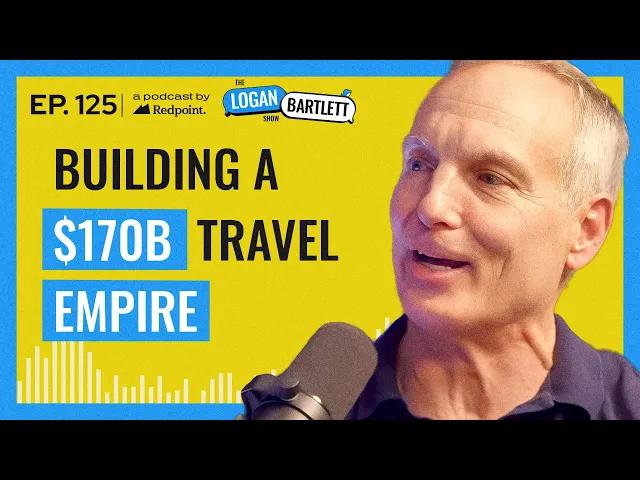
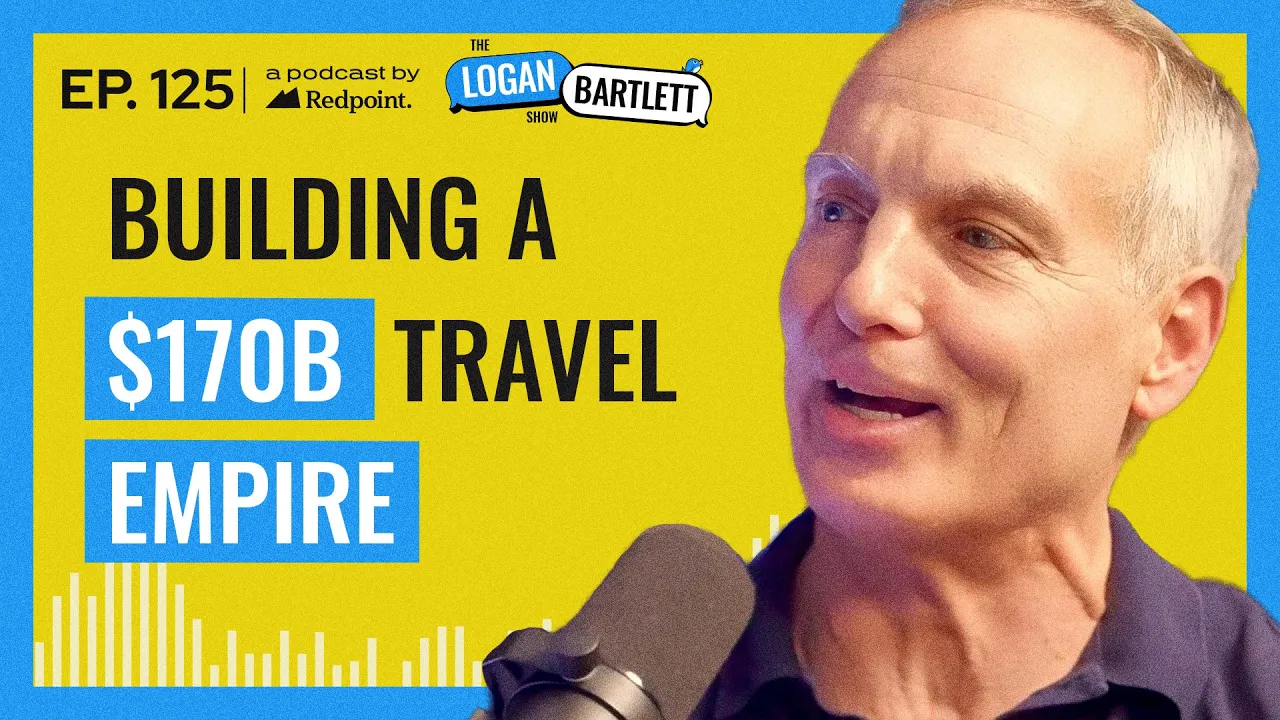
So during that first year the stock dropped down to what was then a dollar a share my mother thought we're going to go bankrupt and then we're trading as of today well over 5,000 welcome to the Logan Bartlet show on this episode what you're going to hear is a conversation I have with CEO of booking Holdings Glen fogal now bookings people probably know from one of their notable Brands booking.com but under their portfolio They also have Priceline kayak open table and a host of other businesses Clint and I have a great discussion about how booking
has grown into a$ 170 billion plus business we talk about the challenges that they faced over the years everything from tsunamis to Wars to a global pandemic to post 911 and all the different things that have impacted travel over the course of the last 20 years we also talk about their acquisition strategy including the Acquisition of booking.com which is now their namesake and how it's grown into 90% of the revenue for the overall company finally we talk about how AI is going to impact travel both from a user standpoint as well as for the business
that is booking the ultimate goal of course is recreating that human travel agent who knew you so well knew what you want knew what you like knew what you could afford brought a few choices to you and you work back and forth with her And came up with what you wanted we want to recreate that only better because the technolog is going to do much better than a human could have done a great conversation with Glenn that you'll hear [Music] now Glen thanks for doing this well thanks for having me it's a pleasure pleasure to
connect I uh I've I've studied uh your business and how you've built it out over the years so I I have a bunch of different questions to go Through but maybe for people that know uh some of your Properties or know booking at a high level can you get just a quick synopsis of uh what is booking and maybe how the the business came together sure well we get spend a lot of time we a little time let me get the brief one you can ask me questions that you want to get into details so
booking Holdings has number of different brands booking.com is by far the largest that's headquartered in Europe in Amsterdam American uh viewers listeners right now they know probably more often things like price line or kayak or open table uh people in Asia would know things like a Goa if you rent a car you may know rentalcars.com though we've tried to merge that into booking.com mostly but the brand still exists many types in rail cars.com still going to be there and then a whole bunch of small things won't go through all the detail we started off though
as priceline.com That was the start of the entire organization and then that was based just in the US and we wanted to become more International and through a lot of details and mergers and Acquisitions Etc we're now where we are but by far booking.com roughly roundoff called about 90% of the business which is kind of interesting because we say wow that means that put together open table and kayak and all the other on that go to all they're Le and I say yes and they Said that that's weird I said well like today right now
we're over $170 billion market cap so 10% that's 17 billion those are big companies even though they're a small percentage totally totally I mean I guess it's a testament to to the booking acquisition which I want to ask you about a little bit but so so Price Line was started in 1999 uh no it went public in 99 the you know 97's pretty much where really started getting you know some sales and such and You joined at what point I joined in February of 2000 so that was about one week before the peak of the.com
Boom so and I had been I was a Trader at Morgan Stanley and uh I always like to say that I top tick that trade going long internet a week before the NASDAQ Peak which proved that I should leave my job as a Trader Morgan Stanley because I clearly don't know how to trade the RIS the risk adjustment that well you know if you're right over a long enough Period of time yeah well so I could say like well I was right I was just too early which in the trading floor that's another way to
say I was wrong yeah wrong and early are the same but but if you stay at a company long enough things can prove out pretty beneficial I'm curious what was the impetus or what made you jump on with Price Line what's your view there so I I wasn't thrilled with what I was doing as a Trader I was working for a Wall Street Legend but to Me it just wasn't that interestes as Barton bigs and he was running about 16 billion and it was as as a Trader for a on a buy side uh all
along and really what I just try to do is execute Barton's thoughts well and I had previously had a number of different careers I had been an investment banker and my clients were airlines so I knew a little bit about the airline business and before that I had actually been an IT person I started my career in it and So I had some knowledge about technology I had some knowledge about the airline IND I knew a little bit about trading which wasn't didn't come that much and then this company Price Line was looking for somebody
to be in charge of corporate development and it was do com boom everybody's internet's going to go to the moon and it's 99 so I interview and I get the job offer I said okay I just want to wait for my bonus bonus could get paid in February and I'll Leave and come over and uh I came over and um like I like you said you know worked out in the end totally over long enough period what what um I mean Price Line was one of the the hottest internet stocks incredible we when it went
public in 99 and that was before I joined but in a few days it was worth $33 billion which back then was real money which is crazy and you know and then just to show how much things can change so during that first year the stock dropped down To what was then a dollar a share we had to do a reverse split which usually doesn't work out so well so we were doing you giving in six to get one so call it $6 a share essentially and my mother thought we're going to go bankrupt and
then you know today we're trading as of today well over 5,000 so that's you know we're talking well over you know 800 well over 800 times so you do a kager so it's almost a quarter of a century and we're talking a Kager that's over 30% over a 25e period almost so it's really been something really been a ride that's incredible but you know we went through a my Lord we went through the.com implosion and then of course we had the great financial crisis I get through that one well you even had after theom you
had 911 right 911 right travel bus forgot forgot that one where yeah the good thing about 911 is is that you get the experience of having negative Revenue because more people are refunding than getting new revenue for exactly that's the point and then we so after um after we had the great financial crisis we had uh the Euro crisis course that was big for us in Europe you we had a couple tsunamis two tsunamis you had the one in the Indian Ocean was a bad one the Chris's one then you had the bad one in
Japan then caused all that problem and of course the volcano and Iceland that shut down Travel in Europe for a while and as you point out the pandemic a few Wars we were one of the biggest players in Russia we were the biggest player in Russia it's not that business so again volatile industry volatile industry but there's one thing thing though that is absolutely true and that is no matter how bad it may seem at the time you know travel is going to come back and and what I mean travel slightly outpaces GDP because maybe
speak to some of the human Uh well I mean it's um it's a couple things you know one of the things always say just as a human desire to travel I think it's almost must be innate or otherwise we'd all still be on the plains of Africa because our species at some point want see what's over the hill but when you look in just terms of today you just look at economics so we see that when somebody enters an income level where they can afford to travel that's one of the first things they're Going to
do is go travel and then as people get wealthier you end up buying more travel in fact once you reach a certain level well you don't go buy another couch you go and travel more and then you get into the area where we seem to have shifted from things into experiences that seems to be a trend that definitely seems to have you know started a few years ago but seems to be here for the long term so we get that benefit so that's nice Tailwind but then We get other things for example we have people
who never ever used to uh use buy anything digitally now they're buying things digitally so they come to us and then you also the people who say well I'm still not going to do it but those are generally an older demographic and you know just the way time works these people will no longer be consumers because they'll have passed on but the new generations coming up they are digital natives so they are of course Buying their travel through someone like us so we have a lot of Tailwinds behind us it is interesting in societies there's
like a handful of services that continue to scale linearly as uh income goes up I think education's one Healthcare is one travel I think are kind of the big buckets of it I'm curious you touched on something uh earlier that might be stupid and a little Finance esoteric but um the reverse stock split and your stock now Uh you you haven't done any more splits or anything to bring the stock price down I'm curious uh there's there's the old retail sentiment about making it more accessible now you can buy smaller share fractions you can buy
fra shares right so that argument is gone it's gone but that was once upon a time well and there also and you may be you may not you know once upon a time I'm old actually know this you had to buy a round lot wait I actually don't know This round round lot was 100 shares so you had to buy 100 shares or else you bought something that was not a round lot it would cost you a lot more money as a retail buyer people didn't buy you wouldn't go out and buy I mean some
people maybe but the idea was so round lot 100 shares and so people would do splits because so people could buy a round lot which is 100 shares nowadays you can buy fractional shares so that argument goes out the door but even more So is and you look at any um Financial study on it you cannot increase the value of the company by displaying the share in the long run there may be a shortterm there's some studies that show a short-term blip because it's seen as a signaling device nothing to do with any sort of
economic just that basically you've held up the flag saying we're going to do better here's how we're going to tell you by doing a split people continue to ask this question I Continue to say why would you want us to do that there is one reason potentially to do it and that is giving people employee options or equity and looking at how many and there's a psychological thing it's just so small it doesn't matter you you're going to give somebody if I was going to give somebody $10,000 worth of equity as an employee and he
says you gave me two shares he doesn't feel that or she doesn't feel that well so that it's a psychological Play there's some element of that that I think the the people understand and it just feels different but I I will tell you the number of times uh we end up trying to get our companies when they're going public to have a price per share of 20 30 bucks something like like that cuz it ends up people feel good about those amounts and it trades decently well and whatever the investment banks have talked us into
it but it is it is funny the number of times when we've had To do stock splits or reverse splits or whatever in the private markets explaining to the employees that you're not taking anything away from them not you're going to have the same ownership in the business and it's interesting I think a lot of people know it but it still feels a little psychologically worse but very smart people you you have to sit down and be like no no here's how the math works and you end up doing a whiteboard exercise and so I
always Encourage my companies to try to in the early day series A's keep the price per share if you can around a dollar $2 $3 right and it just for whatever reason that math works out and it helps on employee hiring it is fascinating how that psychological thing which just shows and when I went to school I studied economics and this whole idea of there was this idea there's a rational person you know homo rationalist but the truth is there was no such thing as Behavioral economics in school when I was there now it's become
a very big school of Economics I really believe in that so you're talking about a certain price for your companies when you bring that but you're talking the us if you go to London what are most of the stocks quoted in they're not in pounds it's Pence it's p yeah you know so it's it's it just what the socialization of what seems normal or not well then you get the cultural elements of different People valuing stock and options differently and we had a I had a French company once upon a time and you couldn't convince
like they they didn't value the ownership in the business at all because there wasn't a culture of seeing the upside now that's changed I think still see elements of it they different cultures that value and they're also different levels and it's interesting where you'll get your more senior manager who are more Knowledgeable and are more interested in equity and in terms of trying to improve it but you'll get more of the rank and file say thank you very much but I would prefer to have you know more of my paycheck sure yeah for sure they've
seen or they they just don't have the risk on in that perspective so so from a uh Price Line standpoint so you acquired uh booking 2005 but you ended up doing a merger with so we bought before that so we bought a couple so again we started The company Price Line it was a thing which many people may not even know because so long ago was thing called name your own price oh yeah William Shatner you got it and it was an opaque way to buy something it was a good Niche product was Niche and
we you know relatively early realized that you know if we want to be a bigger company we're going to sell travel the way everybody buys it which is knowing what you're buying knowing you know where it is if It's an airline ticket when's it going to take off how many stops you're going to make Etc so we had to buy something retail so we went out and we bought a couple of small buy a couple small companies so we could have a retail presence in the us but we also wanted to be big outside the
US and the only thing we had outside the US was the thing we think called Price Line Europe which I was running at the time and which is one of the craziest things Because somebody in the US may be willing to say look if I can get a big amount of savings by buying a flight I don't know when it's taking off I don't know when it's Landing I don't know if we're going to make a stop somewhere but I'll do it to save the money because in the US many cities you have to make
a stop anyway the Hub and spoke system but in Europe to try and do that and say listen I'm going to give you a great deal from London to par it's going to See you 50% and you have Ryan here that's going to charge you 10 pounds to go so so you're going to say me me 50% 5bs but I may end up in Frankfurt first no thank you I'll just take the direct not a good idea so this is 2002 2003 I'm going over trying to figure out Bo how we going to run what
we going I found these young people just out of school real smart people out of Cambridge and they had a company called active hotels that sold just hotels but it sold hotels The old fashioned way they told you what the hotel was the name where it was and how much it was cost you didn't have to bid for it under the name your own price method and uh we were able to have a good relationship and they liked us we liked them but then they decided because they outside investors we'll have to do an auction
anyway hired um UBS and we didn't have the highest price but we won the deal because we're able to convince the management team that's Had substantial amount of equity in it that working with us we'd let them still run the company and more than some of the other biders were willing to do it and that's what CAU them to do it so we did that in 2004 first acquisition first acquisition 2004 there was 165 million us it about 10 and something employees um was just barely profitable and then a couple of months later I was
talking with the CEO and he said to me you know do you know these Guys at booking.com they're over um in am I kind of know why he says well they're in London and um we were going to do a deal with them but then you you we did the auction we didn't so we put them aside but you should meet them I'm saying I don't know I'm supposed to go home tomorrow I don't know meet them tomorrow and then I thought oh okay so I call my wife and I say look honey I'm not
coming home I got I gotta meet this I'll be home the next day no problem and I go and I meet the people at booking.com who were there for a big travel conference called World Travel Mark and whoa this is very interesting these guys are on to something because it looked like hand in glove acting hotels in the UK booking.com in Europe same model very much so I said oh this is great so I say to the guys on the media I said you know I'm very interested in this I'd like I'd like to meet
you uh some more is it is it when Made that happen they said they said what about tomorrow I said what a good idea call up my wife say honey I'm not going home tomorrow either I'm gonna meet these people in Amsterdam long story short we finally get the deal done many many months later and we combined active in Booking booking was 135 million so combined together 300 million for the both merg together they also had about 100 so we had about 200 something employees total booking was losing a lot Of money very cash flow
negative at the time and the reason was because both they and active Hotel worked on something known as the agency method and the agency method was you booked the hotel but you didn't pay active hotels or booking.com you waited until you showed up the hotel and you paid the hotel then sometime later the hotel would send us our commission now that's a cash flow problem because you're not getting paid till a long way down the Road but if you put ads into Google they want their money now so the faster you grow the worse your
cash flow was luckily we had some cash and that was part of it but look it all worked out well so so at the time was that like going back to that agency model which was the way it was once done with travel agents yeah yes and no um there was both the agency model which we just described there's also the merchant model where uh your credit card was charged immediately Even though you may not be traveling for many many months it didn't matter that's the way it was done for a tour operat that was
the way that was done so there were two models the price line name your own price method that was done on the merchant basis essentially your card was charged as soon as we said you won the bid you got it that was done so the two ways but there's certainly very different cash flow the merchant model you get to keep the cash you hand it Over to the supplier way down the road in fact back in the day back in that time turn of the century you had people who were not handing money over to
the suppliers until long after the uh travel had occurred therefore the hotel years for example liked our model much better cuz they got the cash sooner yeah so so how did that um was that a big Insight or leaning into that model was that one of the things that helped obviously great execution brand all that stuff but Yeah it it helped develop relationships with Hotel years because they wanted the cash but it was something it didn't really work well for a lot of companies because when you did the agency model especially in the US the
hotels were not paying the commissions even though they were supposed to they just wouldn't do it or they'd forget to do or just they you know systems didn't work they said I'm not paying you I don't see this reservation so it was a thing that a lot Of people didn't really like so much um people like the merchant model the Distributors because they got the money first it's something that helped us develop relationships with the hotels and get them on board quickly no risk to them we said sign up with us you have to pay
us any money until we put a head in your bed then send us the money later so so do you remember market cap those two were 300 million roughly combine comb combine how big was price line at the Timey Bo well very volatile very volatile do you remember roughly what there was a time yeah about a about a billion round off so a third a third of the business was yeah and maybe and even and there were times we would have been less got it okay so so in uh and I assume it was kind
of a mix of cash and stock no it was all cash it was all cash all cash oh interesting all cash but this is also an intricate thing one of the things we and this like a lot Of people were involved this was was a really smart thing to come up with is providing the incentive to the founders to make sure they still had skin in the game because one of the worst things to do would have been okay we're going to buy this company we don't know how to run it I'm in I'm in
London I'm going back and forth to London I don't know how to run this thing we have the people who are building this thing they know how to do it they're great we're buying Because they're good why would we want them to leave we want them to stay so we have to give them an incentive so we came up with a way that the metrics they achiev would give them a certain amount of equity and that was an incentive that really in the end really paid off well and um it it was win-win for everybody
sometimes people you know they say I hate earn outs I hate an earnout um because I may end up paying a lot more Than I wanted to the reverse to me is I want to pay out as high as incentive as I can because that means that the value went up a lot it's weird sometimes people who say that I don't want to have to pay too high an earnout at the end of the day how long did the founders of of it was three years it was structured for three years um at active then
we combined active when we did booking we combined again to a new plan three years but it was right about the same and then The founders from active pretty much moved on and the people booking stayed being in charge of the combined thing and they stayed not only for the first three but then we upped them again at the end of three years with a new incentive plan so they stayed six Mo not all most of them six and so so after that the the big deals that people are probably familiar with uh in addition
to to the booking acquisition so uh in in order uh I guess it was what kayak Happened when was that a Goa a Goa you can't forget a Goa because a Goa is 2007 and part of the isue American listeners maybe don't know right so Goa is based um it's a legal um headquarters is in Singapore it has a large operation in Bangkok APAC APAC oriented Merchant model totally Merchant model at time now so somebody would say the board you say well why do you want to buy this you already have a worldwide booking.com which
did have some operations in Asia We did have some why would you do that and the reason is because I wasn't certain whether the agency model or the merchant model was better for the cultures of Asia and the different way things were done so have two idea have two ways to do it and see which one does better well they both do very well and a goat has been fantastic just rocking it's a it's a it is the biggest uh travel player tan Asia now that's ex China because trip.com the old sea trip Which is
Chinese uh Trav player they much much bigger but we'll do we'll ex China we'll just do non-chinese Asia and uh go to's number one that was 2007 now that was almost nothing that was 16 million or so six and that thing's worth billions wow many billions wow so then we did Kayak later and that was 2012 I guess and then Open Table 2014 I think but yeah and so I I guess I'm I'm interested in how you think about the um autonomy And the ability to allow these brands to sort of operate on their own
versus the um shared domain and uh I guess the the commonalities that make it one company and not just a distributed bunch of hold CES that can necessarily be SP sort of the iic model versus the fully integrated uh company working together how do you sort of think of those two things well first of all they're growing so fast all of them that you know taking a time out to do Integrations would be a Really bad idea why would you do that even more so as I said we have independent owner Founders who want to
still feel they are the masters of their domain and still make decisions you want to do that too on the other hand you do want to achieve some level of synergy some benefits of why is better together than separate and that together over time we have moved from what was a very separate uh group of independent into a more cohesive more shared Shing of Knowledge we sharing of information working together bringing these together but we're still nowhere near where I'd like to be and here's a perfect example when I stay in London if I go
to let's say Mayfair and let's say I stay in an expensive hotel there um any one of them well there are a lot of very expensive restaurants in Mayfair but I staying in a hotel in Mayfair that I have booking.com knows on there cuz booked there and booking Holdings has Open table with a lot of reservations a lot of relationships with the restaurants there's nothing happening there there's no offer coming from a restaurant tour saying Mr Fogle we see you're in L you're in London would we convince you to come over to our nice fine
restaurant and uh we have a wonderful wonderful uh offer on Cabernet that does not happen yet I want that to happen as part of our connected trip Vision but it's not there yet do you you Think um the public market appropriately values uh the different businesses and the distillation because one of the arguments I guess that the IAC would have is that hey sometimes these things being spun out is the way of achieving the fair value do you think that that the public market ultimately gets this right over a time well there's a I mean
there's a lot of theories about conglomerate discounts or not and is there premium is the cash flow from one Of the non booking.com companies being valued at the overall uh multiple that's higher than they would be on their own of exactly so hard to say I do believe this though I do believe there's a lot of synergy happening already and a lot more to come as we continue to bring together the best learnings how things are being done in particular things like Open Table others that I think there is the potential to really create a
better Experience because the end of the day the value of the company really is going to come down to what kind of value are you doing for the consumer and what value are you bringing to your suppliers two-sided Marketplace if we're achieving value for both of them that's really the end is going to produce great value for the owners are there businesses that you look to either historic ones or or uh analogous ones that have you feel like have done a really good job of where you You hope to skate to where it's going where
there's you know shared services but I say not that we want to go that we'll go to B say look at the value get out of Google we can go talk to the Department of Justice about it say they see it too we we we might need to release this quickly how how how long we talk about it right right right they see the value there too so there is tremendous or look at Amazon and how well all the different Things there look at the Apple ecosystem right isn't that wonderful how it all ties together
so beautifully it's so easy to use I mean those are examples that we it's any consumer would say wow I really get great view this is fantastic now the issue though you end up with Regulators say G I'm not so sure I like this and we there's an opposing view that that stifles competition in the end we won't get as much new things you know the argum is for sure yeah it's It's interesting because Apple has done it in a very uh mostly homegrown way Google with the exception of YouTube uh it's you know they
bought Android yeah Android I guess yeah that was they bought ways that was acquisition as well okay yeah so I mean there are a bunch yeah yeah there are a bunch actual meaningful I wonder how much I guess they've done a good job of the shared services between uh between it really does work well it Works nicely that's interesting uh so so there's this thing artificial intelligence that people are talking about these days and uh I would be remiss not to ask um I'm curious in what ways does it uh get you excited about there's
a bunch of stuff you guys are doing how do you think about the opportunity for your business for consumers uh maybe maybe a quick spot or advertisement for for some of the stuff you guys are doing around this area Definitely look um to AI is an old term from a long time ago even when I was working as a Trader at Morgan Stanley and we had people who are creating neural networks to try and come up with uh different types of uh trading algorithms and such so this this is old stuff at the time of
course we didn't have the compute power and a whole bunch of reasons why it never really took off until some of the really revolutionary things happened um in the last let's say 10 years a little bit about 10 years 12 years and then some real acceleration the last 5 years or so and now we're into the whole world of large language models and gen and all POS long story short we absolutely believe that this is transformational the world will be B Society is going to change for the better and we're really looking forward it now
the things that we bring to the table things that we can do that we believe are helpful is things that we Just started very early stage so booking.com we a thing called our AI trip planner and basically you're having a natural conversation in a chatbot where you are putting out what you want to do and it's working back and forth the ultimate goal of course is recreating that human travel agent who knew you so well knew what you wanted knew what you liked knew what you could afford brought a few choices to you and you
work back and forth with her and Came up with what you wanted we want to recreate that only better because the technolog is going to do it much better than a human could have done that's one even more important is using all the ability of us to know where the problems may be coming and solve that problem before it happens or at least offer a great solution right away I mean let's take customer service for example right now so you go into the airport and you get a text message from an airline or or Even
us and says we're sorry but your flight's going to be delayed six hours right well that's nice to tell me that but how about a solution now what the airline's not going to do and say oh and by the way we have a competing a competitive who's got the flight going the same airport or the same city in 3 hours but we're not going to offer that to you so we though as somebody who's indifferent we would be offering that up and change that even more so though now That's changed same city different airport and
we're saying and we have changed your rental car because you're Landing in a different airport and although by the way you're going to be late for your dinner so don't worry though we've kind we look at Open Table unfortunately there isn't a reservation 3 hours later for you at but we have a very similar restaurant right down the street would you like us to rebook there and notify your other people in your Party about that change blah blah blah blah that's where it's going to be that's dealing with the traveler now in terms of just
I'm curious to just interrupt you I mean that sounds fantastic and the the amount of time that I spend when a flight gets delayed and I'm looking between from JFK Laria nework what's the time where am I right now can I land in you know whatever can I land in San Francisco or San Jose or Oak it's crazy how much you do and the Reservations and all the people you need to notify that world you just presented sounds very nice to me how far away do you think we are from from actually being able to
do that in an automated sort of large language model type way right not going to happen tomorrow yeah I'm flying tomorrow so it would be but it will happen incrementally over time it will we're already seeing some benefits happening now in addition part of the thing right off the bat one Number one thing is the thing that really ticks you off is you got a problem you you call customer service and it's hold and by the way if it's a big problem the hold is longer term you got a big storm came in we going
to be on hold for an hour two hours God knows when they're going to come back to you right think about customer service though is being done automated through gen AI well you have infinite expansion it's an elasticity you can you can Handle them all at once that's the benefit not having to wait now the another one is the customer service AI that is a a gen AI agent will never yell back at you you can be as angry as you want it will still treat you nicely and pleasantly it will not get upset because
you're upset and in addition it will have all the rules it'll know all the things how many time you finally so you're on the hold for an hour finally you got the customer service person and You tell them the situation and they say Okay um could you hold one moment while I check with someone else they ask you to reenter your your travel code or whatever kills you doesn't it yeah and those things should all be solved relatively soon that's actually an interesting point because a lot of people talk about like how can it get
to human par but uh which which you know in certain functional areas we're definitely at already or past but the Superhuman element of the ability to to consume all of the possible information instantaneously and remove the latency between the communication and all that stuff there there's there's just a it's impossible for a human to know all that stuff in real time and so it'll take us well past you know the point that we're even do and we're working on that right now as there are many other people but you'll see it U we are seeing
great Improveing price line the customer service they are using some the we're seeing some great pickup there um there are many areas and lots of people are doing at it one of the benefits for us is the data we have more travel data so we know things more than other people would know and being able to bring it all together that's a big Advantage because it's not just you can say well why is this going to be better than say pick any of your large language model Players right why is this going better well the
difference is by working together using their what they know and what we know creates a better solution in the end and we're working with all of them so I interrupted you that's on the traveler side right on the other side well let's go into productivity for ourselves so we all know how much coding can be more efficient that's table Stakes everybody is doing that that's an important thing then you go over to your Suppliers though and coming up with what A supplier want is incremental demand see what they don't want is to have to pay
for distribution for something that they would have gotten anyway but coming up with the right way to be able to present the right offer that they are willing to give if it's placed in the right way the last thing somewh at one of the big hotel Brands wants to do is offer a discount to somebody who's already a loyalty customer of theirs but They'd be very happy to try and get somebody who's loyal to one of their competitors or isn't is anywhere so example we are so Global so it's hard for the big us-based International
chain to get customers from many parts of the world because they don't have a presence or a marketing budget there you want to get a customer from kakistan I'll get it for you but you'll have to pay for that and they're more than happy to do it and we can come up with different ways using All the different science of the data what is the right price to offer and when is it to offer it so if you go with an attraction in a city nobody goes to a city to hang out in their hotel
room they want to do things well what the supplier the let's say in Amsterdam the person who does the boat uh canals that doesn't know what should I price for the different customers come from different countries or what should I do for different times of the day we do we Using all our data can provide that type of a service and provide benefit to them again so many areas be so many things are going to be so different how do you think about the opportunity as we're potentially moving at least some of search to I
don't know the right term answer engines or things like perplexity and chat GPT and some of these Gemini where where it's ultimately surfacing up some answers and maybe less of the 10 Blue Links and the whatever Spa what are The sidebar whatever the sidebar thing it's called how do you think about that for for your business in the world we're moving well it it again we're all going to see how is this going to play out how are people going to monetize this or not and so oh your guys are going to be toast it
says you know so here's the interesting thing I've been hearing that our company was going to be toast now for I've been here almost 25 years and I've heard it all the time how you're going to be toast now someday companies will disappear I mean we look at just talking with someone about the Dow Jon the Dow Jones none of the original companies that stared in that index are still there the last one was General Electric and just 2017 was dropped out so and you look at the S&P 500 what's the average l a company
stays in the S&P 500 before it disappears so there you know there is a terminal thing all Species do go extinct at some point my thing though for us right now we have so many opportunities in the future and really is what is what's our advantage our competitive advantage and that is the Loyalty of the customers feeling trust with what we do it's the data that we have and the ability to execute look somebody wants just to give away a product or service that you you can be you can get a lot of volume doing
that and for some of the companies because of Their amount of resource and time if they wanted to they could give away for a very long time and everything of course there are issues and Regulatory issues that would cause some problems for them Etc if things are done on a even playing field I am very confident we'll be able for a very long time using the new technologies provide a better service in cooperation with all the other people in the travel industry so I don't know if I wrote this or if this Was a quote
from someone else I have't in quotes so uh uh it says here you've been called one of the greatest acquirers in history uh I don't know if I if I said that or someone else said it someone else said it yeah yeah I listen it's it's a it's quite a compliment so I'm curious your approach to let's just cut that one right yeah okay yeah no deal is done by one person it's a combination of a lot of teamwork by a lot of people with a lot of good ideas It's this idea that you this
idea that like Steve Jobs you know what he he he created the iPhone and the iPad by himself and what he's like soldering it to come on there's so many people involv in this idea of creating business people on this pedestal as though they the so lone leader who yeah look it's nice and Leadership is important to anything to be successful but you got to speak the truth which is nothing gets done that's not done by a team well so you have a Team of amazing uh uh people that have done fantastic acquisitions you sheered
a few I'm curious your your approach to M we talked about earlier some of the incentives and you know how you you thought about it but uh do you are you constantly evaluating opportunities is this is this a rhythm that you like being in on a on a daily weekly basis it opportunistic not as much being CEO of booking.com and booking Holdings I don't have the time but I have a a very good Person who does it Todd Henri who's been with me for a very long time he was a banker I was able to
hire him he had been a banker at a Sterns and Leman brothers and so I thought hm got to wonder is there anything there I got to worry about he at UBS actually exactly so but but Todd's been here great and he's now in charge of corporate development so and I got a great CFO uh Avan steenbergen he's a person who knows a lot about m&a but Here's the thing right now um You are probably aware we were trying to buy a company called e traval I'm familiar and relatively small small deal and the EU
commission has blocked us from doing that and their reasoning was it will help us in our hotel business now e Tri sells air airplane tickets I mean yet they say that will help you and therefore they say because you are a dominant player in Europe you should not be allowed to buy this now we're in the Courts and we're going to go and um I'm not sure exactly when the hearings are but we're going to fight this all the way in because I absolutely they are wrong on the facts they're wrong on the law and
it's absolutely bad for the consumer and it's bad for the SP there's nothing good about this actually but it's you know this got to work within the constraints of the law and this is a legal case that we have to go through so right now it's more difficult for us to Do m& because of that case um we'll see how it plays out well I want to ask about regulation here in a second but but I guess as you think about the characteristics that have made successful deals for you um are there certain things that
like stand out as hey the anytime we've done a really successful deal it's had these characteristics and anytime a Deal's failed it's had these or is it is that too simplistic like what with someone That's listening and maybe thinking about an acquisition for the first time or maybe they made a bad one like what are some of the things that you've learned that you would impart I a couple of random thoughts on this so the first thing is so as a banker for long enough to do enough m&a deals to know that most deals fail
without having to read all the academics studies on it which say that most deals fail there's a lot of books right you've read all them all of Them all the books about suc my favorite is there's actually a book titled deals from hell yes actual title of a book is it a good read it's a fun read yeah I there's so many um God there's again there's so many the Synergy myth was another book um there's so many and here's the thing so we know factually that most deals are bad for the Quire okay now
you start think well why is there a pattern that because human beings love pattern recognition so your Question start was there is there a pattern on the good side or not and is there enough is the sample large enough to be a actually read something about but of course the world's always changed so even if you did identify the pattern was good it was good then is it still good now or not the end of the day the thing that's really important is do you believe in the people are those people capable of taking the
company Beyond where it is right now in a way that'll Do something that you believe is worth the premium you're going to have to pay to acquire it one the other one is that if it's not a people driven thing if it's just an asset you're a coal miner and you're buying an another mine how much coal is there in the mind do you really believe or not that's still left to be mind those are two ways to do it our business our business obviously is a travel travel is a Service Orient with the people
at the end of the day and it's it's it's worked out well enough but we've gotten it wrong we bought a company I won't go too much details we bought a company and the person Absol wanted said they wanted to stay on they want to help build this thing they want to be really good and I don't think the ink was even dry before they you I don't think I want to stay actually thank you very much for playing even Though there was a big incentive to stay but you give someone enough they have other
choices and um so you know you're going to get fooled by some people some of the time again it's a game of probability ities you hope that you're right more times than you're wrong or at least the times you're right give you enough value that it overpowers the times you're wrong and the amount you lost so so you actually I mean similar to I guess my business but the the power Law of the ones that work you just those need to outstrip materially any of the other ones that well it's a little different though for
us because H we are not a VC um we're not a PE firm we really have to do it a deal not think well we're going to do 10 deals and one of them will pay for the other you know pay for one will pay for like seven and the other two will break even that's not our game our game is hopefully every single One is going to be a great success of course but even more so I will take great um questioning I do a deal that fails it's not like well we understand things
that's not from the public markets and internal from public markets and internally from the board Etc ET we want but looks part of the problem I think for us was we didn't take risk early when you look at we did not have a deal that went South until far into the time that I was Running corporate development perhaps I was just too conservative the the deals that fail we obviously I mean being uh misled maybe was the example U of of that founder or at least uh not not foreseeing their change of heart that came
after we'll be altruistic about their their motives on it um I had heard you mention that there's also some uh like if deals are being done for ego if there's no culture uh like alignment What what were some of the other things that um maybe lead to some level of organ rejection or just uh well cultural is always important and um especially when you're doing things that are international that are companies have different viewpoints on how things are uh what's important to other one trying to get people align that can be a that's a big
issue a lot of deals fail because of a mismatch in culture and it's just really hard to turn that other company Into the culture you want culture you know everyone acknowledges this is important but it does feel at times ethereal and um it's sort of hard to put your finger on it and I guess when you're assessing these no I don't find it that hard so I'm curious so when you're when you're assessing two different cultures and will they be um sympatico in some ways within uh within booking let me give you an example one
of the things I loved about active oel So we were I'll use a polite word we were very frugal at price I extremely Frugal because we had almost no cash at one point so you learn to be very very you know near-death experiences will change your mind um when I started when I first went and visited active hotels I said I'm not sure but I think they may be bre breaking the fire code because there are too many people in this in this floor and they're everybody's cran together like a rabbit this is not but
I Liked it not because I thought the movie they breaking the fire code but because they were cheap they were incredibly cheap that's a culture I'd like that um you go to another company and you know they have beautiful offices well that can cause you a problem but here's the interesting thing so when I went and visited Agoda for the first time man this they were in one of the most expensive um offices in Bangkok and I think huh this is interesting until I Spoke with the founders about it and they were tell me look
here's why we do this because it makes us seem real yeah we're able to get great talent cuz we look like a real company a big success uccessful company that were in this big tower in Bangkok so for them it actually made sense and I was okay with that different cultures different things different happening that's an important thing though it's just examples of things you really have to think about When when you're involved in a bunch of different GEOS like that how do you how do you think about what the um the shared cultural framework
of booking uh like across the board is and when you do um all hands or or things like that across across all these different properties that have very different um cultures and and incentives and all that are there a handful of um shared values or do you sort of let people operate independently there are both there are Both there are individual things there some of the share things are ethics right off the back and this is really important when you're operating globally because and let's just again speak honestly and openly about the way the world
Works some parts of the world treat certain things as okay to do where in other parts of world are not okay to do and the US has some very strict rules and laws about these things about bribery in fact something very recently We just saw uh you probably yesterday a very wealthy person's been uh charged with a extreme bribery case these things are no go I don't care that you know in your country this how we do business no we don't do business that way we will something I learned why my first job at Morgan
Stanley and they it was one of the very early days they were talking about about the company and they said I don't know who said it first it's probably from long ago but they they Said we would rather lose money than reputation that's really important and that's something to force through other things will be individual because like um if you're let's say an American football team and I again always have cons I if I say football I gota put American in front of it so we know what we're talking about but you know the defense
is going to have their culture and the way they and the offense going to have different special teams going to Have another thing that's okay but they all believe in winning the game it's more important to win the game than for the offense to just score lots of points that is how you win the game but there what the mindset has to be at the group has to be we are one company and that's something that's taking time we're still working to make sure everybody understands yeah you may be wearing the jersey of this particular
brand but your higher need is to be successful for the Whole company we have one set of owners all they care about the owners care about is the success of booking Holdings not any of the individual Brands when when you acquired these different businesses they've they've almost all uh stood on their own with the the acquired brand uh persisting is that is that yeah fairly to start to start yeah to start have you brought some back into well rentalcars.com we did that one now part of booking is part of booking.com though The brand still lives
and we still have people who will go but we're moving trying to get them over to the booking.com one how do you think about like that element of brand and um the existing credibility that maybe comes from uh whatever they built in a local market versus The credibility that booking or Price Line or kayak or open table or whatever it is H have on their own and rebranding some of these properties you had to think and again We're not what we're doing is it's been a very long slow movement and you don't what you don't
want to do is destroy value I people who know the rentalcars.com brand and loved it and go to it you don't want to then lose those customers you have to do it very gradually very slowly moving it over um and that's something that's interesting because the cost to maintaining it can be relatively low and you get some nice return out of that um we have not Thought of of you know some people say why don't you just make everything booking.com MH because there's a lot of value in priceline.com and a Goa that's why we don't
interesting um I guess uh you had tried I don't know do you guys still have a B2B business we have a huge B2B okay got it and managing the the cultural differences and sort of having those two um I guess go to markets and a lot of the different uh things that ultimately come from running A B2B and a very consumer oriented business do uh do those get run entirely independently are there leaders of the B2B business that are separate there are there there within each of the brands there is a B2B uh operation comp
component to Bringing on supply side or whatever well but more like for example so if you were to go to oh a bank let's say and the bank offers travel Services well somebody is doing that could be us could be one of our competitors we have A unit their job call it strategic Partnerships their job is out there pitching our services to third parties for us to power the travel for them that's the B2B section I think you're talking about but and Once Upon a Time you may maybe an acquisition in sort of the the
software backend space for hotels is that right well a long time ago we made one in a Barcelona company a very very small one yeah this and this was the founder that's now uh travel Perk right exactly got it and so I'm curious like the learning of that in in trying to manage a software company I guess not B2B I why oh that wa well first I had to count you on your research that is very impressive not a l not a lot of people would would have seen that one just wait till the stuff
below the water line yeah avi's a great guy and we parted on very good terms and part of it was that was within booking.com and he couldn't get the Attention and the resources and we were just going so fast on our regular business and it's unfortunate because he's a great guy and I do believe he's offering a great service and would lovely if that had been part of the business we'd be able to grow that but you can only do so many things in a day do you think that could have worked as an independent
business like had it stayed an independent brand within uh yeah I think I think it would have been A better thing to have done probably it's amazing how much hindsight 20 yeah exactly yeah perfect perfect Fidelity on all this stuff uh you started to allude to some of the uh the operate or sorry the the regulatory environment uh earlier I'm curious if you had a uh a magic wand or your DRS about how all stuff could play out um do you do you see solutions that are that are within grasp that people just um aren't
paying attention to in the Complexity of some of these elements of antitrust law not even talking about your specific issue you know but more generally this is a Hot Topic with yeah it really is and um I think most people most people have good intentions and they're trying to create what is best for Society for thing if you're a government regulator I hope that most people there are trying to come up with the way that they believe that this will improve our Overall society and if you we we work in a market economy and some
people believe that this would be better if we could shape it using these kinds of rules and regulations the problem is though a lot of times people are just not aware enough of how the market really works and when you go in conversations with Regulators not speak specifically for me and others by imagine this pretty much across the board is you learn that the people who are making the rules really Don't know your business or industry nearly as well as they need to try and make these decisions kind of it's kind of like unfortunate and
I know of examples where PE where governments have wanted to start an action the company that would be the you know object of this action have gone and explained to the regulator how this business then they're like oh oh never mind it's like really how did you not know this before you ready to Start regulation you go to many things are and I I got such abuse because there was a headline in the Ft I speak in a conference and I was talking about smart regulations and dumb regulations I put that in quotes and of
course the headline was Fogle objects to dumb regulations really but there are I'll give you some examples so for a very long time the rule has been that commercial pilot should not be flying after 65 now what's The reason well the reason is they believe that we want to have safety so who's against safety we're all for safety but is that the right regulation to help improve safety especially if the regulation came out many decades ago a 65y old is very different now than a 65 from 40 or 50 years ago one two don't we
really what we want to test is that person healthy enough and capable enough to be able to fly a plane or not not and that should be the test so we should be Coming out regulations that are smart regulations that actually achieve the goal in a more efficient way than a blunt instrument that says after 65 you got to retire which is nut so especially when there was a shortage of pilots and that's just one small example we can come up with a whole bunch of other I'm I mean it totally makes sense and I
I too do not object to safety uh so so on the safy yeah ex's yeah motherhood and apple pie is safety uh but I'm curious I Guess I haven't thought this through but as you as you think about like these smart regulations do do you end up we when we think about something like that inevitably we then end up with some tests that someone needs to pass and of course why not and then so is that the the better solution again I'm not a pilot never been a pilot but we do know that Pilots exct
example we do know that Pilots are being trained all the time in the simulator right so how hard would it Be to set up a test in the simulator okay let's see how you handle these issues or not do you handle it quick enough fast enough or not and then that should be a okay you passed you're good versus the way 65 just makes zero sense to me yeah you know when whenever I hear I mean it makes so much sense like let's have some some test uh but then I I remember a story from
I I think it was uh 96 97 98 the government came out with like a um interoperable Bill uh that Like hey all the systems need to be able to talk to each other other and so it ended up getting codified all the way down into law as they they actually went into a specific framework that predated apis of like how these things I don't know Cobalt systems how they need to be able to talk to one another and and obviously the technology went way past that and so we still have systems that need to
keep up because of this regulation that happened 30 years ago And it it wasn't even the intention the intention was just interoperability but the way it got codified was and so I guess when talking about this example I worry about the test because we're going to end up with some Arcane I guess it's better than the age better than what Ag and again you want to have to be able to move and change Etc but you're absolutely right on that and what we see so many times is people fighting the last war yeah so we
think about in we Talk about this in the digital world and such and we think about okay remember IBM that antitrust case went on for I don't know a decade maybe more than a decade right because I felt that IBM was too powerful too dominant but of course the market for made IBM long much more so than ended up with The Regulators trying to destroy IBM look at Microsoft look what they did oh Microsoft's too powerful right well you know in the end they're back up now but other forces Came in and Market forces changed
we had Google and all Apple so again I worry sometimes that we have Regulators are are always fighting the last war and coming out ways to deal with problems that were in the past that the Market's going to correct in the future and do we really need all the energy and effort and inefficiencies that come from this or not it's interesting I guess as we as we think about I mean you're living this business every day and uh I'm curious From a business travel standpoint and uh what you're seeing from a trends that uh we're
we're now I guess what what is it we're four and a half years post uh the original outbreak of covid and we almost five almost five and we went I guess some people say it is five we're in November some people say actually we are five depending on where and when when patient zero yeah when the lab leak happened yeah right exactly uh no uh so so as you think about like the um what Has persisted both both within booking as a business but then also as you look out on the broader travel landscape um
are there any Trends or things you've seen on the business and consumer side that you think we're we're in a steady state of what it's going to look like going forward it certainly changed a bit one of the interesting things is the blending of business and consumer because the issue of not everybody working from a workpl five days a week Two days off and then you get a holiday and then you go travel for your holiday where now we have a not insignificant number of people who will work on Friday from someplace else until you'll
have the three-day or 4 day weekends where people are going somewhere else they will get some work done and perhaps hopefully what they're supposed to get done hopefully um that's a change certainly from pre pandemic which is a difference and helps travel um going Forward I think we'll see even more of this sure lots of people say everybody should be back in the office five days a week and for some Industries that'll work out okay and certainly for people who are in certain jobs where you have to be there I mean let's face it you
know it's you can't do meat packing from your home you're not allowed to do that right the robots aren't there exactly so but for many people they are going to take Advantage of this and they do travel and so that's a good trend for the travel industry one on the flip side though that some people will talk about a trend which is started before the pandemic and now is coming back very strong is over tourism and what are we going to do about that and you look at some cities Barcelona's example Venice Amsterdam there are
a whole bunch of places you can come up with where the people who live there feel that they are Being overrun with too much travel and want to stop it and do something about that and certainly the home sector is certainly under the spotlight because people believe rightly are wrongly that has helped contribute to this problem so you end up with certain types of regulations for short-term rentals Etc happening there again this comes down to an issue of a societal issue that in democracy will be decided through the through The Ballot Box by choosing Leaders
who will make decisions based on what the people want in authoritarian places will just make a decision for you um from our own point of view I understand both sides of it on the one hand you have people who feel the need that to do be part of it say you rent out your home because help make it's more affordable then or you need the money um and people who work in the tourist industry with attractions are good at more customers on the other hand If you live in that uh neighborhood and you are not
part of it like I'm being overrun by people running me over with their rolling you know luggage I hate it so I get it there is a conflict and what we need is smart regulations smart again working together to come up with something that really takes into account all the stakeholders yeah I mean one of the I guess uh beauties that we have within the states is we we sort of have 50 different experiments being run on a Lot lot more than 50 down it goes to City level sure I look at airbnbs here right
as an example and totally and then go Global because this is glob issue not so it's a real big issue now the mobility isn't the same uh between different countries it's even difficult between when you're setting up your systems yes it makes a big deal when you have to come up with different regulatory requirements and different cities and you're forking the cat all Over the place to come up with and making sure you're flexible to handle all the different permutations it's actually a very inefficient thing even within the EU one of the issues that we're
dealing with right now in the EU is the EU trying to come off off with an across the EU rules on short-term rentals but then you have the individual member states want to have their own rules some of them and then you go into the local are they want have and it's It's actually an issue that's we're dealing with I I'm curious on the business travel side have you seen are we back to prepandemic levels which country yeah I guess that's a great uh question in the US are we uh yeah it's getting there definitely
I think it's probably I think we're probably I I haven't looked at the data recently it wouldn't surprise me if it's not right now passed the on the other hand though what are you going to measure by if You're measuring by dollar amount of volume well we've had a bit of inflation and rates are higher so that count if you just do a number of people and again goes back to what we already spoke about how do we contribute the amount of the travel that was business versus the consumer Leisure part because it was combined
that's interesting are there are there specific countries that have have really lagged or really exp China China is really lagged in the outbound I Mean they are nowhere near B where they were in 2019 but it's coming back coming back you know nice clip but is still well under what the 2019 numbers were I'm curious from an operating standpoint we talked about the uh the the blending of work and travel and whether or not people are getting um you work done on Fridays where have you guys landed on uh in inperson remote are you guys
yeah so in all of our Brands which have different rules and we let them set up All of them have now a blended type thing but what but here's something that's very interesting so in Europe in the Netherlands for example because of the privacy rules and working with our works Council and such we can't mandate comeb back five days a week nor can we measure how many people are coming on different days individually I cannot we have put out for our booking.com company we strongly suggest that you show up for 40% of the time okay
so two days a week Or during the month you can break it up however you want here's the interesting thing about that though I can't measure who's showing up not at all so somebody hadn't shown up for four or five months I cannot then go and talk to that person say hey why aren't you showing up because privacy rules ET we can't do that so so you can't measure it at an individual level but can you can their manager observe that they're they're not in uh for six You yeah the manager probably know from that
but we can't do anything about it but they they can't they can't say I mean I guess there's practical ways that we're going to have a meeting at the lunch place around the corner and there are but my point about it is that different cultures different ways and you have to you have to understand that if you're going to do business in that part of the world you have to understand what the culture you deal with what what Is how are things done there don't try and force your us Centric mind on a non us
I heard you I heard you say that one of the big failings I don't know if you did or you observed was bringing Americans over to run a European both I've observed it and I'm and and I'm aware of yeah yeah I'm familiar with that yeah because just because the you need you need leadership within the local local markets you know it's it's an apps of course obviously there are Lots of great examples of people of cross culture and have been extremely success uh in fact you interviewed the uh current leader of snowflake yes and
the former leader Frank slutman yes Dutchman very successful in the US so let's not you know again there are people who are able to cross call and do great jobs but he's the most American Dutchman uh you ever met as a general rule though I would say that it's um it's harder for Somebody who doesn't know the territory yes yes I can imagine so um one of the things in dealing with these crisises um I guess you you've uh For Better or For Worse you you've um been through a bunch that we talked about earlier
um I'm curious I mean the addage you said is that travel ultimately recovers which I I think is probably a good Horizon to look out on and know this two shall pass but um for for people that are maybe in different different markets different Business types and all that and they're maybe in some existential crisis whatever whatever it is are there are there things that you would impart on how to be a leader through those periods of time well um yes but they're obvious ones I think we all I'm not going to give any great
knowledge that people don't know which is in case of Crisis staying calm is a good idea yeah that's one two be optimistic because if you're Going to be All Is Lost it's really going to be hard for people you're leading to feel good about the future so even if you don't feel it you don't feel it you got to at least not be the person like yeah run away run away that's that's not a good look it's not going to help you get to where you got to do and also realize that most of the
time it's not as bad as you think it is and things you know this two shell pass is you know generally is true I sometimes it doesn't Sometimes it doesn't work out sometimes things ships do sink companies do die but many times work hard at it think calmly can get yourself out of the crisis and move on and maybe there's damage and maybe there's scars but you get to fight another day we've had so many of these it's it's really it's that's why when Co came in and everybody not many people were really really afraid
and I'm like okay here's the deal guys we've been through SARS already I've been in this company long enough to have been through SARS one when there was no travel at all going to Canada from Asia cuz of SARS one you know there were a lot of people who you know they were like 5 years old when SARS one they didn't know what I was talking about but I'd seen SARS one so now I didn't I'd hope that SARS 2 was not going to be you know worse but it ended up being much much worse
of course globally bad but having been through these type of Cycles Having been through the global financial crisis having been someone who was an adult during the C the the crash of 87 you know you've been through a bunch of these things it's not that bad and again how Co was a horrible horrible horrible thing death terrible terrible damage to a lot of people a lot of communities a lot of economic but I was talking with my daughter once and she was at school and she was a fresh she a first year and had to
go home in the m Co started first year college first year of college they had she had to come home you know the spring when all the college were shutting down and she was feeling really you know wow this is so horrible horrible I said yeah it is it is but there's some plaques you can go look at if you'd like and then the names of the people who are in college in 42 and 43 and 44 and 45 and they never got to finish you'll get to finish so it's not as bad as you
make it out to be freshman You're uh I will say to to sympathize uh with your daughter catching at the March uh of your freshman year and then then having to go through the next two years of your sophomore and Junior I I mean that's that's one of the in the relative scheme it doesn't compare to World II I sympathize I empath but I again it's just maintaining pers persective on the grand perspective on thing uh I guess I guess one more before we wrap um you you referenced in some of the stuff I was
Doing uh in preparing for this you referenced that you had been fired yeah yep when was I I never actually heard the specifics of when this was I was working I was at ker peab was a banker yeah yeah ker was name long since uh since forgotten for since forgot right and ker was owned at the time by General Electric and Jack Welsh had acquired ker and whether it's true or not that his stammer got worse afterwards I I have no truth but it wouldn't surprise me we had A couple of scandals and eventually they
said we're getting rid of this and it sold us to pay Weber and pay Weber only really wanted the retail Brokers didn't really think they need too many uh bankers and so many of the bankers were let go now I was one of the ones let go now if they let all the bankers go well they didn't want any banking but they didn't let all of them go they let most of them go so there was a hierarchy who got let go who didn't let go and it was The standard Wall Street fir ring where
it's you know that day thank you very much for playing please leave there's a guy over there he'll watch you as you fill your box with your personal items and anything you can fill your box with will be sent to your home and that's a really really shitty feeling so one of the things is we've had to let people go we've done riffs we've during the pandemic we let go 25% of the people which for scale I mean about how many People was that well we are 25,000 people people at the time a lot of
people so we um so one of the things though is knowing how that can affect people and such it was very important from my point of view that we did this in the best way possible is fair settlement a fair um thing that they can people can go on and be able to reestablish their lives and one of the great things is we didn't let people go from booking.com till far into 2020 it Really was 2021 where really started at the B so economies had come back so people could get there were other jobs to
be gotten Etc and that's a lot of other industries were booming actually at that point exactly exactly so that's that's one of things that I'm I'm pleased with in terms of we treated people well but it's a terrible thing to feel that I'm sorry but your job is no longer here it's not you it's your job and you can tell somebody that but People you know rightfully are not going to feel oh it's okay they're going to feel sad and angry and all sorts of things it's hard on people I it was a it was
a it was a bad year for me my father had just died at a young age and uh my my only other my mother and my brother and uh grandmother just had a stroke and the dog died that year it was really a bad time but again when people have bad times I I I say I get it I get it but You know sun will come out things can change things can get better well maybe we can wrap on a a slightly uh more more optimistic note than that is optimis firing is is a
little bit of but here's the thing if I had if I had not been fired I would not be where I am today it's an interesting uh it's it's a very good perspective to maintain in all this stuff I guess as we so the as we as we look out um in bookings Journey from Here and uh as you sort of look forward are there is there something that um you would want people to take away uh about the potential and the opportunity that you have in in front of you or any any lasting well
the the thing is I think we all see this and that is that the acceleration of technological change in our world is continuing to increase it's accelerating it's to me it's just amazing how much things have changed in the last 20 years Society overall but Then we bring it just to travel and from where we were in 2000 when I go abroad I had to carry a piece of paper that had this red Carbon on it do you remember that it was ridiculous ulous and so many things and now we're at a stage where we're
just beginning to able to have a conversational Aid driven trip planner that you could actually have a machine come up with a better solution for your travel needs than the human being could done and do it faster and easier Essentially taking away the drudgery the pain the uncertainty the fear and make the point of travel even better and that is enjoying the experience we're going to be there absolutely I'm not sure how long it's going to take to get there but we are on our way and I'm telling you it's just going to be wonderful
I'm excited for it I am too thank you for doing this well thanks for having me thank you for joining this episode of Logan Bartlett show with CEO of booking Holdings Glenn Fogle if you enjoyed this discussion we'd really appreciate it if you subscribed on whatever podcast platform you're listening to us on as well as recommend to anyone that you think might find this interesting we look forward to seeing you back here next week on another great episode of the Logan Bartlet show have a great weekend everyone [Music] [Applause] [Music]