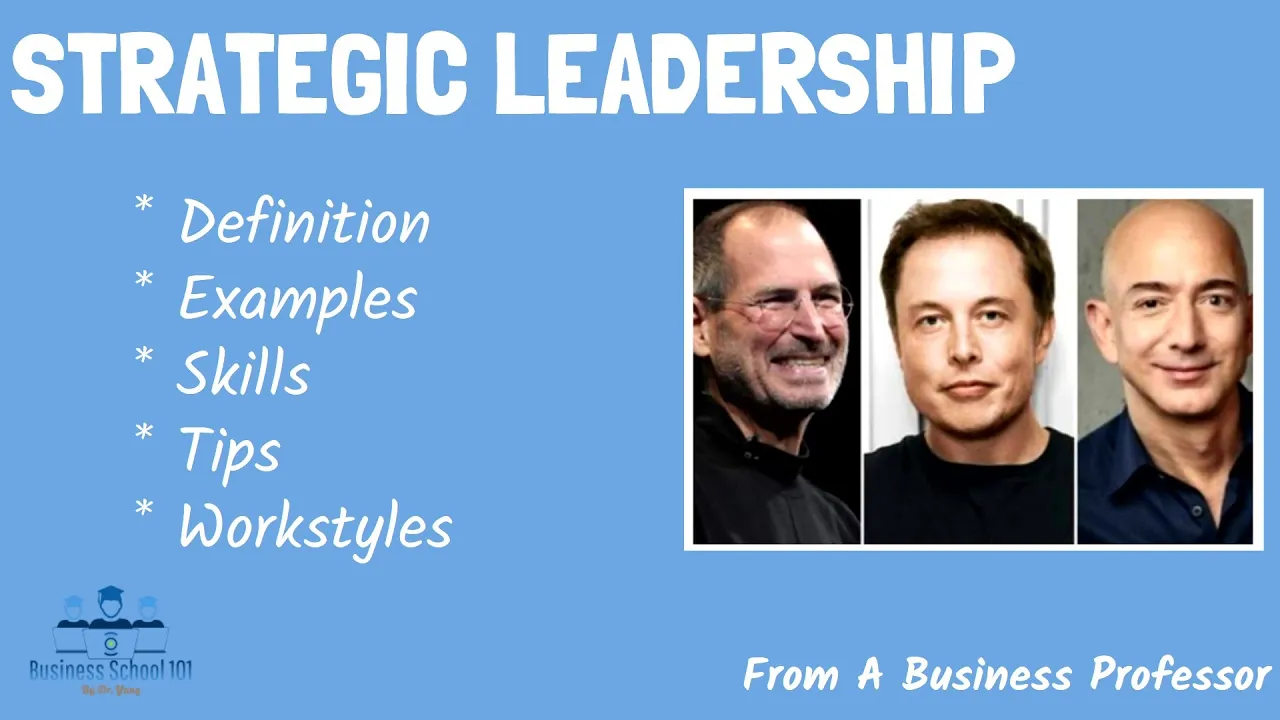
hello everyone welcome to business school 101 we are stubborn on vision we are flexible on details this jeff bezos quote gives us a glimpse into the mind of a strategic business leader for organizations to be competitive their leaders must be in sync with the organization's mission and strategic objectives this is where strategic leadership plays a vital role in any organization so what is strategic leadership to be an effective strategic leader what are the core required skills how to become a strategic leader and how ceos spend their days in this video i will discuss these questions
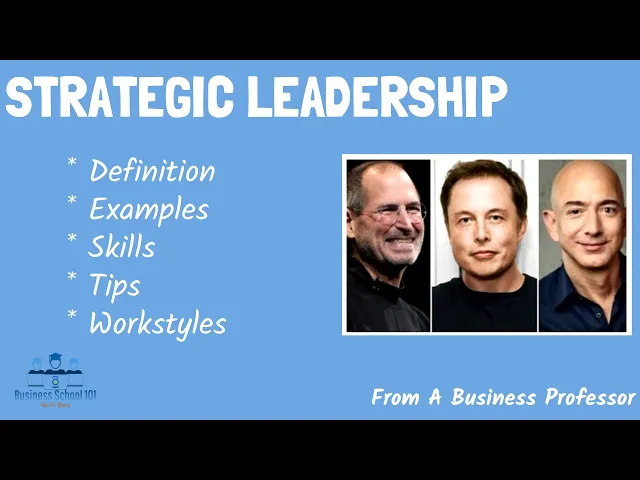
with you section one real world examples before we jump to the definition and principles here are three real world examples of strategic leaders number one jeff bezos as amazon's founder and former ceo jeff bezos is a perfect example of how thinking about the big picture can lead an organization to success he founded the company in 1994 because he heard the statistic that internet usage was increasing by over two thousand percent every year with that potential growth bezos knew an e-commerce platform could be hugely successful long-term in the last two decades amazon has expanded from its
origins as an online bookstore to a massive conglomerate of e-commerce digital streaming artificial intelligence and more number two elon musk as the co-founder and ceo of tesla musk shared his passion for high performance electronic vehicles as early as 2006 besides model x and model s he also wants to develop a wide range of electric cars and trucks including affordable family sedans and suvs besides the transportation industry elon musk is also disrupting the solar energy and space travel industries number three steve jobs jobs vision and strategy execution is credited for establishing apple as a leader in
technology products his strategy focused on customer service ease of use and simplicity of the product which are all features that set apple apart from competitors today in 1996 jobs returned to apple after 11 years away to help the company get out of its slump he refocused a strategy to prioritize the consumer experience and product innovation and within the next 10 years apple introduced the ipod ipad and iphone this quickly turned apple around from a struggling company to a tech leader section 2 definition after introducing some real world examples let us define what strategic leadership is
strategic leadership is defined as the ability to influence others to voluntarily make day-to-day decisions that enhance the long-term viability of the organization while maintaining its short-term financial stability specifically strategic leaders possess the ability to streamline processes increase productivity foster innovation and create an environment of creativity and initiative among employees in today's disruptive environment such leaders ensure that their company maintains a competitive edge please be aware that strategic leadership is different from operational leadership operational leadership is about solving problems and finding solutions to day-to-day operational issues and challenges in contrast strategic leaders normally think about the
big picture which includes creating an organization's overall vision and what actions could affect the organization's long-term performance section three core skills to be an effective strategic leader here are the core required skills one vision strategic leaders are constantly looking toward the future to understand what it could potentially look like or how they could make mindful and thoughtful improvements they often will see the potential of a situation and articulate that vision as something to work toward two goal setting after finding that vision strategic leaders can set goals and establish a plan to make that result come
to life they don't just see the finish line and leave the rest of the process ambiguous they're able to identify what tactical steps and tasks are required to achieve their strategic vision three comfort with change change is constant for strategic leaders and that doesn't make them feel anxious instead they're comfortable with it and see it as a telltale sign that things are improving within their environment a change-oriented leader understands new tactics and goals are part of moving the organization toward the future four communication the best strategic leaders are the ones who not only have a
vision and plan for the future but they're also able to communicate their goals and strategies effectively otherwise they won't have a team to help them get there they're able to spell out the why of any plan and explain what's needed from each individual to make it happen five collaboration similarly strategic leaders are excellent collaborators they know it takes multiple people and teams to make the vision come to life and rely on those partners to bring their knowledge skills and expertise to help achieve the shared end goal 6. influence leaders who follow the strategic leadership style
also have a high level of influence in their organization they know how to influence without authority and can share the benefits of the vision with skeptical partners to bring them on board seven execution strategic leaders can get things done they don't shy away from decision making they understand how to take action on a plan or their goals and can help others be inspired to get things done as well strategic leaders also make the most of the resources or support available to them to complete their mission eight optimism keeping a positive attitude is vital whether things
go as intended team members look up to their leaders so strategic leaders need to maintain an optimistic outlook it encourages the team gives them hope and motivates them to keep trying even when situations appear challenging section four how to become a strategic leader here are a few ways that can help you become a strategic leader one think about the big picture to think more strategically you have to get comfortable analyzing the situation from all angles that includes zooming out from the minute detail and ensuring that you're understanding and considering the big picture by developing a
big picture thought process you'll be able to quickly understand the scope of an issue and focus on it two anticipate what could happen once you've mastered looking at things from a broader lens try to identify potential roadblocks or innovations that may come up in the next three five or even ten years then see how you can prepare to address those potential issues or capitalize on potential opportunities to get ahead in your industry three communicate effectively communication is a key leadership skill that's vital for anyone to be successful in leading a group of people if you
want to work on your communication skills try one of these tips number one listen to understand not just wait until you can speak next number two take a beat before speaking to gather your thoughts number three speak succinctly and get to the point number four when asking for assistance explain the reasoning behind the request number five use communication mediums strategically and ask yourself if a phone caller face-to-face conversation would be more effective than an email number six take notes during meetings and send out a recap of the conversation with clear next steps and responsibilities number
seven make eye contact and use open on aggressive body language for practice collaboration you can improve your collaboration skills by setting clear expectations and deliverables for your employees or working team with tasks and responsibilities laid out for everyone to see before diving into the work teammates can work together more efficiently and without letting duties slip through the cracks five learn the art of strategy execution remember that ultimately a great leader does not just plan to take action you need to be able to get things done so how do leaders guide teams towards success a detailed
strategic plan or timeline is a good place to start it may also be helpful to prepare any contingency plans in the event a deliverable needs to be pushed back or the team runs into roadblocks along the way section 5 how cos spend their days in a recent study of more than 350 ceos strategy scholars found that they spend on average 67 percent of their time in meetings thirteen percent working alone seven percent on email six percent on phone calls five percent on business meals and two percent on public events such as ribbon cutting for a
new factory other studies have also found that most managers prefer oral communication ceos spend most of their time interacting with a wide array of parties inside and outside the organization surprisingly given the advances in information technology ceos today still spend most of their time in face-to-face meetings they consider face-to-face meetings most effective in getting their message across and obtaining the information they need not only do meetings present data through presentations and verbal communications but they also enable ceos to pick up on rich non-verbal cues such as facial expressions body language and mood that are not
apparent to them if they use email or zoom all right that's all for today's topic so what do you think about strategic leadership do you have any related experience or story willing to share please leave your thoughts in a comment below i hope that you guys have enjoyed this video and if you did make sure you give it a thumbs up and subscribe to my channel thanks for watching and i will see you next time
![THIS WILL CHANGE YOU! Navy Seal Admiral William H. McRaven [MOTIVATIONAL SPEECH]](https://img.youtube.com/vi/mMEq0r97T_k/maxresdefault.jpg)