What's up BMS! My name is BMS, and welcome to the. .
. Boring Medical Show! As you can see with the title, I'm gonna talk about the basics in cellular biology, so let's start up with some simple notions: I'm gonna do a really quick summary of the vision I have of the whole human body to understand my vision of a cell.
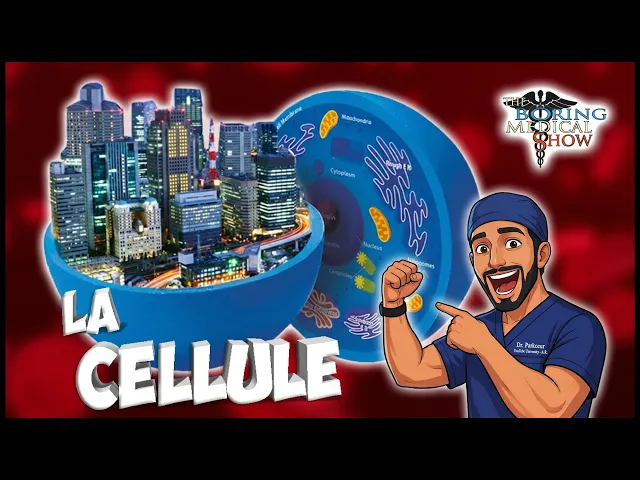
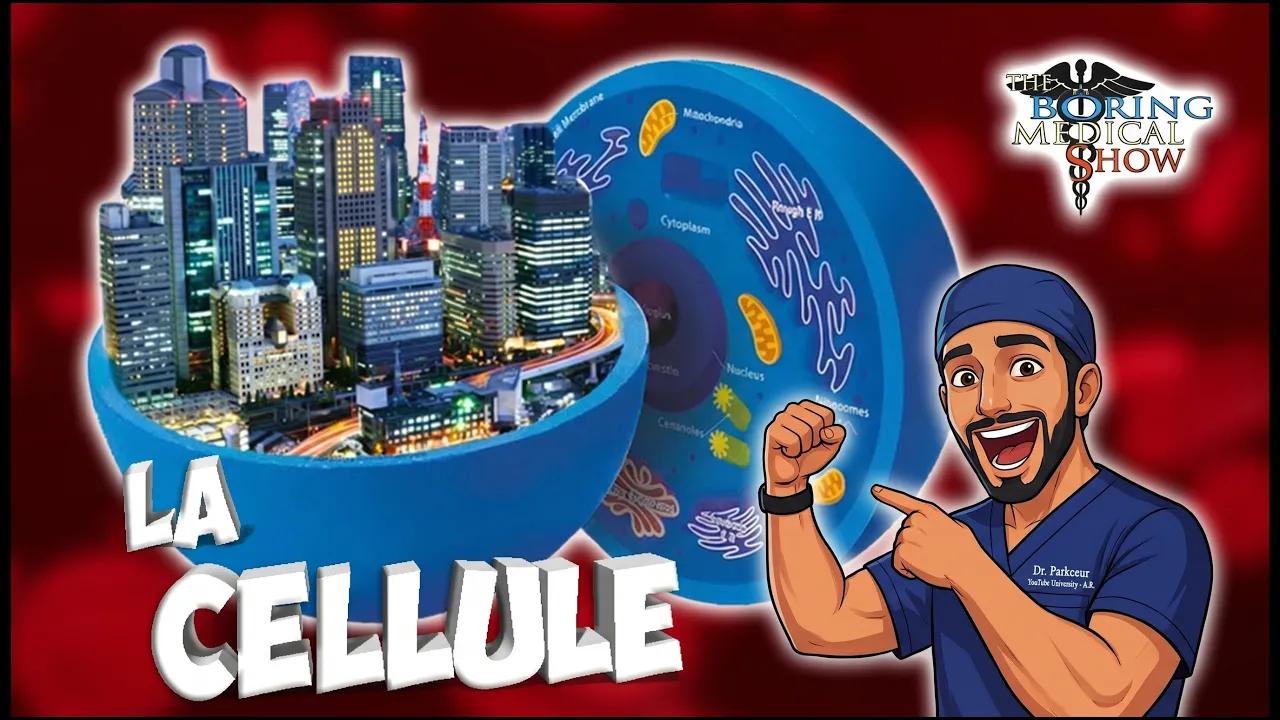
The human body is a World in itself: It has Continents: the head, the thorax, the abdomen, the limbs, etc. And these continents contain Countries: that are represented by organs or tissues. And a country has multiple cities: A cell, is just a whole City in itself: and its inhabitants are Proteins.
So you have, inside of your body, more than 10 to the 14th diffenrent Cities That means you have more than 100 000 billion Cells! That's HUGE! And you've seen nothing yet, because we're only at the 10 or 100 microns scale.
Oh yeah, and each cell contains more than 2. 5 billion proteins. I leave you some time, in case you wanna calculate how much protein you have in total.
. . 250 000 billion of billion of proteins!
Yes, that's called doping, at that point. That's actually really beautiful, cauz' everybody lives in his own personal World, in the end. As regards of the cell, we distinguish 2 types: Those that don't have a nucleus, and those that evolved with a nucleus.
Prokaryotes, and Eukaryotes. Since we're considered an evolved species, cells of our body are eukaryotes (not all of them) Yes, because current medicine is based on the theory of evolution. It is a theory that can have some holes, and that is not perfectly accurate but it can be really handy to try to put together all of our current knowledge so, without further ado, let me walk you through the streets of Cellulia: the city that we're gonna visit, that is the most ideal and general, and that is a model that describes the majority of the other cities.
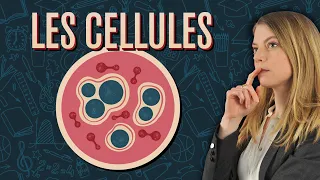
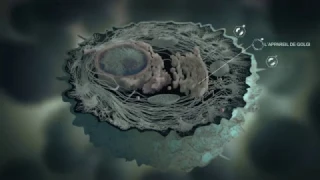
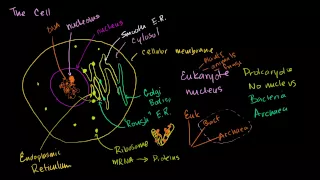
As you can see, Cellulia is surrounded by barriers, that are modeled here by the Membrane. And these barriers protect what's inside of the cell. All the city inside the barriers, (except the nucleus) we call it "the Cytoplasm".
Inside of the city you can see buildings that stand out from others because they have an important role for the city. We call them "Organelles". We gave them that name, because they're like the tiny organs of the cell.
Like, for example the nucleus, that would be the government or the town hall. And we'll see others. You also noticed that Cellulia looks a lot like Venise, because the city rests on a liquid called "the Cytosol".
And yes, I checked: it has a weird pronunciation in french, I know, it's not logical, but don't say that to me, I don't give a damn. And now it is time for me to talk about each of these elements and keep in mind that each one will have a dedicated video in the future to describe it more precisely. 1.
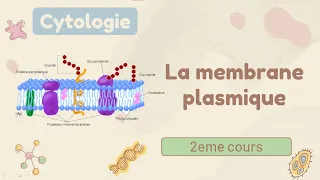
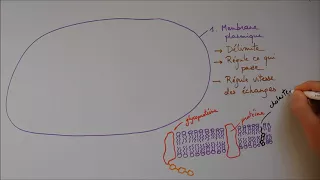
The Membrane A cell separates its content from its environment with its membrane It is composed of 2 layers: The exoplasmic layer: we're gonna call it the "E" layer. and the protoplasmic layer: we're gonna call it the "P" layer. The "P" layer is in contact with the inside of the cell, and the "E" layer" is in contact with the extracellular Matrix Extracellular what.
. . ?
It's really just the environment outside of the cell. Each of these layers is composed of lipids that actually form the true physical barriers, but there are also some proteins in the membrane. And since I told you that proteins are like people, well you could consider these ones to be the TSA of Cellulia.
Because, yes, the cell is surrounded with barriers, but it still needs to let some stuff in, in order to communicate with other cities for example. 2. Organelles I told you there were many elements in a cell, But some can be bigger, and can have an essential function I will do my best, I promise!