You know what's strange? We talk endlessly about boomers and millennials. We dissect Gen Z like there's some kind of fascinating new species.
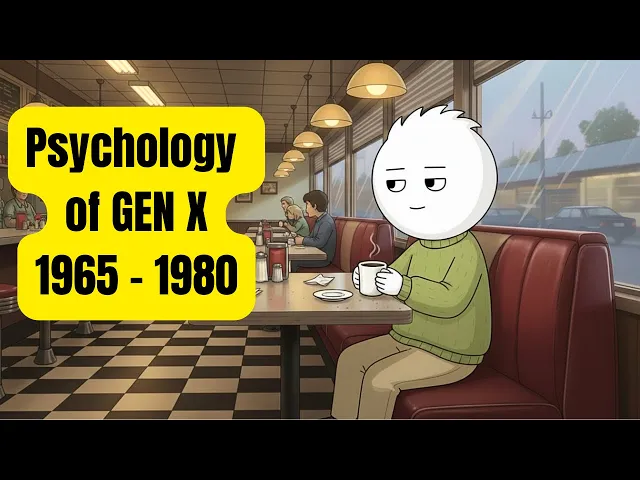
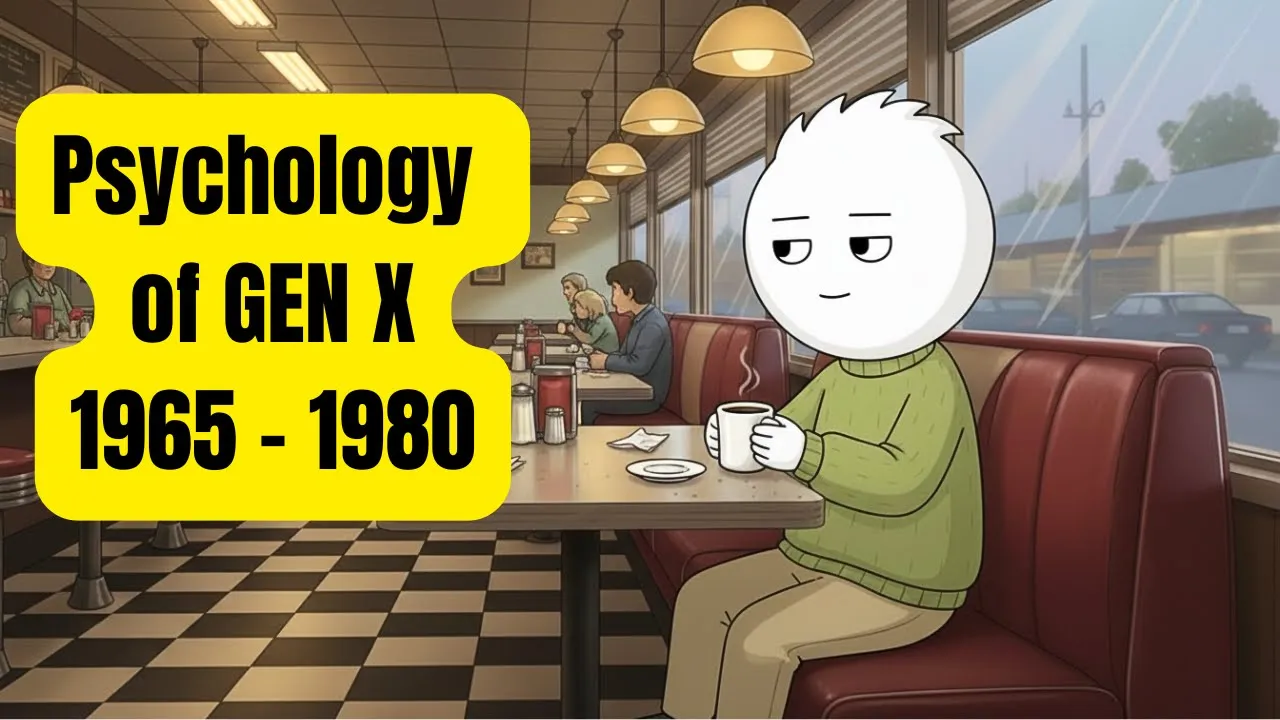
But there's this entire generation that just exists in the middle, barely mentioned, almost invisible. Generation X, born roughly between 1965 and 1980. They're your older co-workers who never complain.
Your parents who seem oddly detached sometimes. the people who built the internet but don't post about their breakfast. And here's what nobody tells you.
Their psychology is probably the most misunderstood of any living generation. They were the first generation of latch key kids on a massive scale. Picture this.
It's 1978. You're 8 years old and you come home to an empty house because both your parents are working. No smartphone, no Ring cameras, no way for anyone to check if you're okay.
You let yourself in, make yourself a snack, do your homework alone, and wait. A study published in the American Journal of Orthoscsychiatry found that by 1984, approximately 7 million children between ages 5 and 13 were regularly unsupervised after school. That's an entire generation learning that you can't always count on someone being there.
That empty house did more than make them self-reliant. It drilled in the idea that actions have real consequences. ones you can't talk your way out of.
When their parents finally showed up, you always knew where you stood. The rules hit hard and fast. Nobody cared about how you felt or wanted to talk about it.
Step out of line and you paid for it right then and there. Psychologically, this created what researchers call a high contingency environment where actions and outcomes were directly linked without buffer time. Your brain learned to predict consequences in real time, which is why Gen X tends to think three steps ahead in ways that baffle younger generations.
Gen X grew up watching their parents talk a big game about stability, then turn around and rack up divorce rates through the 70s and 80s. They saw people give their all to companies only to get pink slips when the next round of layoffs hit. Everyone told them, "Work hard, follow the rules, and life will work out.
" But then the rules just changed right in front of them. So yeah, psychologists might call it defensive pessimism, but Gen X, they just call it being realistic. It's not that they're cynical exactly.
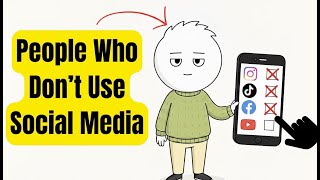
It's more like they built up this emotional armor. They cross their fingers for good things, but deep down they expect the rug to get pulled out because honestly, that's what kept happening. And that's a big reason you barely hear them on social media.
They grew up in a time when privacy was just normal. When you messed up as a kid, maybe a handful of people knew and that was that. No phones, no viral videos, just some awkward memories in a basement or a parking lot.
The idea of blasting your life out for strangers to see, that doesn't feel exciting to them. It feels risky. It's not about not getting tech.
It's about learning early on that the less people know about you, the safer you are. Gen X basically turned irony into a shield. Crack a joke, keep things at arms length, laugh it off before it stings.
You can see exactly where that comes from. They grew up in the shadow of the Cold War when teachers talked about nuclear war like it was just another rainy day. Duck and cover drills in school as if a desk would save anyone.
When adults act like everything's about to go up in smoke, but also insist you shouldn't worry, you get used to holding two clashing ideas at once, and you learn to keep a little distance just in case. But here's what's fascinating. Despite all this, Gen X developed a distinctive approach to work that stands out even today.
They don't talk about it. They don't post about it. They just do it.
This work ethic was forged early through jobs that seem almost archaic now. paper routes at 5 in the morning, bagging groceries, working fast food registers where you had to calculate change in your head when the machine broke. These weren't resume builders.
They were raw introductions to the adult world where a 12-year-old could be responsible for delivering news to an entire neighborhood. They watched their parents' generation get destroyed by corporate restructuring. So, they never believed in company loyalty, but they're fiercely loyal to their own competence.
They can't control whether they'll get laid off, but they can control whether they're the most valuable person in the room when layoffs happen. There's this weird paradox at the core of Gen X psychology. They're simultaneously the most independent generation and the most quietly collaborative.
They'll never ask for help, figure it out themselves, been doing that since they were eight. But if you need help, they'll show up without drama, without a social media post about it. This comes from forming tight bonds with friends out of necessity.
when parents were absent. And let's talk about their relationship with authority because it's complicated. They respect competence, not titles.
If you've earned your position through actual skill, they'll follow you anywhere. If you're just someone with a fancy job title who doesn't know what they're doing, they have zero patience. Gen X questions authority because they watched incompetent authority figures make terrible decisions their entire childhood.
From Watergate to Iran Contra to the fumbled AIDS crisis, they faced serious economic headwinds that their parents' generation hadn't experienced. The youngest Gen Xers graduated college right into the. com bubble burst.
The oldest ones were hitting their stride when the 2008 financial crisis hit. They've been economically traumatized repeatedly, which is why they're more likely to have multiple income streams. Not because they're entrepreneurial by nature, but because they've learned that nothing lasts.
Gen X tends to struggle with what some researchers have identified as patterns of self-reliance that border on anxiety. They're incredibly capable at handling crisis situations. But that capability often comes from an unwillingness to depend on others.
Research in the Journal of Adult Development shows that Gen Xers report lower levels of seeking social support during stressful periods. Not because they don't have people they could ask, but because asking feels like admitting defeat. This self-reliance extended to how they processed information.
Before the internet, knowledge had a different kind of weight. Gen X spent hours in libraries hunting through card catalog drawers for a single book that might contain the answer they needed. Information had a physical cost.
It required effort and time. And because of that, they valued what they learned differently. Cognitive psychologists describe this as deeper encoding, where information that requires effort to obtain becomes more permanently integrated into memory.
They learn to fix things with their hands because that's what you did when your bike chain slipped or the TV flickered. You didn't call a technician. You flipped the bike upside down, got grease on your hands, and figured it out.
This built a mechanical intuition, a belief that with enough patience and a screwdriver, you could master the physical world. And now they're watching their kids grow up in a completely different world. One with helicopter parents and constant supervision and social media documenting everything.
They gave their kids the attention they never had. But sometimes they worry they've made them too soft, too dependent, too visible. Because in the Gen X worldview, being visible means being vulnerable.
The truth is, Generation X might be the last generation that truly understands what it means to be alone with your thoughts, to be bored, to solve problems without googling the answer. They're not better than other generations, just different, shaped by a unique moment in history when the old world was dying and the new one hadn't quite been born. They're the bridge generation.
And bridges don't get much attention. They're just there doing the work, holding things together, expecting nothing in return. And maybe that's the most Gen X thing of all, not caring if anyone notices.
If this hit home for you, please subscribe. And if you want to support these deep dives, hit that join button to become a channel member.