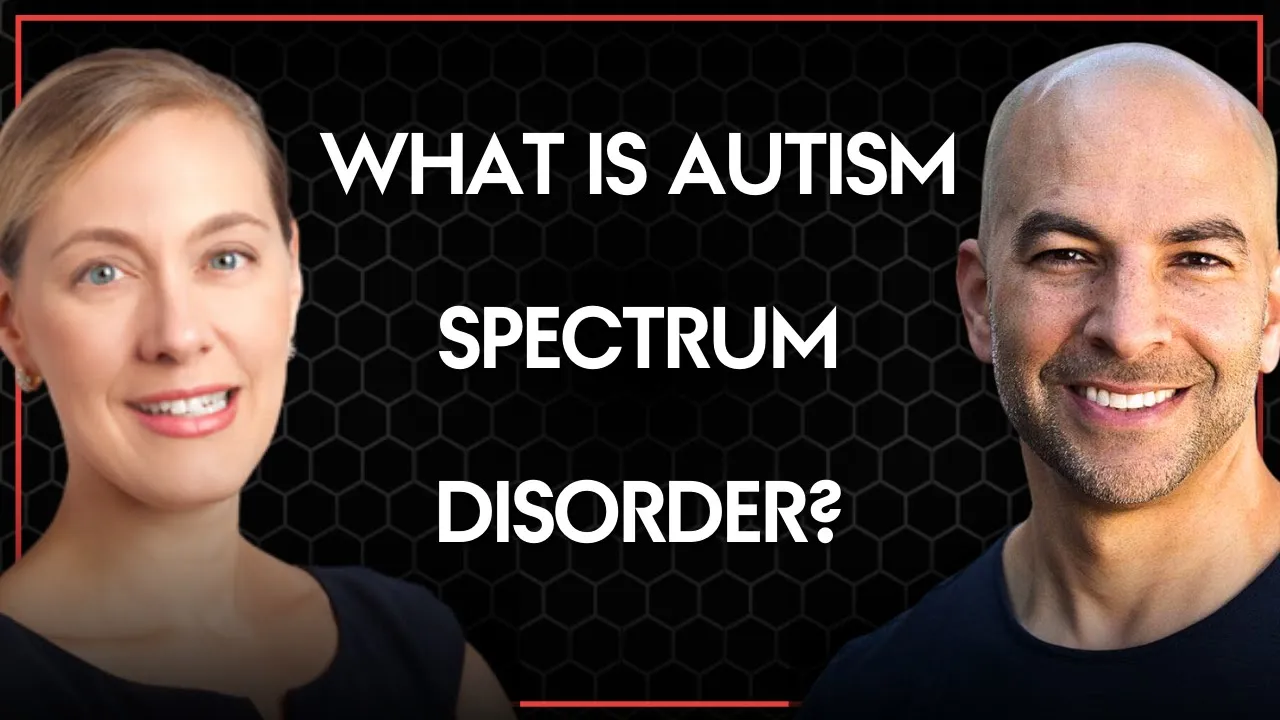
by the way one of the reasons they actually went from um the Asperger syndrome pddn um autistic disorder and they they decided to call it all because I was actually quite controversial when they actually decided to put all three of those things under one umbrella called autism spectrum was because clinicians did a really poor job of deciding uh which which name Buck were in which bucket you were in so you would have a child and one clinician would call it Asperger syndrome another person would call it autistic disorder another person would call it pddn so
they decided okay rather than having these three names let's put it all under autism spectrum so then they put under autism spectrum but then they have level one level two level three but I would argue I would still say that clinicians still struggle sometimes where there is a little bit of overlap it's not always now if you go back to dm4 when as you mentioned Physicians are struggling to know which of these buckets to put them into as a as an outsider looking in my first question is does it matter in terms of treatment and
resources does it matter more in terms of outcomes and support like there must be a reason why people cared about that in other words if you had a child in in the year 2000 who one clinician said this this kid has Asperger syndrome and another person said no they're autistic was that going to make a material difference in the type of support that they got and most importantly the type of person they were going to turn into like were they going to reach their full potential into differential capacity um great question so it did make
a difference so uh with respect to resources so children with asgus syndrome frequently did not get um support or support covered um you needed autistic disorder to to get support and what about pddn waste bucket yeah people didn't know what to do with that they didn't even know what to do with that so if by putting everything under autism then it's like okay if you have autism you um should receive Services it was a tool to understand and get resources now we have level one level two level three now level one is it says requires
support level two is requires substantial support level three is require very substantial support my concern is that again when a child is level one they don't always get the support they need um because they have so many strengths so kids in level one have um frequently they have you know good cognitive skills they have a lot of language skills they struggle with some social skills and they may have you know some you know difficulties with executive functioning and coping skills at times um but again it's considered mild and a lot of those kids don't get
support and I think that's unfortunate because they also are the kids that respond to intervention so well if they get a little coaching on how do you cope with distress how do you cope with change how do you practice some social skills not that they have to change um we don't need to change everything about them but giving them a little bit of support about how to again be adaptive um and in Community um giving that support goes a long way in that with that group um but frequently they don't get the support because they're
called level one help me understand the natural history of those kids back in the 70s and 80s right so back back in the 70s and80s when you and I were kids um nobody thought anything of those kids right they weren't they weren't going to certainly wer going to get labeled with autism they certainly weren't going to show up with uh you know in school programs to help them with their social skills and with their communication skills as you pointed out they're intellectually not impaired so it's not like they're going to struggle in school but there's
there's clearly something that that they're struggling with right do I don't know if we I mean I obviously this hasn't been studied but I'm very curious based on your experience in your judgment like are those people that just went on to pick careers where they didn't have to interact with people but they could still do challenging cognitive work like how do those people what was the natural history of them there clearly a lot of them there are there are a lot of them um and I think uh they did they found a path that made
sense to them they obviously learned what their strengths were and their strengths may have been around memory uh you know detail oriented um following rules that are black and white um they may have had really wonderful cognitive skills um um in certain areas that were less around inferring and social skills and more concrete um and yeah my we don't have studies to to say this for sure but my guess is they have lived happy successful lives uh a lot of them some of them um doing things that they enjoy doing are passionate about they probably
have found ways to not engage in large social uh settings um but there's a lot of careers out there that are a good match and they also have relationships and marriages I just want to emphasize that people with Autism get married yeah I I think it's I mean I just think there's zero chance that there aren't thousands if not tens of thousands of these people listening to us right now right because they're they're adults today and I wonder if they're listening to some of this and they're saying this resonates like I get that you know
when I was a kid I was hyperfocused on this stuff I wasn't interested in a whole bunch of stuff um it was a little harder for me to interact with other kids and and things like that and and yet I found my path and here I am today yeah so I talk to parents all the time about this because I evaluate children I evaluate children for autism or ADHD and very often when I'm evaluating the child uh at some point while I develop this relationship with the family the parents say gosh uh so much of
my child is in me I as you are describing my child and my child's strengths and challenges and I I see me and this is exactly what I went through when I was young and then they share how hard it was and they uh and they say gosh I never like you know no one understood me or I felt bad because I was misunderstood or I thought it was my fault and uh I didn't try hard enough um so I have to say it can be validating for an adult to learn that it wasn't their
fault and this is part of their wiring um I have many many parents who ask me like should I go get a Cess now um should what do you say ah we um I never yes or no I I I ask questions I I think information is uh is power um I think it's good for them to be thinking about it whether or not they go on to actually get assessed a lot of them don't necessar with the autism piece often they don't with the ADHD piece they often do because they realize actually their ADHD
traits are impacting their function and Su success of their job so sometimes they will actually go to a psychiatrist to get an assessment but but I do share with them the genetics and the family history so what do I say I I validate I say it yes you're you're sharing you're telling me that growing up you had many traits that today we would classify under one of these diagnoses you're right and it is possible um because these things do run in families and there is a highly genetic component and um I think sometimes just that
conversation can be therapeutic itself in that someone feeling validated and and they have that aha moment like okay this explains a lot um and then they can feel good as well because they're like okay this explains a lot and I've gone on and I currently have my family and I'm doing well in many parts of my life but it helps them also understand like ah but now I understand why sometimes I do have these challenges at work or with my spouse it it's interesting just sometimes having seeing like having a perspective where now you can
see your challenges through a different lens sometimes helps a person just actually now think about okay now I can adjust or understand the triggers or think about can reflect to think about how do I want to respond the next time so I think again that information's empowering even if they don't ever go to therapy or do anything else just actually starting to become informed about it can can help yeah and I would imagine it helps them a lot with their child because they're they're seeing both hey my child has this diagnosis that now partially explains
you know the challenges we might be having Etc but at the same time because I can empathize with that child if I've experienced it um it makes you better parent now do you so everything you said makes a great case for widening the diagnostic envelope because we you know if we go back 40 years we had this narrow narrow envelope and in other words we had a test that you know had very very high specificity but very low sensitivity you were missing a lot of people um but you didn't get any false positives that's for
sure right and you didn't over pathologize right when someone was autistic they were really autistic now today we have the opposite problem right so we have a high sensitivity low specificity test sort of I'm making that up but you know just to bring it to cancer diagnostics for people so now anybody who's autistic should get diagnosed but then we're you know we're stretching what that means in a lot of of the people getting diagnosed today frankly maybe without any support would go on to do just fine do you worry that when the dsm6 comes out
it could have a wider envelope and we could start to get to a point where someone might say hey are we over path over pathologizing this and are we getting to a point where well what is normal even mean anymore oh I agree with that so much so I actually ask that question all the time so I do Wonder like uh we every time a child has uh a few of these traits we have to give a name to it all the time it's a it's it's an interesting debate um and you will have you
he different perspectives I mean the name gives us a way to get resources and help people and um but I also concerned that we we you know we have to give everything a name I actually Wonder in the next DSM whether weather will end up taking a step back like the weather the pendulum will swing a little bit and when is that do uh I I don't know what was the gap between three and four and four and five so there you often um like 15 years I would say a couple decades so so it
could be another DEC it could literally be another DEC decade it can be so um but uh level one we were talking about level one autism so I'm going to tell you level one autism kid the kids in that bucket might actually be part of several different uh diagnostic buckets so children who are identified with level one autism um one clinician they see one clinician that person may diagnose autism they see a second clinician that person may diagnose ADHD plus anxiety they don't even call it autism um so I see this all the time in
my clinic I have kids who come to clinics and they may see you know three other clinicians before they saw me really great clinicians high standards uh experts um but there's a lot of blurry lines with the level one autism and you will hear different diagnosis so back to your your thoughts around like future dsms I I wonder how we're going to address level one autism and whether all the kids is it the same condition are is that like how how many different conditions are in that bucket um see to me the way I would
think about that is I would hope that by the time we have to make that decision we would have enough data and the data would ask the most important question which is how are we impacting outcomes right in other words when we widen the diagnostic the diagnostic envelope and you know said that you know we're going to now have this ASD class one in here um that opened the door for more resources right that me more more kids had programs at school what's what's a AP I more kids have IEPs at school what's what does
that stand for individual education plan education plan and at the end of the day what we want to know is are those kids doing better and if the answer is yes then it's probably worth keeping right if the answer is that didn't make a darn bit of difference yeah then all we did was create a bunch of anxiety for the parents and maybe it didn't now again I don't know how one goes about answering that but I I would hope that somebody a lot smarter than me is thinking about it through that lens because we
can't lose sight of the whole purpose of this like the purpose of a diagnosis in anywhere in medicine should be to impact an outcome a diagnosis for the sake of a diagnosis is not a particularly valuable tool unless you're an epidemiologist but even there it should be all in the spirit of how are we making people better yeah I agree and that's why again I agree that the kids in level one should be receiving Services otherwise what's the point in giving the diagnosis yeah so they should be receiving services and if we need to call
it something by a different name who cares as long as it gets the service that makes them better off than they would have been had they received no service right [Music]