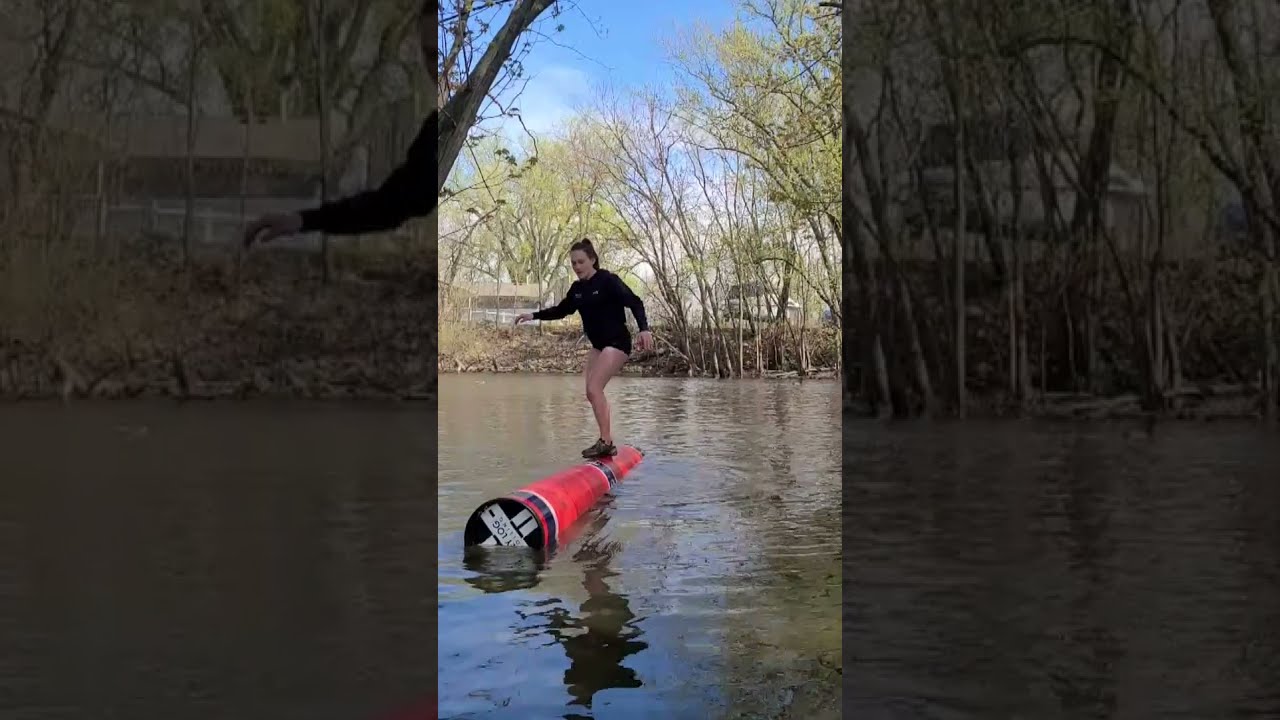
in the last video we taught you the proper body stance and the basic footwork needed to get started in the following video you will learn the two fundamental steps in log rolling the front step and the back step as well as how to transition between the two the two fundamental steps due to the nature of a round buoyant key log it will spin in both directions evenly depending on your weight distribution to stay on top of the floating log a roller must either step forward up to the top called the front step or backward to
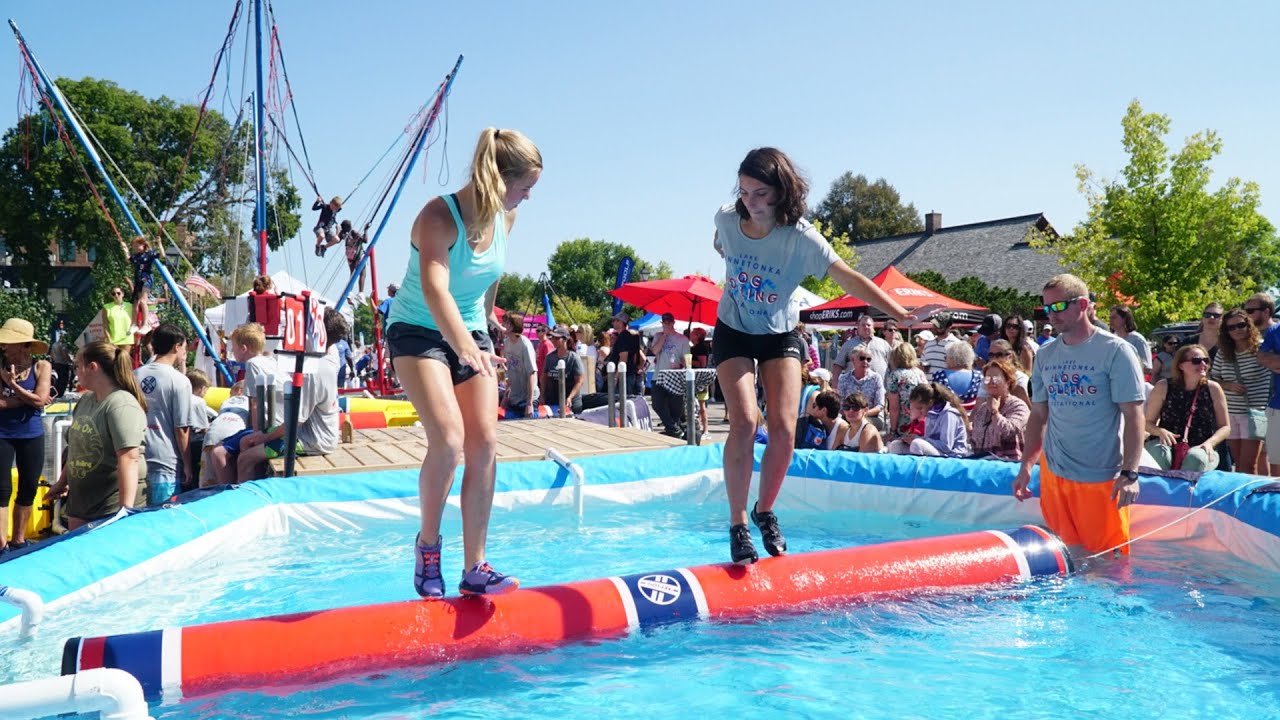
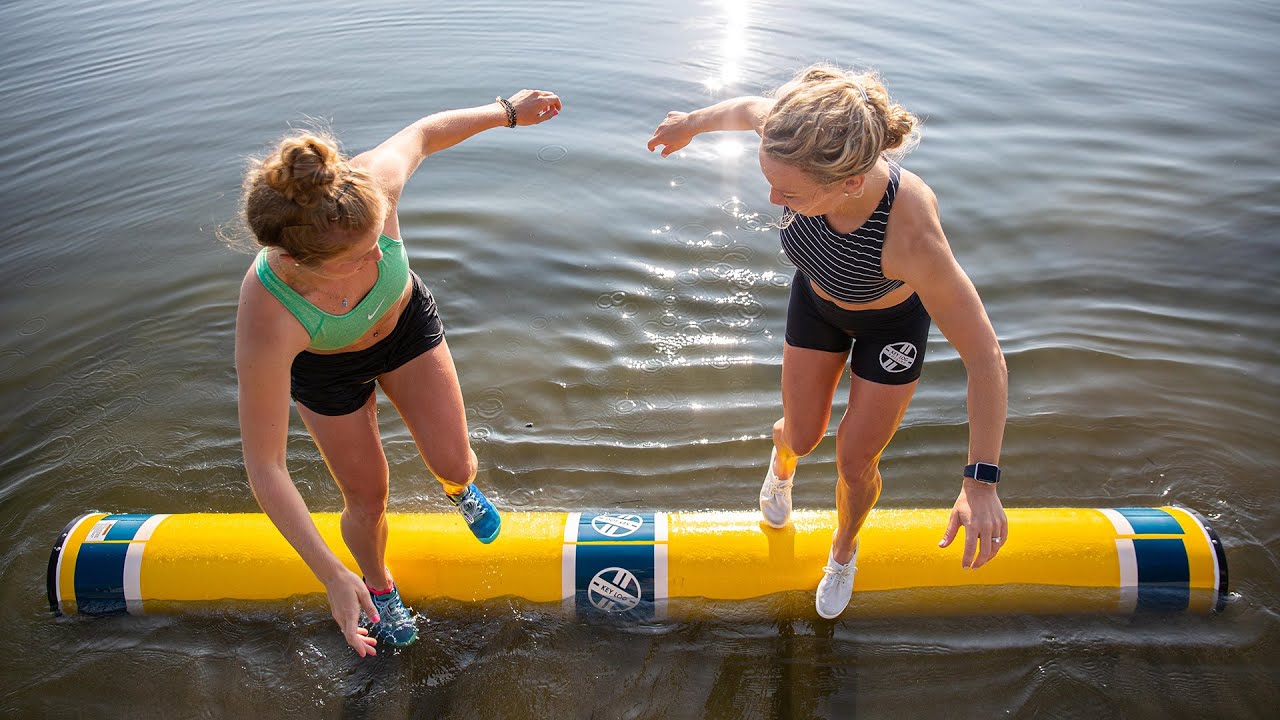
the top called the back step the trickiest part is transitioning between the two as a beginner you will not feel like you have much control over which direction the log spins as you become more advanced you will learn to control the direction and the speed that the log spins with your footwork and weight the front step the front step is just that stepping forward on the key log to keep control of the key log you must step over the top of the key log with your outside foot and quickly follow up to the top with
your inside foot this creates an asymmetrical pattern known as the skip step make sure not to lean forward but rather stand upright with your weight centered over the top of the log step with the bottom of your foot in a fast heel to toe motion do not roll on your tiptoes the skip step is a lot to learn while the key log is spinning so practice a pattern on the pool deck or beach place one foot in front of you and bring the other foot up to meet it repeat this pattern while speeding up as
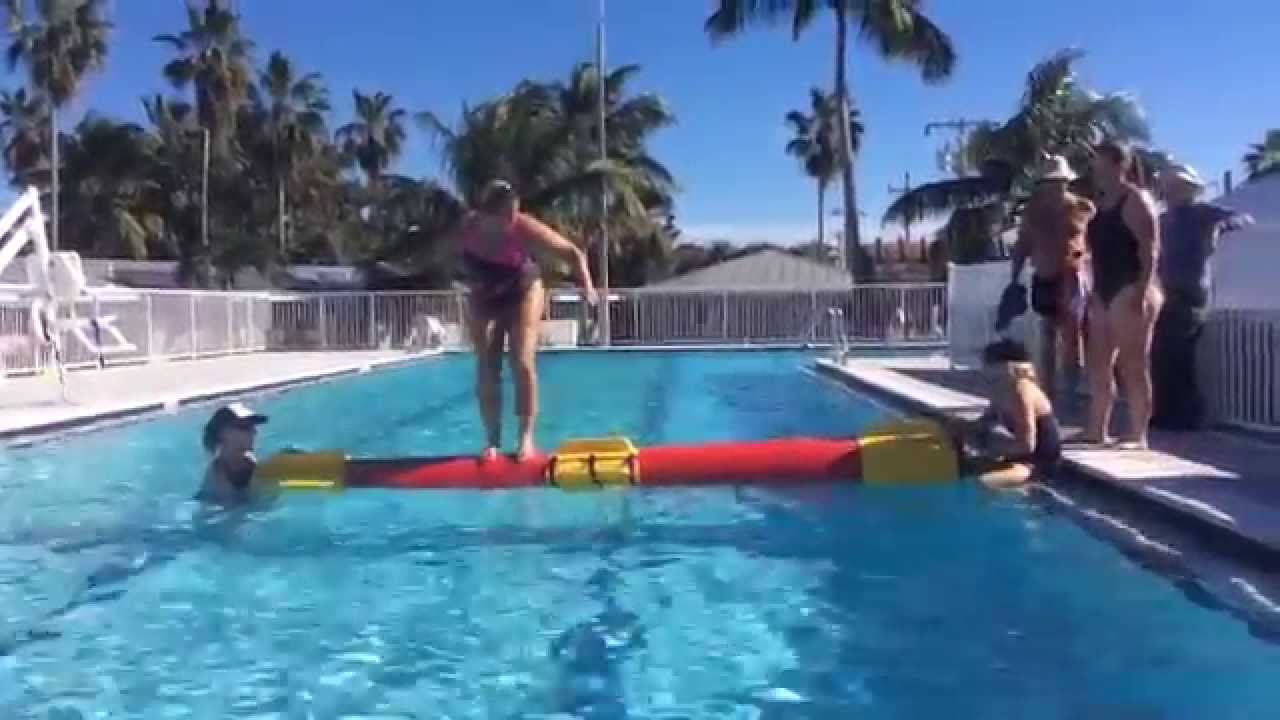
you move forward think of moving forward from your core and focus on driving your hips and quadriceps forward to the top of the log rather than bending at the waist the back step the back step is just that stepping backward to the top of the log as the log spins forward stand upright with knees slightly bent sinking your weight into your heels take very small very fast steps faster than you think is necessary the mass of the key log spinning forward will pull your upper body down with it try to resist this keep your chest
up and sit backward from your hips not from your upper body it's okay to overcompensate by falling off backward to get the feeling of how much to sit down this will take some practice the rhythm of the steps is even and staccato-like unlike the front step there is no variation in rhythm on a back step the speed of the key log is controlled by sitting backwards from your hips and lower body while continuously moving your feet here's an easy drill to try and land so you can learn how far you need to sit back grab
a partner and face each other grasp each other's hands bend your knees and lean back away from each other as though you're sitting in a chair because you are balancing off each other you will not fall over in the same way the mass of the key log spinning in the opposite direction will balance you the transition once you have gained some proficiency with the front step and back step you only need to work on the transition between the two when the key log is rolling and you stop it it will usually change direction very quickly
log rollers must be ready for this directional change to transition from front step to back step and vice versa the necessary movements may be very subtle requiring micro adjustments success is progressive and will come through awareness and practice most importantly it's about having fun and learning something new thanks for watching our three-part series on the basics of key log rolling we hope you enjoyed learning this unique sport for all things log ruling related visit key logrolling.com and check us out on facebook




![M. Ravel -- Scarbo (from Gaspard de la nuit). In amazing VR. [8K]](https://img.youtube.com/vi/sHLAWk8pMos/maxresdefault.jpg)