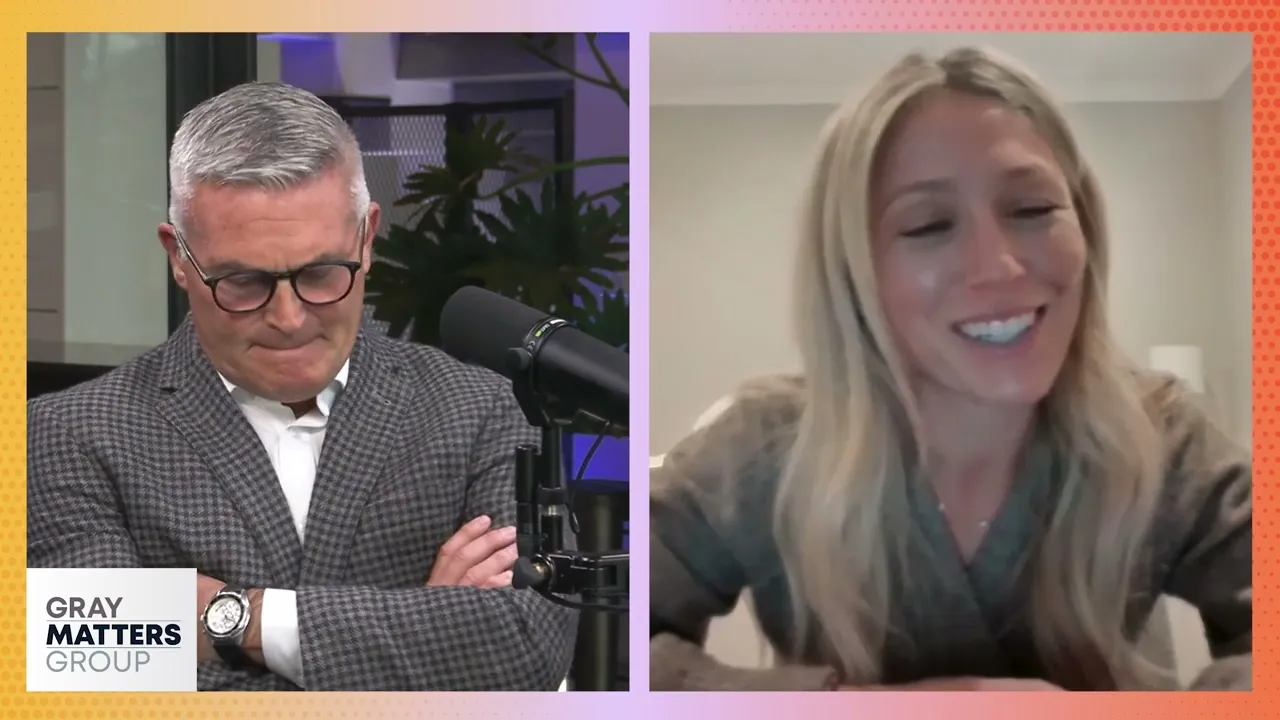
[Music] Greetings and once again welcome back to our mini podcast, Every Touch Point Matters, where we discuss with seasoned business leaders how the quality of every touch point, whether internal or external, impacts our ability to lead our professional reputations and how we're perceived in business. And today I am really excited to welcome Kelly Borland, a vice president in the emerging growth practice at Deote. And Kelly is also one of our recent alumni of the relationship expansion for professionals workshop.
And let me just tell you, she really shined in that program. Kelly is an undergrad and MBA graduate from California Polytech University. And at the end of the day, she's just a delightful person.
So, welcome, Kelly. Thanks, Dave. Excited to be here.
All right. Well, let's get into it. You kind of have a sense for who and what I'm about.
You just went through about a 10-month program, uh, Kelly. Uh, and I want to talk about this concept that every interaction matters. Uh, and I think you live it every day in the work that you do.
So, what does it mean? I mean, you you you've heard me say it, but how does it manifest in your world? You know, I I think it's it manifests in my world on a day-to-day basis with the relationship building.
um I I'm connecting with clients and um prospects as well as other ecosystem providers. And I think when I at its core, every touch matters to me really feels like it is a is a representation of your brand and how you communicate and how you really show up for your clients. And I think that to me um it's those touches and again those those touches that are those positive interactions that really help grow the relationship and move it forward to one where again you can then reach out to them for um all sorts of different you know opportunities but but also just really at its core creating meaningful relationships.
So, is this a near-term thing for you that you just learned or is this something that you've lived for a good part of your life? And if so, how did you get so enlightened? Um, it's definitely, you know, something that has been woven into my my upbringing as well.
But I will say that the terminology is is um obviously a specific and a good reminder, right? I I think that it's, you know, kind of going back my um I was born and raised in a family of four. And as you might imagine, um chaos is is kind of a a term you might use with with four kids running around, right?
And one of the one of my role models and um someone I really attribute a lot of um who I am today to is my mother and just her unique ability to really kind of approach this every touch matters with every person she comes across. And it's it's a piece of just giving um her her time, her experience, but also it's it's foundationally about caring about the other person. Um, and how I've seen her build both family friendships, personal friendships, business relationships, etc.
It really is just is how she shows up and she continually demonstrates that when she's there, she's allin. She's not thinking about the other item. She's there and she's really focused on the person, but also helping out in whatever way that looks like.
And I think the way she shows up for her friends has really created this this loyal camaraderie and community with that like village of people if you think about it. But then also what I think is the the biggest piece is how she shows up uh for her people her community and her friends also will show up for her. And so I I think that like from the very beginning, I think I saw how my mother got friends and family to rally around us as kids growing up with the different activities we had going on, the different things we were trying out.
You know, it'd be um it'd be some of the different sporting things, but also some of the other endeavors we had with different groups and organizations. So, I think, you know, it it certainly is something that is not um not new to me because I do feel like my mom had that approach. Maybe she called it a little something different, but um at the end of the day, I I think I saw it at an early age.
Boy, what a amazing model she has been for you. And I know I had that in my life. uh these are people who really kind of set the tone for what it means to engage and interact and make it about other people not make it about yourself and uh you learned from an early moment that this was important and now I think it's carrying through into the work that you do for deote and uh just seeing you in action over the last 10 months really amazing and I know you know daytoday you're more into the bisdev and relationship ship development.
So, you should be doing this well, but not everybody does it that well. Not everybody had a model like yours, Kelly. And so, I guess the question is is h how do we enlighten those who haven't had a wonderful model like yours or those that I had to the how important this is?
Yeah. And I I think it's it's really just bringing it back to the basics of what what what you need and what you want as a human and in a relationship and recognizing that you know it differs from person to person on how they're going to either receive information but also how they want to be what I I love to steal from you is just delighted like how do they want to be you know delighted and really kind of thinking about that intentionally and not doing these kind of blanket approach approaches of, oh, you know, this be because they fall into this industry, I'm going to send this along. Um, it be content, it be, you know, kind of a specific event or things like that.
But really thinking about the person behind that that note, that reach out, that email. And I think when you can personalize that to what what things you say yes to and what things you get excited about, you recognize that it just it's not a one-sizefits-all approach. And it really is about those specific touches that help build the relationship, but also help advance it by by being thoughtful and really kind of taking that extra step to pause and and really, I don't know, put yourself in their shoes for a moment.
Well, I love that. You know, every touch matters, but every touch point isn't the same. What you're saying is you're kind of dialed into that particular individual.
Uh what inspires them, motivates them. Uh and so the touches can be different. They have to be customized to how someone else consumes information.
Uh pre prefers to receive that intel. uh lets them know that you were listening and paying attention because you tuned it up for me and it's not as you said onesizefits all. Thank you for that and and I wish I saw more of it in professional services because too often is it is a blanket approach and it feels transactional and let's be honest the other PE parties they know they know when it's kind of transactional blanket approach um and they also know when somebody's really tuned something to me totally and I think in professional services there's a lot I mean just in general right you put the client first That's that's table stakes.
Um, as we talked about in your sessions, right? There's there's the baseline um kind of offerings that we provide as prof in the world of professional services that aren't just table stakes anymore. Like the things you need to bring are beyond just great execution, quality insights, helping move the business forward, and proactive thinking, right?
Those are baseline what the expectations are from our firm and I think you know it's really an approach that our firm has taken and specifically my group and leaders is really understanding the client's needs and meeting them on that journey and with that we've kind of like branded a term around like finding them at the moment that matters. M so sometimes this moment is a celebratory moment you know they just went IPO it's a phenomenal moment it's a phenomenal celebration we get to be there along the journey and then celebrate this momentous occasion right other times the CFO is just laid off at a company and they now are at a very low point in their career where they need that next opportunity right and I think or or the third example I'll give is a project that maybe didn't go as expected right so it'd be good bad, positive, you know, benign. It's finding them at that point and then looking for ways to help move them forward.
You know, it be an IPO that now they're a new public company and they have different challenges and different focuses and different pressures, right? Whereas a a person that just got laid off, they need their support of their their network, their community, and their service providers to help them get back in the game. So I think it's coming coming along that like whatever journey it is, we're all in a career journey together and it's coming along that at at those at those different milestones I think makes a very big difference and it's at those moment that matters that I think we we do our best to show up and not only not only show up but be there intentionally and come come with um support and you know thoughts.
Wonderful advice and it seems so simple. Meet them where they are in their journey at that positive or negative or neutral point that they might be and then tune your approach to that moment for that person. Pretty straightforward yet sadly why are we not doing better when it comes to that?
Makes me crazy. I know. I hear you.
I hear you. And I think it's I mean it goes to a little bit of just the fast-paced world we live in, right? I think we our the pressures and demands on our time can be very challenging.
And I think sometimes it's it's difficult to take a step back and recognize the things um that really matters. And sometimes for me I feel like um from my just from my personal life perspective that keeps keeps things in balance a little bit but also keeps things in check of really okay at the the grand scheme of things right of of the importance and the speed and all of that and just um I have two littles under four and we just we have to slow down sometimes and I think that that's been one of the best learnings is being a a new parent but also you know it's it's served well to my relationships of just not necessarily neessarily needing needing that fast pace all the time. I think the Bay Area is a um a really hypers speed space, right, where where technology is moving um you know a mile a minute and it it feels like you you're always behind a little bit.
Um I think that's honestly pervasive across the nation, but I feel that weight in the Bay Area. But I do think, you know, being intentional around um, you know, trying to slow down and really focus on those those things that matter um helps helps kind of shift that perspective to why aren't we all doing this to, you know, these little tactics to be able to um, really be thoughtful because I think when we're lessons learned, Kelly, let me ask you, how does Deote support you in that effort? I I been I had the privilege of working with them for now 20 years and the culture there is pretty remarkable.
I would say it's a pretty supportive culture around what we're talking about. But how is how has it worked for you in terms of enabling you? Yeah.
Um so great question. I have a phenomenal um team and a phenomenal leader. And she's been my um she's been my boss or my leader for about seven years now.
And I think her her like superpower is the fact that she not only can come and approach things with a with a long-term mindset in terms of relationship building, in terms of kind of day-to-day activities, right? She really does think five, you know, multiple years out, five years out for instance, versus what is my return on investment today. Um, but she also has a very empathetic leadership style where she's understanding as to how you want to get it done and recognizing her team strengths.
And so with that, I kind of want to build on kind of what I'm building and what I've built here in the Bay Area is is about seven years ago when I started in this role, I really saw a hole in the the market for women in venture capital and women in finance events. Um reason being is as I was working with the VCs, there just wasn't a a huge number of women in venture capital. The numbers were very very small.
And with that they all wanted to get to know one another to essentially help each other on the career path but also really like encourage growth in that sector. Um and then in addition to that the same hole was in women in finance at tech. Um so it was a kind of a pervasive community um opportunity I guess is what I saw.
and she she not only encouraged me, but she helped me think through and strategize, okay, around building these communities um and and what they looked like and really just gave me the support and empowered me to kind of do what I wanted to do with these groups. So, I've continued to build those um both on the women in venture capital side and then the women in finance side. And it's it's really special because I think at least in my market, it's very it's very easy to put on events, but I think um building community is something really unique.
And the longer I'm in this role, the the more I recognized how more authentic that can be, not only to me and my brand, but also in terms of just what my overall mission is is, you know, bringing in great companies and creating, you know, great connections. And I think that building these groups has been very additive but also um honestly just very uh very successful like and I've seen the the inbound that comes with it but also just the positive responses I hear from these executives that are just thrilled to be connected with other and amazing leaders. There is something about building community and it's the qualitative dimension.
It's not just as you said putting on the event that common bond uh that people have that need to connect and and for the most part as humans we want to connect and support and the communities that you've built seem to be doing that. So I I commend you and I think it's a great lesson for those who are listening, you know, how do we create community and and and really add value and give back and and and uh provide uh to to those that we interact with. Let me ask you something, Kelly, shifting a bit.
You work with in the fast-paced world of Silicon Valley, as you mentioned, private equity firms, uh you know, startups, etc. Is every touch point matter even in their vocabulary? Um, you know, I feel like it's more of a relationship business than anything.
It it's it's a crazy um crazy environment here in the Bay Area where it is it's a kind of a small group of individuals like they the the leaders at these startup companies have a unique um perspective on not only wanting a challenge but also wanting a challenge over and again and again. And what I'll say there is you find that these leaders will go and build finance, build operations, build a company, and they'll get it to a certain point and then they do it all over again. And they enjoy that that that challenge of, you know, limited resources and doing something new that's never been done and really wanting to build something special.
And because of that, it's it's a pretty intertwined community where you find that you've worked with leaders time and again. Um, for instance, someone I caught up with at lunch this week, um, I saw her at a proposal meeting about five years ago at a totally different company. But again, it's just it's these people that you continue to run into.
And so I think the value of building those relationships and those touch points and making sure it's you know it's authentic each and every time you your your brand is out there and whether or not you're like you're being thoughtful about it your brand is being perceived by your clients your customers. So I think it is absolutely a market that every touch matters and it it is very impactful on the overall relationship. Um, so I use these I use these tactics every day here.
Well, I appreciate you enlighting enlightening me, excuse me, because it just feels like it's moving so fast that if maybe a little bit more transactional, but what you said was they're playing the long game even though there are shorter moments between investments and and and taking businesses to market, whatever it might be. Mhm. They're playing the long game and you can't burn any bridges, right?
Uh otherwise, you're not in business. Uh totally for that funding or whatever it might be going forward. So, uh I I get it now.
I I if if you're going to do this multiple times, don't screw it up. Appreciate the relationships that you've got. Thank you for that.
Let me ask you um you just came out of 10 months of the relationship expansion for professionals program was called Lyft uh at Deote. It was 45 really high performing senior managers and you were one of them. give me a little insight on what you think about the program and what it taught you and what you saw it teaching maybe some of the other delivery type individuals who were in the program.
Yeah. Um well, the program was phenomenal and I think you were were certainly a highlight of the program for me at least of just um really just recognizing the importance of those relationships. And I think some of the aha moments I remember folks communicating were just reviewing their relationships and recognizing that some of their closest relationships when you you put them through your your model weren't necessarily going to show up for them, right?
And I think sometimes we go through this role and we're executing client work and we think that again just doing a good job in terms of our qualifications but also just bringing bringing good client service to the to our clients and customers. We think that's going to be enough. And I I do think at the end of the day when you go through your program you see very clearly what relationships are going to show up for you and maybe which ones you should spend more time with.
So, I think that was a big takeaway and just and setting a plan around it, right, of sitting here like, hey, this one's not where I want it to be, but let's start to move that needle. The other piece was, and I loved the reminder on this, too, was just just preparation. I think you touched on it a couple times during our conversation today even where our mo our world moves in in light speed.
We are moving fast all the time. And so I think it really takes intention around looking at your meetings and preparing for them both internally and externally, right? Which is sometimes hard to do.
But I think especially when we're meeting with a new client and we or we're running even just a proposal meeting or just a catchup meeting, going in with some intention, a little bit of prep on the company, what they've been up to, have they raised a recent round of financing, are they in the news at all? Right? like being able to bring a a little bit to the table in terms of perspective, but also just interest in the company goes a long way in these meetings.
And I think the the structure you put on those prep meetings um and really making sure that you show up show up the best because going back to the theme of this, every touch matters. So you mess up that one coffee chat, they're probably not going to give you another 30 minutes. So, I I I thought the program was phenomenal and just great um great tactics and um ways to really bring this to life during our busy busy roles, busy jobs.
Well, you were clearly listening and you know, we try to keep it simple. Don't overwhelm an already overwhelmed group with a lot of sales stick, right? Keep it simple.
keep it uh uh consistent in terms of a process and just let people run and open people's eyes to the fact that you can do this. It's not a huge reach. Sometimes we talk ourselves into, oh my gosh, either I don't want to look like a salesperson or that's there's such a gap in my skills.
I I I just can't get there. But uh hopefully we broke down some of that fear factor and thank you for your com. It really means a lot your comments.
Any advice for those who are listening uh particularly delivery professionals more technical resources who are client-f facing every day maybe not necessarily the partner director level but more that manager senior manager level in your world whatever that is with other firms but that next generation delivery resource any advice for them? Yeah, I think it's it's really around setting some intention around your touches, right? So, being thoughtful about the reach out and have it be authentic.
I think we get inundated with content and sometimes we feel that sending along content is going to make make the other person feel thought of, right? And I think if you just take pause as to what is that person really want to receive, what does that person's goals, what is their expectations, how are they evaluated, what is going to make them look good to their boss, is it an article on ASC 606 perhaps, but maybe not. So if it but really trying to be thoughtful around um each touch point and then I think too my my other piece to this is recognize your network and I think sometimes managers and senior managers go through many many years of client service build these phenomenal relationships meaning the client loves them and they love the client right but they've never moved that forward past they do good work for me and I enjoy working with them to really advancing the relationship to who knows what this could be in the future and potentially more revenue generating opportunities.
Y so I would encourage them to start to really take action around building those relationships at the next level. Well, I'd almost call it and I think your point is a good one is how do we continue the momentum of that relationship, right? Good things happen through the delivery of my work and then the project ends.
uh and then I move on to something else and uh sadly that relationship that we had good things going kind of falls off and so how do we keep that mojo going? How do we keep it refreshed? Uh stay top of mind, continue to add value.
I think that's wonderful advice. Kelly, I cannot thank you enough for coming on and and joining us here on every touch point matters. You believe it.
you live it every day and and thank you so much for being with us. Yes. Thank you, Dave.
Great to see you and so glad I could be part of this. All right. All the best to you.
Thank you.

![1 A.M Study Session 📚 [lofi hip hop]](https://img.youtube.com/vi/lTRiuFIWV54/mqdefault.jpg)



![Muamma - Episode 04 [CC] - [ Saba Qamar ] - Sponsors: Master Paints & Ujooba Beauty Cream - HUM TV](https://img.youtube.com/vi/ayD6DkS-WbA/mqdefault.jpg)


![Case No.9 Episode 29 - [Eng Sub] - Presented by Happilac Paints - 31st December 2025 | HAR PAL GEO](https://img.youtube.com/vi/z0_XxzSgI0w/mqdefault.jpg)



![Muamma - Episode 03 [CC] - [ Saba Qamar ] - Sponsors: Master Paints & Ujooba Beauty Cream - HUM TV](https://img.youtube.com/vi/c9DzVPPff6Q/mqdefault.jpg)