The father of modern medicine Dr Claude Bernard he had said in science more than in any other discipline you have to recognize that we bring biases to any question and you have to actively suspend those biases as you take in new information so you have impeccable objectivity and it's a lesson for everyone today unfortunately I think we're going the other direction in science right now we've got policing of You know misinformation we've got uh this sort of culture of obedience in medical school that goes right down to you know uh right down your first day
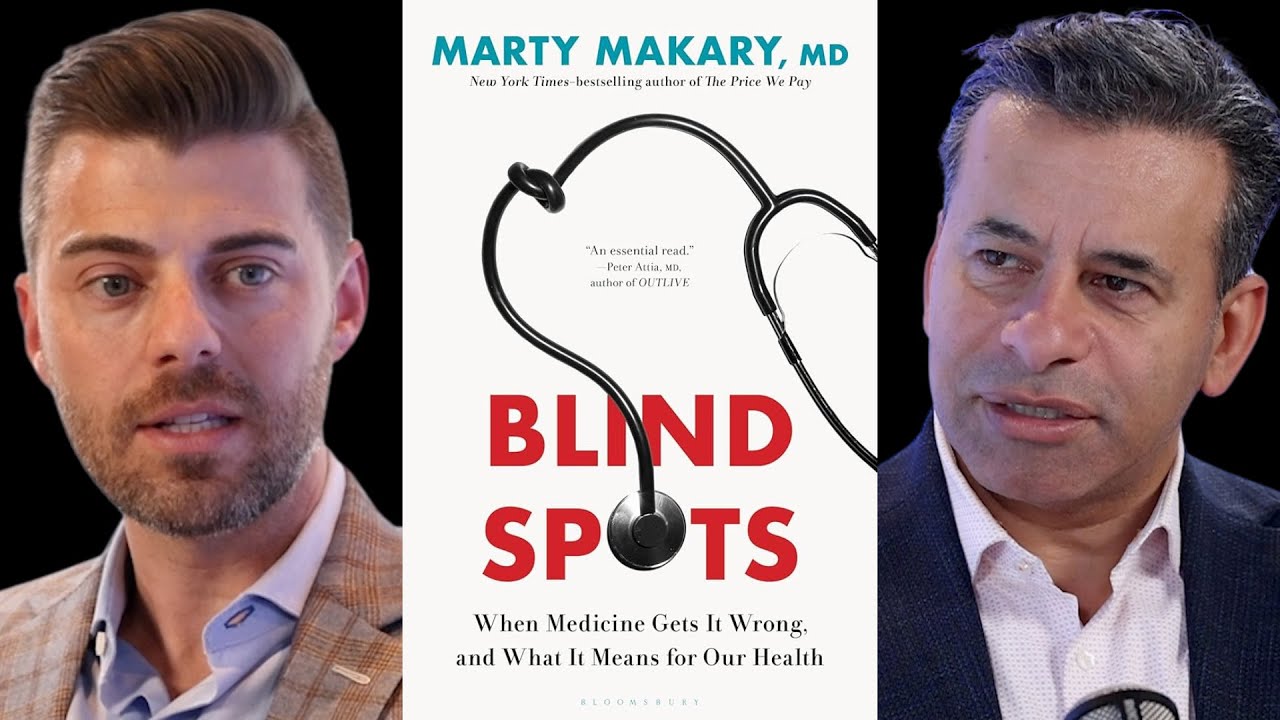
of medical school so I you know I'm optimistic on the future of healthc care because enough people now are sort of anti- central Authority anti-corporate and they're questioning things they didn't before but this culture of just get in line and do what you're told is still a powerful Force hey every everyone welcome to the drive podcast I'm your host Peter [Music] AA hey Marty thanks for coming in Good To Be With You Peter great to see you again as always um so you've got a new book out blind spots and uh this is a book
I guess I certainly remember talking about with you as it was kind of in the works we've had many dinners together when some of these topics have come up um do I take Can I take like 5% credit for the inclusion of HRT in this book no you get 99% credit for that that was incredible and I sorry that was a late edition right that was that tipped me off to do my own sort of investigative journalism so I tracked down the people that made that initial announcement saying it caused breast cancer and I pinned
them down and I went over the stats with them hard and finally got them to confess that it did not so thanks for tipping me Off there and helping me shape the book so you know look the the book the book is a great read and it goes through you know a number of situations that all kind of have this theme in common right which is an idea comes up the idea is a bit shaky in terms of lack of evidence um which in and of itself is not really a problem that really is the
way medicine and science have to work they have to start with ideas that we may or may not have great evidence for but what What sort of goes wrong wh why why is there a book about this instead of you know a bunch of uh case studies of how everything has gone really well so there's a science to group think and that's really what's going on a lot of times it's the bandwagon effect it's not just in medicine it's in business it's in politics it's in relationships people are dead set on an idea not because
they're convinced of it but because they simply heard it first and there was a Psychologist named Leon festinger who uh since passed away but had written a tremendous amount out of material on this idea of cognitive dissidence he really carved this entire discipline out in PS psychology and the idea is that the brain doesn't like to be uncomfortable with conflicting ideas it likes to settle and be lazy with one thought and so it's often the first thing you hear and um so if something comes along that challenges your deeply Held views or just what you've
happened to heard before there's this internal conflict so what the body does is it will reframe the new information to make it fit what you already believe or it'll dismiss it completely kind of the modern day cancel culture and uh so this happens in day-to-day life it happens in human interactions and it happens in medicine too we get the this sort of herd mentality but the important thing is in science is that the purpose of Science is to challenge deeply held assumptions and so that's something that I follow as a thread in so many areas
of modern day health recommendations in this book and I know we'll come back to this because I think one of the Tak homes from this is not just the stories but what a person can do going forward but I would also have to say that and maybe this is you know frankly just a hard thing to hear both as the author of the book but as a person listening which Is how does an individual like a normal person navigate this right like I'll use myself as an example not because I think I'm normal I think
I have at my disposal access to more information I have a research team that can help me answer questions and yet if I was to challenge every idea out there that I held sacred I'm not sure I'd get anything done yeah so so what's the balance in your mind between you know your doctor tells you something kind of makes sense right like On first you know it sort of just it seems logical at least plausible um but technically you haven't done the thing on it um how do you how do you how do you not
allow yourself to become a crazy conspir conspirac theorist who doesn't trust anything and throws out what's 80% good in the pursuit of throwing out the 20% that's trash how do you how does one navigate that right how do you sift through that it's there are extremes on both sides and that you see the pendulum Swing like with child birth you know there's this overmedicalization of ordinary life and then this swing back to avoid all doctors in hospitals and deliver at home with nobody and that is that's a dangerous proposition and so you see that frequently
in the history of modern medicine and for the everyday consumer out there I think the flag should go up when something is put out there as a health recommendation with such Absolutism as science evidence-based when really there's nothing to point to that should be a flag for everyday folks we don't want to create areia we need people to trust doctors I need my patients to trust me a lot of times but asking questions is should be part of the process and I think you know there are times when we are very slow as the as
a medical community to implement scientific evidence and it's okay to educate the Public on it you know there's a non-operative protocol for appendicitis yeah which I it's one of the things I wanted to talk about with you okay you want me to mention real briefly now sure you can um let's talk about how you and I learned to treat appendicitis and what is appendicitis first of all maybe give folks a sense of this yeah so inflammation of the appendix an infection sets in the sort of tight junctions break down and bacteria from The colon will
creep in there and infect the appendix it becomes inflamed gets into the blood system in late stages and and to be give sense people a sense of this I mean what's the lifetime prevalence of this and prior to any treatment so 200 years ago what was the mortality from uh acute appendicitis it was over 60% uh Walter Reed a famous physician himself died of a pentis the hospital and DC's named after him um so it was a common cause of death and the Lifetime prevalence was not that small it was like 7% or something I
thought it was five but yeah probably in that range um and so think about that right there's a one in 20 one in 18 to one in 20 chance you'd get an infection of your appendix and a 60% chance that if you got it it would kill you yeah I mean it was it it still is one of the most common operations performed in American hospitals and we have learned as a reflex as surgeons uh when you were at John's Hopkins you did this many times we may have been in the operating room together many
together yes and um so as a reflex you learn to take out the appendix you do it swiftly you do it with the laparoscope as of the last 30 years or so and um heck Premed students are you know know this this is like we we'll take the interns through the case this is a reflex we don't even think about it in the hospital so it's been one of these easy things like diagnose Treat diagnose treat diagnosis used to be tricky because it's can present a lot of ways now the cat scan just points out
the bullseye and you go to work you call the team mobilize high- five each other after the case talk to the family it's a quick great case for a surgeon and a surgical trainee well then a study came out showing that you don't need to operate and a short course of antibiotics is 67% effective in patients that don't That come in with appendicitis if the appendix is not ruptured or there's no little Stone what we call a fecalith in the appendix which is the vast majority of people don't have rupture or aigal so here's a
discovery that really shook up the whole field of modern surgery so just to make sure folks are following us the studies said look if you're in the majority of cases of appendicitis it's not yet ruptured and it doesn't have an obvious mechanical cause um you can Instead of taking a person to the operating room which is low risk but not zero risk you're still subjecting a person to general anesthesia plus there's the cost associated with surgery um you're saying that you can get 60 to 70% the same outcome if you give them an antibiotic and
if they don't respond to antibiotic then you'll take a third of those people otherwise back to surgery yes exactly and of those that um do not um of those who Respond well to the antibiotics it's something like high 80% will respond to the initial course of antibiotics a small fraction maybe 12% will come back with recurrent symptoms in the first month and say hey I I got that pain back and then you go to surgery for them so the total cure though is about 2/3 two of cases and you don't get behind the eightball it's
not like oh you know well we washed it with an we gave a short course of antibiotic watched it and now It's so far along we can't do anything and the patient is far worse they've done the long-term followup yep so and it's not just you know you made a good point about the cost and the other thing but the patient uh doesn't have to go undergo an incision anesthesia risk of infection risk of hernia all the minor risk but they're present the carbon footprint of the hospital the amount of waste produced the nursing staffing
resources I mean the weight list at a Hospital every every night in every hospital in America has cases that are waiting to go and typically there's an appendix or two on that list and sometimes these are operations that are going to be done in the middle of the night anyway yeah we've got a nursing staffing crisis you know so there's so many implications to appropriately implementing this research so I was talking to one of my colleagues because I I offered this to a kid who came in to See me he had it was I was
really in a dilemma because I had read the study I was convinced of it and and I thought this is at least something to offer patients nobody else was really offering it at the time the study had been a couple months out so I had did this guy come in about 19 years old perfect candidate no rupture no falth early appendicitis young healthy guy they were already getting antibiotics when they come in and get diagnosed in the Emergency department anyway so usually it's just running it a little bit longer and I offer him the surgery
versus no surgery he tells me he has a wedding the next morning in Boston which he has to fly to of his sister and I'm thinking oh my God what what gets him to the wedding faster just taking him to the operating room right now which case he might get there in a wheelchair I don't you know he should be able to leave the hospital in the morning get a flight he he might Limp around he'll be in some discomfort or do I do the antibiotic protocol so I just offered him both and I told
him what I don't know which is I think the most important part of being a doctor is understanding the unknowns and dealing with uncertainty and guess what he chose between surgery and no surgery chose yeah of course yeah do you want to go under the knife or not you know it doesn't matter of course he chooses no surgery so he goes to the wedding the Next day dances up a storm and I become so convinced that this may be revolutionary and I tell one of my colleagues about it and he says I don't buy it
I said well have you read the randomized control trial it's published in like our top journal and he says I need to see two randomized control trials so I'm like okay you know they've been doing this in Europe a lot longer than we've heard about it in the US so a second randomized control trial comes Out like a year later I show it to him and he says I need to see three randomized control trials and then believe it or not a third one came out uh I think it was like 6 months later long-term
followup the initial study was repeated in children other studies came out that were non-randomized and I showed it to him and he says I just think you're better with it out and I'm thinking it would be Unethical to do any more research like this is one of the big this is the cognitive dissidence that Leon festinger was describing Leon festinger embedded himself into a cult to prove his theory correct a cult uh that met in Chicago believed that aliens were going to pick them up because there was going to be a great flood on a
certain day a certain time and he read about this in the paper that they were assembling to be picked up by this spaceship and he realized This is the real world example of my theory of cognitive dissonance why we cling to what we believe First and we're not open-minded to be objective so so that the thing he wants to test is when the aliens don't come to rescue of of the people that were the firm Believers how many will say oh my God how stupid was I to think this right versus what will be the
set of stories that get spun to explain why their belief was still right sounds like you you somehow knew That the aliens did not come and pick them up I was able to make the leap of faith that the aliens indeed did not come so they didn't come that night and he was there in the room with all the cult members and somebody says at 12:05 cuz the pickup was supposed to happen at noon and they had removed their belts and metals for the flight and everything and they somebody says oh the other clock is
wrong it's really 11:55 and everyone gets excited and there's this Denial and denial through the night and then in the morning basically it you know it it was obvious it did not come true and they did not abandon their views they dug in deeper those who had a little belief they thought this is nuts and they just left but there was a physician that festinger spent time with and he writes about it in his book called when prophecy fails where the doctor said just openly once almost in a a Freudian way said you know I
just have So much vested in this now at this point my job my family my friends everybody knows I'm so into this I I have to hold on and festinger watched and Plain View what we all experience in a subconscious way and that is this resistance to new ideas and you see it in politics and business and everything else and it was really amazing um it's a theory that's now well accepted as cognitive dissonance and it's tied closely to effort reporting uh effort um Justification that's the concept in Psychology and that is hey I'm vested
I spent all this energy on it it must be good or Justified or or and we do that with our surgical residency fraternity hazing it Fosters this cycle of abuse and um in the examples by I think their name was uh Aaron and Mills were the two psychologists right after finger around that time and they took college students and they said hey we're going to have you do this task we're going to pay you For the task you take little pegs and you put them in the most tedious boring thing you can design MH um
and uh they paid them some half of them 20 bucks and the other half $1 to do it for an hour which group said they enjoyed doing the task more the group getting paid a dollar the group getting paid a dollar because they had to justify and um they did another experiment where they said hey we're going to have a sex talk and you have to Take an entrance exam and there were three groups that took the entrance exam one they had an entrance exam was incredibly difficult they didn't give them the results they just
said okay you know you passed the other had a moderate exam and the other one had no exam then they had the talk and it was the most boring disappointing let down you could possibly they basically said yeah bees get together and multiply and they're just kind of like what you know This is what we tried hard to get in for this class and then they asked them did you enjoy the class it was designed to drive you nuts Bor and the guess which group said they enjoyed it the most the one with the hardest
test the one with the hardest test and this plays out in our lives every day now that I've read these studies and have written about them I think about this in our research meetings when new ideas get suggested When people ask me if we should do it a certain way you know we've got these traditions and dogmas and medicine that can take on a life of their own so let's talk a little bit about peanut allergies um probably everybody listening uh is is no stranger to a peanut allergy in fact there's I I don't know
what the prevalence is perhaps you do but but it's quite prevalent so there's again the probability that someone listening to this doesn't either have a peanut Allergy or know somebody with one is probably close to zero um so let's talk a little bit about this has it always been this way um and if not when did this um when did this become an epidemic well it really is an epidemic and it's tragic and people can go into severe anaphylaxis just being near peanut without even ingesting the peanut in 1999 Mount Sinai did a study and
estimated the prevalence to be about half of 1% and the vast majority were Very mild and it's there are many theories as to why that might have crept up from zero uh Generations prior but um the American Academy of Pediatrics decided to address this problem by issuing a recommendation now they didn't know what to recommend they honestly literally had no idea what to recommend I went back and interviewed some of the individuals who made that recommendation it was a strong recommendation even if it wasn't made With such absolutism it was interpreted as the law of
the land and the recommendation was for all children 0o through three to avoid all peanut products including the little peanut butter moms would put into food and infancy and um pregnant mothers and laate mothers should also to avoid 100% peanut abstinence and what happened immediately after that recommendation in the year 2000 is peanut allergy rates in the United States began to soar and we saw a new type of allergy which is the severe anaphylactic reaction the ultra allergy where if someone used the same ice cream scooper as in the pistachio even though they had rinsed
it that kid could end up in the emergency room when we saw emergency room visits Skyrocket so the American can so the medical establishment the elites I'll say not the rank and filed doctors that think independently and a lot of them the rank And file doctors knew they just made this up and some were had Immunology backgrounds and knew this doesn't fit with Immunology in Immunology you need to be exposed to things early in life to be immune tolerant something called oral and immune tolerance parents had known it as the dirt Theory sometimes around cats
and dogt yeah yeah get develop a robust immune system they're healthier later in life bubble kids end up getting really Really sick later on there's a um pediatrician named Gideon lack who's an allergist who was one of these enlightened guys early on and he he said he noticed kids that had um I think it was like iron or metal in their teeth for dental work were less likely to get a reaction to earpiercing later in life and so he had done research in immune tolerance and knew this concept if you're you're exposed to something you're
less well a bunch of Pediatricians detested this recommendation tried to speak up they were basically silenced or sidelined and this Rec recommendation took on a life of its own parents were told for their kids remember one two three at age one you can introduce milk at age two eggs and age three finally you can introduce some peanut products so it became known as the 123 it took on a life of its own it became Dogma as the pen algy r soord the medical establishment said What's going on here we're telling people what to do they're
not listening we need to double down we need to get people to comply we have non-compliant parents out there if we can only get everyone to comply with this we can defeat this epidemic if you can hear little Echoes here of of modern day correlations so this doubling down took place and the more they doubled down the wor have got to the point where now there's an estimate that 18 one in 18 Kids has a penut allergy but the severe penut allergies is that the real issue now where it's banned in a lot of schools
about 20% of schools in America have banned all peanut products allog together and the more you ban the less exposure the more immune sensitization because now you have to think about the one in 18 kid with an allergy so it became a self-licking ice cream cone it was like you know more abstinence more abstinence what are you doing and the Parents who were like no I'm going going to introduce peanut butter as my grandmother did and for Generations when there were were no peanut allergies they were seen as anti-science they were ridiculed uh schools would
address these parents sometimes I have two uh medical students well graduate students doing research in my research center at Johns Hopkins from Africa um one's from Cameroon and one's from Zimbabwe and they came to fly over to the research Meeting in their first days and they were like what is it with the peanut allergies here like they're announcing it on the plane to BWI there these all these products are like contains no tree nuts and they're like what I've never seen this before in my life and like some student invited one of them to uh
dinner at his house because he was a new student from Africa and he goes oh would you like to come over for dinner sometime and he goes yeah sure do you Have any peanut or other allergies and he's like Marty what the hell is it with this peanut Obsession here we have no peanut allergies in Africa and I was like Wow Faith have you ever heard of a peanut these are public health graduate students no we have no peanut allergies in Zimbabwe then I would call my relatives that I have back in Egypt same thing
I've never heard of a penut allergy except for there was an exat living here in Cairo he had a pen algy And you realize this is a unique American epidemic that was created but there must have been some index cases that caused the hysteria yeah so that incident from Mount sin I suggested half 1% it might have been microbiome related we think but um but the peanut abstinence just threw lighter fluid into this fire and it really resulted in where we are today so where is the American Academy of Pediatrics today on their recommendations so
here's the Thing the study got done eventually 15 years into the recommendation that doctor Gideon lack I mentioned in London published a study in the New England Journal of Medicine with a with 640 kids doing a randomized control trial to early peanut butter exposure in infancy four five six months not not as their sole diet he's still Pro breastfeeding right and whole peanuts have a choking risk so I mean the smart way yeah and then so peanut abstinence and peanut Introduction in infancy fast forward a couple years radically Eightfold different rates in penut allergies and
severe allergies published in the New England Journal 15 years why didn't the American Academy sorry what year was that study published 2015 okay then of course eight full difference so we're talking about that's almost like as significant as smoking giving lung cancer versus not like smoking versus not smoking and lung Cancer was about a tenfold difference yeah one of the biggest odds ratios you see in research and then of course the you know the bureaucrats niad and NIH from the National Institute of allergy and infectious disease they find two years later they get around to
putting a position paper and all this stuff so for 17 years and but do we also understand how much how much has that position paper reversed the behavior in in parents because when it comes to kids That are born today do we know that the the amount of peanut abstinence going on is virtually gone now I think it's unknown but it's a great point you raised why not reverse the recommendation now that the science is clear with the same Vigor at which you put it out initially why not show some humility why what if the
leaders got out there and called CBS mornings and other morning shows and said hey we got something terribly wrong we really need To correct the record on this you didn't see that yeah that that's to me on my soap box that's really the beef I have with the HRT stuff is the the the the absolute I mean megaphone of um uh you know fear that was promulgated through estrogen hysteria in 2001 and even though if you read the fine print today many of those people have walked back those recommendations of estrogen avoidance um but again
it's not only is it too little too late you've got a Generation of women uh literally a generation of women over 20 million women who have been deprived of of HRT but even women that are available or eligible to take HRT today they're still confused because the same megaphone that was used to say estrogen will give you breast cancer is not being used to correct course so it's there there's an enormous asymmetry in these in these information campaigns and one little piece I know you've done a Great job covering HRT but one of the guys
in that committee so I in the investigative journalism I did around the HRT Dogma before the announcement there was a committee meeting where they were Hoodwinked and the 40 investigators were basically told hey throw out the agenda we've got some breaking news on the study causes breast cancer we already submitted the journal it's coming out and a bunch of guys there are like what the this is not how we do Research right one of them Bob Langer who I interviewed had said in a shouting match with the lead investigator he said look if you put
something out there as sensitive as breast cancer is caused by HR if you you will never be able to put that Genie back in the bottle and that's exactly what happened and sure enough that guy had confess to me that it did not cause there were no increase in breast cancer deaths you know maybe with a gun to his head when we were you know I was doing the interview with him but yeah not a single increase in breast cancer deaths unbel and that was at the time of publication that was again demonstrated N9 years
later and again demonstrated 20 years later on the followup of the same cohort I I can't tell you Marty how many times I get asked this question uh it is it is probably the single most prevalent topic of discussion I have in a in a public setting like get a dinner or you know Something like that so um it tells me how much incorrect information still exists out there it's amazing there's probably no modern-day medical intervention that has improved the health of a population as much as HRT for postmenopausal but it's not just HRT the
medical establishment got opioids wrong for 35 years they got heart stance wrong for 15 years they got the lowfat diet wrong for how many 60 plus years they got uh penut alergies Wrong for 17 years where's the apology where's the humility where's the you know uh that's why there's distrust right now yeah and again this is this is where I really really struggle because I have friends who are otherwise smart people who have such ridiculous views in terms of like where the pulum has swung the other way and like they're convinced like you shouldn't microwave
your food because microwaves are harmful And I don't say this to be um kind of arrogant but but there's also such a degree of scientific illiteracy um that even when I try to explain to one of these friends what a microwave is um and why a microwave can't be harmful like why it you know you have to understand what I ionizing radiation is you have to understand what a light like if if microwaves are harmful then light is more harmful based on the wavelength but that's a hard Thing to explain to people who don't understand
science you can't see wavelengths right so it is it's it's it's difficult so I think that's what bothers me is we've created kind of a bodal distribution right of complete rejection of Science and everything that medicine says is wrong and you should never go to a doctor and anything your doctor says is wrong to complete an utter Blind Faith and again it comes back to my question which I don't have a great answer to which is how do how does a reasonable person maintain skepticism but you know not be paralyzed by it and and not
be pushed so far to either extreme and I I still I I still come away thinking I don't know the answer to this yeah I don't have a satisfying answer either and I feel for the everyday person out there a friend of mine who will come up to me and says well I asked about hormone therapy but my doctor whom I love said no it does This you know you don't want to create so much skepticism where people are denying a chest tube when they have suction pneumothorax right so it's like what is that balance
I don't have a satisfying answer but it is exactly what Leon feser was describing and the father of modern medicine Dr Claude Bernard he had said in science more than in any other discipline you have to recognize that we bring biases to any question and you Have to actively suspend those biases as you take in new information so you have impeccable objectivity and it's a lesson for everyone today unfortunately I think we're going the other direction in science right now we've got policing of you know misinformation we've got uh this sort of culture of obedience
in medical school that goes right down to you know uh right down your first day of medical school so I you know I'm optimistic on the future of healthcare Because enough people now are sort of anti- central Authority anti corporate and they're questioning things they didn't before but this culture of just get in line and do what you're told is still a powerful force yeah I mean I'd love to spend some time when we get through a few more of these interesting examples talking about how to how to at least change medical education and to
me one of the most important changes I would make if I were Medical education s would be a very um dedicated track of uh statistics and probability Theory and I think this is important for all of science right I mean you've I know you would agree with me I think but um you know there are no proofs in science you know I've said this many times before so nothing is 100% certain uh so so science is not a thing right it's a process and um what is highly probable today is is probably a better Way
of describing something that we think is true so you know and and and new information should always be updating probability so if you if you think about that framework right if if people are trained in in in the mathematics of uncertainty which is what statistics and probability Theory are um and I feel very fortunate because I was a math major before I went to medicine so that kind of came a little more naturally to me to think that way um you Could look at you know you could look at some index cases of peanut allergies
in the 90s and you could say well my hypothesis is this is due to being exposed to peanuts as a child now that turns out to be wrong but that would be your hypothesis but you wouldn't cling to that hypothesis with absolute certainty because you would understand that it's a probability distribution and you might assign it a probability of 50% and you would say well if this is true How would I test it I would test it and then based on information as it's coming in I'm updating that probability is it now more than 50%
or less than 50% and I know that sounds very mechanical but I can't really think of another way I mean and I and I know we're going to try not to talk about Co today because the world's Co fatigue is is rampant but but Co offered so many lessons in this right yes which is hey did this did this virus come from a lab Or did it come from a wet Market I don't know I'd say 90% it came from a wet Market because we have a precedent of viruses coming out of wet markets okay
well it's it's three months later we have some more information we found out about this research being done there should we update the probability okay maybe it's 8020 now great that's an update in probability 6 months later hey we still haven't found the vector okay maybe it's 5050 now but if we thought About it that way I think it's easier to change your position yes because you're not wed to a binary outcome yes or no you're you're thinking about it as a probability distribution function which is constantly getting upgraded and updated and improved and it's
theoretically converging on what is true as we go and that's true of everything right I mean like I've lost track of all the other things fortunately I've purged most of them for my brain but like Ivermectin you know Hydro you know all of these things I mean all of these are reasonable things to have assumed but what became unreasonable was to not go through this process both sides the sides that clung to them and the sides that morally opposed them um so anyway we should we should probably revisit that um let's let's shift gears a
little bit and talk about um antibiotic use so this is something that probably doesn't get that much attention I I know Marty When I was in the hospital we did talk a lot lot about this in particular we talked a lot about it in the ICU which was the idea of um antibiotic resistance being a real problem but as a person who lives outside a hospital now I don't hear much about it so that makes me think one of a couple scenarios scenario one is it was greatly exaggerated in the early 2000s when I was
a resident because it hasn't materialized resistance you're talking resistance um It was real and it's still real but more and more drugs are being to keep the bacteria at Bay uh so so so you know I could walk through several other machinations but but give us a sense of what this means what the implications are and and what can be done about it so about a 100,000 people in the US die a year uh roughly from resistant bacteria that are resistant to the antibiotics we've had the time period it took for bacteria to develop resistance
through Their Natural Evolution was about 23 years when antibiotics were first mass-produced in the 1950s and 60s then it shrunk down to 14 years and now it's about one year within a year and a bacteria will mutate around an antibiotic and it'll be a blank say methy and resistant stafl cacus we're now seeing um CI one of those common bacteria take the life of somebody um you know every other month or so in the hospital in most hospitals It's you tend to pick it up in the hospital sadly you look back and you say oh
yeah they took ANF for this tiny little thing they didn't need to take the ANF antibiotic 4 the about 60% of outpatient antibiotics are unnecessary according to several studies and in patient antibiotics I'm not sure it's much better I personally have given thousands of unnecessary antibiotics because I've been forced to well I say I give them it's the operations that I do There's this protocol that you give every single operative patient antibiotic before the incision yeah Marty I I don't think I ever cut a person's skin in my life without an antibiotic being on board
except for a certain trauma case where you're literally putting a knife on them the second they walk in the door because they're going to die but yes we would I don't know we used to give ANF I don't know if that's still the case right That's a common one okay so and and again the reason was um there are bacteria on the skin and even we scrub the skin you can't get every bacteria out so we're going to give you an antibiotic that has to be in your system it's going to be given to you
intravenously the and usually the anesthesiologist still does it in preop or before you cut skin so that by the time that incision goes through whatever bacteria are on the edge of that skin Aren't going to potentially get in so again makes a lot of sense um I never questioned it um were there and there must have been studies that demonstrated lower incidence of wound infections right I can't imagine something that prevalent was was implemented without an RCT was it there were studies and there were rcts in major abdominal operations that were done open well most
surgery is done minimally invasive now and people have inappropriately extrapolated those Findings to minimally invasive surgery I mean have you ever heard of an infection after a laparoscopic inguinal hernia maybe like a case report I've never seen it in my life you but isn't that because we're giving them antibiotics potentially I I don't think so but um if the because you would see at least some I don't think it would be 100% effective you don't see that with abdominal surgery I mean it reduces the incidence of Infections a little bit I just don't think there's
any mechanism in some of these procedures I don't think it works I don't think it gets to this well for whatever reason with no data the the the research from open abdominal GI Cas has got extrapolated broadly and I remember asking I was actually in practice a little bit before the broad recommendation I remember asking uh this guy patch Dinger who was involved in these recommendations it's called like The antibiotic Society of America you know one of these there's all these Niche meetings you know we have the pancreas Club you know it's like all these
meetings it's more fun than the spleen Society by the way they're they're boring and so I remember asking them why is it the antibiotic recommendation at the time of incision for every operation I've never seen or heard of an infection for these minor procedures and he said well you know we Thought a lot about that on our committee and we decided making it easy to remember to do it for every operation would ensure that the big operations get it and I thought well we may have a blind spot in American medicine now it's very obvious
to me based on some research I've been seeing out there that not only could we be breeding resistance but what is what are these antibiotics doing to the gut microbiome and it turns out that a new Theory which has emerged Out of the University of Chicago is suggesting that surgical infections don't come from the skin bacteria crawling in it comes from the gut some sort of weakness in the gut and there may be a a transposition of some bacteria and they've actually done studies now in mice where they they alter their gut microbiome prior to
surgery and they have found that there's some reduction in infection so there may be sort of probiotics pre-operatively That may reduce the risk this is a big area of ongoing research there's nothing definitive we've learned that people should chug a Gatorade 3 to four hours before surgery is mostly for the glucose but what's it doing to the gut or is the patient coming in in a starvation State and is that doing something to the microbiome we've had all this Dogma in the operating room you got to wear your hats like here you got to cover
your shoes some places don't cover your shoes And then you go overseas as you may have as well you go to Africa and you realize they're not wearing anything they're not even wearing masks when they're doing surgery and their infection rate is no different how really yeah yeah and this I've seen that's surprising to me yeah and you think well what is the mask doing is it preventing sweat from dripping in is it preventing the Airborne particles because the Airborne particles are just coming out of the Side of your mask right so there's still so
there's this univers of Chicago research is challenging a lot of deeply held assumptions in operating room protocol but one of the things I feel bad about and I don't do it anymore now is going in for a minor laparoscopic procedure anesthesiologist says you want me to give ANF and I say no you can hold off the average 10-year-old in America has taken 11 courses of antibiotics and the average three-year-old has taken two And a half courses of antibiotics we think that zero to three age group is the most the microbiome is the most sensitive to
antibiotics but antibiotics are like carpet bombing your microbiome you know these millions of bacteria that live in in Harmony and this study I don't know if it's um if I can mention this but this Mayo Clinic study this is what I was telling you before I was dying to tell you about this study incredible study out of the Mayo Clinic That came out I think maybe the most significant study of the modern era in that it's shattering our deeply held assumptions about chronic diseases and the male clinic researchers took the 14,000 children that live in
Olstead County in the area of Rochester Minnesota and they looked at kids who took an antibiotic course in the first two years of life and tracked whether or not they developed asthma learning disabilities overweight obesity uh later In childhood and what they found were these incredible correlations there were about 10,000 kids who had taken an antibiotic course and 4,000 who had not and they matched them to the best of their ability statistically a 20% increase in obesity among kids who had taken an antibiotic in the first two years of life 21% increase in learning disabilities
these were all the statistically significant bindings 32% increase in attention Deficit disorder a 90% increase in asthma and a 289 increase in Celiac other Studies have shown a correlation between antibiotics early in childhood and uler of Claus and Crohn's disease makes sense we're changing the microbiome we may be carpet bombing the microbiome with the Dogma that there are no downsides to antibiotics you got some sniffles it probably won't help you but it won't hurt you not true now how do we know in This study Marty that the 4,000 kids who were in the control arm
that didn't get antibiotics weren't healthier kids which is why they never needed the antibiotic and that it wasn't some other Factor about the 10,000 who did get the antibiotics either they were just naturally less healthy kids there was something about them that was less robust there were other factors that couldn't be corrected for that actually explains those differences I love it That's how a scientific mind should think because there could be confounding variables for example maybe it's the infection that they were treating that is the cause that led to right so those are all good
questions now the my first of all we cannot make conclusions from the study but this study is an incredible signal that I think we should pay attention to for two reasons number one it's been repeated in a Danish study of about a million children number two There was a dose dependent relationship the more courses of antibiotics a child took the more significant the the more sign the higher the odds ratio so again worth maybe pausing and explaining to folks how you can increase the probability of a finding being real in an epidemiologic study so again
it always comes back to this what's the probability what you just said is causal causality is the single most important force in science yes I'm I'm convinced of that if you don't have causality you have nothing um it's what makes the universe what it is in my view so you stated a correlation it's only interesting to us if there's causality and now the question is how probable is the causality and various factors defined by a a statistician named Austin Bradford Hill speak to the strength of the association and the the the probability or likelihood that
that Association is causal and you've Outlined a couple right so one of them is what's the strength of the association period so if if I knew nothing else the um was the asthma the 289 Celiac Celiac so the fact that that had such a strong Hazard ratio that a hazard ratio of 2.9 versus the others that are like 1.2 right you would say well just on the basis of strength of Association that one's more likely to be causal you then stated another factor which was reproducibility there's Another study that's done the same analysis and it's
coming up with the same answers so that makes it a little more likely to be causal and you talked about the dose effect even within the association like for example all of this was sort of figured out during the kind of smoking chalera epidemics when people were trying to understand causality and then you'd say well if smoking is causally related to lung cancer then theoretically my correlations should get Stronger and stronger the more cigarettes you smoked if that's not the case it becomes very hard to make the case that smoking is causing lung cancer so
you're saying that there was a dose effect the more antibiotics you took the more strongly you were having these associations yeah and this is the uh first formal study I've seen like this on an epidemiologic basis that that fits a hypothesis that to me makes sense SE the sephos sporin had a higher Correlation they're generally considered to be a little more damaging to the microbiome than the anfs and penicillin is that because they target gram negatives more or anerobic more or what's the I'm so far out of my my life on antibiotics I don't I
don't even remember why that would be the case I don't know but this is these are there are other observational for example Farmers have used antibiotics to fatten animals for food production for decades And the world expert on the microbiome Marty Blazer who was the chief of medicine at NYU his daughter developed chronic abdominal diseases and obesity they feel terrible because they gave her a bunch of antibiotics in childhood and they thought there was an association he started he's a laboratory scientist he started doing all these mice experiments if antibiotics are making animals more obese
what are they doing to humans that by the way is another one of the Bradford Hill criteria do you have experimental evidence that also supports this which of course in the case of human epidemiology you would you would look at at animals um so of course someone listening to this might say well okay Marty but there's got to be some bad luck involved here I mean you had let's go back to the Rochester Minnesota study you got 4,000 kids who never took an antibiotic 10,000 kids kids who did at least a course or two well
I mean Those 10,000 kids weren't just given antibiotics for no reason they must have had ear infections they must have had tonsilitis they must have had appendicitis they must have had something I what were we supposed to do yeah how do we make the how do we draw the line between what was medically necessary because as unfortunate as those consequences are they pale in comparison to a life-threatening infection that could have killed a kid So H how do we decide what the minimum effective dose is what's absolutely medically necessary versus what is Superfluous and potentially
just exposing a kid to this uh complic these complications later in life antibiotics save lives you've seen it and I've seen it right in front of our eyes they're amazing medications they ushered in the white coat era of modern medicine and I as I wrote in my book Marty it's what took us from medicine 1.0 to Medicine 2.0 yes we died like dogs 50,000 years of human existence we died like dogs yes and you got an infection you're what life expectancy was 38 right um mothers and child you know again it's not the only thing
that made the difference yes but it was arguably the single most important difference with sanitation and antimicrobial therapy in the transition from medicine 1.0 2.0 that's right so we don't want to throw the baby out with the bath water so to Speak right this is the Nuance which if people want just sort of of a simple dumb message an All or Nothing which is where our Echo chambers of media and politics take us in life and social media right you want this All or Nothing absolutism antibiotics save lives but they are also massively abused and
overused at least 60% in all the studies and we've see it we' see it meaning 40% of antibiotic use is Justified yeah and I even question that number because They would say that I should be giving antibiotics before my minor procedures and I you know I um but there's also epidemiologic data over time that look at all these chronic diseases now I know they're multifactorial especially obesity but look at all the increases we've seen in these exact diseases that they've seen increase in the antibiotic Group after the broad administration of antibiotics in the 1940s and
50s in the' 60s you Know it just went up even further the in the discoverer of antibiotics Alexander Fleming in 1922 he had warned after he got the nobell prize about the massive overuse of antibiotics he had written in his diary that I found in my research that these Mass factories producing penicillin it blew him away this was a a mold that blew into his lab when he left the window open we don't know if it's him or his labtech he you know he says It's unknown but somebody left the window open in this lab
where he was growing staff in an augur gel and some of that mold landed and formed a circle around the um the the mold where all the all the bacteria were killed and he had discovered what's considered to be the greatest discovery of modern medicine and so you're right it took us from being surgeon Barbers where we had a lanet and a an axe to do amputations and maybe deoen which didn't help many People and that was it and doctors weren't disrespected but they were respected like a priest or a barber or and then with
the mass administra the mass production of antibiotics now we had the power and controlled a substance where only we could give you a magic pill doctors began to wear white coats they had an unquestioned authority we kept people in the hospital to a little disappointed you're not wearing a white coat today Marty I'm not a white coat Kind of guy um but you know we held babies in the hospital for 10 days routinely normal Healthy Babies immediately I I was in the uh I was in the hospital for 14 days when I was born normal
at term yeah 14 days it's crazy I remember my you could you could be out of the hospital with an aortic root replacement in half that time I um I remember my my little sister was born around 1980s and mom came home from the hospital after delivering her you know my brother and I are like hey we have a sister and we every day we'd ask Dad when is my our little sister coming home from the hospital well the doctors haven't released her yet she's totally normal right she's sitting in there for days and days
you go in there with some big glass window you know and they'd be like there she is third row from the back 61 over You know you see his little head of hair wrapped in some and you're like you're looking back on it this is the medical paternalism this is that white coat ERA this never happened before in history people stayed in the hospital for two weeks after a cataract they'd measure their toe diameter they' you know probe and poke and put babies in the ncu and feed them formula and you know the mother would
be like can I still hold the baby no we have to take the baby Even when I was in in as student you know I was in the OB rotation it's my first rotation I'm nervous and anyone almost shaking thinking about it they give me the scissors you know like oh room six you know there's some moaning you go in there and all sorts of CHA chaos going okay as soon as you see the umbilical cord you cut it and I'm holding the scissors I want to learn about the process of child Birth but I've
blocked out everything I've because I have one job right and I'm holding these scissors and then there's chaos and then all of a sudden this baby and I can barely see this slippery cord and they're putting clamps on it cut it you know and I'm like swooping in to cut it and then they take the baby off to the back table what are we doing oh we have to rewarm the baby okay so they put the baby on this table with the French Fred light and I'm Thinking baby French the the baby the irony baby
was getting a warm blood transfusion from the mother with a pulsating umbilical cord which was actively pulsating when you clamped it and told me to cut it but I I don't say anything I I want to be I want to get I want to get a good grade and I'm like okay well um you know the mom wants to hold the baby wouldn't that be warm enough you know no we have to warm the baby turns out the data now on Skin-to skinin time hours of skin-to-skin kind that's the best incubator there's all kinds of
incredible data now on how the baby has more normal blood pressure and heart rate and more normal glucose levels when the baby is held by the mother and the heart rate and blood pressures I thought I heard that in the studies and I was like that makes sense but I don't get the glucose why would the glucose there stress hormones not cortisol yeah you Figured it out quicker than I did and um I'm kind of like what are we doing you know they're sticking a metal temperature probe in the baby's rectum and I'm like what
just can't is this a nice way to welcome a human into the world you know like what are we doing like the baby's temperature is what the mom's temperature was cuz the baby just came from the mom two seconds ago like what are we doing and um they were just like oh we have to put it on the sheet And all this probing and poking and um then they have to W they wash the baby it's like you don't now they know they not to wash a baby for the first 24 hours say there's kind
of a proten prot tenacious coat and again C-sections are they save lives but C-sections like antibiotics are also massively overused and it turns out as the head of the microbiome unit at the NIH explained to me when I did the research for this book she said in a vaginal delivery the Baby's gut in utero is sterile and so it's seated the microbiome is seated from the bacteria in the vaginal canal and then augmented by bacteria from the colostrum the early breast milk and the skin and the kisses the grandparents but when you're born by a
C-section the baby is extracted from a sterile operative field and what may what May Seed the baby's microbiome are the bacteria that normally live in the hospital and when she explained it to me that way I Thought my God you know it makes sense so what is the U prevalence of C-section today and and how close are we to Peak C-section versus what was it 50 years ago so we're at we're about 30% in the United States private hospitals in Brazil are at 90% um overseas it's sometimes even worse um the individual doctor C-section rate
ranges from 12% to we've seen 100% so we have a big project at Johns Hopkins uh and through our Consortium on The appropriateness of care where we look at practice patterns of Physicians and we basically can profile a physician on their pattern of doing something where there there's known to be a lot of inappropriate overuse but again just help me anchor this to some context um 50 years ago presumably they were not doing elective C-sections a C-section was done because it was medically necessary is that a safe assumption yeah there's definitely more unnecessary C-sections right
so what was the prevalence of C-sections pick your favorite decade when elective C-section was not done was it is it like a five should it be 5% should it be 10% if we're only doing it for medically necessary C-sections the OBS that I've grown to really respect really trust ethically on they talk passionately about the overuse of C-sections and they have impeccable judgment they have csection rates in the 12 to 15% range okay so we think that that probably is at least in the zip code of what is necessary and by the way that let's
go back to what we were talking about in the world of Medicine 1.0 when we lived to you know we barely got to our 40th birthdays and infant and um maternal mortality were Skyhigh every one of those kids that would be getting a necessary C-section they'd be dying and probably the moms are dying so this is a huge Advance the fact that we could Do this operation and um again I know that you're not I don't I I I know you don't think this way but I just want to make sure people listening to us
don't take away from this C-section are bad C-sections Sav lives I mean like I would argue C-sections antibiotics have saved more lives than anything that we're doing in medicine today correct yes right that has doubled human lifespan that's right to be able cu cu when Something goes wrong in pregnancy or in delivery it doesn't go wrong in hours it goes wrong in seconds right uh a a fetus doesn't have an enormous physiologic Reserve so when their heart rate starts crashing like you've got to get that baby out immediately so what you're basically saying or what
I think we want to discuss is why did we go from a world in which once we had modern medicine at the early part of the 20th century and we were able to get these 12 to 15% of children born safely via a C-section how did that go to 50 60 70% depending on your series what was that transition why did that happen I'm told it's a combination of a consumerist culture if you think about it if we're being really honest here I I've talked to a lot of doctors in my life I think you
have too being an OB doctor specializing in labor and delivery is one of the hard bryle it is so hard a brutal lifestyle yeah and so you have Somebody who's been pushing in labor it's now 10 o'clock at night they're telling you just cut this thing out of me may not be NE medically necessary but in the sort of fog of the moment I will tell you that there are OB practices that the ethical OB doctors I've interviewed and talk to tell me about this and it drives them crazy there are OB practices where you
check out from your first prenatal visit and the receptionist when they schedule the Next one is also scheduling your C-section would you like to schedule you pick a for your C-section no disc no informed consent and you know people it runs in certain circles that would be nice to have it and on our grandmother's birthday and when do we schedule it you know Christmas Eve birthday and they try to schedule the birthday there's so many factors in Brazil there's a Dogma that it changes vaginal delivery uh changes One's sexual pleasure um it's unsubstantiated but it
it looms large as a Dogman in popular Society in Brazil so there are many reasons and you know I'm not in this field but from talking to folks in it there's a massive I mean my cousin I went with her when she delivered she was by herself and of course I'm highly attuned to this issue and the OB dos come in and they're looking at something on the Rhythm strip and they basically tell her well I you Know I think that C-section might be safer for the baby well even though she didn't want a C-section
she of course is reasonable and open-minded you tell that to any woman in the world they're 100% going to say well then just do it and so I think there's a little bit of what we call the nudge you know um hey what about this non-operative protocol for appendicitis well it's a little experimental could be a little dangerous oh well heck don't do It then you have bone on bone in your joint nothing is going to help except knee replacement well bone on bone just go ahead right so we have these nudges in medicine and
they're kind of well known in every field look I'm probably guilty of them myself I would bet that if uh if I were if I were listening to me if I were outside of me and listening to me talk to patients I'm sure there are many times when subconsciously I'm doing the same thing I'm nudging them towards what I think is the right answer even if in cases when um maybe my confidence should only be 70% instead of 99% um do we have any evidence Marty that that trend is reversing that it's coming back to
more of a natural childbirth process in terms of everything from both a vaginal delivery standpoint but also in terms of uh how the baby is handled post-operatively I mean I know that for all my three kids They had the instantaneous cord cut uh it was we we were trying to set a world record with how quickly that cord could be cut uh you know we really really smoke that thing um what what is the trend on that now so for on that real quick they've done studies looking at 45 seconds versus 90 seconds of delayed
cord clamping and there was a clinical statistically significant benefit to 90 seconds you're getting stem cells you're Getting benefit in what regard what was the outcome I don't remember this is uh was a randomized control trial of two uh timings and I'm told by the OBS I respect you want to cut it after it's done pul ating could go 2 minutes now you were talking about the pendulum swinging to the extreme and people taking you know Hardline inappropriate positions one patient told her once don't you dare cut that before five minutes and she's like okay
it's not Going to pulsate after two minutes so we don't want to create extremists here but um the C-section rate has stabilized and I think it's because of awareness out there I don't think I don't think people understand the impact of the microbiome I don't think people you know study just came out and jamama surgery that children born by C-section had higher rates of colon cancer before age 50 um how much higher um I don't remember the odds Ratio was jamama surgery came out in the spring 2024 I think I've got it cited somewhere in
the book but it was a large database study from Sweden now again we cannot make conclusions from that but these are little signals on the data that we're supposed to pay attention to um I do think it's stabilizing Dr will Brun tracks C-section rates for healthcare organizations and he will um say here's the 28 doctors at this Hospital here's Their individual C-section rates as we are pulling from Big Data and we're not going to grade doctors shouldn't be under scrutiny for a 15% versus a 19% but we use these data as a screening tool if
you're over 30% C-section rate in your lowrisk deliveries which we can do in Big Data we can scrub the severe preclampsia and the twins and all then that is a screening tool to identify inappropriate concerning patterns that warrant a closer clinical RW and how Prevalent is that type of analysis today we're the only group doing it that I know of it's called Global appropriateness measures it's a Consortium of Physicians that I help start with Dr will Brom gam measures. is the website and lots of groups now ga ga measures for Global appropriateness measures. comom and
so health systems are saying hey you've got all the commercial data or nearly all the commercial data you got 100% of the Medicare data 100% of the Medicaid data and you you can actually pull the C-section rate and lowrisk deliveries for our doctors I want to see what they are and then what they do is they send a a report showing doctors where they stand on the bell curve and when you're out here on the as an outlier guess what happens when you get a report we watch in the Big Data they regress towards the
mean by the way what's the reimbursement or the economic differences between a C-section and a vaginal birth 9,000 versus 7,000 I really don't think not it's not an economic decision I don't think there's any Financial I mean given again how brutal how difficult that job is of being an OB I think it's other factors Y U and by the way we're doing this for spine in Hardware infusion rate during lumbar spine surgery what's your rate shouldn't be over 50% in non- deformity cases we're doing it for how often it is a hernia fixed on both
sides When somebody comes in with a hernia shouldn't be fixed on both sides more than 20% of the time so we we learn the ways in which there's inappropriate practice patterns and then we profile individual docs for improvement for quality improvement by the way what percentage of inguinal hernas are repaired with mesh versus the tissue repair I think they're all fixed with mesh except in the famous SCH dice Clinic where I might go someday uh I got A minor hernia if it ever becomes a problem I might go there because we've sent many patients to
the SCH dice Clinic oh really because and I could be you know just out to lunch on this but one of the things I took away from residency that really stood out to me was how difficult a tissue repair was like I just remember technically I still don't understand the anatomy yeah um but secondly how much better it was if the tissue was sound And we we didn't do very many tissue repairs uh pretty much everybody had mesh um anything to say on that not really the meshes now are so lightweight they're like a little
thin net that's what I've used if I could do it as well as the SCH di Clinic I probably would I just like the idea of no mesh in there y but and I'll offer it to patients say this is how I do it if you wanted no mesh repair there's a place I think it's in Canada Toronto yeah yeah where you're from aren't you yeah yeah um okay that's interesting so basically if you want to get a tissue repair of Ving hernia you got to go to the SCH dice Clinic um but you're saying
maybe mesh is getting so much less intrusive now that it's there's Min there's less downside to doing mesh than there used to be yeah when we used to operate together they put these big thick polypropylene meshes in there that I Don't understand how you wouldn't feel it right it would and the idea was to promote Scar Tissue because it's actually the scarring that is the h but now they're lightweight thin like a fishnet almost let's talk a little bit about ovarian cancer ah yeah so um maybe just give folks a little bit of a anatomy
of the female reproductive system so that what's an ovary what are the what are the little tubes that connect it to the uterus you Know give give folks a sense of what that Anatomy is oh yeah so this is an incredible um area where we're doing some work you know our research team at Johns Hopkins is dedicated to studying the big issues in healthcare that we are not talking about that we should be talking about where research is taking off new science is pointing to things that like hey pay attention and there's not a lot
of attention or NIH dollars and one of those areas is the true Origin of ovarian cancer the ovary uh sits draped under the fallopian tube and the end of the fallopian tube has uh finger-like projections called the fima so we're talking like a millon I mean they're almost really in contact and so um you want me to explain how this look so it turns out we what is an ovary first of all like what does it make why do women have them you know where do the eggs go all that kind of stuff so it
used to be thought that the Only purpose of the ovary is to produce sex hormones but it's not true it produces um you know as we youve talked about with estrogen is involved in heart health and so many things um but it produces the eggs that then um are go down a little circulation through the fallopian tube into the uterus and um doctors have really struggled with ovarian cancer really no major progress in modern medicine you get most of the cases are lethal or Present in late stages there's almost nothing you can do very little
surgical intervention there are some cases where it's early enough but overall the fatality rate is over 50% and there's a strong association between certain types of breast cancer and ovarian cancer yeah there is um with the hereditary predisposition so some people get tested but a big study was just done in the UK looking at screening tests for ovarian cancer should we have mass population Screening like we did using what ultrasound using ultrasound and they've done CAT scans and none were show shown to improve the outcomes in people uh and detect ovarian cancer none total failure
they abandoned the entire idea of ovarian cancer screening based on this big UK study so here we are with a cancer with almost no advances a ton of money it's not for lack of funding at the NCI and what is going wrong here well I Love this sort of blind spot of medicine because it shows how when you're certain of something in medicine you can still benefit from challenging deeply held assumptions it turns out that there was a recent discovery that ovarian cancer does not come from the ovary the most common and lethal type comes
from the fallopian tube and the cells float onto the ovary it so we have taken out millions of healthy ovaries to prevent ovarian Cancer you know during abdominal surgery during a hysterectomy the ovaries will be removed to so-called prevent ovarian cancer turns out we were targeting the wrong organ and so with this new discovery that biologically based on the genetics based on um a lot of good research that's emerged from Penn Dr drapkin uh a guy at John's Hopkins one of my colleagues there's a gynecologic oncologist now this is her entire career focus is that
we have to increase public Awareness that this is really not ovarian cancer the vast majority of time it's fallopian tube cancer and we can prevent it because the fallopian tube serves no function after one a woman's child during years it's not like right even after menopause there's very low levels of estrogen that can trickle out of the ovary for a while but after a woman's done having kids if they come in and say I want my tubes tied the new answerer at John's Hopkins is take them Out we don't do that anymore we remove the
Fallopian tubes to massively reduce your 1 in 78 chance of developing ovarian cancer future yeah it's that high high 178 yeah I love it that you have that reaction because I had the same reaction I realized we don't think like that in clinical medicine like at the pancreas cancer conference once I asked what this patient was asking what is her lifetime chance of developing Pancreatic cancer and I said we have no risk factors and she goes well what is it I'm like you mean just for an everyday person and I asked the experts no one
knew I looked it up it's I guess one I was going to guess one in 20 actually but maybe it's less than that's that's for all pancreatic cancers you mean pancreatic Ado lethal cancer yes one in 67 is that okay I would have guessed even more frequent truthfully okay yeah I think fourth most common Lethal GI cancer or something like fifth most common lethal cancer full stop not GI right so cause of death or cause of death yeah cause of death right it goes number one is lung number two breast and Co breast and prostate
and then colon and then pancreas and breast is only over um pancreas because it's almost all in almost exclusively women whereas pancreas is men and women but it's about 40,000 for both breast and pancreas cancer anyway it's kind you know we Think about well if you have and this is what the docs told me in the conference well if she has chronic pancreatitis her her relative risk is increased 28% okay well that's not what she's asking she's asking what what are the chances but again Marty I'm still surprised that ovarian is as high as 178
and pancreas is 1 167 um so most common GI GYN cause a death most Comm I I believe that for sure um okay so how widely accepted is It today that ovarian cancer is a misnomer like is that what you're basically saying yeah it's not ovarian cancer it's fallopian tube cancer yeah now you for the vast majority of these cancers you can have other types of gatal tumors that are much more benign that arise out of the ovaries there's many types of cancers in that little region but the most common the the rank and file
what we call ovarian cancer does not come from the ovary it comes From the floian tube and this is what we previously thought of as Cirus ovarian cancers Sirus agnosis at carcinoma yeah is a fallopian tube cancer it's a fallopian tube cancer how is that not understood how is the histology of I mean I just don't do the cells look the same cuz C I mean Pathologists for decades have examined this because when a woman gets ovarian cancer she doesn't die from the ovary she dies from where it spreads to right she's dying from the
Spread of that cancer to another part of her body so when they take those cells and they're looking at them under a microscope and they're staining them why why did it take so long to figure this out because of Medical Group think and when I interviewed the scientists that were involved in this discovery the resistance that they encountered Was the Same Old story of the people who challenged the lowfat diet and opioids are not addictive and HRT and all this Other stuff it's it's the same story they um at UCSD San Diego a pathologist there
wrote a very bold essay in one of the medical journals where he said I'm telling you the cells we're looking at do not look like ovarian cancers these ovarian cancer cells they don't look like ovarian cells and he got of course you know attacked and piled on like the H pylor is caused by you know causes ulcer guy he just got destroyed And his courageous step actually LED some researchers to say and then I think it was the Netherlands to say actually we're going to explore this a little bit and they did a little bit
more of an analysis like 15 years ago and they they kind of affirmed him a little bit they were like yeah we are seeing the same thing they did a series of of um people who had um bracka mutations and then uh this guy Ronnie drapkin and um Chris I can't remember His last name at briman Women's Hospital they decided and it was incredible the Chris had a mentor at briam and women's and he goes when everyone's laughing an idea at an idea in science that's a signal you should look into it that you should
your curiosity should kick in but let's be clear and I want to keep coming in back to this maybe 19 out of the 20 things that we laugh at we should be laughing at yes I mean this is the thing I just want to make sure we're not Giving people a license to assume that every dumb idea is right because most dumb ideas end up being dumb and wrong yeah we don't want to promote snake oil here on on the drive but we do want to um but it is an interesting yes but but so
this is the challenge right is the signal to noise ratio is still incredibly low and the the examples that are most remarkable always looked a little foolish at the outset but I think what we want to do is just make sure That people understand that just having a crazy idea is not sufficient you have to have a means of you know stating what a hypothesis is determining how to test that hypothesis and above all else having the ability to update your hypothesis based on new emerging information and um because again most crazy ideas end up
being wrong that's right just full stop wrong yeah most ideas end up being wrong yes so so yeah it it's it's very challenging Um where are we right now in in terms of like rolling this Insight out into Broad oncologic care so you said at Hopkins if a woman wants to get a tubal liation tying of the Fallopian tubes she is told we'll happily take your fallopian tubes out but if we're going to go in there we might as well make sure you never get cancer um massively reduce the risk yeah yeah where where um
where else do we see this how ubiquitous is the acceptance of this um and is there any uncertainty That remains here or is this basically now a feta comple as far as our understanding of that physiology there is uncertainty because I think as early as we are in something like this there always will be but it is now standard of care in Germany and most of Canada that when a woman comes in for any abdominal surgery elective abdominal surgery so even a lapca you're Tak your gallbladder out yes even a lap coli most commonly a
lap coli actually woman comes in because That's more common in women and they're finished having children they will be offered to remove the Fallopian tubes sparing the ovaries as during the procedures a concominant surgery okay and the general surgeon does this so the general surgery and I I'm doing this now in my practice woman comes in done having kids I Rebecca Stone who is our GYN oncologist who's one of the national leaders she comes in and does the salping yeah I Don't want to be taking out the round ligament or something yeah and tell me
um what is the probability um of taking out the fallopian tube and damaging an ovary such that a woman ultimately needs an ectomy as well which would be a disaster an absolute disaster for a woman to lose her ovaries if she's premenopausal and still relying on those for hormones yeah and I think you've touched on a big unknown there which is the single reason why this is not a Broad recommendation for any woman everyday person to come in for just the fallopian tube removal it is only offered as a conc prominent procedure the OBS are
very good at this they say it's a simple procedure but here's the issue if you make a broad recommendation for every woman who's done having kids to come in and have this done what if one in 20 surgeons is going to have a complication rate of 5% you've cancelled out all the public health benefit of Reducing ovarian cancer so that's why um it's for now the recommendation and this is a ation that not even all of our surgeons at Hopkins are aware of is that when we're in there doing another elective abdominal procedure in a
woman who's finished having children and generally on the younger side not over 67 I think is the average age for ovarian cancer so after that your benefit diminishes so in that window of done having kids before their In their mid-60s or and this is we're just using our best judgment here um that's the group where we're offering now that hey I can have you talk with our OBGYN doctors they can come in and reduce your 1 in 78 chance of in Canada they've done giant studies now and they're showing actually lower rates of ovarian cancer
long term and so we're waiting for some of that data to come out but it's it's pretty wild and the pathologist Dr valiko at Johns Hopkins Has actually said Marty we haven't made progress with chemotherapy on ovarian cancer and maybe this is why we may have been targeting the wrong type of organ tissue so it's pretty interesting uh it's an opportunity it's also an opportunity for people to be be aware of this best practice out there but you know like the guy who needs to see three randomized control trials to do the non-operative protocol for
appendicitis it's going to take time I mean only some Doctors in the United States outside of GYN are doing this the American Academy of OBGYN has actually put out a statement recommending women who come in after they've done having kids so there's actually a national guideline on it but it takes a long time for people to understand become aware learn the best practice I hope it can address the uh ovarian cancer incidents and if you know it's in my mind it's in the bucket of challenging certainty if you're 100% Certain that this cancer must come
from the ovary be open-minded to the fact that hey there's some things here that we haven't understood in the past for example tubal liation has resulted in a lower risk of ovarian cancer H interesting maybe it's blocking off some of the cells that could have caused cancer and migrated down maybe it's killed off some of the lining y um there was there's an understanding that ovarian cancer is more likely to spread More likely to be discovered after it spread well there's a little gap between the fallopian tube and the O ovary so maybe it's disseminates
in early stages because of that Gap so there's some interesting things that are now fitting together again I think this speaks to something that we can talk about it at an arms length from from any situation and it all makes sense but now you want to think about how difficult this is to put into practice you're you're a doctor And this is what you do you have 99% certainty which means you're a good doctor cuz you don't have 100% certainty in anything you have 99.9% certainty that this cancer is coming from these ovaries and you're
everything that you do in your practice is predicated around that but now you have to somehow work with a 0.1% probability that everything you believe about this is wrong now again that's a really low number that's that's a one in A thousand Del Delta how do you you not squash that and allow that to remain open and flexible while you continue to do your best work here and periodically come back to revisit this assuming you're not even the one who's doing the primary work but you're just trying to keep update on your practice and and
your practice is and say well maybe that's now a 1% chance maybe that at some point you know if that's a 10% chance I really need to Pay attention if if there's a 10% chance I'm wrong I really need to pay attention to this I need to pause um we're not trained to do that so how H how do we go about thinking about this right if you were you know I already said what I would do if I were Zar of medical education um I don't know enough about medical education today it's been 25
years for me but you're closer to it because you're still part of a university system um is medical Education significantly different today when it comes to this like what how does a medical education today at Hopkins different from you know what it was 25 years ago well one of the most important qualities of a physician is humility knowing your limits and having the awareness the self-awareness that you could be wrong as you said and when you are wrong when it's clear you might be wrong feeling bad about it and offering The patients hey you know
we got this wrong I thought this is the best way to approach it one thing I love about Rebecca Stone and so many the doctors I work with at Hopkins is they don't say you need to have your fallopian tubes out they say we have some data that is suggesting that if we take the foping tube B we can reduce your risk of ovarian cancer significantly and I think the the danger in medicine one of the poisons today is The absolutism that's out there and when we go through medical school it's a you're just memorizing
and regurgitating and it's this terrible robotic dogmatic training still that way it's still that way you might even think it say it's worse I was talking this morning to Dr will Brun who just graduated you met him um buddy of mine I'm working with on the appropriateness work and he just graduated from Oklahoma University School of Medicine we were talking about All the useless dumb me wrote memorization stuff he said it was like 50% of his medical education this bacteria is Catal a positive Catal a negative it say a branch chain bacteria this is a
straight chain it just it's mind-numbing memorizing the names of enzymes he says was like 20% of his medical education what are we doing to these kids they come to us in medical school bright creative altruistic they want to do good Social justice is a generational value and we beat them with the roote memorization of these enzymes and stuff you can look up we have phone nowadays you don't have to know the creb cycle on demand in the trauma Bay and we do this to this incredible generation you they we spit them out seven eight years
later they're different people the robotic they're sometimes emotionally disconnected they've learned a reflex as a survival Mechanism in order to do what we tell them to do which is get through the exams and the thing that kills me and a lot of students they see the tension and they feel it they hate it they're fighting it we do have incredible students that are able to stay normal through the process but it's a struggle because the culture of medicine says obey and it's one private company that controls the medical education in every medical school in America
the double AMC A small group of people get to decide what every doctor learns in their medical education and these people are dinosaurs they're forcing these kids to memorize the of all these and what's the relationship between the aamc and the company that administers um the US mle and the accreditation are they are they linked in some way presumably yes yeah yeah that is the private organization AMC small group of people is the entity that Also regulates the USMLE licensing exam got it they collect a lot of money from these students it's a private organization
and they are so I know um I was talking to a you know one of the cool things that we get to do is talk to a lot of people out there in America and get a bit of a bird's eye view on things and I was talking to Conference of medical school Deans and later on I had met the dean of uh medical school in San Antonio University of the Incarnate Word UIW it's called great Medical School San Antonio and she's like gosh Marty you're so right why do we have to teach all this
wrote memorization and just beat them to regurgitate I would love she's told me to teach self-awareness and understanding uncertainty and focus on applied statistics and the critical appraisal of research and the fact that there are nerves that extend every Aspect of the hand without having to name 50 nerves in the hand you know and regurgitate on the exam I would love to have a modern-day education but I can't because the AMC dictates what we teach and we have to teach to attest and our test score pass rat so it's this terrible system and it's it
connected to the American Board of Medical Specialties which issues board certification and recently they've Basically said in order to keep your board certification you got to pay us $2 to $300 every two years or so and take a quiz that we give you and um they're out there like making a ton of money off this new thing now they're require they're telling hospitals you have to require current board certification unless they've paid us we're private company they're not currently board certified imagine your College UCSF or no Berkeley where'd you go to college again I went
to college in Canada okay imagine your college called you and said hey your degree you don't have it anymore you got to pay us every year to keep your degree that's exactly what the American Board of Medical Specialties is doing they are private organizations of Monopoly my buddy will was telling me at Oklahoma University's school of medicine I probably shouldn't say this but what the Heck 8 hours on transgender sensitivity training two hours on nutrition the two hours on nutrition he said we're so pathetic it might have been better to have zero hours you know
HDL is good you know it's like the most basic and I see this awareness among a generation of doctors and students that they know something is missing this isn't right to just be memorizing they're smart people and that's why you've got a huge number of people Doctors who are learning from you as you learn talking about evolving your position you're out there learning reading talking to people people are learning with you and they're hungry for this kind of honesty with where medicine's going maybe we should be talking about more uh chronic diseases differently maybe we
should be talking more about about treating diabetes with cooking classes than just throwing insulin at People maybe we should talk about school lunch programs not just putting kids on OIC maybe we should talk about sleep medicine when we treat high blood pressure not just throwing anti-hypertensives at people first line Second Line third line maybe we should talk about ice and physical therapy instead of just surgery and opioids when somebody comes in with pain food is medicine the microbiome General body inflammation these are the topics that a Generation of doctors are carving to talk about we
need more research in them they want to think differently but who would fund This research Marty I mean I think when I when I talk about the pillars of of medicine right we have nutrition and exercise and sleep and emotional health and then molecules so that's roughly five things then you could really add a sixth pillar which would be like a a sort of a waste bucket uh you know of everything else That may or may not have benefit like sauna cold plunge you know red light therapy all that kind of Stu okay now one
of those buckets is really taught well in medical school we really do learn and by medical school I mean medical school and residency right so you learn about procedures and medications very well that's that's what we we learn and I think we do learn that quite well um but to your point we learn nothing about exercise sleep nutrition And emotional health and well-being um but part of that if you're not trying to be if you're trying to be as uncynical as possible is at least when it comes to molecules and procedures the way to study
it is straight forward the interventions are easy you take this pillar you don't take you take this pillar you take the placebo um and then on top of that there's a financial engine that supports the use of that which justifies the cost Of the studies but when it comes to doing research on many of these other things you know outside of philanthropic and government causes um such as the NIH it's very difficult to get any of that research funded so how how would we create a new medicine around something for which it would be so
difficult to to Really gather the right evidence or would you argue look we already know enough today that we could teach off the current practice the NIH could not be More broken they've got these siloed funding centers as you suggested and you know unless your research falls under kidney you know cardiovascular disease and it's what the old belt belts and suspenders professors there want to fund it's a legacy system where if the senior guys who've done the research and made a name for themselves on an idea like it they throw money away I think the
disruption is happening right now Private Industry you're seeing Private Industry fund research on different probiotics and bacteria you can introduce we're seeing Private Industry fund research they funded our research on price gouging and predatory billing another big blind spot in medicine I do think you know a lot of our work is not funded by the NIH and people come up and say my gosh it makes sense what you're saying why don't we have a big study on natural immunity and we could draw the blood of these people I mean how many Studies have you put
out there where you've said this study needs to be done it's not what falls in line with the NIH silos but it needs to be done the classic example a practice right now that is surging in the United States is taking a newborn and cutting the frenulum under their tongue either routinely or if if it's a foreshortened tongue some people believe in routine and other people believe in only in foreshortened and Other people believe never should be done I don't know what the truth is I have good ENT friends what is the rationale for doing
this the rationale the claim is that it'll improve breastfeeding and lactation rates that it may help there's claims out there that it may help with sleep apnea with speech impediments um I think they're outrageous claims when it goes that far these are people who are also cutting The frenulum under the upper inside lip and sometimes the side of the tongue and the frenulum under the tongue as all yeah so there's been babies that don't breastfeed because they're in pain from this and this practice is taking off like crazy it's driven a lot in dentistry it's
in that lactation world of lactation Consultants could refer you to somebody and it's this Dogma that has never had any scientific evidence to support the claim now I'm not saying It's bad is it being tested no I'm not saying it's bad or wrong but I'm saying this desperately needs a randomized control trial desperately just like the penology study just like the antibiotic study do it in a cohort of a couple hundred randomization follow them take a look five years or whatever the study design is needed who's going to fund that study big Pharma h no
fat chance um the NIH not one of their clinical Centers um the American Academy of Pediatrics with their you know $1,000 a year membership of all these $130 million in Revenue they take in year no no they haven't Poss they no interest this is the Bermuda Triangle Le of Healthcare in the United States and worldwide we desperately need to fund things where there are ideas people are doing things and they're doing them in a black hole with no scientific evidence we need to do the appropriate study we Could answer the controversy in less than a
year you I hate to mention Co we saw this during covid all those covid controversies could have been answered in three weeks or a month or two they could have done the clinical study immediately done the randomization answered the question instead they everyone went and on TV and opined about it it's easier the NIH controls $80 billion what are they funding they were funding this cruel dog experiment at the University of Iowa trapping these dogs and con having these sandflies bite their heads in these cages and concluding in the in the article that is published
uh leesh miasis can spread through you know from dog to dog via Sandfly bites who gives a okay it's this is where our tax dollars are going and then we're not funding basic clinical research out there why do you think that is I think it's just I don't think it's diabolical I think people um get set in their ways I think it's Leon festinger's cognitive dissonance I think people think oh this would be interesting find out whether or not you know what's the average diameter of stones on Theme Street that would be interesting no it's
not interesting I'm seeing it a a lot now with Health Equity I think describing disparities in Health Equity in my personal opinion is not Interesting at all we know there are massive disparities in Health Equity saying oh there's also a health disparity and you know chronic myologist leukemia according to health that's not interesting what's we've that's known what's interesting is what you're doing to reduce disparities in Health Equity and yet half of the papers now and I go to these conferences are on you know differences in soand so by you know race and Soo economic
stat yeah it's been Known since the beginning of time the number one driver of health status overall in a population is the socioeconomic status of that community so I I think it's just I don't know intellectual laziness the Old Guard there are fresh ideas in medicine but when you show up in medicine and you've done this you show up in the academic world as a resident or you get a peak of it as a student you have big Ideas hey this thing about the Microbiome and the rates of this and it all fits and maybe
chronic diseases have gone up with antibiotics whatever the big idea is you're told no no you need to pick one narrow area and work on an incremental little scientific paper that go to the abstract of the Southern surgical Society or whatever it is and that's how the NIH funds their research little small ideas we need Big Ideas they don't fund that we need new ideas on cancer what's the ROI on our cancer Funding paper at ASCO showed that avastin increased uh gleo blastoma survival rates by um two months well patients want to know what's the
cure did you cure anyone else that you haven't cured cured before if that's the top paper at ASCO our investment on Research has a terrible Roi and I think it's cuz we're not funding Big Ideas we need Ben Franklin thinkers Ben Franklin intellectually curious starts thinking about Opthalmology invents bifocals is interested in electricity invents the lightning rod invents a stove called the Pennsylvania stove which is an amazing invention I mean he's a science he's a true scientist we don't have Ben Franklin thinkers today in medicine I think vanai prad is one I you think we
don't have them or you think we don't have a a vehicle to fund them we don't have a vehicle to encourage them I think and I'm just Saying this because I've said this to other people you're one of those Ben Franklin type thinkers you think broadly about Healthcare that's what we do on our research team is you're told in med school day one hey here's the net textbook of anatomy pick an Oregon you're going to have to focus on just one which one do you like do you like kidney do you like brain heart just
you have to pick one you're like well what if I'm interested in the whole body or The system or the way we deliver care or the way we fund research or approve drugs or what if I'm interested in all of it what if I'm interested in gun control and violence prevention and I'm interested in trauma and all everything you're basically told no no stop thinking like that you got to pick an organ I mean I went to the gym as a medical student and there were some docs there were also used the gym and they
would ask me every day what are you Going into again and I want to be like I'm a seconde medical student I don't know is that okay I don't know and I think you can get a a specialization and then come around and get off the hamster wheel there's a lot of these stocks now saying I don't care about my rvu bonus I want to do something more meaningful and they're start businesses 50% of our medical students at John's Hopkins are getting a second degree with their medical degree they they don't want to Live the
life that they see you know with these guys who are like I got four NIH grants and presented and I got 60 papers I mean I hit that point where I was like okay I've published 300 scientific peer- rreview articles nobody's reading them I don't think I've made Beyond maybe a couple meaningful contributions like what are we doing we've got to focus on impact so everything we do now in our research group focuses on impact and that's how We got into the science of medical errors Frailty as a condition predatory billing and price gouging in
medicine you know 62% of Americans say in a Harvard survey they don't trust the medical profession to build them fairly and they avoid care or delay it for fear of the bill so you can now have the cure for pancreas cancer but that cure is only instead of being 100% effective it's only 38% effective Because you've lost You've Lost That connection right so um rebuilding trust is the hottest topic right now in medical journals essays so so speaking of that um in 2020 the New England Journal of Medicine broke with a 28-year tradition and um
it it it endorsed one of the candidates for presidency um which again this is a this is the most esteemed journal in in all of medicine that for 208 years was decidedly Apolitical um and it chose to it chose to break that now regardless of a person's political Stripes why do you think that's a bad idea I think there is a political narrative and in politics everyone sticks to the same talking points but science science is based on a civil discourse of different ideas among experts and so they're directly in Conflict so you know we
the journal decided to endorse a presidential Candidate for the first time okay other journals have said here are some issues we're not going to be both siding like okay what what if you said that about peanut allergies back in the days what if you said that about people who are suggesting opioids are very addictive they've seen it uh the New England Journal is the one is the place that published that study that out of I don't know 30,000 cases of people taking Narcotics there was only one patient who developed dependence and that became the dogma
and Dogma takes on a life of their own a life of its own I think the journals are in a bubble I think just like we need term limits for politicians just like President should turn over after years Journal editors should not serve terms like monarchs in Europe or African presidents they're there for life and it's they're loading these Journal Editorial boards with their buddies it's cronyism everyone in the field knows it it's hard to criticize because we all need the journals to publish our research the New England Journal of Medicine just a couple years
ago out of 51 editors had one African-American now you can only find one African-American to serve in the attit what's going on is it's their buddies from the brigam and Women's Hospital and you know Beth Israel Deaconess and M oh it's my buddy from I remember meeting the editor of the New England Journal when he came to visit Hopkins um Jerry Cera I think was his name I don't know why I'm mentioning these names these guys will probably all send me some hate mail but what the heck and I said oh I got a chance
to meet your predecessor at a conference we actually had a nice time together talking about ISU he goes oh yeah he was my roommate when we were cardiac fellows Together and you have all these Internal Medicine doctors who look alike think alike they buddies from one institution from one part of the country deciding the what should go through the gates for the rest of the doctors of the world to see it's changing vanai prad and John mandrola and Adam seu and and I and some others started a new Newsfeed called sensible medicine where we're publishing
our thoughts me in real time when we see Articles that look uh flawed when there's a bandwagon effect when we call things out yeah like a 100,000 subscribers to this thing now uh we're starting a new Journal now which is designed to be objective and it's called the Journal of the Academy of Public Health um Jay bararia and Martin korf and I and a bunch of others so there is this effort now and with social media but how do you know you won't fall into the same trap of the New England Journal Of Medicine science
nature again I I want to bring it back to this thing which is the biggest journals in the world became political in 2020 they made a very concerted conscious decision to weigh in on politics to endorse presidential candidates and again I don't think it matters who the endorsing I don't think it matters what party you're in I'm amazed more people don't look at that and say oh no that is awful that is awful we cannot have science and Policy politics I should say we we can't have those things co-mingle again it doesn't matter if they're
endorsing your party you should be just as concerned as if they're endorsing the other party that's right there's there's there's a there's an object ity that can't be comingled there and I I think um as much as I respect Martin and Jay and you I I just I don't think I have a sense of like what the answer is here and why just coming up with the new Rogue Journal is the answer um because I still don't understand systemically what's going on and and and you know yeah anyway so so I don't mean to I
don't mean to sound pessimistic but but I'm but but but I I I I worry that the uh I I just you know all the terms for for kind of the the non-conventional thinking World um is the goal of that to be a little bit more provocative in the other direction even if it's deliberately Provocative but but I I just want to be careful that we don't yeah you know we don't we don't we don't create disagreement for the sake of disagreement that's right we are prone to the same bandwagon group think as the the
jam New England Journal editors that are a bunch of like-minded friends we are at risk of that we have to be constantly aware of it and we've invited people who disagree um in sensible medicine we love publishing proon Articles on the same issue uh same topic and you'll see that you know van pad is wrong Adam sefue is wrong on this topic and and they're they're sparring in the spirit that we should have in academics remember when Obama first ran for president he was asked what is your favorite book he said Team of Rivals how
Lincoln brought together all these different opinions no don't go to war do the and he wanted them on his cabinet he wanted to moderate a civil discourse Well I think I think it wasn't just different opinions Lincoln's cabinet was composed of the people who had attacked him and run against him during the election yes it was these are the people who have just spent the past 6 months telling the American public why Lincoln is an idiot and should never be president and that's the that's the team that he assembled his cabinet from we um need
to stay humble avoid celebrity Worship in medicine we Do that a lot it's the culture um of how we create these the greatest highest attainable achievement you can have as a physician is to be the chief of a department and the way you do that really true though Marty like I there was never a day when I wanted to be the chief of anything I think you're unique I mean in the culture of academics it dominates right you get your NIH Grant oh you have a grant but it's not NIH try harder maybe you'll get
a k award but what percentage of people who what percentage of Physicians today are academic Physicians versus community physicians well it's blurring I mean what's an academic center nowadays with the Acquisitions and mergers I mean I do have a Define academic is people who have some funding for research and or are involved in the education of students and residents Beyond you know the mo like I'm not Talking about Sinai where like you're a community surgeon who once in a while has a resident scrub with you I'm not talking about that but if you if we
Define academic a little bit rigorously it can't be more than 10% of Physicians would fall into that bucket right probably probably they control a lot of the game the question right is what do they control and how much do the community physicians look to them and I think that just kind of comes back to Everything we've been talking about but but ultimately what matters is what are the community physicians doing what are the what are the what are the what are the workhorses doing what are the people who are taking care of the majority of
the patients and let's be clear even if that number is right I'm making it up 9010 but directionally I'm sure that's in the ballpark it's not it's 9010 in headcount it's not 9010 in patient touch it's more than that because the academic Physician has many other responsibilities that don't involve patient care so it might be 955 in other words the majority of people listening to us are going to get the bulk of their medical care from people who are not academic Physicians and therefore the most important thing in delivering exceptional care to the majority of
people is making sure that community-based Physicians are able to think independently or able to think Clearly and in that in that regard I I think that you know I mean I think I I I just I just don't know again I don't know that the answer is um lies in the hierarchy of the academic institution I don't know that that is really where the problem is I don't know where the problem is but I don't think it's where 5 to 10% of of the attention lies I don't disagree with you I think you know I've
got my perspective being in the sort of towers of the ivory Tower the Top of at Hopkins it's all about oh this you know Fabian Johnson just went to be chair at Wake Forest he just got this job great you know we're having a big reception for him it's a big deal it's kind of you know what we do we create chairs to go out there so I I have a do have a skewed perspective but every doctor gets trained in an academic medical school in this culture every student tends to come through this culture
where we tell them it's a Privilege to hold a retractor for six hours instead of um come and watch me talk to a patient's family afterwards and learn self-awareness and how to be perceptive and empathetic so I don't have a solution but it um it you see things where you say this isn't we are actually moving more in the direction of everybody get in line than we are in sort of the freedom of the rank and file doctor in America to speak how they Would speak creatively for example I'll talk to a doctor and say
what do you think about let's say hormone replacement therapy postmenopause someone say well you know I've heard this but I tend to question that I know some people are saying this I'm not sure that's a good doctor a doctor who says no it according to this you know us preventive service task force you must do this okay you're you're like reciting a catechism that's Not the doctor that we want to create right and how do you teach humility John Cameron and I did this thing where we when he operated next door to me I would
pause and I'd say this is a really interesting scenario can the scrub nurse run over and or the tech run over and get our camera to take a look at this and he'd come in and he'd say ah this really interesting Marty in the past I've done done it this way or that way I know exactly what he's going to say but I want to model humility to the students and residents in the room when he gets as maybe one of the most famous surgeons in the world he gets a situation like that he calls
me in hey can the tech run over grab Dr McCary to come in take a look get his thoughts on this he didn't need my thoughts and if he he knows my thoughts anyway we've worked together for 25 years I go in there and I say oh that's interesting yeah so you going to do it this way yeah that's what we're Thinking thanks Marty he's trying to model humility and I think that's one way we can teach it but it's an uphill battle I mean the policing right now in modern medicine is at an all-time
high I would uh gave Grand rounds for our OBGYN department at Hopkins and it went great and it was awesome and they helped me shape some of these ideas and the research that I've worked on and that we discussed and when I filled out the CME form you know There's this I I've coined this ICD9 diagnosis code called send us your slides in advance harassment syndrome it starts starts off in the hallway with hey Peter do you want to could you would you be interested in giving us a talk sometime H yeah sure and then
the harassment and the email and we need your fill out these forms and these right four questions for our CME and send us your slides we have to have your slides no you don't have to have my Slides okay I'm going to work in current events from that morning of my talk or sometimes I've realized the the Kryptonite for send us your slides in her harasment syndrome is is what if you don't use slides I'm not going to use that's yeah that's oh I'm not going to use slides oh well uh well then I guess
we don't need you to send them but um okay and then you show up with a thumb drive hey I got some graphs I was going to throw up is that okay oh yeah sure The a guys in the back but anyway one of those forms I had to fill out for this C continuing medical education requirement for any time you give Grand routs was you I hereby agree that any everything I say will comply with generally accepted norms and standards recognized by consensus within the medical profession and I'm looking at this and I'm like
no what I put out there is I like to Site research that challenges deeply held assumptions and I'm going to be talking about that and I'm not going to you know sign to some catechism here that yes I will obey and only you know say things that are in line with consensus um if you look at our track record in modern modern medicine when we use good scientific studies before we make massive Health recommendations penology is whatever you when we have good science we shine as a profession When we wing it when an an elite
small group of medical establishment folks decide what the world is going to do based on their own gut feeling or Dogma they have a Lous track record so what's let's let's let's talk about the thing what are you most proud of that that that the Medical Institution in this country let's just keep it simple what do you what do you think medicine has done the best job of in the last decade well I think you look at cardiac Surgical care I think you look at um line infections in hospitals I mean there have been some
really big wins here that don't get maybe as much attention as they deserve what what else where else are we hitting it out of the park obstetrical care I think we've not only now have is the infant mortality rate as good as modern medicine can deliver it but we've now accepted these these new best practices of skinto skin time Delayed cord clamping encouraging breastfeeding early on reducing C-sections when not necessary these are those are in the last 10 years those best practices but um we're at a pretty good point where the system is humming on
a lot of acute care and there's a video I saw on social media the other day where a guy said if I get shot I want to go to a US hospital we have the best care in the world if I break a bone that's where I'm I'm going to go Straight to a doctor but when it comes to telling me you know what I should be eating or how to live my life I don't think I trust modern medicine if you come in with chronic abdominal pain sometimes our sophisticated system didn't know what to
do right so I think the acute care has been mastered and I think you know I think about the operations I was a part of these laparoscopic Whipples and it's a tour to force of Science and Technology and uh Advancements and we do something called a TR pancreas transplant uh with eyelid cells now for people with chronic pain so I think good stuff is happening we have good people people go into medicine nursing every aspect of healthcare United by one common thing and that is everybody wants to help other people who are in need and
that's an incredible bond that we have it's a profession we should all be proud of it's a Heritage you know I'm um proud of that my dad uh Was a part of and I get to do the things he encouraged me to do little tips ways to connect with patients I still think of the time he said don't ask somebody are you taking your medication instead say you know some people find it hard to take their medications as prescribed how are you doing with it it's far less you know head-to-head and so it's an incredible
profession and teaching these little pearls and gems citing research uh Calling out the importance of good scientific methodology it's still I think the best job in the world and medical centers are are still some of the most respected institutions in America which is why which is why we've called on them to have ethical billing and and pricing practices but uh we can correct course and I think all in all it's an incredible privilege to be a part of the medical profession I encourage anyone to to to get into it You would still encourage someone who's
sitting here listening to us who's in college who's on the fence about going into Tech going into business going into law going into medicine you you'd still give them the nudge to do medicine if it's if it's something they're partially considering yes where else can you put a knife to someone's skin within seconds of meeting them just because you're the doctor people will tell you Secrets they've never told Their spouse within minutes of meeting you because you're the doctor and so there's an incredible Heritage in the profession and and so I think it's the best
job in the world now you got to be okay with me mizing enzyme names over and over again I mean hundreds of names of useless molecules that you could look up on Google that's just part of the old system and people but you know I I think the bigger issue isn't so much that you have to memorize those names it's that You're you're sort of lacking the context in why I mean Marty I still memorize names of complex enzymes and Pathways um but the difference is I'm doing it because it's feeding my interest yes right
it's like I'm reading paper papers and I'm learning new things and I have to draw diagrams to help I mean I'm doing the same thing I was doing 25 years ago um so I don't I also don't want to let people suggest that it's not important to have knowledge Like it is important that I know these things even if they seem a little bit esoteric but it's just easier to know it when you understand why when you have a scaffolding around why um I while I can't tell you every step of the kreb cycle I
still remember in great detail how metabolism works because it really matters to what I do so I I think if anything I just hope that medical education can major in the major and minor in the minor because while I I Think it matters that you understand these things I I think it and again maybe this is already the case because I'm so far from it but but if you understand why the kreb cycle matters and why when the kreb cycle isn't working every disease in the body gets worse like why is it that a person
with cardiovascular disease type 2 diabetes Alzheimer's disease why do they have defective kreb cycle that's what I want Medical students to be understanding and learning yes so anyway yes um I don't know where I stand on it truthfully if I I do get asked from time to time by young people hey you know would you do it all over again and of course for me the answer is undoubtedly yes but but I also realize there are a lot of other exciting fields in the world today that that maybe weren't available to me and I don't
know how about surgical residency would you do that part again You know yeah it's interesting knowing what I know today and knowing where I ended up today would I have been better off doing a you know an Internal Medicine Residency you know the answer is probably yes I think it it would be more logical but look I wouldn't know you I wouldn't know Ted schaer I wouldn't know a lot of the amazing people that I've gotten to know through my surgical training um and I I think in many ways surgical Training um especially the way
we did it so long ago you know when you didn't have regulations on work hours and stuff it was so hard that it um it really gave me an appreciation for how much easier my life is today um and how how lucky I have it to you know not be woken up every 14 minutes when I sleep and you know things like that so so so I don't know I I don't know I'd probably be reluctant to change anything I think it all worked out okay uh and I'm really Grateful for the folks I met
along the way um and um and I and I do hope that that someone listening to this who's who's contemplating medical school as you said I I I I agree with you completely anybody who chooses to be anywhere within the vicinity of this field you you want to be a nurse you want to be a radiology tech you want to be a photomy you want to be a doctor the one thing that unites all of those People people is um they're they're doing it for the right reasons you know the sort of kid in high
school when asked what do you want to go into and they say I don't know I'm thinking about being a nurse they're different from their peers it's a it's a calling really to be in medicine and so we attract these great folks I think our challenge in the academic Towers is how can we keep the focus both on the test technically Sophisticated pieces of met metabolism so they understand it and at the same time not lose sight of the overall person yeah I agree yeah it's you you have to preserve the humanity of the field
uh while harnessing kind of critical thought um and and and doing it around as I said kind of this scaffolding of purpose one quick thing I discovered classic example of this the Pima Indians in New Mexico along the Gila River they had been cut off with Their water supply farmers and ranchers and settlers and so this nation of Indians all of a sudden wasn't they weren't able to grow crops and the healthy foods they had been eating for centuries so the US government recognizing how they were being depleted of food and the starvation that was
happening they started shipping food but of course it wasn't this wasn't whole food stuff this was spam and potato chips or whatever else and they started Developing massively High rates of obesity diabetes quickly ensued and so you had this population that was massively obese and Di and with diabetes and the NIH decides to swoop in and address this problem by looking for a predisposing gene for obesity and diabetes and they tested the blood of all these poor Indians and it's like we can't see the force from the trees sometimes right they're we've been feeding them
for decades That is what's been driving the Obesity and diabetes it's not that they have a gene they've had spontaneous mutations of the fto gene that have now produced rampant obesity right yeah well Marty thanks for making time to uh to come by and talk always a pleasure and uh congrats again on your new book I'm sure many people are going to get a kick out of it uh we barely touched on I think a third of the stories that are in it always great to be with you Peter great To see you n [Music]