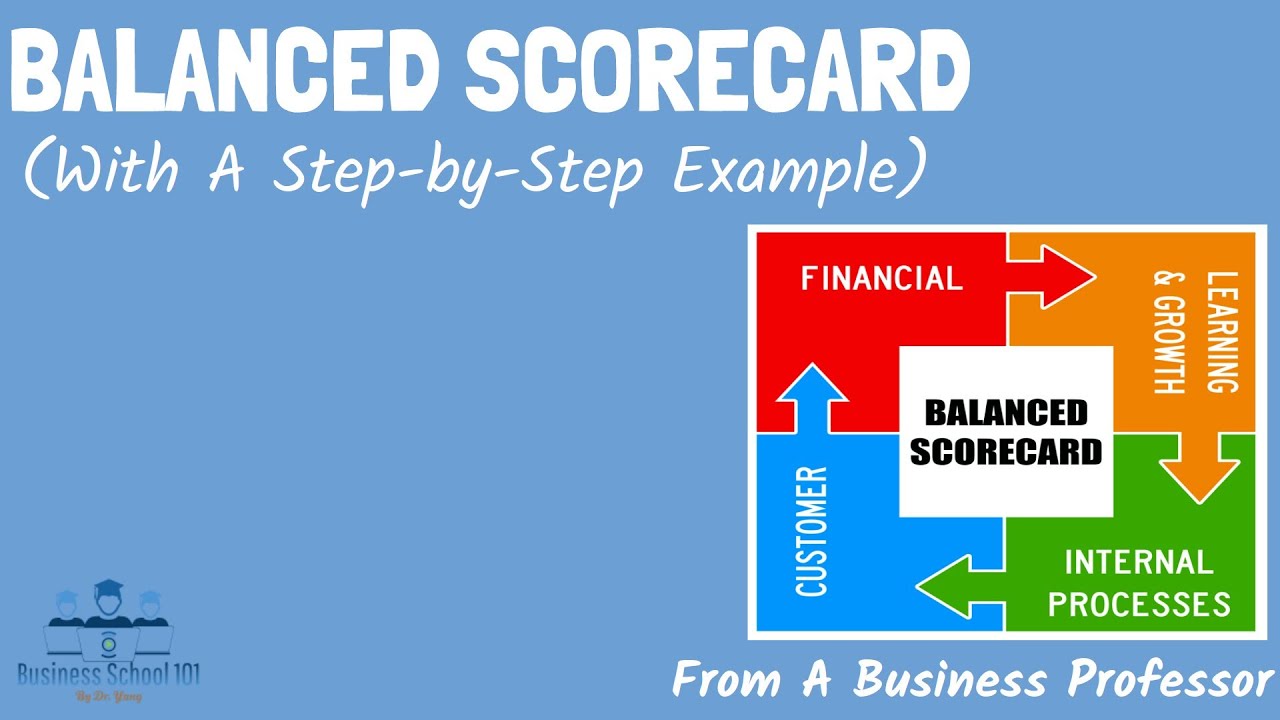
hello and welcome to today's lesson where we're looking at the balanced scorecard which is a strategic Performance Management tool used by management teams to set and measure performance in a way that is aligned with the strategy of an organization so why would you even want to use a balanced scorecard in the first place well there are several reasons including that they allow you to Monitor and communicate progress towards your strategic targets they allow you to link everyone's day-to-day work to the strategy and vision they help you prioritize your projects products and services and they increase
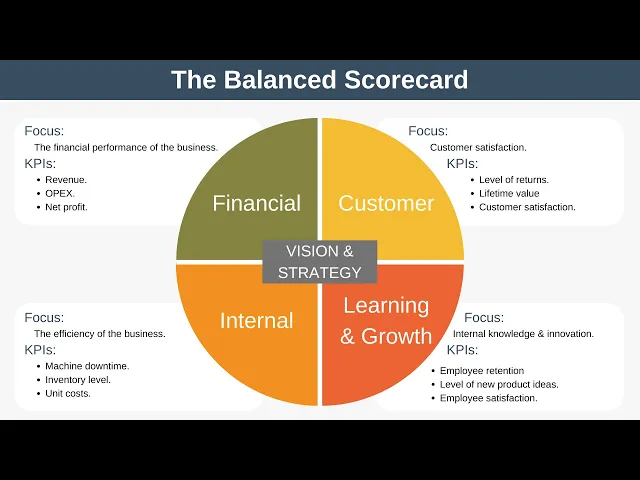
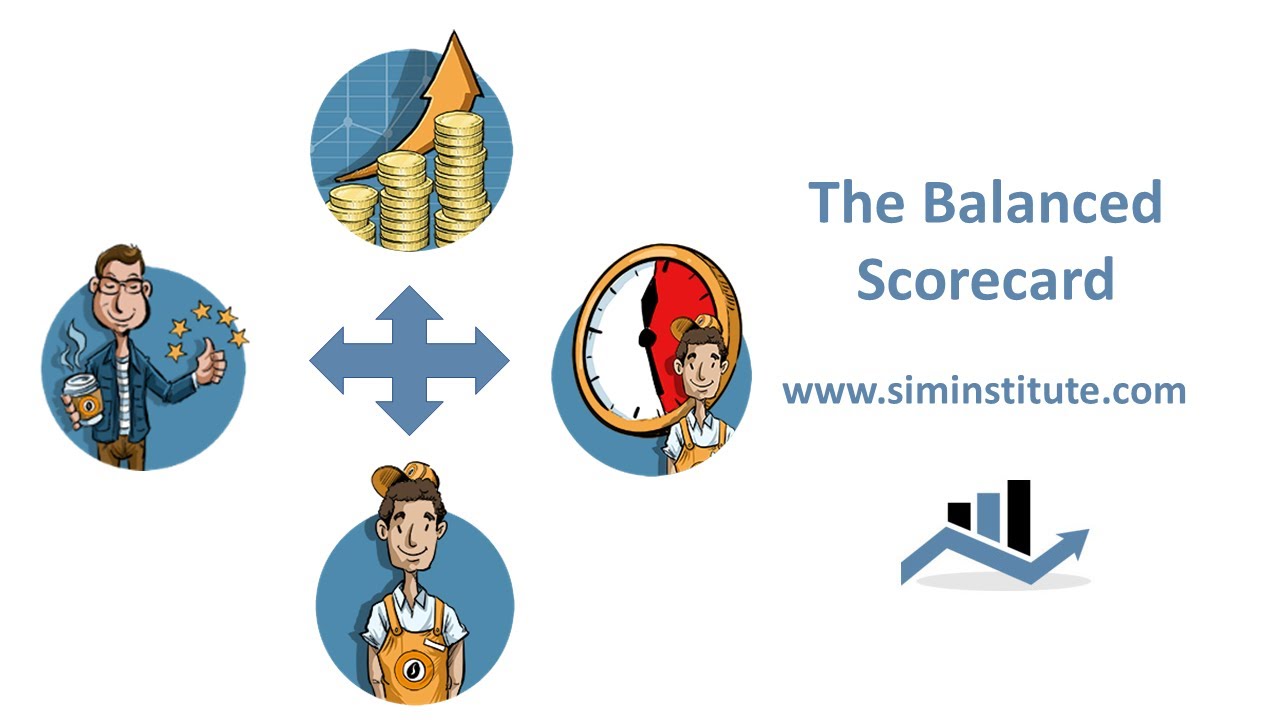
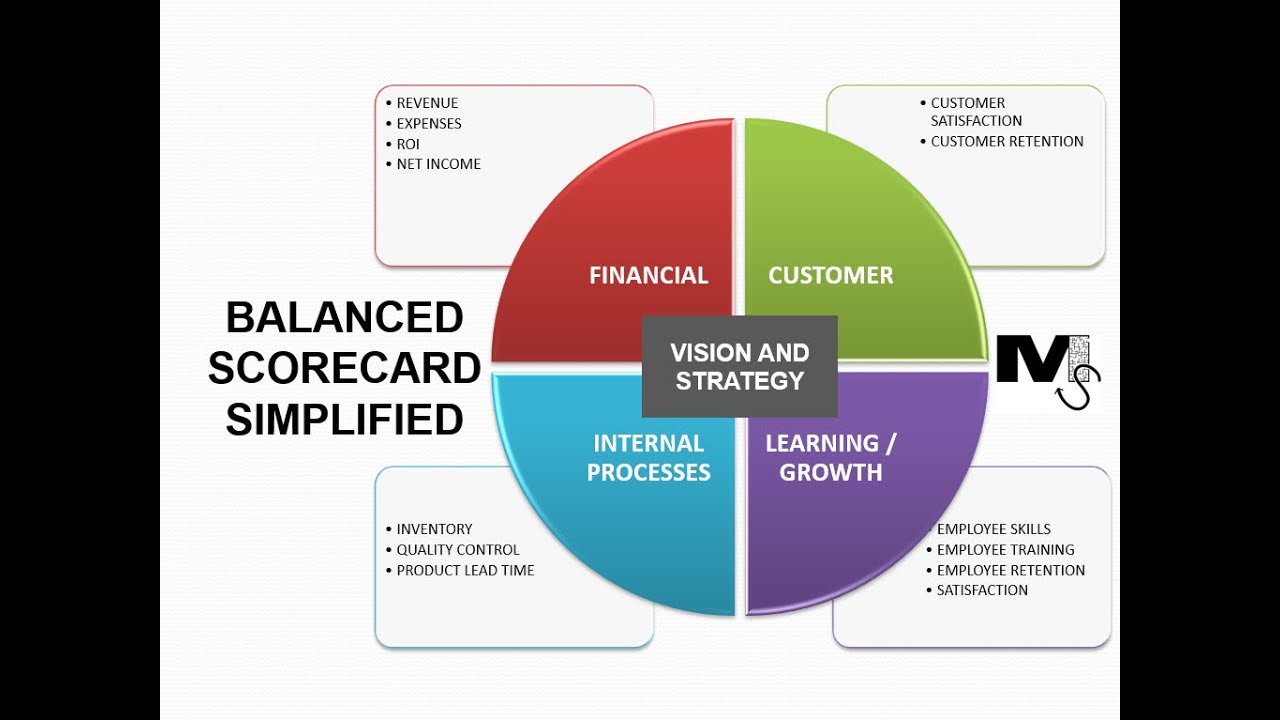
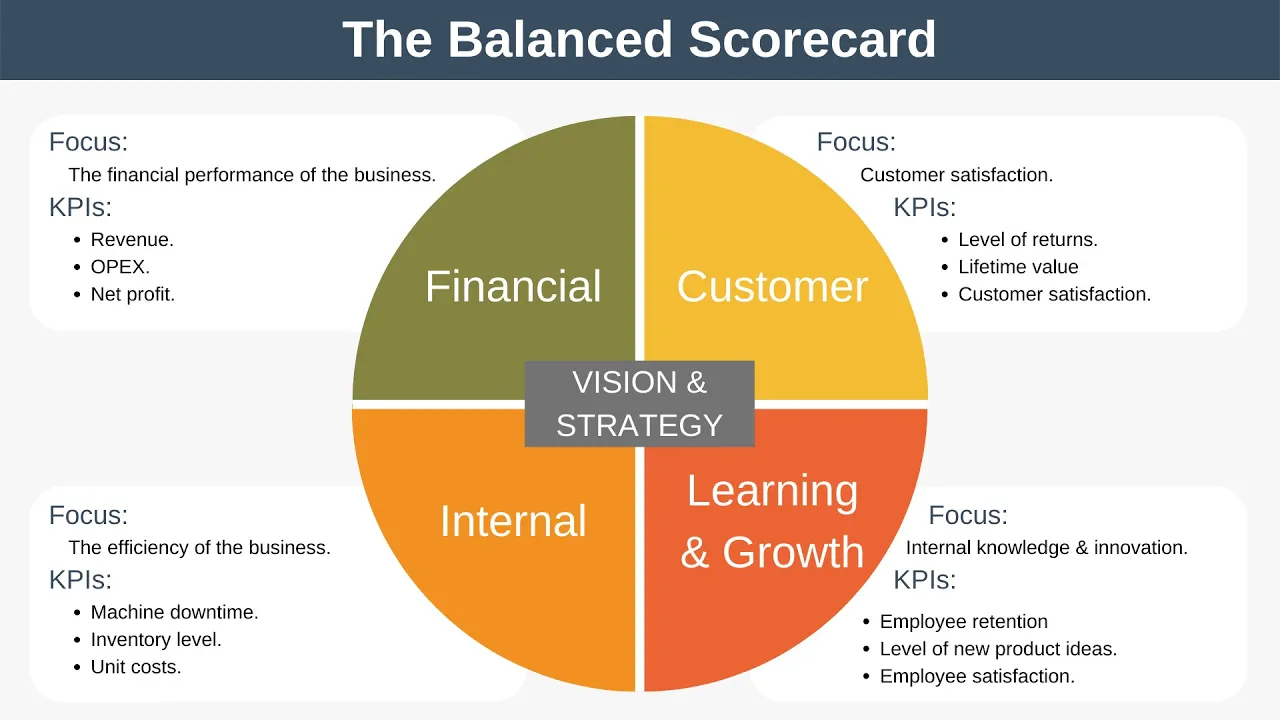
Financial Health increase customer satisfaction improve efficiency and increase knowledge and Innovation within your organization so with that let's jump in and take a look at a balanced scorecard now the balanced scorecard involves measuring the performance of a business from four perspectives all linked to the strategy and vision of the organization the characteristics of balanced scorecards include that they're firstly balanced meaning they consider both financial and non-financial performance measures equally important secondly they're a scorecard allowing you to track how you're doing thirdly they're high level enabling you to see the most important performance measures and finally
their long term meaning they link performance targets to the long-term vision and strategy of the organization so at the very heart of the balanced scorecard is the vision and strategy of your business these Define your vision for where you want the business to get to over the long term and your strategy to achieve that Vision you can't create a balanced scorecard until you have these cornerstones in place so let's take a look at each perspective in a bit more detail starting with the financial perspective so as you can see like all perspectives it contains what
you consider to be the most important key performance indicators or kpis for that perspective now the focus of this perspective is the financial performance of the organization and common kpis to use for this perspective include Revenue so how much revenue do you generate over the period Opex so your operational expenditures in other words how much you spend running the business and finally net profit how much profit you generate after subtracting all costs now there are lots of other kpis too you can choose whatever it works for you so next we have the customer perspective and
the focus here is customer satisfaction common kpis include level of returns so what percentage of goods you ship do customers return lifetime value what is the average revenue a customer will generate over their lifespan as a customer for you and customer satisfaction which is a measure of how happy your customers are with your products and services next we have the internal perspective and the focus here is the efficiency of your business in other words how much time money or resources are needed to run your business common kpis here include machine downtime so how many minutes
is critical Machinery not running over a set period inventory level how much merchandise do you hold on average and finally unit cost the total amount you spend to produce store and sell one unit of whatever it is that your business sells so finally we have the learning and growth perspective this perspective focuses on maintaining and growing your internal knowledge and Innovation so kpis here include employee retention what percentage of employees leave each year level of new product ideas how many new ideas do you generate over a set period and finally employee satisfaction which is a
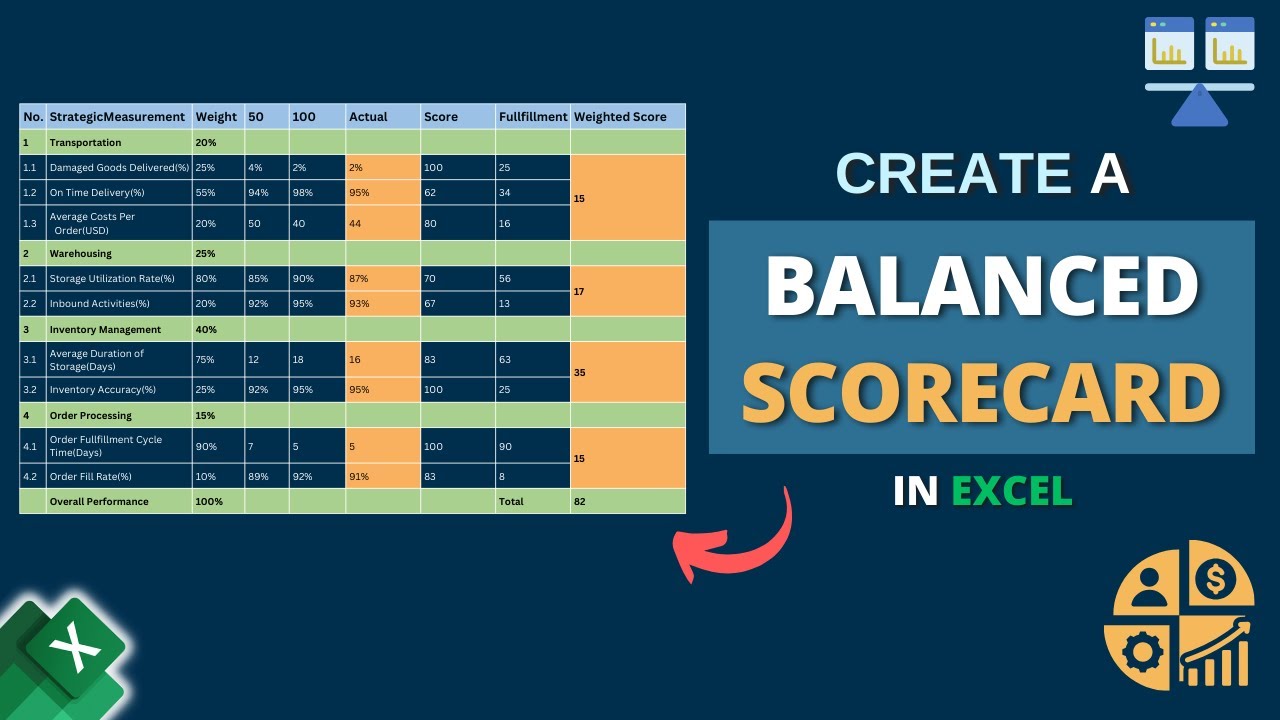
measure of how happy your employees are working for your organization so now that we've covered all that let's take a quick look at an example now we're not going to dwell for long on this example and the reason for that is because although it's based on the original version of the scorecard created by Kaplan and Norton in 1992 this isn't the most popular version of the scorecard in use today we'll look at that shortly so really all I want to point out here is that the key thing to take away from this example is that
not only have kpis been defined for each perspective but targets have been set and current performance is being tracked against those targets so here's the more Modern Way of creating a balanced scorecard which goes by the name of a strategy map now even though this introduces a few new Concepts we haven't covered yet it should actually be easier to use than the example we've just looked at why well because instead of plucking your kpis from thin air you're linking them directly to your strategy so for this example I want you to imagine that you run
a company that sells Furniture online and an example strategy map for such a company might look something like you see here so let's examine where this strategy map differs from the balanced scorecard we've already discussed so first we have a strategic destination section at the top and this section starts broad with your mission statement and gets more specific with each section finishing with strategic results so this is what each section means so firstly Mission so that's a statement defining what you want to do who you want to serve and how you want to serve them
so in this example you want to create functional furniture at an affordable price next we have your vision and that's a statement detailing where you aspire to be in the future in this case you want to create a better everyday life for 100 000 people every year next we have your strategic priorities these are the most important things your organization should focus on over a specific period of time usually three to five years now it's important to limit the number of strategic priorities you define because if you don't then not only will your strategy map
get very complicated but your strategy is going to be less focused so for this example you have two priorities first to improve the quality of your products and second to increase your brand awareness and the final section is strategic results and that is the desired end State at the end of a period of time so in this case you want every product you make to contain some kind of unique innovation and you want to double your Revenue so if we add the rest of the strategy map back in the other things you need to be
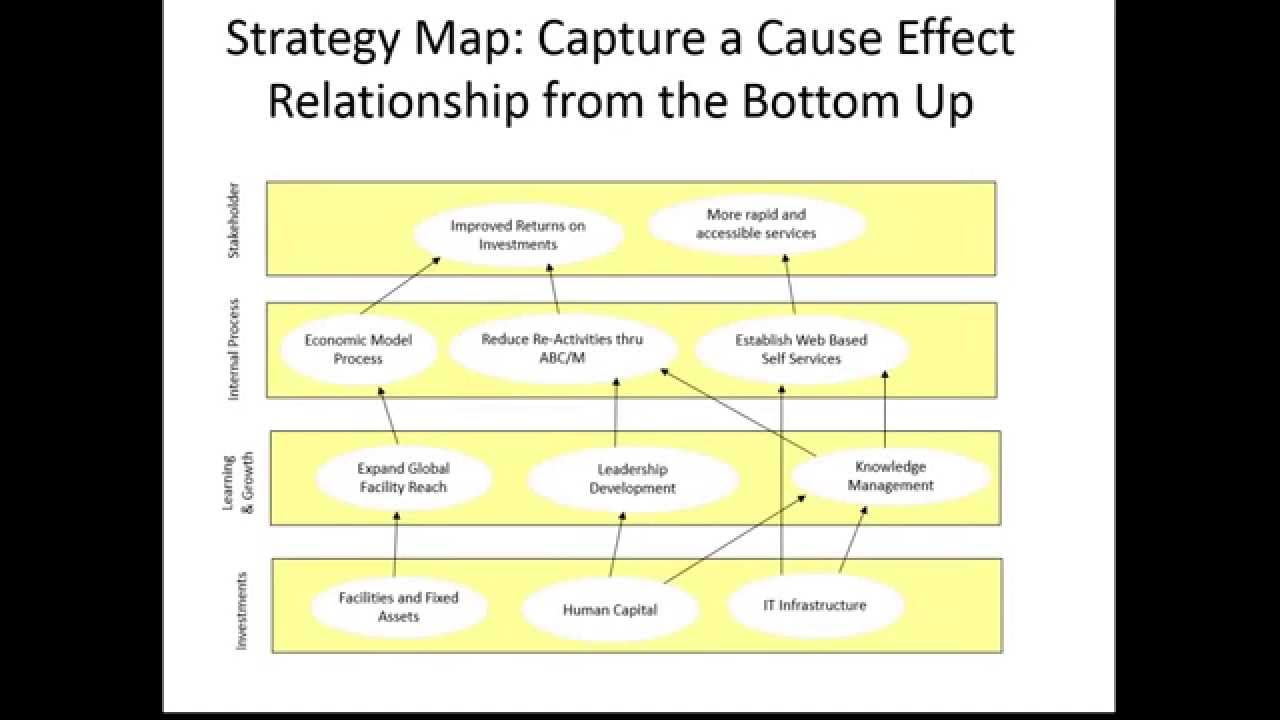
aware of are firstly linked strategic objectives that you can see here so in this section the idea is to select a few objectives for each perspective based on your strategy once you've chosen your objectives the next step is to link them to show cause and effect so for example here we have increased profitability and that depends on you increasing customer satisfaction which in turn depends on you building quality into your processes which in turn depends on increasing employee retention and improving your thought leadership now the benefit of doing this is that it brings sharpness and
focus to your strategy and makes it easy for you to select your kpis and your kpi targets now when you're choosing your kpis then you simply need to select one kpi for each of your strategic objectives that you're trying to achieve and then set a Target fridge the other thing to notice in this section is projects your kpis aren't going to improve on their own so the projects section allows you to list the initiatives and projects that you hope will move the needle for your kpis by the way if you'd like a copy of the
template used to create the balanced scorecard we looked at earlier or a copy of this strategy map template then you can find both of them by following the links below this video so you're a strategy map lays out your strategy and how you're going to make it happen now you can take that and Cascade it through your organization so that means that each functional unit within the organization takes the organizational level strategy map and creates its own functional unit strategy map that shows how the functional unit contributes to the organizational strategy and you repeat this
process until the strategy map has cascaded down the entire chain of the organization now as the strategy Cascades down objectives and kpis become increasingly operational and Technical the ultimate aim of cascading is twofold so firstly to ensure that every employee knows exactly how their work contributes to the overall strategy and secondly to align every employee within the organization to the strategy now there are several advantages and disadvantages associated with balanced scorecards in terms of advantages then essential strategic information is contained in a single place rather than spread around several documents or systems they align every
employee with the organization's strategy they ensure that your strategy is balanced across the four perspectives and finally they make communicating your strategy and measuring progress towards achieving your strategy easier in terms of disadvantages then creating a balanced scorecard and cascading it through your organization can take a lot of time every organization is unique and so each balanced scorecard must be tailored to each organization and finally if you try to do too much balanced scorecards and strategy Maps can get complicated very quickly so in summary the strategy map and balanced scorecard can help you set and
measure performance in a way that is aligned with your strategy the real strength of the models is that they ensure a balanced approach to creating kpis and then allow you to align everyone within your organization to those kpis so that's it for this lesson really hope you enjoyed it and I look forward to speaking to you again soon