Imagine you're a fashion photographer named 'Jeff', who has a crush on an aspiring model named 'Beck'. Curious about Beck's relationship status, you suspect that she might be dating her old friend named 'Ben' and go to see whether she's left any affectionate comments on his posts. You later realize that this was a mistake, as you are presented with hundreds and thousands of posts on Ben's profile, with no clue where to start.
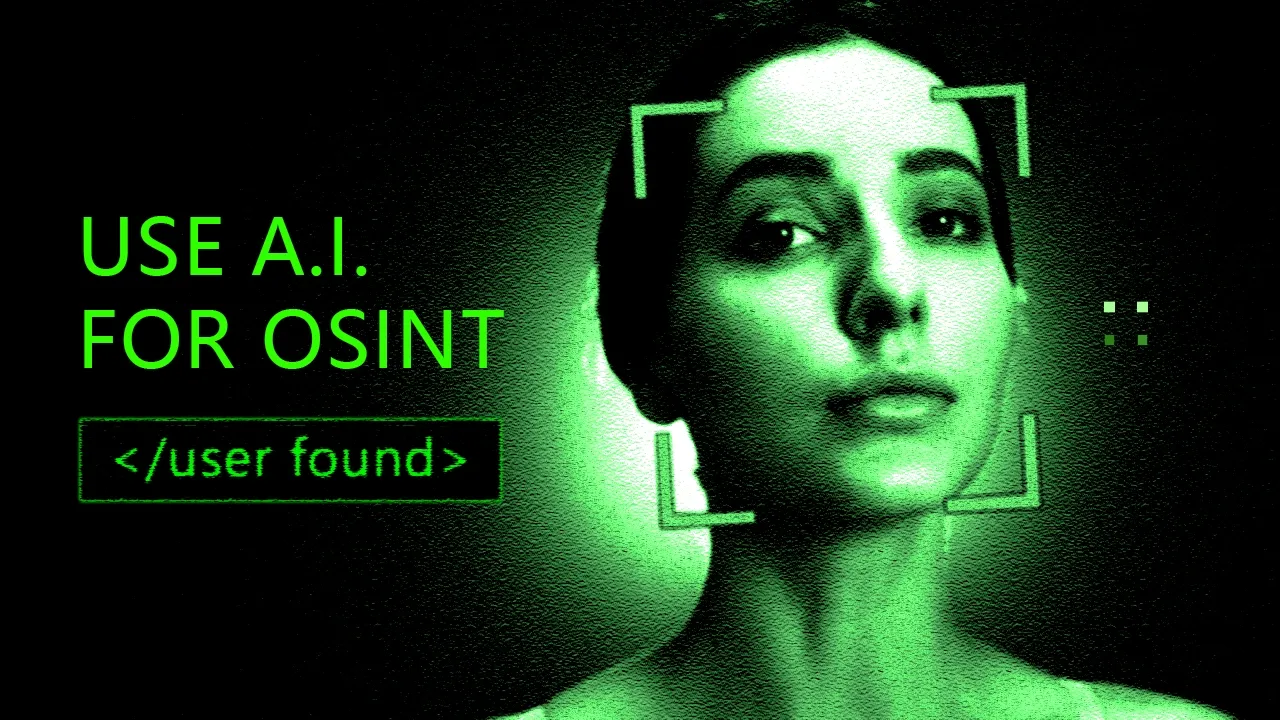
Welcome back to the 'OSINT for Beginners' series; I'll walk you through all the ways someone can use AI for OSINT - and give you a glimpse of just how much information can be found about someone, even if they're careful about what they share online. Okay so going back to our initial scenario, if we wanted to track down all the posts where 'Beck' had commented or was tagged in; it would be clear that going through every post on her friend's account would be impossible in this scenario; as it would require 'Jeff' to have a lot of free time on his hands, while possessing no self respect. .
What if we could automate this process of scanning Ben's account, and filtering out only the posts where Beck had interacted? 'Data Scraping' involves using a bot to automatically browse a website through multiple means; and then saving all that data into a structured format which can then be provided to ChatGPT for analysis or asking multiple questions. The reason why this can be so powerful beyond just searching for certain keywords or tracking down comments, is because a person can also use the data scraped from a profile to perform things like 'personality analysis' or 'behavior assessment' on someone; If you're interested in learning more, you can download this PDF that I recently created for $5 only.
It contains a step-by-step guide on how you can use my favorite data scraping tools to effectively extract data from multiple websites; and then use that data to uncover things like tracking a person's movements, or mapping out their social dynamics. ChatGPT can also be used to generate customized 'Google Dorks' or search queries; which can then be used to look for things like PDFs or court documents containing a target's legal name, I'd recommend you checking out this video to learn more. The reason why it's particularly useful rather than using pre-existing search queries from websites like the 'Google Hacking Database' is because you can ask ChatGPT to tailor these search queries according to your specific needs, or suggest alternative keywords that you might not have considered.
If you're able to get your hands on multiple social media profiles belonging to a subject, you could also ask ChatGPT to combine and cross reference the data between them to provide more accurate results; and while this may require a bit of time and effort, the precision or reliability of these results will make it all worthwhile. ChatGPT can also be used to draft persuasive messages or social engineering scripts based on a target's profile; and while this falls more into the category of how hackers might use AI rather than using AI for OSINT, I decided to include it here to raise awareness against the different ways that emerging AI models can be misused. Imagine you're trying to find someone, but all you have is an old photo of them - back from when they were much younger.
You're wondering if there's a facial recognition tool that can recognize them and search for them online, even after all this time. Well that's exactly what you can do with this incredible tool called 'Lenso. AI' 'Lenso.
ai' is a cutting edge technology, that uses AI to perform reverse image searches across the internet; and while it excels at facial recognition tasks like the one I just talked about, I found it particularly useful for its ability to categorize multiple search results into different categories; which can help you in streamlining your investigative process, while enabling you to focus only on the most relevant searches according to your specific needs. Its ability to identify whether a photo has been cropped or edited allows you to not only track down the exact copies of an original image, but also helps in locating modified or altered versions of a copyrighted material; which may have been stolen or shared online. The tool's advanced processing abilities enables it to search for a specific object or landmarks within a photo to determine its location, and while this is a feature that's also available in other search engines, Lenso's use of AI allows it to recognize an object from different angles, and identify it even if the photo is poorly lit or blurry.
I personally like their 'Filter' option, which allows you to not only search for a photo on a particular website; but also helps in refining your search results by focusing on specific keywords, which can help you in finding images that match certain descriptions or different themes. In addition to searching for a person independent of their age, Lenso. ai also enables you to search for a person even if they've applied a face filter on, and while its effectiveness varies based on the type and extent of the filter used, it can still provide a high degree of accuracy by focusing only on the authentic parts of facial features.
I'd like to mention that this video is also sponsored by Lenso. ai, you can check out their platform by clicking on the link in the description down below. Anyway guys so that's it for the video, if you have any questions, or would like to share some more techniques with the community, feel free to comment in the comments section down below and I'll see you in the next one.