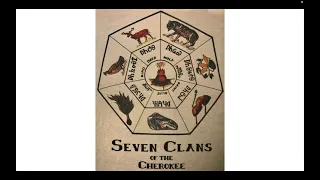
history is a living tale told by men and women who existed breathed loved lived and died within its pages their acts of courage wisdom cowardice foolishness emotion and reason are documented for the generations that come after to know and maybe learn something from or repeat it all again in a never-ending Circle today we'll learn a little bit more about the history of one of America's largest tribes the Cherokee their start their lives and their current challenges as we try to know more about this important piece of American history the Cherokee tribe developed on the Southeastern Woodlands of the United States Cherokee is a word in the Iroquoian Language tree as the Cherokee are of Iroquoian descent their name means people of different speech many prefer to be known as kituwa or slagi the Cherokee numbered around 22 and a half thousand individuals around 1650 in an area approximately forty thousand square miles of the Appalachian Mountains parts of present-day Tennessee North Carolina and South Carolina the Cherokee Nation was composed of A Confederacy of symbolically red war and white peace towns the chiefs of individual red towns were subordinated to a supreme Warchief while the officials of individual white towns were under the Supreme peace chief the peace towns provided Sanctuary for wrongdoers war ceremonies were conducted in red towns Spaniards that met the first of the Cherokee found a resourceful and well-established people living in the Appalachian Mountains then the Cherokee possessed a variety of stone implements including knives axes and chisels they wove baskets made pottery and cultivated corn beans and squash deer bear and Elk furnished meat and clothing Cherokee dwellings were bark roofed windowless log cabins with one door and a Smoke Hole in the roof a typical Cherokee Town had between 30 and 60 such houses and a council house or general meetings were held and a sacred fire burned in the early stages of America's colonization the Spanish the French and the British colonizers sought the Friendship of the Cherokee tribe the tribesmen ultimately allied with the British forces even helping them on the French and Indian War a conflict that raged between 1754 and 1763. that didn't stop the British from turning against the Cherokee when their scorched Earth policy was put into place however even Cherokee and other British Allied Indian towns were destroyed the Cherokee had allied with the British because the French had done the same with other tribes that were historical enemies of the Cherokee as a result of the scorched Earth policy and its destruction on Cherokee territory the tribal economy was seriously disrupted in 1773 the Cherokee and the creek had to exchange a portion of their land to relieve the resulting indebtedness sitting more than 2 million acres in Georgia through the Treaty of Augusta in 1775 the Overhill Cherokee were persuaded at the Treaty of Sycamore Shoals to sell an enormous tract of land in Central Kentucky to the privately owned Transylvania Land Company although land sales to private companies violated British law the treaty nevertheless became the basis for the colonial settlement of that area during the American war of independence the Transylvania Land Company supported the rebs while the Cherokee supported the crown thinking they'd be more inclined to Institute boundary laws than the new government the Cherokee conducted two attacks on the colonists held forts of Eaton station and Fort Watauga in July of 1776 despite British unauthorization and even attempts to restrain them under the command of Cherokee Chief dragging canoe 700 Indians went to battle but were easily fended off by the colonists and had to retreat in disgrace those Reeds were the first in a series of attacks by the Cherokee Creek and Choctaw on Frontier towns eliciting a vigorous response by militia and regulars of the southern colonies during September and October at the end of that time Cherokee power was broken their crops and Villages destroyed and their Warriors dispersed the defeated tribes sued for peace in order to obtain it they were forced to surrender vast tracts of territory in North and South Carolina at the Treaty of Dewitt's Corner May 20th 1777 and the Treaty of long island of Holston July 20th 1777. peace reigned for the next two years when Cherokee raids flared up in 1780 during the American preoccupation with British Armed Forces elsewhere punitive action led by Colonel Arthur Campbell and Colonel John Sevier subdued the tribe again the second Treaty of long island of Holston July 26 1781 confirmed previous land sessions and caused the Cherokee to yield additional territory after 1800 the Cherokee assimilated most of the American Settler culture they modeled their government after the United States aided Andrew Jackson's effort in the creek War adopted Colonial methods of farming weaving and Home Building and most notably developed the syllabary of the Cherokee language in 1821 through the efforts of Sequoia a Cherokee who had served in the U.
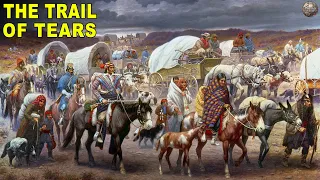
S Army in the creek War the celebrate a system of writing in which each symbol represents a syllable was so successful that almost the entire tribe became literate within a short time a written Constitution was adopted and religious literature flourished including translations from the Christian scriptures the Cherokees rapid acquisition of settler culture did not protect them against the land hunger of those they emulated when gold was discovered on Cherokee land in Georgia agitation for the removal of the tribe increased in December 1835 the Treaty of new akota signed by a small minority of the Cherokee ceded to the United States all Cherokee land east of the Mississippi River for five million dollars the overwhelming majority of tribal members repudiated the treaty and took their case to the U. S Supreme Court the court rendered a decision favorable to the tribe declaring that Georgia had no jurisdiction over the Cherokee and no claim to their land Georgia officials ignored the Court's decision President Andrew Jackson refused to enforce it and Congress passed the Indian Removal Act of 1830 to facilitate the eviction of tribal members from their homes and territory removal was implemented by 7 000 troops commanded by General Winfield Scott 's man moved through the Cherokee territory forcing many people from their homes at gunpoint as many as 16 000 Cherokee were thus gathered into camps while their homes were plundered and burned by local euro-american residents subsequently those refugees were sent West in 13 Overland attachments of about 1 000 per group The majority on foot thus began the Trail of Tears a sadden chapter in Cherokee history though the U. S government had allocated funds for the operation they were terribly mismanaged and with inadequate Food Supplies shelter and clothing the Cherokee were left to face the frigid March towards what is nowadays Northeastern Oklahoma the Cherokee had to pay to be ferried across Rivers paid to Cross Farms even paid to bury their dead their trip lasted for 116 days and over 4 000 Cherokee died on that suffering Trail after the trip their troubles didn't end however settlement was on other Cherokee land and Osage land from Indians that had moved there after the Treaty of 1817.
as a result of the struggle for territory after the Trail of Tears the Cherokee feuded with the Osage and amongst themselves with murders and feuds hurting the Cherokee community in Oklahoma the Cherokee joined four other tribes the creek chicksaw Choctaw and Seminole all of which had been forcibly removed from the southeast by the U.