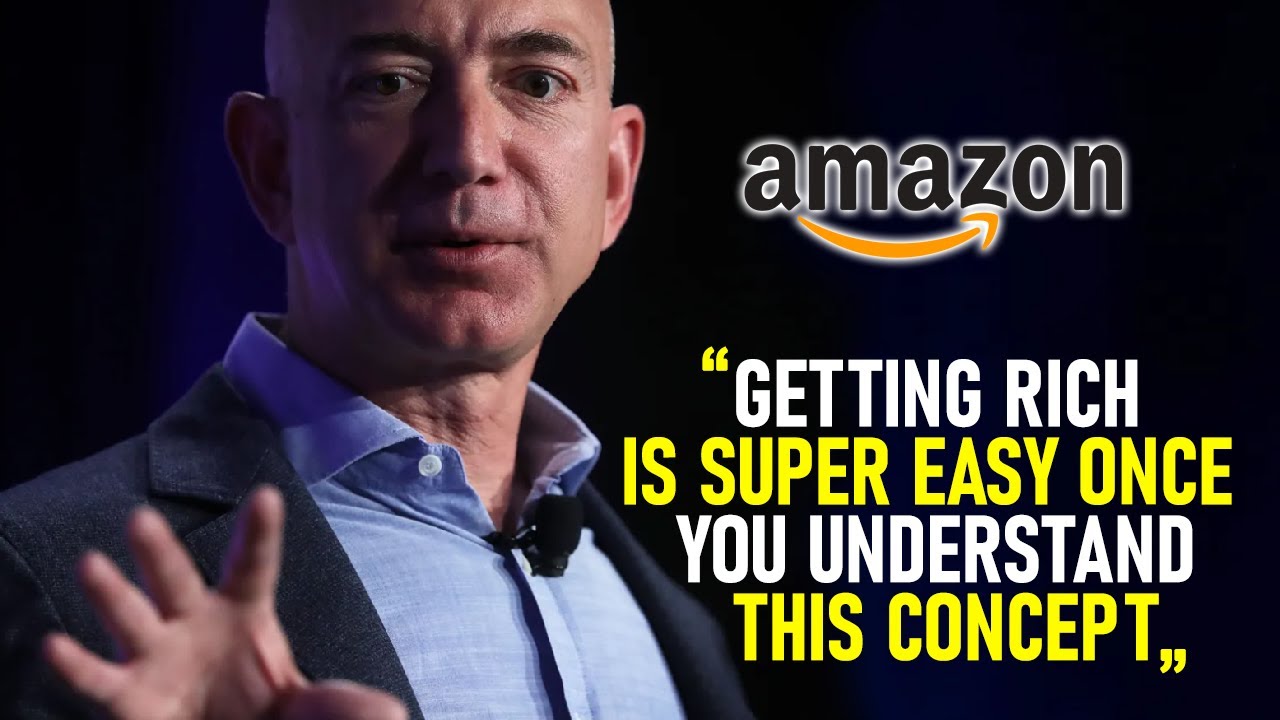
Like love him. Hate him. Question whether it's even moral for one man to have.
All that wealth or even your own conflicting feelings about how good he looks in a gilet and sunglasses. There's no denying that. There's a hell of a lot to learn from the world's first centi-billionaire, and one of the richest men in history.
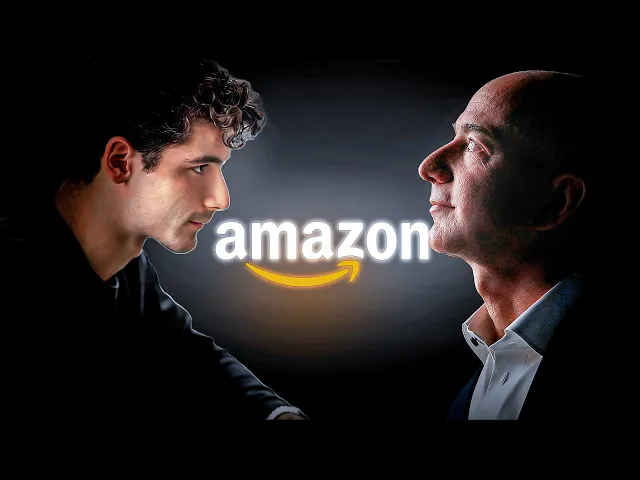
So to honor his retirement as CEO of Amazon, I want to make a video about the three things I learned from the man, the myth, the legend, Jeff Bezos. So let's get straight into it. The first is communication and not communicating well, not communicating more, but just not communicating full-stop.
You see in the late nineties, Jeff Bezos was actually at a company retreat for Amazon employees and a small group of executives actually stood up and made a presentation to the room they called for better organization between the various divisions of the organization. Now here's where all admit, you know, if one of my employees in my agency stood up and made a presentation like this. I probably would have made the wrong decision.
You know, if they said that there were issues with communication, I might agree, set up more regular team calls, you know, set up a Slack channel for the area of communication that they think we can do better with and all in all accommodate for the act request. But that's not what Jeff Bezos did. Instead.
He got angry. David Risher, former vice-president of Amazon recalls. The Bezos stood up with a red face and the blood vessel in his forehead, pulsating and spoke.
The famous words. Communication is terrible. More specifically, communication is a sign of dysfunction.
It means people aren't working together in a close, organic way. We should try to figure out a way for teams to communicate less with each other, not more. And from that moment, a lot changed at Amazon.
Bezos became obsessed with centralization and we'll get onto what that means in just a second. But they also implemented a new rules for team meetings and communication. They call it the two pizza rule, unless two pizzas can comfortably feed everyone in a meeting room.
There are too many people, and it's a great rule of thumb that reduces meetings to key decision makers and ultimately reduces communication. And the founder of Amazon, isn't the only ecentric megalomaniac, who espousses the same sort of views around communication. Take Elon Musk.
For example, you see back in 2018, when Tesla was under immense stress to ramp up production on their Tesla model, threes, you all must send out a company-wide email to try to improve productivity within his employees. And a couple of things stood out to me. First excessive meetings are the blight of big companies, and almost always get worse over time.
Second, get rid of frequent meetings unless you are dealing with an extremely urgent matter. And third communication should travel via the shortest path necessary to get the job done, not through the chain of command. Now, the competing CEOs, aren't exactly known for being the best of friends.
You're competing with the likes of Jeff Bezos, uh, in, uh, Jeff who, and whilst they can both agree on their stances when it comes to communication, they definitely don't exactly see eye to eye when it comes to one of Jeff Bezos's biggest pet hates. And this is actually the thing that I've learned from Jeff Bezos, that centralization or more accurately power of decentralization. But before we can dive into this topic, we have to define what this actually means.
Decentralization is a bit of a buzzword, and it's being applied to everything from law firms to one of the most centralized companies on the planet. Facebook, in fact, it's one of those words, like the democracy that doesn't really have a definition. So it's easy to use and misuse, one of the applications where it's almost certainly accurate is when it comes to Bitcoin, unlike traditional banks and currencies, where values and transactions are manipulated and controlled by a core group of organizations or governments in Bitcoin, there is no centralized structure.
Every time you buy or sell a Bitcoin, the process must be verified by a sequence of servers. And these aren't owned by banks. They're owned by individuals and each server is as powerful as the next one.
No one server can command or lie to the others. And look, this is obviously an incredibly basic explanation of one of the most advanced pieces of technology in history, but it's also analogous to how Amazon is run. This is what a traditional company looks like.
It has a CEO at the top. From there, it has divisions and departments and vice presidents and managers and assistant managers and executives. And will you get the point?
Elon Musk famously has 27 direct reports to him alone. This doesn't just lead to issues with communication. It also damages enterprise within the business.
For example, let's say someone wants to set up a new division or create an income stream within the business. They can't just act like a normal business owner. They have to get permission and speak to their manager who need to sign off from their manager and every new person who you hire will have to be hired through the company-wide HR policy and use the same expenses system.
It's a bureaucratic nightmare. Now, Amazon doesn't have this problem. Instead it allows each division to spin off and operate by its own rules.
No dictates from above hide a de-centralized corporation. And the benefits are obvious. Amazon can expand rapidly its own limits are the rate at which it can hire and recruit.
This approach is one of the reasons why Amazon has served billions of customers worldwide. Now, the other reason, and the third thing I learned from Jeff Bezos is customer obsession. I can say with almost a hundred percent certainty, that if you watch this video, you're an Amazon customer.
So before I tell you what I mean by this, ask yourself the question. Is there a company on this planet that gives you a better service? Whether it's one day deliveries, hassle-free refunds or the hundreds of little ways they've improved my life personally, I can't think of a single one to illustrate this point.
I'm going to refer to another one of the fun anecdotes in which Jeff Bezos features in 1999, when hammering out a partnership between Amazon and toys R us, every time the two companies met a single chair was left purposely unoccupied. Now this wasn't because of superstition or a careless interior decorator in fact basis would tell every single person in the room repeatedly that the chair was not empty. It was there to symbolize the customer of each company and what they would want from a deal.
It, this kind of attention to detail that has justified Amazon's own declaration, that they are the most customer centric company in the world. And by this, I don't just mean that if you complain, they'll give you a refund. I mean that unlike other companies that look at their competition and ask themselves how they could be more like them, what Amazon does and what drives them forward is quite frankly, they listened to their customers.
This means that Amazon is almost always at the forefront of innovation and constantly provides excellent customer service. Meaning that Amazon, it gets the benefit from something very special. Indeed it's called the flywheel effect.
And to keep it simple, it means that every time Amazon makes a customer happy, that customer tells another customer about their experience, bring Amazon, another customer. And every time they offer a low price, they sell more meaning they can offer lower prices and that every time they offer lower prices, they make customers happy. It's basically a virtuous cycle that is echoed in nearly all successful businesses.
Ladies and gentlemen, those are the three things that I learned from Jeff Bezos that helped me scale my businesses to multi seven figures a year at the age of 21. The first time that I read about these incredible lessons was a few years ago in a fantastic book called the everything store by Brad stone. I highly recommend you pick it up.
You know, from Amazon. Hey look. Sure that video, I went ahead and picked out another special video that I know you going to find immensely valuable.
You can find it right there. I know you're going to love it. And I'll see you in the next.
One.