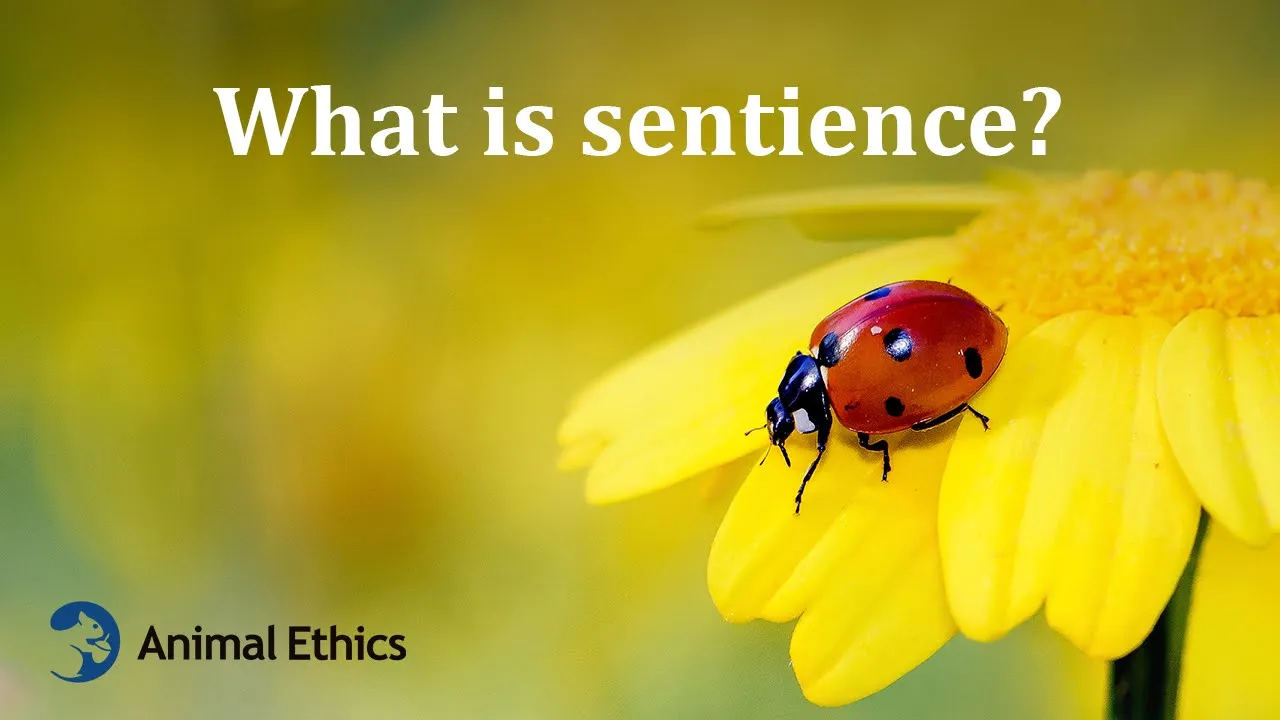
Sentience is the capacity to have experiences. Another word for this is “consciousness. ” A conscious being is a subject of experience, meaning an entity that can experience what happens to itself.
Another way of describing this is to say that there is “something it is like to be” a conscious animal. Animals can be subjects of experience if they have physiological structures that can give rise to consciousness. Conscious beings can experience something external in the environment, internal to the body, or just a thought or memory.
When a being is no longer conscious, it can no longer have experiences, so it ceases to be an individual. In other words, it is no longer a subject of experience. If someone has an accident that irreversibly destroys the capacity for consciousness, the subject ceases to exist, even if the body is still alive.
A synonym that is sometimes used for “conscious” or “sentient” is “having mental states. ” As the term implies, a mental state can only be experienced by a mind. A state of mind is any kind of experience, even a very simple one such as feeling a physical pain or pleasure.
This should not be confused with the complex cognitive functions associated with thinking and learning. Having certain complex intellectual abilities is not necessary in order to have a mental state; all that is required is being sentient. In other words, whether a being experiences the world is different from whether they can mentally solve certain problems.
Note that some of the criteria we use for assessing whether a being is sentient, that is, conscious, may involve some degree of cognition. If an animal is able to perform complex cognitive tasks, that’s an indirect indication that their mind is powerful enough to support sentience. But cognition is not a primary reason for thinking that a being is conscious.
Consciousness shouldn’t be confused with self-consciousness, that is, being conscious of ourselves. An animal may not be conscious of herself and could still have other kinds of experiences. People sometimes make the argument that sentience requires self-consciousness, but this is a minority opinion.
The experiences beings can have differ greatly. Some of them are sensations, such as tastes, sounds, or smells that we like or dislike, and feelings of pain. There are also experiences that are not related to the senses, but rather to thoughts, like when we remember or imagine something, or when we have a problem.
Others are related to emotions, such as joy, fear, distress, and satisfaction. Some experiences can be felt as pleasant or enjoyable in some way, while others can be experienced as unpleasant. Broadly speaking, positive experiences can be referred to as “pleasures,” and negative experiences as “suffering.
” This terminology makes it simpler to talk about, but it’s important to keep in mind that it refers not only to good and bad physical sensations, but to all kinds of positive and negative experiences. The positive or negative aspect of an experience, what makes us feel good or bad, is called the “valence. ” The fact that our experiences are valenced is what makes us consider them morally relevant.
We can be helped or harmed, and so can others. It also makes the question of which beings are sentient an important and urgent one. When we say that suffering is bad by definition, we mean that it is experienced as bad.
Of course, one can have a negative experience, such as a pain, that might be good in an instrumental way. The pain of a burn from a stove is useful because it causes us to be careful not to get burned again. Although the pain itself is negative, the outcome is positive.
In fact, it is the negative experience of pain that makes it instrumentally good, because that is what motivates us to get out of a situation that is bad for us, or to avoid repeating it. It’s similar when something we enjoy harms us, such as when we eat too much rich food. In this case, something that in itself is enjoyable is instrumentally negative.
Now, we’ll turn to the problem of consciousness. The problem of consciousness can be formulated as follows: how is it that, from a purely material basis (a brain or a centralized nervous system), consciousness emerges? Answering this this question requires knowing what structures must be present in an organism and how they would need to function for consciousness to be possible.
There is no reason to suppose that only a human-like central nervous system will give rise to consciousness, and there’s a great deal of evidence that very different types of animals are conscious. An example is bird brains, which have many structural similarities to mammals’ brains, but different arrangements of neurons. Yet the brain circuits of birds seem to be wired in a different way that creates a similar effect in terms of consciousness.
Due to the difficulty of solving the problem of consciousness, it is unlikely to be solved in the near future. Given the current information, it is impossible to know with certainty which beings with centralized nervous systems are conscious. We know that without a centralized nervous system, animals cannot be conscious, but we don’t know what degree of complexity is necessary.
We know that sentience doesn’t require a brain configuration like ours, like that of mammals, or even like that of vertebrates. Even though invertebrates do not have all the same brain regions that we have, they often have functionally similar regions, which should also be able to support consciousness. There is nothing about the particular way our nervous systems are organized that is necessary for consciousness to be present.
Rather, there may be vastly different types of nervous systems with centralization. Another reason to think that having a brain like ours is not necessary for consciousness is that humans have not only complex thoughts, but also simple experiences like feeling pain. The ability to have complex thoughts is not a necessary part of consciousness, which suggests that the type of nervous system necessary for consciousness could be much simpler than ours.
In fact, it could be quite simple. Therefore, sentient animals may be very numerous. Another problem is that the only consciousness we are directly aware of is our own.
We are not directly aware of the experiences others have. But we can infer that they are conscious in light of all the evidence we do have. This inference happens with humans, and with nonhuman animals as well, because they share many relevant features that indicate the presence of consciousness.
If the most straightforward interpretation of someone’s behavior and neurobiology is that they are conscious, we should think that they are conscious. For example, we associate certain behaviors with pain, such as crying and grimacing. Many nonhuman animals exhibit similar indications of pain.
Additionally, when an animal’s behaviors are very complex, it can indicate conscious thinking. The key issue here, however, is physiology, that is, whether the animals’ bodies are wired in ways that make the presence of consciousness possible. As mentioned above, we do not understand the underlying neural basis of consciousness.
We can’t directly test for consciousness yet. Instead, we have to use whatever indirect evidence is available to make an educated guess. The key factor seems to be the presence of a nervous system that can process information in a way that makes experiences possible.
We will now apply the criteria we have to different groups of animals in order to gain a better understanding of which of them could be conscious. The clearer cases are those of animals who have a centralized nervous system with a central organ (basically a brain) that is quite complex. The centralization allows these nervous systems to process information in complex ways.
As a result, it’s no surprise that animals with such nervous systems can have a wide range of behaviors. This group of animals includes vertebrates and invertebrates (such as mollusks like octopuses and arthropods like bees). As we’ll see, all available sources of evidence point towards these animals being conscious.
Many animals have centralized nervous systems with a brain that is not large and complex. This includes arthropods, among which there are insects, arachnids (like spiders), and crustaceans (like lobsters and crabs). There is important evidence to conclude they are conscious as well.
Not only does the organization of their nervous systems seem to be sufficient for giving rise to consciousness, but their behavior also seems to support this. In their everyday lives, they behave in varied and changeable ways to do things such as getting food or avoiding predators. This suggests the kind of flexible behaviors that can only occur in conscious beings.
There are other animals who have minimally centralized nervous systems without a brain. They include, for example, gastropods like snails, bivalves such as mussels, and other animals with a small number of neurons like certain nematodes. In these cases, there can be doubts about whether they are sentient or not.
Given the problems involved in determining the basis of consciousness, we cannot rule out the possibility that they are sentient. We’ll discuss invertebrate sentience in more detail in the next section. Some people have a hard time understanding that certain kinds of animals could be sentient, especially when they look much different from us or are much smaller than we are.
But we should keep in mind that thinking less of someone based on mere looks is a bias that we should try to avoid. If these animals meet the criteria that indicate they could feel pain or pleasure, we should conclude that they probably are sentient. It does not matter what they look like.
We know that sentient animals, human and nonhuman, have experiences that are positive or negative. Since the problem of consciousness will likely remain unsolved for many decades or longer, we should act on the assumption that any animal with a centralized nervous system could be sentient. We should consider the likelihood that they are sentient, and that we can affect them through our actions, so we should give them moral consideration.
Finally, there are living organisms that do not behave the way animals with centralized nervous systems do, and that lack the physiology to carry out the functions that nervous systems perform. Examples are plants, fungi, and protists, as well as some animals such as sponges, that don’t have nervous systems. These beings don’t meet the criteria for the possibility of sentience.
One final note: When we look at animals, we consider particular structures that can give rise to consciousness. But that does not mean that animal-like nervous systems are necessary for sentience. Future beings such as artificial intelligences could have central processing systems that are also able to carry out the functions that give rise to consciousness.