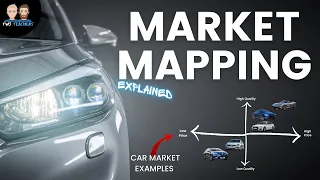
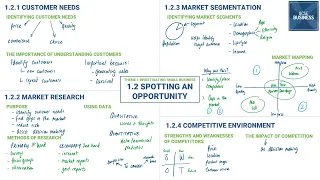
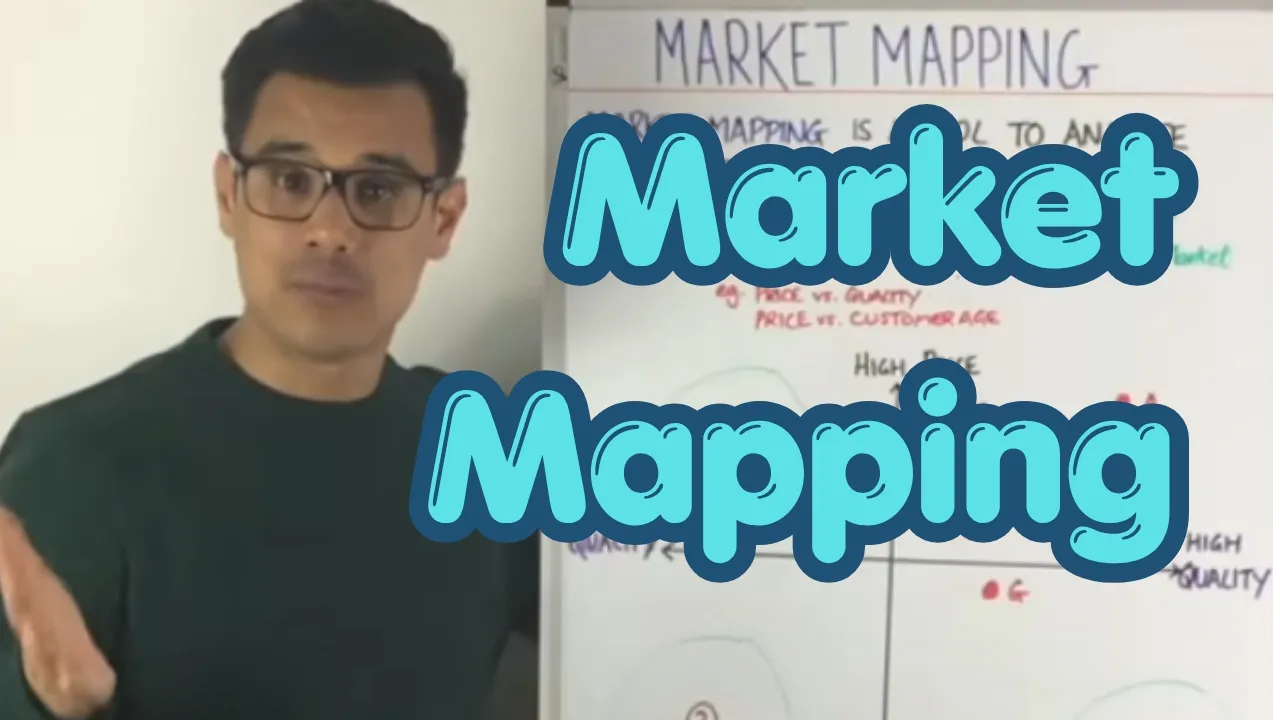
let's have a set of market mapping so market mapping is a tool you can use to analyze competition in a specific market that market could be the airline market or the chocolate bar market or any market the key is the market mapping gives you an output and that output is a market map and the market map will have two variables quite commonly it will have price as one of those variables but it doesn't have to be it could be price versus quality or price versus customer age let's take the variables of price and quality for
the specific market that is the airline market well you would plot that onto your market map and you can see it here so we've got price on this axis and quality on this axis on this side we've got pie price and at the other end the scale we've got low price and here we've got high quality and here we've got low quality so this is our market map for the specific market there's the airline market aeroplanes and these red dots here in this quadrant days high price high quality are the competition in this case the
airline companies so you can see that we've got ABCDE there are all in high price high quality which kind of intuitively makes sense but what we learn from this is that this area in this quadrant is quite saturated there's lots of competition all doing the same thing they're providing a high quality service for a high price so high price high quality you can see it looks here overcrowded it looks saturated so maybe you could have used a market map to decide that you don't want to enter the market and be in this quadrant because there's
lots of competition lots of competition meaning you may have a lower sales so what else can you learn from doing this market map well you can see that there seems to be gaps in the market there's a gap in the market here for high quality low price there's a gap in the market here for high price low quality and there's a gap in the market here number three for low quality low price let's take a look at each of these gaps in the market which is exactly what you do when you're using market mapping to
make decisions so number one high quality low price well that seems like a customers dream to have high quality low price but maybe doesn't make financial sense if you're the business because high quality suggests high costs and low price might mean low revenue so maybe this is an area that you can enter because your costs might outweigh your revenue might be impossible to make a profit so you could analyze another gap in the market maybe you analyze the quadrant here number two which is whether the clear gap in the market of high price and low
quality and then you might do market research which is the important thing about market maps is you should validate it gaps in the market through market research you do some market research here and probably you're going to find out that customers are not willing to pay a high price to get low quality so maybe you've got no demand here but your market research you've done because you kind of insurance in before this you've used market research to back that up and it's come back that there's no demand so then you look at number three gap
in the market number three no one seems to be in the low quality low price end of the market you do some market research because you've done your market map you found your gap in the market and off the back of that you find there is actually high demand in the airline market for low price flights which provide not the greatest quality but low quality maybe they just get you from A to B but you've done your market map you've found you gap in the market and then you've decided you need to go in and
this is the area that you want to answer and this is exactly what Ryanair easy to have done they've entered the low price and the kind of the budget end of the airline industry and being very successful at it and the reason potentially that they've been successful at it is that if you find the gap and you enter it well you can develop your product but then it's likely you're gonna have a low competition because you've already mapped it onto a market not much competition here less competition you're probably going to get higher sales as
a consequence and so therefore you get more revenues and hopefully more profit so you might not be just using market maps to decide where you're going to enter a market it might be that you're an existing business in a market and you're trying to work out if you want to move to a different quadrant maybe you've decided that you're not being successful providing in this area and you want to move elsewhere so you could use market maps to change your product range and you could find a new segment that you want to target your goods
app maybe it could be a different market map in this case maybe it could be priced this is customer age and you've decided that you want to go towards older or younger segments of the market and you might hopefully get more sales as a consequence of that now let's look at the pros and cons of using market mapping so in terms of the pros of market mapping well firstly it helps you identify potential gaps in the market if you're a new business if you're a startup business then it will help you to get initial sales
if you're an existing business then you might allow you to work out how you can reposition your brand and reposition your product within a particular market number two is that you identify areas in the market they are overcrowded or saturated as we saw in the previous example with high price higher quality and that allows you to avoid making poor decision number three is that using market mapping is just a simple tool that you can use to analyze your competition analyze the market and it stands right now so you can make good decisions and encourages you
to use market research and basically if you're using more market research it's very likely you are reducing your risk now let's let's take a look at the cons the first con is that if there's a gap in the market it doesn't mean you're guaranteed to have a success because there's a gap in the market as we saw in the previous sign where you have low quality high price there's a reason we're low quality higher price exists it's because no one wants to produce goods like that because there's no demand for it so gaps in the
market no guarantee of success the second thing is that there's only two variables involved in market mapping maybe there should be free variables and maybe that continue further maybe we should have looked at price versus quality versus the fact that your product is ethical but you can't take an account with market mapping because you only have two variables because it's very simplistic so it can't handle potentially complex markets and ethics a great example here because many ethical consumers are looking for more than just price and more than just quality number three is that it depends
on who did the market map because what do they know they might be doing it based on opinion it might be biased there might be no dates or statistics used to produce where the competitors that should actually be in the grid and where they are is showing you where you derive from will the gaps in the market and if you put the dots in the wrong place there everything is wrong from there so poor accuracy of market maps will very likely lead to poor decisions and then that's going to be wasted cash in terms of
investments so I hope that helps with market mapping and I'll see you at the next video