this recession price elasticity of demand firstly we're going to go through how it works what the formula is and at the end of this video we're going to look at the usefulness of price elasticity demand influences on price acid demand and improper than any issues with price elasticity of demand but before we start price elasticity of demand we need to think about the law of demand the law of demand under pins at all the law of demand is quite simply if the price of a product increases the demand will fall or if the price of
a product Falls the demand will increase if something is cheaper the demand will increase so clearly the law of demand suggests there is a negative a negative correlation between price and demand and that is why as we see later on price elasticity of demand is always going to be a negative number because of the law of demand now price elasticity of the month or peedee peedee is simply an extension of the nor of the month and it measures the responsiveness the sensitivity the responsiveness of demand to changes in price so you change your price you
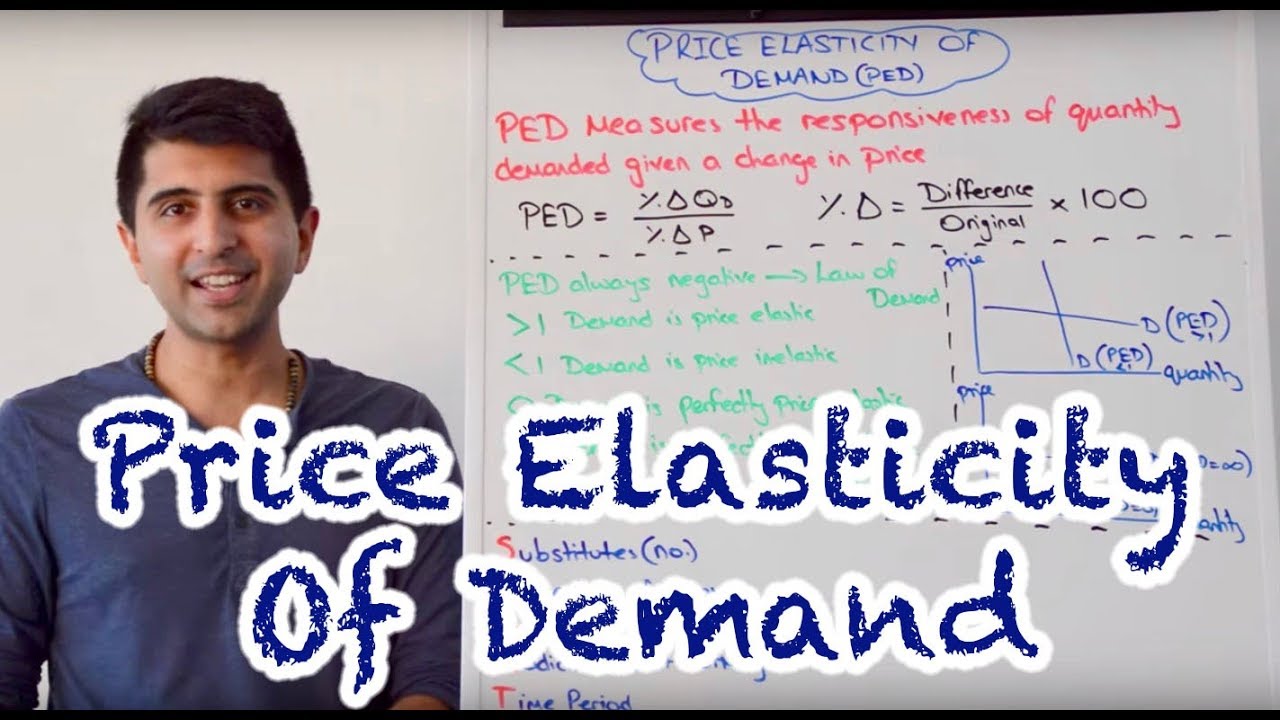
increase your price for example we know if you increase your price we're going to get the opposite happen to demand because of the lower demand but you've increased your price elasticity PD is looking at how much will that demand fall how much will it fall and likewise if it wasn't that you increase your price if you decide to reduce your prices we know demand will increase but by how much will it increase that is what PD price elasticity of demand is measuring now let's look at the formula so PD formula is percentage change in quantity
demanded percentage change in quantity demanded divided by percentage change in price easy for me to remember but the tricky thing is which way do you get it round is it the Q or the P and just think QPR Queens Park Rangers Q is always on top QPR now let's go for two examples of using this formula the example number one so a business reduces its prices by 10% business reduces prices by 10% the result of that is the quantity demanded will increase by 40% so they drop their prices by 10% quantity demanded has gone up
by 40% so if you throw the numbers into the formula on the top is the quantity demanded they went up by 40% so plus 40% and prices went down by 10% so minus 10% so the PD plus 40 divided by minus 10% equals minus 4 just my score no units minus 4 is the coefficient that is the elasticity coefficient that is what PE D is so if you have a PD of some people like minus 4 then that suggests that the number is elastic and the reason why is elastic is quite simply because the percentage
change in quantity demanded is bigger than the percentage change in the price change because for T's bigger than 10 so if you get that clear your number is going to be a number that we take our negatives for the women a number that is greater than 1 then that would suggest you have an elastic price elastic demand and essentially we're saying is that you change your prices in this case by 10 percent well demand is incredibly sensitive to that price change because demand is increased with four folders that if an increase of 4 times the
percentage that you drop those prices by so if you are elastic your prior to the last tickler business is the last thing in terms of it services then that would suggest that your customers are sensitive to price changes now the opposite of elastic is inelastic let's take a look at example so example number two is that prices have increased by 20 percent price is up by 20 percent but the quantity demanded has only fallen by 4 percent you chuck surprises up 20 percent quantity demanded has only fallen by 4 percent clearly that's where our business
really wants to be inelastic price elasticity demand and in this case we check the numbers in with the QD on top so it fell by 4 percent so minus 4 percent and we divide that by the price increase which was plus 20 % - / + 20 is - look we - a number take away the - for the moment a number that is less than 1 so we've got - 2 that that's when I smoke went to that that's an example an inelastic number the reason why it's an inelastic price massive there are it's
because you have the quantity demanded is smaller than the price change so when changes in quantity demanded is smaller than the change in price completely that suggests that demand is not very sensitive to price changes and as I said before that's clearly where a business with lines of beef we're glad to have P dealers particularly inelastic now there is a strong relationship between PD and Revenue PD and revenue the reason why is because revenue in its simplest form is just price times by sales price plasma sales sales the bets we demand which basically means the
two things within your price elasticity or your law of demand are essentially the core components of revenue so you will often talk about price elasticity demand and revenue together particularly those longer questions where you might want to extend your chains of analysis just the word of warning don't get confused the fact that PD is to do with revenue and you starts with my profit because probably something different Mac includes costs to just keep your PD in line with revenue this is what you really need to know if you have an elastic PD elastic PD and
you increase your prices well then revenue will fall so if you have an elastic price elastic demand you increase your prices revenue will fall and if you reduce your prices revenue will increase so clearly what is happening here is the change in prices or the opposite is happening to revenue so what you do when you have a elastic price elastic demand what you do sir price is the opposite will happen to revenue increase prices revenue or fall reduce prices revenue increase now that is different if you have an inelastic price elastic demand if you have
an inelastic price elasticity and if you increase your prices revenue will increase and if you reduce your prices revenue will reduce now clearly that spring if you can increase your prices revenue will increase that says we want to be that's a perfect scenario for a business from a revenue perspective so clearly in the case of inelastic price elastic demand the same impact will happen to revenues so whatever you do price is if you have any elastic price list of demand the same thing will happen to revenue away always remember duck is the elastic opposite inelastic
same and I've always remembered it as is inelastic same is now let's test that so let's just say we have an elastic PD an elastic PD and we increased our prices so we increase our prices the opposite of up is down because elastic opposite so it means revenues will go down if we should increase our prices if we have an elastic PD if managers know that how inelastic PD so clearly managers would not want to do that in that scenario because it's going to need to lower revenues which is why it's important for managers to
use it and that's what we're getting to next when we look at the usefulness of PD the influences of PD and any issues with PD let's move on now the next thing to look at is why price elasticity of demand is useful or if a manager or a business is able to predict what their price elasticity of demand is it gives them an edge because it means that if they decide to change their prices maybe they increase their prices maybe they drop their prices well then they can see the likely impact on quantity demanded and
when we think about quantity demanded is just essentially silence so if you can know your PD you make your price change and therefore you can predict the impact on those sales well that means you can therefore get your staffing ready maybe you think your quantity demanded is going to increase your forecast it's going to increase maybe it's because managers think they have an elastic PD and elastic PD if drop prices they think the quantity of my name is gonna go through the roof well that means you want to get your staffing in place maybe you
need more staffing now also you get your stop controlling place maybe you need to up in our stocks you have and that's going to make your cash flow forecasts and your income statement forecasts for projections of the future likely to be more precise and more accurate than they otherwise would have been if you did not know also if you're an international business you are selling abroad you are selling exports well then you're subject to exchange rates of course now let's just do a simple example the pound has increased in values got stronger you are a
UK business than exports so strong pound inputs cheap exports dear exports dear well that means the price of your product in the country you're selling to has increased so therefore you might want to now consider the elasticity because if your product is elastic the revenues will fall if your product is inelastic the revenues will rise in a particular country the next thing to think about is the business will want to be more price inelastic the business will want to be more price inelastic why because if you increase your prices your revenues will increase how to
establish this one brand Ozzie if you can establish brand loyalty mean for a particular marketing strategy over time tobacco makes you less sensitive to price changes price increases number two is the fewer rivals you have the better for you because customers have nowhere else to purchase the product from in the ideal scenario you are a monopoly number three is if your product is extremely cheap compared to the proportion of average consumers income or that will likely make you more inelastic if a penny sweet became two pennies how much difference would it have on quantity demanded
proportionately compared to that hundred-percent price increase and number four is someone else is paying for it this might be a scenario in the case of the business-to-business transaction where someone is acting on behalf of the business that is not the owner of the business and maybe is less bothered about it or simply number five is if you don't have much time to consider you are forced to be more price inelastic if you have all the time in the world to consider a decision then you become more sensitive to price them therefore more price elastic so
their consideration may be sales promotion you can loop into that if you can only buy in a certain amount of time does that in elasticity our issues to think about with price elasticity of demand well it's very difficult to calculate B reason wise because there's lots of external factors always ruining the data really because it might be that you think you've estimated it but essentially when you are doing that data changes what happened in two incomes the economy change maybe there's a recession maybe the booth maybe the weather was changing so really it's extremely difficult
to calculate PD but if you can have in the process estimate that would clearly aid managers as we saw with these components earlier on I hope that helps with PD and I'll see you of a next step [Music]