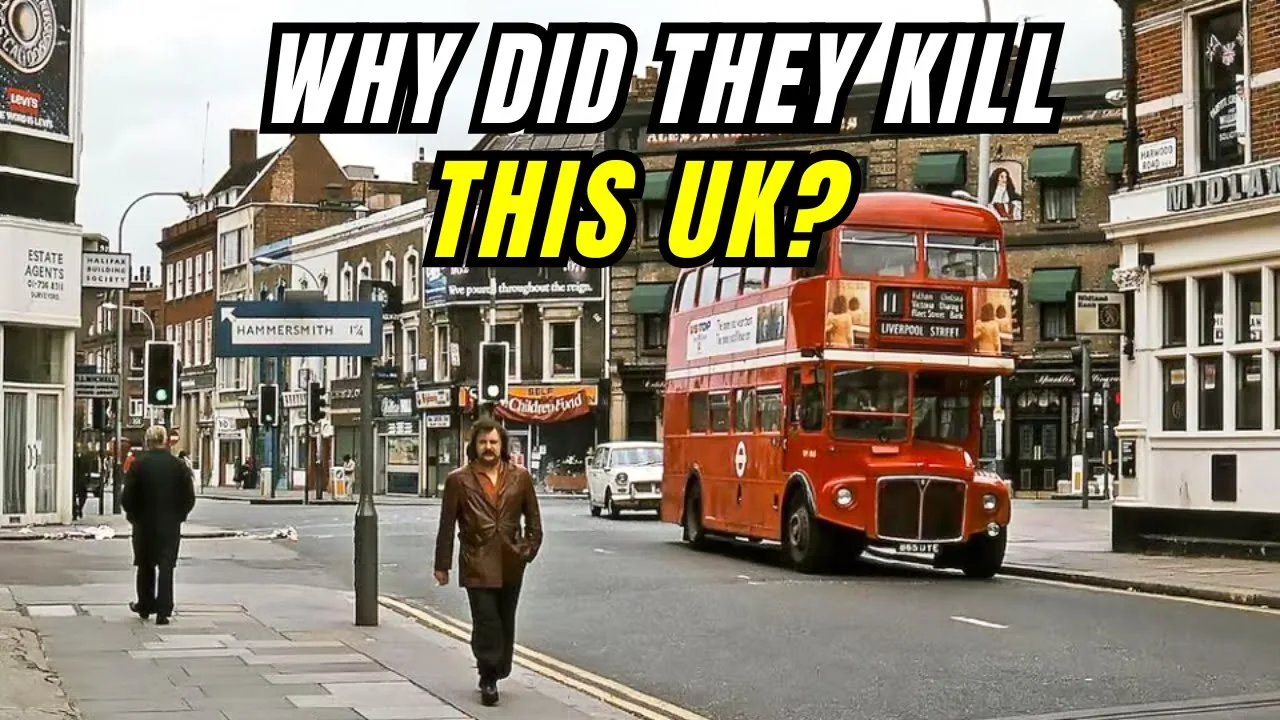
Close your eyes for a second. Now picture this. It's 1980.
The air smells faintly of hairspray and fish and chips. Sweet dreams by Urithmics is playing on the radio and your dad's just come home with a VHS rental of Back to the Future. Even though it's not out yet because, well, it's still 1980.
Britain in the 1980s was loud, proud, and chaotically charming. It was a time when kids played outside until the street lights came on. The milkman still did his rounds and everyone knew someone who taped songs off the radio with the DJ's voice halfway through the chorus.
But it wasn't all neon socks and top of the pops. Beneath the perms and polyester was a country going through one of its most radical transformations politically, culturally, even spiritually. So, what was it really like to live in 1980s Britain?
Let's relive it together. Life in the 1980s, Britain had its own rhythm. Slow, simple, and filled with the smell of toast and gravy.
Class was everywhere. Workingclass families lived in terrace houses with net curtains and coal fires, while middle-class homes showed off microwaves they barely used. Sundays meant roast dinners and three TV channels, four if you were fancy.
Kids ate frosties, wore itchy uniforms, and watched Grange Hill before biking around the culde-sac. Garbage pale kids were currency, and you knew to be home before neighbors started. Teens lived on mixtapes, Top Shop, and Woolly Yangst.
If you had a Walkman, you were a legend. Adults smoked everywhere, at home, in cars, at work. Dads loosened their ties and turned on Coronation Street, while moms ruled the VCR and made sure dinner was on time.
Homes had floral wallpaper, brown carpets, and at least one Baby Cham bottle on display. TVs were wooden boxes. Phones had cords.
And if you had Betamax instead of VHS, well, bad luck. People talked at the post office over garden fences on doorsteps. No mobiles, no internet, just word of mouth and a cuppper.
Cars were boxy, loud, and smelled like crisps and cassette tapes. Ford Escorts and Vauhall Cavaliers ruled the road. Sat nav.
Dad with a map and mom saying, "You've missed the turn. " Buses were red, crowded, and exciting, especially the top front seat on the double-decker. Tickets clunked out of the conductor's machine like treasure.
Trains always late, freezing or boiling with tea in cardboard cups and orange brown seats. Holidays meant butlins or a caravan at the coast, windy beaches, raincoats in July and 99 flakes eaten in towels. If you went abroad, it was Spain, sunburn, sangria, and trying to ask for chips in your best holiday Spanish.
The 1980s in Britain looked like a rainbow exploded on a pile of hairspray. Clothes were loud. Neon leggings, oversized jumpers, and shoulder pads you could land a plane on.
More was more, and subtlety was banned. Hair defied gravity. Perms were everywhere.
Boys had mullets. Girls had teased fringes. And hairspray was practically atmospheric.
Subcultures ruled the streets. Punks with safety pins and snars. New romantics dressed like Victorian poets in eyeliner.
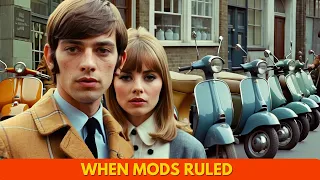
Mods on scooters. Every look told a story loudly. Music and fashion were soulmates.
Madonna clones in lace gloves and crucifixes. Duran Duran fans with buffon hair and pastel jackets. If you loved a band, you dressed the part.
British cool collided with American pop. MTV, Dynasty, The Breakfast Club. Glamour, rebellion, and identity came wrapped in glitter and eyeliner.
And behind every wild outfit was a teenager who truly believed no one had ever felt feelings as deeply as they did while dancing alone in their bedroom to a mixtape they made themselves. What did you wear in the 80s? And would you dare wear it again today?
Entertainment in the 1980s. Britain was simple, shared, and totally unforgettable. TV had just four channels.
If you missed your favorite show, tough, you waited for the repeat, the telly shut down at night with the national anthem and remote controls. Not in most homes. Your little brother was the remote.
VHS tapes changed everything. Renting a movie was an event. You picked it based on the cover, hoped it wasn't already taken, and prayed it had been rewound.
If your family had Betamax, you heard about it. Music came on vinyl, cassette, or the radio. You made mixtapz from top of the pops and tried to pause before the DJ ruined the outro.
A Sony Walkman made you feel invincible. Everyone rewound tapes with a pencil because they always got chewed. Video games arrived on cassette.
ZX Spectrum. Commodore 64 pixelated magic after 10 minutes of loading noise. crash.
Start again. Arcades were electric temples of Pac-Man, Space Invaders, and sticky buttons. Everything was shared.
One TV, one radio, one tape deck. And somehow it brought everyone together. And if you had £5 in your pocket, that was a fortune.
Enough for a cassette single, a packet of crisps, a fizzy drink, and still change for the arcade. Being a kid in 1980s, Britain was a mix of scraped knees, soggy, packed lunches, and the absolute thrill of having the last word in a playground argument with my dad's bigger than your dad. Let's start with school.
Uniforms were non-negotiable. Gray trousers or skirts, stiff collars, itchy jumpers, and blazers that never quite fit. If your school had a clip-on tie, you were lucky.
If it didn't, you were constantly trying to knot yours in the mirror without choking yourself. Classrooms had the smell of chalk dust, boiled cabbage from the lunch hall, and that weird disinfectant they used on everything. Desks were wooden, carved with the initials of past students, and the blackboard was the center of command.
No smartboards, no laptops, just chalk. Squeaky pens and overhead projectors that never worked properly. Punishments.
Oh, they were real. Detentions, lines, being made to stand outside the headteer's office. And in some schools, you could still get the cane.
Teachers did not smile much, and if they did, it usually meant trouble. Recess, playtime if you will, was chaos in the best way. Games like British Bulldog, banned in some schools for being too rough, conquers, skipping ropes, and those plastic hand clappers you weren't supposed to bring.
Football was played with whatever round object you could find, and arguments were settled with rock paper scissors or a quick chase around the yard. At home, kids watched cartoons like Danger Mouse, The Raccoons, or Super Ted. Saturday mornings were sacred.
Going live with Philip Scoffield and Gordon the Gopher was basically your social life. You ate cereal straight from the box, sitting cross-legged in front of the telly, shouting answers at the screen. And the snacks.
Oh, the snacks. Monster munch. Wagon wheels that were definitely bigger back then.
Sherbet dip dabs. Space raiders for 10 p. And taiser or quattro to wash it all down.
Lunchtimes at school meant rectangular pizza, pink custard, and dinner ladies who knew everything. Teenagers had it rough and brilliant at the same time. No phones, no social media, but they had diaries, mixtapz, and hours spent sitting on the wall outside the corner shop, hoping someone they fancied would walk by.
Friendships were made with shared Walkman headphones and long dramatic conversations about who was better, Madonna or Cindy Lorer. What's the one thing you remember most from your school days in the 80s? The 1980s in Britain were turbulent, bold, and deeply divided.
Margaret Thatcher led the country with an iron fist. Some called her a savior, others never forgave her. Strikes filled the headlines, especially the miners strike.
Whole communities lost their livelihoods almost overnight. Picket lines, riot police, and cold dust became national symbols. The Fulkland's war in 1982 stirred up patriotism.
Flags in windows, headlines everywhere. For many, it was the first war watched live on TV. But fear wasn't just abroad.
The threat of IRA bombings was constant. Public bins were removed and people avoided crowds. London lived with low-level tension every day.
There were deep contrasts. Champagnes swilling yuppies in the city and jobless families relying on benefits in former industrial towns. It was a time of protest, pride, anger, and resilience.
People disagreed, marched, argued, but never gave up. Because even in the toughest times, the kettle was always on, and someone always had a biscuit to spare. The 1980s were packed with moments that stopped Britain in its tracks.
In 1981, the whole country watched as Prince Charles married Lady Diana. Over 750 million people tuned in worldwide. It wasn't just a wedding.
It was a fairy tale on TV. And for a moment, everyone believed in happy endings. Then came 1985, Liv Aade, a global concert broadcast live from Wembley, raising millions for famine relief in Ethiopia.
Queens set, legendary. It wasn't just music. It was history.
But the decade had darker notes, too. The Cold War loomed large. Kids watched nuclear warnings on threads and genuinely thought the world might end.
The tension between east and west colored everything, even the cartoons. And while the world watched Berlin divide, Britain wrestled with its own identity, striking a balance between tradition and rapid change. Shopping in the 1980s, Britain was a world away from Amazon and selfch checkouts.
You went to the high street, not a website. There was the butcher, the baker, the green grosser, and maybe the Woolworths for everything else from pick and mix to cassette singles. Supermarkets were growing, but most people still did a bit of shopping every day.
You paid with cash, notes with Queen Elizabeth's portrait and coins that felt like treasure in your pocket. Debit cards existed, but barely anyone had one. Checks were common and you had to write your name and postcode on the back.
Every single time, prices. A loaf of bread was around 30 p. A Mars bar 15.
A5 note in your hand felt like real money. And calling someone that meant finding a red phone box, hoping it worked and having the right change. Or using a phone card, which always bent just enough to jam the slot.
The 1980s in Britain weren't perfect, but they were unforgettable. A decade of cassette tapes and corner shops, perms and protests, laughter and change. We lived slower, talked more, and found joy in the little things.
Whether it was a 99 flake on a windy beach or a favorite song taped off the radio, it was a time of contrasts, hardship and hope, chaos and charm. But above all, it was a time that shaped who we are. And maybe that's why we still look back, not just with nostalgia, but with pride.
Because if you remember the 80s, you'll know they never really left us. So tell me, what's your most vivid memory of life in 1980s Britain? Thanks for watching and we'll see you in the next episode of British Time Capsule.