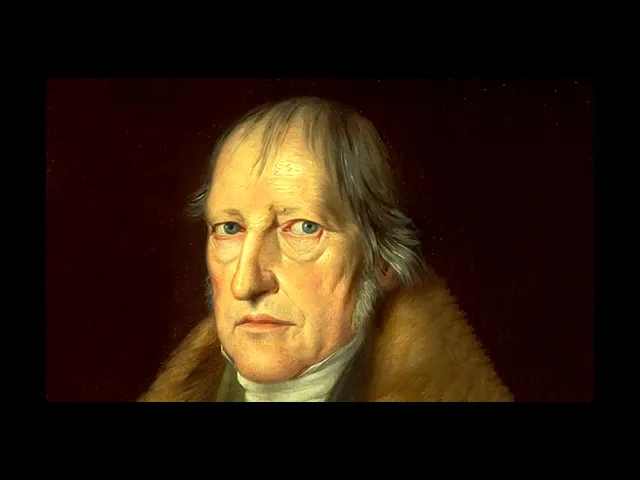
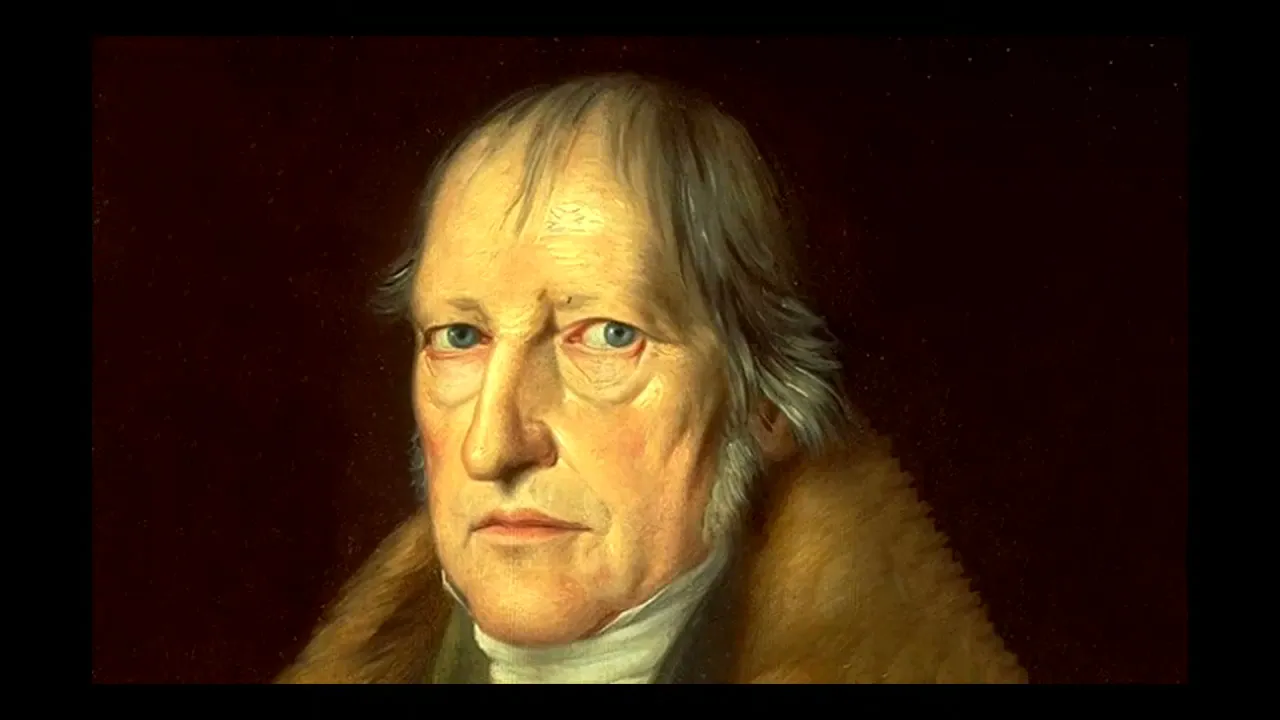
georg hegel is best known as a philosopher rather than as an art historian his version of idealism and his notion of a zeitgeist or spirit of the times are still influential today but in his career which spanned the late 17 and early 1800s hegel did write repeatedly on art and aesthetics and in fact he even advanced a provocative history of world art and while his specific art historical claims may not have many adherents today his approach is still well worth considering both for the nature of his logic and for the many ways in which later
art historical writing responded to those ideas hegel who was born in stuttgart in 1770 and spent much of his adult life as a professor was a prolific writer and he could also be formidably abstract as a result it can be difficult to summarize his views succinctly one of his most consequential assumptions though was that human history is generally characterized by progress but by a progress characterized by conflict and tension rather than a smooth linear quality hegel often spoke in terms of a dialectical tension between opposing possibilities or positions that he termed a thesis and an
antithesis over time he argued the tension between the two eventually resulted in a synthesis or a productive resolution and behind this process was what hegel called the geist or spirit an animating force whose gradual manifestation essentially powered human history hegel developed these ideas during a turbulent period in european history and it seems clear that they were informed to a certain extent by the rise of napoleon and subsequent talk of revolutions but hegel was not merely a political philosopher he was also interested among other things in art and in looking at the history of art he
felt that here too he could detect meaningful contours and a pattern of prolonged revelation art hegel argued was different from mere nature in that it communicated an essentially spiritual content a bird's feathers in other words might be beautiful but they were not an expression of an idea by contrast art involved in hegel's view a basic tension between material oil paint say or marble and the idea by which he meant again a sort of universal consciousness having taken these steps hegel could then point to what he felt were three distinct stages in the history of world
art in what he called the symbolic era the idea was still indeterminate or less than fully formed the great pyramids of giza he felt embodied such a stage as their heavy rough blocky geometry more or less overwhelmed any meaningful spiritual content the classical era to hegel constituted a more harmonious relationship between the two in a 5th century greek sculpture for example he held that external matter and idea mutually coexist in a balanced manner and then there was the romantic era or the age of renaissance and baroque religious painting in which hegel contended the idea was
now perfected and had fully transcended the physical the spirit in short had triumphed over inert form and arts evolution was complete now clearly this is a teleological narrative in which hegel describes a slow motion towards an ideal end obviously it's also a very judgmental account which plainly favors modern christian art and positions ancient african architecture as a sort of mute inner mass of stone indeed we might even note that his tripartite scheme was quite consciously christian in fact as a christian hegel was sensitive to the central importance of the trinity or father son holy spirit
and often arranged his claims in a correspondingly pious three-part manner but his ideas can be framed in other ways too his privileging of the idea for instance might remind you of plato's emphasis on ideal forms which are only partially manifested in this coarsely physical world at the same time too hegel's account represented a decisive step away from the biographical art history practiced by say vasari individual artists have little place in hegel's philosophy which is unapologetically interested in much larger patterns and forces hegel's influence was immense and it's clearly discernible in the work of later thinkers
as diverse as marx who drew on the notions of thesis and antithesis in formulating his celebrated account of the proletariat and the bourgeoisie and martin luther king jr whose famous claim that the moral arc of the universe is long but it bends towards justice is basically hegelian in its view of history many art historians have also embraced and grappled with hegel's analyses certainly some have criticized the notion of the geist as conveniently abstract or frustratingly vague but e.h gombrick once called hegel's lectures the founding document of the modern study of art and when in 1923
the famous architect walter gropius claimed that the attitude of a period to the world becomes crystallized in its buildings for in these both the spiritual and material resources of the age find their simultaneous expression well gropius was advancing a purely hegelian set of ideas and of course if you've ever heard of a reference to the zeitgeist well you have hegel to thank so while hegel may have lived two centuries ago and maybe best known as an idealist philosopher his influence on the history of art was considerable and his ideas are still traceable in common speech
today