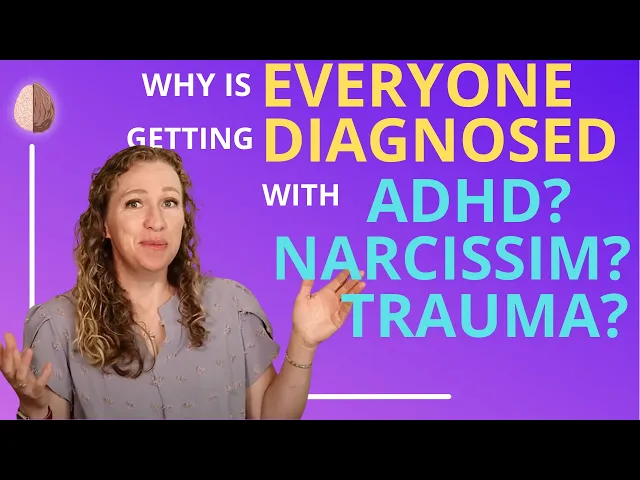
I think there's four reasons why more people than ever are getting diagnosed with mental illness. The first one is what I'm going to call diagnosis creep. So people are using the clinical terms much more broadly than was intended in the past or in the diagnostic manuals.
So you'll see this when people say, "I'm so OCD" or "I'm so ADD" or when you watch a video that talks about high-functioning depression or high-functioning anxiety. But for a clinical diagnosis with PTSD, depression, anxiety, the requirements say these symptoms cause clinically significant distress or impairment in functioning. So many people can experience traits of these diagnostic labels but often not meet formal criteria for them when professionally evaluated.
So in the past terms like depression, anxiety, ADHD, and trauma were used to describe a very small percent of the population, maybe less than 5%, and it only included the most severe forms that impaired functioning. But now people are casually using them to describe a much broader segment, maybe 30% or more of people. Um it's really easy to see diagnosis creep with the label of narcissism, for example.
So my colleague Nevin runs Marriage Therapy Clinic and says that 45% of couples who come in have been told by friends or YouTube videos that their partner is a narcissist. But estimates for clinical Narcissistic Personality Disorder range from 0. 5 to 2% of the population.
So NPD is a clinical term for people who experience severe, persistent, pervasive traits of narcissism. But now that term is being used to broadly include people who are mean, manipulative, blaming, or abusive. Now, clearly those are still problematic behaviors.
But a false diagnosis can get in the way of solving what's actually going on. So based on videos on the internet, more people than ever are diagnosing themselves or others with a mental health disorder. Now, we could spend a lot of time talking about the pros and cons of making a label into your identity.
So for example, if you believe that depression is part of who you are, that might actually demotivate you to learn the skills or make the changes that can really improve your life. Depression doesn't have to be permanent. But if you believe that it is, it makes it a lot harder to get the skills that help.
But the interesting thing is that while I think using a label like this has downsides, on the other hand the skills that are effective to treat the severe form of the condition can also be really helpful at treating the milder forms of the condition. So with the narcissist, the skills that you need to manage them include um not taking what they say personally and setting better boundaries, and that can also be a helpful skill set with people who aren't actually clinical narcissists but who are just mean or toxic in other ways. Same thing with ADHD.
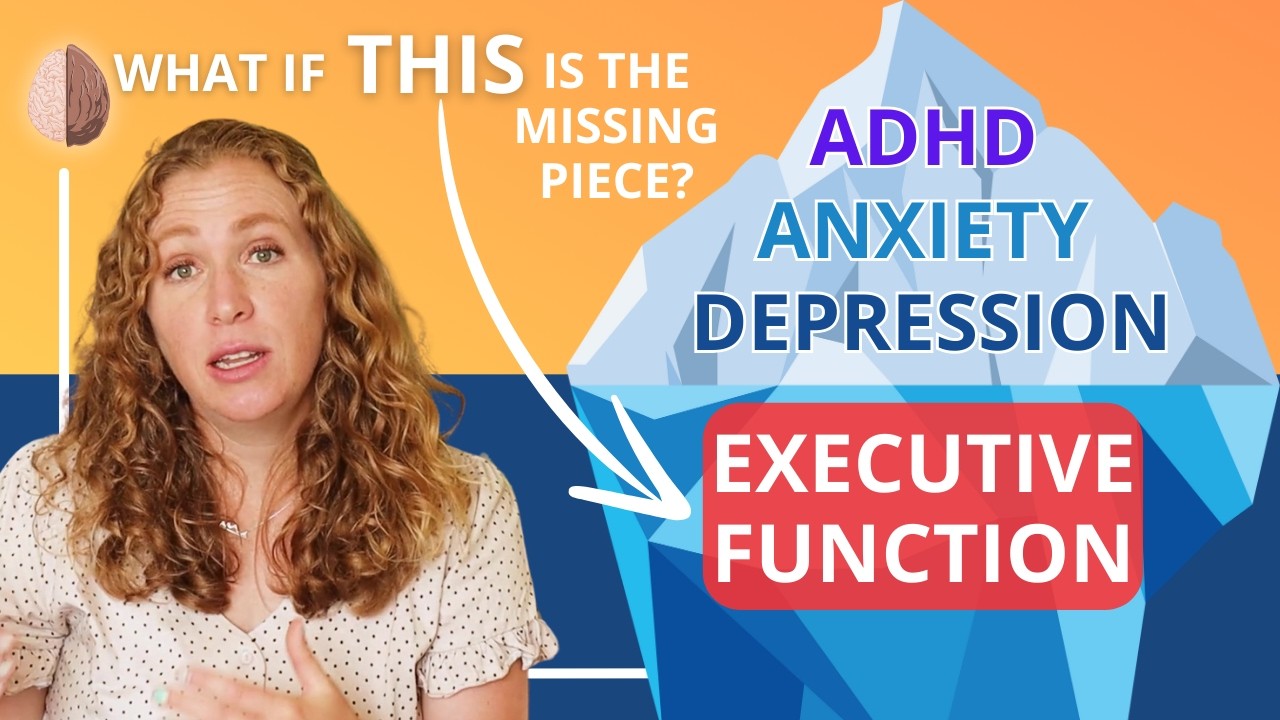
If you believe everything you see on TikTok, you've got ADHD If you crave salt, you don't like certain clothes, you procrastinate, or you struggle to do things that you don't want to do. These symptoms cover an incredibly broad segment of the population and include a lot of people who don't have clinical ADHD. However, while this doesn't meet the DSM criteria for a diagnosis, if you struggle to initiate tasks you can probably benefit from some of the skills that help people with ADHD.
The label may or may not be accurate, but the skills might help. So here's the question I would ask: does identifying with the diagnosis empower you to get the help, support, and education you need, or does it make you feel helpless, avoid more situations, demand that others accommodate you, or believe that you can't change? I'm all for more awareness and skills training when it comes to self-improvement but not when it disempowers you.
Okay. Here are three more reasons why we're seeing more people than ever with mental health diagnoses. Number two: less stigma and more awareness.
So in the past only the most extreme forms of mental health conditions were getting treated, and that was often brutally done in hospitals or in institutions. Everyone else was just kind of suffering in silence. Now people are being more open about how common it is to struggle with mental health, and it's also easier than ever to access resources.
So there's better insurance coverage and more providers through telehealth. So I see all of this awareness and accessibility as a good thing. Okay.
The next reason is not so great. We live in a more difficult environment than our ancestors. The presence of social media 24/7, global news, and the endlessly available distraction of a smartphone which allows us to avoid our feelings, plus the abundance of marketing messaging is clearly harmful to people's mental health.
So it's double whammy: not only are more people identifying with a more broad form of the diagnosis, but more people are actually mentally unhealthy than in the past. If you want to maintain your mental health, you need a plan to moderate your consumption of media. And finally, number four: straight up misinformation with a broad reach.
A recent study of 500 mental health videos on TikTok found that 83% of them were misleading and 14% of them gave potentially damaging advice. What's scary about these 500 videos is how many people they reached. They were viewed almost 25 million times.
The professionals who analyzed these videos found that those addressing ADHD, bipolar disorder, and depression were especially likely to be inaccurate. So you've got to be a careful consumer. You cannot let the algorithm determine what you believe because it's going to favor videos that are very comforting but also leave you feeling like there's not much you can do about it.
So this includes diagnosing you or telling you that it's your parents' fault or society's fault. If you want to maintain your mental health, you must be a wise consumer. Look for credentials and primary sources of information.
Be cautious about labeling yourself, limit your reliance on social media for personal answers, and trust your deepest sense of what is right. I encourage you to spend more time clarifying what kind of life you value and actively, ardently striving to learn the information and the skills that will help you take action to live it. Um if you are interested in learning evidence-based skills that help people improve their mental health, you can check out my membership.
I've got eight courses that teach people the actual skills to process their emotions and improve their mental health, plus live Q&A and lots of exclusive content. Okay. Link's in the description.
Take care, everyone.