Oh my god. Get off the bus. Get off the bus.
>> No, you did that. >> Now you're going to jail. >> Go ahead.
>> Now you're going to jail. That's not our problem. >> You can go, man.
>> Better run. >> I mean, really. >> Now you can go.
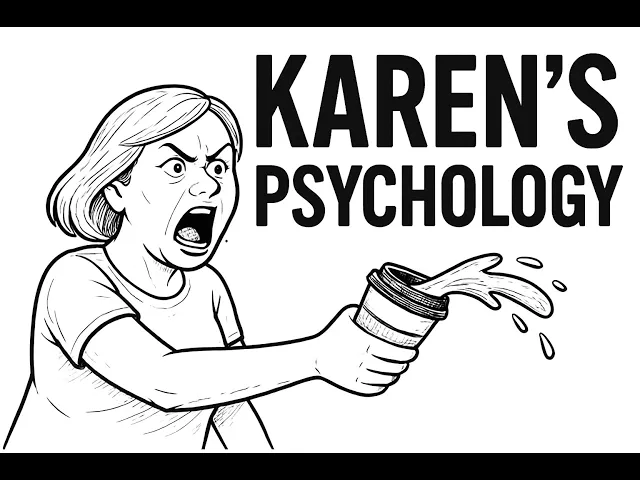
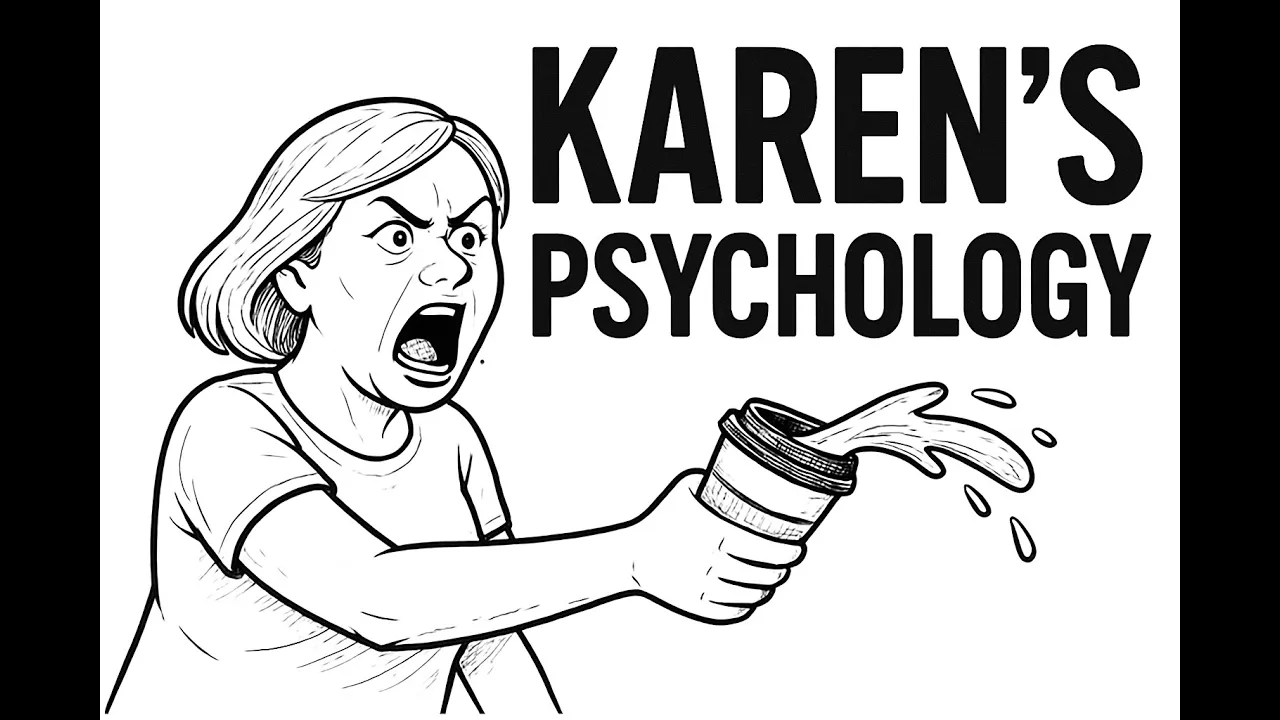
She's decided to be an idiot. She walks into the room, not to belong, but to command. The air tightens when she speaks.
Her tone, sharp with authority, yet hollow in empathy, cuts into the moment like a blade. Some call her entitled, others label her spoiled. But beneath the surface, her psyche is far more complex and disturbing.
This is not merely a cultural meme or internet caricature. The Karen is a psychological pattern wearing human skin. From the outside, she may seem like a middle-aged woman upset over trivial matters.
A hair appointment delayed, a coffee order wrong, a store policy she believes doesn't apply to her. But these outbursts, these aggressive demands for compliance are symptoms of something deeper. The pathology of control.
To understand the Karen, you must look not at her actions, but at her belief system. At the core of her psychology lies a profound fragility of identity. The Karen archetype is not born.
It is manufactured over time, shaped by cultural conditioning, social expectations, and an unchallenged internal narrative of superiority. She was taught directly or indirectly that the world should work for her. And when it doesn't, the disruption is perceived not as inconvenience but as injustice.
Entitlement then becomes her armor, not her power. What the world sees as rudeness is often her defense against an invisible fear, irrelevance. To a Karen, being ignored feels like eraser.
Her voice must be heard, not for communication, but for affirmation of her perceived importance. She is often a product of environments where dominance was praised and submission was scorned. Where having standards was applauded, even when it meant demeaning others, where being a strong woman meant being louder, colder, and quicker to assert than to understand.
This kind of upbringing creates a mind that cannot tolerate ambiguity, only hierarchy. She must know who is above and who is below. And in her worldview, she is rarely, if ever, below.
You can see this hierarchy play out in everyday encounters. She doesn't complain to the server. She demands to see the manager.
Not because she truly believes the issue is catastrophic, but because she believes someone lower on the food chain must be punished for disrupting her comfort. Her world is binary. There are those who serve and those who are served.
The Karen believes she is the latter. But where does this internal belief originate? Often it begins with overvaluation in childhood.
not necessarily love, but conditional praise. She may have been raised in households where performance was rewarded over presence, where being daddy's little princess didn't mean being emotionally understood, but constantly being reminded that she was exceptional without needing to be kind. In such an environment, she learned that identity is transactional, that value is not intrinsic, but reinforced by status, appearances, and how well others obey her expectations.
In adulthood, when the real world stops mirroring those childhood conditions, she begins to unravel. The barista doesn't care who she is. The cler doesn't bend the rules for her.
The neighbor doesn't apologize for existing loudly. Suddenly, the world becomes not just annoying, but threatening. Every moment that doesn't affirm her worth feels like a personal attack.
She reacts not with introspection, but escalation. Psychologists often identify these behaviors with narcissistic traits, though not always full-blown narcissistic personality disorder. Karens may possess what's known as vulnerable narcissism, a quieter but equally corrosive belief that their needs matter more, that they deserve more, and that any failure to recognize this is a form of disrespect.
But here's the paradox. Underneath the narcissism lies insecurity. That's what makes it so dangerous.
The louder she shouts, the more fragile she is. The more she demands power, the more powerless she feels internally. It's a self-reinforcing cycle.
Insecurity breeds control. Control breeds conflict. And conflict confirms her internal belief that the world is against her, thus justifying more control.
It's not sadness that lives in her. It's resentment. And resentment is far more corrosive than grief.
Grief mourns what was lost. Resentment blames the world for taking it. This is why the Karen doesn't adapt to change.
She fights it. She fights new pronouns, new customs, new social norms, not because they harm her, but because they symbolize a world that is no longer designed with her at the center. She believes society is becoming too sensitive, too politically correct, too permissive.
But what she's really saying is, "I no longer control the narrative. " and that terrifies me. She masks that fear with moral outrage.
She invokes rules, policies, fairness, but only when they serve her. When those same rules protect others, she grows furious. To her, equality feels like oppression because it removes the privileges she assumed were permanent.
And that's the unspoken truth. She doesn't want fairness. She wants exceptionalism.
There's also the element of performative anger. A Karen doesn't just get upset. She wants to be seen getting upset.
Rage for her is a theater. She performs indignation the way others perform compassion. The raised voice, the accusatory finger, the phone camera pulled out not for safety but for leverage.
Her meltdowns are meant to humiliate, not resolve. But beneath all of this is a psychological need that is devastatingly human. The need to matter.
She wants to matter in a world that has moved on. In a society where youth is glorified, diversity is embraced and privilege is questioned. She feels stranded in the past.
Her identity was built on a version of the world that no longer exists. And she's mourning its death, not with tears, but with rage. And what about race?
Let's not ignore it. Many Karen incidents involve white women weaponizing their discomfort against people of color. This is not incidental.
It is integral. The entitlement isn't just personal. It's structural.
She is inherited consciously or unconsciously. The belief that her discomfort is more valid than another's existence. That she can summon authority, a manager, the police, the HOA, and expect to be believed, protected, obeyed.
This is not just psychological. It's historical. It's the legacy of power systems where her archetype was always the beneficiary.
So when that system fails her, when people no longer flinch, when cameras turn on her instead of away, she is thrown into disarray. The power she wielded so effortlessly is now a mirror reflecting her own behavior back at her, unfiltered and permanent. And she doesn't like what she sees.
To understand the Karen is not to sympathize with her. It is to deconstruct her. We must examine the mechanism behind her entitlement.
What drives it? What sustains it? and what happens when it collapses.
At its core, the Karen identity is a false self, a constructed persona designed to mask a deep sense of insufficiency. This is not a person rooted in truth, but in performance, the performance of being correct, of being above, of being the final voice in the room. It's not confidence.
It's a desperate need to never feel wrong. And that's where the psychological danger lies. You see, when someone cannot tolerate being wrong, they also cannot tolerate growth.
The ego becomes too brittle to hold contradiction, too defensive to absorb truth. And so the Karen begins to rot from within, not from malice, but from stagnation. She cannot update her software.
She runs on belief systems that are expired. Ideas about gender, class, race, authority, and worth that no longer apply. But instead of evolving, she doubles down.
The past becomes her religion. Back when people had manners. Back when kids respected elders.
Back when the world made sense. What she's really saying is, "Back when I felt powerful. " Her rigidity is a rebellion against relevance.
In a world moving toward complexity, she seeks simplicity, rules, roles, obedience. The Karen doesn't want mutual understanding. She wants to win, to dominate the interaction, to flatten nuance under the weight of her certainty.
This is why arguments with Karens are never about resolution. They're about submission. She doesn't just want you to agree.
She wants you to yield. To accept that her truth is universal, that her standards are moral, that her dissatisfaction justifies your silence. She's not just angry.
She's moralizing her anger. To her, manners are not about respect. They're about hierarchy.
And when you don't conform to her vision of civilized behavior, it offends her not because it's wrong, but because it disempowers her. Your refusal to be controlled is an existential threat. This explains why many Karen outbursts occur in public spaces, restaurants, lobbies, parking lots.
These are shared environments, places that don't belong to her. And that's precisely the problem. When a space cannot be possessed, she tries to police it.
It's not about the rules. It's about whose rules get enforced. Let's go deeper.
Many Karens also display what psychologists call external locus of control. The belief that their problems are caused by external forces, never internal patterns. When something goes wrong, it's always someone else's fault.
The delivery was late. The policy was stupid. The teenager was rude.
The customer service agent was incompetent. Never. I overreacted.
Never. I was disrespectful. Never.
I need to reflect because reflection would mean acknowledging that she's not always right. And for someone whose identity is glued together by self-righteousness, that is not an option. So, she rewrites the story.
In her mind, she becomes the victim. The martyr of modern society. You can't say anything anymore.
People are too sensitive. I'm just speaking the truth. But what she calls truth is often just entitlement with better branding.
And this victimhood isn't harmless. It's weaponized. She uses it to justify cruelty, to mask prejudice, to avoid accountability.
The Karen does not feel guilty when she lashes out. She feels justified. Her logic is circular.
I feel disrespected. Therefore, you are disrespectful. And because you are disrespectful, I am allowed to punish you.
It's not reason. It's retaliation masquerading as reason. There's another layer to consider.
Many Karens are women who were promised empowerment, but were handed performance. Society told them to be confident, but only if it fit a mold. To be independent, but not too disagreeable.
To speak up, but only when it made others comfortable. So, they carved out power the only way they knew how. By becoming guardians of norms, they couldn't control systems, so they policed behavior.
They couldn't own institutions, so they dominated interactions. This is why many Karens act like self-appointed referees of public morality. They monitor dress codes, tone of voice, social cues, perceived disrespect, not because they're virtuous, but because being the judge makes them feel safe.
And what happens when that power no longer works? They panic. When someone stands up to a Karen calmly, firmly, without fear, it often results in escalation.
Not because the confrontation is aggressive, but because it reveals her lack of control. And nothing threatens the Karen more than realizing her authority is imaginary. She may cry.
She may call the police. She may accuse others of abuse. This is not just manipulation.
It's psychological collapse. The illusion of power is breaking. and with it her entire constructed self.
In some cases, Karens are not only enraged, they are humiliated. And this humiliation turns into vengeance. Not against the system that failed them, but against the individual who exposed them.
This is what makes the Karen archetype so dangerous. It's not just about rudeness. It's about fragile power in decline.
And fragile power doesn't fade quietly. It thrashes. It accuses.
It destroys. But there is a cultural function to Karens, too. They represent the dying breath of a world view where dominance equals value, where authority is earned not through compassion or competence, but through fear.
They are the last gasps of a system that told certain people they would always be at the top and are now watching that promise dissolve. And like any fading empire, they don't go gently, they go loudly. You see the Karen is not new.
She is just visible now. The phone camera is her reckoning. The internet is her mirror.
She can no longer bully in private. The whole world watches and judges. And unlike the past where shame could be buried, today it is archived.
But will she change? Probably not. Because change requires surrender and surrender requires humility.
two things the Karen mind is not trained to access. To dismantle her psychology would mean questioning every belief she has built her selfworth on. It would mean asking what if I am not better?
What if I am not owed? What if I am just human? And for the Karen, humanity is not enough.
So she clings to the myth. She yells louder, demands more. Doubles down.
But inside the fear remains. If I am not exceptional, then who am I? And perhaps that is the most terrifying question of all because it means that the Karen, for all her noise, her tantrums, her entitlement is not confronting the world.
She is running from herself.