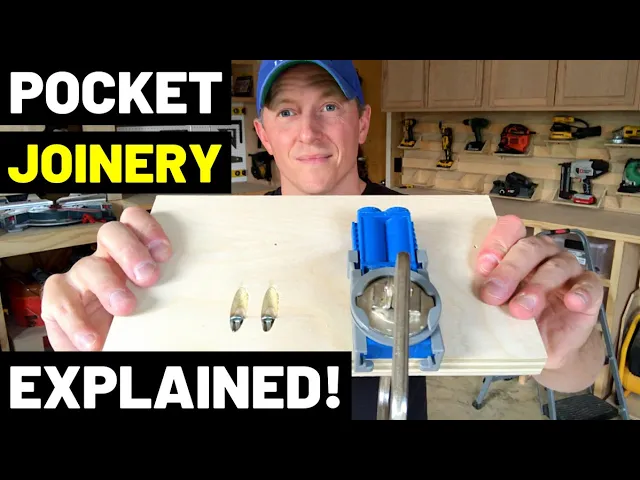
so almost no one gets into carpentry and woodworking these days without soon hearing about pocket holes or pocket screws these innovations have sort of dominated the topic of joinery for 30 years and that's due to the fact that they're so prolific and so easy to use and yet for as much as pocket screws get talked about they still remain sort of a mystery for newcomers i felt like there needed to be an introductory video for new carpenters and woodworkers to simply explain what these things are so today i'm going to talk about how pocket joinery
works why it exists and what it's good for and that's coming up next on the honest carpenter show since the earliest days that people began working with wood we've struggled to find ways to bring boards together securely how do we attach pieces to one another so that they won't separate under force or strain this process of joining boards together known simply as joinery takes on a hundred different forms you have really simple methods like making a square butt joint with fasteners driven through one board into the other then there are methods of using intermediary pieces
to join boards things like dowels biscuits and splines sit in pre-cut holes where they're combined with glue under pressure to hold boards in place and then you have very complex joinery methods where the pieces you're joining are actually shaped to mate with each other and lock together securely you do this with dovetail joints mortise and tenons half laps and other intricate cuts but the thing is all of these methods pose their own unique problems simple joins often leave fastener heads exposed and they aren't necessarily very strong biscuits and dowels on the other hand are strong
and pretty easy to use but they can require messy setups with a lot of clamps and can take a long time to bond and many of the fancy joinery techniques though beautiful and incredibly strong just require far too much experience for newcomers to do well these are the frustrating realities of joinery and for years it seemed like joining parts together would never get simpler until these things came along pocket holes pocket holes and pocket screws reduce the act of joining boards to a process so simple and so fast that even newcomers can do it in
minutes so how does it work and what are its strengths and limitations pocket joinery basically combines custom drilling jigs with custom fasteners to create a strong toenail joint almost anywhere that you want one if you watched my toenail effect video then you know that toenailing is sort of a universal method for driving a fastener at an angle sometimes a steep angle to connect or fasten pieces framers do this a lot when nailing boards together at a 90 degree angle but toenailing is often harder to do with screws because they grab much more aggressively and the
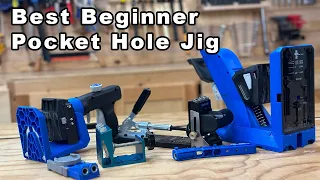
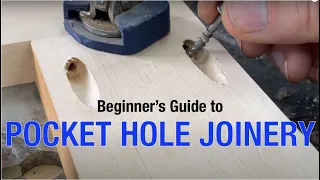
heads tend to be very large and thick they'll protrude drastically on the surface of a board and may cause splitting if the hole isn't carefully pre-drilled so pocket joinery is a method of quickly producing really clean extremely effective toenails and boards typically proprietary pocket tools and drill bits are used with any common drill to create the pocket and sink the fastener the king of all pocket joinery companies is craig they've existed since 1990 and their products have expanded to include dozens if not hundreds of pocket hole tools and accessories they vary in complexity but they
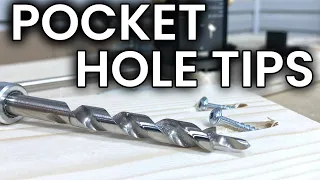
basically all work the same way the tool allows you to pin or clamp a drilling guide against a piece of wood then a special drill bit usually a half inch thick with a spur on the end chucks into your drill by aligning the drill bit with the guide you can activate the drill apply some pressure and bore a 15 degree hole very cleanly into the face of the board every pocket hole jig and drill bit have carefully calibrated markers and detents that let you account for the thickness of the boards that you're drilling into this
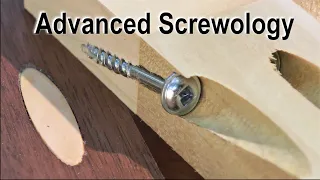
is very important because it aligns your pocket hole exit point with the center of the board thickness where it can produce the strongest connection and it also won't overdrive the fastener once the hole is drilled special screws with large truss or pan heads can then be driven through the pocket hole into the bottom board you're fastening a long custom driving bit gives the drill itself clearance to sink these fasteners the pocket hole has quickly and easily given you the fastest alignment for the fastener and it has hidden the head of the fastener down in the
meat of the board so now the hole can be filled and hidden for a flush surface custom pocket plugs exist that can fill the remaining hole with wood or plastic or the pocket holes can simply be placed on a face of the board that won't be seen and can therefore be left unfilled many many cabinets and pieces of furniture employ pocket screws this way they create face frames or bring together walls with fasteners simply hidden on the back side and left unfilled not only is this process very easy it's also insanely fast with my smaller
field kreg jig and custom clamp i can work my way down the edge of a board making half a dozen pocket holes in less than a minute my friend logan parker of the heirloom builders channel doesn't even faster with his older bench mounted model of which there are numerous upgraded versions now and the toenail screws create a surprisingly strong connection you can reinforce these with wood glue even further but it's not always necessary for every joint mostly just certain butt joints so no more boring slots for biscuits or drilling holes for dowels no complex clamp
setups with a lot of glue and no intricate handcrafted joints that's the magic of pocket joinery simplicity anyone can learn it in minutes and instantly start incorporating it into their builds now there's a lot of discussion in woodworking about whether pocket screws are strong enough companies like craig claim that they're actually stronger than dals when used properly but many seasoned woodworkers out there claim that they're not for my part i think that they're plenty strong for many applications but not unbreakable if they're stressed at the wrong angle so i frequently combine mine with glue and
install them in pairs where i need strength that helps a lot and the jigs are actually set up for these double screws but i have used them extensively for various doors and boxes where i need a nice finished surface quickly the custom clamps in particular make alignment a breeze and prevent headaches so that's how pocket joinery works in the future i promise i'll do videos on tips and tricks best practices and even mistakes but i thought we needed a primer just to get things started let me know what you think of the video down in
the comments and feel free to post questions also i'm going to link some pocket hole tools below feel free to shop those links and remember that when you do we receive a tiny commission at no extra charge to you as always thanks for watching be sure to check back in for more videos coming up soon and please consider subscribing and hitting that bell button to turn on notifications that way you'll know the moment we post something i'm ethan james with the honest carpenter.com i'll see you next time [Music]