[Music] So good to be with you guys this morning! If we haven't met yet, my name is Chris, one of the pastors here at Journey, and it is a gift to be able to gather in this place this morning to worship the Lord in a variety of different ways—through serving, through fellowship, through singing, and through time in the Word, through communion. I’m just reminded this morning that it is a gift that we get to gather together.
Take a minute and just look around the room. You may see people you know; you may see people you don't know, but what is true is that all around this room there are brothers and sisters in Christ. It's family, and to be able to come together is a gift.
I'm thankful that we're able to be here today. If you're new, welcome! We're glad you're here.
I'd love to meet you after the service; I'll be out in the lobby. Come by and say hey! I’d love to introduce myself to you and get to know you as well.
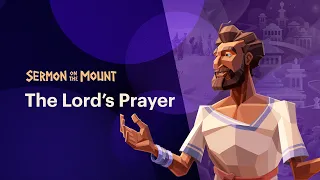
We're in the middle of a series on The Sermon on the Mount, which is a teaching of Jesus from Matthew Chapter 5 through Matthew Chapter 7. We jumped back in last week into Chapter 6 after taking a little break for Advent, and today we're going to start a two-part sermon—one that will be today and one that will be next week—called Learning to Pray. But the subtitle for today is Learning to Pray: How Not to Pray.
We're going to be in Matthew Chapter 6, verses 5-8. I want to invite you to go ahead and stand with me this morning as we read from God's Word. We don't stand out of right or ritual or practice because it's something that we have to do to get through the order of the service, but to honor the reading of God's Word, to set it aside as different from everything else that we read and scroll through and intake in our lives.
We see, starting in verse 5, Matthew—the servant of the Lord—recounting Jesus in this sermon as he says, “And when you pray, you must not be like the hypocrites, for they love to stand and pray in the synagogues and at the street corners that they may be seen by others. Truly, I say to you, they have received their reward. But when you pray, go into your room and shut the door, and pray to your Father who is in secret, and your Father who sees in secret will reward you.
And when you pray, do not heap up empty phrases as the Gentiles do, for they think that they will be heard for their many words. Do not be like them, for your Father knows what you need before you ask Him. " This is the Word of the Lord.
Father, this morning we thank You. We thank You for Your Word. God, we're thankful that You saw our helpless estate and that You Yourself came to dwell among us, flesh and blood, in the form of Jesus.
We thank You for these words that He has spoken to those Jews and Gentile hearers of the day, but those words that are still timely and true for us this morning. And so, Father, would You be with us through the power of Your Spirit? Would You do a work in us in transforming us so that we may not leave the way that we came in, but that we may leave more formed into the image of Your Son, as more fully formed disciples of Jesus and His way?
It is in the name of Your Son that we pray. Amen. You guys can grab a seat.
Jesus warns and commands here, "You must not be like these when you pray. " But again, He says, "And when you pray. " There’s no option here; for the follower of Jesus, prayer is not optional.
It's assumed that all of those who follow Jesus will pray. Now remember, last week we talked about giving to the needy, and Jesus did not say, "If you give to the needy. " He says, "When you give to the needy.
" We see that pattern again today. If we look down in verses 16-18, where we're going to be in a couple of weeks, He says, "And when you fast," not “If you fast. ” So the same is true and clear with prayer.
It's not an "if you pray" as a follower and disciple of Jesus, but it is an instruction for us: when we pray. Giving to the needy, prayer, and fasting are not optional practices for the follower of Jesus; they are direct fruit from walking in His way. In this passage, Jesus is teaching us how to pray, but He starts with how not to pray.
So, three observations about how not to pray. The first is this: that we do not pray performatively. Okay, now listen, I may have made up a couple of words for my points today.
So you just have to bear with me. If you want to send an email that "performatively" is not a word, that's fine. I probably won't respond.
I've warned you there are a couple in there. We are not to pray performatively. Now remember, this is not some new section of teaching; it's not isolated; it's not separate.
Jesus is continuing this in the middle of His sermon that started back in Chapter 5. But this particular section is clearly connected to those verses that we looked at last week. In verses 1-4, this reference to not being like the hypocrites is not new.
Back in verse two, He used that same word. We often think about hypocrites as someone who says one thing and does another. The church has gotten a bad rap for years, with people saying that the church is just full of hypocrites.
I remember being a youth, growing up and hearing people say that. I remember being a youth pastor, and kids would always say that, "The church is just full of hypocrites. " Then I remember one day realizing, "Yeah, we are.
" Yeah, we are because we're sinners. We claim to know and follow Jesus, but we also sin and fail. So, yeah, we could fall into that category.
But really, what Jesus is getting at here is not the way that we would define that; it's defined very differently. That's kind of like a common, normal definition that we have, but it's not fully the same as even what a proper dictionary definition should be. Last week, we talked about this: a person who professes beliefs and opinions that they do not hold, in order to conceal their real feelings or motives.
Now, this is different than like actions not lining up with words; it's a little bit of a definition. They would say something they don't actually believe in. The Bible and the way other writings at the time use this again—pretender, liar, traitor, deceiver, actor—it's rooted in fakeness and not in realness.
Now, previously, He spoke about the hypocrites in relation to their giving. They would give to the poor in the public places, the synagogues, and the streets—the most public of places in that day—so that they may be seen. He says that their purpose in doing so was in the synagogue, on the street, to be praised by others, and that in doing so, that was their reward.
That moment of praise that they got would have been their reward. But now, here in regard to prayer, Jesus is saying again, "Do not be like the hypocrites. " Not only "Don't be," but He's saying, "You must not be like the hypocrites.
" Why? Because they are praying in public places with the wrong motive. Their motive is to be seen by others.
It's to perform. Their prayers are passionate pleas from the heart, overflowing with worship and praise to their Creator God. That is not where they're coming from.
Their prayers are performative acts of perceived righteousness, and their motive in it was the attention of people. And let's be honest, they probably got it. You guys ever been in a city where you see a street performer and you walk by, thinking, "I don't know why there's someone breakdancing on this street corner, but they are"?
Or maybe you've been in a place where people paint themselves completely silver and pose like a statue, standing there for like 30 minutes until they move. Maybe you've seen a mime or someone busking, playing and singing a guitar. What is going on when we see that?
Well, here's the thing for me: I can't walk by that and not stop. I don't know about you guys; plenty of people I know are sure like, "Yeah, that's cool, that's fine—move on. " But I'm walking by, and I'm like, "Somebody's doing something that's performing; I got to watch that.
" I'm going to stop, even if it's for a few seconds. Because I've now realized—terrible or not—I’m going to stay for a few minutes because they're performing. That's the whole point; they're there to entertain us as we walk by.
Yes, they're trying to make a little bit of money and get your good money, but you're giving them your money because they're entertaining you. They're there to impress you, to gain your attention in an incredibly noisy world. This is essentially what Jesus is comparing these praying performers to—gaining your attention and the attention of those passing by, and the attention of those gathered in the synagogue.
That's their reward. The praise they get is for their perceived righteousness; it's the eyes of the onlooker, the ears that are given, the time that is spent marveling. That's their reward.
It's momentary and inconsequential, but the reward that Jesus promises is something far greater—it's eternal in its great significance. We saw this last week: the reward for those who are faithful to the way of Jesus, for those who walk in believing the good news of the Gospel, is that God has done for us what we could not do for ourselves, nor can we now, nor will ever be able to do for ourselves. The reward is being with Him.
It's not some earthly resource that He gives us. This reward is not something that comes from Him into our hands; the reward is Him and our access to Him. But we're going to come back to access in just a little bit.
Jesus is clear, though: you are not to practice like the hypocrites. These public performances are not the way to genuine prayer. Instead, Jesus sketches something far different.
He says, "Go into your room, shut the door, and pray to your Father in secret. " This is the opposite of these performative prayers in the synagogues and on the streets, isn't it? It's the opposite of being loud in very public places.
Now, why might this have been what Jesus instructs His hearers and followers to do? Maybe because part. .
. Of the practice of the day was to pray aloud. Not many of us pray aloud anymore; at least I know very few people who have.
We've had conversations about prayer through the years with those who are like, "Yeah, I pray aloud," as my normal posture. Normally, we're quiet, we're reflective, we're praying in our minds. We pray aloud when we're with other people, but for us, it's like we would pray quietly to ourselves.
And maybe why did he invite them in this different way? It's that there's no temptation then to be performative—it's an invitation to not be tempted into performing for others who might be hearing. Now maybe you're thinking, if this is what Jesus instructed, why do we pray on Sunday mornings?
Then wouldn't that fall into a performative category? What about the prayer nights that we have on Tuesday night that are here at Journey? Wouldn't that fall into the category of performative prayer?
I mean, I already struggle enough with prayer; now you're asking me to come pray with other people? I've got to talk in front of other people? Is it that performative?
What about See You at the Pole for high school, middle school, and elementary school students? What about national days of prayer? We could go on and on and on, couldn't we?
Are these inherently prohibited because they're in public? Honestly, it isn't really that cut and dry. It could be performative in these environments; it very well could be.
It could also be performative when you're sitting around the dinner table with your family. It could also be performative when you're sitting with one other person. But there is evidence throughout the scriptures of God's people praying together and even praying in public places and gathered like this.
Throughout the Old Testament, the people of God prayed together, and we see it even in the earliest Church in the New Testament: Acts 2:42. "And they devoted themselves to the fellowship," that was the gathering of one another, the gathering of the family of God, "to the breaking of bread. " They would share a meal together, but specifically, they were talking about the family meal; they were talking about communion.
And to the prayers—again, it's about the heart; it's about the posture, private or public. It all comes down to the heart, more important than the physical location, more important than who may or may not hear you; it's about your nearness to God in prayer. It's about the intimacy of your conversation with Him, the intimacy of your presence with Him.
This isn't explicitly a call to be in a room solo, alone by yourself. It is a call instead to write motives. Now here's the bottom line: when it comes to prayer, Jesus is clear you must not pray to be seen or to be heard by others.
Our prayers must then come from a pure heart, and He says to not pray performatively. But this is not the only instruction that Jesus gives on how not to pray. He also says do not pray insincerely.
Look with me at verse seven: "And when you pray, do not heap up empty phrases as the Gentiles do, for they think that they will be heard for their many words. Do not be like them. " When you pray, do not heap up empty phrases.
This is probably the phrase that jumped out to you most. It's always been the phrase that jumped out to me the most: "Do not heap up empty phrases as the Gentiles do. " If these empty phrases are so insincere, what are they?
Maybe there's a temptation for you to think these empty phrases are things of repetition. Maybe that's a phrase that you know of someone that says every time in their prayer. And maybe they start the same way; maybe they finish the same way; or maybe there's some phrase that they will repeat, what feels like almost as part of their rhythm in their prayer.
Maybe it's the prayer itself; maybe you're thinking, "That's because it's a written prayer, and it's been recited hundreds or maybe even thousands of times. " Maybe it's using biblical phrases, not quite in the right context. And I've heard all these things through the years, and sometimes I've heard people be very critical of other people who have had these different phrases.
As frustrating as it might be for you and for me to hear someone repeating a phrase over and over again, that isn't necessarily what Jesus is talking about specifically for the Gentiles. He's speaking to the length of their prayer because the length of the prayer of the Gentiles was really important to them. They were how the deities would have seen them with appreciation.
But it wasn't unique to the Gentiles. In Mark 12:40, Jesus is giving a warning about the scribes, and He says, "The scribes who devour widows' houses and for a pretense make long prayers, they will receive the greater condemnation. " For a pretense, for a show, for what comes before—they will make long prayers.
There's not sincerity there, and though some Jews were known to have prayed nine hours a day at this time, they too could advocate for short prayers. Not only the Jews and the Gentiles—remember, this is the primary people, the audience of the day—but the rest of the world was guilty too. For those who were into magic and what we might call the dark arts of the day, they had formal invocations; there were these magical incantations that used rhythms.
and sounds, and the proper repetition was more important for all of these groups. But what's more important is the proper heart of the worshipper for all of them. Jesus gives a command: do not heap up empty phrases; do not pray insincerely.
The word here, "empty phrases," is often translated as "babble. " Do not babble in prayer! This is not the way of the heart of God; this is not the way to the heart of God.
The Hebrew word here that they would use for this word is similar, but it's pointing to vanity and idleness, to nothingness, to sitting still. It's getting at a rambling prayer with fluffy language that doesn't really mean anything; so much so that it is similar to the magical incantations of the pagans of the day. Jesus' command here is to be different from the culture; he's pointing to a quality of heart versus a quantity of words.
There isn't a command against repetition; there's no command against set forms of prayer. But it is a command against thoughtless prayer. The Gentiles believe their prayers were only effective if they were long; God would answer their prayers, but only if it was long enough.
Jesus says something quite different: he says don't pray as the Gentiles do; don't heap up empty phrases; don't pray meaningless prayers just to be long; don't pray insincere prayers. Now, when I was growing up, every time my family would get together for a family meal on my dad's side, my granddaddy would pray, "Oh Lord, we thank you for these and all thy many blessings. Amen.
" I remember being, like, 10 and thinking, "Granddaddy, do you know another prayer? " because he always prayed that same thing over every meal—whether it was just me there with my granddaddy and my granny or whether it was our whole family there for a holiday gathering—it was the same prayer: "Oh Lord, make us thankful for these and all thy many blessings. Amen.
" Maybe you have that same kind of prayer that you pray with your kids when you put them down every night, or maybe you have the same kind of prayer as you sit for meals. They can be empty phrases; they can be a rite of sorts; they can be rituals. But they can also be heartfelt and meaningful.
I knew my granddaddy to be a man who was grateful for all that he had and saw that it all came from the Lord. Though I questioned his repetitive prayer at every meal when I was young, I now see that he was praying something deeply meaningful for him, and there was nothing more that he needed to say. Even though it was verbatim every time, it was sincere between him and the Lord.
But I do want to take a moment and invite us all to reflect on our prayer life this morning. Now, we could start with, "Are you praying? " because Jesus says, "And when you pray," so again, it's not an option but a call—a command.
Are you praying? And then the next question I would encourage you to consider is, "Are there repetitive prayers in your life that aren't sincere? Are there things that you're just saying because it's what you do to start a meal, but that heart of thanksgiving is not truly there?
" You know your heart; God knows your heart. Is there an opportunity today for you to confess and repent of this? Because what Jesus is calling his followers to is sincere prayer.
He's calling us to a proper posture. Now, keep in mind he's just instructed to pray in your room, not to heap up empty phrases. Both of these commands point toward the same outcome: to pray from a pure heart.
Don't pray for attention in public; don't pray for attention through wordiness; don't pray performatively; don't pray insincerely. Pray with a pure heart. Do not be like those who don't follow me.
What is it that often leads us to pray performatively and insincerely? What is it that would put you in that place? What has put you in that place?
You know you're asked to pray in front of a group of people who you feel spiritually insecure to be praying in front of. Maybe they're part of the prayer team that meets here on Tuesday nights, or maybe they lead a Bible study or your journey group, or maybe they've just been around here longer than you have. And you say yes; you will pray, but internally you want to be impressive to those who you think are better than you.
Why? Because we want to be impressive, right? Because we want people to like us; we want people's approval.
But church, we don't need it. If God is for you, who can be against you? If God looked upon your helpless estate and brings you into life with him; if God breathed new life into you; if God saved you from the slavery of sin and death that you were living in; if God, through the life, death, and resurrection of Jesus, has made a way for you to be restored to him—if God has done all of this, who else do you need approval from?
Hasn't he given you all the identity that you need? Hasn't that given you all the approval that you need? I've been convicted this week through my time in prep that I want your approval, and when I'm in groups with other pastors, I want them to think of me as a great pastor.
And when I'm with people who know I'm a Christian, I want them to see someone who really acts on what they say they believe, and sometimes. . .
This desire for the approval of others leads me to heap up empty phrases in prayers. Am I saying true things? Sure.
Am I saying right things? Sure. But do I truly mean them when I'm saying them, or have I calculated that this will make me sound righteous, and therefore other people will approve of me?
Have you ever felt that way? Have you ever felt like God's approval is enough for you this morning, or for me this morning, or do we long more for man's approval in general, but specifically when it comes to our prayers? You see, we're constantly fighting lies in our life, and one of the big ones is that man's approval matters more than God's, that God's approval isn't enough.
This is a huge lie, and we're sucked right into believing it so easily. We're lured into forgetting our truest identity, and this is the reason why I think we tend to pray so disconnectedly. Do not pray disconnectedly.
Jesus says, "Look with me at verses 6 and 8: 'Pray to your Father who is in secret'" (verse 6) "and the second half of verse 8: 'For your Father knows what you need before you ask Him. '" We just finished up Christmas, and this year Jan's family came here before Christmas, and then we were here, just our family, on Christmas Eve and Christmas Day. Then, on the 26th, we got up and drove to Alabama to be with my family.
As we were coming back home, J and I were having this conversation about how it feels like Christmas has changed so much. Because what happens now? You have a family get-together, and it's like, "Hey, we're going to draw names, and everybody gets to buy for somebody else, but make sure you go to this website and put all the things that you want on the list so that person can buy it for you.
" Y'all know what I'm talking about? Or maybe you just have your thing with your parents or your kids or whatever, and it's like, "Hey, tell us what you want so we make sure that you get what you want, so you make sure that you get what you need. " And that's great; that is a great posture.
But you know what? I just really miss the days where somebody saw me and knew me and got what I needed for me. Y'all know what I'm talking about?
It's like sometimes I just need a pair of jeans—I didn't get any this year. People knowing you, what you like, what you need, and getting it for you without you asking is so much more meaningful, isn't it? We all want to be known like this, for someone to see us and to know us and to know our needs without us having to say anything, without us having to share it with them by text or email or putting it on Elfster—that's the website I thought more people would know.
The thing we long for with Christmas gifts in this way is already, though, true in prayer. Your Father knows what you need before you ask Him; He doesn't need you to tell Him. He already knows, and this is our privilege as a child of God.
He already knows—this is why our babbling words aren't necessary. He knows the desires of your heart; He knows the needs of your life. He knows, He knows.
And this is because of our proximity to Him. He is our Father. For those of us in relationship with Him, you are His son or you are His daughter.
My friend John Stark addresses this reality, saying, "Jesus tells me to think my many words can beautify my prayer enough to be heard. Babbling going on as if I can impress or charm the Almighty is silly talk more than it's prayer. But my impulse to babble is a sign that my heart knows its shortcomings.
My babbling is just my darkness talking, acting as an angel of light. Again, that won't work; it never works. It merely turns my prayers into court arguments and me into the court jester.
" But Jesus knows this temptation. He's a sympathetic priest who is acquainted with my weakness. "Quit your babbling," He tells me, "and talk like a son.
" As a son, as a daughter, you do not pray disconnectedly; you pray because of your position as a son and a daughter of the King. Now, you could be tempted to say, "If He already knows what I need, and I'm near to Him, and I have proximity and I'm connected to Him, then I don't really need to pray at all, then do I? " And I can understand how you would get there.
But if that were the case, Jesus' next words probably wouldn't have been, "Pray then like this" (that's verse 9; we'll be there next week). "Pray then like this," He has said. "And when you pray, pray then like this.
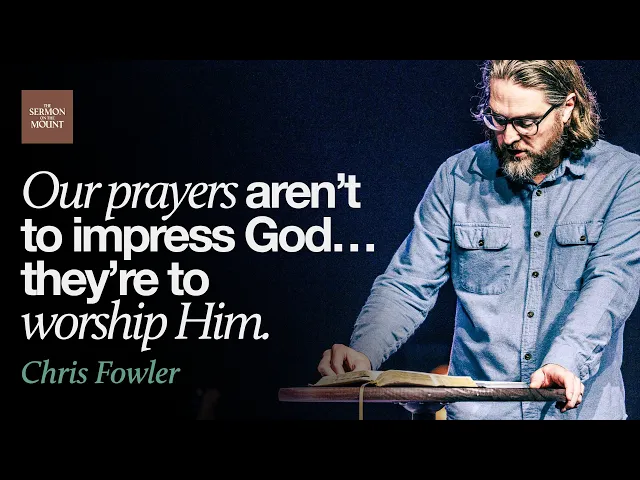
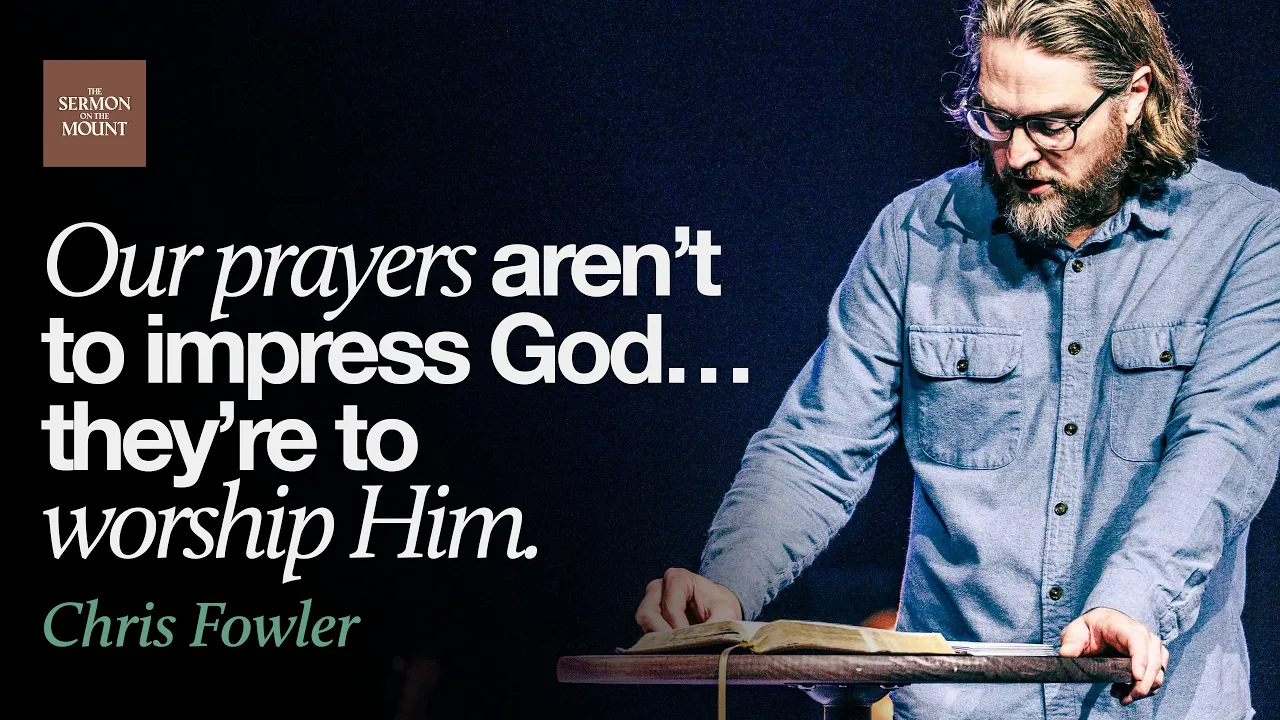
" God does know what you need, but that doesn't mean that we aren't to pray. Our prayer isn't to inform God; our prayer is to worship Him. It's to declare that we see ourselves rightly, that we are the son, that we are the daughter, that we are the sinner that needed to be saved by grace, that we see Him rightly, that He is reigning and ruling over all creation, and that we are not—that He is the one who initiates salvation for His children; we are not.
In Isaiah 65:4, there’s a prophecy about the new heavens and the new earth—this being the time when Jesus has returned and He has made all things new and He will dwell with. . .
His people for all of eternity. And that verse says, "Before they call, I will answer. " He knows what you need.
"While they are yet speaking, I will hear. " Our Father knows our needs before we ask. Why?
Because He is the all-knowing, all-powerful Creator. But not just the Creator; He is the Father who has adopted us into His family. Paul said in Ephesians 1:5, "In love, He predestined us for adoption to His, as sons and daughters, through Jesus Christ, according to the purpose of His will.
" He knows what we need because He's adopted us. We are His children, and He is our perfect heavenly Father. He knows our needs.
J. Packer said it this way: "In adoption, God takes us into His family and fellowship. He establishes us as His children and heirs.
Closeness, affection, and generosity are at the heart of the relationship. To be right with God the judge is a great thing, but to be loved and cared for by God the Father is greater. " I'm curious: Have you forgotten this morning the privilege of your position as a fully known, fully loved son and daughter of the King?
Earlier this week, in the middle of the night, one of our kids came and knocked on the door. I wanted to ignore it—just being honest. I wanted to ignore it, but I heard it, and I went out there.
She was like, "I can't sleep. I don't feel good. Something's not right.
" We began to talk, and we worked through that. What I recognized in the moment was that she needed a hug and an embrace. She needed the comfort of a father.
She needed prayer to know that someone else was in this with her, that she wasn't alone. Tim Keller says, "The only person who dares awake a king at 3:00 a. m.
for a glass of water is a child. " We have that kind of access. Now, I'm not saying I'm a king, but I am the king at my house.
No, I'm not; Jesus is. Jesus says Jesus is King. Jesus is King in my house and all of my life.
The father who comes to the child's bedroom in the middle of the night, not feeling well; the child who comes to the king at 3:00 a. m. because they're thirsty—that's the access that we have to God the Father.
We cannot pray disconnected from our identity as His sons and daughters. We cannot pray disconnected from the privilege of this reality. We must not pray insincerely.
We must not pray performatively, but we must pray. And that reality might leave you a little anxious because we don't want to get it wrong; we don't want to mess up. Jesus does call us to a life of prayer with a pure heart posture.
Jesus commands here about the internal; He's focused on your righteousness, not those external actions. As easy as it was to try and take a pass on this, because He says the Father already knows, with the temptation to babble in performance, it's easier not to pray at all. Yet Jesus is clearly calling us to a life of prayer.
"Pray then like this. " When you pray this week, we looked at how not to pray, learning to pray. Next week, we're going to look at verses 9 through 15, which many call the Lord's Prayer.
There we will learn to pray, but we will see how to pray. I'm struggling a little bit this morning not to give some practical advice and applications for you so that as you go through this week, you can step into prayer—whether it's something that you just haven't done or haven't practiced, or maybe it's something that you need to re-engage with. But that's going to be for next week.
So my advice and application for this week is to search your heart. Are your motives pure in prayer? Are you praying like the Gentiles for all to see, for all to hear, with the wrong motives, or are you praying with that pure heart as a son and daughter of the King?
It's not the words we say that are powerful; it's not the length that we pray that is powerful; it is not the place that we pray that is powerful; it is the One we pray to that is powerful—the One who has the power over sin and death, the One who had the power to take His life back up after He gave it for us, the One who has the power to give you life and me. In everything we do, we must remember that Jesus is what is powerful about prayer, for He has already done what we cannot do for ourselves. Our prayers are asking God to continue to do the same.
It is this work that God has done for us what we could not do for ourselves that we remember each and every week when we come to the family table and we take the family meal, just as Jesus did with His disciples the night before He was betrayed. After dinner, while they were dining, He took a loaf of bread and broke it and said, "This is my body, which is broken for you. " Then He took a cup of wine and said, "This is the cup of the New Covenant; this is my blood that is shed for you.
" And every time you eat this bread and drink this cup, you proclaim this good news of the Gospel to yourself. You proclaim it to your brothers and sisters who you share. .
. The meal with which we declare to the world that we identify with the way of Jesus. So, as you come today, as we come to this time in the service where we take time to reflect, I want to encourage you.
If you're here today and you're a follower of Jesus, come and take this meal. You'll come, and you'll tear off a piece of the bread, and you'll dip it into the cup. Now, when you come, sometimes you want to just tear off a teeny little piece, and a lot of times that will fall into the cup.
But let us remember that this is a visual and a picture of the body of Jesus broken for you. It's okay to tear off a big piece; it's okay to be reminded that his body was broken and crushed for you and torn for you. It's okay to submerge that thing and be reminded that his blood was shed for you, and then to take this meal.
But before you come, I want to encourage you, in the same way that Jesus has encouraged us with giving and with prayer, not to come with improper motives or an impure heart, but to confess your sins before you come. Come with a pure heart, and then come and worship the Lord through this meal. And if you're here today and you're not a follower of Jesus, we would say, "Hold off," not because we want to make you feel like you're on the outside or not because we want you to feel isolated, but because this meal won't mean anything to you yet.
Instead, we say, "Take Christ! Feast on the good news of the Gospel. " That though you were a sinner and spiritually poor and needy and sick, Christ came for you.
In living the life that we live, being born in the way that we are, in flesh and blood, and growing up as a toddler, a teen, and an adult, at every point that he was tempted with sin, he resisted so that he could be the perfect sacrifice for each of us. His righteousness and holiness, his purity, are given to us, and our sinful rebellion is given to him. He pays for that rebellion, that debt for our sin and our separation when he dies on the cross.
But he didn't stay there! A few days later, he took his life back up, defeating the power of sin and death over us. He came to take new life for himself and to give new life to us.
We would say, "Take this meal; call upon him today! " After the service, there will be pastors and staff around. I want to encourage you to go and find them, share that with them, and let us pray with you.
Let us walk with you, and may you come next week and take this meal with us together as a family. Father, this morning, God, we thank you for your love and your care for us. Father, we thank you that in all the instruction that you give, it is from a loving and perfect Father.
Though we are and have had imperfect earthly fathers, and sometimes it's hard to even imagine what you are like, God, you tell us that you know our needs before we speak them. Lord, today may we confess that we have ignored the near access that we have to you. May we confess the empty phrases that we have heaped and thrown toward you.
Father, may we come with pure hearts to the table to be reminded of what you have done for us in Jesus, in his life, and his death, and in his resurrection. O Father, would you be with us now? May your Spirit bring conviction and correction, and may it bring comfort as we take this family meal.
And it's in the name of your Son we pray, amen.