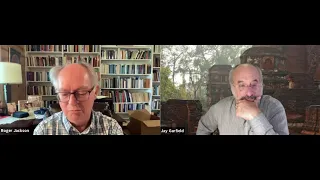
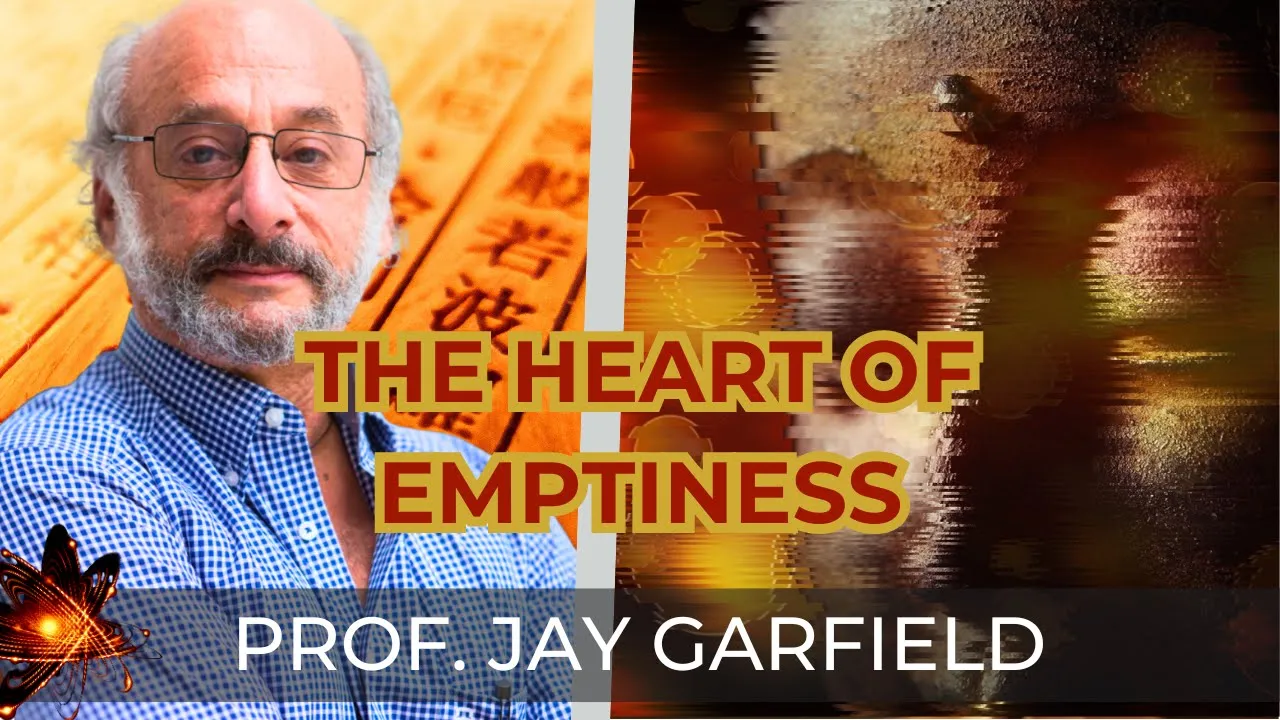
Welcome everyone to the great mind Series where we dive into meaningful and thought-provoking discussions on key philosophical questions today we are turning our attention in a fascinating intersections how Buddhist philosophy especially mamaka engages with and challenges Western idea about the mind and Consciousness I'm thrilled to welcome Professor Jay Garfield a leading Authority on Buddhist philosophy and his Engagement with Western thought Professor Garfield has made profound contribution to our understanding of mamaka philosophy offering fresh perspective on its relevance within contemporary philosophical discourse his work Bridges eastern and western tradition with exceptional Clarity providing valuable inside that
challenge and deepen our understanding of Consciousness self and reality it's an honor to having with us today to explore These intricacy ideas and help us navigate through the fascinating intersections between this philosophical World in today's session we will explore the convergence between Buddhist thoughts particularly mamaka and key ideas in Western philosophy our goal is to delve into how this tradition not only just oppose but also en reach and challenge each other offering fresh perspective on Consciousness the self and the natures of reality before we Dive in into today's discussion Jay I would love to hear
about your own intellectual Journey you know what initially Drew you to Buddhist philosophy and how did you come to engage eastern and western philosophical tradition in dialogue and were there any key moments or thinkers that sign ific L shape this path for you sure um in my case it's actually almost by accident um because my training was entirely in Western philosophy um I always say that I'm practicing without a license when I work in Asian philosophy um in the time that I went to graduate school and this is still largely true in the world today
sadly though it's improving um nonwestern Phil philosophical tradition simply weren't taught in major graduate programs in philosophy so I finished my PhD literally not knowing that there was any philosophy done outside of the European Tradition but I finished my PhD and went to take my first teaching job at a college called Hampshire college in the United States and the very first student who walked into my office um literally while I was unpacking my books in my my very first professional office um was came in and asked me to direct his senior thesis in philosophy on
intersections between medieval Tibetan epistemology and the social contract tradition and when he Asked me to do this I just burst out laughing and I thought somebody had actually paid him to give me a welcome to Hampshire joke because I couldn't even imagine that this made any sense or that there was such a thing as medieval Tibetan epistemology but he assured me he said look there's this guy up the road at ammer College Bob Thurman who of course is a great scholar of Indo Tibetan Buddhist philosophy he said he'll keep Me honest on the um Tibetan
philosophy I just want you to be read lock and muso with me you can read lock and rouso can't you and I said yeah I could read lock and muso and I thought it was a bad idea to begin my teaching career by saying no to somebody so that even though I really knew nothing whatsoever about Tibetan epistemology and had never heard of it I said sure I would do this since I knew that there was an expert on the um on the scene who could help with That side but of course if I was
helping to direct this young man's thesis I had to read what he was reading and what he was reading were actually the rough drafts of Bob Thurman's translation of ton capa's great Treatise on hermeneutics called the essence of eloquence um and that is an extremely technical very difficult uh text on how maikas can read the Su emotion of Sutra the Sutra unraveling the thought it it presupposes A an enormous textual background in Indian and Tibetan um epistemology uh metaphysics and and literature so I was really struggling and of course this was also really the first
major Tibetan EP um Trea us that anybody had tried to translate into English so it was difficult and I was reading rough drafts and I I found it really hard but I understood a little bit of it but not a whole lot but I found it fascinating but anyway he finished his thesis and I put That down because I had a career to get going in logic and cognitive science which is what my specialties are in Western philosophy and I didn't have any time to think about medieval Tibetan epistemology after that was done but then
seven years later there was a big debate at our college and I was happily on the losing side I'm s very sorry that I advocated for the position that I did but I'm glad that I lost and it was over a new curricular requirement For a students and the requirement was really simple that no matter what subject the student was studying no matter what their major they have to pursue the way that it's addressed in some non-western tradition they can't just study a discipline say the way white people study it so whether it's physics or
art history or philosophy or chemistry you can't just do the European Version and that requirement passed the faculty passed this and so the college turned around to the faculty and said well we can't require students to study things we don't teach so everybody has to either retool or resign you've either got to develop a teaching competence in some western part of your discipline or leave um so I kind of panicked I didn't know anything about any non-western tradition in philosophy which of course was one of the reasons that I opposed it Um and I just
thought well what can I do and then I remembered seven years ago medieval Tibetan epistemology that was kind of interesting I could learn enough about that maybe to um add a week to my epistemology class on Tibetan epistemology so I applied for a grant to retool because the college made a lot of money available to do this and I essentially hired Bob Thurman over the summer to teach me enough Tibetan epistemology that I could do a week in My epistemology class and I figured then I will have paid my debt to society so I did
that and it was actually really fun and the students loved it so the next year I applied for a bigger Grant to develop a comparative epistemology class and to learn a little bit more about Buddhist epistemology and gosh that was even more fun um and students were enjoying it even more and I found that I was actually getting interested in this material and I realized very quickly um That there wasn't a lot of material translated into English from the Indian and Tibetan Buddhist traditions and so I constantly kept running into situations where I'd be reading
something that they' refer to some other text and I'd call my friend Bob Thurman up on the phone and say hey Bob this text referring to the Buddha po do you have a copy of that and he'd say sure I do Jay but it's only available in tibetan say oh damn B this other text is Being cited it's the pran of Artica do you have a copy of it yes but it's only available in tibetan and so I realized that if I was going to go and get anywhere in this field I had to start
learning some Tibetan so I started learning a little Tibetan and that was difficult but interesting um and I had a sabatical coming up oh no before that there was a great the National Endowment for the Humanities offered a summer seminar on ngar um in Hawaii and I Thought wow wouldn't it be cool to you know study ngara with a bunch of experts in Hawaii and I thought I'll never get accepted to this but why not apply so I applied and I was accepted and I went off to Hawaii and spent a wonderful summer studying the
Garian and my interest got deeper and deeper and so then I had a Saba coming up and I asked everybody if you're really serious about learning Indian and Tibetan Buddhist philosophy and if you're really serious About getting Tibetan language under your belt where do you go and everybody said the same thing you go to India to the central Institute of higher Tibetan studies and try to study there so I applied for a grant to go to India to my astonishment we received the grant our family picked up and went off to India for a year
to the central Institute of higher Tibetan studies where I studied mamaka and yogachara with the great gesi yeshi tapka and I never look back and so That's kind of how I backed into this field it wasn't because I was trained to do it it was because students were interested and my college wanted us to retrain and I kind of followed those pressures and got hooked so that's how I got it's beautiful so technically are you just a scholar or are you considered a Buddhist then um okay I'll tell you a story about that as well
um about 20 years ago we invited his Holiness the Dal Lama to Smith College for a visit and um he came and one of the things that he did was to offer a seminar for faculty members in Buddha studies in our five College Community and the Consortium in which our College functions and they were about 20 or 25 professors of Buddhist studies around a big table with his Holiness of Dal and he began the uh seminar this way he asked how many of you when you teach Buddhist philosophy your Buddhist studies are asked by your
students are you a Buddhist and of course every hand went up and then he said now here's the question I really want to ask how many of you answer that question and about half of the hands went up and he advised he said I do not think you should answer that question and here's why suppose there are students in your class who are Buddhist and you say that you're a non- Buddhist they're going to say oh this Person doesn't have any authority to teach me and they're not going to listen to you and you'll be
less effective as a teacher and they will learn less or suppose you have non- Buddhists in your class and you say that you're a Buddhist they will be afraid that you're trying to proze them and them and they won't listen to what you have to say and you'll be less effective and they won't learn as much your job is to teach students not to pratie them um not to Make them feel uncomfortable so my advice he said is never answer that question um they're there to learn from you and you're there to teach and it's
none of their business what your religious practice is and then he said I try to do the same thing but nobody ever believes me so I'm going to just simply follow the advice is his Holiness of Al Lama and to say whatever my personal um beliefs are have absolutely nothing to Do with what I'm doing professionally in studying and teaching Buddhist philosophy in mamaka it's known for its radical metaphysical disc constructions both self and Consciousness could you begin by outlining how these tradition conceptualized Consciousness particularly in relation to its critique of inherit existed so a
central theme in mam philosophy is the doctrine of the two truths um conventional truth and an ultimate Truth and this is um a Doctrine that's um developed in detail by the second century philosopher narina and then by his commentators Buddha palata Bava Chandra and so on um and the fundamental idea is this that there's a conventional reality in which we live and conventional truths about that and that conventional reality has peoples and tables and chairs and dogs and cats and trees and everything else that we have around us as well as Things like atoms and
molecules and wind and you know all of that stuff and a mind and conscious thoughts and so forth um there's things that it doesn't have right Santa Claus turns out not to even be conventionally real um and unicorns aren't conventionally real um so it doesn't mean that everything that we just dream Up is real but there's a an a reality on which we can agree um there's also um an ultimate truth but the ultimate truth um is that Everything that exists is empty of any intrinsic reality that is that nothing exists on its own independently
or substantially um and the and the idea that it that it does is something that we continually carry with us that when we look at the conventional world we habitually superimpose intrinsic identity on things so when we see objects in the world or states of our own mind we think of them as existing independently when in fact every one of Them exists only interdependently or conventionally and that interdependence has three dimensions to it there's causal interdependence everything that we encounter depends upon causes and conditions none of it exists causelessly or just on its own there's
mological interdependence that is every complex that we see exists in dependence upon its parts and every part that we see exists only in interdependence on the Holes in which it figures and finally there's conceptual in um interdependence that is the phenomena that we encounter exist as the kinds of things they are only in virtue of the structure of our perceptual and cognitive apparatus we can only see things and conceive things as they show up for our perceptual capacities and in our conceptual scheme now once we appreciate that we come to recognize that the world we
inhabit isn't a world that we just Encounter but a world that we're constantly actively constructing in interaction with the phenomena around us conditioned by our previous cognitive activity and having as consequences all of the kinds of things that happened to us and that we experience later on and that all of this is happening in the context of many many of us co-constituting this reality so when we say that the conventional world is empty of intrinsic reality We're not saying that it's non-existent rather we're saying that the way that it exists is conventionally and interdependently that's
the first thing to say now when we think about things in the context of the doctrine of the two truths one of the kinds of phenomena that we tend to reify most easily and most reflexively are our own minds or our own personal um existence and that can take the form of thinking Of myself as a self as opposed to a person and of course Buddhism in all of its Traditions is well known as the doctrine of no self or selflessness in Sanskrit we say anat and what that means is that when we reflexively think
of ourselves as being selves that thing called a self doesn't exist at all something that underl our mental states that underlies our body that's the owner of our mind and our body that we reflexively think of Ourselves as kind of standing behind all of this that's just a fiction instead what we are are persons that is causally interdependent sequences of psychophysical states that are in constant causal interaction with everything around us and we mistake that flow of psychophys iCal processes for a substantial underlying self similarly while it might well be true and it is true
that conventionally we have lots of conscious States so for Instance right now I'm conscious of the question that you asked me I'm looking at you on the screen and conscious of what you of of what you look like and that you're nodding and listening and so forth I'm conscious of a world around me in my room and so forth to say that in order for there to be conscious states there has to be some substantial thing called a Consciousness behind them is a deep mistake instead there's a flow of Conscious States each one of which
is generated by countless causes and conditions and it generates further Downstream effects but we can talk about being conscious without talking about a thing called consciousness one way of thinking about all but uh the import of all of this is that mamaka Buddhist philosophy is constantly reminding us of an innate reflex to reify everything around us to make it seem more solid more essential More substantial more independent than it is and that applies to things outside of our psych psychophysical stream like apples and trees and dogs and PS but it also applies and perhaps most
poignantly to what we are ourselves and so to hypothesize selves or consciousnesses or Minds where all there are are sequences of psychophysical processes so professor gari as you talked about ultimate and conventional reality uh do you see uh even Ultimate Reality is said as empty You know emptiness being empty of itself so what will be the uh you know distinguish and conventional reality is also you know said in the same way so what is the distinguishing line between ultimate and conventional reality what is one thing that you would say you know oh that's that's a
wonderful question thank you so much for that so you're right and I first want to emphasize the depth of the premise of your question um some people think of the Distinction between conventional reality and emptiness as being the distinction between things that appear to exist but don't and complete non-existence and so they think that when we say that the Ultimate Reality of things is their emptiness that we're saying that things only appear to exist but don't and ultimately there is nothing that's a mistake to do that is to deprecate the conventional world and to reify
Emptiness so narina puts it very beautifully like this in the 24th chapter of the fundamental verses on The Middle Way mul he says the Buddhist teaching is based upon two truths a truth of worldly convention and ultimate truth and if you don't understand the difference between the two truths you're not going to understand the Buddhist teaching because you can only understand the ultimate truth in dependence on the conventional Truth and only if you understand the ultimate truth do you gain Liberation so he begins as the first half of the answer to your question by distinguishing
the two truths and saying that the conventional truth is importantly different from the ultimate truth and one way we can understand that difference is that the conventional truth that we app that appears to us is a positive um phenomenon um so dogs cats tables and chairs apples and Oranges peaches and pears um all of those are um positive things that appear to our senses um and with which we interact in order to for our daily life to work and again if you say those things don't exist you're in big trouble you won't be able to
eat you won't be able to make tea you won't be able to walk down the street and you certainly won't be able to talk about think about or Reason your way into emptiness that's the that's a really important point you Can't just jettison the conventional truth and keep the ultimate but the ultimate truth about those things is a negative fact it's the fact that they have no intrinsic reality they exist only conventionally so one way to put this is the ultimate truth is that every of anything is that it exists only conventional so one way
to put this point another way to put this point is if you don't have tables you don't have The emptiness of tables if you don't have chairs you don't have the emptiness of chairs you can't say you keep the Apple but hand me its emptiness or let's get rid of the Apple but keep its emptiness the ultimate truth of things is an aspect of those things and it's a negative aspect of those things it's the pure absence of any intrinsic identity without the positive presence of anything else so when we say that Emptiness is empty
just as conventional Phenomena are empty we say that when we look for emptiness as a positive phenomenon there is no such thing there's just the absence of any positive thing of any of any substance or Essence naran's commentator Chan vaker who lived in the seventh century makes that point beautifully by using a fun example he says empty to say that emptiness is a thing if you think that it's a positive thing besides conventional phenomena is absolutely Crazy and he says it would be like this suppose you went into a shop and you wanted to buy
something and the shopkeeper points to the empty shelves and says sorry I have nothing to sell you and you say that's great I'd like three of those nothings please um Sean vieri says what would you possibly buy how crazy would that be to say that emptiness is a positive thing that you could then apprehend as opposed to the mere absence of intrinsic ID identity Would be like saying I'll have three of those nothings that you've got so the sense in which conventional reality and Ultimate Reality are one which narian also asserts when he says whatever
is dependent origination we explain to be emptiness that being a de dependent designation is the middle way is to say that there's no substantial difference between the conventional and the ultimate world that is Ultimate Reality is always the Ultimate Reality of some conventionally existent thing emptiness is always the emptiness of some interdependently existent object but that's what the sense in which they they saying the important sense in which they're different is that conventional reality of things is their positive aspect as they appear as objects to our Consciousness or subjective States their emptiness is the absence
of any intrinsic ident Since Consciousness is from the shanang like it is discontinuous uh so would you like to say that uh or understand in this way that the memory doesn't lies in the uh Consciousness but again if memory doesn't lies in the Consciousness where does it exactly lies uh and uh this is not a new portion I think so you're aware of it so how will we uh tackle this question um thank you for that question question if I understand it Correctly you're raising the question um that some pranav um raised for majamas but
is also raised by um some advit vant philosophers um for maikas and that's the question if we think about um our mental life simply as a Continuum of causely related States how do we account for um memory um because it sounds like memory um is the preservation of a past perception some place like in Consciousness and if There is no such Consciousness how do we preserve that past state in order to remember it now is that the question I think we can answer that question pretty directly and here I'm I'm simply trading on Chandra K's
approach to answering this question but it's I think a perfectly perfectly good approach notice that the question presupposes that when I remember something that occurred before that somehow that past experience has been Preserved and then is being recalled or reactivated now that's actually a misleading um understanding of how memory works and chandra's explanation and Shanti dava's explanation a bit later of how memory works is in fact exactly the way that contemporary cognitive psychologists tell us the way that memory works we don't have the preservation of an experience in the past rather an Experience in the
past causes a sequence of psychophysical processes and our memory right now is an effect of that a downstream effect of that sequence of psychophysical processes not a photograph that's somehow been stored in our brain or a video recording stored in our brain that's then replayed that's why for instance when people remember things they um often we discover that what they claim to remember is in fact very different from what happened at the Time that's also why sometimes we forget things um or create um confabulate memory and Imagination so you don't have um something that's preserved
in memory rather in memory what we have is a contemporary cognition that is the downstream effect of a cognition that happened long ago and for that reason you don't need a substance or a substratum like a Consciousness in order to retain and File photographs or videos in order to replay them in memory all you need is a causally intact sequence of psycho physical States so think about it by analogy this way suppose you line up a whole lot of dominoes and then you knock the first one over when the 45th Domino Falls you don't ask
what is it about that first Domino that was preserved in every one of those dominoes and is now being replayed in the 45th Domino instead you have a series of effects of That initial domino falling that is represented in the 45th domino falling and that that's the way memory looks so you don't need a substantive basis for memory in order to explain it indeed we often take ourselves to have such a substantive basis but that's the illusion of self and exactly what Buddhism is posed against is that illusion of self trying to replace it with
a clearer doctrine of no self Dr Garfield I just wanted to ask about Because you just gave an example of the stom know for instance cuz I was interested in what is it that catalyzes this causal chain if you will or these causal relationships and and so the other part of that question would be are is this emptiness and the causal phenomena are they related in some way um this this is what I want to check like you talk about the Domino so what is it that makes the first domino fall let's say that well
Buddhist philosophers tend to think that there is no first Domino um that this causal process has been going on um in for beginningless time um and one way to think about that is that you know we don't look for a cause for everything we look for a cause for each thing um contemporary physics um you know um tells us that the universe began in a big bang there was nothing before that that caused it the Big Bang brings time itself into existence and once time is In existence causal processes begin um but we don't need
to point to any first cause for anything as long as there's been time there's been causes and effects Professor yoga Chara and madaka both reject the existence of a permanent cell but yoga introductions of Alaya Viana provide a more structur account of Consciousness so my question is in your view what is the philosophical tension between these two school because the group tends to ask these two questions So I'm just presented it to you it might sound bit broad so are these approaches fundamentally different or could they be seen as addressing complimentary aspect of the the
the same issue they want to know I think they're completely complimentary and not at all inconsistent with one another um and I think that's really important to see so let me preface that by saying that the yogachara tradition is huge and extremely Internally diverse and there are many philosophical strands within the yogachara tradition and very often people will pick one particular particular idea and say this is what yogachara is this is what yogachara is this is what yogachara is um and very often that's they pick the idealist strains within yogachara I do think there are
tensions between idealism and mamaka but idealism isn't essential to yogachara it's not the central idea it's Something that it's one stream of yogachara and thought um so I'm going to give you a different perspective on the relationship between yogachara and mamaka than the Rivalry perspective that is often presented and this perspective I actually encountered first in a talk that his Holiness ofal Lama gave in New Delhi about maybe 25 years ago I'm not sure exactly but roughly then but I Learned afterwards as I sort of did further research that he was actually channeling a much
longer tradition that actually begins um with the 14th century Tibetan philosopher rongon um and that is a tradition of seeing these as um as very complimentary so here's a way to think about this first of all yoga what's really um the core of yoga and thought I think the core of yoga and thought are the doctrine of the three Natures and the three natur lessness is so when we understand that each phenomenon has an imagined nature par cus from Hava that each phenomenon has a interdependent nature pantus from Hava and that each part each phenomenon
has a consumate nature aava that every phenomenon is empty in three aspects empty with empty with respect to characteristics empty with respect to causation and ultimately empty and Understand the way in which those three naturistes pair with the three natures corresponding to um to the imagin nature is emptiness with respect to characteristic corresponding to the dependent nature is emptiness with respect to causation and corresponding to the consumate nature is Ultimate emptiness that's really the core of yogachara and we can see that because that's really what we find presented in the Su MOA Sutra especially in
the Seventh chapter the questions of paramont summit Gata now how do we put mamak and yogachara together here's how rongon does it and I think it's quite beautiful he says that mamaka teaches emptiness from the side of the object of knowledge when we understand emptiness in mamaa we pay attention to objects to things and ask what is it that to superimpose intrinsic identity on this thing what is the absence of intrinsic identity in this Thing and so we use forms of argument that reduce to absurdity the idea that things have intrinsic identity and to demonstrate
that they're emptiness of any empty of any intrinsic nature um and hence that they that their ultimate nature is emptiness when we do that we're always focusing on the things we experience even when we're focusing on the person or the self we're asking what what is it that makes the the me that I Experience empty so turning myself into an object and analyzing that and these arguments and these analyses are very profound and they're very important yoga cha is addressing emptiness from the side of the subject of experience so it's asking the following very difficult
question given that everything is empty how is it that we manage to superimpose intrinsic identity on phenomena that lack them what are the Nature of our cognitive processes and our subjectivity in virtue of which we manage to get so completely confused about the nature of the world to confuse empty phenomena with non-empty phenomena and to experience a world of non-empty phenomena so we can if we explore how that works we can understand both the roles of the three na natur and three naturistes and of the Aly of Anana in That process so yoga is asking
how we manage to do this subjectively so one way to do this and and so because it's doing this yoga churan thought is much more psychological and much more phenomenological than mamica thought one way to think about this is that Moma is doing the metaphysics and yogachara is doing the phenomenology that allows us to um understand how we experience a world Whose metaphysical reality is delivered by mamaka so let's imagine an object um that we're going to all all see together um suppose that you've got um an apple on your desk or an apple in
your room if you don't have an apple you have to imagine one um the Apple that I see um presents itself as very red and smooth and shiny and tastes very sweet if I bite into it and it smells very sweet right now on my desk it makes me tempted to bite into it but I'm not going to um So now I want you to imagine that it's not you seeing the Apple but suppose it's a bee or another kind of insect in your room who sees the apple one of the interesting things about bees
is that they don't only see in the same wavelength range of light that we do they also see in the ultraviolet and the infrared so the Apple doesn't look red to the be the apple is going to have a remarkable range of colors that we can't even see bees are also sensitive to Magnetic fields and so if the Apple's got a magnetic field that appears with that magnetic field bees have complicated compound eyes so the image they're seeing is an image seen from many perspectives at once unlike ours now if you were to ask yourself
oh and let's also imagine that you've got a dog in your room I have one in my room he's fast asleep behind me um he doesn't see um Reds very well at all dogs see yellows and greens okay but not Reds so When he sees the apple he probably sees it as sort of a grayish or greenish color so he sees it very differently but he has a much more acute sense of smell than I do or the bee so what he actually experiences a volume of smell that looks kind of grayish greenish whereas I
see see a red object that happens to have a sweet smell there's three really different ways of experiencing the Apple now ask yourself the following question and the moment you ask it you're going To realize how stupid it is the question is who's right about how the Apple appears is it me the Bee or the dog the moment you ask that question you realize that it's dumb it's I don't want to say I get it right and bees see everything wrong or bees really get reality right but human beings don't that doesn't even make any
sense there's the apple as it shows up for the bee in perception there's the apple as it shows up for me in perception there's the Apple as it shows up for my dog in perception and then if you ask the really dumb question yeah yeah yeah but what does the app how does the Apple appear just on its own regardless of whether you're a bee a person or a dog then you're really stupid right but what you realize when you ask that question is there is no way the Apple just appears only a way it
appears to a particular subjectivity when you realize that that There is no actual perceptible characteristic that the Apple has you realize that the apple is empty with respect to characteristics and that's the first of the three emptinesses in yogachara Okay so we've recognized that the app apple is empty with respect to characteristic now if we continue on this story and we ask yeah yeah yeah but how does the Apple appear so sweet and smooth and red to me right now now I can tell a story and it's a very natural Story light bounces off that
Apple um various aromatic compounds are evaporating from that Apple the light enters my eye through the pupil is refracted and turned upside down through jelly and my eye causes photoelectric effects on the back of my retina sends electrical impulses through two different Pathways to the back of my brain and a bunch of electrical stuff happens in the occipital cortex that's how I see it and then I could tell a Similar story about o faction and and gustatory stuff notice that none of that electrical stuff that's happening looks anything like an apple or smells anything like
an apple I hope it doesn't or I'm in big trouble right there's no apple in my skull or I'm in very big trouble so what I experience as this red shiny smooth thing is really a complex set of causal processes now the yoga Char didn't talk about occipital cortices and retinas but they did talk About all of the minute cognitive um cognitive and memory processes involved in perception and pointed out that that's really what's happening so when we say that we've recognized that the apple is empty with respect to causation that is there's no apple
in all of those causal processes those causal processes lack an apple but they're confused for an apple through this imaginative projection um as this red shiny thing then we ask the question so that's The second of the three empasis um the third of the three emptinesses is Ultimate emptiness so we're now asking the question okay so where is the Apple in all of this Co in this cognitive process and the answer is is nowhere there isn't an apple there at all all there is is a complicated interaction between me um and phenomena around me that's
experienced as an apple and that is the ultimate emptiness of the Apple that gives us the three Emptinesses notice that each of those is characterized purely phenomenologically but now the beauty of yogachara is we can turn those three emptinesses around into three characteristics of the Apple so we can say oh the Apple has an imagined nature there's a way that I imagine the apple and a way that bees imagine the Apple a way that dogs imagine the apple and so forth we imagine the Apple to be an external object dually Rel related to Subjectivity that
we simply happen to encounter as it is and imagine that our subjectivity is just this kind of recording device that perfectly gives us the way the world is antecedently that's stupid but that is the way we reflexively imagine the world around us the 20th century German philosopher Edmund huro called that the natural attitude our natural attitude towards the world is here we are as perfectly experiencing subjects just detecting Properties that are already there in the world where in fact we're constructing them all the time so that's the first nature of the Apple the imagined nature
there's also the dependent nature of the Apple the Apple that I experience the red smooth sweet thing only emerges depend in dependence on countless causes and conditions most of which are psychological and the dependent nature of the apple is that the thing I experience that imagined apple is Something that depends for its existence on all of these causal processes and then there's the consumate nature of the Apple that is that that dependent nature is empty of anything red shiny and sweet there's nothing red shiny or sweet in my head that it's empty of all of
that and that's the consumate nature of the Apple that the dependent is empty of the imagined now those three emptinesses that we um or those three Natures map on to those Three emptinesses right so the emptiness with respect to characteristic Maxs on to the maps on to the imagin nature The Emptiness with respect to causation maps on to the dependent nature and the consum the ultimate emptiness maps on to the consumate nature and all of that gives us a detailed phenomenological and psychological explanation of how we construct this empty world around us and that and
in virtue of which it is completely empty there's nothing in that Story inconsistent with mamaka it's just the phenomenological sign of mamaka now the aliyana last piece of the puzzle um this Foundation Consciousness part of the genius of yoga is that it's really the first philosoph opical system in the world that really discovered the profound importance of unconscious psychological processes to understanding our cognition and so when you think about the Ali of vyana even though it's Generally translated as Foundation Consciousness it it may be better to understand it as the fundamental unconscious or the preconscious
or as I like to put it just non- introspectible foundational psychophysical processes um Freud had this idea a few thousand years later um but the yoga Chan idea is that if we want to understand how our introspectible cognitive life emerges A Life That's Got apples and tables and dogs and cats and Bees we have to understand that the causes of all of that are things to which we don't have any access all of those process that psychologists tell us about neuroscientists tell us about and the Ali of Anana is that flow of unconscious processes and
when those um and what those do is produce the yoga metaphors to ripen that their seeds or potentials that ripen as cognitive processes and whenever they emerge into conscious introspectible um experience They always emerge in a dual aspect a subjective aspect and not objective aspect so when my ability to perceive the Apple happens I experience me as a subject perceiving the apple as an object and it's not as though first I emerge as a subject with no object or first it emerg as an object and then I get positive as a subject but there's a
co-emergence of subjectivity and objectivity that gives our experience the appearance of subject object Duality But that appearance of subject object Duality is just that it's an appearance that is actually the maturation or the um the evolution of a fundamentally nonu non- introspectible set of psychological processes namely the alyana and that's why where mamaka says that things are empty of intrinsic nature yoga say no the fundamental thing that they're empty of is subject object Duality and that that can be understood in terms of these three aspects of Emptiness emptiness with respect to characteristic with respect to
production and ultimate emptiness again that's not inconsistent with mamaka it's giving a phenomenological understanding of the metaphysical picture that mamaka sketches it's quite a complex system to understand because of the way they're using dialect iCal languages and that's the way you you clarify it it sync in to me now because before I'm categorizing It I have these categorizing saying this is an idealist frame of work and this is a m Maka frame workk so I'm seeing two separate uh literature of it but when you combine them together I hear it now that that is a
phenomenological side of it and that's the the broader metaphysical side of it it so this beautiful tremendously explained you know yogachara I have a question that recent researches on sandmo Sutra and Maya Jala sura especially they say that Uh there was gradual development of yogachara budhism especially so so what is your views on that like how would you you know say Rel the gradual development of yogachara with the gradual development of madika yeah I I think both of these um Traditions develop gradually um it's easy for us and this is I think a really um
important kind of hermeneutical mistake that often gets made by contemporary readers when we read Classical um Indian philosophical literature um it's the model of authorship um that we impose so these days I mean like the 21st century um if I write a book I write it at a particular time over a period of a certain number of years if my name appears on the cover or if my name and two of my colleagues names appear on the cover or my name and nine of my colleagues appear on the cover you assume that we wrote that
book during That particular time frame and when people refer to that book they can open it up and say this is the book that Garfield and his colleagues wrote and it's easy to superimpose that model of authorship on a Classical period where that if that did happen it was probably the exception rather than the rule so most of the texts that we have are texts that evolved over time that were written by Committees of authors rather than single Authors and those committees may have existed over many years so for instance um if we look at
and this is certainly true more or let me say it's more plausibly true of Mahayana Sutra literature than sh literature but it's true of both um so for instance if we look at Shanti Davis Bodhi avatara which is a classic example of that um we know that that text evolved for at least a couple of hundred years and we can we've got manuscripts from different periods Where different parts of the text are transposed and moved and material is added to it and so the text that we have um is a fairly late version and I
and I like to say that what that means is It's the final draft wasn't a rough draft um and we can think about these texts as evolving from rough drafts into final drafts um now the sutas that we have and I would say those include the prna param sutras the Perfection of wisdom sutras that represent the foundation of the Mamica school as well as the S Mo and the Lan vatara and sutras like that that represent the Sutra foundation of the Yar School those don't have authors attached to them at all right they're allegedly the
word of the the Buddha Buddha v um but of course the historical Buddha was dead for 500 to 800 years prior to the composition of any of these sutras so if we're being realistic and these are written in Sanskrit right they're not written in in uh po or any Other Propet language um like the um like the terada or the the primay Canon so we have to um take very seriously the fact that um we don't know who wrote these texts but also when we look at the at the texts themselves they provide a lot
of evidence of editing re-editing um and evolution over time from rough drafts to the final canonical drafts that we have and sometimes again if we look at um translations of these texts or manuscripts of these texts that Are found in different places whether they're found in silk gr caves and dun Wong or ton or whether they're found in tibetan monasteries or or elsewhere or in Chinese translations we see that people are working from different editions um with with different versions of the texts there's nothing wrong with that um we just can't superimpose the model of
authorship that we have of contemporary literature on classical literature now in the case of yogachara Which is what you asked about the um the yoga tradition was a a viable and dominant tradition in India from about the 3D Century to about the 11th century so that's about 800 years 800 00 years is a really long time um I want you to sort of think about that that's like from the 1300s till now okay um so that's a long time and you expect that any intellectual tradition is going to develop um over those times Western philosophy
and its systems developed a Lot over those times um and we don't want to say gee if you really want to understand logic look at 14th century logic not 21st century logic um if you really want to understand idealism look at 14th century idealism not 21st century idealism we say let's look at the history and development of these strains of thought in Western philosophy over time and we have to be willing to do the same thing for Indian philosophy in general for Buddhist philosophy in Particular for yoga chura philosophy in very particular and these philosophical
systems were evolving not only in an eternal Dynamic but in interaction with other systems so yoga charans were talking to majamas they were talking to non Mahayana Buddhist philosophers they were talking to vidon they were talking to niakas they were talking to mimamsikas and so there were all of these different debates going on to Kashmir shivas so there were all these Different debates going on and each of these schools was developing in response to the others this was a living active intellectual tradition and that's why it's really helpful to do textual history history in order
to figure out what was going on and when we look at some of these debates we get beautiful insights into how these people were thinking into what kinds of um theories were in play and also into the degree to which 21st century Western philosophical Debates often recapitulate classical Indian debates or classical Tibetan debates we could say the same thing about Tibet you know philosophy in Tibet evolved an awful lot from the early transmissions in uh the 8th centuries up through the later transmissions and then the autonomous philosophical Scholastic Traditions that really got going in the
10th and 11th centuries in like f thank you historically yeah one quick followup so in light of you know mad and Yogachara where do you see the school of Buddha nature tagat Garba aligning with is it more towards yogachara um T Gara thought developed primarily in the yogachara tradition that's not to say there were no maikas who um referred to taga Garba but you should also recognize and really important that when we talk about Evolution and and dissension there are a lot of different interpretations of the tarath thought both within uh in within India in
Tibet and in China um And it's not a single strain of thought so sometimes T taka Garba gets represented as a kind of kind of essence or kind of um nature that that um sentient beings have and then it begins to sound an awful lot like um a kind of reintroduction of self and that gets criticized by some some Buddhist philosophers um but sometimes it's merely referring to the potential that beings have for buddhahood um so it becomes something much lighter and Sometimes it's somewhere in between but it's certainly true historically that taga Garba develops
primarily in the context of Yar thought hi first of all big fan and my question is that there is this particular verse in muladar chapter 25 verse number 19 it basically says that there is no distinction between n and samsara can you explain this thing I can I think it's a beautiful verse and so not even the subtlest something in between them Right there's not even a subtlest difference so I think it's useful to explain 2519 um in the context of 2418 um so at 2418 which I've um already uh quoted but I didn't I
didn't identify Nar says whatever is dependent origination is explained to be emptiness that being a dependent designation is itself the middle way and there what narina is saying is I'm going to use the Language of um sonapa here um sonapa is a 14 15th century Tibetan commentator and commenting on that verse he says that um conventional reality and Ultimate Reality are just are are extensionally equivalent and intentionally distinct that is they're the same thing from a from a an ontological point of view but they're distinct from the standpoint of how they're understood um and here's
a let me give you an analogy there and Then I will come to 2519 but I think that talking about 248 team provides the the relevant context um suppose um gee I want a really good example here that isn't okay yeah um King Charles um let's talk about Charles for a while I used to always do this with her majesty Queen Elizabeth because it was so easy actually let me do that with her majesty Queen the late Queen Elizabeth because it's easier okay We could either have we could we could have understood her as the
um Monarch and head of state of the British Empire we could also have known her as the most famous breeder of Welsh Corgis in the world um and you could imagine going to um uh going and seeing um Elizabeth on walking all of these corgis and saying there goes the woman who's the most famous breeder of Welsh Corgis in the world and somebody says do you know that she's also the monarch of Great Britain and you say no no no she's just an old lady who breed Welsh Corgis or somebody who looks at Queen Elizabeth
addressing Parliament and says you know that she's actually also the most famous breeder of Welsh CES and you'd say oh come on she's the queen she doesn't have any time for that but indeed she was both right um and so these are two different ways of understanding who she was um but it was the same person it wasn't as though there were two people In one body there was one person who could appear in two different ways either as a monarch or as a reader of Welsh corgis similarly narian is pointing out there aren't two
realities conventional reality and Ultimate Reality instead there's one reality that can be understood as it is conventionally when we simply apprehend dependently originated phenomena or could we understand to be emptiness when we apprehend Ultimate Reality but it's The same reality now Nana and sansara same idea we can say that Nana and some sorrow represent the same reality experienced in two very different ways remember Nirvana um is a sociation the term Nirvana means the extinction of flames and the Flames that we have in mind here are the Flames of Attraction and aversion so that when we
experience the world without suffering we're experiencing Nirvana When we experience the world as a source of suffering we're experiencing some sorrow but that doesn't mean we're experiencing two different worlds the difference between suffering and Nots suffering is on the subjective side if we are plagued by attraction and aversion when we experience phenomena and if we are if our experience of them is conditioned by the Primal confusion of conventional reality with Ultimate Reality that grounds attraction and Aversion the primary confusion that involves the superimposition of intrinsic identity then we're experiencing the world as some sorrow but
if we're experiencing the world as empty and so have no attraction and no aversion and so experiencing the world free from suffering we're experiencing it as Nirvana that's not two different worlds that's two different modes of experience just as emptiness and and origination are't two different worlds They're two different modes of comprehension of the same world so this verse 2519 is meant to caution you against thinking of samsara as say the world in which we're born and Nana is some kind of weird Heaven world that we go to after death um we don't go anywhere
else we stay here the attainment of Nana is simply the relinquishing of suffering within this very world does that help yes very helpful thank you so my Question is this uh now how to assimilate that concept or is it possible to assimilate that concept of uh uh birth and reverse cycle the cycle of uh birth and death with this concept of uh there is no self or in the context like there is no continuous continuity of this self uh and I think so you're aware of this question so I no need to explain it to
you so can you just uh like how is it possible yes absolutely because if We ask what's born and what's reborn if we believe in literal rebirth that is personal rebirth then what's reborn is not a self but a person and you can and the important thing to see is that from this standpoint rebirth isn't something that only happens between that biological death and biological birth rebirth is something that's happening every moment so right now as I'm speaking to you the Jay Garfield who is speaking these words Is not the same as the Jay Garfield
who spoke the first words in this sentence and I can tell you why this Jay Garfield is older than that one and two things that are different ages can't be the same thing so one way to put this is that every moment I'm being reborn as a being with the memories of the person who existed a moment ago that's how how the sequence of psychophysical processes work now the doctrine of personal rebirth that we find In classical India Suggests that even if bodies aren't reborn across biological birth and biological death psychological continua um are independent
of those bodies and can continue um through that process many of us today don't believe that um and that's okay but here's something that we do believe um that just as the being I am now is the downstream consequence of the being I was when I began um speaking this sentence that there will be future consequences of my Life even after I die um my think my thinking is that to take rebirth seriously as a psychological as a phenomenological reality but more importantly as the basis for moral um thought and for um and for conceiving
of the importance of Our Lives you don't have to believe that you personally will be reborn what you have to believe in is a future um and if you believe in a future and you believe that what you do now is Causally efficacious in that future then you think that the psychophysical Continuum that you are now will continue after after your death because part of that Continuum is all of the effects of your life the that Continuum isn't just the effects of your life within a biological body so to take my own case um in
particular not that it's anything special but the way that I think about that I'm a teacher that's my profession that's my Job and I teach students um most of those students will be alive after I die um those students will know things believe things have developed in ways because of what I've taught them that means that I've got a huge responsibility if I teach them badly I screw them up and I screw up the future of the world if I teach them well I might do them some benefit and benefit the future of the world
and so when I'm thinking I'm thinking about the Downstream consequences of my psychological physical verbal act actions and that means I'm thinking about um what happens in after my death as part of the psychological consequences of what I do and that's how I understand rebirth you know this speaks about ultimate truth and we look at ultimate truth as you know it's sort of like the enlightened perspective is is the emptiness and the other perspective is Nana and they're not Separate is there um an ontological uh description sort of of this ultimate truth or is it
more phen phenomenological in nature in in in these ideas as I said earlier in talking about 2418 and 2519 of Mala um ontologically samsara and Nirvana are no different from one another phenomenologically they're different that on the other way to put that is extensionally they're not different just As her majesty Queen Elizabeth II was not ontologically different from the most famous breeder of Welsh Corgis in the world um but intentionally different you might recognize the F the most famous uh breeder of Welsh Corgis without recognizing that she's the Monarch and vice versa um so ontologically
there's no difference at all phenomenologically there's all the difference in the world and one way to look at that I mean This is a yogachara move one of the other names for the yogachara school is chittam Matra right mind only and sometimes people read that in an idealistic way as thinking that the only thing there is is mind a colleague of mine Dan lust house says there's a much better way to read that says the mind is the only thing you need to worry about um you can't do a lot to change the world you
can do a lot to change the way you experience the world um and um when We start looking at the relationship between samsara and Nana that's a transformation not of the world but a transformation of our minds that's changing our mind from a mind that grasps things as intrinsically existent and develops attraction and aversion to them and hence causes an experiences suffering into a mind that grasps the world as empty and hence without attachment and aversion and so no longer experiences or creates suffering that Distinction that transformation from samsar to Nirvana is not a matter
of going to a different world or transforming this world it's a matter of transforming experience I mean I I don't know what that really says about ultimate truth in the sense of is there anything on that does it have Consciousness does it have intelligence is it a presence I mean you know this is the kind of thing that I'm trying to trying to figure out this is yeah this Is a very difficult and a very old I think a debate that has been going on I do come from a kind of vedantic background so I'm
trying to understand how this would you know be similar or different yeah um it's different from Vidant um but it's not a it's not enormously different um but I want to leave the Vidant side a aide so as not to confuse things and just to talk specifically about the mam side whenever you say that something is Empty you haven't finished your sentence you have to say empty of what so for instance if somebody comes into my room trying to catch a buffalo they're going to look into the room and say it's empty because there are
no Buffalo here um but if they were looking for a person or a dog they would say the room is non empty because there's a person and a dog in here if after this um a after this little seminar I decide to take my dog out for a walk and we leave the room Somebody might say oh the room is empty now but if they're looking for furniture they're going to find the room isn't empty there's a desk and chairs and things like that suppose somebody comes and takes all of the desk and the chairs
and the pictures and the carpets and everything out says now the room is empty a physicist says no it's not empty of air there's plenty of air in there and so forth so you always have to ask the question empty of what now in the Mam tradition when we say that all phenomena are empty we do not mean that they are empty of existence we mean they are empty of intrinsic existence that's why Chan security and then later tanapa say that the first step in mam analysis is identifying the object of negation making sure that
it's clear what you're denying when you say that things are empty and if you think you're denying that they exist you've got it really Wrong um what because if you say that they don't exist then you have to also say their emptiness doesn't exist because you can't have the empty of a non-existent thing only of The Emptiness of an existent thing so when we say that things are empty we mean that even though they exist they don't exist intrinsically that's completely consistent with and in fact is mutually entailed by saying that they exist Interdependently or
exist conventionally so emptiness leaves the conventional reality of things intact and says that is the superimposition of intrinsic reality on that which lacks it that is the fundamental Primal confusion if we were to look at this from a yogachara perspective instead of a majam perspective then we might say to say that things are empty is to say that they're empty of subject object Duality Again not to say that they don't exist but to say that they presentation as independently existing objects that appear to independently existing subjects object is illusory and that in fact they arise
from ndu conscious unconscious processes that are made conscious in a manifestation as subject and object or that they are empty of the imagined nature um and and purely interdependent um phenomena notice that that is not to say that they don't exist It's not to say that there's just a luminous Consciousness it's not to say that there's a pure absence it's to say that things exist conventionally but not ultimately so it's not the same as Vidant and don't try to read it through ADV Vidant um instead um understand it um on its own terms uh J
there is this particular verse in dhap verse number 153 and verse number 154 it basically says that it basically says that Buddha's mind has Become free from samsaras so is it is it the Samaras are responsible for your craving is this what it's trying to say yes when we use the term samcara in Buddhist thought what we mean are um psychological dispositions kind of innate psychological traits or processes and when we say that the Buddha's mind is free from some scaras what we mean is it's free from um polluted Sams scaras or illusory Sams scaras
so that you know And I we talked about the yogachara tradition for instance and we said that what they're reflecting is the fact that we innately and reflexively um understand the world as existing in a manner that's fundamentally different from that in which it in fact exists we're talking about sets of psychological processes that naturally Deliver us a world that is illusory footnote here on the idea of Illusion for something to be illusory and this is just basic kind of Sanskrit definition um is for it to exist in one way but to appear in a
different way so a mirage for instance exists as a refraction pattern but appears to be water a reflection in a mirror exists as a reflection but appears to be another face and so forth um so when we say that the Buddhist Saras have ceased what we mean is that the Dispositions that we have to experience the world as existing intrinsically no longer exist after Awakening that's what we awaken from and that's to say that the Buddha is not sucked in by Illusions as we are constantly first of all it feels good to have you here
okay my question might sound silly but for a Le practitioner of maduka will they attain the highest buddh without becoming a b or taking renunciation what Does the scripture say on this um the Mahayana tradition um is kind of committed to the view that lay people um can attain Awakening as as much as ordained people can and I'd say the Locust classic is for this is everybody's favorite Mahayana sura the vi Sutra um vim's a late person and um has realizations that outshine those of celestial bodh satas um so I think one of the Innovations
in the Mahayana Tradition is opening up a practice of L A pathway of lay practice along with a biku and bikuni um pathway um historically this is probably because people who were you know contributing to monasteries wanted a piece of the action uh so theologically and um Buddhism in order to grow needed to bring lay people um into the practice fold and into the possibility of Awakening but for whatever reason um it's certainly true that uh in the Mahayana we think of There as being a four-fold s that includes not only male and female renunciant
but male and female um lay people right I just uh want to to say something here because you mentioned ad vanta so my question is shank's a vant posit Brahman as an ultimate and unified reality which appears similar to certain Buddhist notion of interconnectedness but from your perspective Professor gari could it be argue that shankra despite his emphasis On a singular Ultimate Reality and intentionally basically he reinforcing a form of reification that Chandra Kiti in his de constructive approach seek to dismantle basically I think that's right I think that's the fundamental difference between adite to
vant and um and Buddhism is that whereas the Buddhist conception of Ultimate Reality is a purely negative conception an emptiness that doesn't interpose anything else Um the adviant system um provides you know it's auna Brahma but it's still a Brahma it's still it's still a thing um a a non-dual single reality um and Buddhism is really saying no empty of everything even empty of n Brahman it is regarding to the phenomenology and so usually uh when you look at phenology of phenomenon we also come across the numon so again this question comes in like uh
if uh the samsara isn't isn't phenomenon uh how to understand it uh without the Concept of Numa yeah there's no conception of Numa in in Buddhism I mean one way to look at that is introducing Numa are introducing things that exist independently as they are independently of Consciousness and the Buddhist idea is you can't even make sense of that the things only come into existence interdependently I'm cautious about not over journalizing Western thought so Western philosophy Consciousness is Often reduced to uh mechanism like the brain the self and then buddhy transition offer a fluid independent
view how can this approach address when Western concern about relativism you know and especially the agen see well having said you weren't going to overgeneralize you kind of did yeah but I give the the the the thingy first before you know yeah the air quotes don't help they generalization with a quotes so I'm gonna I'm not going to Talk about Western philosophy per se I'm gonna talk about a specific idea yeah um I think that a lot of contemporary debate not all but a lot of contemporary debates in cognitive science and in Consciousness studies um
suffer from an initial illusory step and that is one that they could have avoided if they had read their Buddhist philosophy and it was the slide from conscious to Consciousness the moment we put that Substantivized suffix on the word conscious we've created a thing and now we start wondering what that thing is um there's a beautiful paragraph in vipen Stein's philosophical investigations one of my favorite and it's paragraph number 308 and vien Stein there says you know we began with the idea of a mechanism and we all know what a physical mechanism is and so
then when we tried To understand thought we said well it's just like a physical mechanism only it's inside and the moment we understand try to understand what a physical mechanism is except that it's not physical said the whole analogy Falls to pieces and then we think we can't understand thought and I think that that's exactly what a great deal of contemporary cognitive science has done it said okay I know what a physical mechanism like a computer looks like um I know what a thermostat looks like um the mind is just like that only not physical
and you want to say wait wait wait wait wait it's just like a physical thing except that it's not physical what are you talking about what where is the analogy but where the analogy is it's a substantivized let's try to do an analogy to understand just how dangerous that is suppose that you went from thinking about how Financial transactions occur How do people buy things well sometimes they do it with barter sometimes they do it with British pounds sometimes with Euros sometimes with dollars sometimes they do it with hard currency sometimes they do it with
a credit card sometimes they do it with venmo or PayPal sometimes it's an EF all these different ways right there's all these ways to do that and you said okay but they all must be ways of doing the same thing what physically is a money Transfer you want to say wait a minute there is no thing that a money transfer is there's just all these different ways of doing it there isn't any Common Core um especially not a substantial core and you wonder what is that thing is money transfer physical or is it mental or
is it AB abstract or is it you know how long does it take or you want wrong question you've substantivized something that isn't substantive there are examples of me Buying a a pack of chewing gum or somebody else buying some eggs or somebody else buying shares but there isn't a single thing called buying that we can then say oh is it physical or is it mental um and I think the same thing goes for Thought or for being conscious when we talk about something being conscious we're talking about a moment where that thing interacts conceptually
with something else or perceptually with Something else but then to ask what's that kind of thing that is consciousness that makes that that interaction conscious there isn't any such thing and I think that we've just got off on the wrong foot when we ask how does the brain produce Consciousness or is consciousness physical or is consciousness non-physical or is consciousness Universal or is right the moment we stick that n on there we've created a something out of nothing and When Buddhists talk about the importance of no self and of emptiness and the fact that the
um the instinct to reify gets us into constant confusions this is a beautiful example of that and I just look forward to the point where somebody says we have to stop substantivized it's almost always a mistake wondering um if you by any chance wanted to elaborate a little bit about the five Aggregates and the different levels of consciousness um the word Aggregates has Got a lot of um is pretty deeply entrenched so the first thing I want to do is advocate for a new term okay um let's just take clusters it it's got fewer syllables
it's a little bit less you know mystical and it reminds us that what we're talking about are groups of things and so the five psychophysical clusters are analytically useful baskets in which to put groups of disparate things so one of those is the material Uh the cluster of matter sometimes again weirdly translated as form but of matter physical stuff part of what it is to be a human being is to have physical properties um and those are physical properties like you know how much you weigh and what color you are and whether you're male or
female and whether you've got hair or no hair and how many fingers you've got and stuff like that all these physical processes so part of who I am um is my physical nature my embodiment My location my age all of that stuff and that's what it means to say that matter is one of the psychophysical Clusters a second psychophysical cluster are Sensations and Sensations are the kind of bare feelings that I have of the world those might be pleasant unpleasant neither Pleasant nor unpleasant they might be sensory feelings they might be cognitive feelings but just
the basic sensory contact with the world um if you don't have sensory contact with the World then you know you're not a psychophysical organism right and every organism has got some contact with the world and so part of who I am is how I'm feeling and what I'm sensing then there's um perception um perception is much more than sensation because perception is always conceptually enriched it always gives me an object and again as yoga charin point out implicates a subject object um Duality so when I perceive something I Distinguish it from things around it and
see it stand out as an entity I reify it I hypostasized it if I'm in the natural attitude but part of who I am and part of the psychophysical processes that explain my behavior are perceptual processes and so there's a cluster of different perceptual processes and those include visual um gustatory Al Factory auditory introspective perceptual processes that go along with sensory Processes um another um set of psychophysical clusters or my personality traits or dispositions what we called some scaras um so you know there's whether I'm angry or patient whether I'm a kind person or an
unkind person whether I'm a greedy person or a selfless person all of these different psycho these dispositions to behave in particular ways am I a sleepy person or an active person um am I a good mathematician or a lousy mathematician Am I a good musician or a lousy mathematician these are all the sun scars another part of what it is to be me and as you can see there gets a very diverse cluster of different kinds of properties and finally there are the cluster of conscious properties of the things of which I'm aware the things
that show up for me in cognition um and you know there's again lots of different cognitive processes um but the when we talk about the five sets of clusters What we're talking about are this tremendously multi-dimensional um character of what it is to be a living conscious organism and you can't um reduce me to any one of those or to any individual thing within those clusters so one of the reasons that Buddhists talk so much about the psychophysical Clusters is in order to displace the idea that there's a single thing an Atman or a self
or a core that Constitutes who I am instead there's just this very complicated ongoing multi-dimensional set of psychophysical process my question is uh do you see white contradictions or harmonious construction between navana Buddhism and the Deep philosophical and psychological thought that we have in classical Buddhism okay let me see if let me paraphrase it and you tell me if I've got it right um do I think That Buddhism is sometimes committed to contradictions and that thinking in a way that tolerates contradictions is important to understanding Buddhism uh yeah you can paraphrase that in that way
as well but especially with respect to navana Buddhism and the current developments in India because uh this is something which is which we Indian Buddhist who practices Mahayana constantly face you know the navana narrative so so what do you find like You know uh like we should have these contradictions oras what navana say navana folks say that you know this is the most enhanced way of you know Buddhism yeah okay so I I think that tolerance of contradictions is really important and I think that it's one of the ideas that Buddhist logicians brought to um
brought to World intellectual uh history so when we look back at early Buddhist logic it's Defined by the chapus cotti by um partitioning logical space into four rather than into two and understanding that sometimes it you don't want to say that something is just true or just false but may be neither true nor false or even both true and false now that was an idea that was considered pretty radical In classical India and eventually it faded out as um Buddhism adopted a niia logic which was more balent and just gave us truth or falsity And
throughout the both and the neither but in 20th and 21st Century um European logic um Lo Logics that tolerate contradictions have come back into Center Stage so-called paraconsistent Logics and people who study um the history of Buddhism say wow um paraconsistent logic isn't the invention of 20th century logicians it's the um invention of 2 Century Indian logicians or actually maybe fifth century BCE logicians because the uses the chatus Cot um and so this partitioning of logical space into four and so the countenancing of contradictions in the discussion of reality and especially narina who really articulates
very deep paradoxes concerning emptiness um I think is really important and it reminds us one more time of the danger of confusing reality as it appear appears to us with reality as it is so like a lot of my work in logic um independently of my work in Buddhism before I started working in Buddhism was in paraconsistent logic so maybe I was already primed um for Buddhism and when I talk to people who resist contradictions and think that to be coherent you've got to be non-contradictory I asked which deity whispered into your ear and said
don't worry the world is completely consistent no deity ever whispered in that into my ear and it may and the idea that the world has to be consistent is simply the Idea that some particular way of human reasoning has to be completely adequate to reality namely one that allows sentences to be true or false but not both um I think that it's to the credit of um early Buddhist thinkers that they recognized that reality may go well beyond our human Notions of cogency and so an understanding of Buddhism that allows us to see when we
need to think paric consistently that is beyond the consistent is really important yeah Thanks so much for the interview again I really appreciate it um I a few years ago I remember talking to somebody and wanting to get a little more into I was I was profoundly impacted by e philosophy in college and it really changed my view um particularly Daoism for me but Buddhism as well and I remember at one point asking okay who are who are contemporary Eastern philosophers like if I want to read the the modern stuff what what happens after Some
of these ancient test texts and just interpretations of them and I got two very different answers one was well there just kind of isn't anything like there's people that talk about it today but there's nothing new and the second one was oh there's lots of new stuff but it's it's always commenting or iterating on how we understand the original and much later on in my career people informed now there's a lot of good contemporary uh philosophy going on in These fields so I'm curious um from the professor what what might be some contemporary uh Buddhist
philosophers that you like or recommend reading and have you seen any differences or changes um that are kind of consistent or coherent over time okay so the first question is who are the really cool contemporary Buddhist philosophers writing right now um I think that uh of course it depends which Buddha school you're interested in Um a lot of the folks I read are Tibetan Scholars um so I think for instance if you start working on the stuff by his Holiness the Dal Lama um he's a contemporary Buddhist scholar who's doing really cool stuff um matu
Ricard is also doing real really cool stuff in the Tibetan tradition Tupin jimpa is um uh Sona is those are all a bunch of Tibetans or Tibetan Hangers On who are doing that um T and CH she's an American nun who who's writing really brilliant Stuff in um very much a a an authentically Buddhist vein in Japan um Yasuo deuchi is doing really cool stuff um in um China in in Taiwan I I think Ching Kang is writing brilliant stuff right now um there's a whole lot of people over there in Taiwan right now it's
like an explosion but Ching is one of my one of my go two guys for really cool stuff happening um there's a whole lot of contemporary um European and American um Buddhists who were doing interesting work um in the engaged Buddhist movement for instance Bernie Glassman um Sally King Chris Queen doing very cool work um uh Bill Waldren is is writing brilliant stuff on yoga ch his new book on yoga is quite dazzling um but I think no it's if you just go to wisdom Publications um to Shambala press to Oxford University press um Columbia
University press uh Dharma press uh you'll find tons of contemporary work in Buddhist philosophy um Parallax press as well um kastan aashi work on dogen is really cool um there's just so much it's just it's a gigantic a gigantic ongoing literature so I would I would just keep reading um I forget what your second question was oh yeah and than so much for those names um I'm GNA try try and catch them all in the replay write them Down um do you notice I know in so for example like you mentioned you start out in
this continuity and change continuity and change yes exactly like yeah central idea in Buddhism is the idea of impermanence right one of the central ideas in all of Buddhism from the very beginning and what impermanence means is that all phenomena are constantly changing but we also have dependent origination which means that the change is always conditioned by previous causes And conditions contemporary causes and conditions so the Buddhist tradition from the time of the historical Buddhist dartha Gala to the present has been constantly changing and has been constantly changing in a kind of coherent systematic way
in dialogue with other traditions and through internal dialogue among Buddhists that is no different in 21st century than it was in the 5th Century BCE so yes we're 2600 years past the Death of the historical Buddha you expect a bunch of things to be different but it's Buddhism so you expect a bunch of things to be continuous and that's exactly what you find and anybody who says this isn't authentically Buddhist because look this isn't what the Buddha was talking about I just want to say anything authentically Buddhist has to recognize impermanence and that means it
has to be a recognizable descendant but um it Ought to be different otherwise Buddhism would be stagnant nobody wants to Simply read stuff that people believe 20 600 years ago we want to see how that makes sense for us today thank you J I have a question in the chat room is from wisom he's from uh Harvard he's in neurophysics so this is is just a statement he's making to defend himself basically he say adding Nur as in n s to conscious EAS about turning Consciousness into a thing but rather Giving us a way to
talk about state of being conscious uh nor does it come with metaphysical commitment yeah I guess I disagree with well I agree with the first and disagree with the second um yes it's talking about a state of being conscious but to think that there is something which is the state of being conscious is to hypostasized and to reify um is to reify in exactly the same sense so I don't think that that that's any any different I think we do end up With a metaphysical commitment L the metaphysical commitment that there's something common to all
states in which one thing is conscious of another and that is by definition a metaphysical commitment it might be a correct one or incorrect one I personally believe it's incorrect and the questioner might believe it's correct but it's that's what a metaphysical commitment looks like would you say then that you would differentiate some like between the State of being conscious and just being conscious I I I don't even know what that would mean but what I want to say is there's no single thing which is the state of being conscious that is Con that is
um Universal to or present in all situations in which one thing is conscious of something else um that there's no reason to believe that every episode in which we say a is conscious of B is an episode that possesses a Property that all of the others possess so if you if they're invoking a state meaning it's a persistent state right something that is static ongoing right that do you think that this particular process or what I'm calling becoming more aware do you think that the S because you see usually there is the debate between the
existence of Consciousness which let's say posited by AA or and non is is a more metaphysical debate whereas this uh aspiration of Becoming more aware becoming more conscious conscious is something that is common maybe to all tradition but definitely to vanta Buddhism all these do you think that that is the more important part of it and the metaphysical debate is something that for let's say a practitioner that is something that is not as uh important because um because you know this idea of let's say call it nirwana or Enlightenment or whatever is something Where is
obviously a a space where you have S reached a certain psychological condition and only then would you be appreciate that I hope my question is clear I think it is I I would say that what's important to the practitioner is to stop getting involved in the a metaphysical debate about the nature of something which is only hypothesis the point of the for the practitioner at least in the Buddhist tradition is to increase their own Insight into the nature of the experiences they're having into the um process into the cognitive processes that underly those experiences and
into the phenomenology that structures their life so as not to confuse that phenomenology with metaphysics so it's one thing for me to become aware that I'm reifying my subjectivity or myself that I'm reifying my experience I'm reifying an apple around me um and another for me to say Gosh well what's the nature of the Apple um if the Apple's already reified then it it doesn't have a nature it's empty so would you then say that let us say there is a practitioner uh would you say that that even though they may come to some kind
of a state of clarity it is the description that they give of the philosophy or the metaphysics Etc that may differ and that could be viewed as some kind of difference in articulation And maybe is is more secondary to what their actual uh you know uh becoming state of becoming conscious is you know what I'm saying like no I don't really I um what I mean is that you know like U whereas a vedanti might insist on the existence of Consciousness and a Buddhist might say that no that is not really this the way of
things but in terms of of uh their appreciation of reality they might both a yogi and a Buddhist meditator might have both Advanced along in their development psychological to a certain uh similar point and it's just different these P these are different perspectives of like you said no I no no I don't want to I don't want to fall into the Trap of saying that people who disagree fundamentally really agree only are using different words that's kind of like the wonderful story of Bertrand Russell giving a lecture in New York and a woman comes up
to him and afterwards And says isn't it wonderful that I'm a Christian and you're an atheist but we believe in the same God um no don't do that because you're simp trivializing deep philosophical differences when you do that okay thank you for this has been really useful I'm not a philosopher U so the question I asked might be naive but I keep hopping between vidanta and Buddhism wondering about the differences and what's true um my question is what what notices what Notices any experience um another if an experience is noticed it's noticed by another experience
from the Buddhist perspective from the Vidant perspective it's noticed by pure subjectivity but Buddhists reject that in ter in favor of one experience being directed on another thank you so much for sharing your Insight today Jay it has been enlightening discussions and I'm sure the audience will will will get on to it In the bit thank you and hope to see you again maybe thank you all for fabulous questions and contributions I've loved it come back we sincerely come back again we want more of your time and more of your inquiries with you so okay
eventually I will thank you byebye [Music] [Music]