foreign [Music] the last little tip before we get into actually looking at the Stills themselves of the location and this is an important one I don't think I've ever shared this before but this is my secret tool when it comes to location scouting especially when you're doing it from photos as opposed to being there in real life and especially when it is a travel job right not every job is going to be your home City where you know every street or you know every neighborhood it's going to be in a different country it's going to
be on a different continent you might not be able to get there in advance to scout these things you might have to make these decisions just looking off of Stills uh you know in your spare office there but you're going to be traveling three weeks from now you're going to be in Africa or you're going to be in Asia you're going to be wherever that you've never been before so this is a little tiny tool that I found that can really help with that so what it is I'll put this link here you can copy
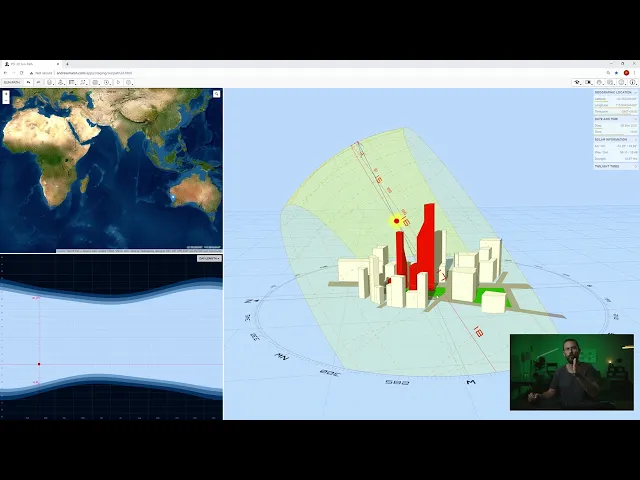
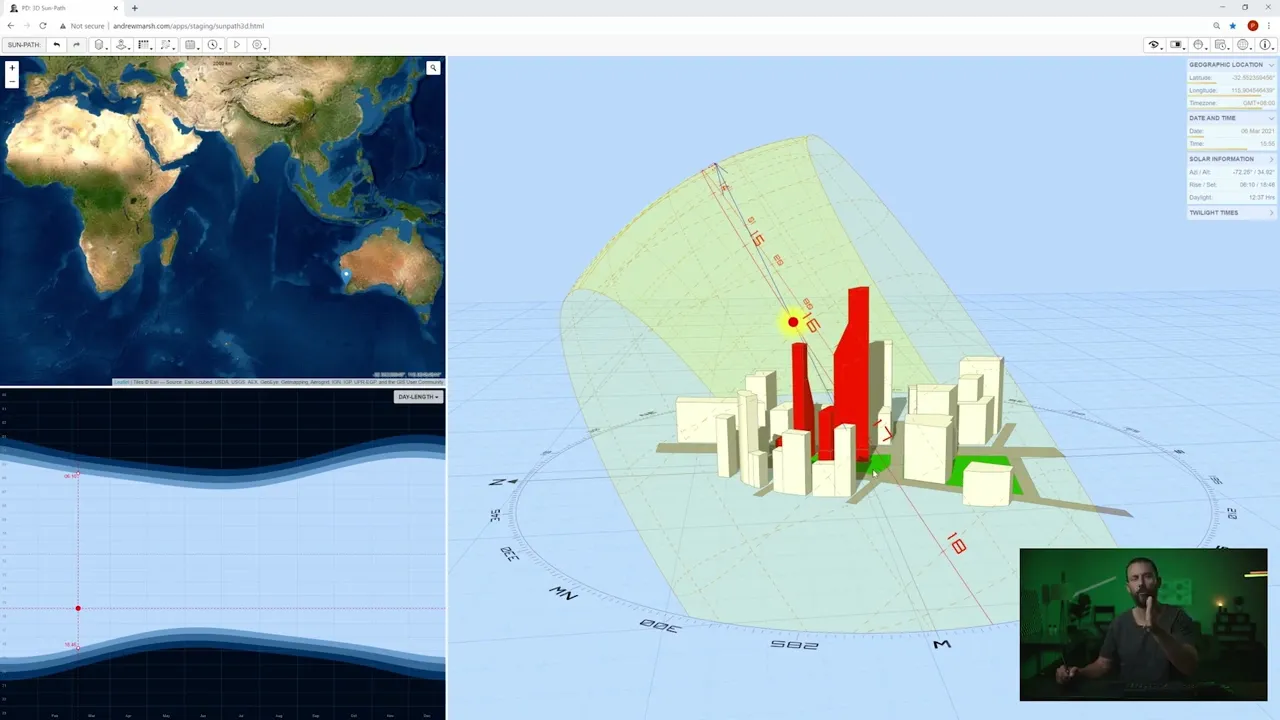
it for yourselves but I'll put that link in the description so you can go and check it out I don't know how long it's going to stay here on andrewmarch.com right this is just some guy that put this tool together but it is invaluable for location scouting so here you've got a map of the world right and you can move this little thing around and what will happen is you can see the Sun Path changing you can see the Sun path you can see the compass you can see what angle it changes throughout the year
so if you want to come up here and change the date you'll be able to slide along and you can see it going back and forth back and forth and you can come down here you can see the angle that it takes As you move throughout the year right it changes on this axis tells you how many hours of sunshine you're going to have then you can change it this way you can change the time of day so you actually see the path and the Shadows change as well so this makes location scouting very very
easy when you're doing it remotely the other great thing is that Artemis right if you can get every PA that goes out if you give them a little note before they go out and say hey download Artemis I will buy the code for you just go out there and take it and when Artemis takes a still all of this information here is recorded on the still so then you can just type it in and know exactly where you are on this map and then you can work backwards from the sun it's like okay well if
we are let's say we are going to shoot this commercial in my hometown which is Perth Australia so I'm gonna move this dial over and we're gonna see let's see that looks about right in there somewhere we're gonna see now our chances for backlight if we're just looking at the Shadows right we know we won't backlight and we want backlight for as long as we can get it so if we come down here to this View and if we go in a little bit let's see oh that's the wrong way let's go in a little
bit so you can see what I'm talking about here so we've got the red thing here is our Sun Path and this is the entirety of the Sun Path over the course of the year so as you change days right it goes Higher and Higher and Higher and then it goes lower and lower and lower in the winter time right so that is ideal to be shooting in Perth but we're not going to say we're not going to shoot June 25th we're not going to make it as easy on ourselves as we can I want
to make this difficult so we're going to go let's go like a March like a March 6th okay now you can see where the Sun starts and just how crazy the Shadows are pointing all West right so it's completely West and you get all of this information uh 91 degrees here the rise in the set time the number of daylight hours Twilight times if you want them you just click on it but we can see that really if we start there maybe right it's usually like these two buildings that you can actually start shooting it
looks like day so maybe it's 805 in the morning you can start and then if we scroll through keep scrolling through really it's going to be until about five o'clock that you can continue shooting and make it look like day so that tells your hours but also tells you the direction of the sun right we want to be looking due north because due north is going to allow us to have backlight all day look at the buildings it never changes so it goes from I mean it's very very sidy in the morning comes up but
it's still the shadow is facing towards us which is what we want even though it's very very toppy then we come around and still the Shadows are sort of facing towards us at least they're sighty what we don't want to do is find a location if we come around swing around to the north side we never get any Shadow coming towards us here the entire day right we do so we do not want to be in a location that is looking South that is immediately off of the cards so if we see something when we're
going through the Stills or we're at their own location if we start to look south or anybody wants to look South that's when we start saying whoa whoa whoa whoa we may we might have to find another location same thing with looking East and West we want our hero angles on the action our line of 180 degrees has to be along the north and south because if it's along the east and west in the morning right we'll be able to get some uh some backlit look right this is great great great great but then if
we're continuing to look this way in the afternoon we're going to get a complete change of lighting and that's what you can't have on day exteriors so we don't want to be looking East or West for any extended amount of time we want our hero angle to be looking north south because you can make you know the difference between 11 o'clock and two o'clock that doesn't make any difference to our lighting if we're looking North it makes a big difference if we're looking East it changes the light Direction almost entirely so we don't want to
do that so this is just a little quick tip I don't want to get too far into the Weeds on this thing but do yourselves a favor if you are remote scouting remotely or if you just want to play with the idea of why cinematographers come from some countries rather than others you don't see a lot of great cinematography coming out of the equators right but let's say we go up here uh somewhere some Scandinavian region now why there's so many beautifully looking shots and ads come from Scandinavia well let's take a look at the
Sun Path this thing is backlit all day all day right you never get psychy at all look at how exciting those Shadows get maybe a little bit but that's like your daytime look there and the shadow is still out of the circle that's how long the shadow is because that's how far down the Sun path is in the sky barely tips above now if we go to proper like winter the thing never gets above the Horizon right it's like there's a reason why that soft backlit look that's why people go to Iceland when they're shooting
right you want to go out there and you want it to be sunset for the entire day you can see the Sun Path just how tiny it gets and as you go further along in the year it gets a little bit higher but that's but not much still the highest point there is lower than the lowest point in Perth so it gives you a great idea of okay well just where the major film hubs what does the sunlight look like in those right we go to somewhere like London okay is it going to be better
to shoot exteriors on you know in the middle of summer or in the middle of winter how is that going to affect the light and the way that we look now look what happens when we get into the northern hemisphere now we want to be looking South the whole time minus the exact opposite we want to be looking the other way so just wherever you are especially if you're doing international shooting this is a great tool to just have a play look around where you are see the times of year when is it going to
be best to shoot and you can also again you can even take this to the scheduling part of the process where you can look at how many daylight hours you have see when you can start like oftentimes the first ad will say when can we do the first shot if we're going for a daytime look at what time can we start because you can't start at six in the morning because a 6 30 shot is going to not look like full day and this job takes place over a single day and a single continuous amount
of time so we don't want any major lighting shifts so you can't actually start at 6 30. so then what time can you start well we know at 8 30 it the Sun is up high enough that we can fake that to look like any other time of the day so lots of different things you can do with this a very cool tool that I don't think I've ever mentioned before so this is it andrewmarsh.com is where you can get it I'll put that link down below so you can check it out