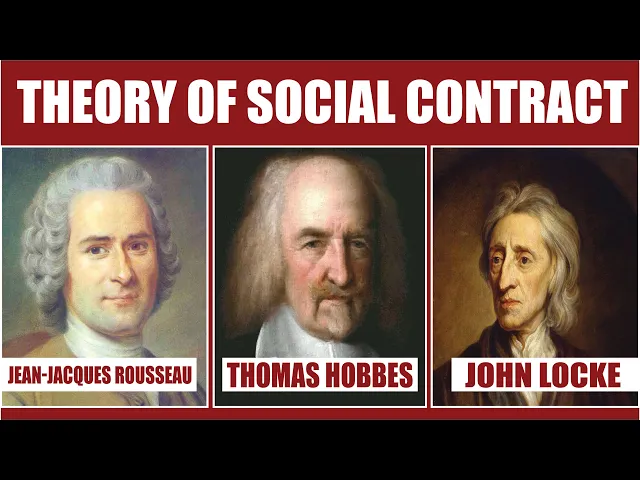
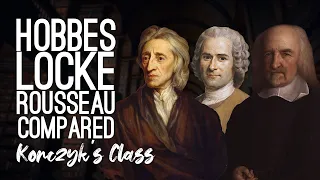
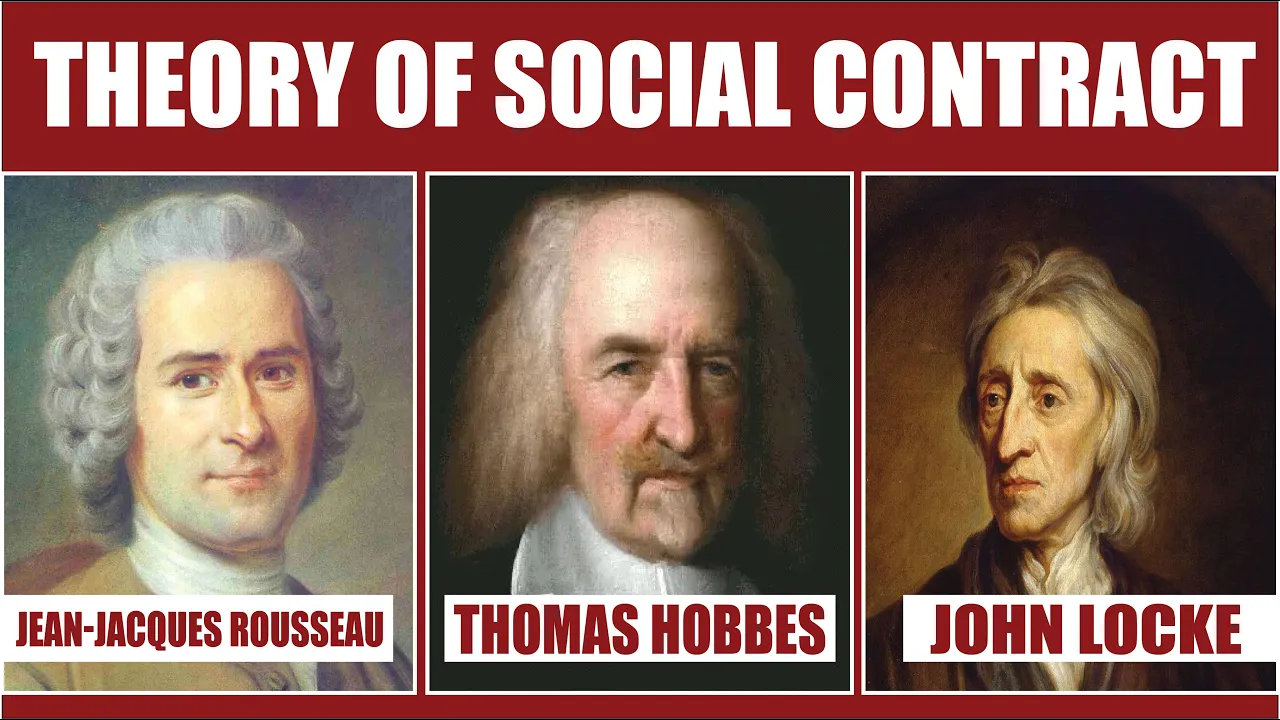
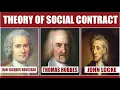
history of the social contract theory the theory of social contract is as old as political speculation ancient greek philosophers plato and aristotle discussed it but only to reject it the greek moralists and roman jurists also deal with this theory during the 16th 18th centuries this theory had a universal appeal and was widely believed its numerous supporters and writers put forth many versions of this theory three of them hobbes locke and rousseau have achieved great fame and arc today considered as its chief exponents a general statement of the theory social contract theory presumes the following three stages viz 1 a state of nature 2 the social contract and 3. the civil society or state in the first period of human existence man was found in the state of nature when he was uncontrolled by any law of human imposition he was guided by such regulations as nature itself prescribed for him they are called lows of nature or natural laws man has also some natural rights but they were no more than his natural power according to some writers whether the state of nature was too good or too bad all social contract theorists agree that men decided to contract out of it when the men of the state of nature were compelled to leave it they entered into a voluntary but mutual agreement or contract to put an end to their lawless condition and establish a state or civil society as a result of the contract the individuals gave up their natural isolation and joined into one civil society or state each individual now submitted himself to the joint control of all and was protected by all against the possible rapacity of any other human law now takes the place of natural thomas hobbes tobbs was an englishman who lived at the time when his country was passing through the turmoils of a civil war he though that only an absolute monarchy could restore peace and order in his troubled country he adopted the current theory of social contract in his book leviathan 1951 in which he advocated the establishment of a strong and absolutist government to maintain law and order hobbes on the state of nature hobbes begins his theory with the state of nature according to him man was essentially selfish egoistic and self-seeking he did not know pity or compassion his dealings with other men were not ruled by reason or intellect but were characterized by competition diffidence or distrust and selfish love of power all men were equally selfish self-seeking cunning covetous brutal and aggressive hobbes gives us an equally dismal description of the state of nature it was a state of unceasing strife a condition of war of every man against every other man where every man is enemy to every man hobbes adds the life of man was solitary poor nasty brutish and short however hobbes recognizes that even in the state of nature men had a sense of the laws of nature man enjoyed natural liberty and natural rights one of which was the right to self-preservation and another was to take whatever one like the perpetual fear and danger to life and property compelled man to make an agreement to put an end to the conditions of perpetual strife among them and establish a common authority or civil society the contract hobbes mentions the exact terms on which every man entered into a mutual agreement with all other s in these words i authorize and give up my right of governing myself to this man or to this assembly of men on this condition that thou givest up thy right to him and authorize all his actions in like manner the state and the sovereign thus the state is created men have completely and unconditionally surrendered their natural rights to some particular man or assembly of men who thereby become the sovereign while the covenanting individuals become his subjects contract is not between the subjects and the sovereign it is not a governmental compact and therefore can never be violated no matter what the king or the ruler does hobbes theory of sovereignty on such conditions and consequences of the social contract that hobbes based his theory of absolute sovereignty the sovereign alone has the power to make law which is not a council but a command the sovereign is the sole judge of what is right or wrong and what is necessary for the people to believe in what doctrines are fit to be taught to them he has the right to make war or peace appoint judges and officials of the state and to confer honors and give punishment as he likes appreciation of theory hobbes has exercised a great influence on political thinkers as for example on the german philosopher hegel and his own countrymen the jurist john austin his theory has certain merits it is a correct theory of legal sovereignty and rights as pollock says hobbes defines legal sovereignty and legal obligation with admirable strength and precision moreover hobbes was so filled with the desire to maintain peace and order in human life that he went to the extreme of justifying despotism by an absolute king or ruler he skillfully turned upside down the theory of social contract which was really a theory of free consent and voluntary association into a theory of absolute power defects 1. fear cannot alone be the basis of the state according to hobbes fear is the psychological basis of the state it was the fear of others and of immediate death which so to say drove the men of the natural state into a mutual agreement in civil society but it does not appeal to common sense as locke said afterwards that these men who were after all nearly equal in strength and cunning should willingly put their necks under the heels of an absolute master with unlimited authority over them how could the cats agree that owing to their mutual fear they should be ruled by a lion 2.
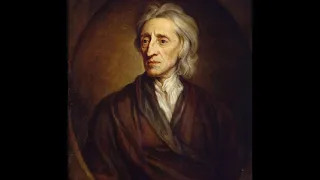
his analysis of human nature is also unsound hobbes describes human nature in such dark and dismal colors that it is unreal and untrue man is not so inherently selfish aggressive and self-centered as he describes him man is selfish yet he is also a social creature he feels sympathy towards others and has alsp altruistic tendencies love sympathy and compassion are natural to him hobbes's view of human nature is false because it is one-sided and incomplete 3. twisted meaning of the word contract a contract is always between two parties but hobbs's contract was one-sided or unilateral the sovereign is not a party to it nor it is binding on him for hobbes is inconsistent in describing the tens of the contract at first he says that men completely surrendered all natural rights to the sovereign when they entered into a covenant among themselves but subsequently he asserts that they have regained the natural right of self-preservation and self-defense there could not be a complete surrender when something is still preserved in the contract even the complete surrender of rights does not appeal to common sense the conception of the natural rights is also false 5. hobbes's legal theory of lights and sovereignty is also one-sided this theory tells us that rights must be recognized by the state but it does not inform us why and when they should receive such a recognition hobbes further says that law is the command of the sovereign but this does not explain the real nature of law nevertheless the juristic theory of sovereignty rights and laws had enabled hobbes to make the sovereign's power absolute which was indeed the real purpose of his theory of social contract john locke john locke was an english philosopher expounded his social contract theory in his book two treatises on civil government wrote in 1660 as a defense of the constitutional monarchy which the glorious revolution of 1688 had established in england lock on the state of nature lock docks not paint a dismal picture of the state of nature it was not as hobbes held a state of war and misery on the contrary it was as locke says one of peace goodwill mutual assistance and preservation men enjoyed freedom and equality in it each lived according to his own liking you like hobbes's natural man lock's man in the state of nature was not selfish or aggressive but social and sympathetic his attitude towards his fellow men was that of reason and justice moreover man possessed natural rights in the state of nature based on law of nature these rights were life liberty and property although the state of nature was a condition of peace and reason yet a few inconveniences were experienced in it they were three in number one the law of nature was not defined clearly because the interest as well as the intelligence of each man differed from others and each interpreted the law of nature as he liked two there were no competent impartial and known judges to interpret the law 3 there was no common authority to enforce it that is the reason why once a dispute began in the state of nature it could not be put to an end this necessitated the institution of civil society or state in order to remove the inconveniences and insecurities of the state of nature the contracts although locke did not state it explicitly yet he impliedly said that there were two contracts the first contract established the political society or state and the other the government according to locke each individual finding the state of nature intolerable owing to its inconveniences entered into a contract he agreed with all other individuals to give up his natural right of executing the law of nature and punishing offenders against it but he did not give up all his natural rights as hobbes asserted moreover the natural right was given not to a man or assembly of men as hobbes said but to the community as a whole locke described it in these words there in their only as political society where every one of the members has quitted the natural power resigned it up into the hands of the community in all cases that exclude him not from appealing for protection to the law established by it this society thus becomes by the act of individuals who form it vested with the functions of determining what are offenses against the law of nature and punish violations of that law after establishing the state the people entered into another contract this time with the rulers the legislature this is the governmental compact locke describes it thus the legislative power constituted by the consent of the people becomes the supreme power in the commonwealth but it is not arbitrary it must be exercised as it is given for the good of the subjects government is in the nature of a trust and embraces only such powers as are transferred at the time of the change from a state of nature the power of the government is limited to the condition that it is exercised to carry out the established known laws applied by impartial judges locke's theory of limited sovereignty and right of revolt locke's contract is a limited contract for the individual surrounded only part of his natural rights the power of the state is therefore limited the government cannot exercise unlimited powers as hobbes's sovereign did as a matter of fact luck did not even use the term sovereignty in his book instead of it he used the term supreme power of the legislature as he himself says the legislative power constituted by the consent of the people becomes the supreme power in the commonwealth but is not arbitrary.
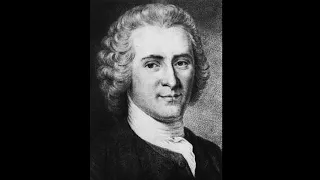
lt must be exercised as it is given for the good of the subjects the legislature cannot transfer its power to any other person or body it is but a delegated power form the people who alone can dispose of it so behind the supreme legislature stand the people or community as final embodiment of power if the legislature or government betrays the trust the people can depose it the community perpetually retains a supreme power of saving themselves from the attempts and designs of anybody even of their legislatures whenever they shall be so foolish or so wicked as to lay and carry on designs against the liberties and properties of the subjects thus locke defended the people's right to rebellion which is the basis of this theory of limited sovereignty thus locke justific the glorious revolution of 1688 in his country which ousted the autocratic stewart kings from power and a stalagshed parliament as the sovereign power in england criticism of locke's theory merits locke's theory has several merits as h. j lowsky pointed out locke is a philosopher of consent his theory of consent has now become a basic principle of the english and american political philosophy for this purpose he distinguishes the state form the government the government derives its power and authority from the consent of the people who are ultimately the sovereign loch thus gives us a theory of limited sovereignty or constitutional government hobbes made the sovereign absolute but locke recognized the fact that there is a power behind the throne that the exercise of sovereignty ultimately depends upon the consent of the people who obeys it another contribution of lock to political science is his theory of natural rights he considers life liberty and property as inalienable rights of every individual the end for which the state was established is to secure these natural rights although the concept of natural rights is misleading yet to base rights on the nature of man is justifiable the main defect in locke's theory is that he ignored the concept of legal sovereignty he also failed to see that a revolution however desirable is never legal jean-jacques rousseau the third great exponent of the social contract was the french philosopher jean-jacques rousseau he was by birth a swiss but adopted france as his country he lived in the pre-revolutionary 18th century of france then ruled by the absolutist bourbon kings rousseau's writings inspired the great french revolution of 1789. he presented his theory in two books namely a discourie say on the origin of inequality and the social contract rousseau on the state of nature rousseau's views on the state of nature are found in his discourse on the origin of inequality like locke rousseau believed that man lived a free happy and peaceful life in the state of nature it was an ideal condition but two things put an end to this happy existence one of them was the growth of population and the other was the origin of private property which divided men because they began to think in terms mine and nine with these development piece equality and freedom of the state of nature were gone and in their place war murder disputes and quarrels broke out among men they however escaped from this miserable existence only by entering into contract and instituting a civil society the contract in his second and more famous book social contract rousseau does not concern himself with the question of the state of nature he begins his book social contract with these memorable words man is born free but is everywhere in chains it means that man lived free in the earlier natural state but is now everywhere bound by the laws and customs of civilized life the problem is how to justify the obedience of these laws its solution lies in substituting natural freedom by civil freedom the problem is solved by the social contract the contract which created the civil society or state is according to rousseau as thus founded each of us puts into a single mass his person and all his power under the supreme direction of the general will and we receive as a body each member as an indivisible part of the whole as in hobbes's theory so in rousseau's the individual surrenders his all but unlike hobbes he surrenders not to a single person or body of persons but to the whole community rousseau's contract like that of locke makes not one person but the whole community sovereign rousseau's doctrine of general will and popular sovereignty the individuals surrendered completely and unconditionally their natural freedom and powers to the community as a whole which became thereby the sovereign body the body so created as a moral and collective body because it is under the general will that is the will of the whole community the general will is sovereign it is sovereign because firstly it is created by the free act of those who entered into the contract and have surrendered their individual wills and interests to the supreme direction of the general will and secondly because it is the general will always aims at the common good and it can never error it is supreme over all individual interests according to rousseau the individuals have surrendered all their rights and have surrendered them not to one person but to the whole community this complete and unconditional surrender ensures the equality and liberty of all and also of the life and property of each individual he goes on to say that no individual can justifiably disobey the general will by obeying the general will the individual really obeys himself because he has created it when he disobeys the law which is the expression of the general will he really disobeys himself and when he is punished for it he has himself ordered his punishment real coercion is not possible in society when a criminal is punished he has willed it himself coercion is only another aspect of freedom rousseau expresses it thus in order then that the social contract may not be an empty formula it includes the undertaking that whoever refuses to obey the general will shall be compelled to do so by the whole body this means nothing less than that he will be forced to be free thus rousseau declares that by obeying the sovereign unconditionally and unquestioningly the individual becomes really free the general will is always right rousseau emphasizes that what is not right is not the general will in this way he subordinated the individual to the state influence of rousseau's theory rousseau exercised great influence on political thought and events especially of france germany and america rousseau's revolutionary philosophy proclaimed firstly that all men are by nature free and equal secondly that the authority of government is based on a contract freely entered into by the equal and independent individuals and thirdly that the people are the sovereign this philosophy inspired the french revolutionaries who embodied it in the declaration of the rights of man in 1789 and also influenced the american framers of the declaration of independence 1776.
furthermore rousseau was an admirer of direct democracy of the ancient greek type he emphasized that the people alone should be the lawmakers we find his influence in the adoption of the methods of direct legislation by the people e. g the referendum and the initiative in such countries as switzerland etc popular sovereignty the idea of consent and direct legislation by the people were revolutionary teachings in the days of the absolute kings and led to the french revolution of 1789.