Before the explosion of European philosophy during the enlightenment, most rulers claimed their right to rule from what we call the divine right of kings. They claimed that their power came directly from God. And people being very religious, well, they didn't really question that.
The enlightenment, however, saw the development of what we call social contract philosophy. The idea of a social contract aims to explain the relationship between a people and government where the belief is that the right to rule comes from the people. These different philosophies however saw that social contract in very different ways in terms of how much freedom people should give up to their governments and to the rulers in exchange for security and protection.
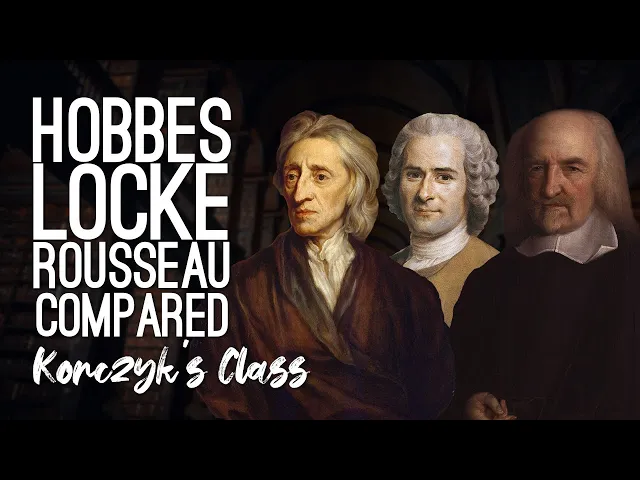
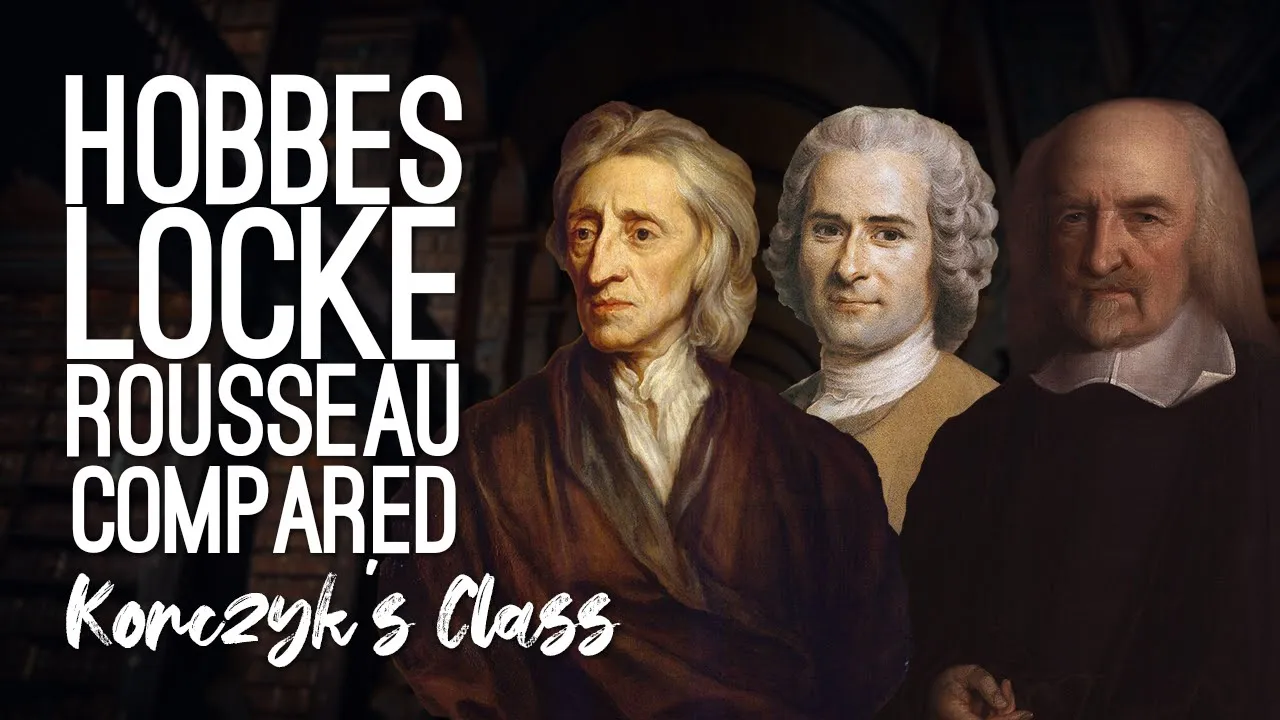
The first philosopher we're going to look at here is Thomas Hobbes. Now Hobbes believed that human nature is inherently destructive and that at their core if left to their own devices we would have violence and chaos and society basically disintegrated. In his book Leviathan he wrote in the state of nature people are in that condition which is called war.
In such condition there is no place for industry, no culture of the earth, no arts, no letters, no society and which is worst of all continual fear and danger of violent death and the life of man solitary, poor, nasty, brutish and short. So in terms of the social contract, Hobbes very much believed that the most important thing to have is this strong authoritative figure that he called the Leviathan. might call them monarchs or even dictators, but they wouldn't get their power from God.
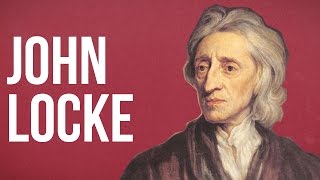
What Hobbes believed is that people would voluntarily give up their freedom knowing that if they were left to be free, they would descend into chaos and violence and that people should willingly give up their freedom to that authoritative figure. John Lockach, however, believed almost the polar opposite of Hops. He believed that people were born with what he called a tabular rasa or a blank slate and there was no inherent anger or destructive tendencies in people.
And so if left to their own devices, people would find a way to better themselves and just better society as a whole, being given as much freedom as possible. And so Loach believed the utmost importance in society was a limited government that served to promote people's life, liberty, and property. And about this he wrote, "Men all being naturally free, equal, and independent.
So no one can be deprived of this freedom and subjected to the political power of someone else without his own consent. The only way anyone can strip off his natural liberty and clothe himself in the bonds of civil society is for him to agree with other men to unite in a community so as to live together comfortably, safely and peaceibly. Right?
So Loach believed that you know not only should people be free to enjoy their rights and freedoms, but they had the right to select their leaders and their governments. And Loach believed in what's called a representative democracy. this idea that we select leaders to make laws on our behalf knowing that we're rational making rational decisions to select good leaders and those leaders are going to act rationally to make good laws that are going to protect those freedoms of ours.
Furthermore, Loach believed that if we felt that these leaders aren't acting in our interests anymore, we should have the power to overthrow those leaders. And this could come in the form of a revolution but more commonly we see this in the form of elections in our liberal democracies around the world. Rouso on the other hand went in an entirely different direction altogether.
He believed that all these freedoms and society that lock world would create um would essentially lead to the kind of corruption and destruction that Hobbes talks about and his saying is that man is born free but everywhere in chains. So all these social structures that have been set up are what lead to corruption and jealousy and the disintegration of society. So then if you strip away all of these elements, what's left?
people being free together in total equality making decisions for what's best for the community or what Rouso called the general will without this situation where all of a sudden you might start getting power inequalities between people that lead to corruption as Russo saw it and so in this world of rousos decisions are made together by the community laws are made directly by the people of the community and sometimes you might get your way other times you might not sometimes maybe you don't get your way at all but it's for what the majority of the community want or again this idea of the general will of the community and if that's what society deems best well that's what happens so if we're to summarize these three philosophers with maybe their catchphrases if you will right you have Thomas Hobbes and his belief that human nature is nasty brutish and short so you need that strong authoritarian dictator in order to keep security in check with Loach and his belief that freedom is of the utmost importance. Government should be limited and only protect life, liberty, and property. And finally, Russo's big catchphrase that man is born free, but everywhere in chains.
People are good, but society corrupts. And so, you strip away all of society, and what's left is that pure form of equality between individuals. And as you can see, most modern societies draw on the ideas of these three philosophers and their theories of what the social contract should look like.
Generally, most liberal democracies are going to be most strongly related to John Lock's ideas of government protecting personal freedom and private property. Although I'm sure you can also think of some examples where individual freedoms were restricted by laws in order to protect the security or the common good of the people of a society. Typically in situations where the people of a society maybe felt that individuals couldn't always be trusted to make the right decisions for that common good of the people.
And these philosophers grappled with a question that is still one of the central challenges to our world today. To what extent should we allow the government and laws to limit our freedom in exchange for security? And with that question, I'll leave you for this time.
Subscribe so you don't miss any videos in the future and we will see you again next time.