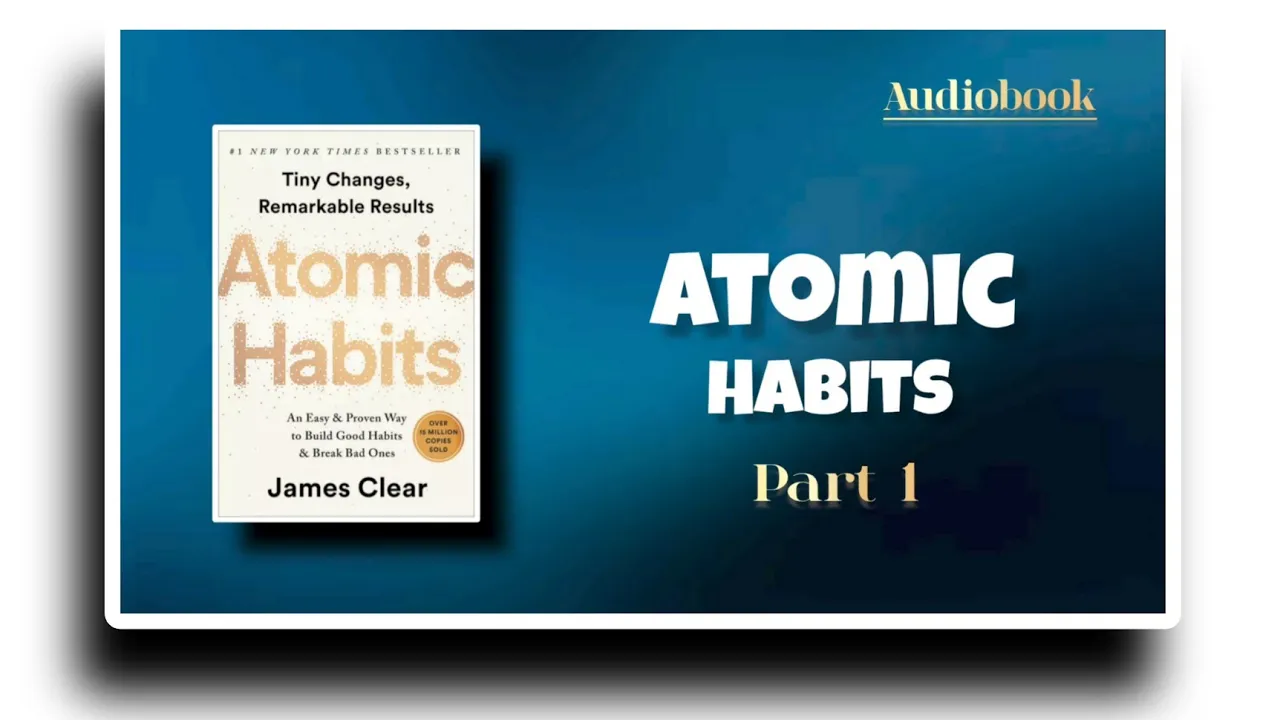
The fundamentals of why tiny changes make a big difference: One, the surprising power of atomic habits. The fate of British cycling changed one day in 2003. The organization, which was the governing body for professional cycling in Great Britain, had recently hired Dave Brailsford as its new performance director.
At the time, professional cyclists in Great Britain had endured nearly 100 years of mediocrity. Since 1988, British riders had won just a single gold medal at the Olympic Games, and they had fared even worse in cycling's biggest race, the Tour de France. In 110 years, no British cyclist had ever won the event.
In fact, the performance of British riders had been so underwhelming that one of the top bike manufacturers in Europe refused to sell bikes to the team because they were afraid that it would hurt sales if other professionals saw the Brits using their gear. Brailsford had been hired to put British cycling on a new trajectory. What made him different from previous coaches was his relentless commitment to a strategy that he referred to as the aggregation of marginal gains, which was the philosophy of searching for a tiny margin of improvement in everything you do.
Brailsford said the whole principle came from the idea that if you broke down everything you could think of that goes into riding a bike and then improved it by 1%, you would get a significant increase when you put them all together. Brailsford and his coaches began by making small adjustments you might expect from a professional cycling team. They redesigned the bike seats to make them more comfortable and rubbed alcohol on the tires for a better grip.
They asked riders to wear electrically heated overshorts to maintain ideal muscle temperature while riding and used biofeedback sensors to monitor how each athlete responded to a particular workout. The team tested various fabrics in a wind tunnel and had their outdoor riders switch to indoor racing suits, which proved to be lighter and more aerodynamic. But they didn't stop there.
Brailsford and his team continued to find 1% improvements in overlooked and unexpected areas. They tested different types of massage gels to see which one led to the fastest muscle recovery. They hired a surgeon to teach each rider the best way to wash their hands to reduce the chances of catching a cold.
They determined the type of pillow and mattress that led to the best night's sleep for each rider. They even painted the inside of the team truck white, which helped them spot little bits of dust that would normally slip by unnoticed but could degrade the performance of the finely tuned bikes. As these and hundreds of other small improvements accumulated, the results came faster than anyone could have imagined.
Just five years after Brailsford took over, the British cycling team dominated the road and track cycling events at the 2008 Olympic Games in Beijing, where they won an astounding 60% of the gold medals available. Four years later, when the Olympic Games came to London, the Brits raised the bar as they set nine Olympic records and seven world records. That same year, Bradley Wiggins became the first British cyclist to win the Tour de France.
The next year, his teammate Chris Froome won the race, and he would go on to win again in 2015, 2016, and 2017, giving the British team five Tour de France victories in six years. During the 10-year span from 2007 to 2017, British cyclists won 178 World Championships and 66 Olympic or Paralympic gold medals and captured five Tour de France victories in what is widely regarded as the most successful run in cycling history. How does this happen?
How does a team of previously ordinary athletes transform into world champions with tiny changes that at first glance would seem to make a modest difference at best? Why do small improvements accumulate into such remarkable results, and how can you replicate this approach in your own life? Why small habits make a big difference: It is so easy to overestimate the importance of one defining moment and underestimate the value of making small improvements on a daily basis.
Too often, we convince ourselves that massive success requires massive action. Whether it is losing weight, building a business, writing a book, winning a championship, or achieving any other goal, we put pressure on ourselves to make some earth-shattering improvement that everyone will talk about. Meanwhile, improving by 1% isn't particularly notable; sometimes, it isn't even noticeable.
But it can be far more meaningful, especially in the long run. The difference a tiny improvement can make over time is astounding. Here's how the math works out: If you can get 1% better each day for one year, you'll end up 37 times better by the time you're done.
Conversely, if you get 1% worse each day for one year, you'll decline nearly down to zero. What starts as a small win or a minor setback accumulates into something much more. Habits are the compound interest of self-improvement.
The same way that money multiplies through compound interest, the effects of your habits multiply as you repeat them. They seem to make little difference on any given day, and yet the impact they deliver over the months and years can be enormous. It is only when looking back five or perhaps ten years later that the value of good habits and the cost of bad ones becomes strikingly apparent.
This can be a difficult concept to appreciate in daily life. We often dismiss small changes because they don't seem to matter very much in the moment. If you save a little money now, you're still not a millionaire.
If you go to the gym three days in a row, you're still out of shape. If you study Mandarin for an hour tonight, you still haven't learned the language. front of you unchanged.
But at some point, the temperature will reach 32°, and the ice will begin to melt. The change is sudden and dramatic, but it has been preceded by a long period of gradual heating. This is often how progress looks—invisible for a long time, then suddenly visible once a critical threshold has been crossed.
Similarly, real change in your habits often feels slow and unnoticeable until it reaches a tipping point. The work you put in during the months and years before that moment lays the foundation for your eventual results. Just because you don’t see progress right away doesn’t mean that progress isn’t happening.
Every action you take is like a vote for the type of person you wish to become. Each time you choose to act in alignment with your goals, you reinforce your identity as someone who is capable of achieving them. In summary, focus on making small improvements and stay consistent.
Over time, those incremental changes will lead to substantial transformation. Your habits shape your future, and each moment is an opportunity to choose the path that leads to who you want to be. front of you: 29°, 30°, 31°—still nothing has happened.
Then, at 32°, the ice begins to melt. A 1° shift, seemingly no different from the temperature increases before it, has unlocked a huge change. Breakthrough moments are often the result of many previous actions which build up the potential required to unleash a major change.
This pattern shows up everywhere: cancer spends 80% of its life undetectable, then takes over the body in months; bamboo can barely be seen for the first 5 years as it builds extensive root systems underground before exploding 90 ft into the air within 6 weeks. Similarly, habits often appear to make no difference until you cross a critical threshold and unlock a new level of performance. In the early and middle stages of any quest, there is often a valley of disappointment.
You expect to make progress in a linear fashion, and it's frustrating how ineffective changes can seem during the first days, weeks, and even months. It doesn't feel like you are going anywhere; it's a hallmark of any compounding process: the most powerful outcomes are delayed. This is one of the core reasons why it is so hard to build habits that last.
People make a few small changes, fail to see a tangible result, and decide to stop. You think, “I've been running every day for a month, so why can't I see any change in my body? ” Once this kind of thinking takes over, it's easy to let good habits fall by the wayside.
But in order to make a meaningful difference, habits need to persist long enough to break through this plateau, what I call the plateau of latent potential. If you find yourself struggling to build a good habit or break a bad one, it is not because you have lost your ability to improve; it is often because you have not yet crossed the plateau of latent potential. Complaining about not achieving success despite working hard is like complaining about an ice cube not melting when you heated it from 25° to 31°.
Your work was not wasted; it is just being stored. All the action happens at 32°. When you finally break through the plateau of latent potential, people will call it an overnight success.
The outside world only sees the most dramatic event rather than all that preceded it, but you know that it's the work you did long ago, when it seemed that you weren't making any progress, that makes the jump today possible. It is the human equivalent of geological pressure: two tectonic plates can grind against one another for millions of years, the tension slowly building all the while. Then, one day, they rub against each other once again in the same fashion they have for ages, but this time the tension is too great—an earthquake erupts.
Change can take years before it happens all at once. Mastery requires patience. The San Antonio Spurs, one of the most successful teams in NBA history, have a quote from social reformer Jacob Rees hanging in their locker room: "When nothing seems to help, I go and look at a stone cutter hammering away at his rock, perhaps 100 times without as much as a crack showing in it.
Yet at the 101st blow, it will split in two, and I know it was not that last blow that did it, but all that had gone before. " The plateau of latent potential: all big things come from small beginnings. The seed of every habit is a single tiny decision, but as that decision is repeated, a habit sprouts and grows.
Stronger roots entrench themselves, and branches grow. The task of breaking a bad habit is like uprooting a powerful oak within us, and the task of building a good habit is like cultivating a delicate flower—one day at a time. But what determines whether we stick with a habit long enough to survive the plateau of latent potential and break through to the other side?
What is it that causes some people to slide into unwanted habits and enables others to enjoy the compounding effects of good ones? Forget about goals; focus on systems instead. Prevailing wisdom claims that the best way to achieve what we want in life—getting into better shape, building a successful business, relaxing more and worrying less, spending more time with friends and family—is to set specific, actionable goals.
For many years, this was how I approached my habits too. Each one was a goal to be reached. I set goals for the grades I wanted to get in school, for the weights I wanted to lift in the gym, for the profits I wanted to earn in business.
I succeeded at a few, but I failed at a lot of them. Eventually, I began to realize that my results had very little to do with the goals I set and nearly everything to do with the systems I followed. What's the difference between systems and goals?
It's a distinction I first learned from Scott Adams, the cartoonist behind the Dilbert comic. Goals are about the results you want to achieve; systems are about the processes that lead to those results. For example, if you are a coach, your goal might be to win a championship; your system is the way you recruit players, manage your assistant coaches, and conduct practice.
If you are an entrepreneur, your goal might be to build a million-dollar business; your system is how you test product ideas, hire employees, and run marketing campaigns. If you are a musician, your goal might be to play a new piece; your system is how often you practice, how you break down and tackle difficult measures, and your method for receiving feedback from your instructor. Now for the interesting question: if you completely ignored your goals and focused only on your system, would you still succeed?
For example, if you. . .
Were a basketball coach, and you ignored your goal to win a championship and focused only on what your team does at practice each day, would you still get results? I think you would. The goal in any sport is to finish with the best score, but it would be ridiculous to spend the whole game staring at the scoreboard.
The only way to actually win is to get better each day. In the words of three-time Super Bowl winner Bill Walsh, "The score takes care of itself. " The same is true for other areas of life.
If you want better results, then forget about setting goals; focus on your system instead. What do I mean by this? Are goals completely useless?
Of course not; goals are good for setting a direction, but systems are best for making progress. A handful of problems arise when you spend too much time thinking about your goals and not enough time designing your systems. Problem number one: winners and losers have the same goals.
Goal setting suffers from a serious case of survivorship bias. We concentrate on the people who end up winning—the survivors—and mistakenly assume that ambitious goals led to their success, while overlooking all of the people who had the same objective but didn't succeed. Every Olympian wants to win a gold medal; every candidate wants to get the job.
If successful and unsuccessful people share the same goals, then the goal cannot be what differentiates the winners from the losers. It wasn't the goal of winning the Tour de France that propelled the British cyclists to the top of the sport; presumably, they had wanted to win the race every year before, just like every other professional team. The goal had always been there.
It was only when they implemented a system of continuous small improvements that they achieved a different outcome. Problem number two: achieving a goal is only a momentary change. Imagine you have a messy room and you set a goal to clean it.
If you summon the energy to tidy up, then you will have a clean room for now, but if you maintain the same sloppy packrat habits that led to a messy room in the first place, soon you'll be looking at a new pile of clutter and hoping for another burst of motivation. You're left chasing the same outcome because you never changed the system behind it. You treated a symptom without addressing the cause.
Achieving a goal only changes your life for the moment. That's the counterintuitive thing about improvement: we think we need to change our results, but the results are not the problem. What we really need to change are the systems that cause those results.
When you solve problems at the results level, you only solve them temporarily. In order to improve for good, you need to solve problems at the systems level. Fix the inputs, and the outputs will fix themselves.
Problem number three: goals restrict your happiness. The implicit assumption behind any goal is this: once I reach my goal, then I'll be happy. The problem with a goals-first mentality is that you're continually putting happiness off until the next milestone.
I've slipped into this trap so many times I've lost count. For years, happiness was always something for my future self to enjoy. I promised myself that once I gained 20 lbs of muscle, or after my book was featured in The New York Times, then I could finally relax.
Furthermore, goals create an either/or conflict: either you achieve your goal and are successful, or you fail and you are a disappointment. You mentally box yourself into a narrow version of happiness. This is misguided.
It is unlikely that your actual path through life will match the exact journey you had in mind when you set out. It makes no sense to restrict your satisfaction to one scenario when there are many paths to success. A systems-first mentality provides the antidote.
When you fall in love with the process rather than the product, you don't have to wait to give yourself permission to be happy. You can be satisfied anytime your system is running, and a system can be successful in many different forms, not just the one you first envisioned. Problem number four: goals are at odds with long-term progress.
Finally, a goal-oriented mindset can create a yo-yo effect. Many runners work hard for months, but as soon as they cross the finish line, they stop training. The race is no longer there to motivate them.
When all of your hard work is focused on a particular goal, what is left to push you forward after you achieve it? This is why many people find themselves reverting to their old habits after achieving a goal. The purpose of setting goals is to win the game; the purpose of building systems is to continue playing the game.
True long-term thinking is goalless thinking. It's not about any single accomplishment; it is about the cycle of endless refinement and continuous improvement. Ultimately, it is your commitment to the process that will determine your progress.
A system of atomic habits: if you're having trouble changing your habits, the problem isn't you; the problem is your system. Bad habits repeat themselves again and again, not because you don't want to change, but because you have the wrong system for change. You do not rise to the level of your goals; you fall to the level of your systems.
Focusing on the overall system rather than a single goal is one of the core themes of this book. It is also one of the deeper meanings behind the word "atomic. " By now, you probably realize that an atomic habit refers to a tiny change, a marginal gain, a 1% improvement.
But atomic habits are not just any old habits. However small they are, they are little habits that are part. .
. Of a larger system, just as atoms are the building blocks of molecules, atomic habits are the building blocks of remarkable results. Habits are like the atoms of our lives; each one is a fundamental unit that contributes to your overall improvement.
At first, these tiny routines seem insignificant, but soon they build on each other and fuel bigger wins that multiply to a degree that far outweighs the cost of their initial investment. They are both small and mighty. This is the meaning of the phrase "atomic habits": a regular practice or routine that is not only small and easy to do but also the source of incredible power, a component of the system of compound growth.
**Chapter Summary:** Habits are the compound interest of self-improvement. Getting 1% better every day counts for a lot in the long run. Habits are a double-edged sword; they can work for you or against you, which is why understanding the details is essential.
Small changes often appear to make no difference until you cross a critical threshold. The most powerful outcomes of any compounding process are delayed; you need to be patient. An atomic habit is a little habit that is part of a larger system, just as atoms are the building blocks of molecules.
Atomic habits are the building blocks of remarkable results. If you want better results, then forget about setting goals; focus on your system instead. You do not rise to the level of your goals; you fall to the level of your systems.



![How To 10X Your Memory & Learning [New speech]](https://img.youtube.com/vi/HIdblMmSyl8/maxresdefault.jpg)