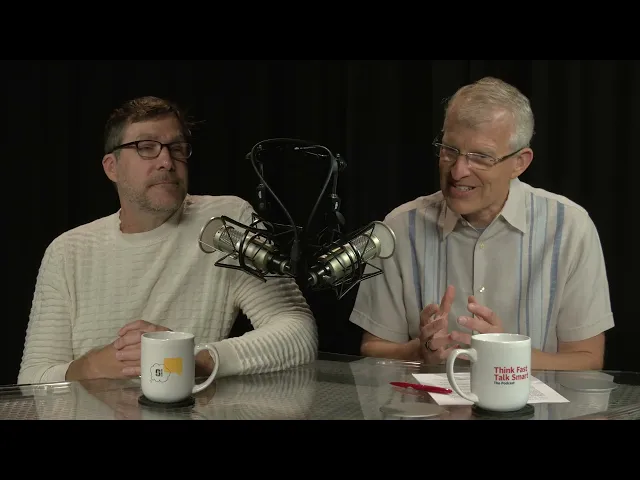
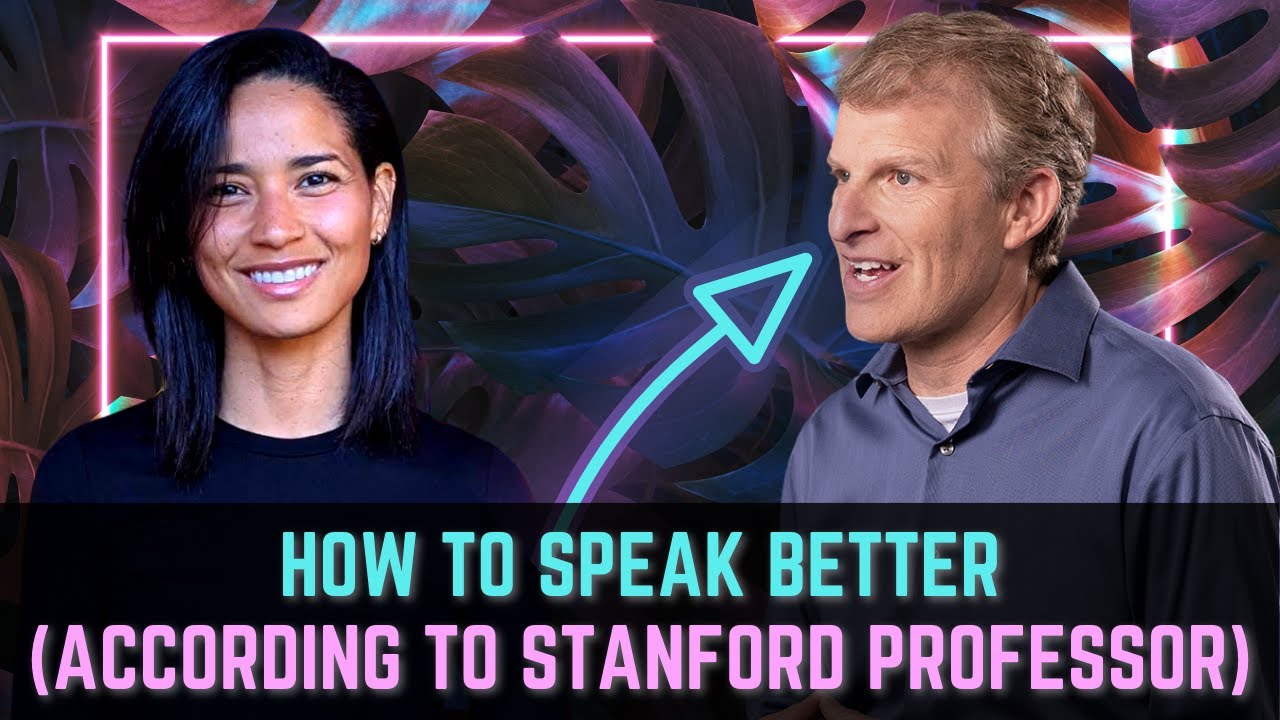
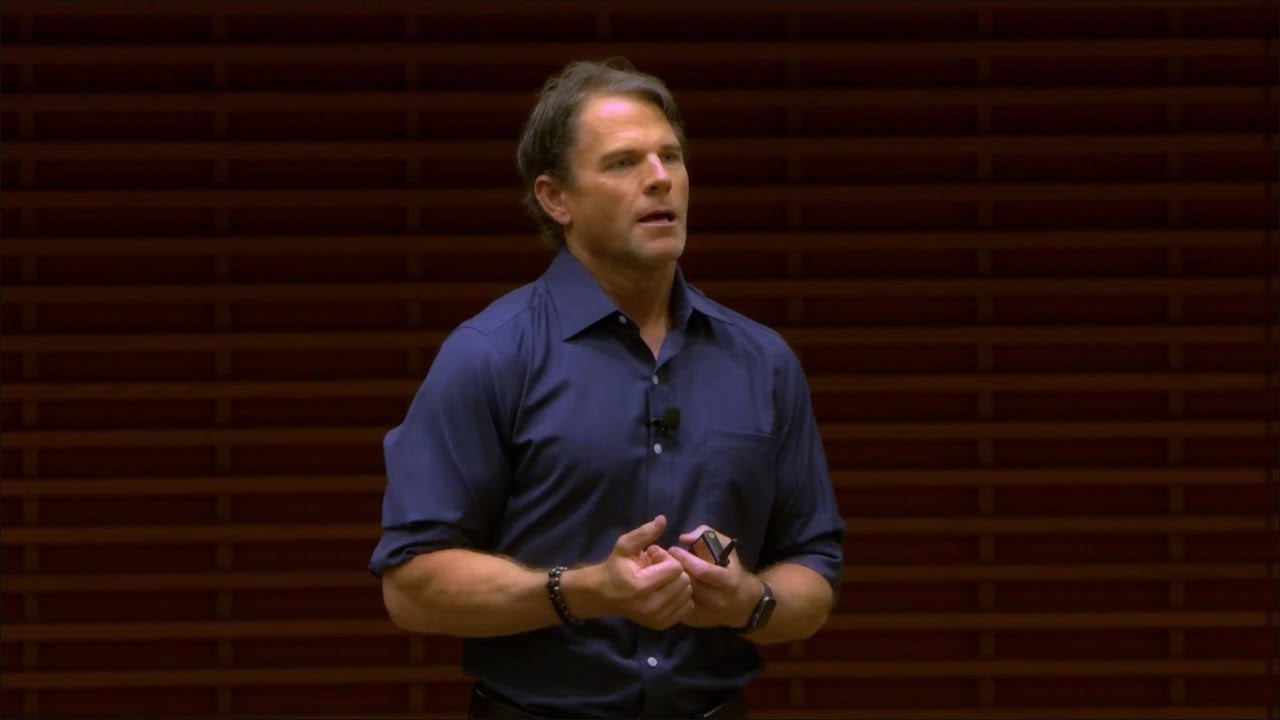
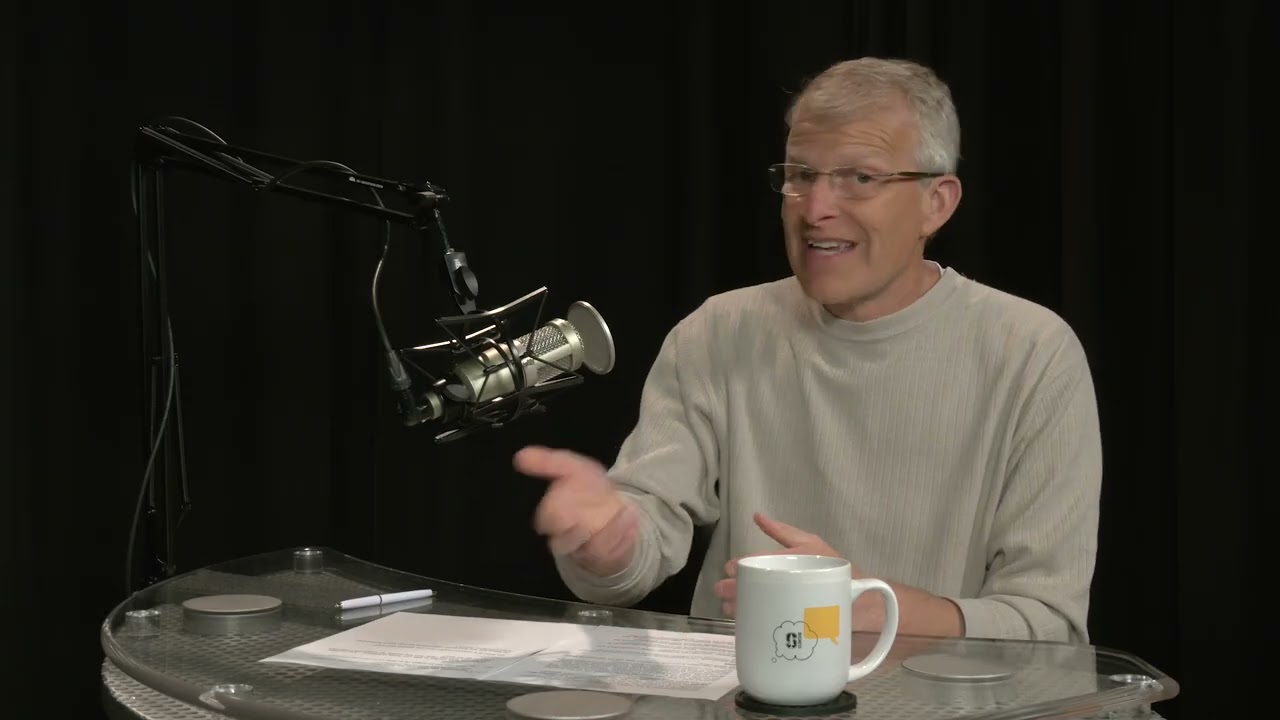
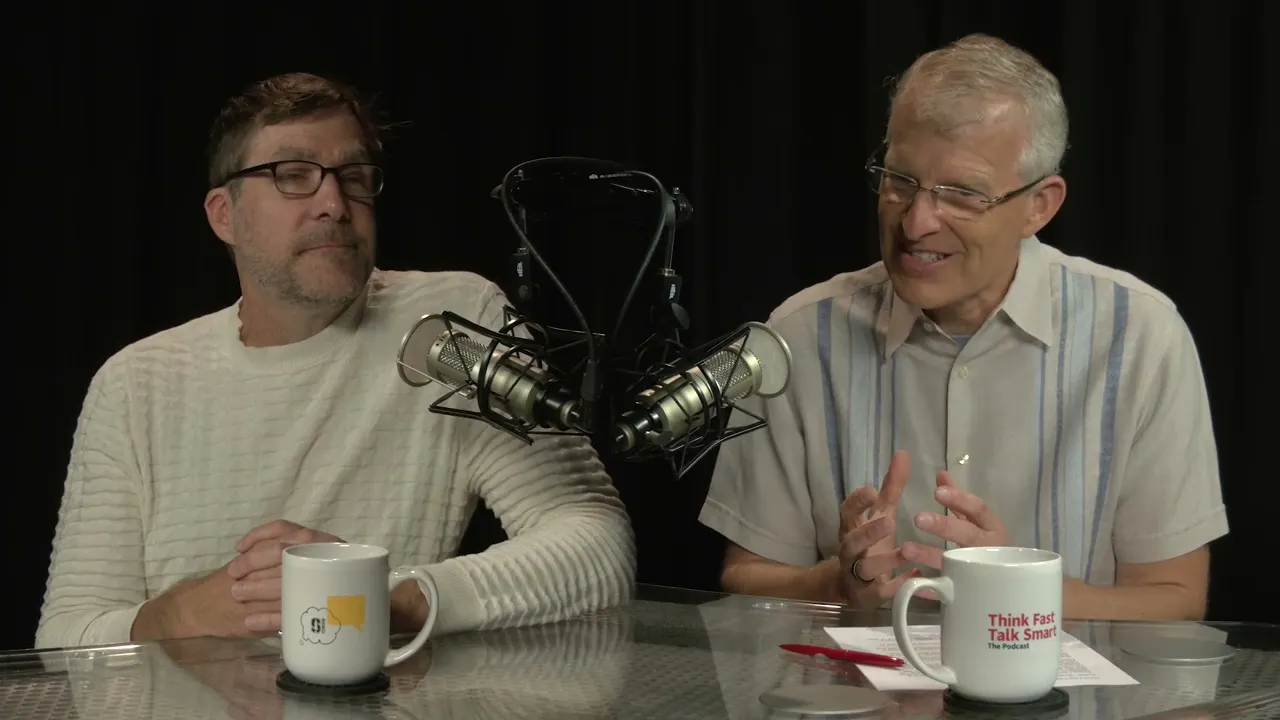
we often over focus in our communication on information rather than emotion we need to make sure to give feeling desirability it's due we have to look at the intangibles to be successful in our communication my name is Matt Abrahams and I teach strategic communication at Stanford Graduate School of Business welcome to think fast talk smart the podcast [Music] I am super excited today to talk with Scott dorly Scott is a friend and a colleague Scott serves as the academic and creative director at The hasso platner Institute of Design also known as the Stanford D School
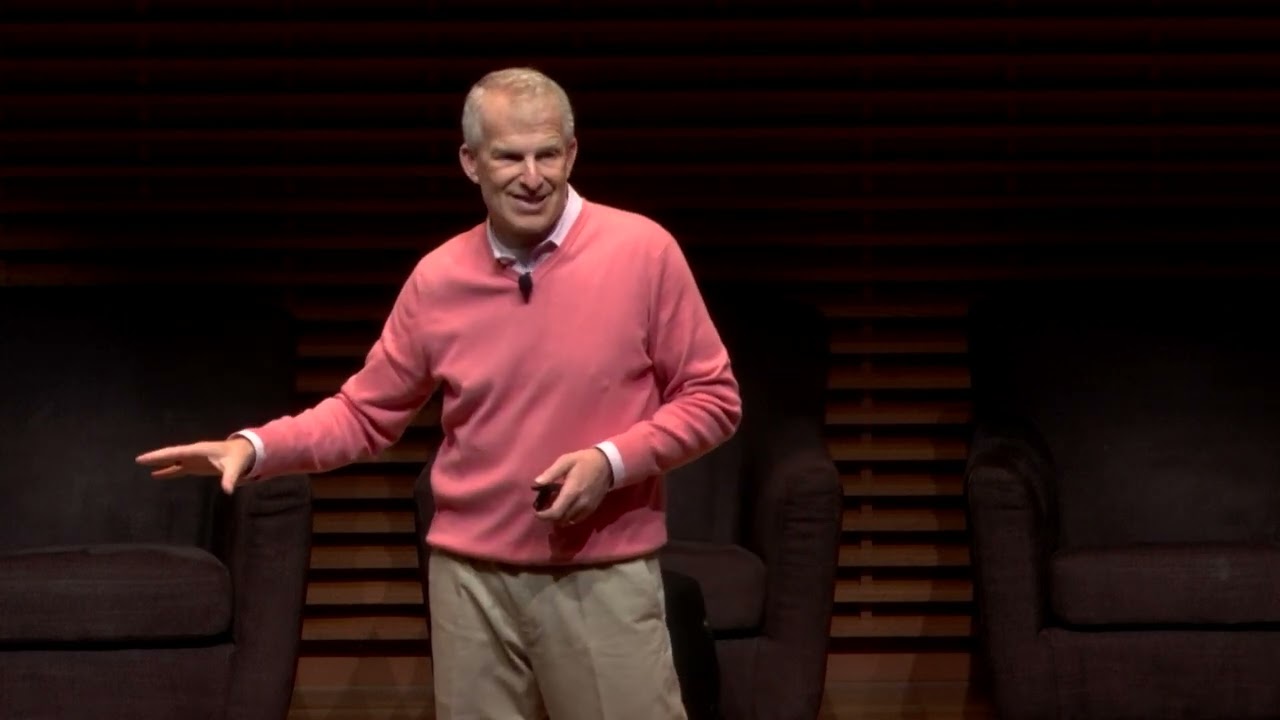
along with Carissa Carter he wrote the recently released book assembling tomorrow a guide to designing a thriving future some of you might remember that Carissa joined me on episode 61 to discuss her previous book The Secret Language of maps how to tell visual stories with data Scott I'm really excited that we finally arranged for you to join me here on the podcast welcome oh thanks so much Matt I'm so happy to be here shall we get started yeah let's do it you do design work and you teach design can you share with us what types
of things you your students and those you work with do in doing design yeah we think of design very broadly it's really the act of bringing an idea into the world with intention so we teach students we have a degree program where we teach to you know design students to be professional designers but we also work with uh departments around the university so The Graduate School of Business uh Graduate School of Education School of Engineering and on and on and what we do is we have students come in and they'll work on projects that fit
their expertise and their interest which is usually a problem in a in a space they're interested in so we'll have we'll have students do anything from creating something that looks like design a product we had a grad student create a musical instrument that teaches you how to play music which is very cool but then we have students working on really large scale systems so also recently in the past few years we had students working on healthc care in India where family members took an active role in post-operative patient care which doesn't look like a product
at all really is a system a service a way of doing things and we we call all that design and I mean those things are fascinating I love the idea of musical instrument that teaches you how to play music that's fascinating the the things that you produce are the result of a process design thinking and a design process can you share a little bit about what that process is like because I know you teach those things absolutely you know there are ton there are very many different ways to look at it and for us it's
always evolving but the thing that I think there are two things that are fundamental about it one is that design is specifically about desirability right so business is a lot about viability engineering is about feasibility Design's about desirability and there's ways to think about that so one is to say like well it should be usable and maybe aesthetically pleasing that's kind of like an old way to think about it but is also super pertinent another way to think about it is is this something we want in the world is this desirable and so that brings
up the other part which is like how do you understand what should exist in the world and the only way to do that is to get it outside of yourself so most of the techniques that we use are about embodying work in the world so that might be looking at how people use things presently talking to people who are struggling with an issue creating something which we call prototype to test out and see if it works if your assumptions are right where you have breakdowns and then getting feedback about everything you do so it's very
much a process of externalizing your work so you can understand it better I love that idea of desirability as compared to viability and feasibility what role does communication play in all of this and and do you ever design messages using the same process so much and also I think the the thing I would look at I can at least say this in design problems but I think it's probably true for everything is that most issues say you have it on team or you're trying to get something out they're communication issues I especially in design because
design is so much about how people use things how people understand things what what they make of them and all that's communication so you know if you're trying to sell a project product obviously that's communication if you're trying to collaborate or lead a team obviously that's communication but I I work specifically on uh Interiors for workspaces and schools and even that the things we make in the space that we build into the space are communication so at the dchool most of our furniture is movable because we want people to think about how they're setting up
their space we spent extra money on bright red cters you know the wheels that go on the bottom of tables so that people would notice that they're movable I've done some work around here for different companies and we had we were working on a leadership training center and one of the big things is they wanted everyone to be present when they came in and so right as you walk in there's a series of lockers that are tiny little lockers and there's a ritual where everyone takes out their phone opens up the Locker inside the locker
is a plug so you can charge it you watch everybody else doing the same thing so there's a little social pressure to do it and then you go inside and nobody has their devices and that's really communication you know it's a ritual it's a signal it's a habit where I can see what you're doing you can see what I'm doing that is so fascinating in many ways it's a form of non-verbal communication the way the environment set up so I want to go down this path a little bit more what would you say is one
of the biggest mistakes that people make in arranging their environment to facilitate interaction and and communication what what do people get wrong yeah that's such a great question I mean it's the most obvious thing and yet the least obvious thing right which with often is the case it's to not manipulate it right most people just walk into a room and they just accept what's there um we specifically in our Studios which are our classrooms we call them Studios because they involve both teaching and work um in those Studios we make sure that the studio is
not set up when the teacher walks in to start class so there's no choice but to set up the space and you have no choice to set up the space then you have to decide what you want and so kind of built it in that you have to manipulate the space to use it um and it's really powerful when you you know one different Arrangement can change the way people interact a lot absolutely I think this notion that all of us should take from from what you've just said is we need to be strategic not
just about the messaging and the work that happens in the space but how we actually set up the space uh I have a colleague and friend who got so frustrated with everybody being on their laptops and meetings that he actually designed in a meeting room a table that had an angle to it so you couldn't actually put a laptop without it sliding off and instead he had magnets where you could put paper so you could write if you needed to capture notes but the idea of manipulating the space to facilitate the interaction I think is
fascinating I love that one too because people will use anything for the thing they want it to be used for right like if I have a table I might use it as a chair CU I want to sit down and and it's sending a message that I want you to be present and it's about the interaction I I really am fascinated by that in your new book you and Carissa refer to Runaway design what is Runaway design and and how can we avoid it or just deal with it yeah I think it is on the
more deal with it side because I think it's here and it's probably here to stay and what we're talking about we're just trying to point out that this moment right now that we're going through which we can all feel right you just have to look at the news and you feel it in political unrest climate change machines that can think for us it's all you know everybody has their list that things are fundamentally changing in some way we think it has to do with the fact that the materials that we're making with can actually change
after we make them so it's very different than say like I build a car while that might you know pollute the environment or change make a pothole in the road it itself doesn't change whereas like even the algorithms that have been driving social media those are based on machine learning and so they can respond to the data that they're getting uh you know obviously Genera AI can write stories on its own if we start getting into synthetic biology which we call artificial Evolution uh it's like you know we're it can evolve it can spread and
the people making with these tools are very aware of this but it's a very different thing so you know that you could think about how that affects the people making it but it also affects all of us and I will say that the people working with it are often and and and good for them it's their job they get very excited about the potential what it can do but there's a question of what should it do like what should this stuff do what do we want what's the desire desirable outcome that we want in the
world and I think that's on all of us right like we're experts in the impacts of these things we're experts in the in the experience of using them whether or not we know how they work we need to have a voice in in what we're going to do with them so what I'm hearing is that that we we need to one recognize and acknowledge this is happening and then to raise our voices and express our concern about it yeah and the idea of dealing with it the reason I kind of said yeah I think it's
more about dealing with it um is that really it's about like how do we adjust to this and I think it's important to note that we're probably not going to get it right so really we have to have systems and attitudes of being able to respond to it not expect that you know everything's going to be perfect and that doesn't mean we shouldn't Advance we should Advance with the knowledge that we're going to have to adjust and so think you know as we move forward we're kind of going to trade confidence for curiosity a little
bit I think like as a leader you know we look to leaders to be confident and know what to do I think we're going to need to look look and have leaders who are very curious about what's going on what am I missing what are we not doing right how did that work how should we change it what do other people have to say in some ways I think that's really freeing for leaders because I think leaders are curious but there's this idea that if I express my curiosity it might negative L impact people's confidence
in my ability we have this notion that leaders should be very focused and directive and curiosity sometimes can look very different than that so I think that's a really interesting idea in in your new book uh you and Carissa talk about actionables and intangibles and I found this idea really fascinating not just how you used it but how it can be used in lots of other ways can you share with us what you mean by actionables and intangibles and and how we might be able to leverage that beyond the way you do yes so the
intangibles and that's an idea that Carissa my co-author came up with that framing is something that designers do they're looking for what's missing what's unseen that's kind of the initial Act of design is to find what's hidden and the way we think of actionables that they're the things that are very consequential that have a big impact on how we live what we do the way we feel but are really hard to see so they're things like the way our systems are so interconnected and even the feelings that we have inside of ourselves so we could
talk about you know we can go into any one of the intangible specifically maybe later but they're just these invisible things that have a huge impact the actionables then are ways to reveal those things so I I'll give an example um you know if you take feelings as an intangible or interconnection as an intangible one actionable that we have we call lose the object and the idea there is that you go into any situation you're in and subtract all the technology and all the stuff right so let's say take a mundane one like a meeting
you know subtract the tables subtract the presentation that's that's up on the top subtract the whiteboards and then it opens you up to look at all the intangibles that are happening so what are the connections people are making you can see that through eye contact who's looking at who who's not being referred to who's who's kind of having a side conversation you can look at things like posture and that tells you about feelings like how does this person's posture Express how their feeling why are they feeling that way so when you kind of take away
all the things we've designed to create the world that we live in you can start to see all the things that are hiding underneath it those are the intangibles and the actionables are ways to see that I really think this is an insightful way of looking at human interaction I I think if we we look at what are the intangibles and and leverage actionables to to get behind or beyond that we can then see where we might need to actually do something work we can in some ways I think and I'd love your feedback on
this we can we can be distracted by the things that we have built that get in our way of of actually what might help us accomplish what we want to accomplish yeah James Baldwin who's uh uh playright um and he and a poet and he has this amazing quote that I love uh which is the purpose of art is to lay be the questions that have been hidden by the answers oh I love that it takes a second to get it all in there right like it's so profound but there are answers there are solutions
that we've come up with and those have cascaded over time there only one way of solving that thing and often they're based on an issue that existed a while ago you know there are some issues that are just unique to humankind over time there are others where there was kind of like a well we're going to solve it this way that became a custom and then we kind of just get caught up in the custom rather than like the why behind it right so this ability to pull the why out of the the how is
really interesting pulling the why out of the how that is that that that in and of itself beyond the quote is really insightful I can't tell you the number of times I go into organizations because I need help with communication and I'll ask why is it you do it this way and the answer is because that's the way we've always done it and and using this notion of intangibles and actionables looking at that why and how really could be helpful and I encourage everybody to think about about their processes you do something else in the
book that I find really really useful and and and I haven't seen it before you use stories that you call histories of the future to help your readers envision your points what led you to do this and and what goes into a good story about the future that we can all think about in the way we communicate so we were we knew we'd have to talk about the Futures because even as we were writing this book these future stories we were coming up with were coming true there are three or four of them where we
started like oh this is 10 years out 15 years out Boom by the time the book was published it's real so we knew we had to get ahead a little bit to really focus on how is this Runway design going to be shaping the world but we didn't want to just speculate you know we didn't want to predict we want to be able to say like well how's this going to affect our day-to-day and then start to ask the questions after the initi you know what happens after what happens and stories are fantastic for that
because they force you into details like a good story needs specifics so the exercise of writing the story forces you into those specifics and actually I think as a journaling technique say writing a story about you know what tomorrow's going to look like or what you're hoping for for the future is a really useful tool just like daytoday because it does force you well this happened and then that happened and then that happened it forces you to Cascade and then the other thing I'll say is we wrote short stories and short stories are very particular
form I would say for me anyway they're a little more close to the structure of a joke than they are the structure of a novel even though they kind of feel more like a novel but a novel can Meander it kind of needs a lot of plot lines for you to get through it it needs multiple characters a short story really kind of needs a setup and a payoff the way a joke does and particularly short chir ones you know we're writing some of them in two pages three pages and what I realized and and
this was you know something I knew but something when you do it you figure it out in a different way is how much the beginning and the ending relate like how much a good beginning has to really set up the ending and how dependent the good ending is on whether or not you have a good beginning and in general and I know in your work you use this a lot which I really think is a great tool is setting up communication as a question right right and so the beginning of the story really has to
be the question that's going to set up the ending to answer in a slightly surprising way like something that feels satisfying and answers that question but in a way that I couldn't have figured it out with the asking of the question and so you basically have to go back and forth between the beginning and the ending and sometimes the problem with the ending is a bad beginning and and I didn't you know it really hit home it sounds like you personally learned a lot by doing this and it's certainly helpful for the reader and and
you're right a a good communication regardless story or not is really about how the starting and the ending connect it's about the promise and the purpose that you make and how you take the the the audience through that I think all of us could benefit by thinking about our strategies and our tactics in terms of stories and really forcing ourselves or encouraging ourselves to to Think Through It or even document it as a story because that forces you to think about things at a at a level as you mentioned that we probably don't and yeah
I think we do it internally right so external it's worth it you know like when I worry I'm writing a story in my head about what's going to happen right but it might not have the same level of detail and we might not have the logical connections that that you have to when you put it down on paper or when you tell it to somebody else yeah you write if necessity is the mother of invention feelings are the father what's the role of emotion in Innovation design and communication and so this is one of our
intangibles as feelings and there's great research on this from a colleague of ours actually Baba shiv and uh his Mentor Antonio deasio Who's down at USC so if you're interested in this topic those are two great sources uh but what they figured out or what they point to is the fact that feelings really motivate us they focus Our intention they help us uh decide things and they motivate us to act to the point where damasio says basically like feelings are the source of culture right whether that's art or it's the technology we create they are
the things that motivate us to act and if you think about how something comes to be there's often an emotional description behind it you know I'm working with creative people all the time innovators people have done startups entrepreneurs and students and almost every time it's like well I was super frustrated by this thing which is an emotion word right or I got really excited by the opportunity D or you know I've been struggling with this for soul and you just hear these emotion words and what their research shows is that yeah that's actually how the
brain is working these feelings are motivating us to do things and then there's another side of it which is then they get our feelings get built into everything we create right so they're built into our media for sure that's very easy to see um there's a dietary technique you know an eating dietary technique where you kind of check your hunger you rate your hunger before you start eating and what it does just makes you conscious of your hunger and it allow it actually leads to not overeating or and eating at the right time which is
kind of a big deal I think we should be doing that with our Med you know I do it but I do it while I'm consuming I'll just be like well let me just check in on how this is making me feel right now nine times out of 10 is not making me feel good and nine times out of 10 I'll just turn it off and over time what's happened is it's pushed me to one consume things that make me feel better not that it should be just you know polyana and just whatever feels good
but I'm avoiding things that are just riling me up in a bad way and I'm consuming less media as well which I think is good and I think actually like I'll go a little bit further here I I think our imagination I think our emotions should be looked at in this age of runaway design where everything is interconnected as a public resource you know because as we move it shapes how the algorithms react to us so if we calm down and we say like you know enragement isn't a way to engage me they'll adjust right
they'll know that that's not a good tactic and it'll slow things down so if you can't motivate yourself to do it for yourself like monitor your feelings do it for us do it for everybody else right I think it's an important thing to do the idea of checking in with yourself around your emotions is really important I'm thinking of conflict situations I'm thinking of negotiation uh not just media consumption this notion that it is a commodity that we all share and in especially in a world of algorithms our choices impact not just us but others
I think that's a really wise advice Baba has been on our show and we've talked about his research and it is fascinating and thinking about our own emotions but thinking about the emotions of others uh in the interactions we have also really critical before we end I like to ask all my guests three questions one I make just for you and then the others are very common are you are you up for that I'm I'm up for it let's do it I'm curious what are you working on currently what are you designing currently what's got
your focus right now I'm working right now on a little bit of like a communication strategy that's based on um Salt Fat acid Heat do you know this cookbook it's sort of like what are the ingredients that are really needed uh for communication and I've just been using it as a lecture for now just to see how how it works and like something about it's a little abstract I got to like get down to more of the nitty-gritty I don't want you to add the ingredients because that's one of my questions so hold on to
that but but so so looking to bring an analogy or metaphor to to an issue around in this case communication one of the things I respect ECT so much about what you all do in the D school and those of you who who work on design is the way you use analogies metaphors and comparisons to help you think uh my favorite story and I write about it in in the book I wrote is uh some Hospital chain was looking to improve ER emergency room performance and instead of going to other emergency rooms they went to
Formula 1 pit crew yeah and I think just switching what that analogy is all of a sudden changes the way you approach things and I love that you're looking at recipes in that particular book which is fantastic um to look at how that can impact communication yeah and I will say on that one we call that analgous inspiration yeah and uh or there's a bunch of different names for it but uh and it's very effective for two reasons one it pushes you to work on the problem in a area that's not about the problem so
then you're not hung up on all the baggage that you have and then two it's just fun it's really fun and and I think metaphors are underutilized as a thinking tool because you know think in stories for sure but we really think in metaphors you know everything's a connection and right and and I would argue that the same thing is true when it comes to communicating information we all know that storytelling is important but we don't always rely on metaphors and analogies that can help us as well question number two who's a communicator you admire
and why oh that's so great too I mentioned James Baldwin who I really admire because he um he had everything against him and he still wasn't afraid to say what he thought thought and he was and he did it in such a way where it was very clear and not pulling punches but it wasn't um off-putting some you know like it was both direct and sort of consumable right and there's something amazing about that so I really admire people who can say what they mean in a way that other people can receive it and I
think that's a very hard thing to do absolutely yeah I I think just focusing on that is a helpful way to to to try to do it is really thinking about what that looks like and what that means question number three you do get to share some ingredients what are the first three ingredients that go into a successful communication recipe so I I'll pull some from the the thing I'm working on and maybe from the discussion we had so like we talked about the essence right this idea of having the essence um I think that
as Clarity or the essence but if you don't know what you're saying no one's going to know what you're saying Francis Ford Copla had this great thing when he was writing The Godfather and he he printed it as a book all his notes every scene has something he calls the core which is what does this scene have to do in the so it might just be this person has to meet this person and they have to realize they have a disagreement but he knows what the purpose of of everything is so I think that's sort
of capturing the essence the thing about trust is if you don't have this the trust the communication's not going to land so if you're not in a trusting space you actually can't really communicate so you actually have to back up up and get into that trusting space and there's you know tons of ways to do that feelings is another one and again that's you know feelings motivate and so if you're trying to motivate people which a lot of stories are about that or a lot of presentations a lot of our communication is about motivating you
really have to connect with people's feelings because that's how they're going to make a decision like they're going to they're going to do a logical thing because they're motivated emotionally to do it so telling them The Logical version isn't going to help you got to get into the feelings heard of it knowing the essence of what you're saying having trust and being in a place of trust and and talking to and and understanding the feelings in the moment absolutely critical ingredients and and often ones we don't necessarily focus on and and so thank you and
Scott thank you for the entire conversation I knew we would have a blast and I knew we we had to have this conversation the notion of design being about desirability thinking about the context and environment for our communication dis really taking time to distinguish the intangibles and the actionables thinking about feeling all of these are such important Concepts I I appreciate the work you do I appreciate sharing these ideas and I look forward to the next time we get to play some improv games together me too I hope it's sooner rather than [Music] later e
e e e e e e e e e e e e e e e e e e e e e e e e e e e so much of our communic is about information transfer we need to think about emotion desirability how do we want people to feel what are those intangibles that go into our communication my name is Matt Abrahams and I teach strategic communication at Stanford Graduate School of Business welcome to think fast talk smart the podcast today I am very excited to speak with Scott dorly Scott is a colleague and friend Scott
serves as the academic and creative director at The hasso platner Institute of Design also known as the Stanford D School along with Carissa Carter he wrote the recently released book assembling tomorrow a guide to designing a thriving future some of you might remember that Carissa joined me on episode 61 to discuss her previous book The Secret Language of maps how to tell visual stories with data e often in communication we prioritize information over emotion we must think about feelings desirability the intangibles that make communication so effective my name is Matt Abrahams and I teach strategic
communication at Stanford Graduate School of Business welcome to think fast talks smart the podcast