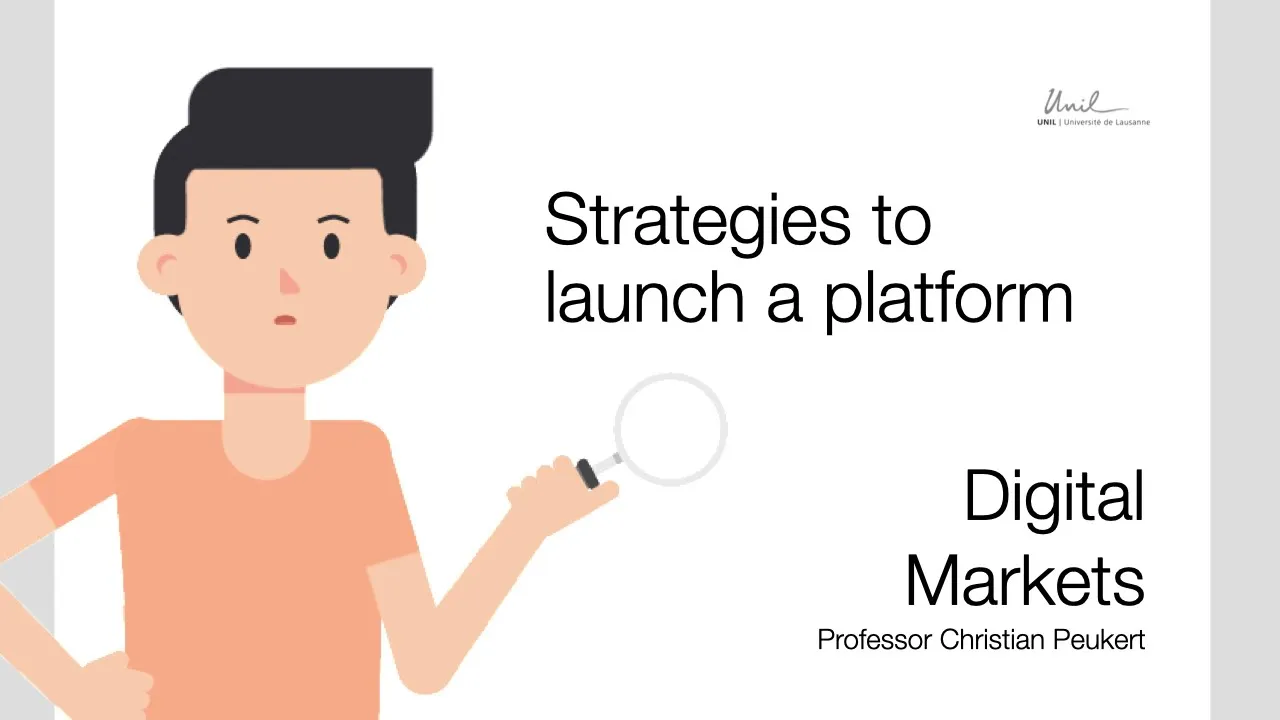
Hi! Today we want to think about launching a platform, about strategies that help us to solve the chicken-and-egg problem: how do we attract users to a platform when there are not yet enough users on the other side? We will see that launching a platform has a lot to do with marketing.
We will remind ourselves about the concepts of push and pull marketing, and then get to know a few strategies to try to manage the process of adding users to a new platform. One of the key take-aways will be: pull marketing is more effective in a network world, the world in which platforms typically live. But let’s not get ahead of ourselves.
Let’s first clarify a few concepts. Traditionally, firms would launch products using push marketing. A push strategy includes print and TV advertising, billboards, and so on.
But as we shift away from linear communication channels, where the company simply pushes an advertising message in front of the consumers, and as people spend more time consuming user-generated content, effective push marketing becomes more difficult to achieve. It’s simply not as easy as it used to be to get access to people’s attention. Especially on social media and entertainment platforms, such as YouTube, there is unlimited content and messages about various products and firms.
What’s the solution then? Firms can try to move from a push model to a pull model of marketing. Instead of pushing your message to consumers, you try to pull consumers into your world, into your orbit.
You try to make them talk about your product and hopefully how much they like it. While push marketing is paid advertising, we can think of pull marketing as earned advertising. How does this relate to launch strategies in platform markets?
Let’s take a look at a few stylized examples, and then the link will become clearer. The first launch strategy I want to talk about is follow-the-rabbit. The idea here is simple.
We make a mini version of the platform, with selected participants, just to demonstrate that the platform generates value. What are examples where firms used a follow-the-rabbit strategy? Take the chip manufacturer Intel.
A few decades back, when they introduced wireless networking – nowadays known as Wifi - in laptop chipsets, they first had to demonstrate that there is a market for wireless internet. Sounds crazy today, but hey, this was the early 2000s. Intel partnered with a Japanese telecom company.
Since Intel only wanted to sell their chipsets but did not want to have to install wifi networks everywhere, they had to find a partner who would do it, at least in a limited setting. Intel had found their rabbit, and recognizing the value, more and more markets would follow soon. Let’s stay in the world of animals – what is the idea behind a piggyback strategy?
Well, you try to make your platform interoperable with another one that already has a large installed base. Remember we talked about network effects and compatibility in one of the other videos? That’s the same idea here.
An example is PayPal, the online payment provider. They piggybacked on eBay’s auction platform to find a lot of potential users of direct payment. PayPal was in fact quite clever in its platform implementation strategy.
They used bots to buy goods and insisted on using PayPal as the payment method. Of course, they did not have a warehouse to store all the good, so they immediately resold them on eBay, again insisting on PayPal as the payment method. You can also try to focus on key users of your platform and specifically target them.
Variants of such strategies are known as seeding or marquee strategies. The first idea would be to pick a user group that may have a particularly high value from joining your platform and target them first. When Google launched their Android platform, they were offering incentives to app developers to join.
The best apps would win prizes that would offset the investment costs. Once the platform grew, and users were added on the other side, the benefits to app developers grew bigger and Google didn’t need to worry as much anymore about attracting more developers. The second idea would be select a user group that provides the highest value to everybody else.
When a new gaming consoles launches, the platform owners often try hard to make sure that the most successful games are available on their platforms. When Jay-Z launched his music streaming service Tidal, he removed his own music from Spotify and therefore created a reason for his fans to sign up for Tidal. So far, the launch strategies that we talked about had a lot do with managing indirect network effects.
But of course, we can also try to benefit from direct network effects. This is the idea of a producer evangelism strategy. Again, you find a way to attract complementors, or producers.
But this time, we want them to bring their existing customer base to the platform. So, you’re adding users on both or multiple sides of the platform, but only by focusing on one side, the producers. The crowdfunding platform Kickstarter creates value in that they make it easier for producers or entrepreneurs to collect funding from users.
When you launch such a platform, it is in the best interest of producers to attract users to the platform themselves. Another example is Mercateo, which is a B2B platform for industrial and office supplies that shares some characteristics of an auction platform. The way they created incentives for producers to bring their customers to the platform was the following.
You will have the last word in every bidding competition, but only for the customers that you bring. Okay – let’s take a step back and reflect on the four or five launch strategies that we covered so far. All these strategies rely on trying to manage the inherent dynamics of multi-sided platforms, by trying to pull users into the system.
Does this mean that push marketing is never an option with platforms? Of course not. Meet the big-bang adoption strategy.
Nothing new here: The idea is to simply use traditional push marketing strategies to attract a lot of interest and attention to your platform. This is what Twitter did when they installed a giant screen at a large tech conference where people would instantly see their tweets. This was mind-blowing back then, and as a result Twitter usage tripled.
To sum up, in this video we have talked about push and pull marketing and we have seen a few examples of strategies to launch a platform. Most strategies had a lot to do with pull. Now you see why I started with the key take away: in a platform world, pull marketing is often more effective than push marketing.