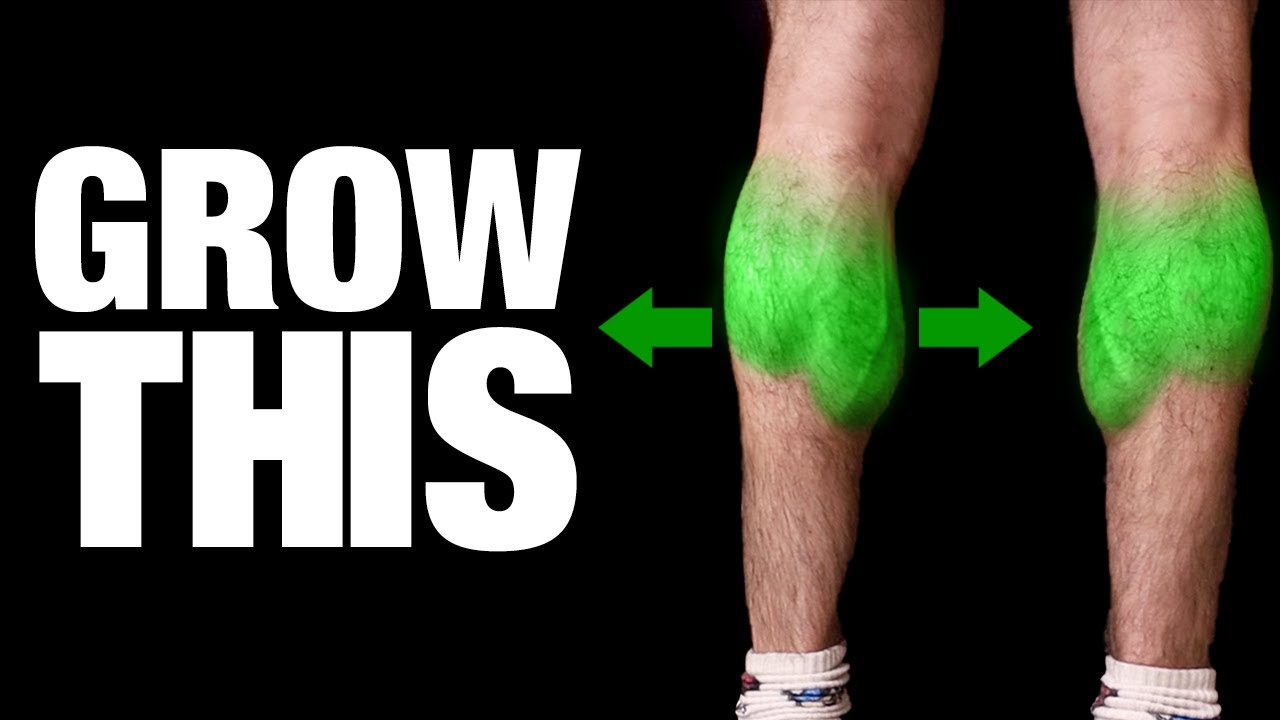
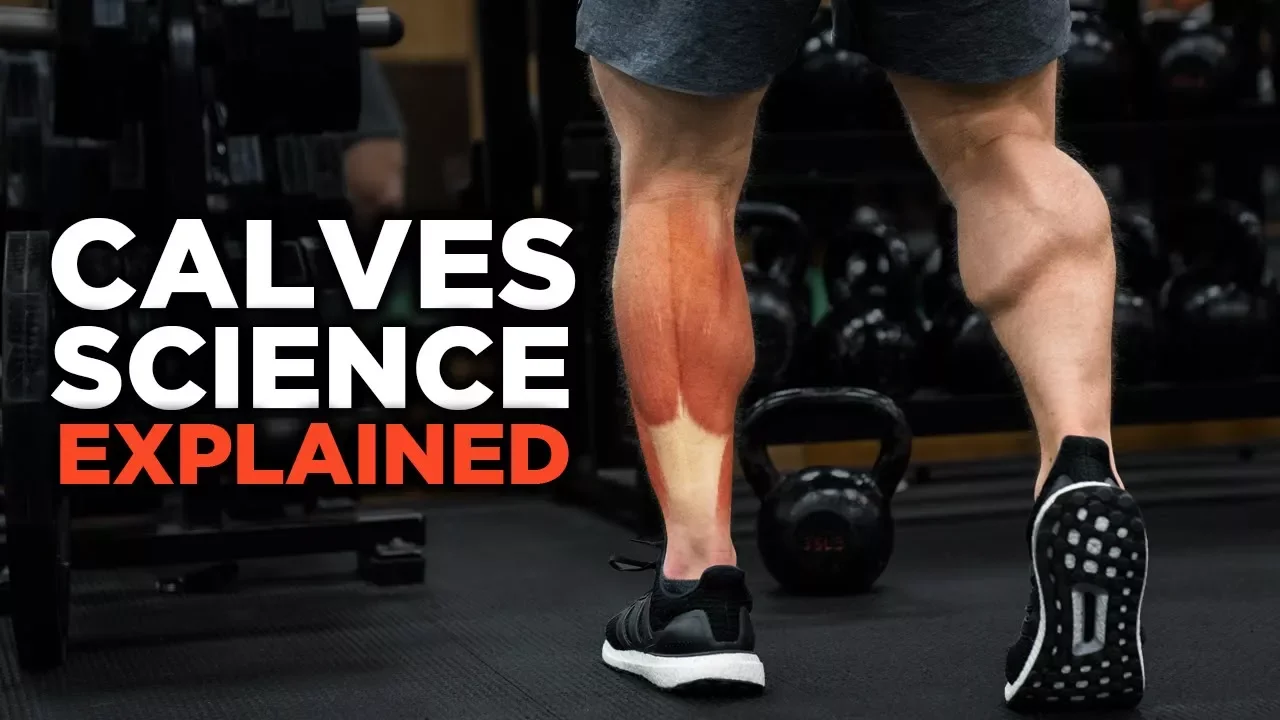
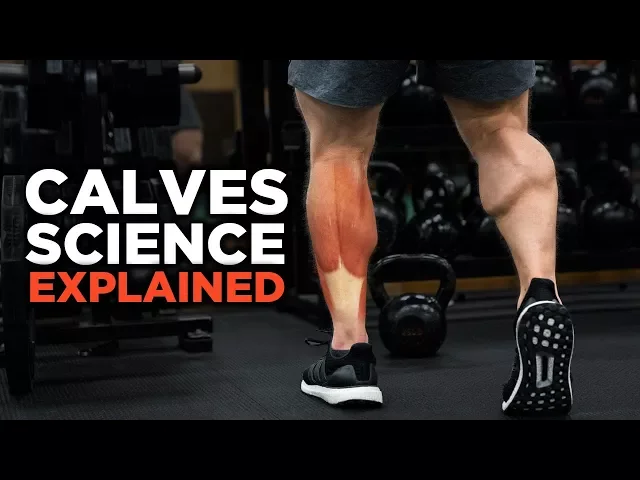
so it's been a little over a year since I released my first science explained video on the Cavs and given just how much research has been published since then I think it's a good time for an overhaul so first in order to understand how to best train the Cavs for growth I think it's important to have a fundamental grasp of their basic anatomy first um so what we call the Cavs are technically a pair of muscles known as the triceps surae which is made up of the soleus and gastrocnemius the soleus sits underneath the gastroc
but is actually bigger in terms of muscle volume and I think it's much more important than many trainees realize for creating big muscular calves as a whole the gastrocnemius or gastroc for short has a medial or inside head and a lateral or outside head and the gastroc originates on the femur and inserts on the heel bone via the Achilles tendon so it's a bi articular muscle meaning across as two joints having actions at the knee where it performs knee flexion or bending your leg like in a leg curl and at the ankle joint where it
performs plantar flexion pressing your foot down as if pushing on a gas pedal in contrast the soleus originates on the tibia and fibula of the lower leg also inserting on the heel bone via the Achilles tendon and so it only acts on the ankle joint to perform plantar flexion and has no action at all at the knee and remember this because it's something we'll come back to later now the first I'd like to quickly comment on the so called stubbornness of the calves and while I'm not aware of any direct research suggesting this to be
the case and I can think of at least two reasons why it very well could be true for one studies have shown that androgen receptors which are what testosterone binds to to a signal for a muscle and Abba lism are greatest in number in the neck and traps and then decrease in number as you move down the body according to scientific fitness author Lyle McDonald by the time you get to the calves androgen receptor density is very low so a testosterone can't exert as much of an effect but I would say this is speculative at
best and the second reason why the calves might be more stubborn than other muscles has to do with their fiber type composition and so the most recent evidence on this to guess that both the gastrocnemius and soleus are type 1 or slow-twitch dominant and sends type 2 or fast-twitch fibers tend to a greater hypertrophic potential than type 1 or slow-twitch fibers especially when using heavier weights this preponderance of slow-twitch fibers could be limiting the calves growth potential but there are definitely ways around these potential limiting factors and in my opinion probably the single most limiting
factor is that people just get discouraged with the results either give up on their training or take a more lackadaisical approach and I think that perhaps the best a counter example to this that I've seen comes from Pro natural bodybuilder Jeff Albert's and this is a 24-year transformation but it goes to show that if you do just stick to the plan with consistency and a steady focus on progression and it will grow if you train them properly over enough time so exactly how to do that is what we're gonna cover next and I think that
when it comes to exercise selection the main thing to keep in mind is that you should be including at least one standing and one seated calf raise variation and this is because as we mentioned in the anatomy section the gastroc crosses both the ankle joint and the knee joint so when your knee is bent your gastroc is already shortened up at the knee as such isn't in as great of a position to shorten or contract down at the ankle and this is called active insufficiency and I think it gives us good biomechanical grounds for assuming
that the soleus should be more active when performing seated calf raises where the knee is bent and this has been corroborated by EMG data one 2012 study found that increasing knee flexion angle from 0 to 45 degrees resulted in an increase in soleus activation further implying the seated variations are likely better at isolating the soleus and just recall that the soleus is the biggest muscle and so I think it deserves some sort of special attention in this way but despite this we're gonna start with the more gastroc dominated standing variations of calf raises and perhaps
the best thing to do would just be to experiment with all of these and find out what works best for you according to EMG activation data from buh heck bare hands and bus keys donkey calf raises came out on top however you'll want to keep in mind that while I personally believe that all else equal more EMG amplitude should imply more muscle activation which should imply greater rates of muscle protein synthesis and greater muscle hypertrophy overall and this line of reasoning has received some criticism from some members of the scientific community for now I think
you'll just want to exercise caution when extrapolating these results but in any case if we just grant that activation matters for something and I certainly think it does and you may want to include a donkey calf raise in your routine in practice if you don't have the machine there are a few other ways you can set it up one way is to simply have a partner load a plate on your lower back but there will come a point where overloading heavily enough will become an issue so you can also load it using a smith machine
with the bar placed on your lower back or even more creatively you can load it using a barbell positioned lengthwise with the safety rack setup as staggered Heights so that you can still get a full range of motion you can always just do the normal standing calf raise which will also activate the calves to a very high degree and well I think that the standard version using the machine works just fine and is simple enough to perform I think there are two better variations the first being the calf jump exercise where the idea is to
mimic a jumping motion where you bend the knees slightly as well as the hips and pretend as if you were just jumping up as explosively as possible into the pads of the machine and from what I understand the main purpose here is to alter the resistance curve to better match the strength curve of the calves 2003 study out of Kyoto University in Japan found that the calves were able to produce maximum torque at lower ankle angles basically the calves are strongest at the bottom of a calf raise so with this variation some of that explosive
force that you produce out at the bottom can sort of carry over to the top end of the range where the calves are weaker now the other variation I really like is the single leg calf raise mostly just because it allows you to really focus on one leg at a time which is good for preventing muscle imbalances I think the most important factor is to include a pause at the bottom to allow any potentially stored elastic energy to dissipate many trainees take way too much advantage in my opinion of the very powerful and the highly
elastic Achilles tendon leaving very little work left for the actual calf muscles to perform so what about foot position well I don't know what made this such a hot research topic but in the last year alone in 2017 from aware of at least three studies that were published on this exact topic but before we get to those let's look at the original paper published on this in 2011 by riemann and colleagues found that 420 healthy subjects doing calf raises externally rotating or pointing the toes out did activate the medial or the inner head of the
gastroc more i'm so based on this evidence it is possible that pointing the feet out might activate the inner calves more now out of the three papers published last year in 2017 one study weakly supported the idea that pointing the toes out caused more inner activation however the paper from peri era Attell showed no statistically significant difference and the third study also found no difference so pulling it all together I think the best recommendation we can make here is that there probably isn't much difference so you should just go with what feels most comfortable for
you and of course biomechanically this makes sense since internally or externally rotating the foot actually results from the internal or external rotation at the hip and since the gastroc doesn't even cross the hip joint it shouldn't be surprising that it isn't strongly affected by changing foot position as for bent-leg soleus dominated movements you basically have one main option a seated calf raise now if you don't have this machine you can improvise by putting dumbbells on your knees and plates under your feet but the machine is definitely better in my opinion and as we've mentioned the
soleus is by some estimates as much as 96% slow-twitch which on the face of it it seems to imply that it may be better targeted with higher reps and I do believe that there is some truth to that according to the size principle lower threshold slow-twitch fibers are recruited first meaning they'll be active for a longer duration meaning they'll receive higher levels of fatigue and potentially a greater hypertrophic stimulus for growth but as with many things in the real world it's actually a bit more complicated than that as some studies show that type 1 fibers
respond better to light weights and higher reps other studies show that they grow better in response to heavier training with lower reps still I tend to favor the quite strong theoretical basis for doing higher reps for the soleus I think it's your safest bet just to include a variety of rep ranges with high and low rather than sticking to a single rep range for all these movements now when it comes to volume and frequency for the calves I find it to be the case that many trainees will just immediately turn to pounding them with more
volume more reps and more frequency but I think that we should learn from Jeff Albert's lead on this one and in a text chat Jeff informed me that his routine was fairly simple he'd hit them 1 to 2 times per week focusing on progressive overload and perfect technique with standing calf raises and full range of motion in the 6 to 8 rep range and then he just repeated that for 24 years now for those of us with truly stubborn calves who'd maybe rather not wait that long I think before turning to adding more reps more
volume more frequency you should first focus on mastering your technique that means pausing at the bottom of every rep engaging a mind muscle connection with your calves and experimenting with different exercise variations and advanced techniques like some of the foot positions we discussed then once you have all of this mastered I'd recommend going for the upper range of the volume recommendation set out by Warren Baum and colleagues in 2007 which is 70 reps per session done three times per week in practice combining it with some sort of daily undulating setup it might look something like
this now of course if your knee-jerk reaction to that is to say that you're already doing more than that and still not getting results and what I would say to do is first go back to step one and make sure that your technique is on point and if it is then you may just be in a place where your your muscles just need to be resent eyes to that training stimulus so I'd recommend taking a 1 to 2 week D load where you either take a complete break from any calf training whatsoever or at least
reduce volume by 50% and this way you'll resent eyes your calves again and you won't have to go so high with the training volume in order to make progress after that I would say to just continue to be patient continue to execute the plan and be consistent in the gym and I promise you that if you apply these scientific principles over enough time you'll eventually be cut from team no pet all right what is going on everyone so before we go I want to quickly say thank you so much for watching the video I also
have to thank Dollar Shave Club for sponsoring this video I'm in case any of you guys aren't aware Dollar Shave Club is a men's grooming brand and their specialty is that they deliver high-quality razors and other grooming products straight to your door Dollar Shave Club is great because you don't have to deal with the inconvenience of having to go to a store and pick from their massive selection of razor blades so just for a limited time Dollar Shave Club is offering their shower and shave starter kit to new members for just five bucks so let's
have a quick look at what's in the box over here so we've got of course their sturdy executive razor and we've also got a full cassette of new razor blades and they're also including three of their most popular products so we've got the shave butter body wash and one white Charlie's ICU if you'd like to get started with your first month of Dollar Shave Club and their new starter kit you can do so for just five bucks with free shipping if you go to dollarshaveclub.com forward slash nipper and I'll have that link as the first
link in the description box below I'm sets dollarshaveclub.com forward slash nipper and I just want to thank Dollar Shave Club for sponsoring this video I really appreciate it and of course want to thank you guys so much for watching please don't forget to leave me a like if you liked the video subscribe to the channel if you happen to be new and also Stephanie and I are gonna be at the Arnold Classic this weekend at the PE science booth if you happen to have made it this far let me know if you guys plan on
going to that Expo we'd love to see you there and until next time I'll see you guys in the next video [Music]


![Taurine: The Nutrient of Youth [Science Explained]](https://img.youtube.com/vi/qH5QumHGrgk/maxresdefault.jpg)