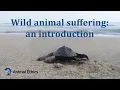
Think for a moment of a wild animal. What animal do you picture in your mind? When asked this, most people picture healthy, adult, big exotic mammals, or maybe another big vertebrate, such as a lion or an elephant.
They think of happy animals, enjoying themselves, without any human causing them harm. This is a view of the situation of animals in the wild that is prevalent today Despite this, there are many people around the world rescuing and aiding wild animals. These animals would otherwise die in painful ways.
Life is not easy for animals out there. From the very moment they are born or hatched from their eggs, they must face very serious threats, which cause them to suffer a lot. The factors from which animals suffer are very diverse.
Some are due to direct human action. Others may be indirect results of human action, natural circumstances, or combinations of the two. Among the factors that can be partly or completely natural are: hostile weather conditions, hunger and malnutrition, thirst, a wide range of diseases, accidents, injuries, conflicts with other animals, parasitism, and psychological stress.
These are not unusual circumstances, and the harms animals undergo due to them are not trivial. In fact, due to them, many animals have lives that contain much more suffering than pleasure. We can think, for instance, of a bird chick who falls from her nest and agonizes, starving to death on the ground for days, suffering from the cold, the distress, and the pain of the injuries she received due to the fall.
Or a baby fish starving after never being able to find any food. Such cases are common among young animals. Other animals may beable to survive for longer and reach adulthood, but undergo chronic pain, or die after having endured a lot of suffering.
One example of this is a deer suffering from a nasal bot parasitic infection. These are larvae that grow inthe nasal cavities until they are so numerous and so large that the deer is no longer able to breathe and slowly suffocates to death. Examples such as these suggest that the idea that the best we can do for animals in the wild is to leave them alone is not always correct.
There are many cases where we can't do anything to help animals, or where helping them may entail causing greater harm to others. But there are other cases where we can make a significant difference for animals and they can be net positive overall. Some people who, like us, care about animals, might wonder why all this should be an issue, given that there are so many visible ways animals are harmed by humans today, such as those kept in captivity, or harmed in the wild by things like fishing.
Concern about animals suffering for other reasons is just an expansion of this concern. There is no contradiction in caring about all animals, regardless of whether they are being harmed by humans or for other causes, such as harmful weather conditions or diseases. There would be acontradiction in caring only about what happens to animals that humans harm, and not caring about other animals In order to get a better sense of the importance of wild animal suffering, we need to be aware that many animals have lives filled with suffering, like the ones described above.
Such cases are much more numerous than we might initially believe. We can see this by examining how animal populations evolve, and what their mortality rates in their youth are. This is studied by different fields in biology.
A key factor determining this is the reproductive strategy that different animals follow. In nature there are some animals who reproduce by having just one offspring at a time. These are animals who typically give a lot of parental care to their offspring, to maximize the probabilities of survival.
However, most animals follow a very different reproductive strategy, bringing into existence a very large number of offspring. The survival rates of these animals at the beginning of their lives is typically very low. If the animals in question reproduce just once during their lives and their populations remain stable, on average only two of their offspring per litter or clutch make it to adulthood, that is, one per parent.
If they reproduce several times, the average number decreases. Some of these animals might survive for some time even if they do not manage to reach maturity. But in many cases, they die not long after they have started to exist.
Some of them might never develop into sentient beings. But many of them do, and they typically die in ways that are likely to be painful, sometimes extremely so. They starve to death, are killed in painful ways, or die due to other factors, such as cold or disease.
However because they are very young when they die, they have likely not have had the opportunities to enjoy any pleasures. They experience a little more than the pain of their death. Due to this, suffering appears to outweigh happiness in their lives.
This indicates why wildanimal suffering is of great importance. It also shows why it can make a big difference that there are actually ways to help some of these animals. The following are some examples of this.
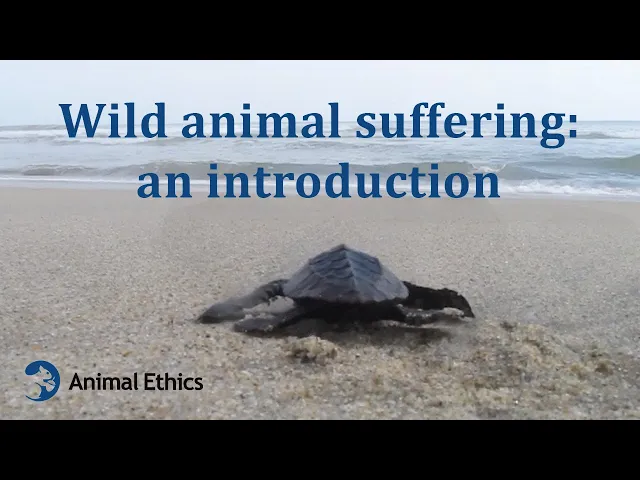
Animals in the wild can suffer very significantly and die prematurely due to different factors. In many cases, however, they are helped. Examples of this include rescues of animals stranded on beaches, trapped in ice, snow, mud ponds and many other situations.
Further examples include providing shelter and assistance to sick and injured animals, caring for orphans, and saving some of them from starving in particularly harsh situations, On a larger scale, vaccination programs save huge numbers of animals from suffering and dying due to disease. New programs to help animals can be developed. For example, well monitored pilot programs can start with the aim of improving the situation of animals living in suburban, urban, or industrial areas.
What we learn from them can then be applied to animals living in agricultural zones, and then to aid those in need of help in semi-wild and wild areas. Also, we must bear in mind that in the future we may be able to improve things in ways we can't now. For this to be possible, however, it will be necessary that we have an attitude of concern, and not one of disregard, for animals.
Some people don't care about what happens to animals at all, despite the fact that they can also feel and suffer. This appears to be one of the forms of speciesism. Second, we have cognitive biases that distort how we imagine animal life in nature to be.
As I mentioned at the beginning of this video, when most people think of wild animals, the image that comes to their minds is that of big animals, most likely mammals,and maybe big birds; in any case most surely vertebrates. Furthermore, in almost all cases, they think of adult animals. They may think of lions and tigers, perhaps of giraffes, elephants, wolves, eagles.
. . but they seldom think of say, fishlings or invertebrates that have just broken out of their eggs.
However, these are the overwhelming majority in nature. Most animals are small, and most animals are very young ones. The picture of wild animals that many people have, which is totally unrepresentative, very much conditions the view that people have of animals lives in nature.
Finally, there are also people who think that we should not help animals living in the wild because doing so is not "natural". We should note, however, that when humans are suffering in the way that wild animals commonly do, we typically support helping them. Why have a different attitude in the case of animals?
This seems to be a form of discrimination against animals living in the wild. So we should help them whether or not humans are responsible for those harmful conditions. In fact, we should also note that humans already frequently do intervene in nature to further human interests.
We build houses, hospitals, schools, libraries. . .
We also plant the food we need to eat. If we are ready to transform our surroundings for the sake of our needs, we should be willing to do so when other, equally sentient beings, like wild animals, are in need of help Because it requires careful study to learn how best to help animals, it's important to invest in research that will help us to both optimize the results for animals and to avoid negative indirect consequences of helping them. The good news is that there is already a lot of data that could be used for this purpose.
Veterinary scientists have focused on assessing the well-being of domesticated animals, but they have also examined that of wild animals. Ecologists have researched the population dynamics of these animals, their life histories, and the way they interact with other animals and their surroundings. All this can potentially provide us with firm grounding on which to base programs to help animals.
Gathering more knowledge can aid us in developing new ways of helping animals that will increase our positive impact in the future. Also, we will be able to learn more about how the well-being of animals is effected on the ecosystem level in different situations, and of the best ways to achieve the transitions from worse to better situations in the wild. Due to this, an attitude of caring about animals in the wild can potentially have a big impact, because if we really care about what happens to animals, we should not only worry about those living today.
Those who will live in the future have the potential to suffer just as much. In the rest of the videos in this course, we will examine in much more detail all these questions and many more. We will start in the next videos of this first part of the course by looking at what wild animal suffering is, at some of the different reasons why animals in the wild can suffer so much, and about the ways they are currently being helped.