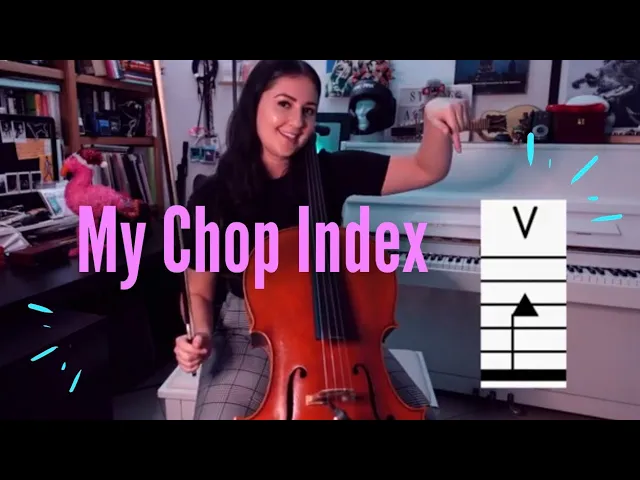
hey guys welcome to my YouTube channel I'm so excited to share with you today my chop index so I have a set of percussive and extended techniques that I use in my plane in my sheet music in my performances that I want to share it with you I recently recorded heart the chop it's my percussive arrangement of Hark the Herald Angels Sing it's for solo unaccompanied cello and I do a lot of really cool techniques in there [Music] so in today's video I'm going to Simply go through the various chops in my personal chop index
what it looks like in the notation how I play it what it sounds like and we're just gonna go through each one if you want the context of how it sounds like in a piece make sure you check out my next video and of course none of this would be possible without the chop Master himself Casey driesen whether you're instrumentalist a composer or both and you're curious on these percussive techniques I highly recommend checking out his page he's a fiddler and shop master and he created the chop notation project link below alright let's get started
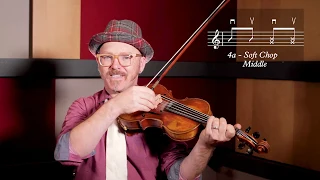
so chopping 101 first chop you should know is the hard chop foreign slightly angled and there's no pitch so it's going to be a very sharp crispy sound so the hard chop is notated as a slash note head as you'll see right here so after the hard chop the next thing we're going to learn is the soft chop it's not as percussive it's more as a placeholder and you'll see that in the sheet music as X's because they're basically Ghost Notes also at the Frog but we're gonna do a straight bow and also no pitch
lightly placed a bow on the string and release in Rhythm while muting the strings with your left palm so we're going to do middle and towards so we're still getting some sound but it's definitely not as aggressive as a heart shop so the third item on the chop index is the hard soft combo chop so when you do a hard chop and when you lift it up it creates a light percussive sound and that's the hard soft chop combo and just so you can hear what it sounds like on the other strings we're going to
do a d g and C foreign so the next one is super fun I call this one the scrape and this one's going to be towards you so you're going to put the bow on the string and you're literally just going to drag it up towards you and it sounds different depending on what string you use so here's a string D G and C and the way the scrape is notated is by a triangle you'll see right here all right the fifth one now this one's my favorite the DJ scratch all right the DJ scratch
is gonna be four consecutive scrapes down up down up and for this one I angle the bow so I get a nice scrape sound and it sounds like this for cello it's more accurate to use down up down up but if you're playing violin it doesn't really make sense to call it down up down up so again this video is specifically for chalice if you're a violinist I'm sure you can figure out how to apply it to your instrument it's a very cool effect and depending on what string you play on it creates a different
sound so check out my high string D string G and C so this C string has a pretty cool deep sound honestly both strings sound really cool it depends on what kind of effect you're trying to create but either the a or C string has a really cool DJ scratch all right the sixth item on the chop index the quarter note triplet chop so it consists of a heart chop a scrape towards and a lift [Music] now the next item on the list is the triplet chop it's an eight note triplet and this one's very
tricky this is an advanced level of chopping it's basically the same concept as skipping Stones which I couldn't do for most my childhood I don't know how familiar you are with the concept of skipping stones for those who don't know you have a smooth Rock here by a lake and you try to throw it this way horizontally and it skips across the water so we're going to do that on our cello so you're gonna get your bow and you're gonna try to skip it down letting gravity help you [Music] and normally I follow the triplet
chop of a hard chop so it lands triple it and I land in a hard shop [Music] this is a tricky Advanced one it took me a couple years to actually learn this one it really helps a lot to have a loose relaxed hand because the more tense your hand is the harder it is to do a triplet chop you really need to be relaxed to let it Glide down [Music] the next one on my chop index is not a chop but it's more of an extended technique that I love to use in my music
it's my Distortion effect so similar to the sound a guitar makes when they're rocking out we also can rock out on the cello though in classical music we call it ponticello so we're going to use ponticello but we're going to make it a little bit edgier so how I make that sound is a mix of plain ponticello playing a harmonic so not fully pressing my finger down lightly pressing it so it creates a harmonic sound and doing wide vibrato foreign so you can do this with or without the wide vibrato now why vibrato has a
nice rock and roll effect but you can also do it with no vibrato and it sounds like this it also helps us slide into it it's a little bit edgier so with vibrato without vibrato both sound equally cool to me so I hope this video was helpful in showing you the different techniques that I have in my chopped toolbox so again this video was merely just to show you what I call each technique how I notate it what it sounds like and how I play it if you want a closer look on how to do
these techniques and how I use them in music please check out my other videos thank you so much for watching make sure you like subscribe my page I truly appreciate the support from you all and again please check out my song it's now on Spotify and all streaming platforms heart the chop my solo unaccompanied percussive arrangement of part of the Herald Angels Sing and if you're interested in learning hark the chop the sheet music is now available online on my website good luck out there to my fellow Choppers [Music] foreign